Native Ohio Plants To Grow Instead Of Hostas In Shady May Beds
Hostas have basically become the default setting for shady Ohio yards, and sure, they earn their spot. They are sturdy, easygoing, and great at making a bed look full in a hurry.
Still, there is something a little more magical about shade plants that actually belong in Ohio’s woodland story.
That is where native plants get especially fun.
Instead of the same big mounds of leaves you see on every block, you can bring in spring blooms, softer textures, and foliage that feels like it wandered in naturally and decided to stay.
Pretty charming, honestly.
These native choices can give shady beds more personality, more seasonal change, and a stronger connection to the landscapes that make Ohio feel like Ohio.
If your shade garden is starting to look a bit too familiar, this is a good excuse to mix things up and give those hostas some very worthy company today.
1. Christmas Fern Keeps Shady Beds Looking Full
Shady Ohio beds can look bare and tired by late fall, but Christmas fern is one of those plants that quietly holds everything together long after other plants have faded.
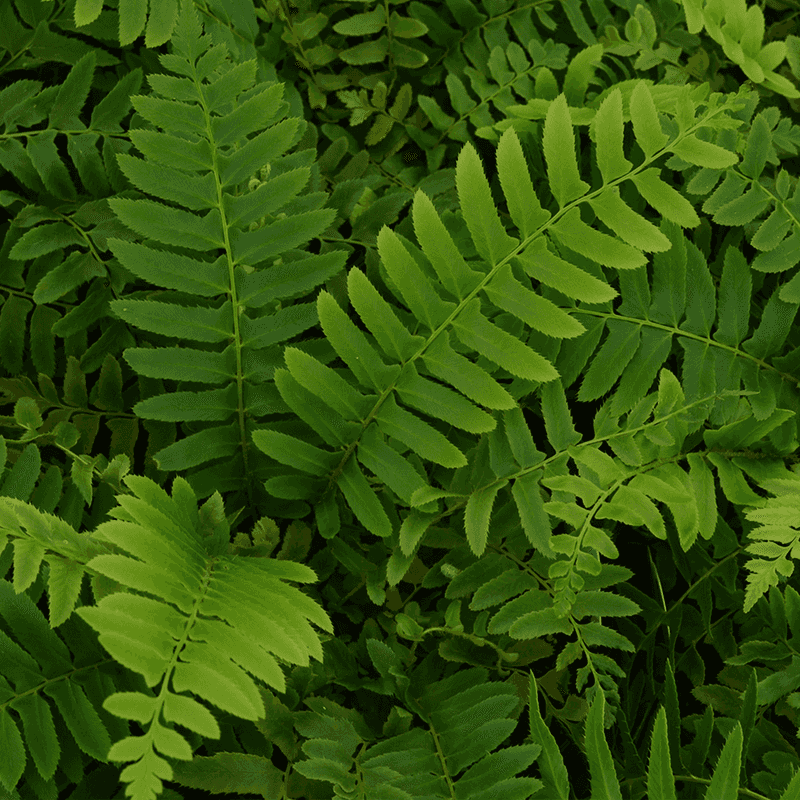
Its deep green, leathery fronds stay attractive through winter, giving your garden structure even during the coldest months.
That kind of year-round reliability is hard to find in a native plant.
Christmas fern grows well in part shade to full shade and handles the kind of dry, rocky woodland soil that frustrates many gardeners. It reaches about one to two feet tall and spreads slowly into tidy, arching clumps.
Unlike some ferns, it does not aggressively take over a bed, so you can plant it alongside other natives without worrying about it crowding them out.
In Ohio, this fern is native to woodland edges and forested slopes, which makes it well suited to the shady corners of home gardens. It pairs nicely with wild ginger or foamflower for a layered, naturalistic look.
Spring brings fresh new fronds that uncurl in a satisfying way, adding a bit of seasonal interest even for a plant known mostly for its evergreen qualities.
If you want a low-effort native that fills a shady bed with confidence, Christmas fern is a strong and dependable choice worth planting this May.
2. Wild Ginger Spreads Quietly Through Woodland Beds
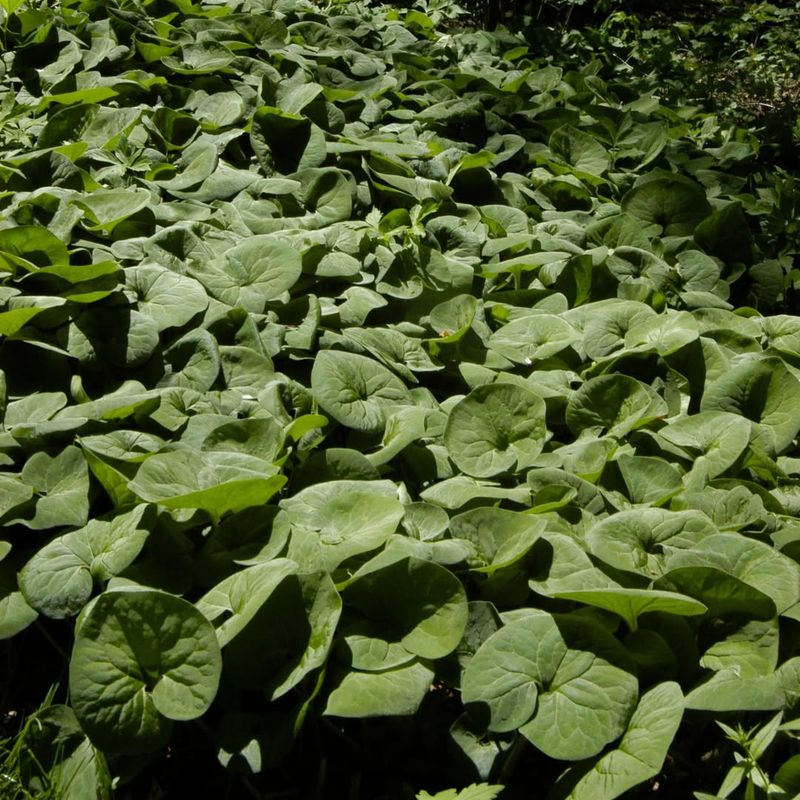
There is something quietly satisfying about wild ginger. It does not shout for attention with showy blooms, but once you plant it in a shady Ohio bed, it earns its place by slowly spreading into a rich, weed-suppressing carpet of large, heart-shaped leaves.
The texture alone makes it worth growing.
Asarum canadense, the native wild ginger found in Ohio, grows naturally on woodland floors where shade is heavy and moisture is consistent.
It handles the kind of deep shade that challenges even hostas, making it a genuinely useful plant for those dark corners under trees or along north-facing foundation walls.
The leaves have a pleasant, slightly velvety texture and stay fresh-looking through most of the growing season.
Your Ohio Garden Changes Every Week. Your Plan Should Too.
Gardening in Ohio changes quickly throughout the season. Every Friday you’ll receive a simple weekly plan showing exactly what to plant, prune, fertilize, harvest, and protect so you never miss the right timing.
Wild ginger does bloom in spring, but the small brownish-red flowers hide beneath the leaves and are easy to miss. Most gardeners grow it purely for its foliage, which is dense enough to shade out many common weeds once established.
It spreads steadily but not aggressively, so you stay in control of where it goes. For Ohio gardeners who want a low-maintenance native ground cover with real staying power, wild ginger is a smart choice.
It layers beautifully beneath taller natives like wild geranium or Jacob’s ladder, helping create the kind of layered, woodland-style planting that feels natural and intentional without requiring constant attention or upkeep through the season.
3. Wild Geranium Brings Gentle Color To Spring Shade
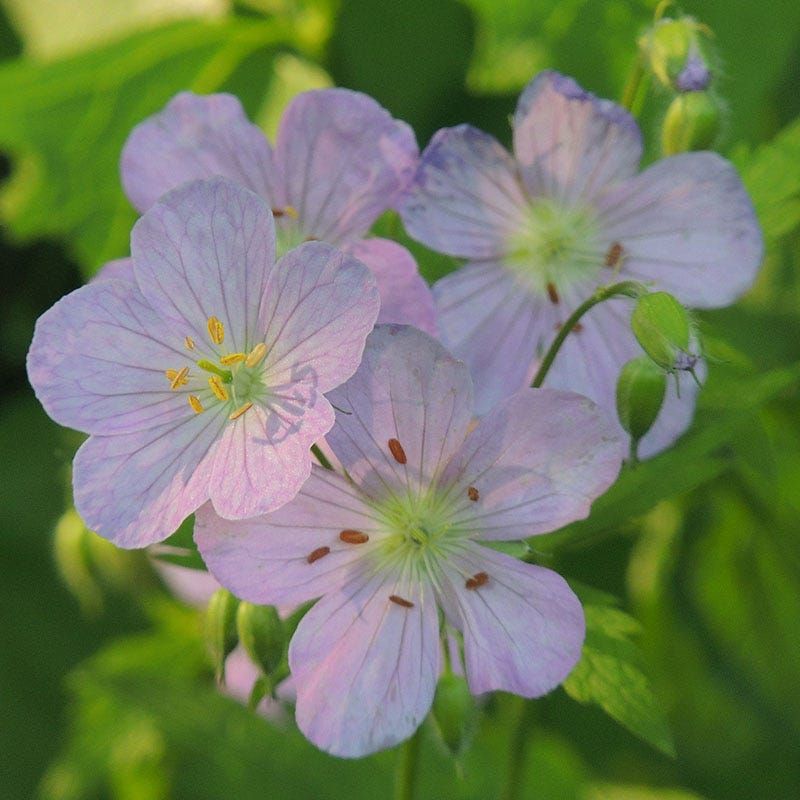
Walking through an Ohio woodland in May, you are likely to spot wild geranium tucked between tree roots, its lavender-pink blooms catching whatever light filters through the canopy.
That same easy beauty translates well into home shade gardens, where it adds a relaxed, cottage-garden quality without any fuss.
Geranium maculatum is a true Ohio native that thrives in part shade and moist, humus-rich soil.
It grows about one to two feet tall and blooms reliably from late April through June, which makes it one of the better native options for filling that important late-spring window when Ohio gardeners want color but the summer perennials have not yet kicked in.
The flowers are a soft lavender-pink that pairs well with the white blooms of foamflower or the blue of Jacob’s ladder.
After blooming, wild geranium develops attractive, deeply lobed foliage that holds up well through summer and sometimes turns reddish in fall, giving the plant a secondary moment of seasonal interest.
It self-seeds modestly, so you may find new plants popping up nearby over time, gradually filling in a bed in a natural way.
It is not a pushy spreader, which makes it easy to manage alongside other natives. For Ohio shade beds that need spring color and a relaxed woodland feel, wild geranium is a reliable and visually rewarding native worth including this May planting season.
4. Foamflower Adds Soft Spring Color In Shade
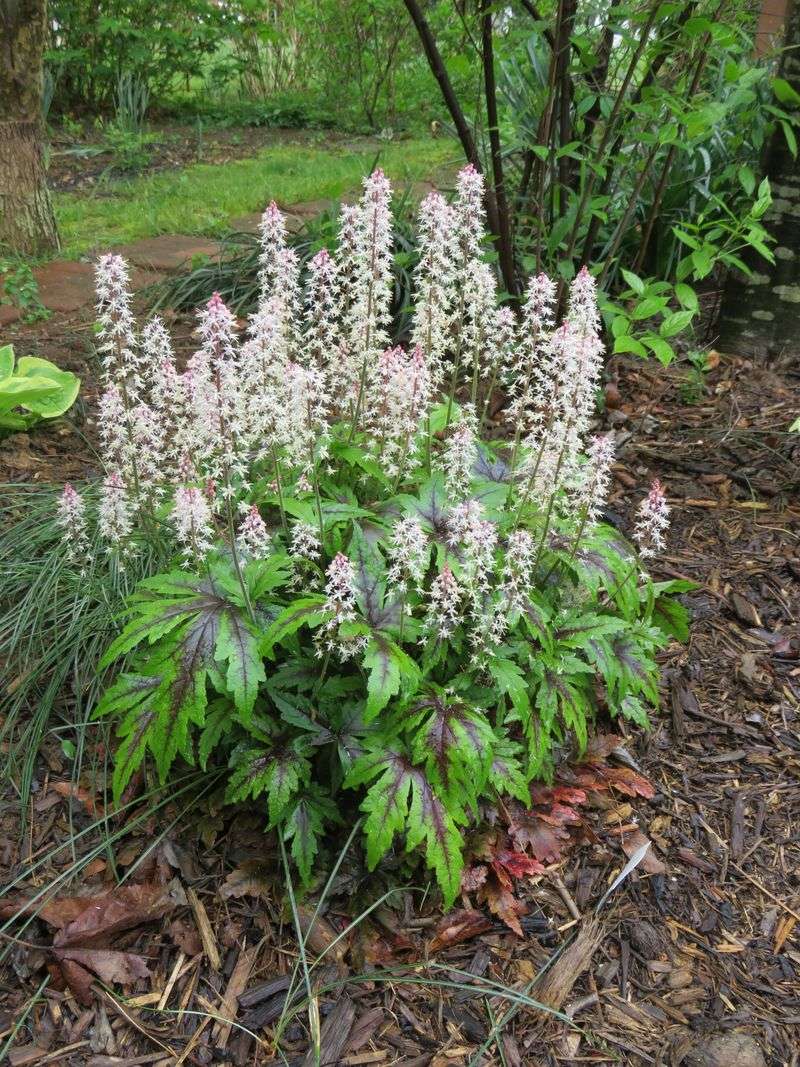
Few native plants put on a spring show as charming as foamflower.
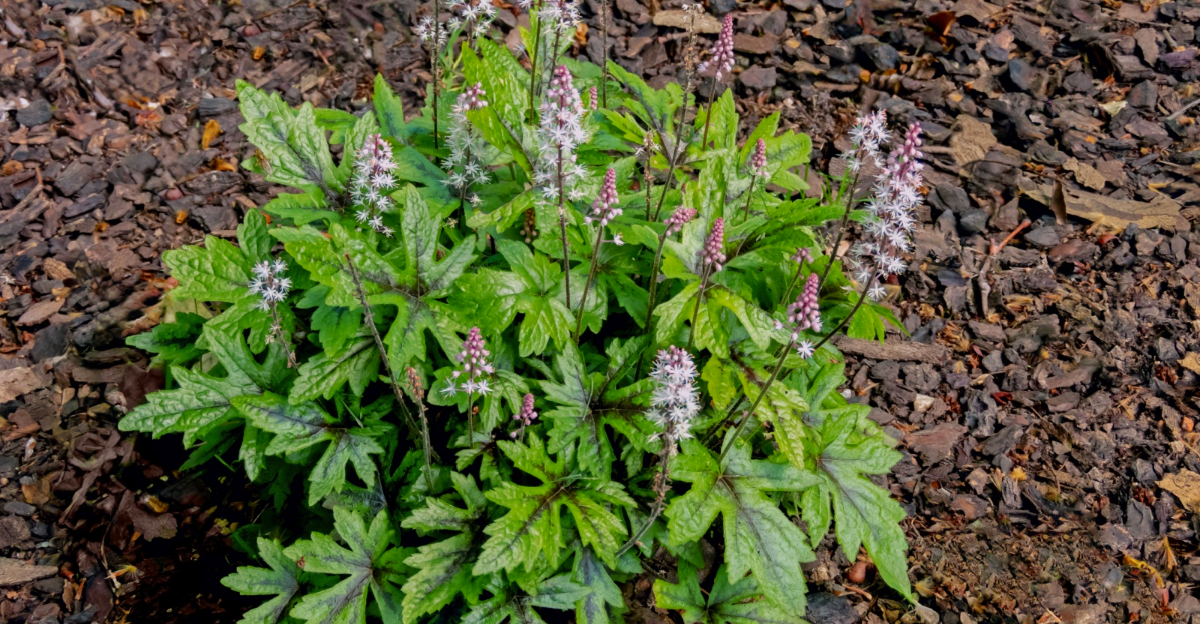
When May arrives in Ohio, its feathery white or pale pink flower spikes rise above a low mat of attractive, maple-shaped leaves, creating a soft, airy display that feels right at home in a shaded bed.
It is the kind of plant that makes you stop and look twice.
Foamflower, known botanically as Tiarella cordifolia, is native to Ohio woodlands and thrives in moist, well-drained soil with part to full shade.
It grows about six to twelve inches tall, making it an excellent ground-level plant that fills in spaces without growing too tall or unruly.
The foliage often has interesting dark markings that add visual texture even when the plant is not blooming.
One of its most useful qualities is how well it spreads by runners to form a ground-covering mat over time. This makes foamflower a practical alternative to hostas when you want something that fills in a bed with relatively little effort.
Unlike hostas, foamflower brings genuine spring color right when Ohio gardens are waking up in May. It also attracts native bees and small pollinators, adding a layer of ecological value that goes beyond looks.
For a shady bed that feels lively and connected to Ohio’s woodland heritage, foamflower is an easy and rewarding native to plant.
5. Jacob’s Ladder Brightens Shady Beds With Blue Flowers
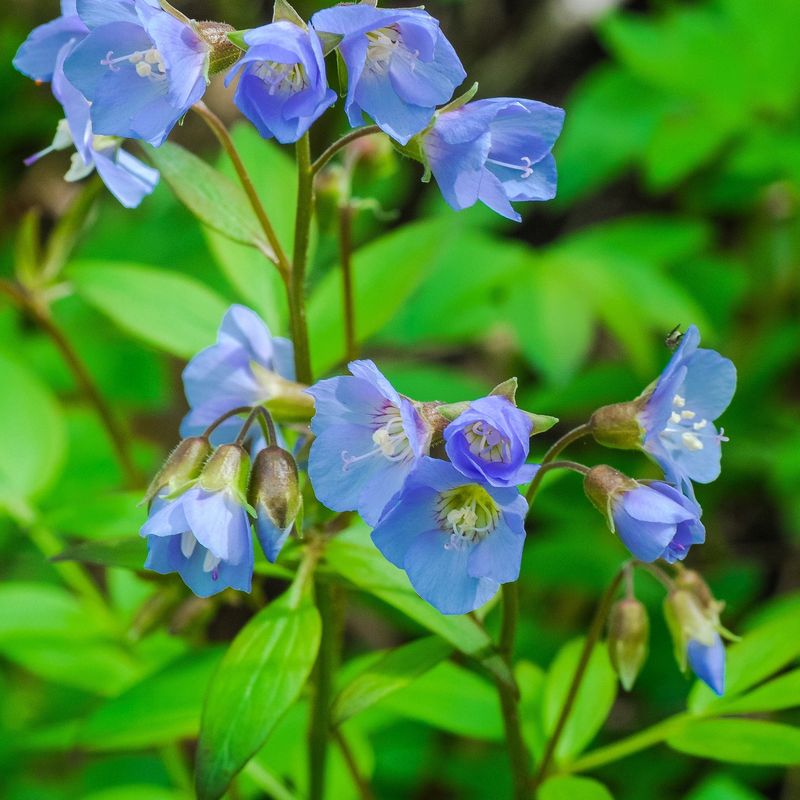
Blue flowers are not common in the spring shade garden, which is exactly what makes Jacob’s ladder stand out.
When it blooms in May, its clusters of soft blue-violet flowers bring a color that feels almost unexpected in a shaded Ohio bed, and that surprise is a big part of its appeal for gardeners looking for something a little different.
Polemonium reptans is native to Ohio woodlands and moist lowland areas. It grows best in part shade with consistently moist, fertile soil, reaching about eight to sixteen inches tall.
The foliage is one of its best features, with elegant, ladder-like leaves made up of small paired leaflets that give the plant a refined, almost delicate appearance even when it is not in bloom. The overall effect is airy and graceful rather than bold and chunky.
Jacob’s ladder blooms from April into June, making it a valuable bridge plant for Ohio shade gardens between early spring ephemerals and summer perennials.
It tends to self-seed gently, so a single plant can slowly establish a small colony over a few seasons without becoming invasive or difficult to manage.
Pairing it with wild ginger or foamflower creates a layered, woodland-style combination that looks thoughtful and cohesive.
For shady May beds where you want genuine native interest and a touch of unexpected blue color, Jacob’s ladder is a rewarding and ecologically meaningful plant to grow in Ohio.
6. Woodland Phlox Adds Fresh Color To May Shade
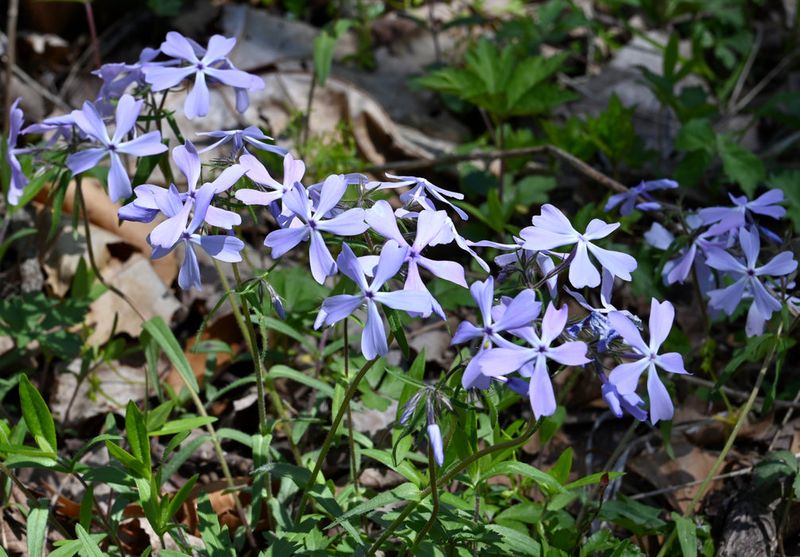
May is when woodland phlox really earns its reputation.
Clusters of soft lavender-blue flowers open just as Ohio’s shade gardens are coming fully to life, creating a fragrant, low-growing display that brings both color and a light, sweet scent to spots that might otherwise feel quiet and overlooked.
It is one of those plants that rewards you simply for paying attention to it.
Phlox divaricata grows naturally in Ohio’s moist woodlands and along shaded stream banks. In the garden, it prefers part to full shade and moist, well-drained soil rich in organic matter.
Plants grow about ten to fourteen inches tall and spread slowly to form loose, informal colonies. The semi-evergreen foliage stays tidy through much of the year, providing a bit of green texture even outside of bloom time.
One thing that sets woodland phlox apart from many other shade natives is its fragrance. The flowers carry a mild, pleasant scent that is noticeable on warm May evenings, adding a sensory dimension that most foliage plants cannot offer.
It also attracts native bees and butterflies, particularly early-season pollinators looking for nectar sources. Woodland phlox pairs well with wild ginger as a ground layer or with wild geranium for a soft color combination.
For Ohio gardeners wanting a native that brings both fragrance and fresh spring color to shady beds, woodland phlox is a genuinely lovely and practical choice.
7. Wild Columbine Brings Light Color And Woodland Charm
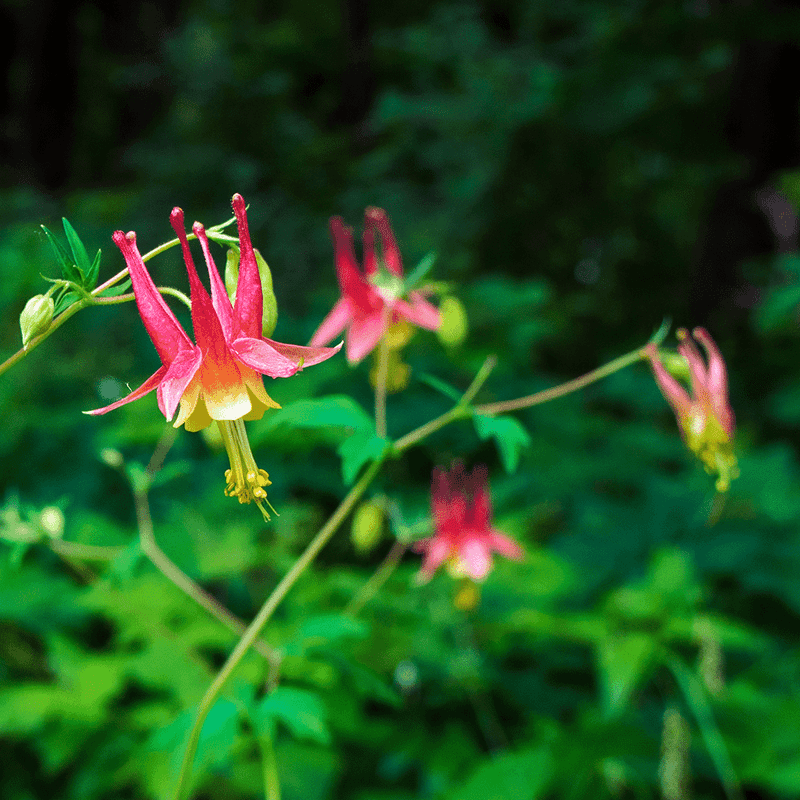
There is a playful, almost whimsical quality to wild columbine that sets it apart from most shade garden plants.
Its nodding red and yellow flowers hang like little lanterns above delicate, blue-green foliage, creating a light and airy effect that feels genuinely different from the bold, heavy texture of hostas.
In an Ohio shade bed, it brings a welcome sense of movement and charm.
Aquilegia canadensis is native to Ohio woodlands, rocky slopes, and open shaded areas. It grows well in part shade and adapts to a range of soil types, including drier, rockier soils where many other shade natives struggle.
Plants reach about one to two feet tall and bloom from April through June, making them one of the earlier-blooming native options available for May shade gardens in Ohio.
Hummingbirds are strongly attracted to wild columbine’s tubular flowers, so planting it near a window or seating area gives you a chance to enjoy some early-season wildlife activity up close.
The plant self-seeds readily, which means it tends to naturalize happily through a bed over time, filling gaps and creating a relaxed, cottage-style effect.
It is not fussy about soil fertility, which makes it forgiving for gardeners still learning their shady spots.
Wild columbine is a native Ohio plant that brings real character, ecological value, and light spring color to shaded beds that deserve more than just another row of hostas.