The Boxwood Problems Ohio Homeowners Should Not Confuse With Winter Burn
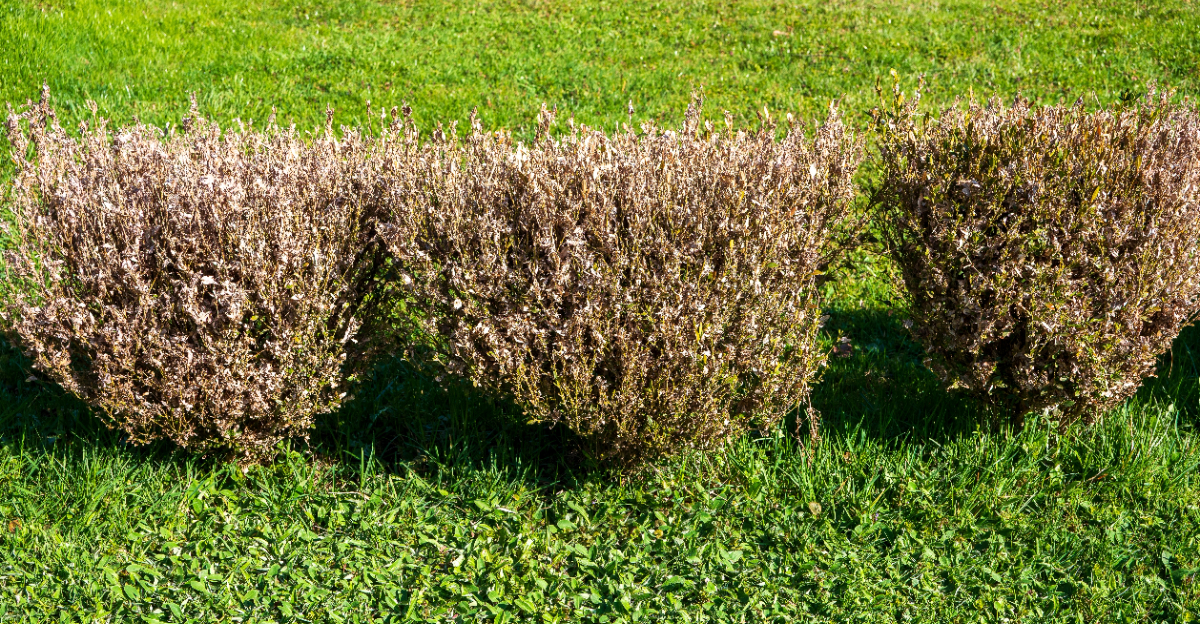
Winter burn gets blamed for everything. Brown boxwoods in March?
Must be winter burn. Patchy, struggling shrubs that never quite bounced back after February?
Probably winter burn. It’s become the catch-all excuse for every boxwood problem Ohio homeowners encounter, and that habit is quietly costing people healthy shrubs every single season.
The trouble with misreading your boxwood is that the wrong diagnosis leads straight to the wrong fix.
You baby a plant through spring thinking it just needs time to recover, and meanwhile the actual problem, a fungal disease, a pest infestation, or a soil issue, keeps advancing.
By the time the shrub is clearly beyond help, the window to save it has already closed. Winter burn is real and it does happen here.
But it looks a lot like several other conditions that behave completely differently and demand a totally different response. Knowing the gap between them matters more than most people think.
1. Box Tree Moth Damage Can Strip Boxwoods Fast
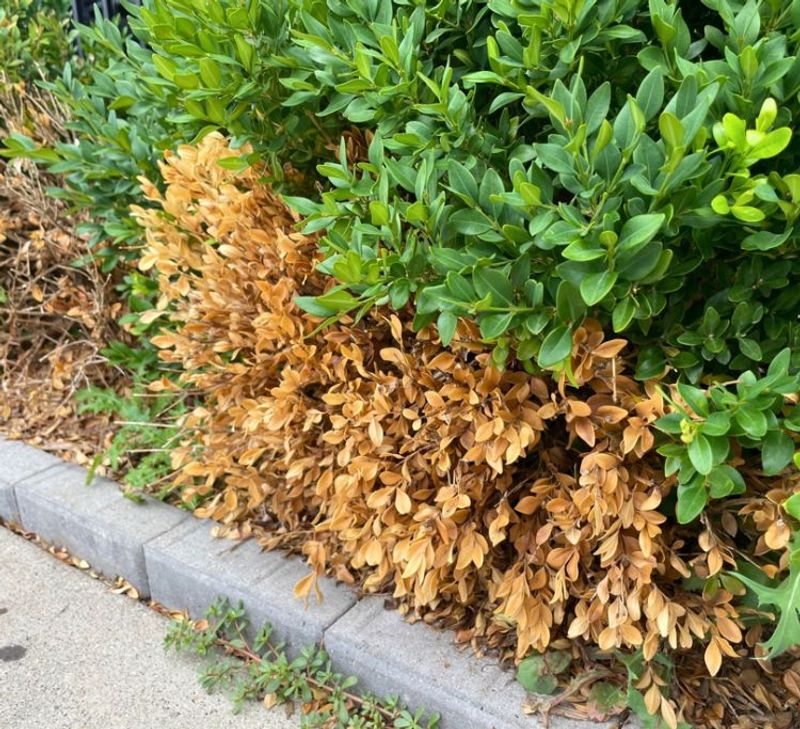
A hedge that suddenly looks hollow or see-through is one of the most alarming things an Ohio homeowner can spot in spring. Box tree moth larvae are the reason some boxwoods go from full and green to stripped and bare in a matter of weeks.
Unlike winter burn, which browns foliage from the outside in, box tree moth feeding removes and chews actual leaf tissue from inside the plant canopy outward.
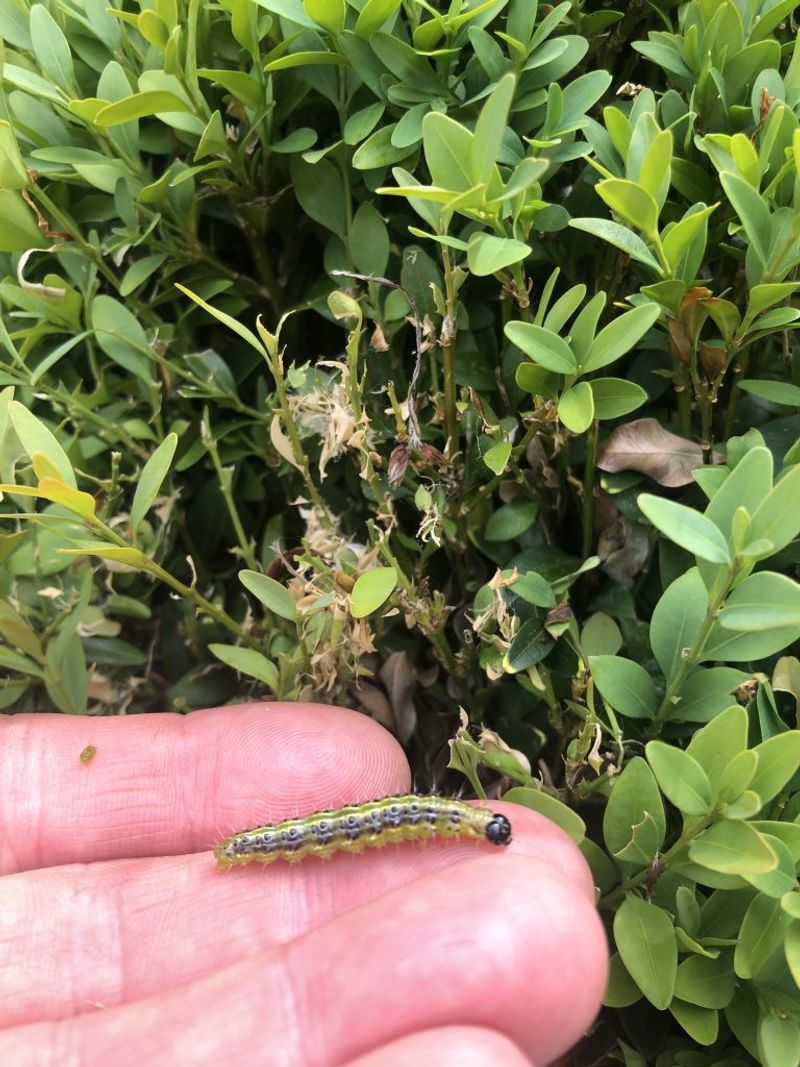
Larvae are greenish caterpillars with dark heads and distinct black or yellow markings along their bodies.
Signs include ragged chewed leaves, skeletonized foliage where only the leaf veins remain, silky webbing tucked between branches, and frass scattered inside the shrub.
The webbing is one of the clearest visual clues that separates this pest from environmental injury.
Box tree moth is an invasive species now under active monitoring in Ohio.
The Ohio Department of Agriculture has issued guidance related to this pest, and homeowners should check current quarantine or reporting requirements before moving any boxwood plant material.
Northern Ohio landscapes near Lake Erie may face earlier detection pressure due to regional spread patterns from the northeast. If a boxwood suddenly looks hollow rather than simply browned, look inside the canopy before assuming winter did the damage.
2. Cut Out Webbing And Treat Active Box Tree Moth Fast
Finding webbing tucked inside a boxwood is the signal to act, not to wait and see. Hand-picking visible caterpillars off branches is a practical first step that requires no chemicals and reduces the population quickly when infestations are still light.
Work methodically from the outside of the shrub inward, looking for silky webs, frass, and caterpillars clinging to stems or hiding between leaves.
Clip out heavily webbed or chewed branch tips and drop them directly into a sealed plastic bag. Do not leave infested clippings on the ground near the plant or toss them into an open compost pile.
Moving infested boxwood material from one property to another is one of the fastest ways to spread box tree moth, so avoid transporting any clippings or plants from a site where the pest has been confirmed.
Your Ohio Garden Changes Every Week. Your Plan Should Too.
Gardening in Ohio changes quickly throughout the season. Every Friday you’ll receive a simple weekly plan showing exactly what to plant, prune, fertilize, harvest, and protect so you never miss the right timing.
Bacillus thuringiensis var. kurstaki, commonly called Bt, is a naturally occurring bacterial product that can help manage young, actively feeding caterpillars when applied correctly.
Bt works best on small larvae and must be applied when caterpillars are present and actively feeding.
Always read and follow the full pesticide label, and check current Ohio Department of Agriculture or OSU Extension guidance before applying any treatment. A certified arborist can help confirm the pest and recommend a targeted approach when feeding is extensive.
3. Volutella Blight Often Follows Winter Stress
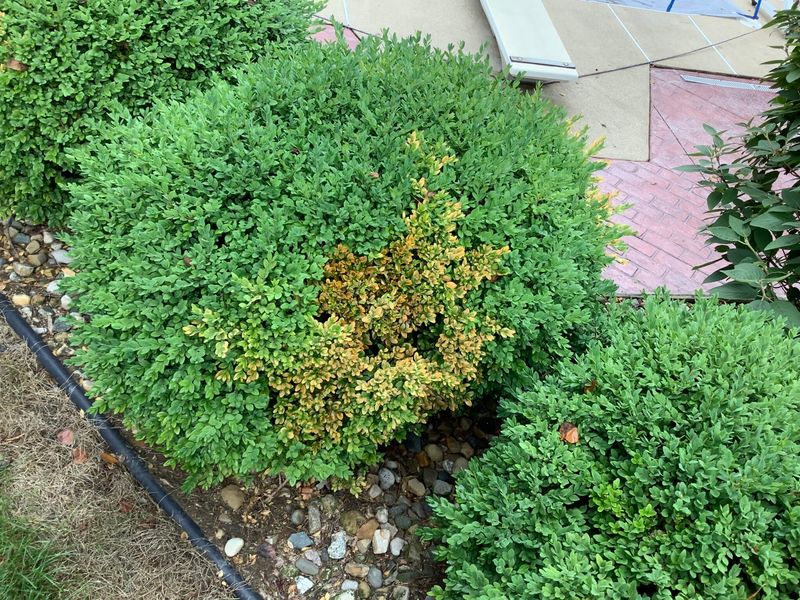
A foundation planting with poor airflow is practically an open invitation for Volutella blight, especially after a rough Ohio winter.
Volutella blight, caused by the fungal pathogen Pseudonectria buxi, tends to show up on plants that have already been weakened by cold injury, pruning wounds, or drought stress.
Ohio State University Extension recognizes it as one of the more common boxwood diseases found in Ohio landscapes.
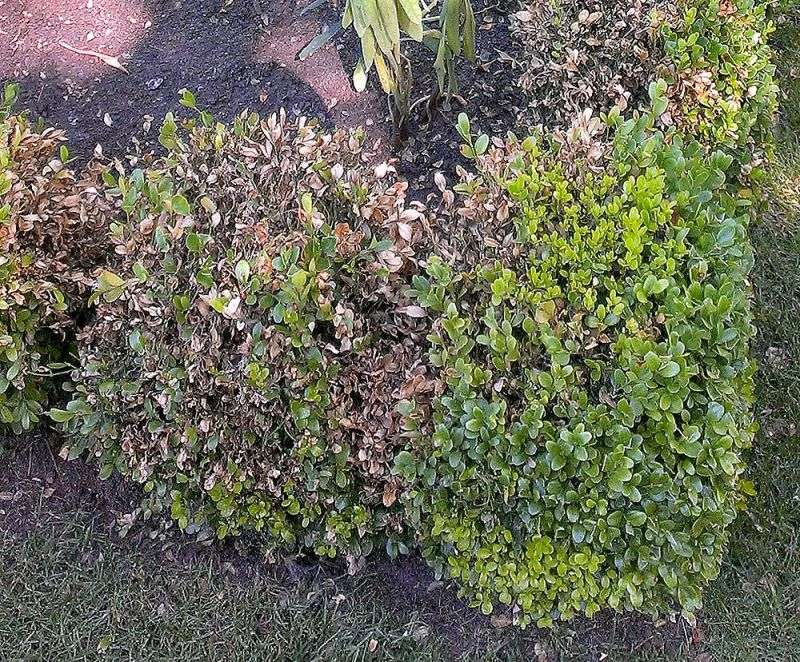
Symptoms include tan or light brown foliage on individual branches, stems with small cankers, and leaves that stay attached rather than dropping cleanly. That last detail matters.
Winter burn also leaves foliage attached and bronzed, so the two problems can look nearly identical from across the yard. Getting closer and checking for cankers or discolored bark on affected stems helps separate disease from simple environmental damage.
Central Ohio landscapes with heavy clay soil and dense foundation plantings are especially susceptible because poor drainage and limited airflow around the base of the plant create conditions where fungi thrive.
Freeze-thaw cycles that crack bark or damage tissue during late winter give Volutella a way in.
Southern Ohio homeowners may notice symptoms appearing earlier in the season as warmer spring temperatures accelerate fungal activity. If multiple branches in one section of the shrub are browning while others nearby look fine, disease rather than weather may be the cause.
4. Prune Out Blighted Branches During Dry Weather
Rainy days feel like good gardening days, but reaching for the pruners while the foliage is wet is one of the fastest ways to spread a fungal disease from branch to branch.
Volutella blight spores move easily on wet surfaces, so waiting for a stretch of dry weather before pruning affected boxwoods makes a real difference in how well management works.
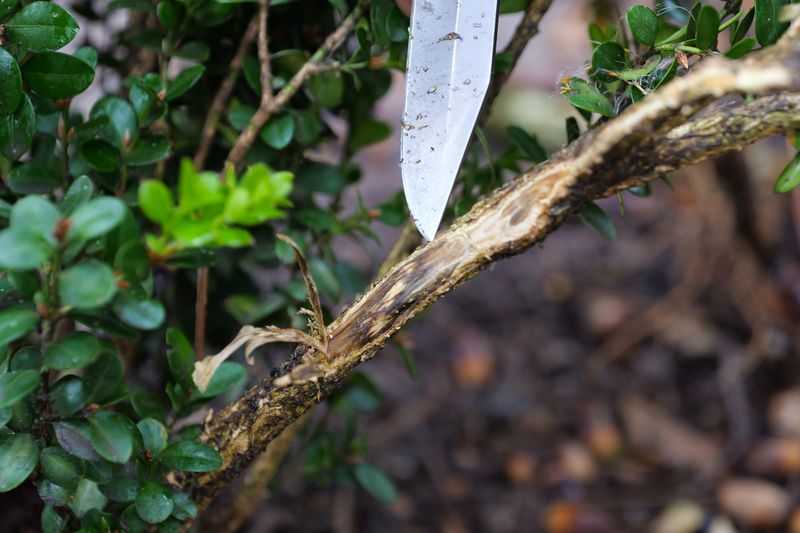
Cut back affected branches to healthy tissue, looking for wood that is green and firm rather than discolored or mushy at the center. Sanitize pruning tools between cuts by wiping blades with a diluted bleach solution or rubbing alcohol when disease is suspected.
Skipping this step can transfer fungal material from an infected branch to a healthy one before the cut even heals.
Remove all pruned debris from the site and bag it rather than leaving it under or around the shrub. Fallen leaves and clippings on the soil surface can harbor fungal spores that splash back onto the plant during rain or irrigation.
Improving airflow by selectively thinning dense interior growth helps the remaining canopy dry faster after rain. Avoid overhead irrigation on boxwoods whenever possible, and switch to drip or ground-level watering if irrigation is needed.
Reducing overall plant stress through appropriate fertilization and mulching also helps boxwoods resist future infection. Heavily blighted shrubs that do not respond to pruning may benefit from professional evaluation.
5. Boxwood Leafminer Can Look Like Winter Burn From A Distance
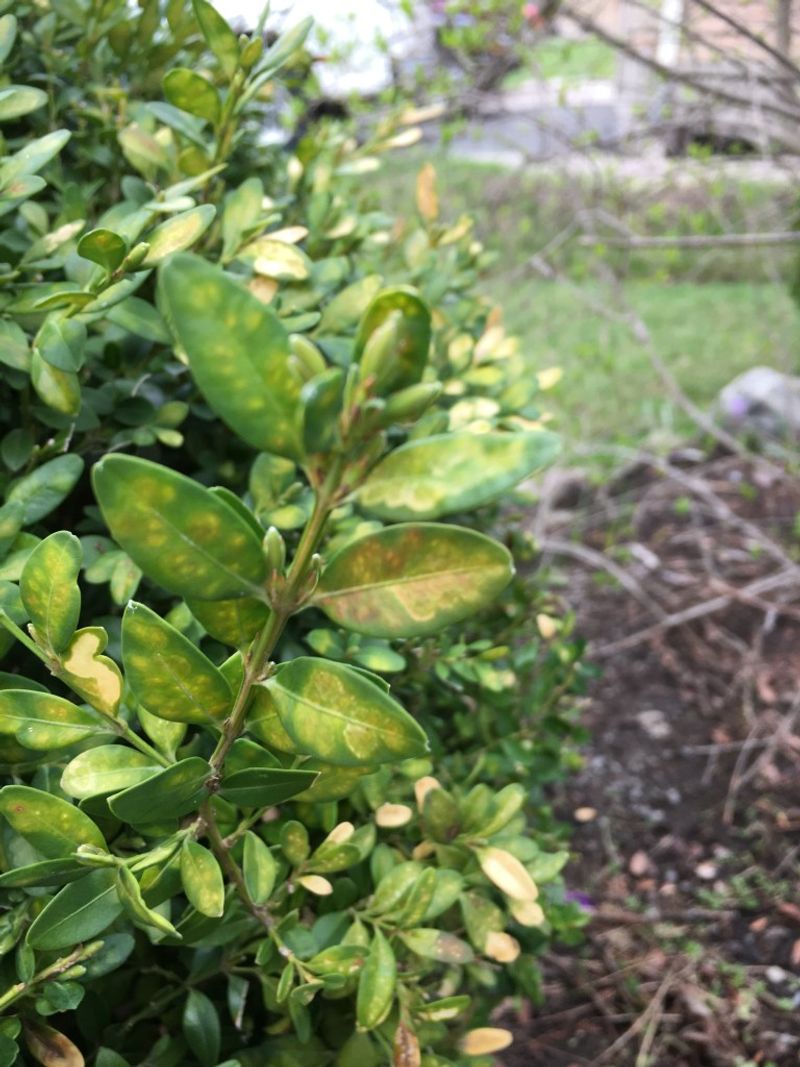
Standing at the edge of a driveway looking at a row of boxwoods, blistered and yellowing foliage can look a lot like frost damage or salt spray from a nearby road.
Boxwood leafminer is a native insect pest in Ohio, and its damage is subtle enough to fool even attentive homeowners until they get up close.
The larvae feed inside the leaf itself, creating a pocket of damage that puffs or blisters the leaf surface from within.
Affected leaves may appear yellowish, orange-tinted, or generally off-color with a slightly swollen texture compared to healthy foliage. The plant can look thin and ragged overall, especially on older growth that has hosted multiple generations of larvae.
Because the feeding happens inside the leaf rather than on the surface, there are no chewed edges or skeletonized patches to give it away from a distance.
Ohio State University Extension notes boxwood leafminer as one of the most common and damaging boxwood pests in Ohio landscapes.
Urban and suburban plantings near sidewalks and driveways may show extra stress from road salt and soil compaction, which can make leafminer damage look even more severe.
American boxwood varieties tend to be more susceptible than some Japanese or Korean types. Switching to a more resistant variety is worth considering for homeowners who deal with leafminer pressure repeatedly in the same location.
6. Split Open Blistered Leaves To Confirm The Pest
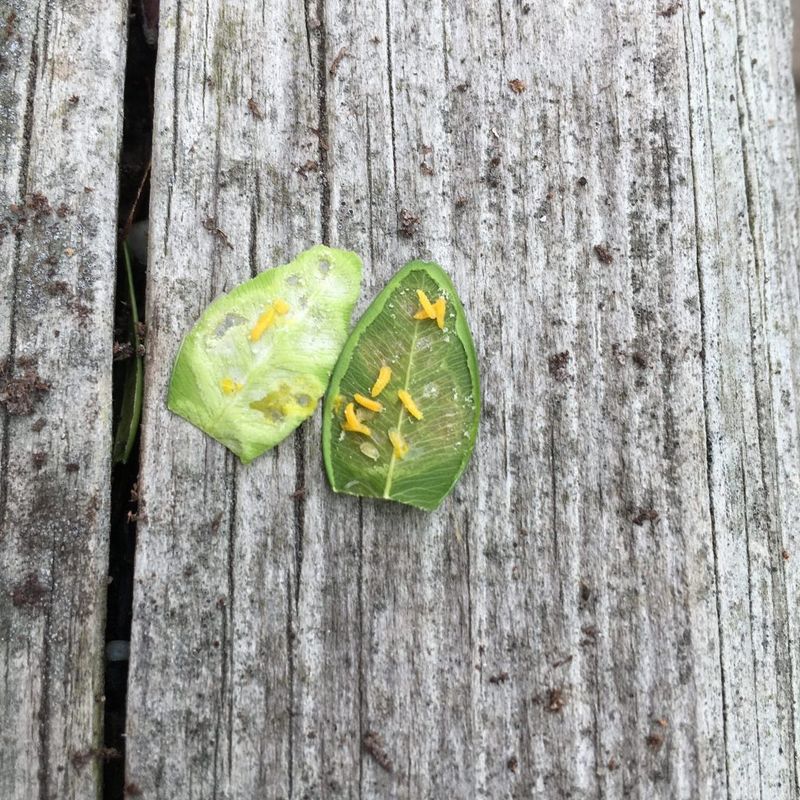
One of the most satisfying confirmations in backyard plant sleuthing is splitting open a suspicious leaf and finding exactly what you suspected inside.
Picking a blistered or swollen boxwood leaf and carefully splitting it open along the edge can reveal tiny orange or yellowish larvae tunneling through the interior tissue.
That single step changes the diagnosis from possible weather damage to confirmed insect pest, and that matters for what comes next.
Adult boxwood leafminers are small orange flies that emerge in spring, often around the time forsythia finishes blooming in Ohio. Females lay eggs directly into leaf tissue, and the larvae feed and develop through the summer before overwintering inside the leaf.
By the time homeowners notice the worst damage in late winter or early spring, the larvae have already completed most of their development cycle.
Proper identification before any treatment is the most practical advice available. Contact a local OSU Extension county office or a certified arborist if splitting leaves does not give you a clear answer.
Pruning out heavily infested growth before adult flies emerge in spring can reduce the next generation of larvae.
If insecticide treatment is being considered, timing and product selection matter significantly, and following current label directions and Extension recommendations is non-negotiable.
Not every leafminer infestation requires a spray response, especially on otherwise healthy shrubs with light to moderate damage.
7. Boxwood Blight Causes Leaf Drop That Winter Burn Does Not
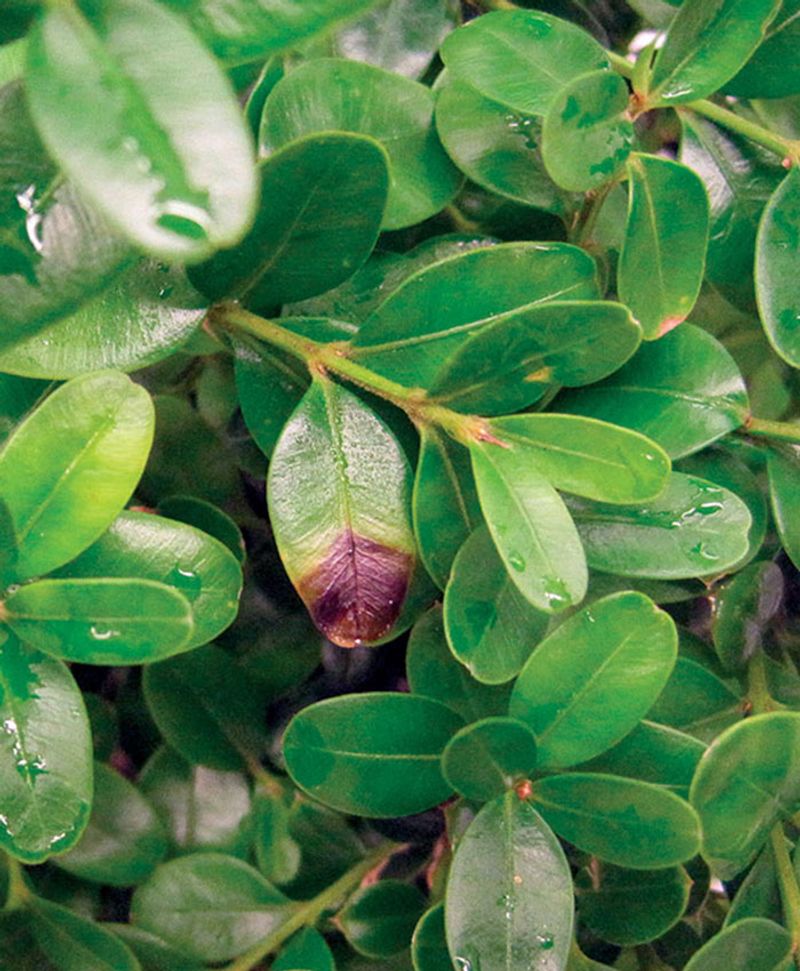
A boxwood that drops its leaves quickly and leaves bare twigs behind is sending a very different signal than one with browned foliage still clinging to branches through spring.
Boxwood blight, caused by the fungal pathogen Calonectria pseudonaviculata, produces a distinctive pattern of rapid defoliation that sets it apart from nearly every other boxwood problem, including winter burn.
Winter burn browns and bleaches foliage, but the leaves stay put. Boxwood blight makes them fall.
Other symptoms include circular tan or brown spots with darker borders on leaves, dark brown or black streaks running along green stems, and rapid spread through a planting when conditions are wet and warm.
The disease can move through a hedge quickly when plants are touching or when water splashes spores from one shrub to another during rain or overhead irrigation.
Boxwood blight is less common in Ohio than Volutella blight or leafminer damage, but it has been confirmed in the state and should not be dismissed when symptoms match. OSU Extension and the C.
Wayne Hingst Plant and Pest Diagnostic Clinic can help confirm a diagnosis. Not every boxwood dropping leaves has blight, and avoiding a panic response before getting confirmation is reasonable.
Some boxwoods do recover from winter stress with some leaf drop, but when bare twigs and black stem streaks appear together, getting a professional opinion is the right call.
8. Bag Suspect Clippings And Avoid Spreading Spores
A pair of dirty pruning shears carried from one shrub to the next is one of the quietest ways a fungal disease spreads across an entire planting.
When boxwood blight or any serious fungal problem is suspected, the cleanup and tool hygiene steps matter just as much as the pruning itself.
Bagging suspect clippings and removing them from the property keeps spores from splashing back onto plants during the next rain.
Do not compost suspect boxwood debris at home. Backyard compost piles rarely reach temperatures high enough to neutralize boxwood blight spores reliably.
Sealed bags placed in household trash or disposed of according to local guidelines are the safer option. Avoid shaking or dropping clippings loosely onto the soil surface around the base of the shrub while working.
Wipe pruning blades with a diluted bleach solution or 70 percent isopropyl alcohol between cuts and between plants. Avoid working around boxwoods when foliage is wet, and skip pruning sessions on rainy or humid days when spore movement is most active.
If symptoms match boxwood blight but confirmation is uncertain, submit a sample to the OSU Plant and Pest Diagnostic Clinic or contact a county Extension office for guidance before pruning extensively.
Staying calm and methodical rather than removing large amounts of plant material without a confirmed diagnosis protects both the shrubs and the surrounding landscape from unnecessary disruption.