How To Level A Bumpy Michigan Lawn Without Any Heavy Machinery Or Expensive Equipment
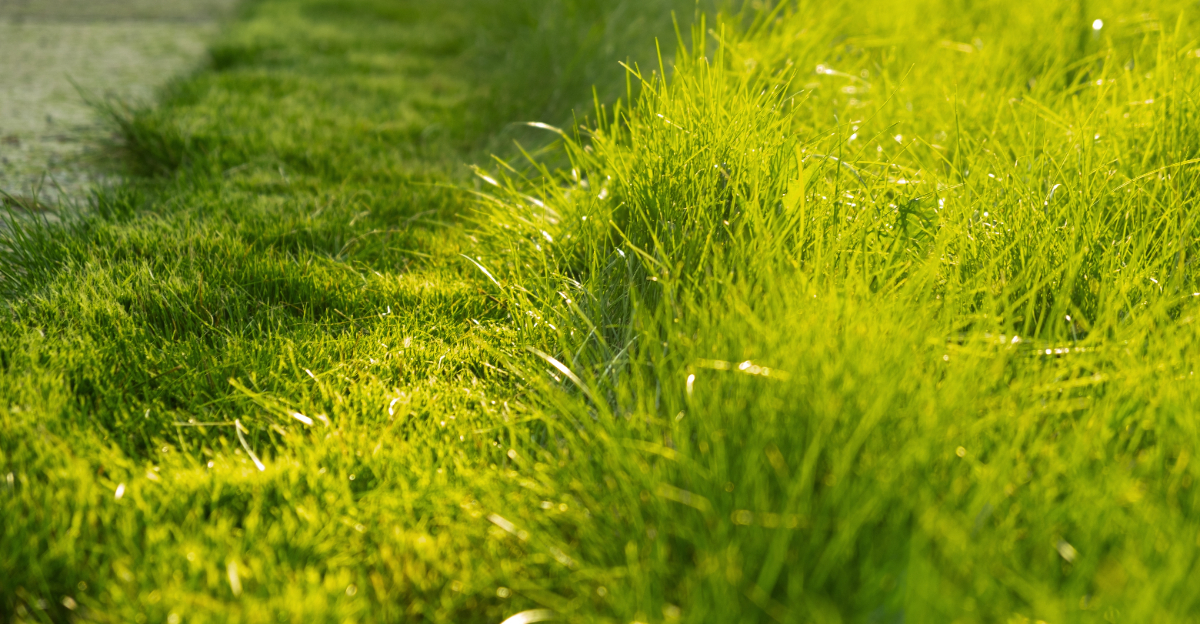
A lawn full of bumps, dips, and uneven patches is more than just an eyesore. It creates tripping hazards, makes mowing frustrating, and often signals underlying drainage or soil issues that get worse if they are not addressed.
The good news is that fixing an uneven Michigan lawn does not require renting equipment or hiring a landscaping crew.
Most homeowners can handle the process with basic tools they either already own or can pick up inexpensively, and the results are genuinely satisfying when the right approach is matched to the right problem.
Michigan lawns develop unevenness for several specific reasons, from freeze thaw cycles heaving the soil each winter to mole activity, settling after construction, or years of thatch buildup that creates an inconsistent surface over time.
Understanding what caused the bumps in your yard is what points you toward the most effective fix, and for most lawns the process is more straightforward than it looks from the surface.
1. Identify The Cause Before Fixing
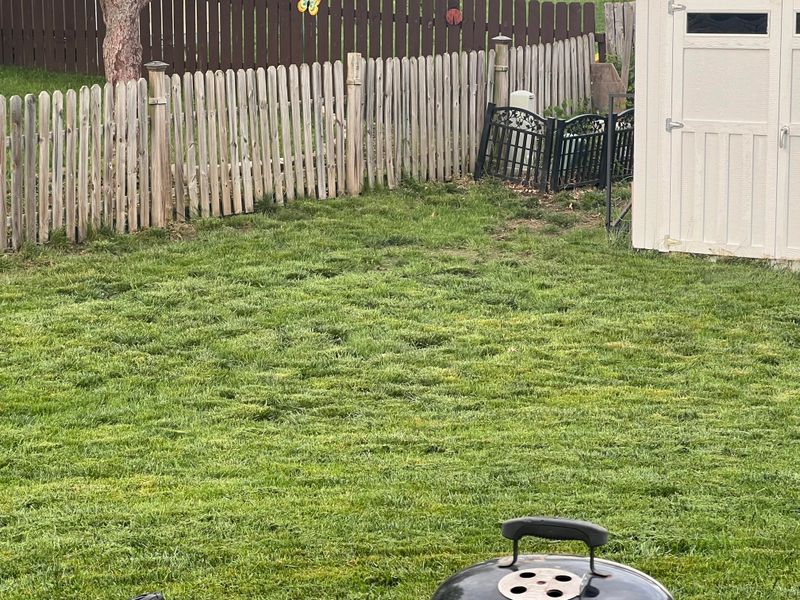
Before you grab a shovel or bag of soil, take a good look at what is actually causing your bumpy lawn. Michigan lawns deal with a unique set of challenges that homeowners in warmer states simply never face.
The freeze-thaw cycle here is one of the biggest culprits, causing soil to heave upward in winter and then sink back down unevenly in spring.
Animal activity is another common problem across Michigan yards. Moles, voles, and even earthworms can push soil around and create small ridges and soft spots throughout your turf.
Compacted clay soil, which is extremely common in Michigan, can also cause water to pool and soil to settle unevenly over time.
Drainage issues are worth checking too. If water consistently flows toward certain spots in your yard, those areas will erode and sink faster than the rest.
Poor grading around your foundation can make this even worse, especially after heavy Michigan rains.
Fixing the root cause first saves you a lot of repeated effort. If moles are tunneling through your yard, address that problem before adding fresh topdressing.
If drainage is pulling soil away, correct the slope or install a simple French drain. Spending 30 minutes identifying the real problem upfront means you will not be re-leveling the same spots every single season.
2. Use A Topdressing Mix, Not Straight Soil
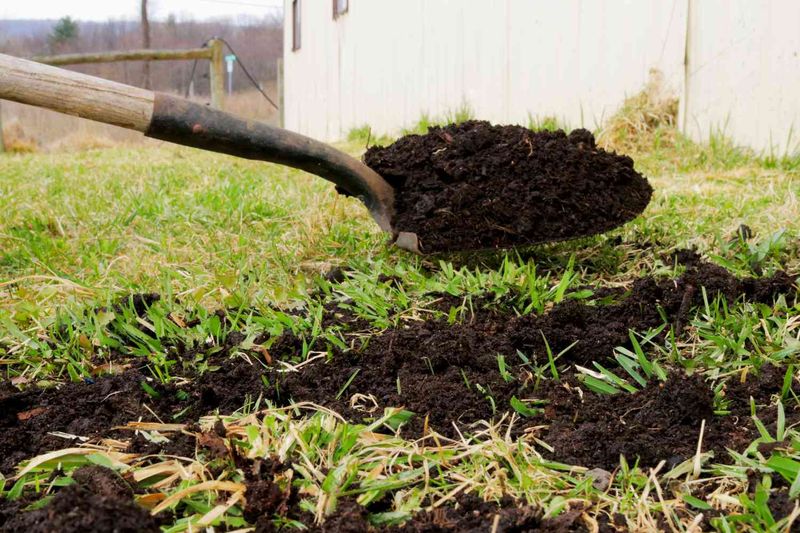
Grabbing a bag of straight topsoil from your local Michigan hardware store and dumping it on your lawn might seem like the easiest fix, but it can actually make things worse.
Pure topsoil, especially the clay-heavy varieties common throughout Michigan, tends to compact tightly once it dries out.
That compaction can smother your grass roots and create a hard layer that blocks water from reaching the soil below.
A much better approach is to blend screened topsoil with compost, typically in a 50/50 ratio or close to it. The compost adds organic matter that keeps the mix loose and airy even after it settles.
Your grass roots will push through it much more easily, and the mix will hold just enough moisture without becoming waterlogged during Michigan spring rains.
Your Michigan Garden Changes Every Week. Your Plan Should Too.
Gardening in Michigan changes quickly throughout the season. Every Friday you’ll receive a simple weekly plan showing exactly what to plant, prune, fertilize, harvest, and protect so you never miss the right timing.
You can find bagged topdressing blends at most Michigan garden centers in spring and early fall. Some homeowners also mix in a small amount of fine sand to improve drainage, though this works best when combined with compost rather than used alone.
Sand mixed directly into clay soil without organic matter can actually create a concrete-like texture over time.
Mixing your topdressing correctly takes only a few extra minutes but makes a real difference in how well your lawn recovers. Your grass will fill in faster, your soil will stay healthier, and your leveling results will last much longer through Michigan winters.
3. Fill Low Spots Gradually
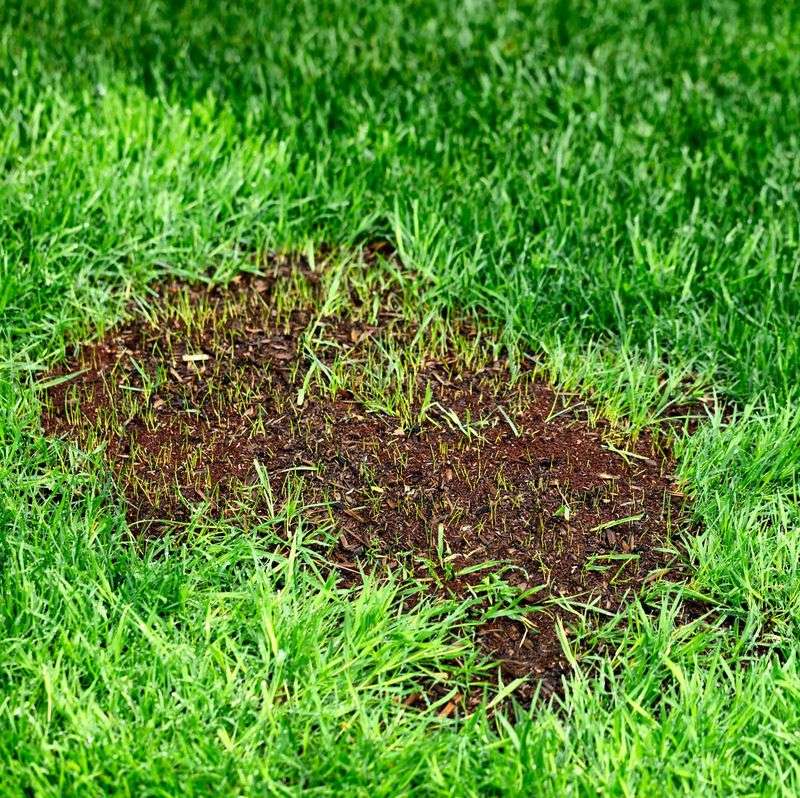
One of the most common mistakes Michigan homeowners make when leveling their lawn is trying to fix everything in a single afternoon. Piling on several inches of topdressing at once might look like progress, but it almost always smothers the grass underneath.
When grass blades get buried too deeply, they cannot get enough sunlight to survive, and you end up with bare patches instead of a smooth lawn.
The smarter approach is to add no more than half an inch to one inch of topdressing at a time over any existing grass. That thin layer still allows sunlight to reach the grass blades, giving them a chance to grow up through the new material naturally.
Over a few weeks, you will see the grass push right through, and the area will begin to look much more even.
For spots that are more than two inches deep, you may need to repeat the process several times across multiple weeks. Patience really pays off here.
Each thin application settles and firms up before the next one goes down, which creates a much more stable and long-lasting result than one heavy dump of soil.
Michigan lawns respond especially well to this gradual method during the growing season when grass is actively pushing upward.
Spring and early fall are ideal times to tackle low spots because the cooler temperatures help the grass recover quickly between applications without heat stress slowing things down.
4. Rake And Smooth Evenly
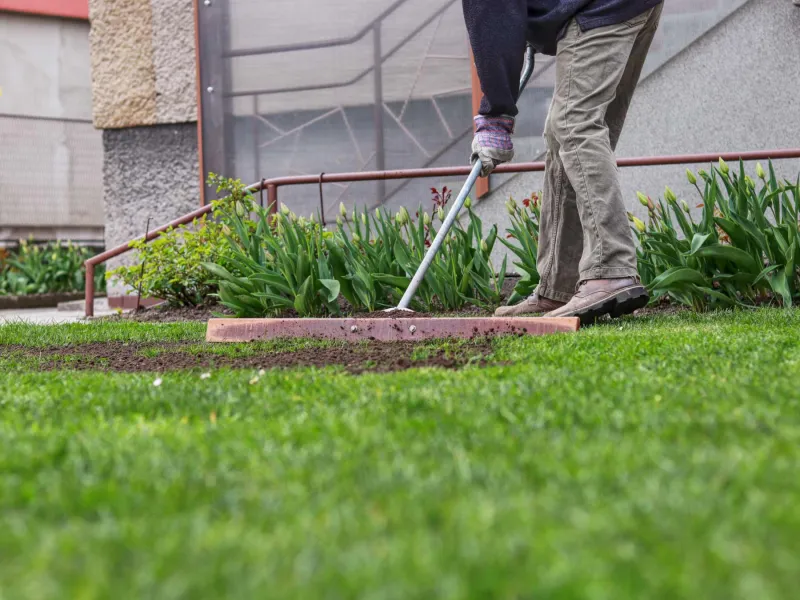
Once you have your topdressing mix ready and in place, how you spread it matters just as much as what you use. A wide landscape rake or a dedicated leveling rake is your best friend for this job, and neither one costs very much at Michigan garden and hardware stores.
These tools let you push and pull material across the surface with much more control than a standard garden rake.
The key technique here is called feathering, and it makes a huge difference in how natural your lawn looks when you are finished. Instead of creating a hard edge where the topdressing ends, you gradually blend the material outward so the transition between the filled area and the surrounding lawn is smooth and invisible.
Think of it like frosting a cake, blending the edges so nothing looks abrupt. Work in multiple directions when you rake. Going back and forth in one direction can create small ridges or uneven lines in the material.
Crossing your strokes in two or three different directions helps distribute the mix more uniformly and fills in any tiny gaps you might miss on the first pass.
Stand back and look at the area from different angles after each pass. Your eyes will catch high and low spots that your hands might miss while raking.
Taking that extra moment to evaluate your work helps you catch problems while the material is still loose and easy to adjust before it settles into place.
5. Level After Rain Or Light Watering
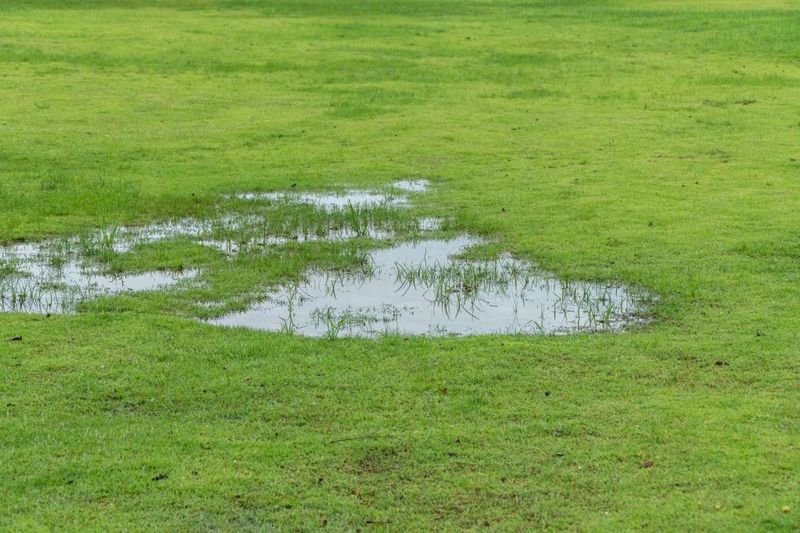
Timing your lawn leveling project around soil moisture is a detail that most people overlook, but it truly changes how easy and effective the whole process becomes.
Dry, cracked soil is hard to work with because it resists settling and the topdressing material tends to shift around rather than integrating with the ground underneath. Slightly moist soil, on the other hand, is pliable and cooperative.
The best window to work in Michigan is usually the day after a moderate rain or shortly after you have given the lawn a light watering. The soil should feel damp when you press it but should not squish or leave muddy prints under your shoes.
That sweet spot of moisture makes raking and spreading much smoother and helps the topdressing bond with the existing soil more effectively.
Avoid working your Michigan lawn when the soil is completely saturated, especially in areas with heavy clay content.
Wet clay compacts easily under foot traffic, and walking across a waterlogged lawn while carrying a wheelbarrow of topdressing can create new compaction problems that are harder to fix than the original bumps you started with.
If you are unsure whether the soil is ready, dig a small test hole about two inches deep with a trowel. The soil at that depth should hold its shape when you squeeze it but crumble apart easily when you poke it.
That texture means conditions are just right for leveling work in your Michigan yard.
6. Overseed After Leveling
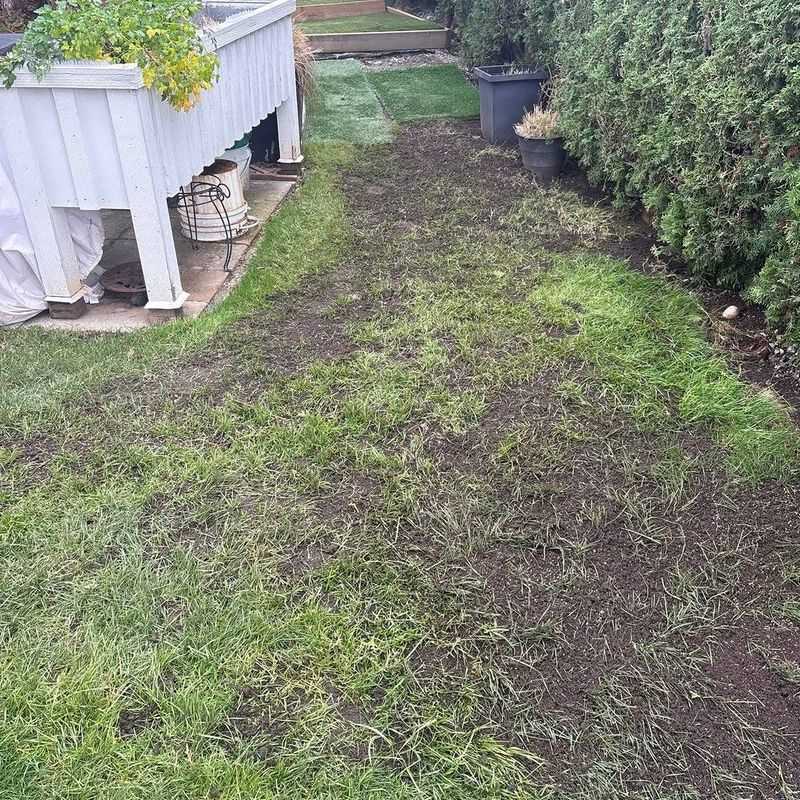
Spreading topdressing over your lawn is only half the job. Once you have smoothed out those low spots, the filled areas often look thin or bare because the existing grass was buried or disturbed during the leveling process.
Overseeding those areas fills them back in with fresh, healthy turf that will knit together with the surrounding lawn and hold the leveled soil in place.
Michigan is home to some excellent cool-season grasses that thrive in this climate, including Kentucky bluegrass, tall fescue, and perennial ryegrass.
All three of these establish well when seeded in spring once overnight temperatures stay above 50 degrees, or in early fall when soil temperatures are still warm but air temperatures have cooled down.
Fall is actually the preferred time for most Michigan lawn experts because weed competition is lower and moisture is more reliable.
Spread your seed at the rate recommended on the package for overseeding, which is typically lower than the rate for starting a lawn from scratch. Lightly rake the seed into the top of the topdressing so it has good soil contact, which dramatically improves germination rates.
Keep the seeded areas consistently moist for the first two weeks until you see consistent sprouting across the patch.
Avoid heavy foot traffic on freshly seeded areas. Even a few footprints can displace seed and create uneven germination.
A little temporary fencing or even some sticks and string can remind family members to walk around the reseeded spots while the new grass gets established.
7. Roll Lightly Or Let Soil Settle Naturally
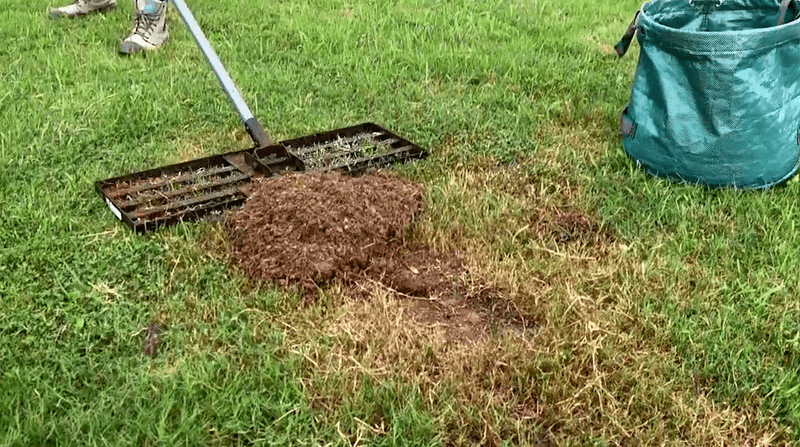
After all your topdressing, raking, and seeding work is done, the final step is helping that fresh material settle firmly into the lawn surface. Some Michigan homeowners like to use a light lawn roller for this step, and it can be a helpful tool when used correctly.
You can rent a small manual roller at most Michigan equipment rental shops for a very reasonable daily rate, making it an affordable option without buying anything new.
The critical word here is light. A roller that is too heavy will compact your freshly applied mix and the soil underneath, undoing much of the good work you just put in.
If you choose to roll, fill the roller only partially with water so the weight stays low. One or two slow passes across the area is all you need to press the topdressing gently into contact with the existing soil.
Rolling is entirely optional, though. Many Michigan lawn owners skip it altogether and simply let natural settling do the work over time.
Rain, foot traffic, and the natural movement of soil organisms will settle the material just as effectively within a week or two. Nature is surprisingly good at evening things out on its own.
Whichever approach you choose, keep an eye on the treated areas over the following weeks. Michigan weather can be unpredictable, and a heavy rain right after leveling can wash topdressing out of low spots.
A quick touch-up with a rake after a big storm keeps your hard work looking great and gives your Michigan lawn the smooth, even surface it deserves.