North Carolina Gardeners Can Turn Bare Fences Into Green Walls With These Fast-Climbing Plants
A bare fence can make even a lovely North Carolina yard feel a little unfinished. It is just sitting there, doing its best, but it could be doing so much more.
Add the right climbing plant, and that plain stretch of wood or wire can start to feel lush, colorful, and a whole lot more inviting. Fast-growing vines are especially tempting when privacy is on your mind or when a fence line needs softening in a hurry.
Some bring flowers, some bring dense green coverage, and some do both without much fuss. That is where things get fun.
A fence can go from flat and forgettable to leafy and full of personality surprisingly quickly. Of course, growth depends on basics like sun, soil, moisture, and support.
Still, North Carolina gardeners have some excellent choices for turning a bare fence into something that feels alive.
And honestly, a fence covered in vines is a lot more charming than one that just stands there looking awkward.
1. Crossvine Covers In A Flash
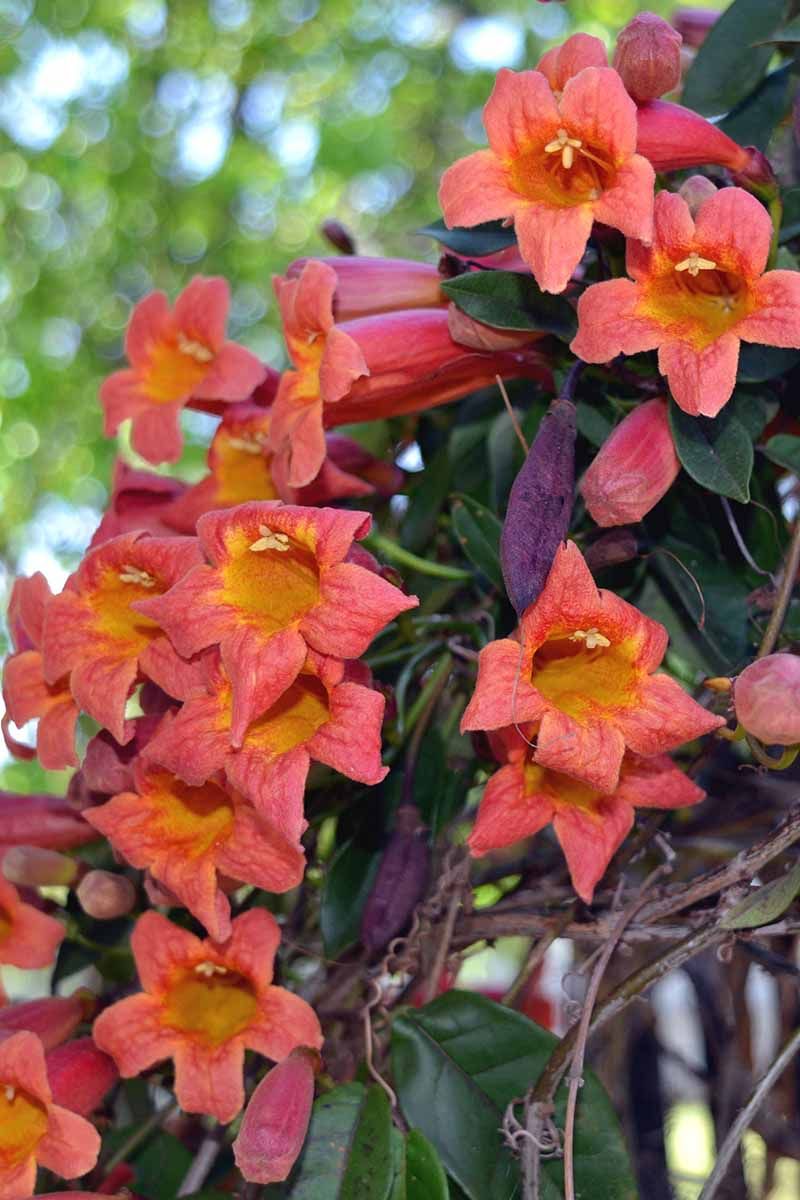
Few vines put on a show quite like crossvine when spring rolls around in North Carolina. This semi-evergreen native climber produces clusters of bold, trumpet-shaped flowers in shades of orange, red, and yellow that are hard to miss from across a yard.
Hummingbirds and bees find it almost impossible to pass by without stopping, making it a strong choice for gardeners who want both coverage and pollinator appeal along a fence.
Crossvine earns its reputation as a fast grower through its tendrils and adhesive discs, which allow it to grip wood, wire, chain-link, and even brick with very little help.
In warm North Carolina summers with good moisture and full sun, established plants can push out several feet of new growth in a season.
The Piedmont and Coastal Plain regions often see the most vigorous performance, though it grows well in the mountains too with the right exposure.
One thing worth noting is that crossvine can spread wider than some gardeners expect over time, so giving it a sturdy fence and some seasonal pruning helps keep it manageable.
It holds onto its leaves through mild winters across much of North Carolina, which means the fence stays covered even when temperatures dip.
For gardeners who want quick coverage with a spectacular spring bloom, crossvine is a strong contender worth planting sooner rather than later.
2. Woolly Pipevine Builds A Leafy Screen
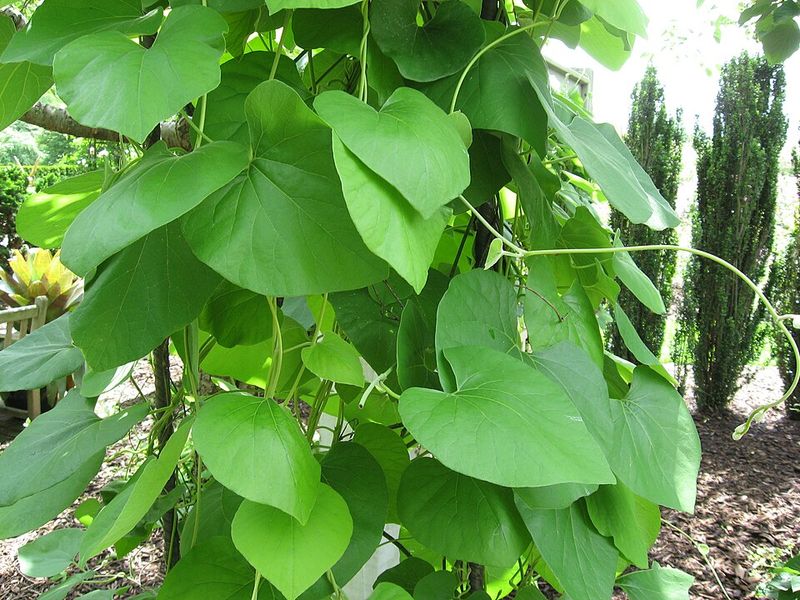
Big, overlapping leaves are the main attraction when woolly pipevine gets going on a fence, and in North Carolina, that leafy screen can develop impressively fast once the plant settles in.
Aristolochia tomentosa is a native vine that produces large, heart-shaped leaves with a soft, slightly fuzzy texture that gives the plant its common name.
The dense foliage stacks up quickly in warm weather, creating a thick green wall that provides real visual privacy along a property line or side yard fence.
The flowers are small and pipe-shaped, tucked beneath the foliage where they are easy to miss unless you look closely.
Your North Carolina Garden Changes Every Week. Your Plan Should Too.
Gardening in North Carolina changes quickly throughout the season. Every Friday you’ll receive a simple weekly plan showing exactly what to plant, prune, fertilize, harvest, and protect so you never miss the right timing.
What makes woolly pipevine especially exciting for North Carolina gardeners is its role as the host plant for the pipevine swallowtail butterfly, one of the more striking butterflies you can attract to a yard.
Planting this vine near a fence is essentially sending out an open invitation to one of nature’s most beautiful pollinators.
Woolly pipevine grows best in partial to full sun and appreciates consistent moisture, particularly during its first season while roots are getting established.
It twines around supports rather than gripping with adhesive pads, so giving it wire, lattice, or a slatted fence helps it climb more efficiently.
Across the Piedmont and mountain regions of North Carolina, it tends to perform reliably, though Coastal Plain gardeners may want to watch moisture levels during dry stretches to keep growth steady and strong.
3. Virginia Creeper Fills Space Fast
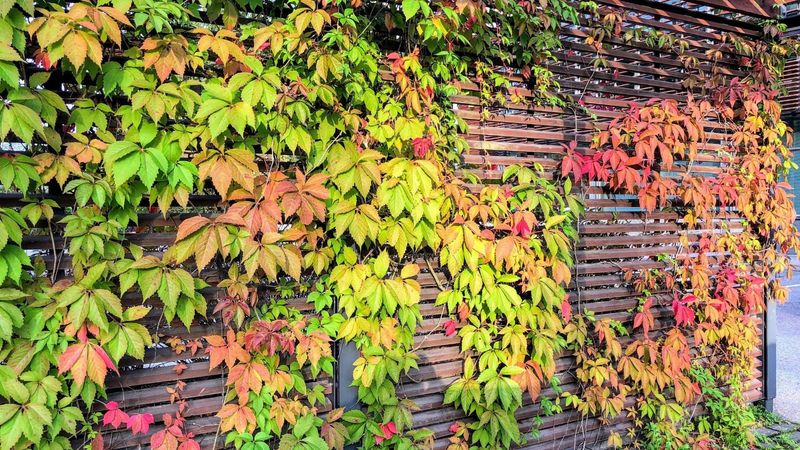
There is something almost relentless about the way Virginia creeper moves across a fence once it finds its footing.
This tough, adaptable native vine is one of the most reliably fast fence-fillers available to North Carolina gardeners, pushing out long stems covered in five-lobed leaves that create a full, layered look across a fence surface in a single growing season.
It handles sun, shade, clay soil, and dry spells with a kind of casual resilience that most other vines cannot match.
Virginia creeper attaches to surfaces using small adhesive pads at the tips of its tendrils, which means it can climb wood, brick, chain-link, and vinyl fencing without needing extra support in many cases.
The foliage is green through summer and then shifts to brilliant shades of red and crimson in fall, giving the fence a whole new personality just when most other plants are winding down for the season.
That autumn color display is one reason so many North Carolina gardeners keep it around even when they could choose something else.
The main thing to keep in mind is that Virginia creeper is genuinely vigorous and will spread into nearby areas if left unchecked.
Seasonal trimming keeps it looking intentional rather than overgrown, and it responds well to cutting back without much fuss.
Across all three regions of North Carolina, from the mountains to the Coastal Plain, this vine tends to establish quickly and fill fence lines with satisfying speed and seasonal interest.
4. American Wisteria Climbs With Less Chaos
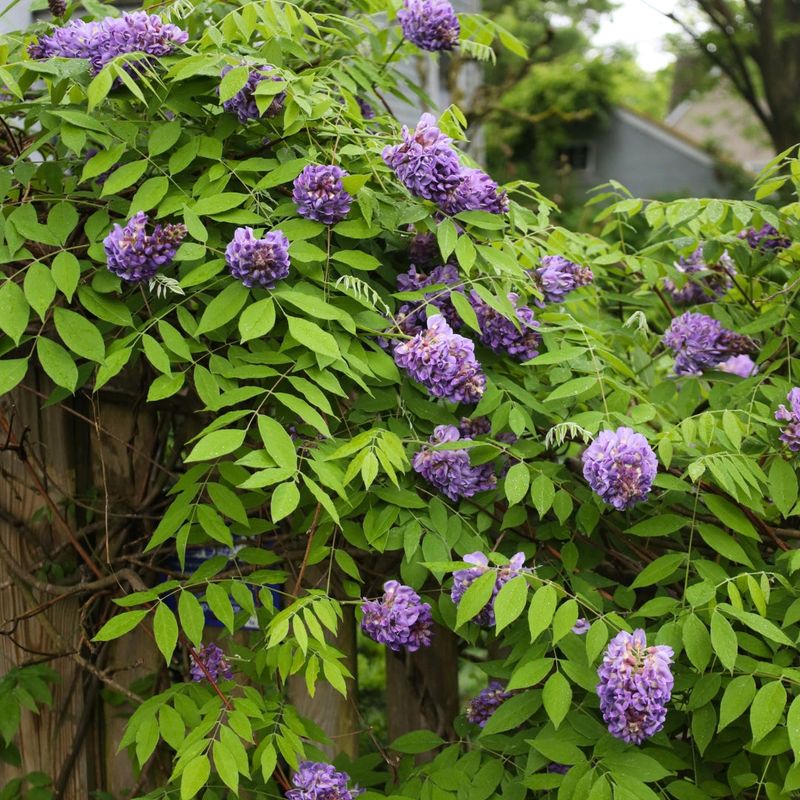
Wisteria has a complicated reputation in the South, and for good reason, but American wisteria offers a way to enjoy the drama of cascading flower clusters without the aggressive spread that makes the Asian species so problematic in North Carolina landscapes.
Wisteria frutescens is a native species that blooms with fragrant, lavender-purple flower clusters in spring and often reblooms in summer, giving a fence a romantic, cottage-garden quality that few other vines can match during the growing season.
Compared to its invasive Asian relatives, American wisteria is more restrained in its growth habits, though restrained does not mean slow.
It climbs by twining its stems around supports and can cover a substantial section of fence within a few seasons when given good sun and consistent moisture.
The Piedmont region of North Carolina tends to be especially well-suited to its performance, though it grows across a wide range of the state with some variation in timing and bloom intensity.
Because wisteria is a strong twiner, it needs a fence or trellis that can handle the weight and pressure of mature stems over time. Lightweight or flimsy structures may struggle under a well-established plant.
Pruning twice a year, once after bloom and once in late summer, helps manage the size and encourages better flowering the following season.
For North Carolina gardeners who want a flowering vine with real visual impact and manageable habits, American wisteria is a rewarding choice along a sturdy fence.
5. Passionflower Runs With Summer Energy
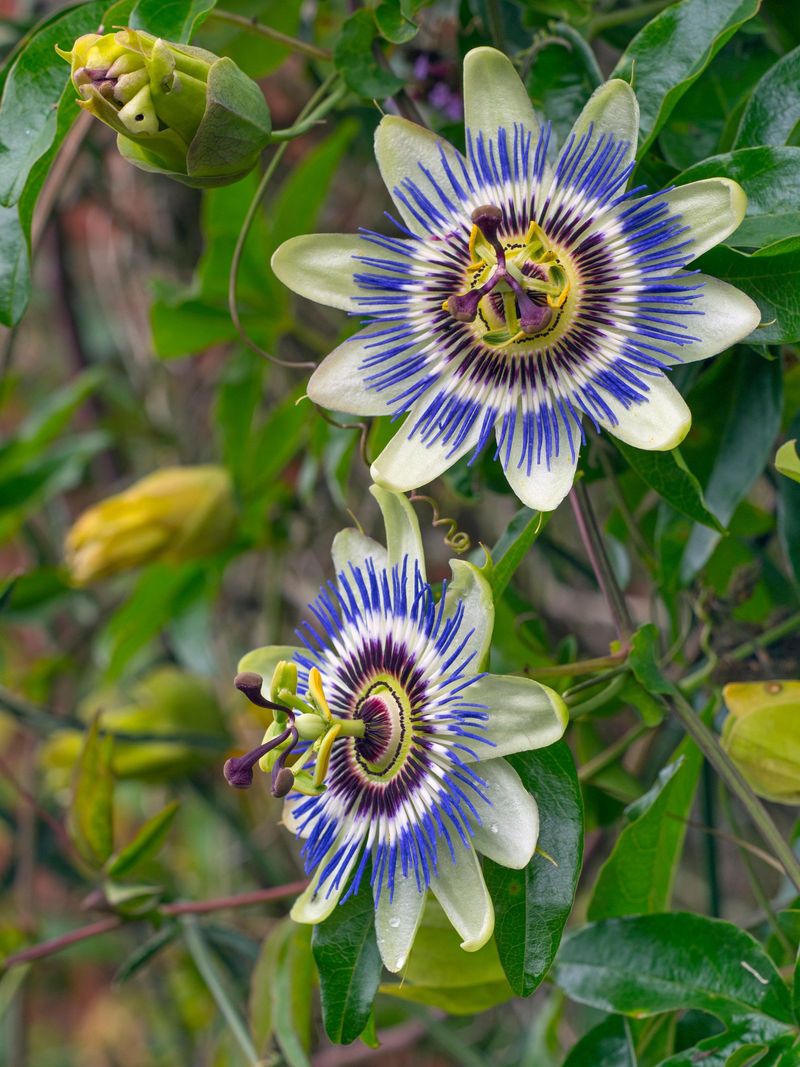
Passionflower has a way of stopping people in their tracks the first time they see it in bloom.
The flowers of Passiflora incarnata are genuinely exotic-looking, with fringed purple and white petals arranged around a complex center structure that looks like something from a tropical garden rather than a native North Carolina vine.
And yet this is a true North American native that grows enthusiastically across much of the state, particularly in sunny spots with well-drained soil.
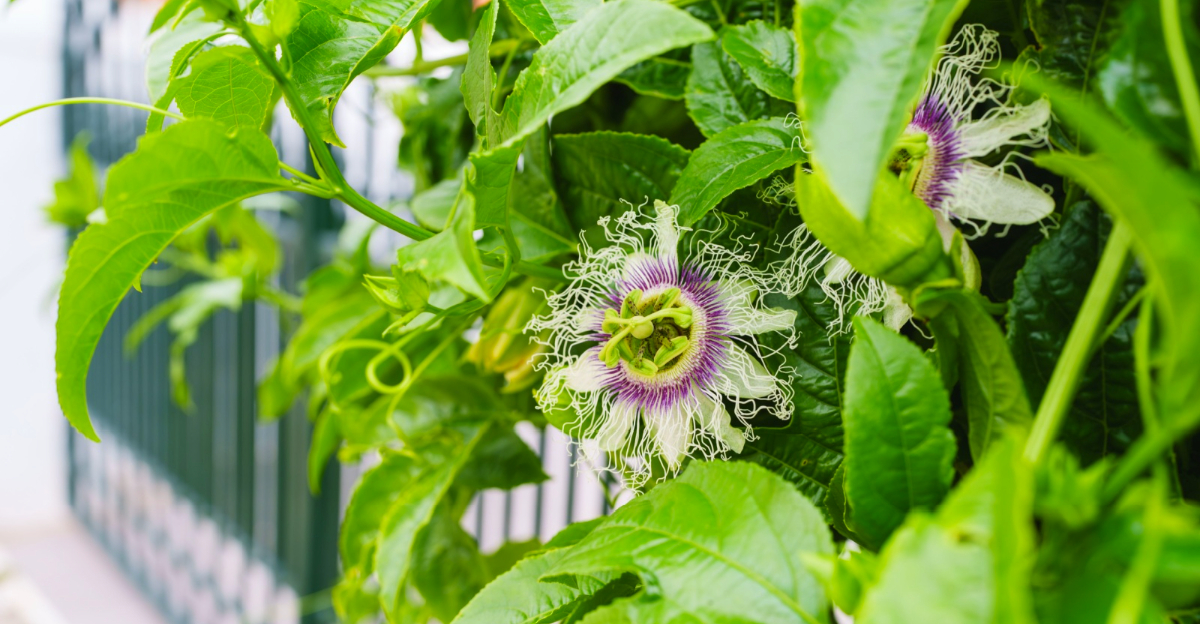
Once established, passionflower grows with real summer energy, sending out tendrils that grab onto fence wire, lattice, and wooden slats as it climbs toward the light.
It can cover a fence section surprisingly quickly during the warm months, producing flowers from early summer through fall that attract native bees, bumblebees, and the larvae of gulf fritillary and zebra longwing butterflies.
The combination of fast climbing, striking blooms, and wildlife value makes it a genuinely useful vine for North Carolina fence lines.
One thing to keep in mind is that passionflower spreads through underground runners and can pop up in nearby garden beds or lawn areas over time. Managing the spread with occasional edging or root pruning keeps it contained without much effort.
In the Coastal Plain and Piedmont, it tends to be especially vigorous, while mountain gardeners may see slightly slower growth depending on elevation and temperature.
The yellow-green fruits that follow the flowers are edible and attract wildlife, adding one more reason to welcome this vine into the yard.
6. Trumpet Honeysuckle Climbs With Color
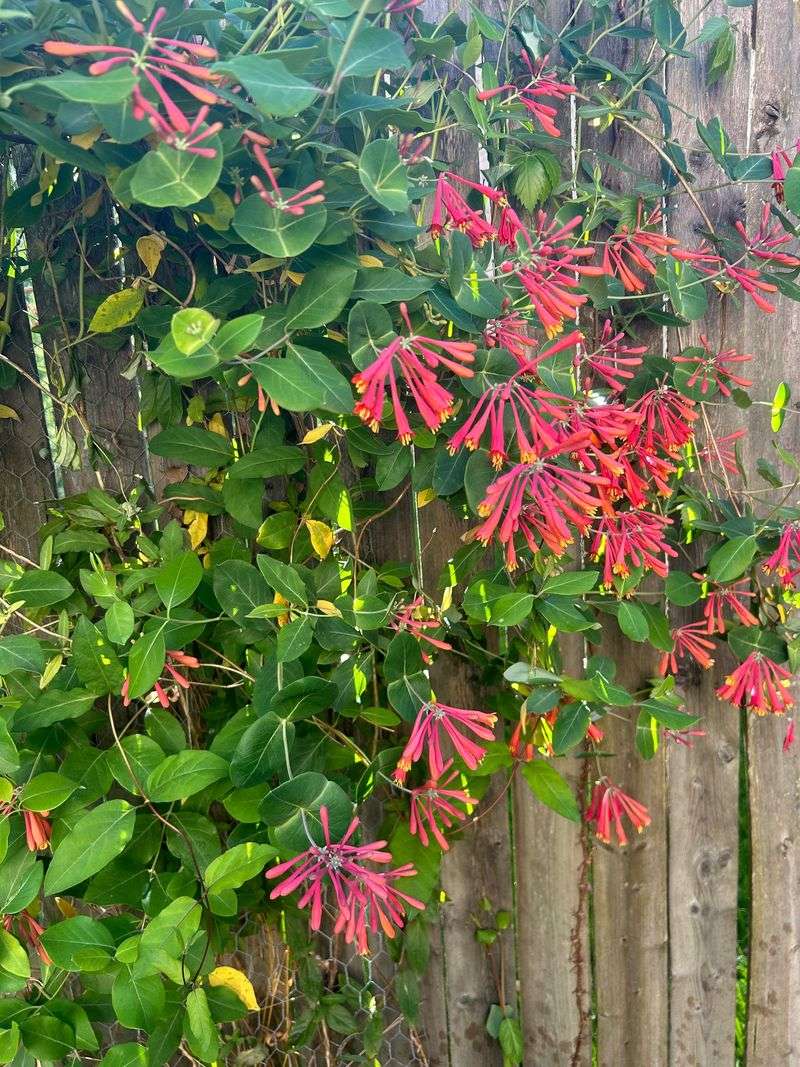
Hummingbirds seem to have a radar for trumpet honeysuckle, and once this native vine starts blooming on a North Carolina fence, the aerial visits become a regular part of the backyard experience.
Lonicera sempervirens produces long, tubular flowers in shades of red, coral, and orange that are tailor-made for hummingbird bills, and it blooms from spring well into summer with occasional flushes of color into fall depending on growing conditions and pruning habits.
Unlike the invasive Japanese honeysuckle that has spread aggressively across North Carolina roadsides and woodland edges, trumpet honeysuckle is a well-behaved native that climbs by twining rather than rooting at every node.
It covers fence sections with attractive foliage and steady upward growth, and while it may not be the absolute fastest vine on this list, it earns its place through reliable performance and the wildlife value it brings to a yard.
The semi-evergreen foliage also means the fence stays partially covered even through mild North Carolina winters.
Trumpet honeysuckle grows well across most of North Carolina in full sun to partial shade, and it appreciates consistent moisture during the establishment period.
A fence with wire, lattice, or horizontal rails gives the twining stems the kind of support they need to move upward efficiently.
Some gardeners train the stems manually in the first season to encourage even coverage across the fence surface.
With a little patience and the right support structure, this vine rewards North Carolina gardeners with color, wildlife activity, and year-round fence presence.
7. Carolina Jessamine Covers With Grace
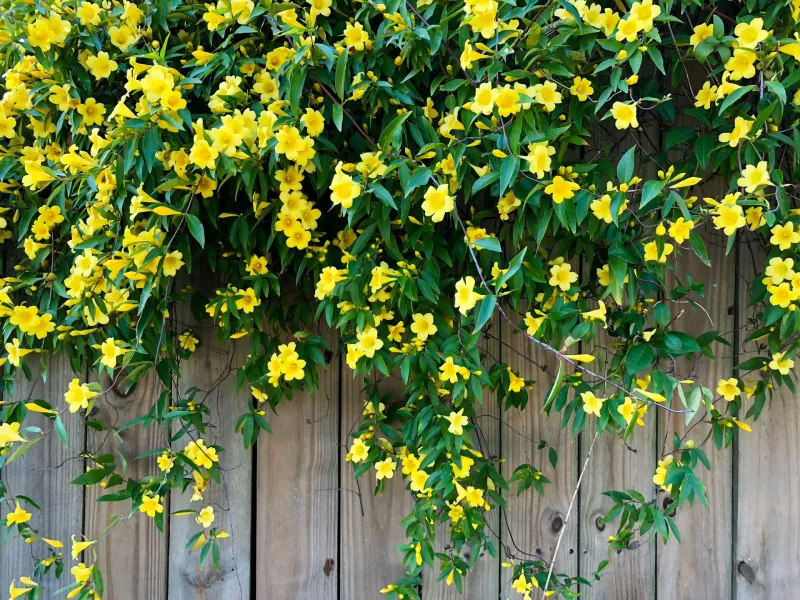
Walk past a fence draped in Carolina jessamine on a warm late-winter morning in North Carolina, and the sweet fragrance hits you before you even see the flowers.
Gelsemium sempervirens is the state flower of South Carolina and a beloved ornamental vine across the Southeast, producing bright yellow, funnel-shaped blooms that often appear as early as February or March when most other plants are still dormant.
That early bloom makes it a standout along a fence during a season when color is hard to come by.
Carolina jessamine is an evergreen twining vine that moves steadily up fences, trellises, and arbors, building a dense layer of glossy green foliage that keeps the fence covered year-round.
In the Coastal Plain and Piedmont regions of North Carolina, it tends to establish and spread quickly, while mountain gardeners may find it slightly slower or less cold-hardy depending on elevation.
Full sun to partial shade suits it well, and once established, it handles drought and moderate neglect with reasonable grace.
One important note for households with children or pets is that all parts of Carolina jessamine contain alkaloids and should not be eaten. This does not make it unsuitable for a fence garden, but it is worth knowing before planting.
The vine responds well to pruning after bloom, which helps keep it tidy and encourages denser coverage the following season.
For North Carolina gardeners who want a polished, fragrant, year-round green wall with early spring color, Carolina jessamine earns a strong recommendation.
8. Virgin’s-Bower Takes Off Quickly
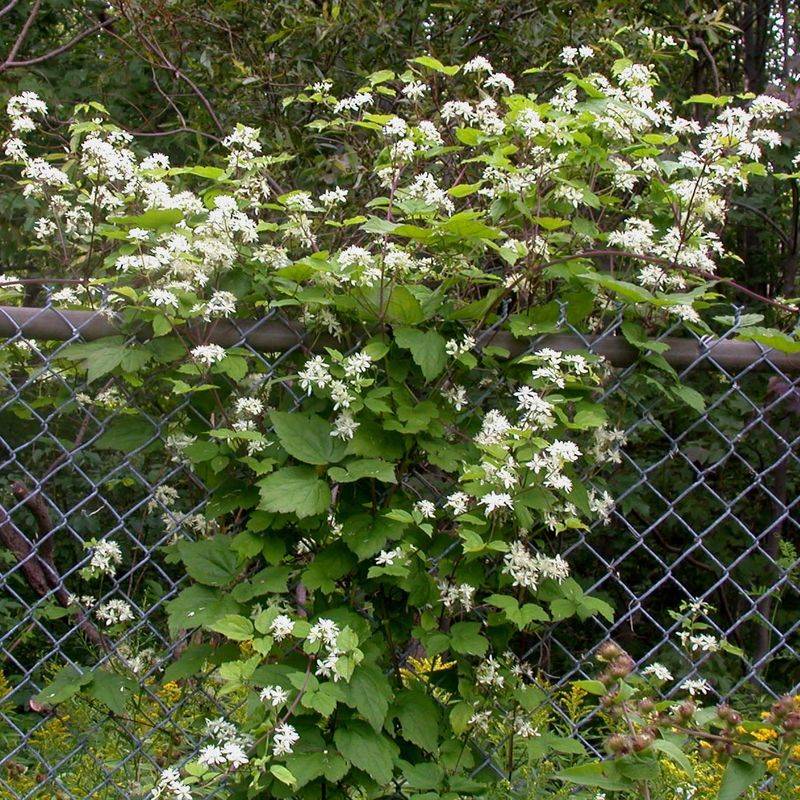
By late summer and into fall, when many flowering vines have already peaked, virgin’s-bower puts on a frothy, cloud-like display of small white flowers that blankets a fence with surprising density.
Clematis virginiana is a native clematis species found across much of North Carolina, and it climbs fast enough during the growing season to cover a substantial fence section from a standing start in a single year under good conditions.
The feathery, silvery seed heads that follow the flowers add a second season of visual interest that carries the display into early winter.
This vine climbs by wrapping its leaf petioles around fence wire, lattice, and thin rails, so giving it something slender to grab makes a real difference in how quickly it moves upward.
It grows naturally along woodland edges, stream banks, and fence rows across the state, which tells you something about its adaptability.
Full sun to partial shade, consistent moisture, and decent soil give it the fuel it needs to really take off in a North Carolina yard.
Virgin’s-bower spreads by seed, and in a garden setting that means seedlings can appear nearby in subsequent seasons. Removing spent flower heads before seeds fully mature helps reduce self-seeding if spread is a concern.
That said, many North Carolina gardeners welcome the volunteers as an easy way to fill in additional fence sections without purchasing new plants.
For a fast-climbing native vine with late-season charm and genuine ecological value, virgin’s-bower brings a lot to a fence line with relatively little fuss.