Invasive Plants North Carolina Homeowners Are Urged To Remove This Spring
Spring in North Carolina has a sneaky side. One minute the yard is waking up with fresh green growth, and the next minute something aggressive is racing over the fence, climbing a tree, or filling every open patch like it pays rent.
A lot of invasive plants look harmless at first. Some are even annoyingly pretty.
That is part of the problem. These plants do a lot more than crowd a flower bed.
They can push native plants out of the picture, weaken local ecosystems, carry pests and diseases, damage forests, and in some cases even add to fire risk. That is a big mess for one yard plant to cause.
Human activity has helped speed things along too, especially through landscaping choices and the movement of plants across regions. That is why spring matters so much in North Carolina.
New growth makes invasive plants easier to spot, and early action can be much simpler than wrestling with a jungle by summer. Catch them now, and your future self may be deeply grateful.
1. English Ivy Covers Fast But Causes Bigger Problems
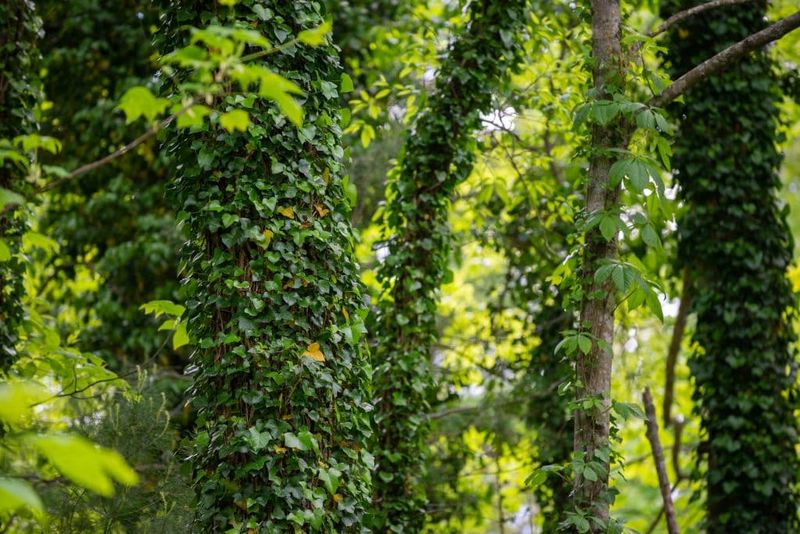
Few plants look as tidy as English ivy creeping along a shaded slope or climbing a brick wall, but that polished appearance hides a plant that can quietly take over large areas of a North Carolina yard before most homeowners realize what is happening.
Once established, it forms dense mats that crowd out native wildflowers, ferns, and ground covers that wildlife depends on.
On trees, English ivy is especially concerning. As vines climb upward, the extra weight and moisture they hold against bark can weaken limbs and make trees more vulnerable to wind damage and disease.
The sheer coverage ivy creates along the trunk also makes it harder to spot other problems developing in the bark.
Spring is a practical time to start pulling ivy because new growth is soft and the soil is moist, making roots easier to loosen.
Removing vines from tree trunks first, by cutting them at the base and pulling them away from the bark, gives trees a chance to recover.
In North Carolina, ivy spreads especially well in moist, shaded areas, so yards near wooded edges or with older foundation plantings are worth checking carefully this season.
2. Japanese Honeysuckle Runs Wild In A Hurry

That sweet fragrance drifting from a tangled fence line in spring might bring back pleasant memories, but Japanese honeysuckle is one of the most widespread invasive vines in North Carolina and it earns that reputation every growing season.
Its ability to twine through shrubs, small trees, and fence rows while spreading underground through rhizomes means a small patch can balloon into a serious problem within just a couple of years.
Homeowners near woodland edges or older neighborhoods often notice it first as a dense green tangle that never fully goes dormant in mild winters.
In North Carolina, where winters can be relatively short and springs arrive early in many parts of the state, Japanese honeysuckle has a head start on most native plants that are just beginning to leaf out.
Your North Carolina Garden Changes Every Week. Your Plan Should Too.
Gardening in North Carolina changes quickly throughout the season. Every Friday you’ll receive a simple weekly plan showing exactly what to plant, prune, fertilize, harvest, and protect so you never miss the right timing.
Pulling young vines in spring, before they flower and set seed, gives homeowners a real advantage. Smaller infestations rooted in moist soil can sometimes be managed by hand-pulling and repeated follow-up.
Larger patches that have grown into shrub borders or climbed into tree canopies may need a more committed approach over multiple seasons. Checking fence lines, wood edges, and old garden beds early is a smart first step.
3. Kudzu Quickly Swallows Open Space
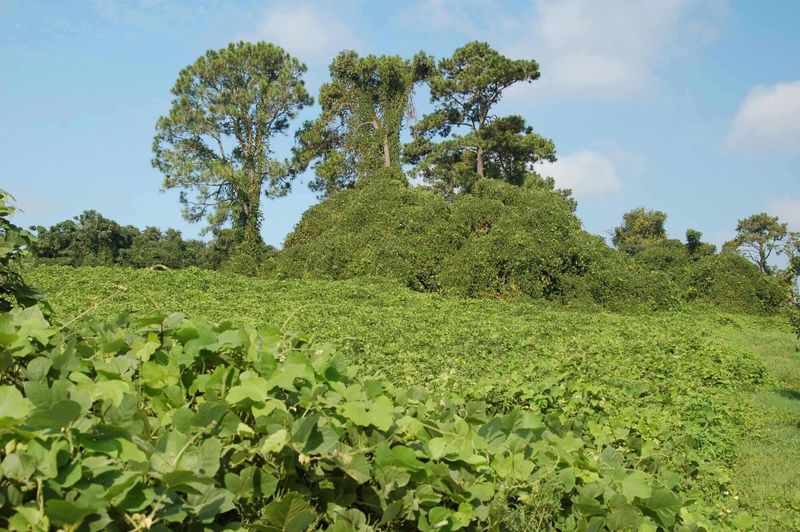
Ask almost anyone in the Southeast about kudzu and they will likely have a story.
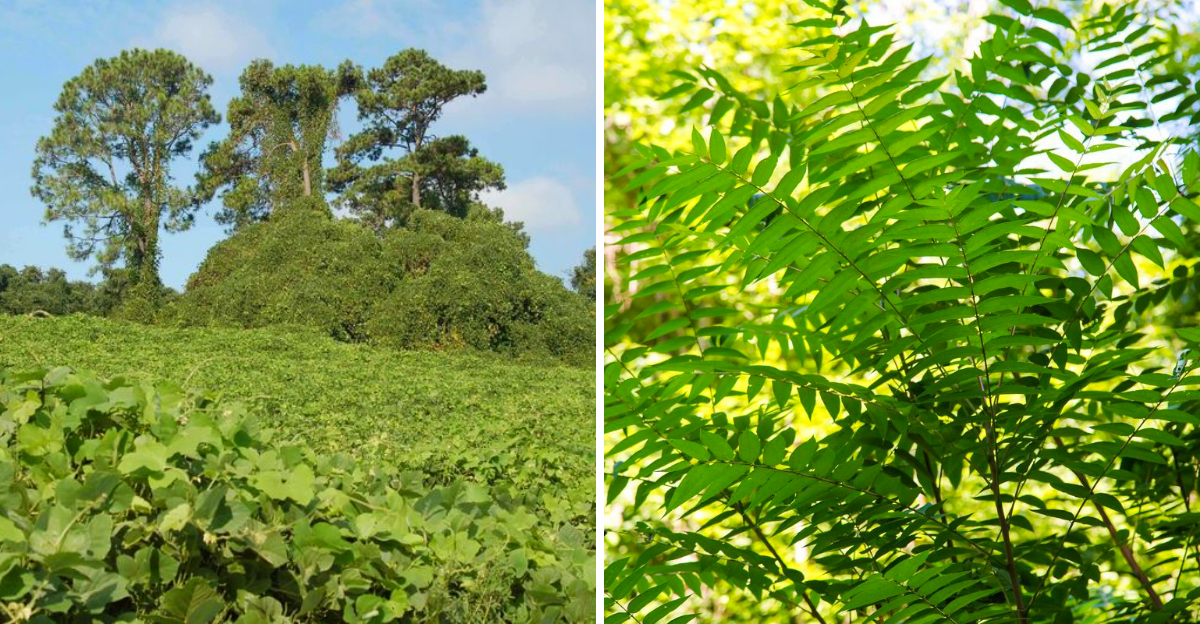
This vine has become something of a regional symbol for unstoppable growth, and while some of those stories get exaggerated over time, the truth is that kudzu can cover large areas of open, disturbed ground with surprising speed under the right conditions.
Roadsides, old fields, and sunny yard edges near woodland borders are among the spots where it tends to show up in North Carolina.
Kudzu grows from a deep, starchy root system that stores a significant amount of energy, which means cutting the vines back without addressing the roots tends to result in regrowth.
Spring is actually a useful time to begin tackling it because young shoots emerging from the crown are easier to identify and the root crowns are accessible before surrounding vegetation gets too dense.
Homeowners dealing with kudzu along property edges or near outbuildings should expect that control takes more than one season. Repeated removal of new growth over time can gradually wear down the plant’s root reserves.
North Carolina conditions, including warm, humid summers and disturbed soils, can favor kudzu spread, so early spring monitoring around sunny borders and old fence rows makes a real difference.
4. Oriental Bittersweet Twists Through Everything Nearby
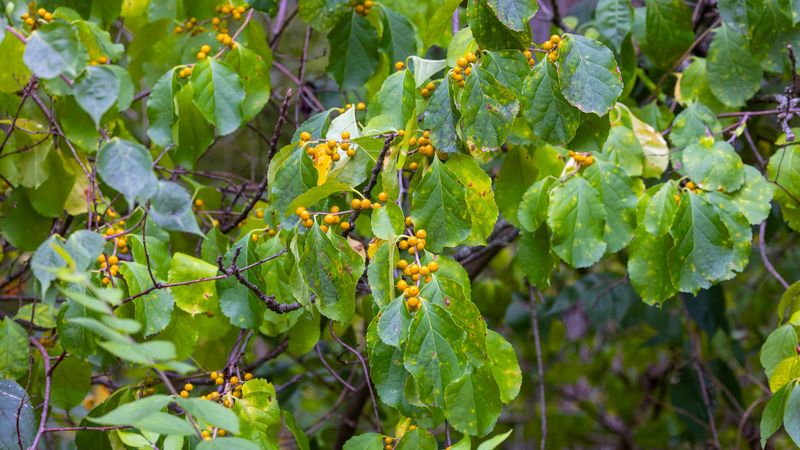
Walking a wooded edge in spring, you might notice a vine with fresh green leaves spiraling tightly around young tree trunks and shrub stems.
Oriental bittersweet has a habit of wrapping so firmly around woody plants that it can girdle and weaken them over time, restricting the flow of water and nutrients through the stem.
That twisting growth pattern is one of the clearest signs homeowners can watch for when checking property edges in North Carolina.
The plant spreads efficiently through berries that birds carry well beyond the original planting site, which is why it frequently shows up along fence rows, woodland edges, and brushy areas even when no one intentionally planted it nearby.
Older neighborhoods with established shrub borders and homes near natural areas are especially likely to see it turn up uninvited.
Spring is a good window for removal because the vines are actively growing and easy to identify before surrounding vegetation fills in.
Unwinding vines from tree trunks and cutting them back to the root crown is a reasonable starting point for smaller infestations.
Larger patches that have climbed high into tree canopies are harder to address fully in one season, but reducing the root crown and following up through the summer can gradually bring it under control.
5. Tree-Of-Heaven Spreads Faster Than Expected
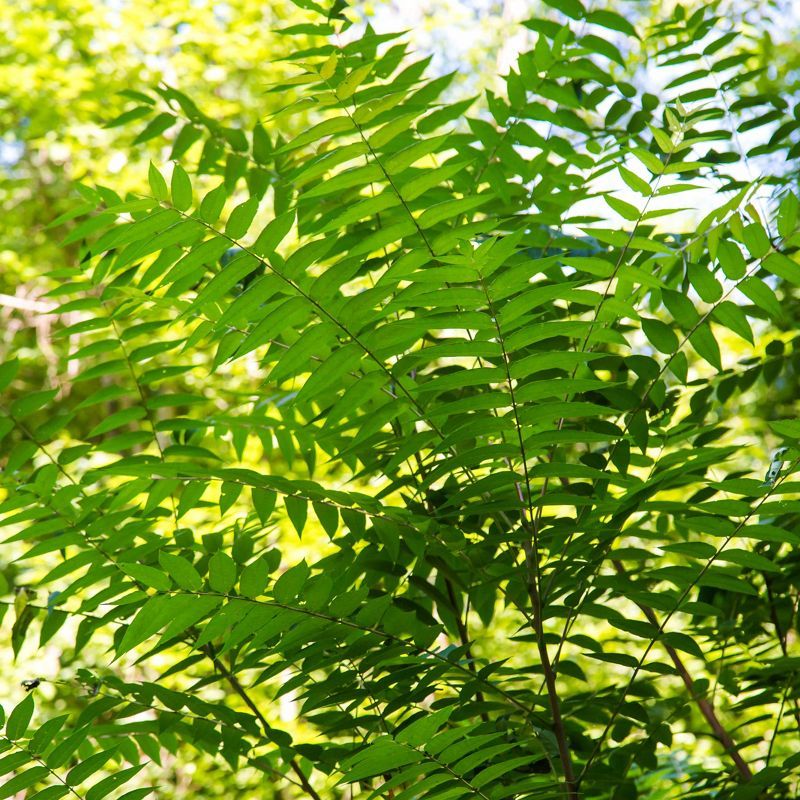
Sprouting from sidewalk cracks, fence lines, and disturbed lots with almost cheerful persistence, tree-of-heaven has made itself at home across much of North Carolina. It is not a tree that sneaks in quietly.
Young seedlings grow rapidly, and established root systems send up sprouts aggressively, especially after cutting or mowing.
Homeowners who trim it back without treating the root system often find a cluster of new sprouts pushing up from the same spot within weeks.
Part of what makes tree-of-heaven so competitive is its tolerance for poor soils, pollution, and disturbance. Urban lots, roadsides, and overgrown backyard edges near developed areas are common places it shows up.
It also produces a large number of winged seeds that travel on the wind, so a mature tree nearby can seed a yard repeatedly over time.
Spring is worth noting as a management window because seedlings and root sprouts are young and easier to pull when the soil is moist and growth is still fresh. Smaller seedlings caught early can sometimes be removed by hand.
Larger, established plants with deep root crowns are more challenging and may need a multi-season approach. In North Carolina, the plant is considered invasive across a range of settings, from urban neighborhoods to rural woodland edges.
6. Callery Pear Escapes Far Beyond Landscapes
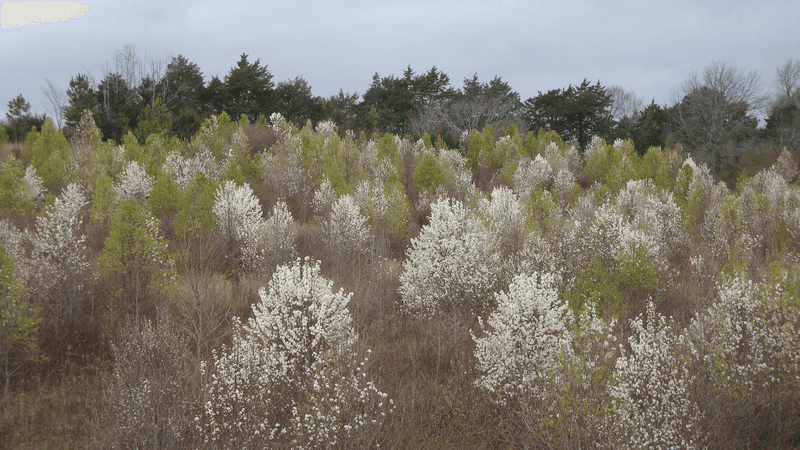
For years, Callery pear was one of the most popular ornamental trees planted in North Carolina neighborhoods, shopping centers, and streetscapes. The showy white flowers in early spring made it an easy sell.
What landscape designers and homeowners did not fully anticipate was how effectively it would cross-pollinate with other Callery pear cultivars and produce viable seeds that birds would carry into natural areas far beyond any intentional planting.
Today, escaped Callery pear trees are a familiar sight along North Carolina roadsides and woodland edges, where their early white blooms often appear before most native trees have leafed out.
The trees grow quickly, produce heavy crops of small berries, and can crowd out native species in open fields and forest margins over time.
Spring, when Callery pear is in full bloom and easy to spot from a distance, is a practical time for homeowners to check their property and neighboring edges for escaped seedlings or young trees.
Removing small seedlings before they mature and begin producing their own seeds is much more manageable than dealing with established trees later.
North Carolina has taken steps to address the spread of this plant, and homeowners can support those efforts by removing any plants found on their property this season.
7. Multiflora Rose Builds Dense Thorny Masses
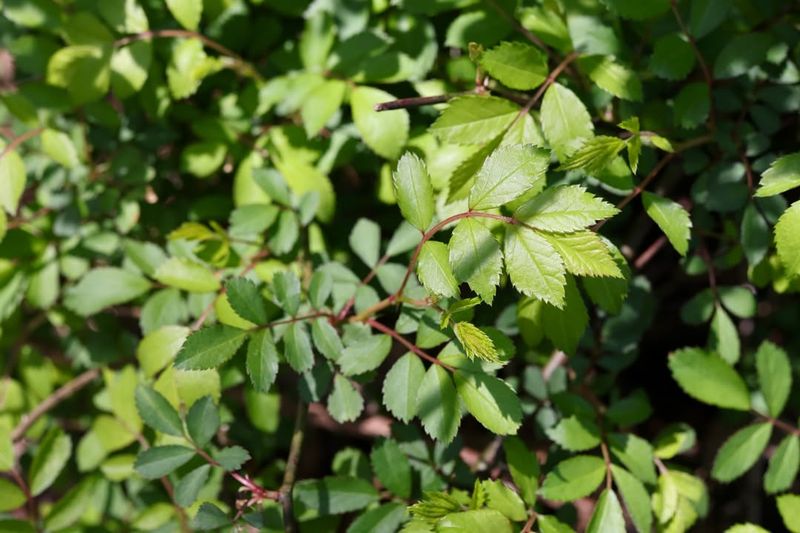
Anyone who has tried to push through a multiflora rose thicket knows exactly how effectively those arching, thorny canes can block passage and swallow up open ground.
Originally planted in North Carolina for erosion control, wildlife habitat, and living fences decades ago, multiflora rose has long since earned its spot on the invasive plant list.
It forms dense masses that crowd out native shrubs and make land management genuinely difficult.
Each mature plant can produce enormous numbers of small red rose hips that birds eat and distribute widely. That bird-assisted seeding is one reason multiflora rose shows up so readily along fence rows, old field edges, and yard borders near natural areas.
In North Carolina, it tends to thrive in full sun to partial shade and can establish in a range of soil conditions.
Tackling it in spring, while canes are still young and flexible and before seeds develop, gives homeowners a reasonable window to cut back and begin removing root crowns. Small plants can sometimes be dug out entirely.
Larger, established clumps with thick root systems often require repeated cutting over several seasons to exhaust the plant’s ability to resprout.
Wearing heavy gloves and protective clothing is strongly recommended before attempting any removal work on established patches.
8. Autumn Olive Pushes Into Natural Areas
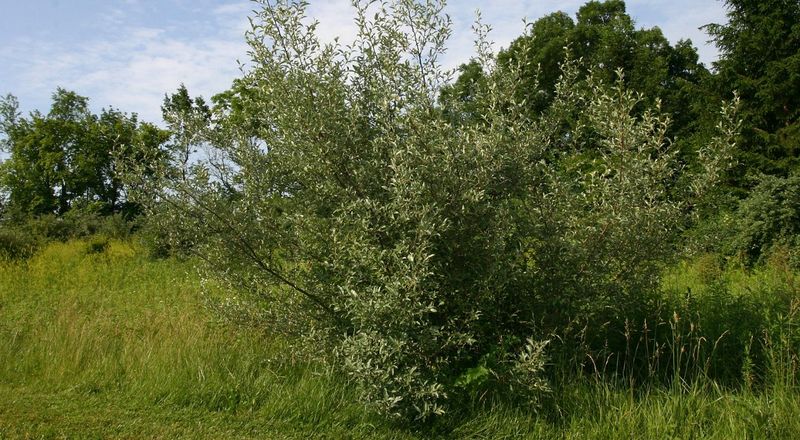
Silvery-green leaves that shimmer in sunlight and fragrant spring flowers might make autumn olive seem like a worthwhile addition to a yard, but this shrub has a well-documented history of spreading aggressively into natural areas across the eastern United States, including much of North Carolina.
It was widely planted for wildlife habitat and erosion control in the past, which gave it a strong foothold in many parts of the state before its invasive tendencies became better understood.
Autumn olive is a nitrogen-fixing shrub, meaning it can alter soil chemistry in ways that make it harder for native plants to compete.
It produces large quantities of small berries that birds readily eat and distribute, allowing it to spread from old plantings into open fields, roadsides, and woodland edges with little assistance from humans.
Spring is a useful time to scout for autumn olive because its silvery foliage and early-season fragrant flowers make it relatively easy to distinguish from surrounding native shrubs before the landscape fills in completely.
Smaller plants can be pulled or dug when the soil is moist.
Larger, established shrubs with deep root systems are more challenging and may need a sustained multi-season removal effort. North Carolina homeowners near open fields or old conservation plantings are encouraged to check for this plant this spring.
9. Chinese Privet Takes Over Shrub Borders Fast
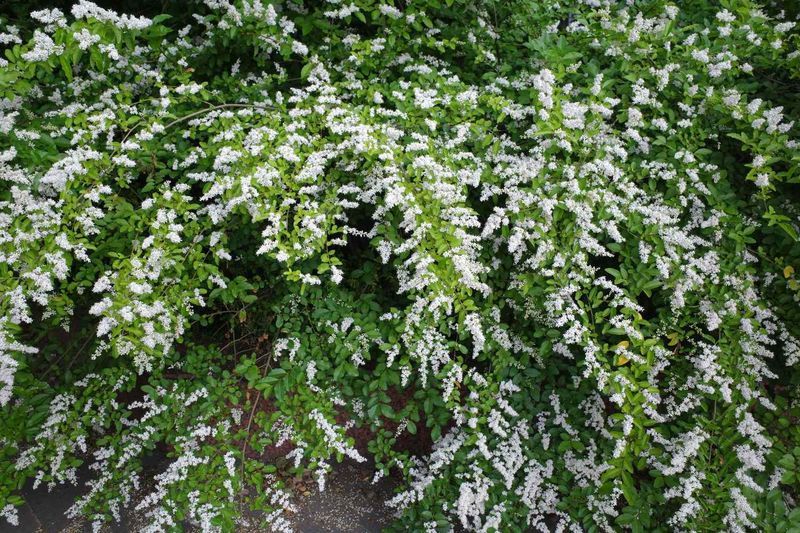
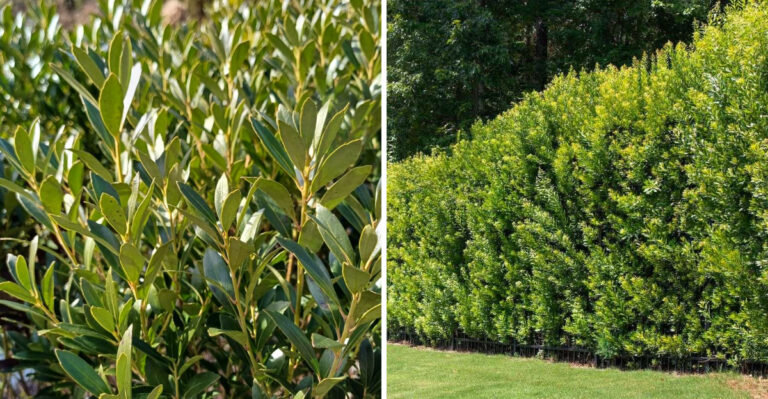
Chances are, if you have an older North Carolina property with established foundation plantings or a shaded backyard border, Chinese privet has already found its way in.
It was once a go-to shrub for hedges and borders across the South, and remnants of those old plantings have been seeding into yards, streambanks, and woodland understories for decades.
Birds eat the dark berries enthusiastically and spread seeds broadly, making Chinese privet one of the most common invasive shrubs homeowners encounter.
In shaded, moist conditions near streams, drainage areas, or wooded yard edges, Chinese privet can form nearly impenetrable thickets that shade out native wildflowers and shrubs.
Its semi-evergreen to evergreen foliage gives it a competitive edge during mild North Carolina winters when many native plants are dormant.
Spring is a good time to take stock of how much privet has crept into a landscape. Young seedlings are easier to pull in moist spring soil, and smaller shrubs can sometimes be dug out before they become deeply rooted.
Larger, established clumps with multiple woody stems may need to be cut and followed up on repeatedly through the season.
Getting a handle on privet near natural areas or water features is especially worthwhile, since those spots tend to support the fastest spread.
10. Chinese Tallowtree Gains Ground Very Quickly
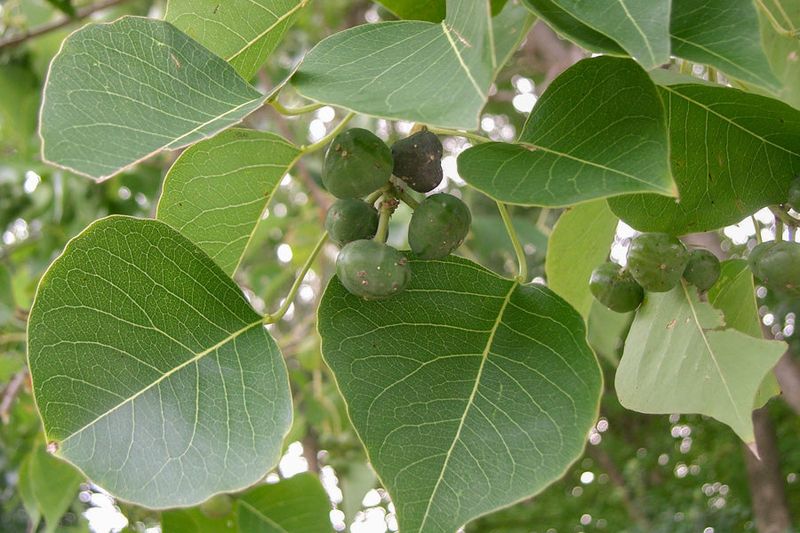
Bright fall color and a tidy shape once made Chinese tallowtree a popular choice in landscapes across the southeastern United States, including parts of North Carolina.
That ornamental appeal faded quickly once the plant demonstrated how effectively it could spread into natural areas, old fields, and disturbed roadsides.
In North Carolina, it is most commonly found in the Coastal Plain and Piedmont regions, where conditions of moisture and mild winters tend to favor its establishment.
Each tree produces large numbers of small white waxy seeds that persist on branches into winter and are eaten and spread by birds.
Once established in open or disturbed ground, Chinese tallowtree can form dense stands that alter the plant community and make it harder for native species to recover.
Its ability to grow in both wet and somewhat drier conditions gives it flexibility that many invasive plants lack.
Homeowners in the eastern and central parts of North Carolina are especially encouraged to check property edges, old fields, and sunny disturbed areas for seedlings and young trees this spring.
Removing young plants while they are still small is far more manageable than dealing with mature trees that have already begun seeding.
Moist spring soil makes hand-pulling or digging small seedlings a reasonable first step before growth accelerates through the warmer months ahead.