7 Perennials That Keep Arizona Gardens Colorful From Spring Through Fall
Arizona gardens that stay colorful from spring through fall always stand out. Flowers keep blooming, garden beds stay lively much longer, and the whole yard feels brighter even after intense heat starts taking over for the season.
Plenty of plants look good for a short time, then quickly lose color once temperatures keep climbing. Long blooming perennials change that completely because they continue flowering for months instead of fading out after one strong bloom cycle.
Gardens instantly look fuller and far more eye catching when color keeps showing up through different parts of the season instead of disappearing too early. Plant choice plays a huge role in that.
Perennials that handle Arizona conditions well can keep gardens looking colorful for a surprisingly long time without needing constant replacement every few weeks once hotter weather settles in for good.
1. Autumn Sage Produces Colorful Blooms Through Much Of The Year
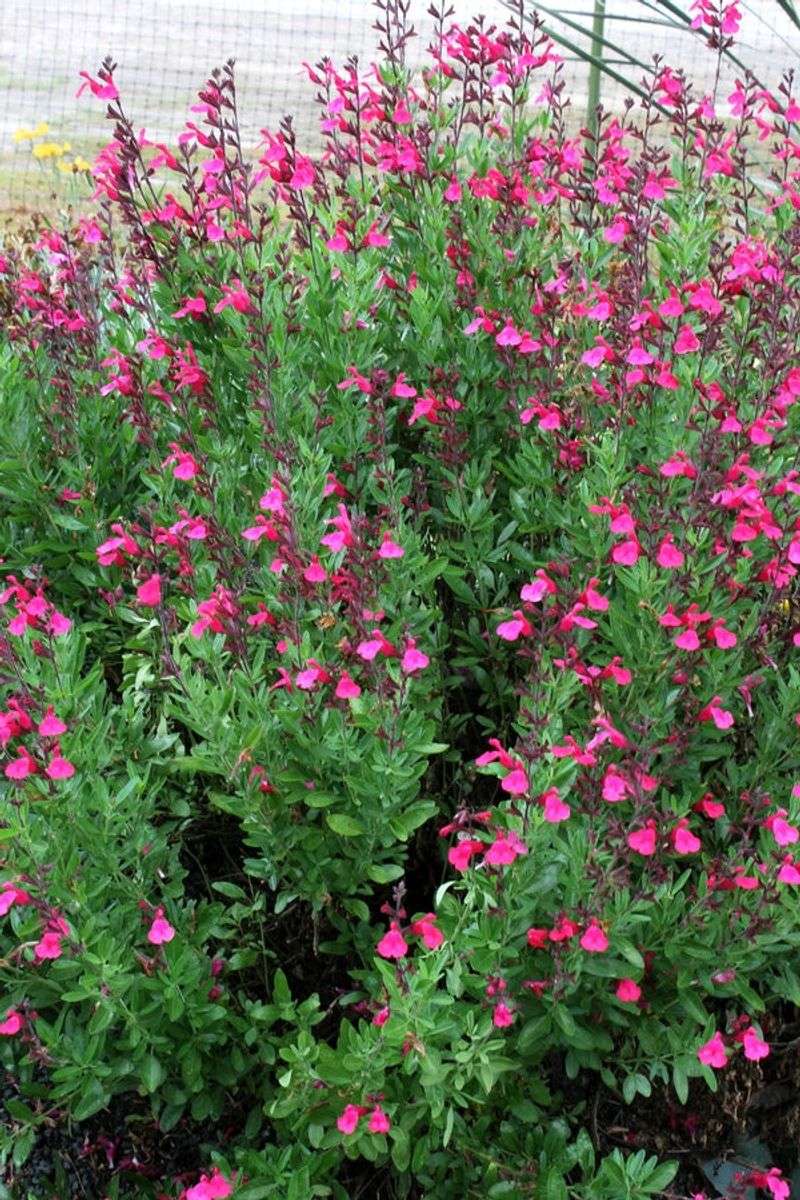
Walk past an Autumn Sage in full bloom and it practically stops you in your tracks. Salvia greggii pumps out small tubular flowers in shades of red, pink, coral, and white from early spring and keeps going well into fall, barely pausing even during Arizona summers.
Few plants match that kind of stamina in the low desert.
Autumn Sage thrives in full sun and handles poor, well-draining soil without complaint. Once established, it rarely needs supplemental water more than once a week during the hottest months.
In mild winters, which Arizona sees often, plants may never go fully dormant and can bloom almost year-round in warmer zones like Phoenix and Yuma.
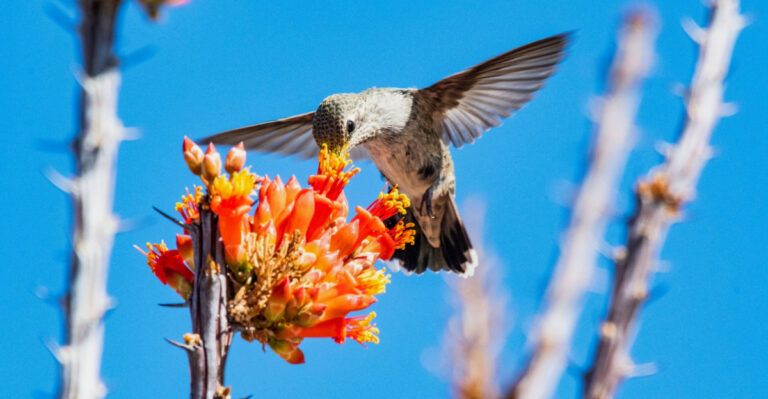
Hummingbirds are absolutely crazy about the flowers, so planting a few near a patio or window gives you a lively show all season. Trim plants back by about a third in late winter to encourage fresh new growth and more blooms.
Avoid heavy clay soils that hold moisture, since roots can rot if they sit in wet conditions for too long. Spacing plants about two to three feet apart gives them enough airflow to stay healthy through humid monsoon stretches.
Autumn Sage grows to roughly two to three feet tall and wide, making it a solid mid-border plant that fills gaps without overwhelming smaller neighbors. It is one of the most reliably colorful perennials available to Arizona gardeners today.
Light pruning during the growing season can also help keep the plant compact and encourage even more flowering instead of leggy growth.
2. Blackfoot Daisy Keeps Blooming During Long Hot Dry Periods
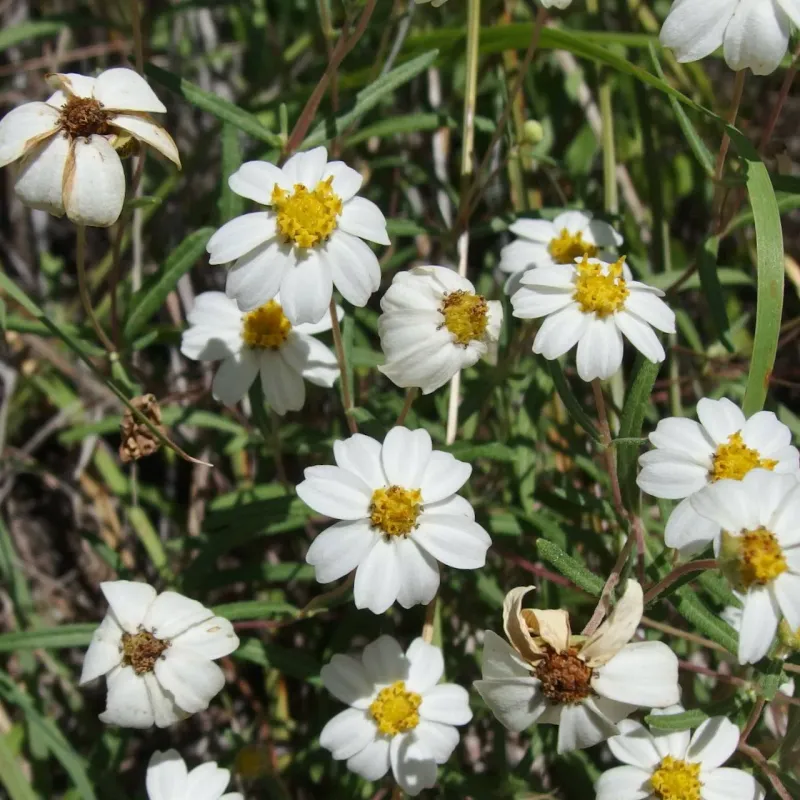
Blackfoot Daisy is basically the overachiever of the Arizona perennial world. Melampodium leucanthum produces cheerful white petals with bright yellow centers almost nonstop from late winter through fall, and it does all of this while surviving on very little water.
Honestly, it almost seems too good to be true until you see it growing roadside across the Sonoran Desert.
Native to the southwestern United States and northern Mexico, this plant evolved right here in the kind of heat and drought that flattens most ornamentals. Plant it in fast-draining, gravelly soil and give it full sun, and it will reward you season after season.
Your Arizona Garden Changes Every Week. Your Plan Should Too.
Gardening in Arizona changes quickly throughout the season. Every Friday you’ll receive a simple weekly plan showing exactly what to plant, prune, fertilize, harvest, and protect so you never miss the right timing.
Overwatering is actually the biggest mistake gardeners make with Blackfoot Daisy, so resist the urge to pamper it too much.
Plants stay compact, usually reaching about one foot tall and spreading up to two feet wide. That low, mounding habit makes it ideal for rock gardens, dry slopes, or the front edge of a xeriscape planting bed.
Pollinators visit the flowers regularly, adding extra life to the garden. Light trimming after major bloom flushes can encourage fresh flower production, though plants often rebloom without any intervention at all.
In Tucson and across central Arizona, Blackfoot Daisy is a go-to plant for gardeners who want color without irrigation headaches. It may self-seed mildly in ideal conditions, which is generally a welcome bonus rather than a problem.
A truly low-maintenance gem for the desert Southwest.
It also pairs well with other drought-tolerant natives, creating a natural look that blends easily into Arizona desert-style plantings.
3. Angelita Daisy Flowers Repeatedly From Spring Into Fall
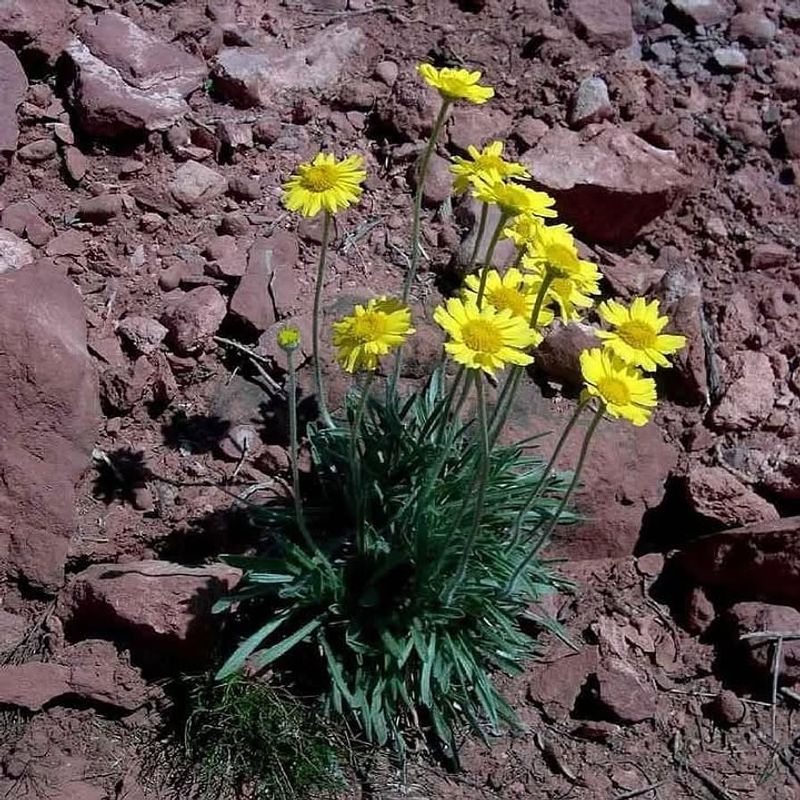
If you want nonstop yellow color without hauling out the hose every other day, Angelita Daisy deserves a serious look. Tetraneuris acaulis is a compact, clumping perennial that sends up cheerful bright yellow flowers above fine, dark green foliage from early spring through late fall.
It blooms in flushes rather than one continuous wave, but those flushes come back reliably as long as the plant gets full sun and good drainage.
Angelita Daisy is native to the southwestern United States, which means it already knows how to handle Arizona conditions. Established plants are remarkably drought-tolerant, though a deep watering every couple of weeks during summer heat keeps them looking their best.
Skip fertilizer heavy in nitrogen, since that encourages leafy growth at the expense of flowers.
Growing only six to ten inches tall, Angelita Daisy fits perfectly along walkways, between boulders, or in any spot where a low, tidy plant is needed.
It pairs beautifully with ornamental grasses and other native perennials in naturalistic desert plantings around Tucson and the Phoenix metro area.
Deadheading spent blooms can encourage faster rebloom, though it is not strictly necessary. Plants tend to stay tidy without heavy pruning, which is a real time-saver for busy gardeners.
Cold hardiness is solid enough to handle most Arizona winters without damage. Over time, clumps can be divided to create new plants, giving you even more coverage across the garden for free.
A quiet workhorse that delivers season-long color consistently.
In especially hot interior zones, a light layer of gravel mulch around the base helps keep roots cooler and improves flowering consistency through summer.
4. Trailing Lantana Handles Extreme Heat While Blooming For Months
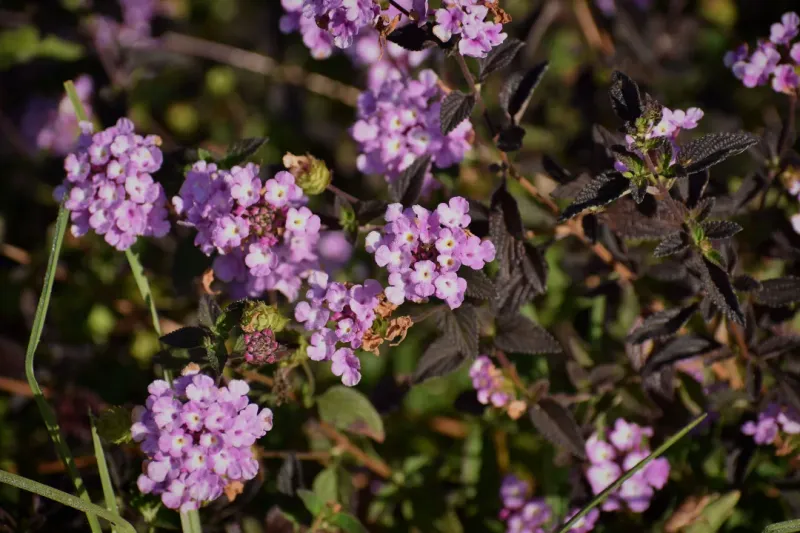
Temperatures that would wilt most flowering plants seem to actually energize Trailing Lantana.
Lantana montevidensis sprawls low across the ground, covering bare soil with dense foliage and producing clusters of lavender, purple, or white flowers from spring through fall without missing a beat.
During Arizona’s brutal July and August heat, when most gardens look scorched and sad, Trailing Lantana just keeps blooming.
Plant it where it gets full sun and sharp drainage, and then mostly leave it alone. Water deeply but infrequently once established, roughly every week to ten days during summer.
Overwatering encourages whitefly and root problems, so less really is more with this plant in the desert Southwest.
Trailing Lantana spreads two to four feet wide and stays relatively low, making it a fantastic groundcover for slopes, berms, or areas where erosion control matters. It suppresses weeds effectively once it fills in, cutting down on maintenance time through the season.
Butterflies are strongly attracted to the flowers, turning the planting into a living pollinator garden. In the Phoenix area and lower elevations of Arizona, Trailing Lantana may survive mild winters and re-emerge vigorously in spring.
Harder freezes will knock it back, but roots typically survive and push new growth when temperatures warm again. A light trim in late winter removes winter-damaged stems and shapes the plant before the new growing season begins.
Few groundcovers can match its combination of heat tolerance, extended bloom time, and genuine low-water performance in Arizona gardens.
Few groundcovers handle Arizona heat so effortlessly while still keeping slopes, borders, and containers full of color for months at a time.
5. Red Yucca Sends Up Coral Flower Spikes Through Summer Heat
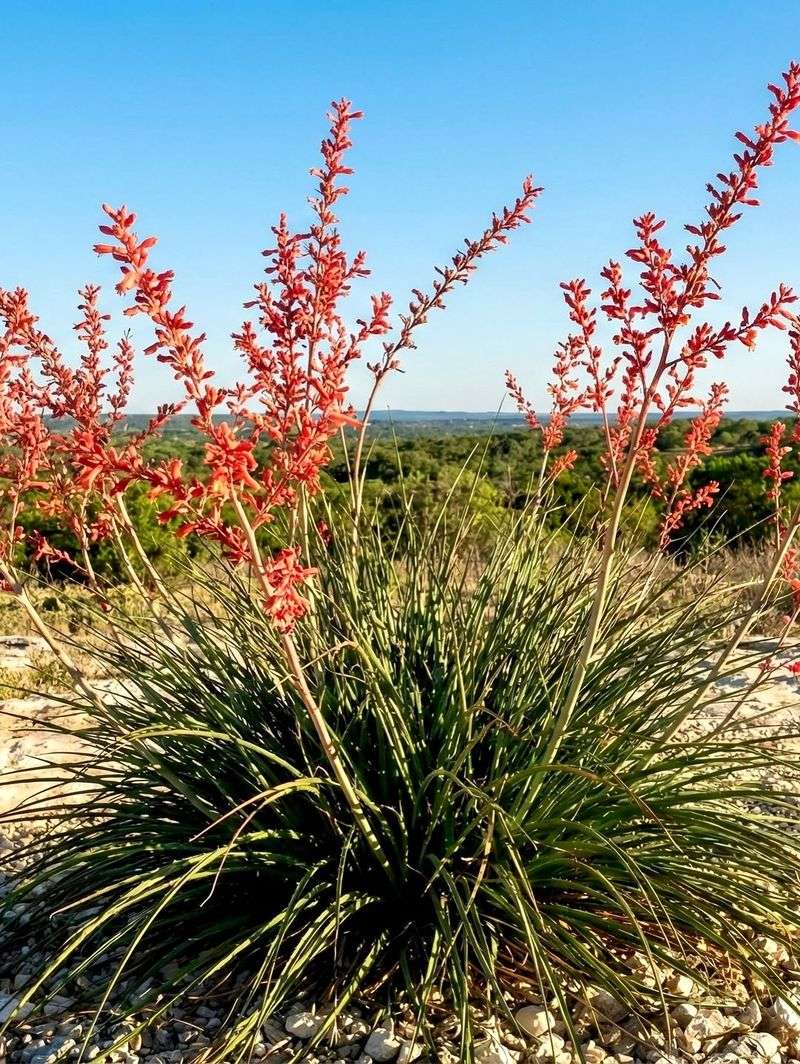
Red Yucca does not look like a typical flowering perennial, and that is exactly what makes it so striking. Hesperaloe parviflora forms a dramatic clump of long, arching grass-like leaves and sends up tall spikes covered in coral-pink to red tubular flowers that hummingbirds cannot resist.
Those spikes can reach five to eight feet tall and bloom from late spring well into summer, sometimes extending into early fall in Arizona gardens.
Despite the name, Red Yucca is not a true yucca but a close relative native to Texas and northern Mexico. It handles full sun, reflected heat, and extremely dry conditions with ease.
Rocky or sandy soil suits it perfectly, and it rarely needs any supplemental fertilizer once settled into the landscape.
Water established plants deeply once every two to three weeks during summer, and even less frequently in cooler months. Plants grow slowly but steadily, eventually reaching two to three feet tall and four feet wide at the base.
The flower spikes persist for weeks, providing color and vertical interest during the hottest stretch of the Arizona summer when few other plants are performing well.
Hummingbirds visit the flowers constantly from May through August, making Red Yucca a must-have for wildlife-friendly gardens.
Old flower stalks can be cut back after blooming finishes to keep the plant looking tidy. Red Yucca is long-lived, drought-adapted, and genuinely unfazed by the Sonoran Desert climate, earning its place in any serious Arizona perennial planting.
Mature plants also handle cold snaps surprisingly well, which makes Red Yucca one of the more dependable flowering choices across many parts of Arizona.
6. Gaura Produces Airy Blooms From Spring Well Into Fall
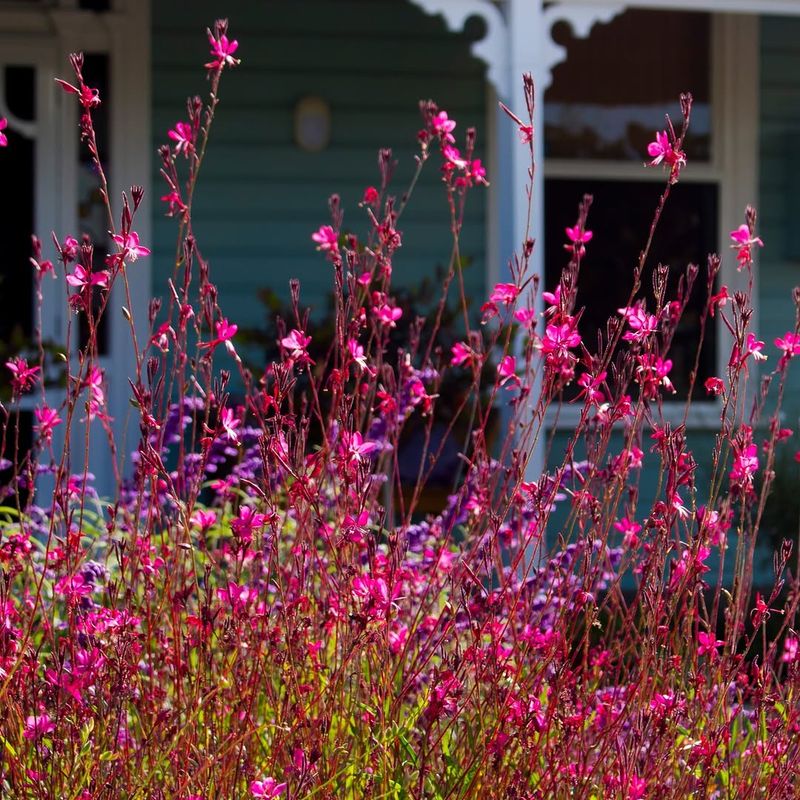
Gaura brings a lightness to the desert garden that heavier-textured plants simply cannot match.
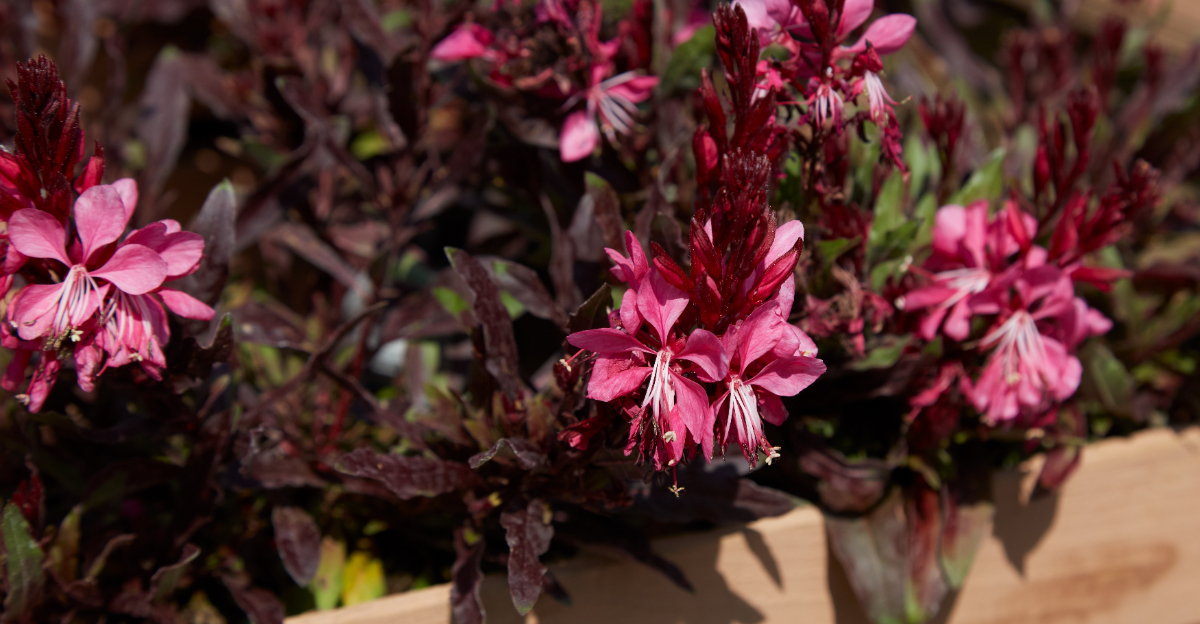
Gaura lindheimeri, sometimes called Whirling Butterflies, produces slender wiry stems loaded with small pink or white flowers that flutter in the breeze from early spring through fall.
Planted alongside bold succulents or chunky desert shrubs in Arizona landscapes, it softens the scene with movement and delicate color.
Native to the south-central United States, Gaura adapts well to the heat and drought conditions common across Arizona. Full sun is essential for strong blooming, and well-draining soil prevents root problems during the monsoon season.
Once established, plants are quite drought-tolerant, though they appreciate a deep soak every week to ten days during the hottest summer months.
Gaura grows two to four feet tall and spreads about two feet wide, giving it a loose, open form that works well in mixed perennial borders. Cutting plants back by about half in midsummer can refresh them and encourage a strong flush of fall blooms.
Without pruning, plants may get a bit floppy by late summer, especially in richer soils. In Tucson and other parts of southern Arizona, Gaura often performs especially well due to slightly cooler nighttime temperatures compared to the Phoenix basin.
Pollinators, particularly bees, visit the flowers frequently. Plants may self-seed in favorable spots, which is usually a welcome development rather than a nuisance.
Gaura is genuinely underused in Arizona gardens given how reliably it performs through a long and demanding growing season.
7. Damianita Covers Plants With Yellow Flowers During Warm Months
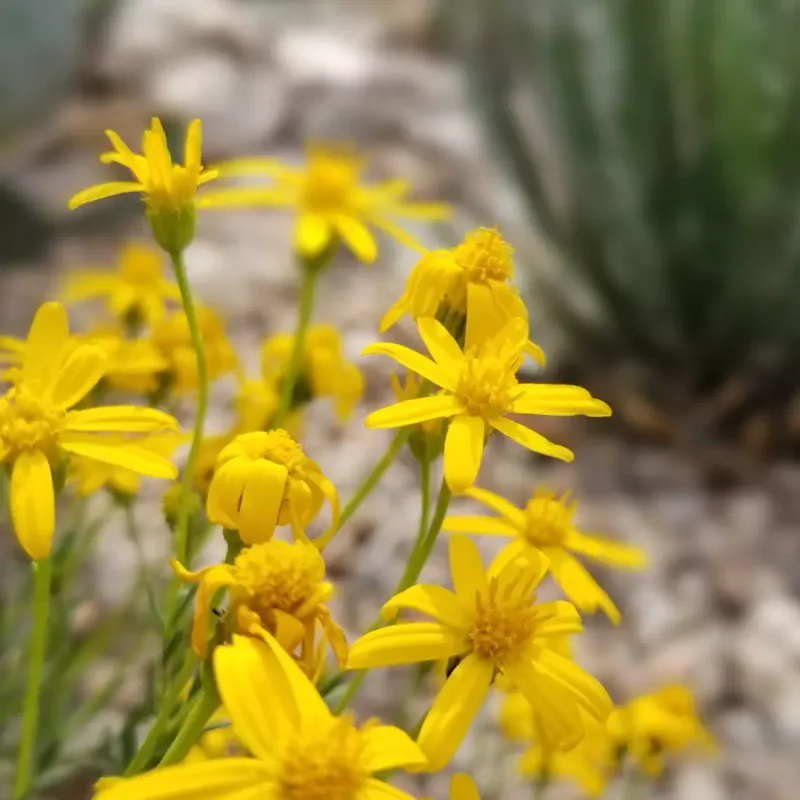
Damianita is one of those plants that Arizona gardeners discover and immediately wonder why they waited so long to try it.
Chrysactinia mexicana is a compact, aromatic shrubby perennial covered in tiny bright yellow daisy-like flowers from spring through fall, with bloom flushes that coincide with warm temperatures and occasional moisture.
The fine, needle-like foliage stays dark green and fragrant even when plants are not actively blooming.
Native to the Chihuahuan Desert of Texas, New Mexico, and northern Mexico, Damianita is well-suited to the dry heat of Arizona. It demands full sun and excellent drainage, and it genuinely struggles in heavy clay or consistently wet soils.
Once those basic needs are met, it asks for very little in return.
Established plants are impressively drought-tolerant, needing deep water only every ten days to two weeks during summer.
Plants typically grow one to two feet tall and wide, forming a tidy rounded mound that works well in rock gardens, along dry pathways, or as a low border plant.
The aromatic foliage is a bonus that sets it apart from many other yellow-flowering perennials available to Arizona gardeners. Light trimming after each bloom flush keeps plants compact and encourages fresh flowering.
Bees and butterflies visit Damianita regularly, adding pollinator value to the garden. It handles reflected heat from walls and pavement remarkably well, making it an excellent choice for hot south or west-facing exposures common in Arizona residential landscapes.
A reliable, fragrant, and genuinely tough performer.
Gravel mulch around the base helps prevent excess moisture buildup and keeps the plant healthier during Arizona’s humid monsoon periods.