The Most Beautiful Big Leaf Caladium Varieties Michigan Gardeners Can Actually Grow
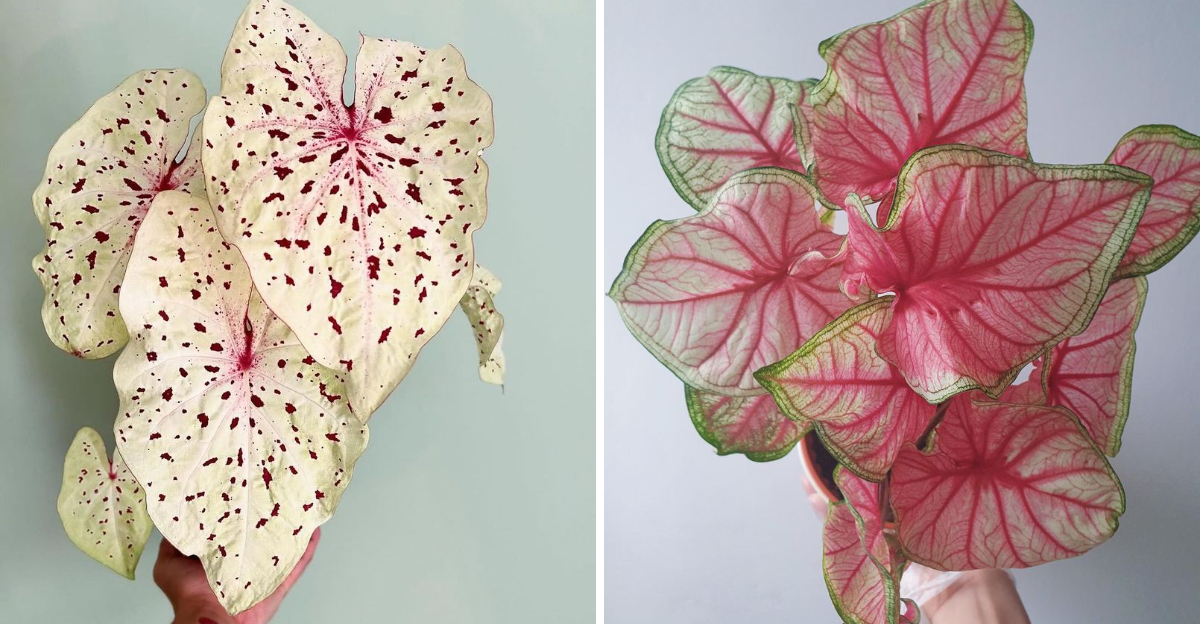
Caladiums bring a kind of tropical drama to a garden that most flowering plants simply cannot compete with.
The leaves are the whole show, and big leaf varieties take that visual impact to another level with bold patterns, vivid color combinations, and a presence that fills a shaded bed or container in a way that stops people mid-step.
Michigan gardeners sometimes assume caladiums are out of reach given the shorter season and cooler spring temperatures, but the reality is more encouraging than that.
With the right timing and a few straightforward adjustments to account for Michigan’s climate, big leaf caladiums can deliver an absolutely stunning display through the warmest months of the year.
The key is knowing which varieties perform best in the conditions Michigan summers actually provide rather than the long, consistently warm seasons caladiums get in southern states.
These varieties have proven themselves worth growing here, and the payoff for getting them started correctly is a garden that looks genuinely lush and tropical from midsummer right through to the first frost.
1. White Christmas Caladium (Caladium Bicolor)
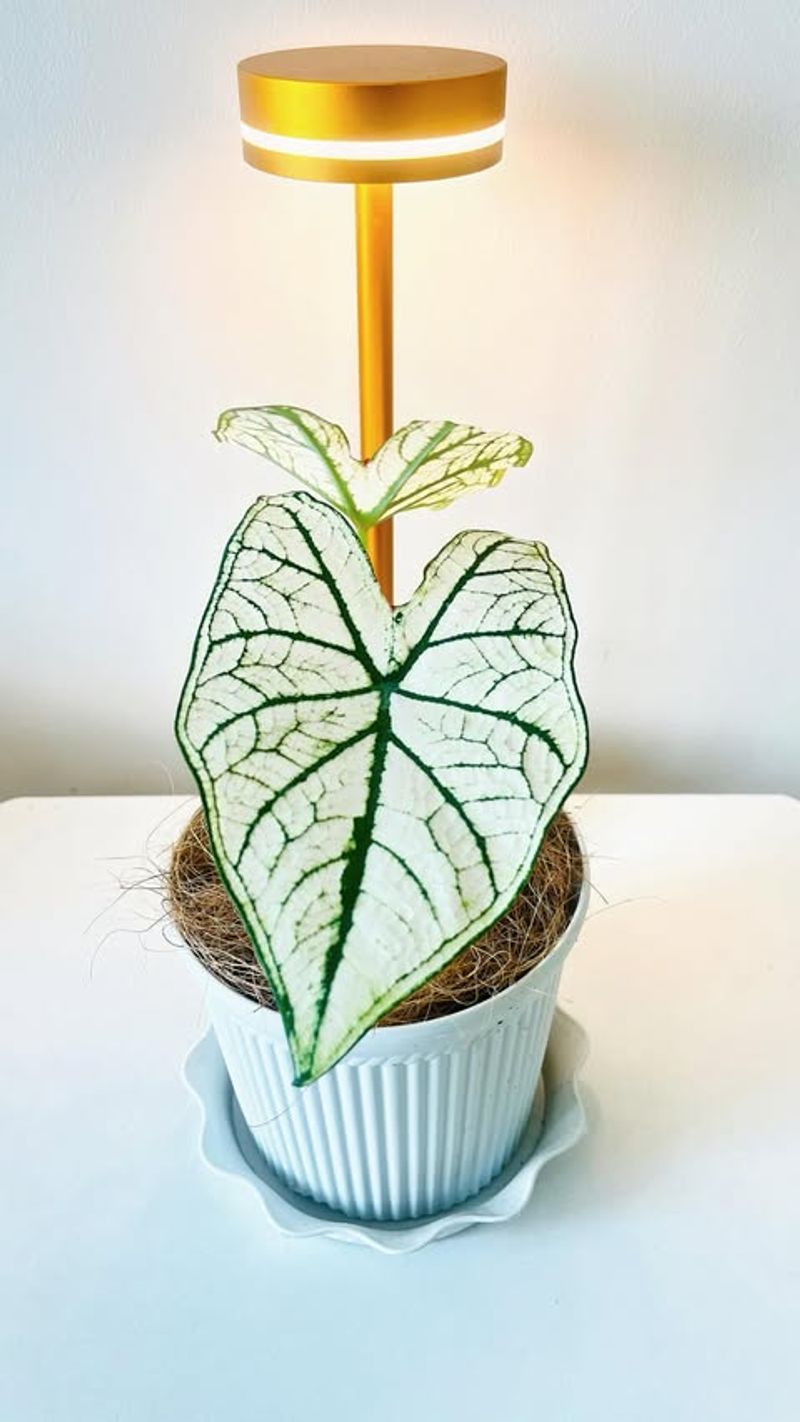
Imagine walking past a shaded garden bed and spotting leaves so bright they almost glow.
White Christmas Caladium does exactly that, with massive white leaves traced by deep, dramatic green veins that create a look unlike almost anything else in the garden.
It is one of those plants that stops people in their tracks. Michigan gardeners love this variety because it handles humid summers surprisingly well and holds its color even when planted in deep shade.
Most caladiums fade a little when conditions get rough, but White Christmas stays vivid and full-looking right through the warmest months. Plant it in containers or along shaded borders for maximum visual punch.
Start the tubers indoors around late April, about six weeks before your last frost date, since Michigan springs can be unpredictable.
Once nighttime temps stay above 60 degrees Fahrenheit, you can safely move them outside.
Use rich, well-draining potting mix and keep the soil consistently moist but never waterlogged. Full to partial shade is ideal, as too much direct sun will scorch those gorgeous white leaves.
Pair it with dark-leaved plants like coleus or purple sweet potato vine for a contrast that looks professionally designed.
With a little care, White Christmas will reward you with lush, beautiful foliage from June straight through early September across Michigan.
2. Carolyn Whorton Caladium (Caladium Bicolor)
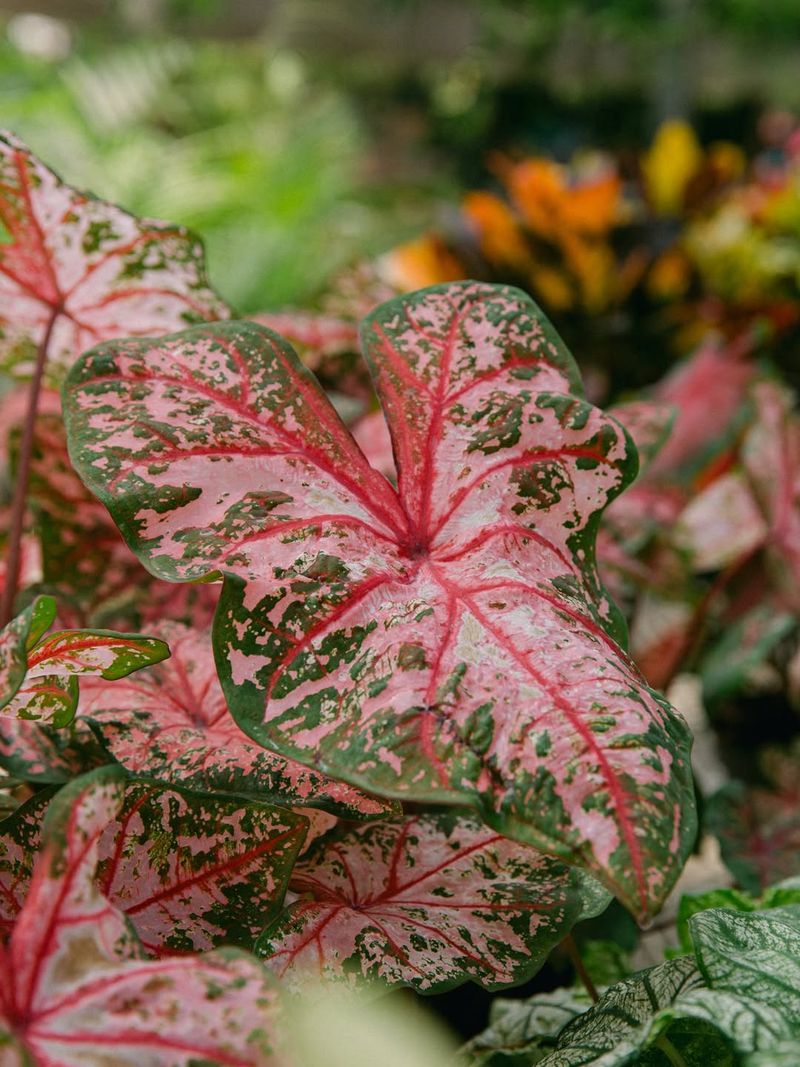
Few caladiums bring the kind of warm, rosy energy that Carolyn Whorton delivers season after season.
The large pink leaves are flushed with soft rose tones, crossed by vivid red veins, and finished with a clean green edge that keeps everything looking polished. It is bold without being overwhelming, which is a tricky balance to pull off.
Michigan gardeners who love pink in their summer containers will find this variety incredibly reliable.
It handles heat and humidity better than many pink caladiums, and it does not tend to go patchy or fade the way some lighter-colored varieties do.
Carolyn Whorton consistently produces large, full-sized leaves that stay attractive all the way into late August.
Your Michigan Garden Changes Every Week. Your Plan Should Too.
Gardening in Michigan changes quickly throughout the season. Every Friday you’ll receive a simple weekly plan showing exactly what to plant, prune, fertilize, harvest, and protect so you never miss the right timing.
Plant the tubers in well-amended, moisture-retaining soil and choose a spot with filtered light or morning sun followed by afternoon shade.
Too much harsh afternoon sun in Michigan summers can bleach the pink tones, so placement really matters here. Water regularly and feed with a balanced slow-release fertilizer every four to six weeks.
This variety looks especially striking in large decorative pots on patios, or mass-planted along shaded walkways where the pink color greets visitors with warmth.
If you want one caladium that combines reliability with genuine beauty, Carolyn Whorton is a standout pick for Michigan gardens every single summer.
3. Red Flash Caladium (Caladium Bicolor)
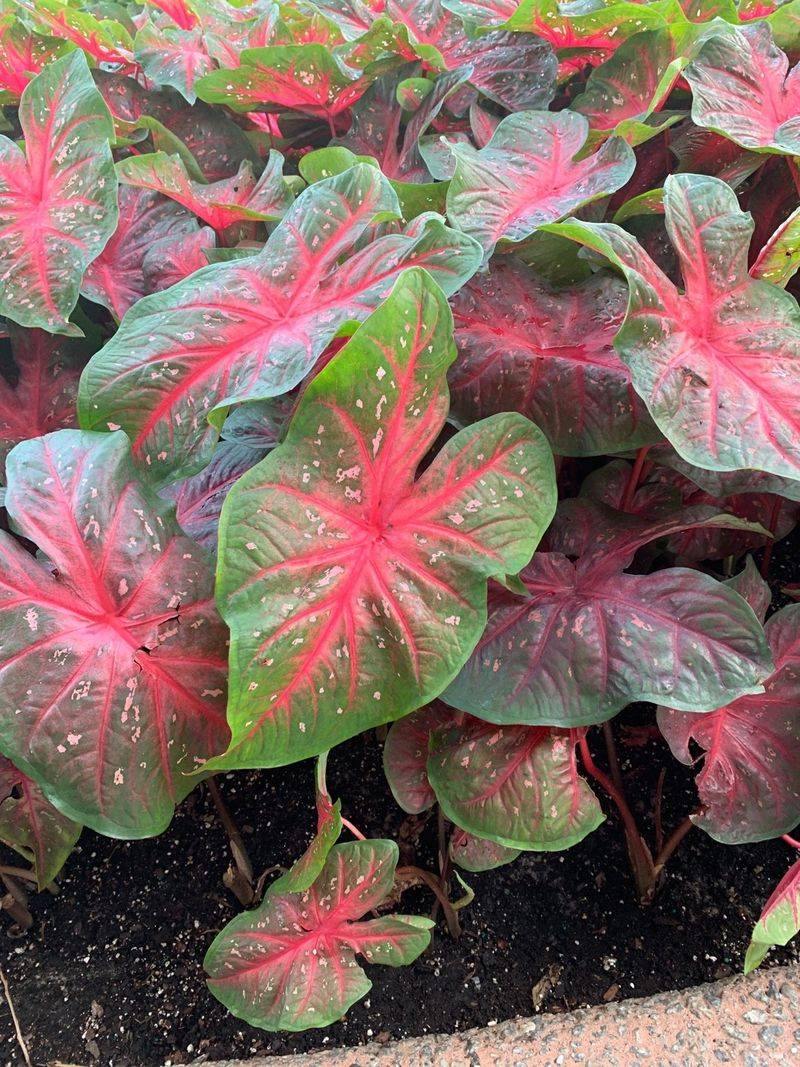
There is something undeniably bold about a plant that leads with deep crimson and refuses to apologize for it.
Red Flash Caladium is exactly that kind of statement maker, featuring rich red centers that fade into dark green margins with scattered pink spots throughout the leaf.
The result is a layered, jewel-toned look that photographs beautifully and turns heads in person.
Among dark-leaf caladium varieties, Red Flash is widely considered one of the most vigorous and dependable.
Michigan gardeners appreciate that it does not sulk in hot, humid conditions and that it produces consistently large leaves across the whole growing season.
The contrast between the deep red and the green border gives every single leaf a finished, almost artistic quality.
For best results in Michigan, start tubers indoors around mid-April and transplant outside once the soil warms past 60 degrees Fahrenheit.
Red Flash tolerates a bit more sun than many white or pink varieties, so it works well in spots with dappled light or even a few hours of gentle morning sun. Keep the soil evenly moist and avoid letting it dry out completely between waterings.
Use it as a dramatic focal point in mixed container plantings, or group several plants together for a bold bed display.
Feed monthly with a balanced liquid fertilizer and watch it absolutely thrive through a Michigan summer.
4. Aaron Caladium (Caladium Bicolor)
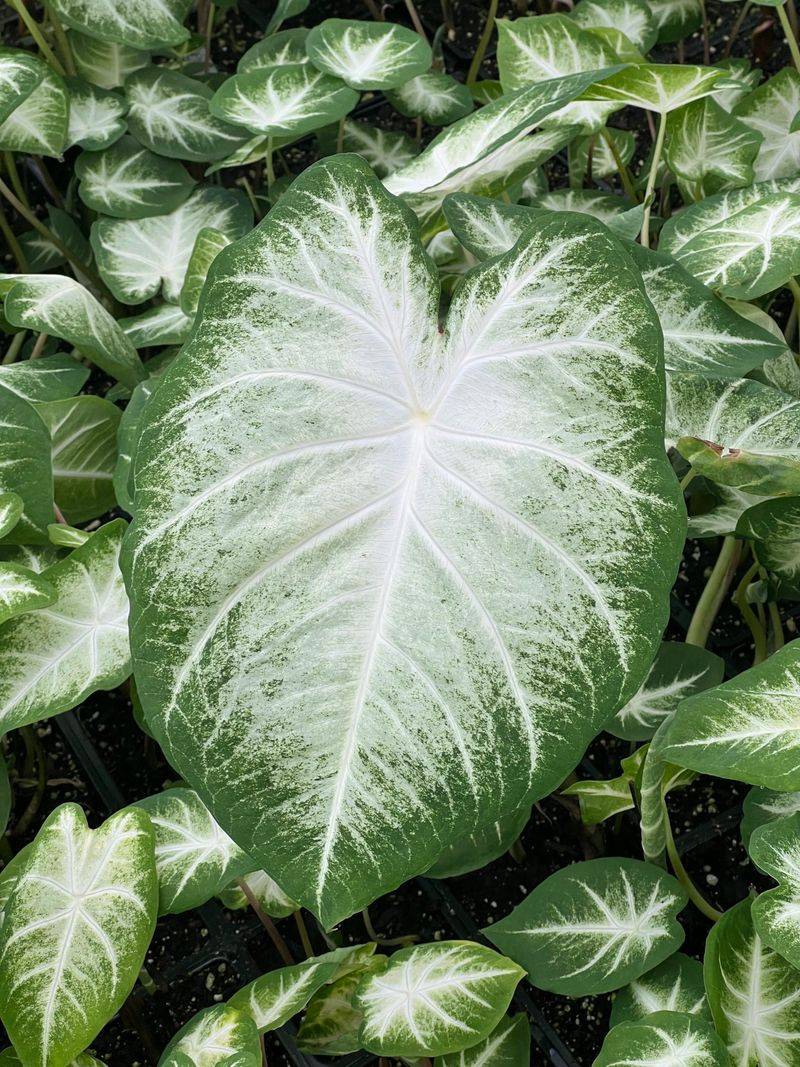
Not every garden needs the loudest plant on the block, and Aaron Caladium proves that quiet confidence can be just as stunning.
The leaves feature clean white centers surrounded by deep, rich green edges, creating a crisp two-tone look that feels both classic and fresh at the same time. It is the kind of variety that makes a whole container planting feel pulled together.
Aaron is a reliable performer across Michigan because it handles shade extremely well and maintains strong leaf size even in lower-light conditions.
While some caladiums get leggy or produce smaller leaves when light is limited, Aaron stays compact and full-looking.
That makes it a fantastic choice for covered porches, north-facing beds, or spots under dense tree canopies where other colorful plants struggle.
Start tubers indoors about six weeks before Michigan’s last frost, usually around mid-April in most parts of the state.
Plant in rich, humus-heavy soil with good drainage and keep moisture levels consistent. Aaron responds beautifully to regular feeding with a balanced fertilizer, pushing out new leaves steadily throughout summer.
Pair it with deep purple or burgundy companion plants to make those white centers really pop. Hostas, astilbes, and ferns all work wonderfully alongside Aaron in shaded Michigan beds.
With minimal fuss and maximum visual payoff, Aaron Caladium earns a permanent spot on any Michigan gardener’s must-grow list every season.
5. Candidum Caladium (Caladium Bicolor)
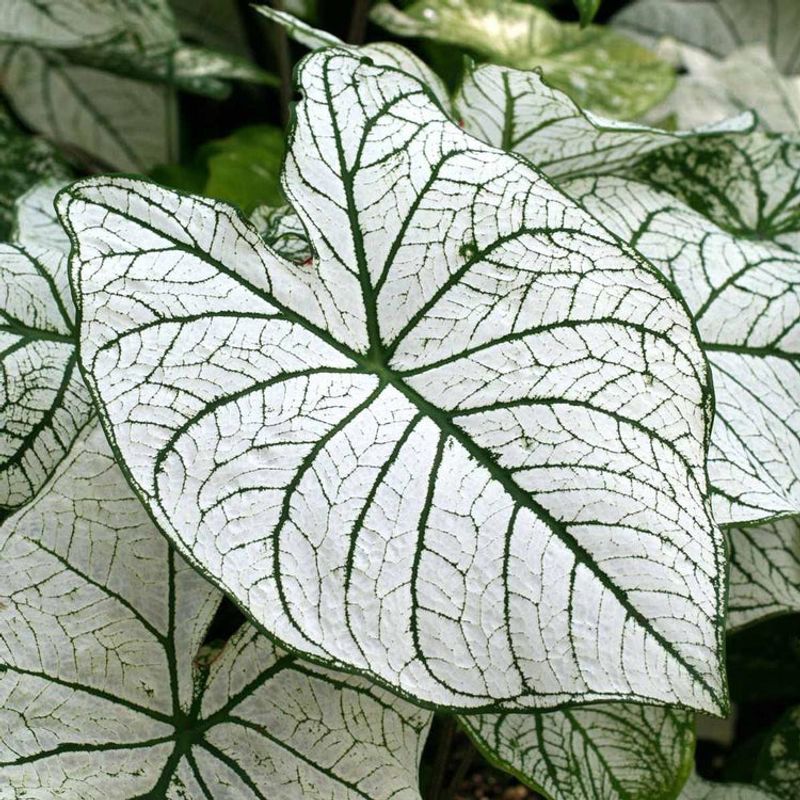
Candidum is the caladium that started a lot of people’s love affair with this plant family. It is a classic for good reason, featuring large white leaves with crisp green veining that gives every leaf an almost hand-painted quality.
There is something timeless about this variety that never feels dated, no matter what other plants surround it.
Michigan gardeners have grown Candidum for decades, and it continues to show up in garden centers every spring because it simply works.
The contrast between the luminous white and the structured green veins is strong enough to brighten up even the darkest corner of a yard.
It works beautifully as a solo planting or as a backdrop for more colorful companions in mixed beds and pots.
Candidum prefers consistent moisture and does best in partial to full shade across Michigan’s growing season.
Plant tubers after the last frost risk passes, typically mid to late May for most Michigan regions, in loose, organically rich soil.
Water two to three times per week during dry spells and add a layer of mulch around the base to help retain moisture and keep roots cool.
Avoid planting in spots that collect standing water, as tubers can rot in overly soggy conditions. Feed every four to six weeks with a balanced fertilizer to keep leaf production strong.
Candidum’s elegant simplicity makes it a go-to choice that Michigan gardeners return to year after year.
6. Fannie Munson Caladium (Caladium Bicolor)
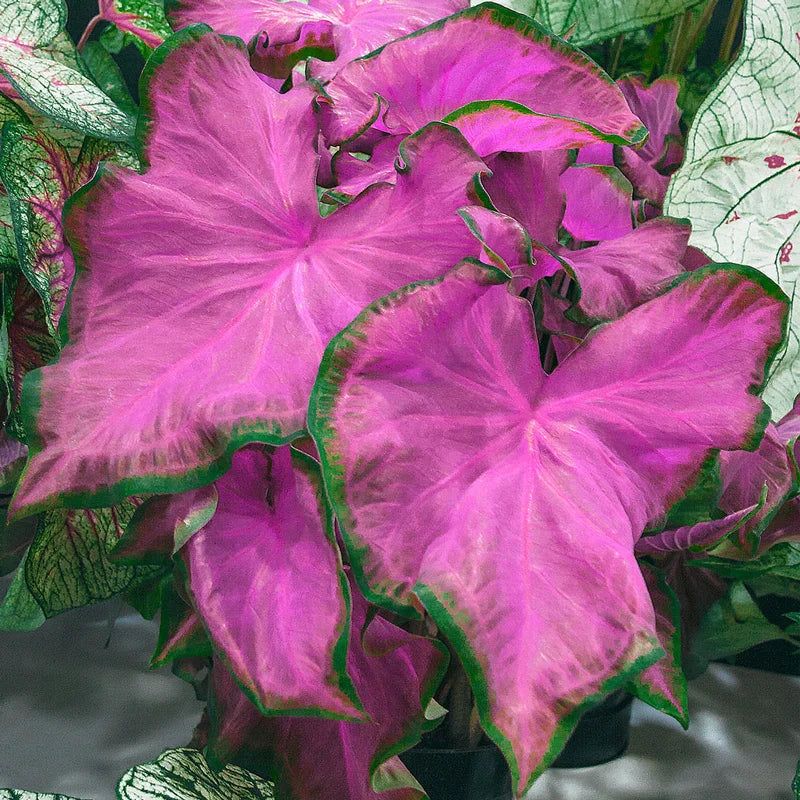
Soft, romantic, and completely impossible to walk past without stopping, Fannie Munson is the pink caladium that earns compliments all summer long.
The leaves are large and generously sized, washed in a warm rose-pink tone with a clearly defined green border that keeps the color from looking washed out. It has a lush, almost tropical quality that feels right at home in a Michigan summer garden.
What makes Fannie Munson especially appealing is how consistently it produces large, full leaves without requiring a lot of fussing.
Many gardeners in Michigan plant it in big decorative containers on patios and porches, where the soft pink tones create a welcoming, cottage-garden feel that pairs beautifully with white or cream-colored flowers nearby.
Impatiens, white begonias, and trailing bacopa all make excellent companions. For strong performance in Michigan, choose a planting spot with morning sun and afternoon shade.
Fannie Munson can handle a bit more light than some caladiums, and that extra light actually intensifies the pink coloring in the leaves.
Start tubers indoors in April, then move plants outside once nighttime temperatures hold steady above 60 degrees Fahrenheit. Water consistently and feed monthly with a slow-release balanced fertilizer.
Mulch the base of container plants to prevent moisture loss during Michigan’s warmer summer stretches.
Fannie Munson rewards attentive care with wave after wave of gorgeous pink foliage from early June through late August.
7. Gingerland Caladium (Caladium Bicolor)
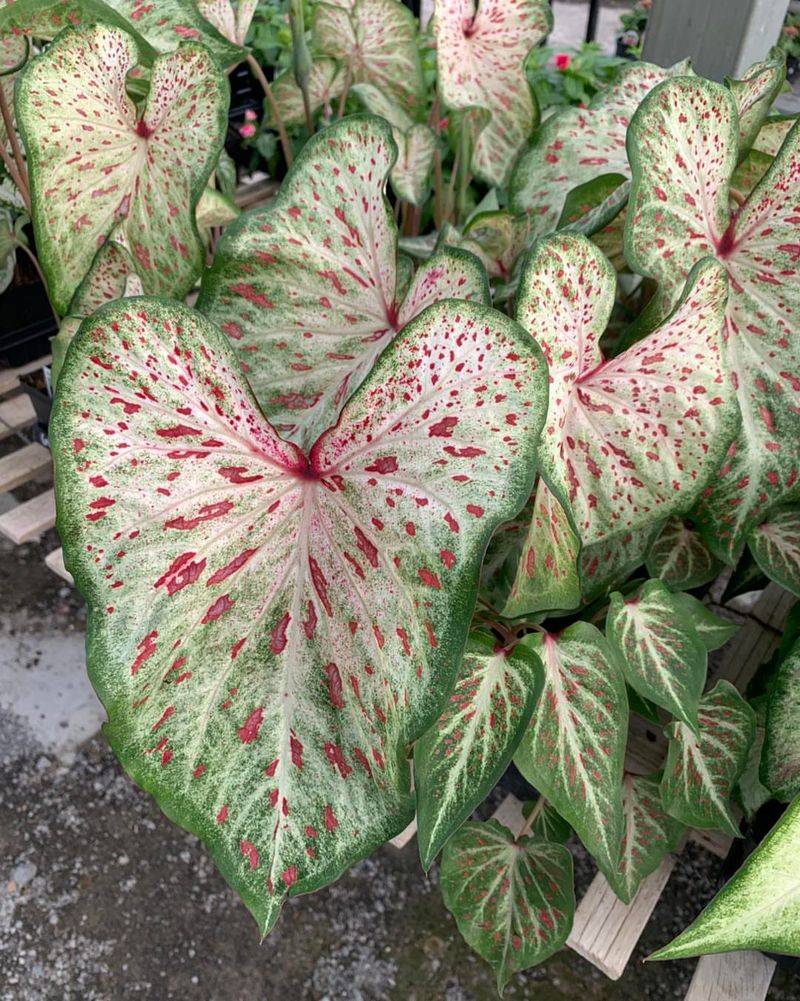
Gingerland Caladium looks like someone took a fine paintbrush and flicked tiny red freckles across creamy white leaves, then outlined everything with a tidy green margin.
The effect is playful, eye-catching, and surprisingly sophisticated all at once. It stands out in any container or garden bed simply because no other caladium quite matches that speckled pattern.
This variety is a fantastic choice for Michigan gardeners who want something a little different from the usual solid-color options.
Gingerland works especially well in mixed container plantings where its freckled leaves add visual texture that complements bolder, solid-colored companions.
Try pairing it with deep red or burgundy plants to make those red speckles really pop against the creamy background.
Gingerland stays slightly more compact than some of the giant-leaf varieties, which actually makes it easier to manage in pots and window boxes throughout the Michigan growing season.
Plant tubers in a well-draining, humus-rich mix and position the container where it gets bright, indirect light for most of the day.
A few hours of gentle morning sun will deepen the red speckling without scorching the delicate white leaf surface.
Water regularly, keeping the soil moist but not soggy, and feed every four weeks with a balanced liquid fertilizer.
Tubers can be dug up in early fall before Michigan’s first frost arrives and stored indoors over winter for replanting the following spring.
Gingerland is quirky, charming, and completely worth growing.
8. Postman Joyner Caladium (Caladium Bicolor)
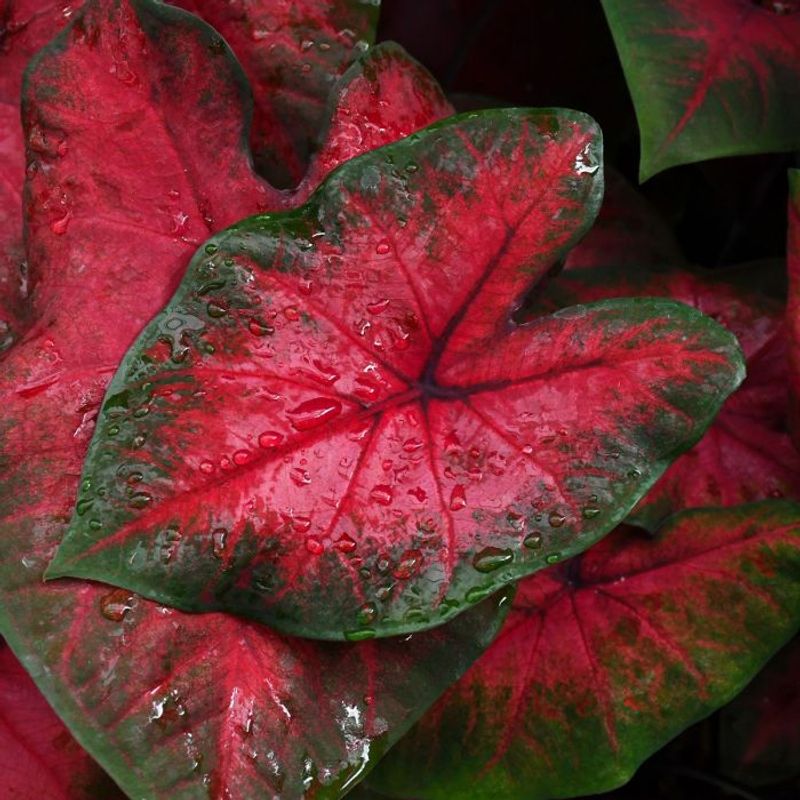
Bold, dramatic, and absolutely unforgettable, Postman Joyner is the kind of caladium that makes a whole garden feel more alive.
The leaves are large and deeply colored in rich, saturated red, framed by dark green borders that sharpen the contrast and make every leaf look like it belongs in a botanical illustration. It commands attention without trying too hard.
Michigan gardeners who want maximum visual impact in shaded beds will find Postman Joyner hard to beat.
The red coloring stays vibrant and true throughout the entire growing season, which is not always the case with red-toned caladiums that can fade as summer heats up.
This variety holds its color reliably, making it a dependable anchor plant for any shaded landscape design.
Plant tubers in rich, moisture-retaining soil after Michigan’s frost risk has fully passed, usually by late May in most areas of the state.
Postman Joyner performs best in partial shade, where the red coloring deepens beautifully without the risk of sun scorch.
Water consistently throughout the season and never let the soil dry out completely between waterings, as caladiums are sensitive to drought stress.
Apply a layer of organic mulch around the base of plants to help regulate soil temperature and retain moisture during warm Michigan summer weeks.
Feed monthly with a balanced fertilizer to support strong leaf production. Group several plants together for a planting that looks genuinely lush and professionally designed.
9. Miss Muffet Caladium (Caladium Bicolor)
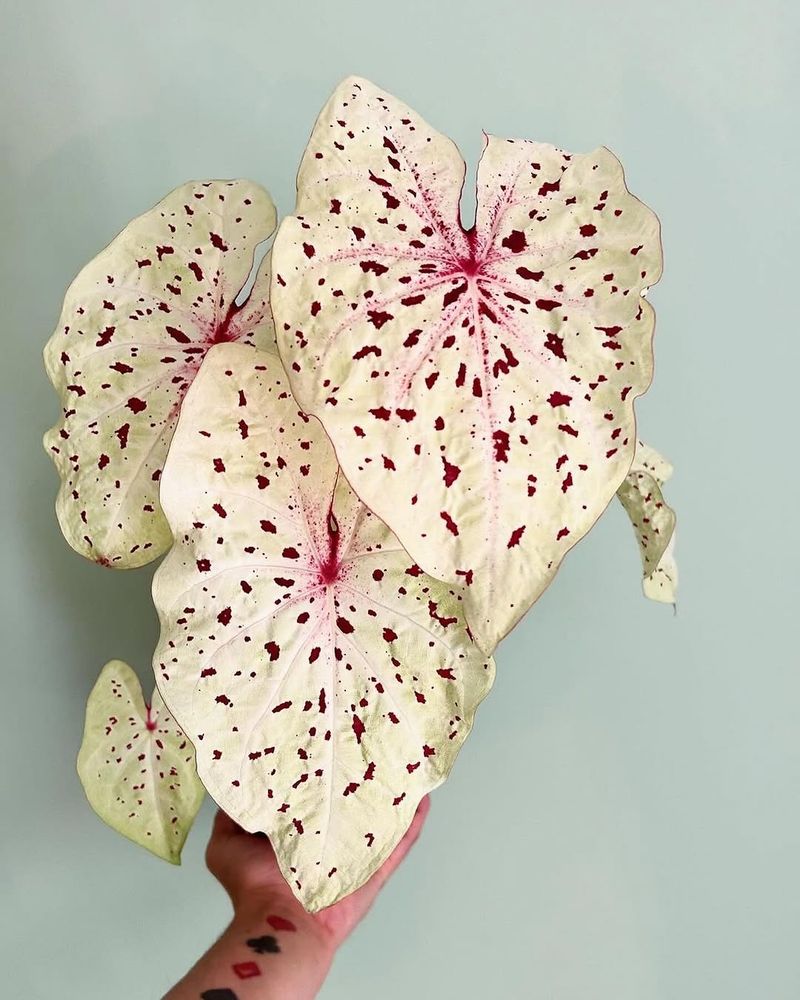
Do not let the smaller leaf size fool you because Miss Muffet Caladium brings more color per square inch than many of its larger cousins.
The light green leaves are covered in cheerful red spots that give the whole plant a bright, festive energy that works perfectly in summer container gardens across Michigan. It is playful, vibrant, and consistently easy to grow.
What sets Miss Muffet apart from the giant-leaf types is how well it fits into smaller containers, window boxes, and mixed plantings where space is limited.
Michigan gardeners with compact patios or apartment balconies appreciate that this variety delivers big tropical color without needing a massive pot or a huge garden bed.
It pairs especially well with trailing plants like sweet potato vine or lobelia that spill over container edges.
For healthy growth in Michigan, plant tubers in well-draining potting mix and position containers in a spot with bright, indirect light or gentle morning sun.
Miss Muffet handles a bit more light than many caladiums, which gives Michigan gardeners more flexibility with placement.
Keep the soil consistently moist and feed every three to four weeks with a balanced liquid fertilizer to encourage steady new leaf production.
Bring containers indoors or dig tubers before Michigan’s first fall frost to save them for next year.
Store tubers in a cool, dry location around 60 degrees Fahrenheit over winter. Miss Muffet is colorful, dependable, and endlessly charming through every Michigan summer.
10. Florida Sweetheart Caladium (Caladium Bicolor)
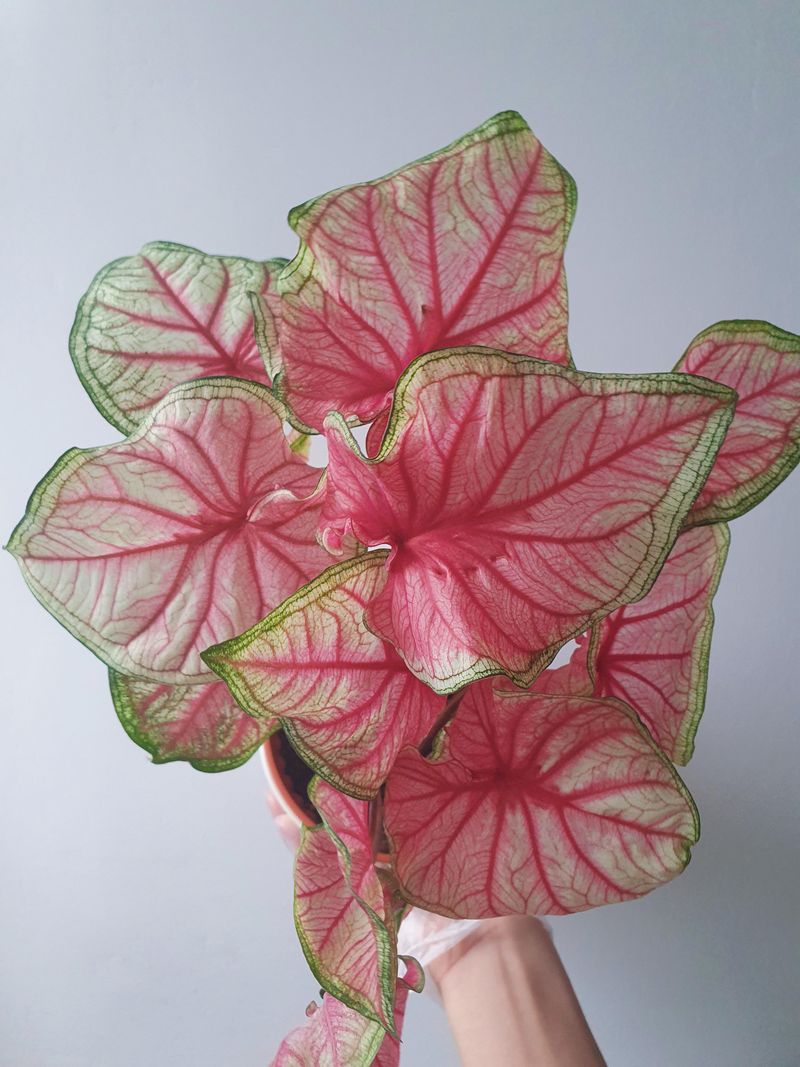
There is something genuinely sweet about a plant shaped like a heart, and Florida Sweetheart Caladium leans fully into that charm.
The leaves are soft pink with clean green edges, formed in a classic heart shape that looks almost intentional, like nature designed them specifically to delight gardeners.
Michigan gardeners who grow this variety often say it becomes an instant conversation starter.
Florida Sweetheart stays on the more compact side compared to some of the larger-leaved varieties on this list, but the color it produces is anything but understated.
The pink tones are vibrant and warm, and the green edging gives each leaf a finished, polished look that holds up beautifully all season long.
It thrives in containers, hanging baskets, and small garden beds where its heart-shaped leaves can be seen up close.
Plant tubers in loose, well-draining soil after Michigan’s last frost date, typically late May across most of the state.
Florida Sweetheart grows best in partial shade, though it can handle brief periods of morning sun without issue.
Water consistently and aim to keep the soil evenly moist throughout the growing season. Feed every four weeks with a balanced slow-release fertilizer to support continuous leaf growth.
Because Michigan summers are relatively short, getting an early start by sprouting tubers indoors in April gives this variety the longest possible display window.
Florida Sweetheart is warm, vibrant, and one of the most lovable caladiums any Michigan gardener can grow.