The May Mistakes That Cause Ixora To Stop Flowering In Florida
May is basically a glow-up season for Florida gardens. As the heat cranks up, Ixora shrubs start acting like they are ready for their close-up.
These tropical beauties love the sunshine, but Florida’s unpredictable May weather can be a real mood ring for your plants. You might be expecting a massive explosion of neon blooms, yet you are staring at a bunch of stubborn green leaves instead.
It is a total bummer when your yard refuses to cooperate! The truth is that sandy soil and weird pH levels can quietly sabotage those flower clusters before they even pop.
A few simple missteps with pruning, watering, light, fertilizer, soil pH, or pest problems can slow down flower production before those bright clusters really get going.
The good news is that most May mistakes are easy to spot once you know what your Ixora is trying to tell you.
1. Shearing Ixora Like A Tight Hedge In May
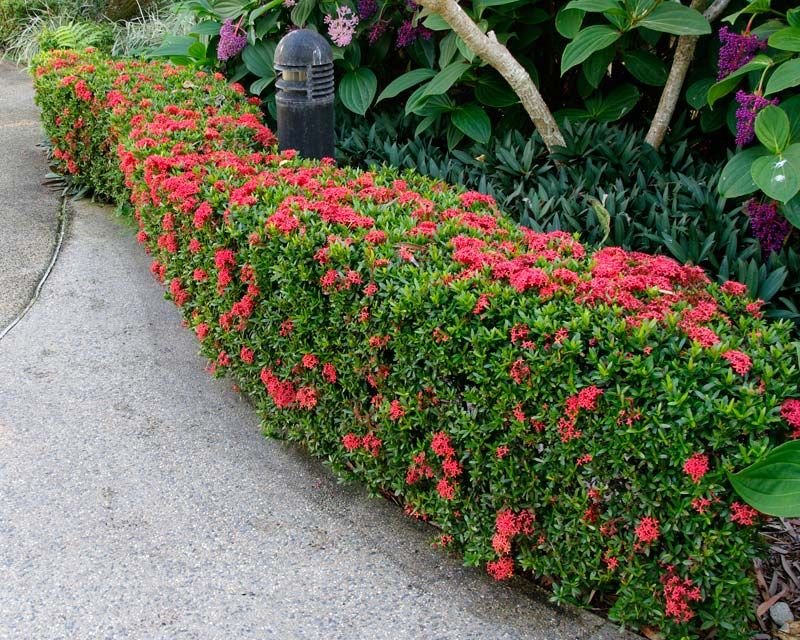
May is exactly when Ixora starts pushing out new growth tipped with developing flower buds, and running a hedge trimmer across the top of the plant at this point removes those buds before they ever open.
Many Florida homeowners treat Ixora the same way they would a ficus hedge, shearing it into a tight, boxy shape every few weeks to keep things looking neat.
The problem is that Ixora blooms on new growth, and repeated shearing keeps removing the very tips where flowers form.
In Florida landscapes, this habit often becomes a routine that runs from spring through summer, which means the plant spends most of the growing season replacing clipped growth rather than producing blooms.
You might notice the shrub looks green and full but rarely shows more than a handful of small flower clusters at a time.
That is a clear sign that mechanical shearing is outpacing the plant’s ability to bloom.
Switching to hand pruners and selectively thinning branches rather than shearing the surface can make a real difference.
Light, targeted cuts allow new growth to develop fully, giving flower buds the time they need to mature and open across the plant.
2. Growing Ixora In Too Much Shade
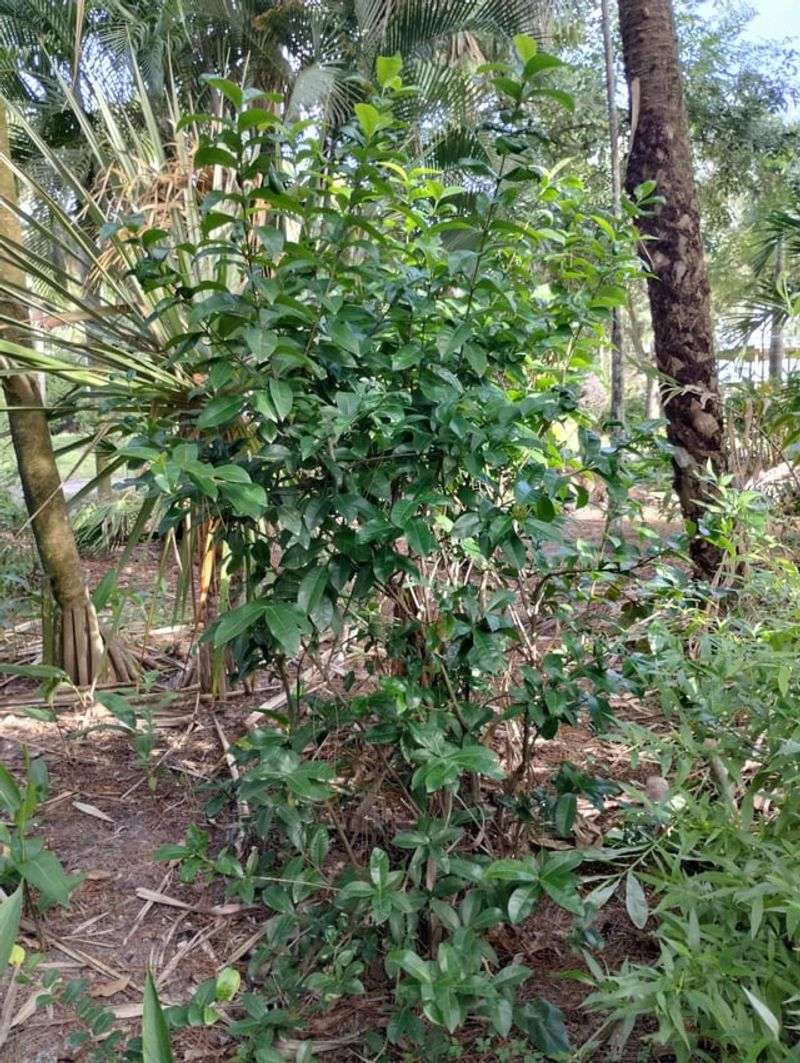
Ixora is a sun-loving plant, and Florida’s landscape offers plenty of it, yet many homeowners end up planting Ixora in spots that receive far less light than the plant actually needs.
Spots along the north side of a house, under the canopy of large oaks, or between taller shrubs that block the afternoon sun can leave Ixora struggling to bloom through May and beyond.
Flower production in Ixora is closely tied to light intensity, and reduced sun exposure tends to reduce blooms noticeably.
A plant growing in too much shade often looks relatively healthy in terms of leaf color but produces very few flower clusters.
The stems may stretch and become leggy as the plant reaches toward available light, and the overall form can become loose and open rather than compact and dense.
These are signs that the location is limiting what the plant can do.
Your Florida Garden Changes Every Week. Your Plan Should Too.
Gardening in Florida changes quickly throughout the season. Every Friday you’ll receive a simple weekly plan showing exactly what to plant, prune, fertilize, harvest, and protect so you never miss the right timing.
If an Ixora is in a spot that now receives more shade than it did when first planted, perhaps because nearby trees have grown larger, relocating the shrub to a sunnier area during a cooler part of the year may be worth considering.
In Florida, Ixora tends to perform best with at least six hours of direct sun daily, and more sun generally supports better flowering through the warm season.
3. Doing Major Shape Pruning Too Late
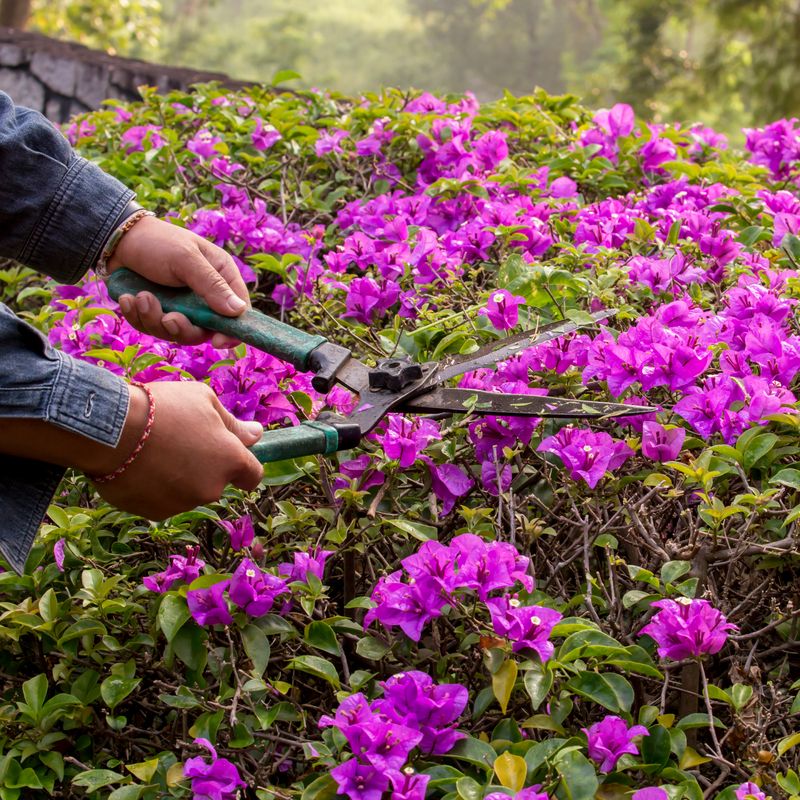
Timing matters more than most Florida gardeners realize when it comes to shaping Ixora.
Major pruning that removes a significant portion of the plant is generally more effective when done earlier in spring as new growth is just beginning, not in mid to late May when the plant has already committed energy toward building flower buds.
Cutting back hard during May essentially sets the clock back and forces the shrub to start over.
In Florida’s warm climate, Ixora can recover relatively quickly compared to plants in cooler regions, but that recovery still takes time. Heavy pruning in May often pushes flowering several weeks or even months later than expected.
Gardeners who prune hard and then wonder why their Ixora is not blooming through summer may not realize that the pruning itself caused the delay.
If shaping is needed in May, keeping cuts light and selective rather than removing large portions of the canopy is a smarter approach. Focusing on crossing branches, dead wood, or a few wayward stems preserves most of the developing growth.
Saving any significant reshaping for late winter or very early spring gives Ixora the best chance of producing a strong flush of blooms as Florida’s warm season builds.
4. Ignoring Alkaline Soil Problems
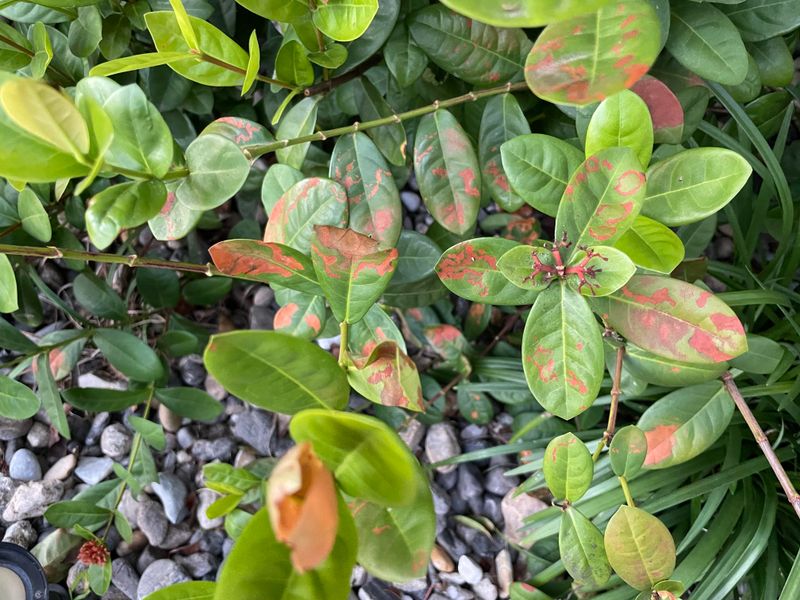
Soil pH plays a bigger role in Ixora flowering than many Florida gardeners expect.
Ixora prefers acidic soil, generally in the pH range of about 5.0 to 6.0, and when soil becomes too alkaline, the plant struggles to absorb iron and other micronutrients even when those nutrients are present in the soil.
The result is a condition called chlorosis, where leaf tissue between the veins turns yellow while the veins themselves stay green.
Florida’s soils vary quite a bit across the state, but alkaline conditions are common in areas with limestone-based soils or where fill material has been used in newer developments.
Irrigation water in many parts of Florida also tends to be alkaline, which can gradually raise soil pH over time even in beds that started out more acidic.
Gardeners who notice yellowing leaves on their Ixora in May but keep adding fertilizer without addressing pH are often missing the root cause.
Testing soil pH is a straightforward step that can reveal a lot. If pH is too high, applying soil sulfur or an acidifying fertilizer formulated for acid-loving plants can help bring it back into a more favorable range.
Addressing pH first makes fertilizer applications far more effective and can restore the plant’s ability to produce healthy, consistent blooms.
5. Planting Too Close To Concrete
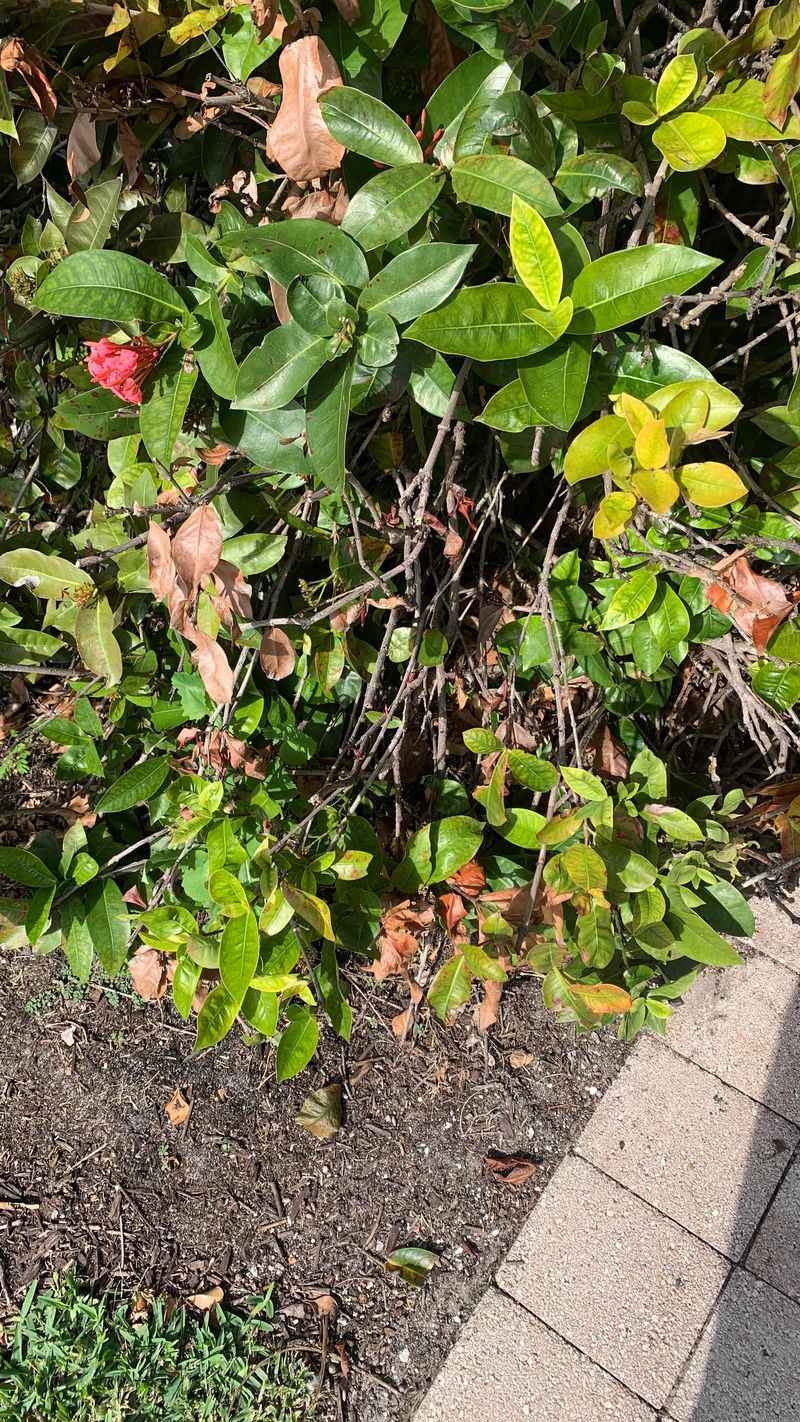
Concrete driveways, sidewalks, and patios are common features in Florida yards, and Ixora is often planted right along these edges for a tidy, colorful border.
What many gardeners do not realize is that concrete leaches lime into the surrounding soil over time, gradually raising the pH in the root zone.
For Ixora, which already struggles in alkaline conditions, planting near concrete can set the stage for nutrient problems that show up most noticeably during the active growing season in May.
Plants placed right along a concrete edge may begin to show yellowing leaves, reduced flower production, and overall poor vigor even when they receive regular water and fertilizer.
The pH shift near the concrete can prevent iron and manganese uptake, leading to the same chlorosis pattern seen in naturally alkaline soils.
Gardeners sometimes blame the plant or the fertilizer without connecting the problem back to the nearby concrete.
Keeping Ixora at least a few feet away from concrete edges reduces this risk, though it does not eliminate it entirely in Florida’s warm, wet climate where lime continues to leach with each rain and irrigation cycle.
Using an acidifying mulch like pine bark and monitoring soil pH regularly near hardscape edges are practical steps that can help keep conditions more favorable for steady flowering.
6. Using Rock Or Pea Gravel Mulch Around Ixora
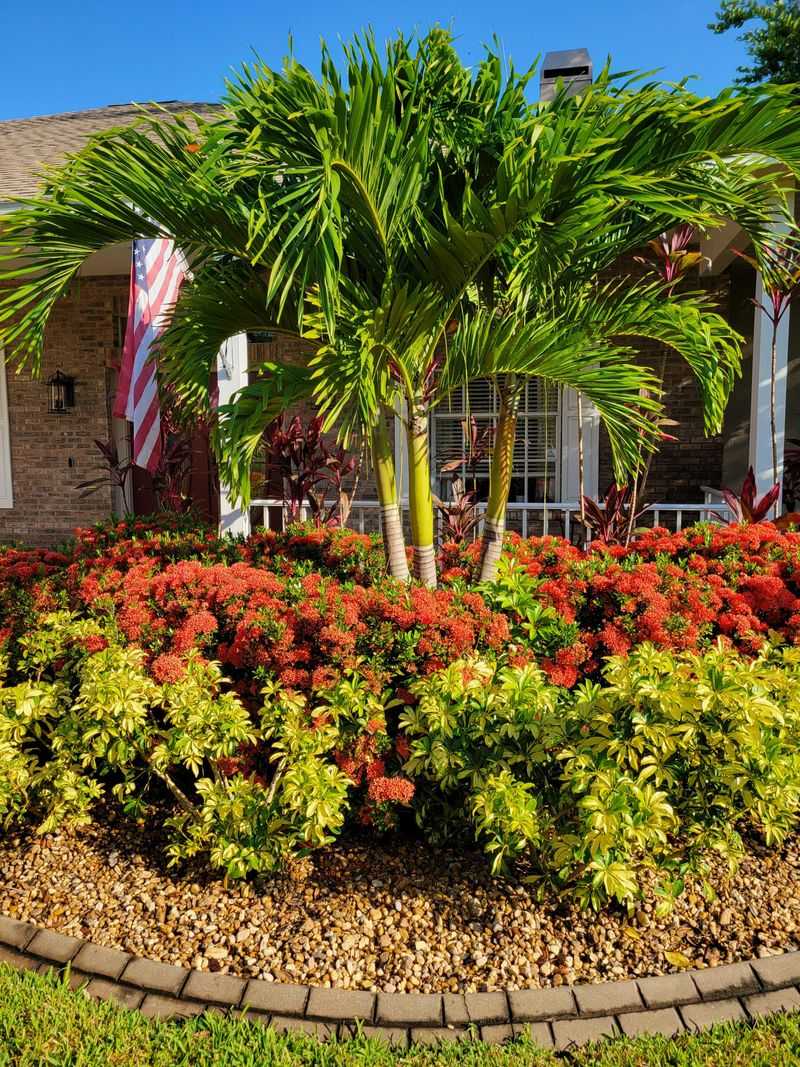
Rock mulch and pea gravel have become popular choices in Florida landscapes because they look clean, last a long time, and do not need to be replaced like organic mulch.
For Ixora, though, using rock or gravel around the base of the plant can create a harsh environment that works against good flowering.
Rocks absorb and radiate heat, raising soil temperatures around the root zone to levels that can stress the plant during Florida’s already warm May days.
Beyond heat, rock mulch does not break down and add organic matter to the soil the way pine bark or wood chip mulch does.
Ixora benefits from the slow improvement in soil structure and mild acidification that organic mulch provides as it decomposes.
Gravel and rock offer none of those benefits and can actually contribute to drier soil conditions between watering cycles, since they do not hold moisture the way organic material does.
Switching to a two to three inch layer of pine bark mulch or shredded wood mulch kept a few inches away from the main stem can improve soil moisture retention, moderate root zone temperatures, and gently support more acidic soil conditions over time.
These are relatively simple changes that can support better overall plant health and more consistent blooming through Florida’s warm growing season.
7. Skipping May Fertilizer For Established Plants
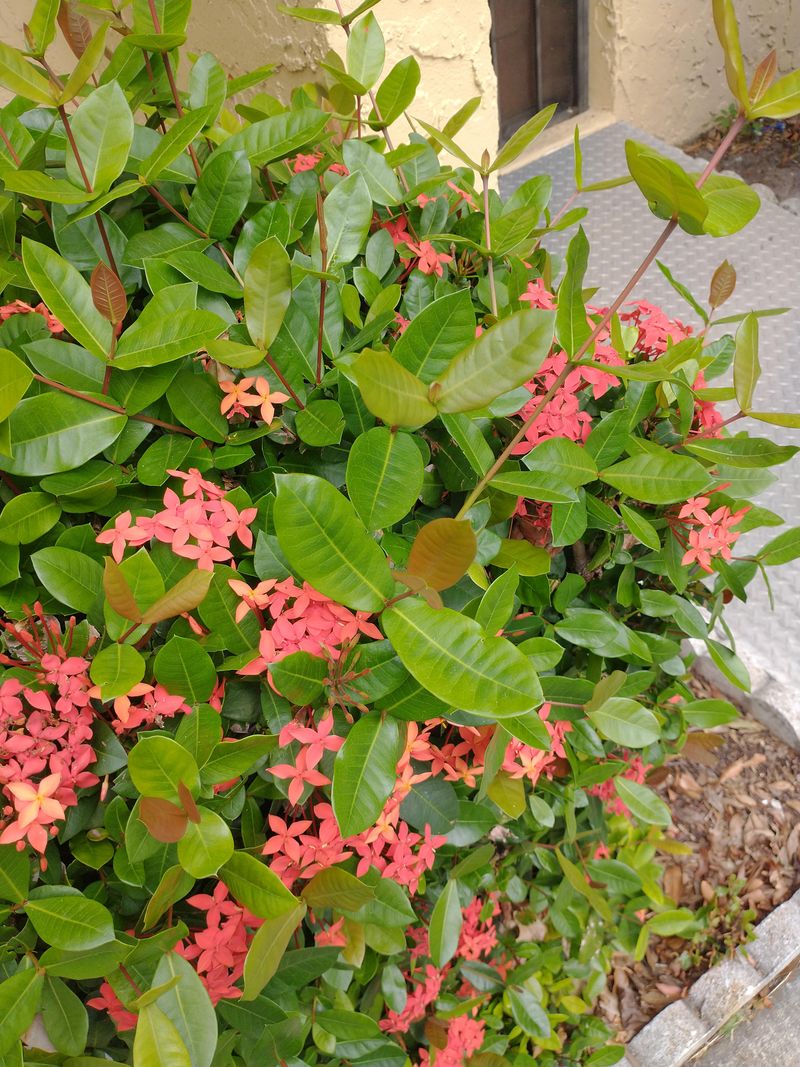
Established Ixora plants that have been in the ground for several years sometimes get overlooked at fertilizer time because they already look decent and gardeners assume they can take care of themselves.
May is actually a key month to fertilize Ixora in Florida because the plant is actively growing and pushing out new stems and potential flower buds.
Skipping fertilizer during this window can leave the plant without the nutrients it needs to support a strong flush of blooms.
Nitrogen supports leafy growth and overall plant vigor, while phosphorus and micronutrients like iron and magnesium play roles in flowering and color.
An all-purpose fertilizer that does not include micronutrients may not fully address what Ixora needs, especially in Florida’s sandy soils where nutrients leach out quickly with rainfall and irrigation.
A fertilizer formulated specifically for acid-loving plants and containing micronutrients tends to be a better fit for Ixora in most Florida landscapes.
Applying fertilizer in May and again in late summer or early fall gives Ixora consistent nutritional support through the warm growing season.
Following label directions on application rates avoids the risk of over-fertilizing, which can push excessive leafy growth at the expense of flowers.
Consistent, correctly timed feeding supports the kind of steady bloom production that makes Ixora such a rewarding plant in Florida yards.
8. Treating Nutrient Deficiencies The Wrong Way
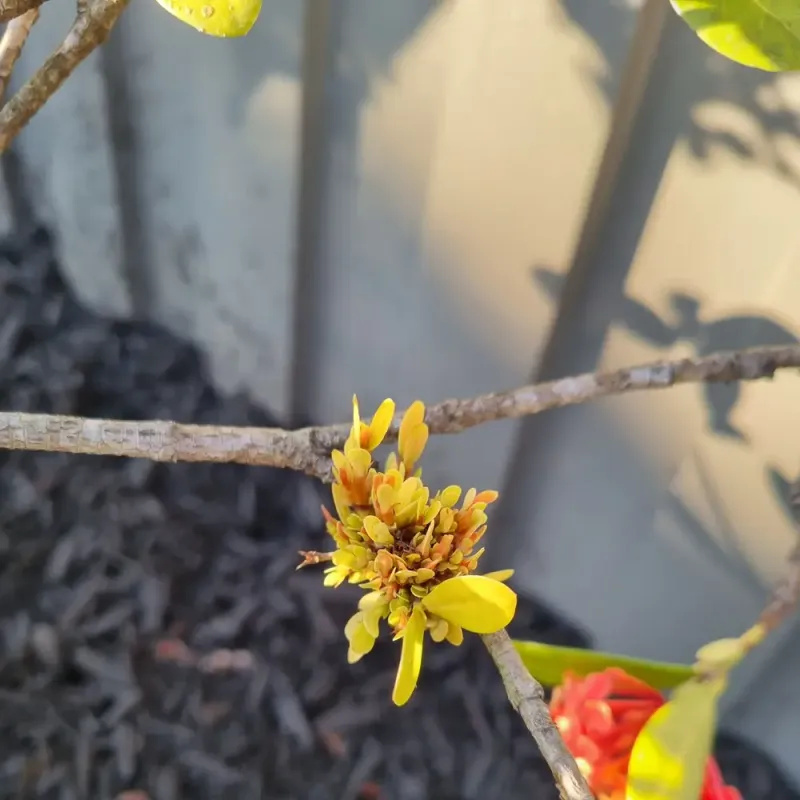
Yellowing leaves on Ixora are one of the most common complaints among Florida gardeners, and the instinct to grab a bag of general fertilizer and apply it heavily is understandable.
The challenge is that not all yellowing looks the same, and not all yellowing responds to the same treatment.
Iron deficiency tends to cause yellowing between the veins on younger leaves near the tips of branches, while magnesium deficiency often shows up on older leaves toward the center of the plant.
Applying the wrong product can waste money and sometimes make conditions worse.
Over-applying nitrogen-heavy fertilizers without addressing pH or specific micronutrient shortfalls is a common misstep.
In Florida’s alkaline or lime-affected soils, iron and manganese are often present in the soil but locked in forms the plant cannot absorb.
Foliar sprays containing chelated iron can offer faster short-term relief in some cases, while longer-term improvement usually requires addressing soil pH alongside fertilizer applications.
Getting a soil test through a local extension office or garden center is one of the most practical things a Florida gardener can do before treating any deficiency.
A test takes the guesswork out of the process and helps identify whether the problem is pH, a missing nutrient, or something else entirely, leading to more targeted and effective care for Ixora.
9. Overwatering Or Planting Where Water Collects
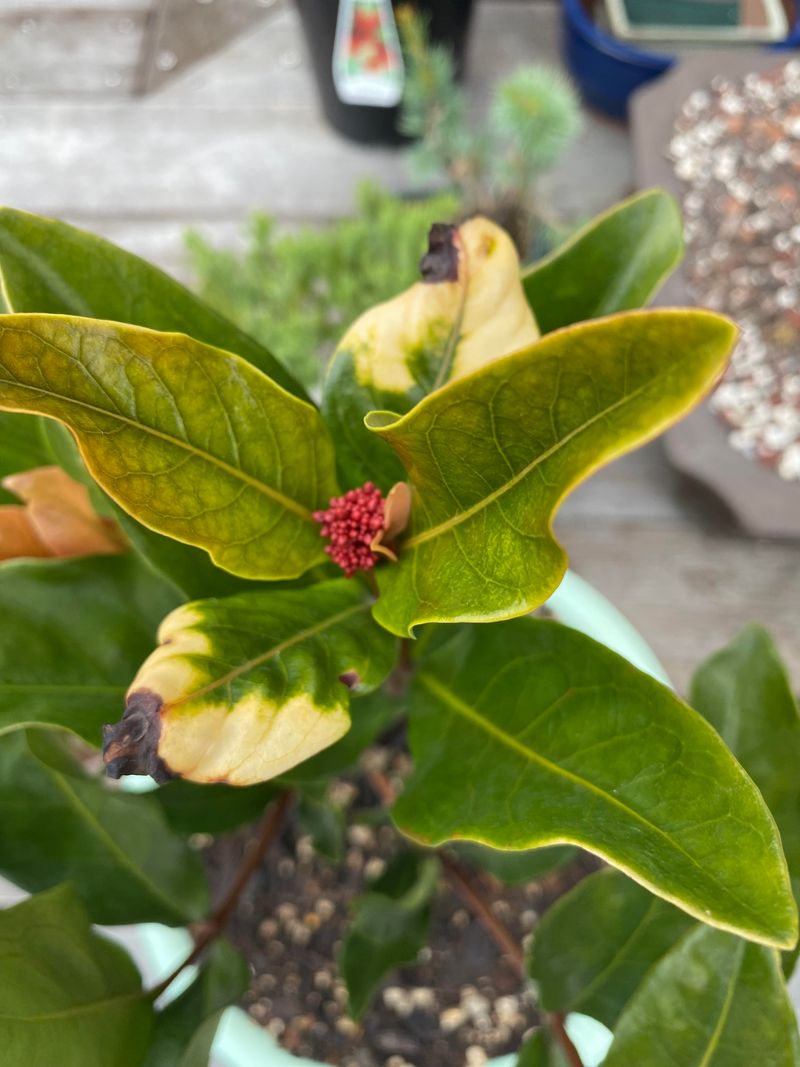
Florida’s rainy season typically begins to ramp up around May, and the timing can catch gardeners off guard when it overlaps with irrigation schedules that have not been adjusted for the changing weather.
Ixora prefers moist soil but does not tolerate standing water or consistently soggy conditions around its roots.
Planting in low spots that collect runoff or continuing to run irrigation systems at the same frequency as during dry spring months can push the root zone into waterlogged territory.
Roots sitting in overly wet soil have limited access to oxygen, which weakens the plant’s ability to take up nutrients and support flowering.
Gardeners may notice that an Ixora planted in a low area looks tired, produces few blooms, and shows general decline even when soil nutrients and pH seem fine.
The drainage issue is often the hidden factor reducing plant performance.
Adjusting irrigation schedules as May rains increase is a simple but effective step. Florida’s smart irrigation controllers with rain sensors can help automate this process.
For plants already in low spots, improving drainage by amending the soil with organic matter or raising the bed slightly can reduce waterlogging over time.
Choosing planting locations with good natural drainage from the start saves a lot of trouble and supports much healthier, more floriferous Ixora over the long run.
10. Letting Sooty Mold And Sap-Feeding Insects Go Unchecked
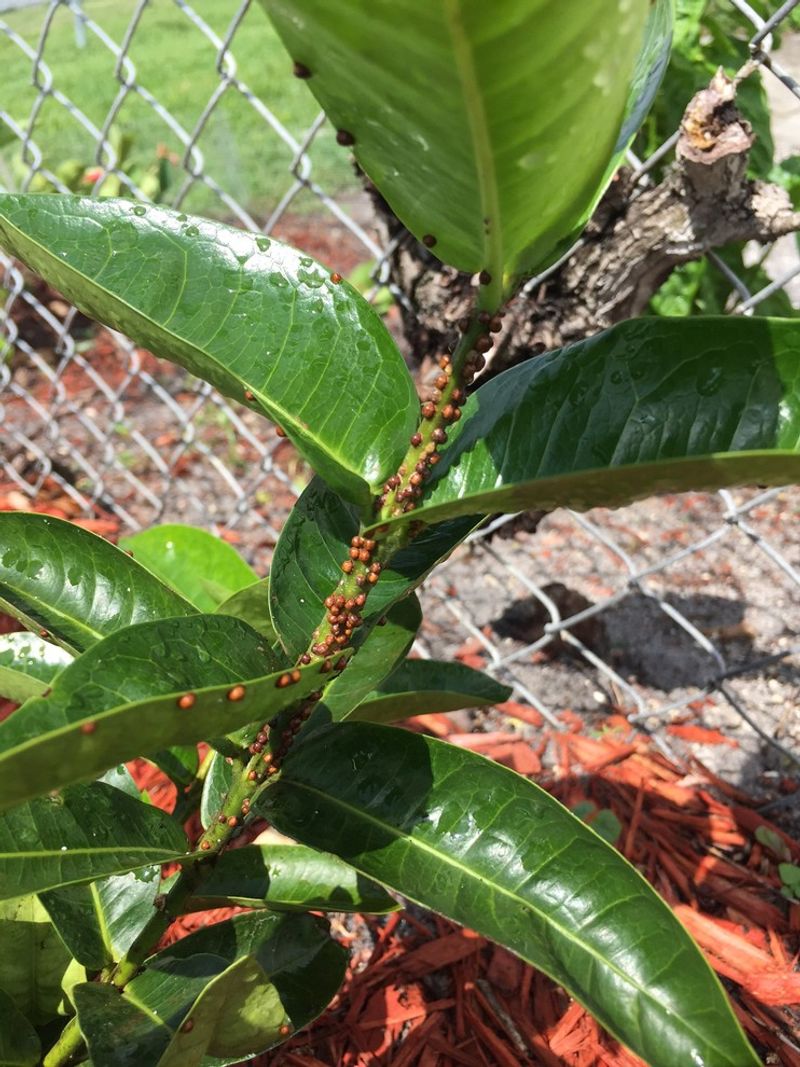
A black, dusty coating on Ixora leaves is not just an eyesore – it is a sign that sap-feeding insects have been active on the plant.
Sooty mold grows on the sticky honeydew that insects like scales, aphids, mealybugs, and whiteflies leave behind as they feed.
In Florida’s warm May climate, these pest populations can build up quickly on Ixora, especially on plants that are already stressed from poor soil conditions, too much shade, or inconsistent watering.
The mold itself does not attack the plant directly, but a heavy coating on leaves reduces the amount of light reaching the leaf surface, which can reduce photosynthesis and overall plant energy. Less energy means fewer resources available for producing flowers.
Meanwhile, the insects feeding on plant sap are pulling nutrients and moisture directly from the stems and leaves, further weakening the plant’s ability to bloom well through the growing season.
Checking Ixora regularly for sticky residue, black coating, or small insects on stems and leaf undersides allows for early action before populations grow large.
Horticultural oil or insecticidal soap applied according to label directions can help manage soft-bodied sap feeders on Ixora in Florida.
Treating the pest problem removes the source of honeydew, and sooty mold tends to weather away on its own once the insects are under control.