The 7 Florida Shrubs People Regret Planting Once Summer Arrives
Spring in Florida has a way of making bad plant decisions look perfectly reasonable. The temperatures are comfortable, garden centers are packed with options, and everything sitting in those nursery rows looks healthy, full, and full of potential.
So gardeners load up the car, get things in the ground, and feel good about it. Then summer arrives and the regret starts creeping in.
Florida summers are a completely different beast.
The heat builds, the humidity sits heavy, the afternoon storms roll through daily, and certain shrubs that looked so promising in March begin to struggle, thin out, attract every pest in the neighborhood, or simply refuse to perform the way the plant tag suggested they would.
The hard truth is that some shrubs are genuinely not worth the trouble in a Florida garden, and most people only figure that out after a summer of watching them fall apart. Knowing which ones to avoid before you buy saves a lot of frustration.
1. Common Lantana Spreads Fast In Summer
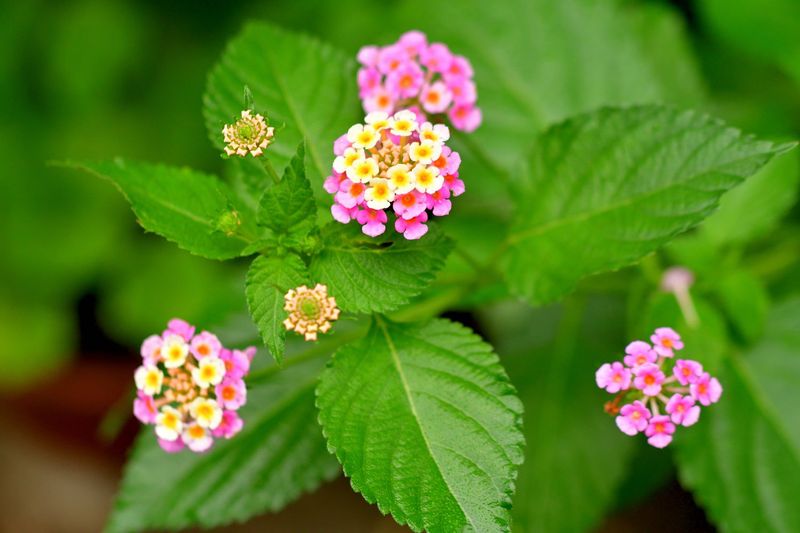
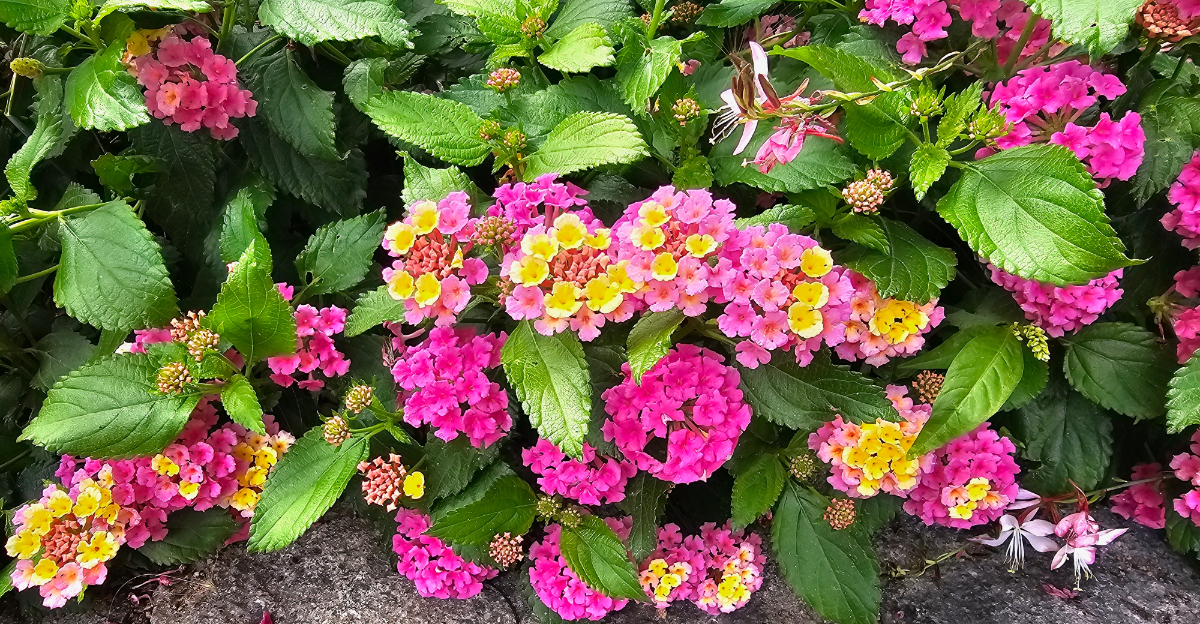
Few plants look as cheerful at the garden center as common lantana, with its clusters of bright orange, yellow, and pink flowers practically begging you to take one home.
The trouble starts when Florida’s summer heat and heavy rainfall give it exactly what it needs to go wild.
Nonnative lantana, currently listed by the Florida Invasive Species Council as Lantana strigocamara (syn. Lantana camara), is a Category I invasive species, meaning it alters native plant communities by displacing native species and changing community structure.
Once established, common lantana spreads mainly through berries eaten and dispersed by birds, while its fast growth allows it to form dense thickets. A small plant bought in April can become a sprawling, thorny tangle by August.
Removing it is frustrating work because the roots anchor deeply into Florida’s sandy soil, and any piece left behind tends to resprout.
It forms dense thickets that crowd out native groundcovers and shrubs, especially along roadsides, disturbed areas, and the edges of natural lands.
The good news is that not all lantana is created equal. Native pineland lantana, Lantana depressa, is a much better-behaved choice for South Florida’s pine rockland and coastal areas.
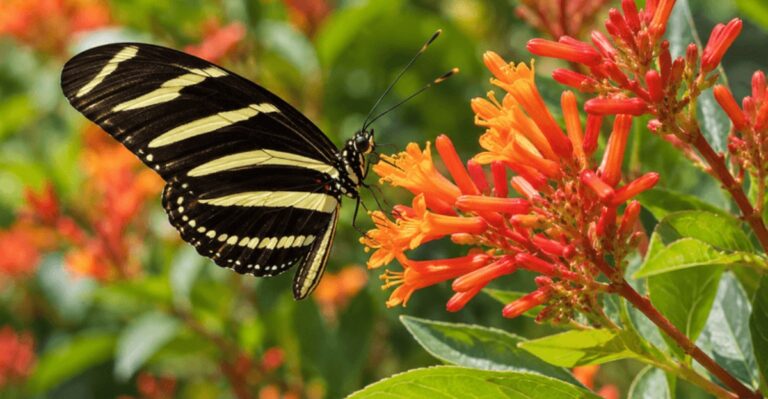
Firebush, Hamelia patens, offers equally vibrant color and outstanding pollinator value for Central and South Florida gardens without the invasive risk.
Beautyberry, Callicarpa americana, brings stunning purple berries and wildlife appeal for gardeners across the state.
If pollinators are your goal, these Florida-friendly options deliver the same visual payoff with far less regret once summer rolls around.
2. Brazilian Pepper Bullies Florida Yards
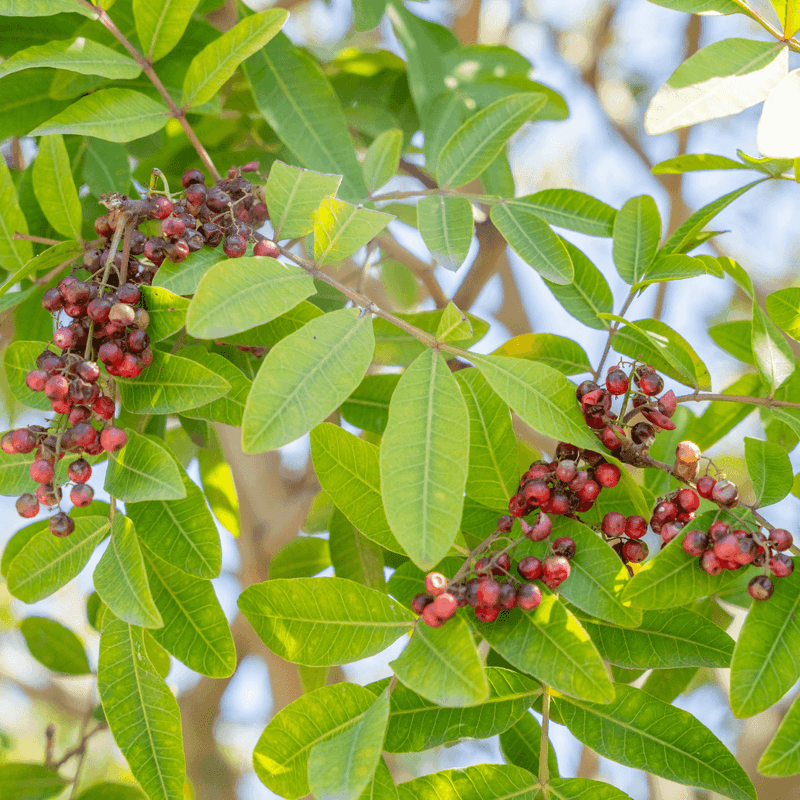
Walk through almost any disturbed natural area in Central or South Florida and you will almost certainly run into Brazilian pepper, Schinus terebinthifolia.
Its lush, dark green leaves and clusters of bright red berries make it look attractive at first glance, but this plant is one of the most aggressive invaders in the state.
It is also a Category I invasive species in Florida and is illegal to plant, sell, or transport under Florida law.
Your Florida Garden Changes Every Week. Your Plan Should Too.
Gardening in Florida changes quickly throughout the season. Every Friday you’ll receive a simple weekly plan showing exactly what to plant, prune, fertilize, harvest, and protect so you never miss the right timing.
Despite its legal status, Brazilian pepper still shows up in yards, often carried in by birds that eat the berries. Once it takes root, the plant grows quickly into dense, impenetrable thickets that shade out everything else.
Roots spread wide and deep, and the plant resprouts vigorously after cutting. In warm, wet summers, the growth rate is remarkable in the worst possible way.
People who let a seedling go unnoticed quickly find themselves dealing with a full-scale invasion that threatens neighboring natural areas.
Removing established Brazilian pepper requires persistence. Repeated cutting, combined with careful treatment of the cut stumps, is typically needed before the plant gives up.
Homeowners near preserves, parks, or wetlands have an added responsibility to stay on top of any new seedlings. For a dense, wildlife-friendly screen, Walter’s viburnum, Viburnum obovatum, is an outstanding Florida native alternative.
Simpson’s stopper, Myrcianthes fragrans, works beautifully as a hedge or specimen plant. Wax myrtle, Morella cerifera, grows fast and provides excellent bird habitat.
For coastal South Florida sites, buttonwood, Conocarpus erectus, offers salt tolerance and native value without any of the invasive drama.
3. Coral Ardisia Brings Invasive Regret
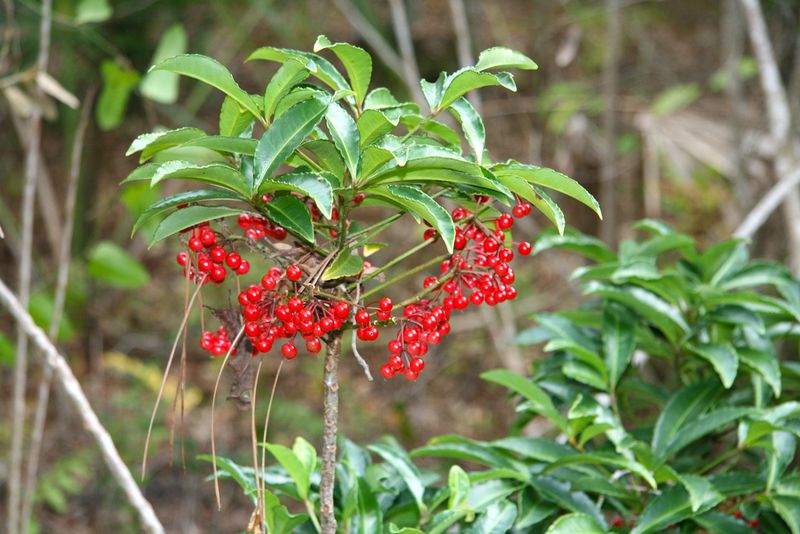
Coral ardisia, Ardisia crenata, has a look that draws people in. The glossy, dark green leaves are elegant, and the clusters of bright red berries that appear in fall and winter look almost festive.
It was widely sold as a landscape plant for shaded Florida gardens for years, and many homeowners still have it without realizing what it is.
Listed as a Category I invasive species by the Florida Invasive Species Council, coral ardisia spreads steadily through bird- and mammal-dispersed seeds and occurs throughout Florida, though it is currently most abundant in North Florida and especially problematic in shaded, moist hammocks and forest understories.
Shaded, moist areas are where coral ardisia does its worst damage. It forms a dense carpet of seedlings beneath trees and along stream banks, outcompeting native wildflowers, ferns, and shrubs that wildlife depend on.
The berries are produced in large numbers, and birds carry the seeds far beyond any yard. A single plant left unchecked can seed an entire wooded area within a few years.
Once a population establishes, removal is labor-intensive and requires pulling plants by the roots before berries form.
Shaded Florida gardens have far better options. Wild coffee, Psychotria nervosa, is a beautiful native shrub for South Florida shade gardens, producing small red fruits that native birds genuinely love.
Beautyberry thrives in partial shade and puts on a spectacular show of purple berries in fall. Coontie, Zamia integrifolia, adds bold texture to shaded or partly sunny spots and supports the rare Atala butterfly.
Simpson’s stopper and Walter’s viburnum round out the list of dependable, regionally appropriate choices that reward you without the invasive aftermath.
4. Surinam Cherry Escapes South Florida Yards
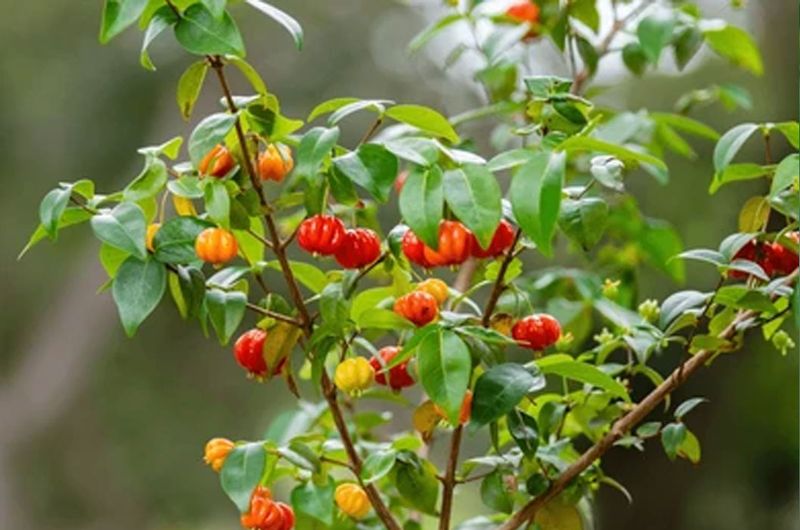
Surinam cherry, Eugenia uniflora, has been a common sight in South Florida hedges for decades. The plant is fast-growing, takes well to trimming, and produces small ribbed fruits that ripen from green to orange to deep red.
Plenty of homeowners have fond memories of snacking on the tangy little fruits straight off the hedge. The problem is that birds love them just as much, and those birds carry the seeds into natural areas where Surinam cherry has no business growing.
Classified as a Category I invasive species in Florida, Surinam cherry establishes readily in disturbed areas, hammocks, and the edges of natural lands throughout South Florida.
It grows quickly enough to shade out native groundcovers and shrubs, forming dense patches that change the character of native plant communities.
For homeowners with properties near preserves, parks, or natural areas, planting Surinam cherry puts nearby ecosystems at real risk. Even in urban settings, the seeds move farther than most people expect.
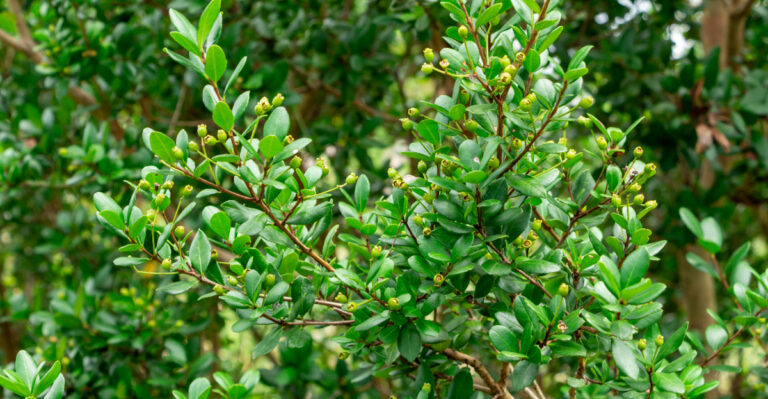
South Florida gardeners looking for a compact, attractive hedge shrub have excellent native options. Simpson’s stopper produces small white flowers and red berries that wildlife adore, and it holds a tidy shape with minimal pruning.
Wild coffee works well in partly shaded South Florida spots and supports native birds with its berries. Walter’s viburnum handles a range of conditions and responds well to hedging.
Yaupon holly, Ilex vomitoria, and wax myrtle both offer fast growth, wildlife value, and adaptability across much of the state. Florida privet, Forestiera segregata, is another regionally suitable choice for coastal and South Florida landscapes.
5. Gardenia Brings Summer Pest Pressure
The fragrance of gardenia in bloom is genuinely hard to resist, and that scent is exactly why so many Florida gardeners bring one home despite knowing the plant’s reputation.
Gardenias, Gardenia jasminoides, do grow in Florida, but they do not exactly thrive without effort.
Florida’s warm, humid summers create ideal conditions for a parade of pest problems that can leave even an experienced gardener feeling exhausted by midsummer.
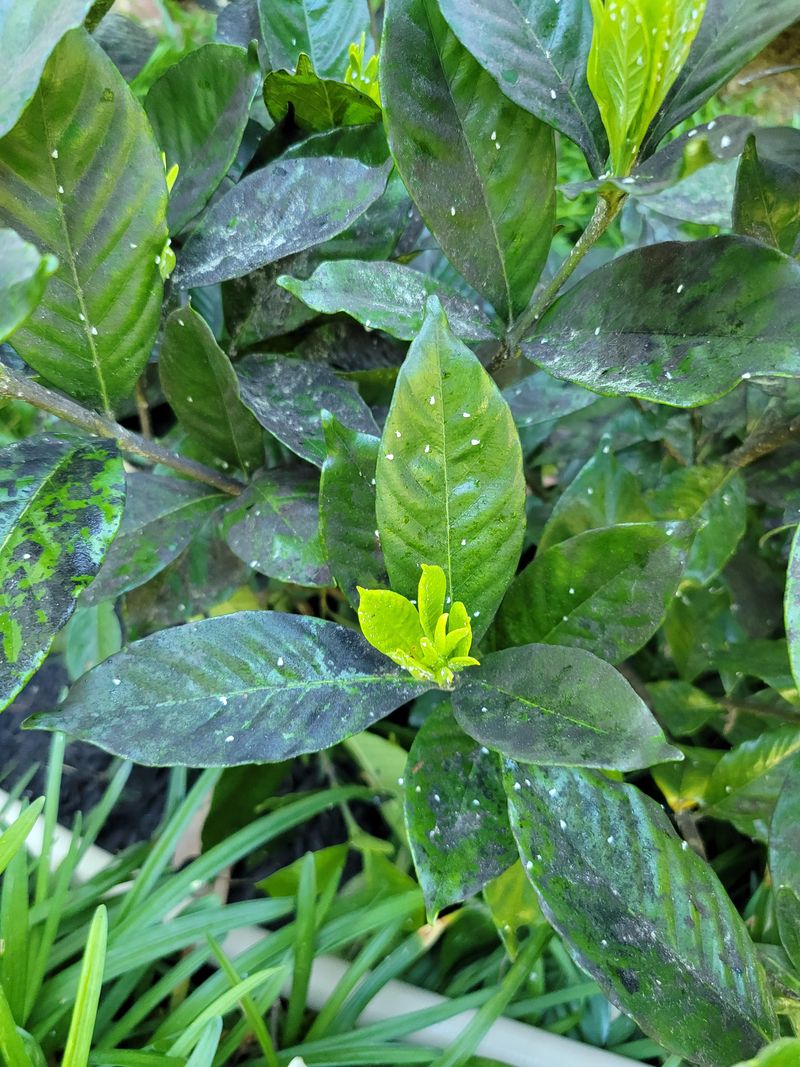
Whiteflies are perhaps the most notorious gardenia pest in Florida, clustering thickly on leaf undersides and producing sticky honeydew that leads to black sooty mold coating the foliage.
Scale insects, aphids, and mealybugs also target gardenias with enthusiasm during warm months.
The combination of pests, sooty mold, and the plant’s sensitivity to soil pH and nutritional imbalances often results in yellowing leaves and a generally sad-looking shrub by August. Regular monitoring, appropriate fertilization, and targeted pest management are all part of keeping gardenias presentable.
Gardenias are not impossible to grow in Florida, but they reward attentive gardeners rather than low-maintenance ones.
If you are willing to check your plants weekly and respond quickly to pest outbreaks, a gardenia can still bring real beauty and fragrance to the right spot.
For gardeners who prefer a more relaxed approach, Simpson’s stopper offers attractive white flowers and wildlife value with far less fuss. Wild coffee suits shaded South Florida gardens beautifully.
Beautyberry and firebush bring color and pollinators without the pest drama, and Walter’s viburnum works across a wide range of Florida landscapes with minimal intervention.
6. Hibiscus Brings Blooms And Bugs
Tropical hibiscus, Hibiscus rosa-sinensis, is one of the most recognizable shrubs in Florida, and for good reason. The flowers are enormous, the colors are spectacular, and the plant blooms enthusiastically in warm weather.
Plenty of Florida gardeners swear by it, and it absolutely can be a showstopper in the right hands. The catch is that Florida summers bring not just blooms but a reliable wave of pest pressure that catches many first-time hibiscus growers off guard.
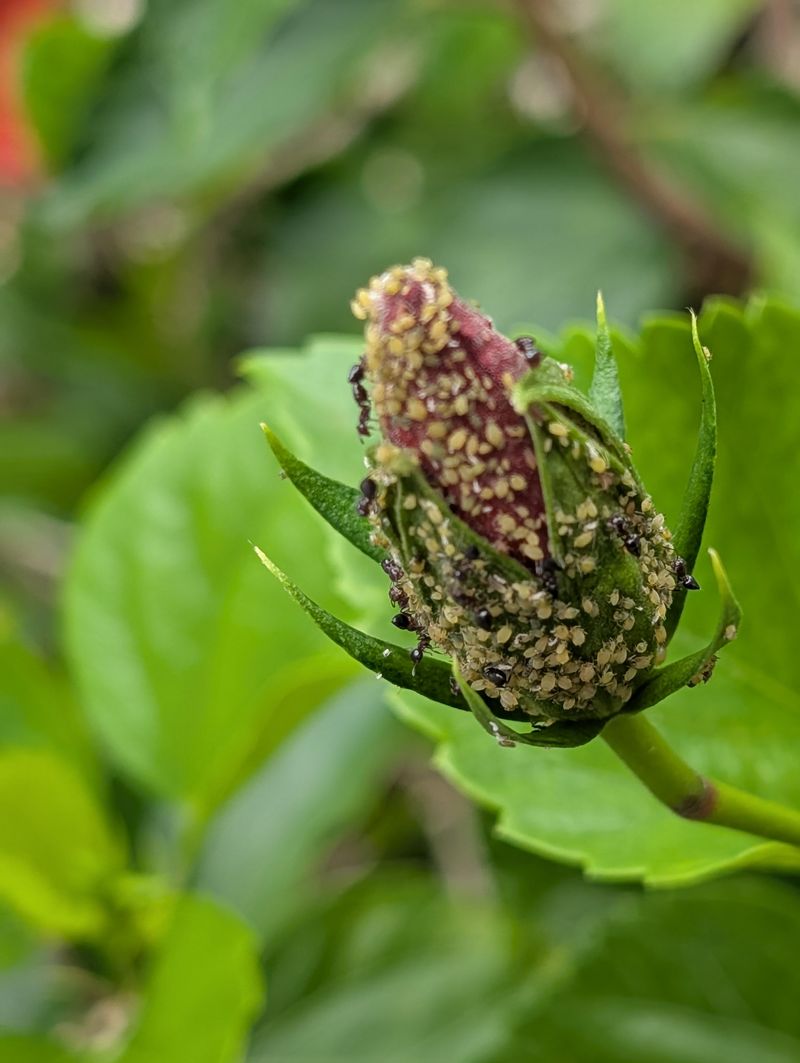
Aphids, whiteflies, mealybugs, and spider mites all find tropical hibiscus extremely appealing, especially during the heat of summer.
The pests tend to congregate on new growth and the undersides of leaves, where they can go unnoticed until the damage is already significant.
Sooty mold often follows whitefly infestations, leaving foliage looking dark and dingy. Staying ahead of these problems means checking the plant regularly, rinsing foliage with water, and treating outbreaks early with appropriate methods before populations explode.
Hibiscus works best for gardeners who genuinely enjoy tending their plants and checking in often rather than planting and walking away. If that sounds like you, the blooms are absolutely worth it.
For a lower-maintenance flowering option, firebush is a standout choice for Central and South Florida, attracting hummingbirds and butterflies with minimal pest issues.
Native hibiscus species, such as Hibiscus grandiflorus or Hibiscus coccineus, are regionally appropriate alternatives that support Florida wildlife.
Beautyberry brings bold seasonal color, coontie provides reliable structure, and other Florida-friendly flowering shrubs can fill the gap without the weekly pest-checking commitment.
7. Oleander Raises Serious Safety Concerns
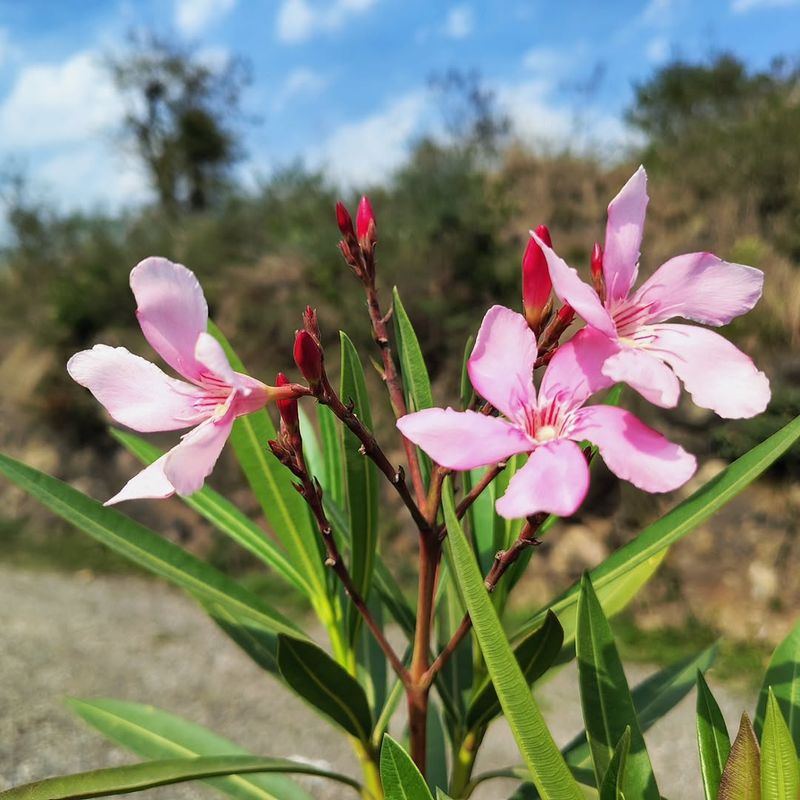
Oleander, Nerium oleander, is genuinely tough. It tolerates drought, salt spray, poor soils, and Florida’s relentless summer heat without much complaint.
The flowers are showy, coming in shades of white, pink, and red, and the plant fills a large space quickly. For those reasons, it became a popular landscape choice in Florida, especially along roadsides and in coastal areas.
But oleander carries a serious downside that is easy to underestimate until it becomes a real problem.
Every part of oleander is highly toxic, including the leaves, stems, flowers, and even the smoke from burning cuttings. The toxins, primarily cardiac glycosides, can cause severe illness or worse in people, pets, and livestock if ingested.
For households with young children, curious dogs, or grazing animals nearby, oleander poses a genuine hazard that no amount of beautiful blooms can offset.
Planting it in high-traffic areas, near play spaces, or along paths where children and pets roam is a choice many Florida families come to regret.
On top of the toxicity concern, oleander caterpillars can strip the foliage during warm months, leaving plants looking ragged and requiring repeated attention.
Plenty of tough, attractive shrubs can do what oleander does without the safety concerns. Firebush handles heat, drought, and poor soils while feeding hummingbirds and butterflies.
Simpson’s stopper is an excellent hedge or specimen shrub with real wildlife value. Walter’s viburnum is adaptable and dependable across Florida.
Yaupon holly offers salt tolerance and fast growth for screening. For coastal sites, buttonwood is a native, salt-tolerant option that fits South Florida landscapes naturally.
Wax myrtle screens quickly and supports birds throughout the state.