8 Low-Maintenance Ohio Plants To Add In May For A Stress-Free Summer Yard
May is the most forgiving planting window Ohio offers, and most homeowners let it slip by without putting it to work. The soil has finally warmed, frost risk has dropped, and summer’s brutal heat hasn’t arrived yet.
Plants put in the ground right now have weeks to establish strong root systems before they face any real stress. Skip this window and the next opportunity costs twice the effort with half the results.
Low-maintenance doesn’t mean boring. Ohio’s climate actually favors a surprisingly diverse range of tough, beautiful plants that ask for very little once they settle in.
No daily watering schedules. No complicated fertilizing routines.
No babysitting through every heat wave and dry spell. The goal for any Ohio yard this summer should be simple: maximum color, texture, and life with minimum intervention.
The right plants, put in the ground at the right moment, make that completely achievable.
1. Plant Black Eyed Susan For Easy Summer Color
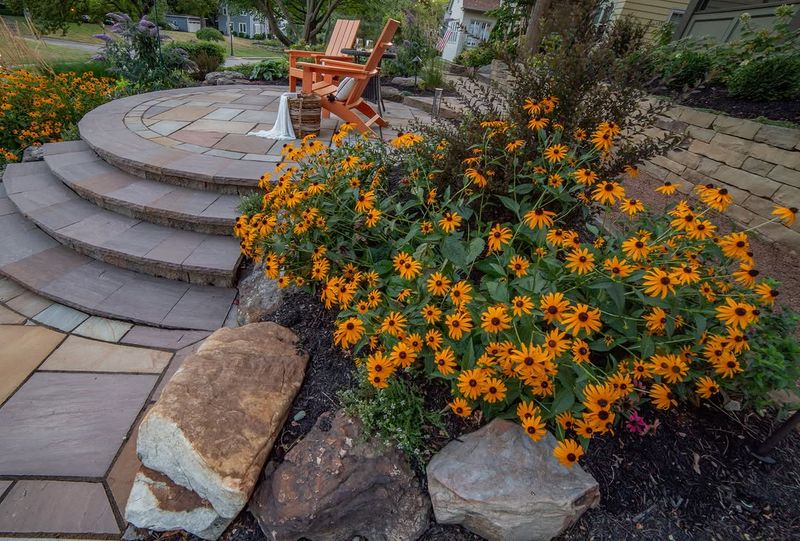
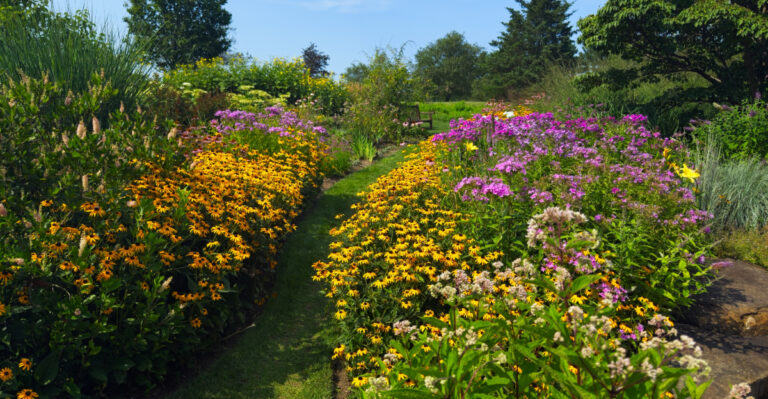
Few sights say “Ohio summer” quite like a patch of cheerful yellow black eyed Susans swaying in a warm breeze.
Rudbeckia hirta is a native-region friendly wildflower that has been brightening roadsides, meadows, and home gardens across the Midwest for generations.
Planting it in May gives it time to root in while the weather is still mild, setting it up to bloom confidently through July and into September.
Black eyed Susan thrives in full sun and tolerates average or even poor soil without complaint. It does not need rich compost or regular fertilizing to perform well.
Once established, it handles dry stretches surprisingly well, making it a smart pick for curbside beds or sloped areas where watering is inconvenient.
Pollinators absolutely love it. Bees, butterflies, and beneficial insects visit the blooms regularly throughout summer, making it a productive addition to any pollinator patch or cottage border.
The plant can reseed itself from year to year, which most gardeners appreciate. If you prefer a tidier bed, simply remove spent blooms before seeds fully form, or pull extra seedlings in spring.
Black eyed Susan fits naturally into casual borders, curbside plantings, and mixed perennial beds. It pairs beautifully with purple coneflower and little bluestem for a low-maintenance prairie-style look that practically takes care of itself all summer long.
2. Add Butterfly Weed For Bright Blooms And Pollinators
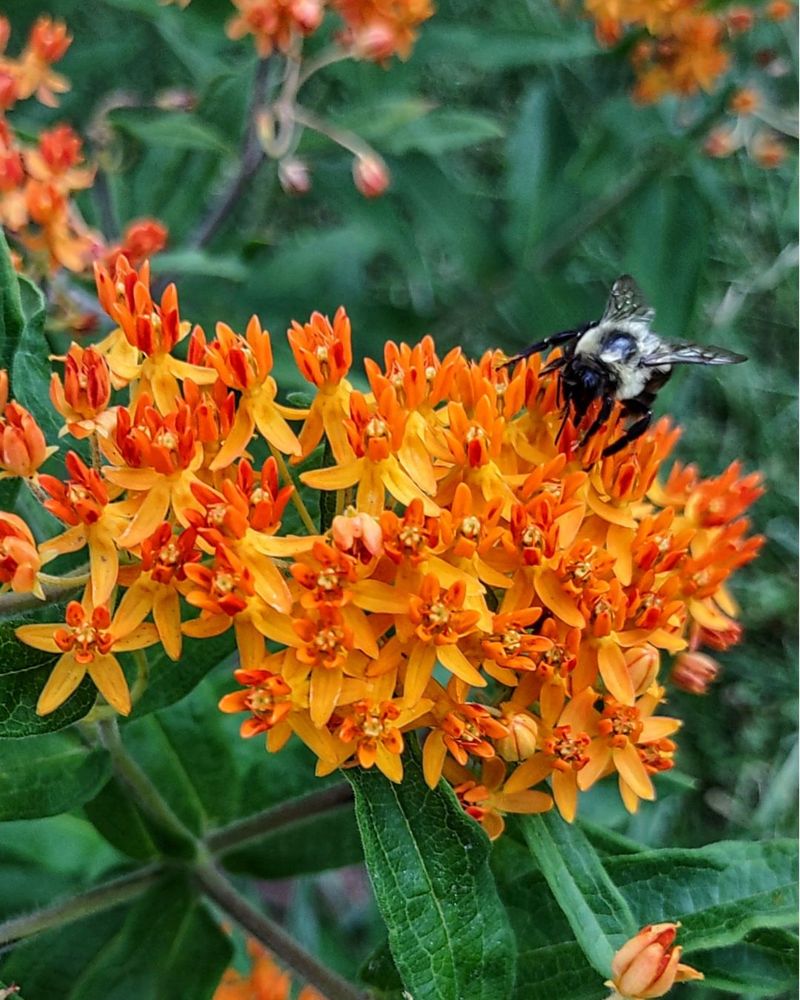
Bright orange flowers in a summer garden have a way of stopping people in their tracks, and butterfly weed delivers that kind of bold color without asking much in return.
Asclepias tuberosa is a native-region friendly perennial that is closely related to common milkweed but stays much more compact and tidy.
May is an excellent time to plant it here because the warming soil encourages strong root development before summer heat peaks.
Full sun is a must for butterfly weed. It also needs well-drained soil and actually performs better in lean conditions than in rich, moist garden beds.
Overwatering or heavy clay can cause problems, so raised beds or sandy loam spots are ideal. Once the roots are settled in, usually by the second summer, it handles drought with ease and rarely needs supplemental watering.
Your Ohio Garden Changes Every Week. Your Plan Should Too.
Gardening in Ohio changes quickly throughout the season. Every Friday you’ll receive a simple weekly plan showing exactly what to plant, prune, fertilize, harvest, and protect so you never miss the right timing.
Monarch butterflies depend on milkweed plants as their only larval host plant, and butterfly weed fills that role beautifully. Other pollinators, including native bees and swallowtail butterflies, visit the blooms in large numbers throughout the season.
The plant may look slow in its first year, but patience pays off because it becomes noticeably tougher and fuller with each passing season.
Choose your planting spot carefully before you plant. Butterfly weed dislikes being moved once it has established deep roots, and transplanting a settled plant rarely goes well.
3. Let Purple Coneflower Handle The Heat
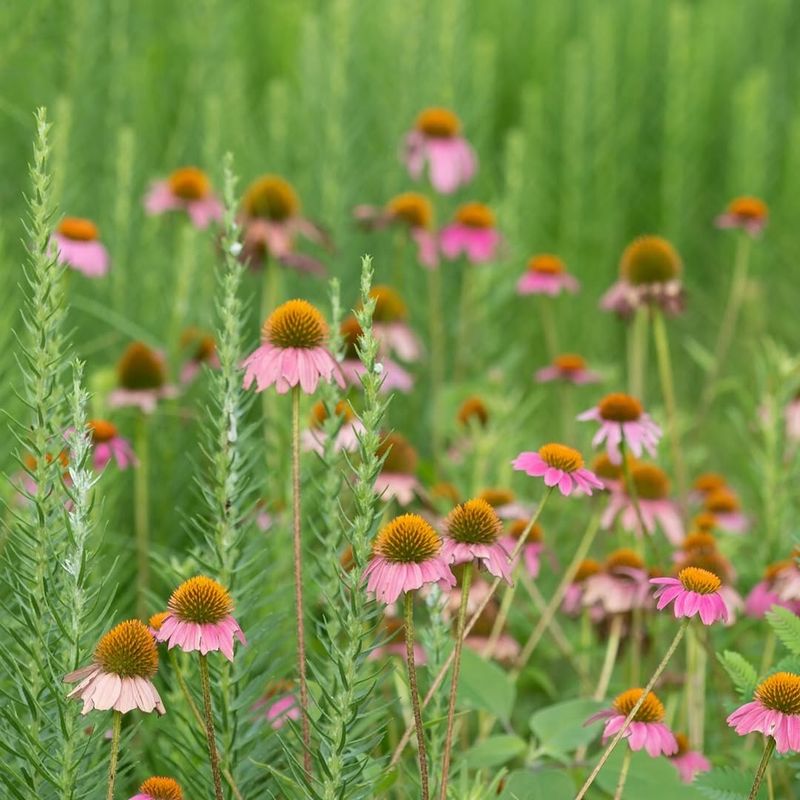
Summer in Ohio can be relentlessly hot by late July, and not every plant holds up gracefully under that kind of pressure. Purple coneflower, Echinacea purpurea, is one that genuinely thrives when temperatures climb.
It is a native-region friendly perennial that has been a staple of Midwest gardens for decades, and for good reason. Planting it in May gives the roots a solid start before the heat settles in for the long haul.
Coneflower grows best in full sun but can tolerate a bit of afternoon shade in especially hot spots. Average, well-drained soil suits it just fine, and it does not need fertilizing to bloom well.
In fact, too much fertilizer can make the plants floppy. Watering during the first growing season helps establishment, but mature plants are impressively drought-tolerant.
Pollinators treat coneflower like a buffet. Bees, butterflies, and beetles crowd the blooms from early summer through fall.
After the petals fade, the spiky seedheads remain standing and draw goldfinches and other seed-eating birds well into winter. Leaving the seedheads up through the cold months adds structure to the garden and gives wildlife a reliable food source.
If reseeding becomes an issue in a tidy bed, removing a portion of the spent blooms keeps things manageable. Otherwise, a few extra seedlings can simply be moved to fill gaps elsewhere in the yard, making this plant genuinely generous.
4. Use Blue Wild Indigo As A Long Lasting Anchor
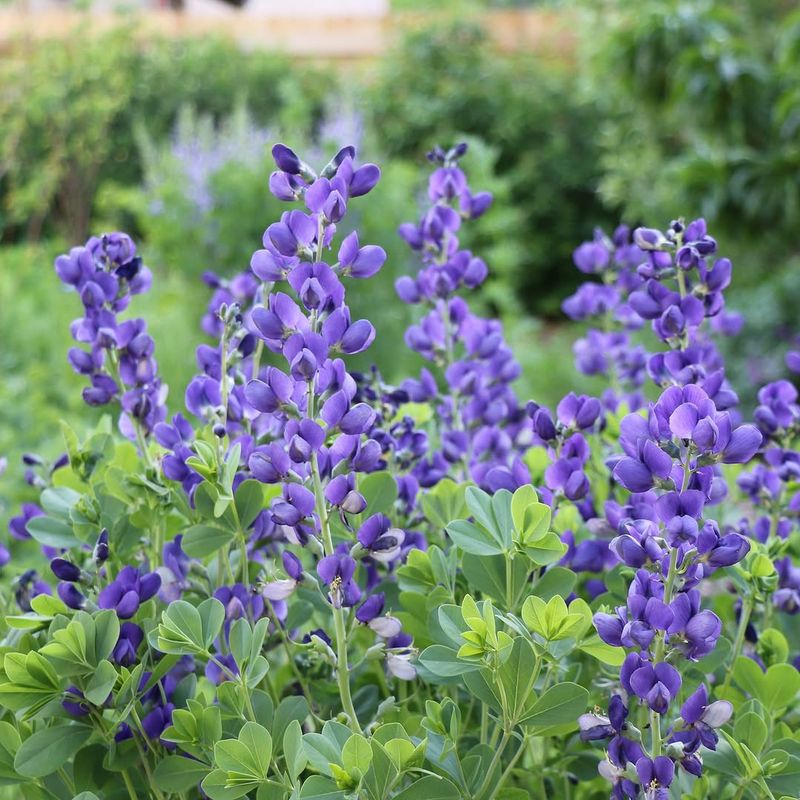
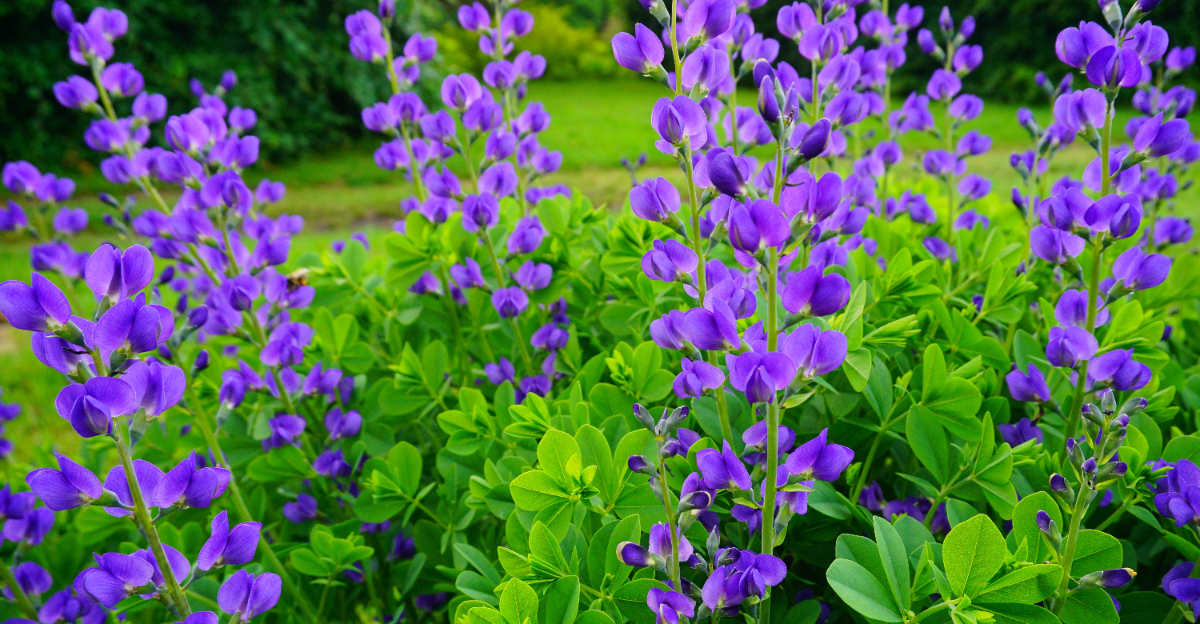
Some plants earn their place in the garden not just through their flowers but through sheer staying power. Blue wild indigo, Baptisia australis, is one of those plants.
It can live in the same spot for twenty years or more, growing fuller and more impressive with each season. Native to much of the eastern and central United States, it is well-suited to Ohio gardens and earns its reputation as a true anchor plant for sunny borders.
The tall spikes of blue-purple flowers appear in late spring and early summer, drawing bumblebees and other native pollinators in impressive numbers.
After the blooms fade, the blue-green foliage remains attractive all summer long, filling space and suppressing weeds without any help.
The inflated seedpods that follow are interesting in their own right and add late-season texture to the bed.
Blue wild indigo develops a deep taproot over time, which makes it highly drought-tolerant once established. That same taproot is also why it should not be moved after it has settled in.
Choose your planting site in May with the mature size in mind – this plant can spread three to four feet wide and reach similar heights, so it needs room to grow without crowding neighbors.
Average to lean soil in full sun is the sweet spot. Avoid wet or heavy clay, and skip the fertilizer.
This plant thrives on neglect more than on pampering, making it one of the most genuinely low-maintenance perennials you can add to your yard.
5. Tuck Wild Geranium Into Part Shade
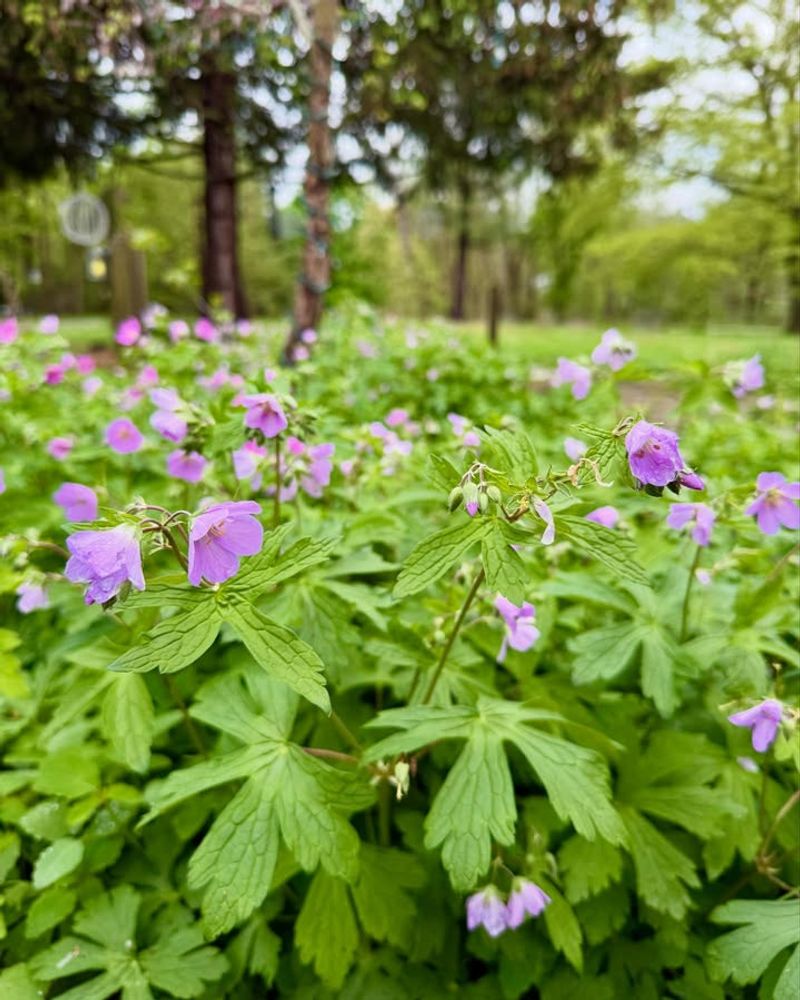
Not every corner of an Ohio yard gets generous sun. Under a sprawling maple or along the shaded north side of a fence, many plants struggle to perform.
Wild geranium, Geranium maculatum, is a true native that was made for exactly those kinds of spots. Its soft pink-purple blooms appear in spring, and its neatly mounded foliage stays attractive through summer without demanding much attention at all.
Planting wild geranium in May catches the tail end of its bloom window and gives the roots time to settle into their shaded home before summer arrives. Part shade is ideal, though it can handle light dappled sun as well.
It prefers average, moderately moist soil but adapts reasonably well once established. Heavy clay or bone-dry shade are the two conditions most likely to cause trouble.
The mounding habit keeps this plant looking tidy without any trimming. It spreads gently over time through both rhizomes and self-seeding, forming soft colonies that fill shaded edges and woodland borders in a naturalistic, relaxed way.
That spread is easy to manage – unwanted seedlings pull out with minimal effort in spring.
Wild geranium pairs especially well with ferns, hostas, and other shade-tolerant natives along property edges or under small ornamental trees.
It supports early-season native bees with its nectar-rich blooms and adds a quiet, woodland-garden charm to parts of the yard that often feel like an afterthought in summer planting plans.
6. Grow Threadleaf Coreopsis For Sunny Low Fuss Beds
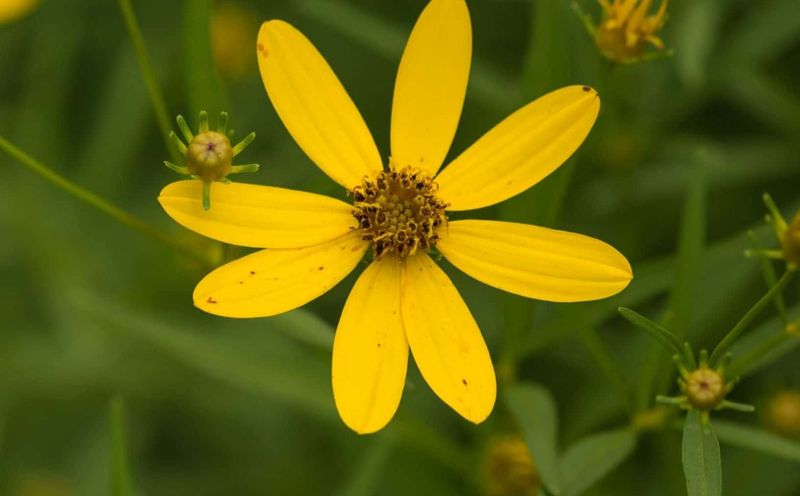
Delicate-looking plants are not always delicate plants. Threadleaf coreopsis, Coreopsis verticillata, is a perfect example of that.
Its fine, ferny foliage gives it an airy, almost whimsical appearance, but underneath that soft texture is a tough, heat-tolerant perennial that blooms for weeks without much fuss.
Native-region friendly and widely recommended for Midwest gardens, it earns a spot in sunny beds with very little effort required from the gardener.
Full sun is where threadleaf coreopsis shines brightest. It prefers average, well-drained soil and actually performs better without heavy fertilizing, which can lead to floppy stems.
Once established after a May planting, it handles dry stretches gracefully and does not need regular watering unless a true drought sets in.
That combination of sun tolerance and drought resilience makes it especially useful in exposed front-yard beds or along driveways.
The bright yellow blooms attract small native bees and butterflies throughout summer.
Trimming spent flowers or giving the plant a light shearing in midsummer can encourage a fresh flush of blooms later in the season.
Compact cultivars like Moonbeam or Zagreb are smart choices for smaller yards or tidy borders where a more restrained size is helpful.
Avoid planting threadleaf coreopsis too close to aggressive spreaders, and give each plant enough air circulation to stay healthy. In the right sunny spot, it rewards you with cheerful color from early summer straight through to fall frost.
7. Add Little Bluestem For Texture Without Extra Work
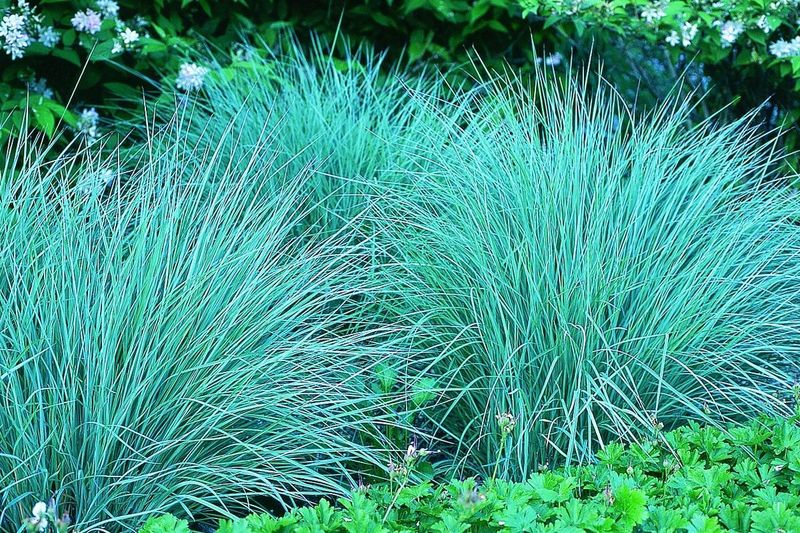
Grasses often get overlooked in home garden planning, but little bluestem makes a strong case for why that is a missed opportunity.
Schizachyrium scoparium is a true native prairie grass that brings movement, texture, and four-season interest to sunny beds without asking for anything complicated in return.
Its upright, blue-green stems catch summer breezes beautifully, and by fall the foliage shifts into warm shades of copper, rust, and burgundy.
May is a practical time to plant container-grown little bluestem in Ohio. The warming soil encourages root growth, and the plant has the full growing season ahead to establish itself before winter.
Full sun is essential, and well-drained soil is a firm requirement. Heavy, wet clay causes root problems over time, so amending poorly drained spots or choosing a naturally elevated planting area is worth the extra step.
Once established, little bluestem is remarkably drought-tolerant and requires no fertilizing. Overfeeding actually makes the plants flop open at the center, which ruins the tidy upright form that makes this grass so appealing.
A single cut back to about four to six inches in late winter or very early spring is all the maintenance it needs each year.
Pairing little bluestem with purple coneflower, black eyed Susan, and butterfly weed creates a cohesive, prairie-inspired planting that looks intentional and polished all season.
The seedheads also provide food for sparrows and finches through the winter months, adding wildlife value long after summer ends.
8. Plant Ninebark For A Tough Native Shrub
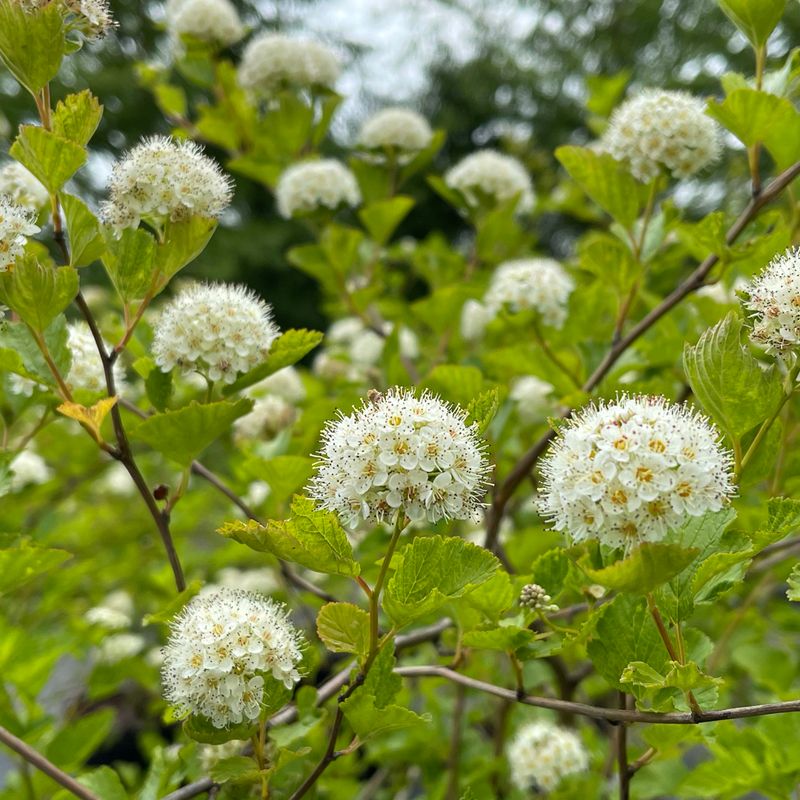
Every low-maintenance yard benefits from at least one reliable native shrub. Ninebark, Physocarpus opulifolius, is one of the toughest and most rewarding choices available to Ohio gardeners.
The clusters of small white or pale pink flowers that appear in late spring draw native bees and other pollinators in impressive numbers.
After the blooms fade, the attractive foliage – ranging from chartreuse to deep burgundy depending on the cultivar – carries the plant through summer with real visual presence.
Ninebark earns its low-maintenance reputation through sheer toughness. It tolerates a wide range of soil types, including clay, and adapts to both full sun and partial shade.
Once established after a May planting with consistent watering during the first growing season, it rarely needs supplemental irrigation. The peeling, layered bark adds winter interest when the leaves are gone, making this a four-season plant in the truest sense.
Size matters with ninebark. Standard varieties can reach eight to ten feet tall and wide, which is substantial.
For smaller yards or foundation plantings, compact cultivars like Tiny Wine or Little Devil are much more manageable at three to four feet. Always check the mature size on the plant tag before choosing a spot.
Birds use the dense branching structure for nesting and cover, adding habitat value beyond the blooms.
Minimal pruning is needed – just remove any crossing or damaged branches after flowering to keep the shrub looking its best without a lot of effort throughout the summer.