These Are The Climbing Roses Oregon Gardeners Are Training Along Fences This Season
A fence can do more than mark the edge of a yard. With the right climbing rose, it can turn into a wall of color, fragrance, and charm.
That is the kind of upgrade that makes a garden feel instantly more romantic, right? Oregon gardeners are leaning into roses that can handle shifting weather, climb with confidence, and bloom in a way that feels worth the training effort.
Some bring soft, old-fashioned flowers. Others offer bold color or repeat blooms that keep the fence looking lively for months.
The key is choosing a rose that fits the space, gets enough sun, and has the strength to stretch without becoming a tangled mess. Once those canes are tied in and guided along the fence, the whole garden starts to feel fuller and a little more magical.
1. Rise Up Lilac Days
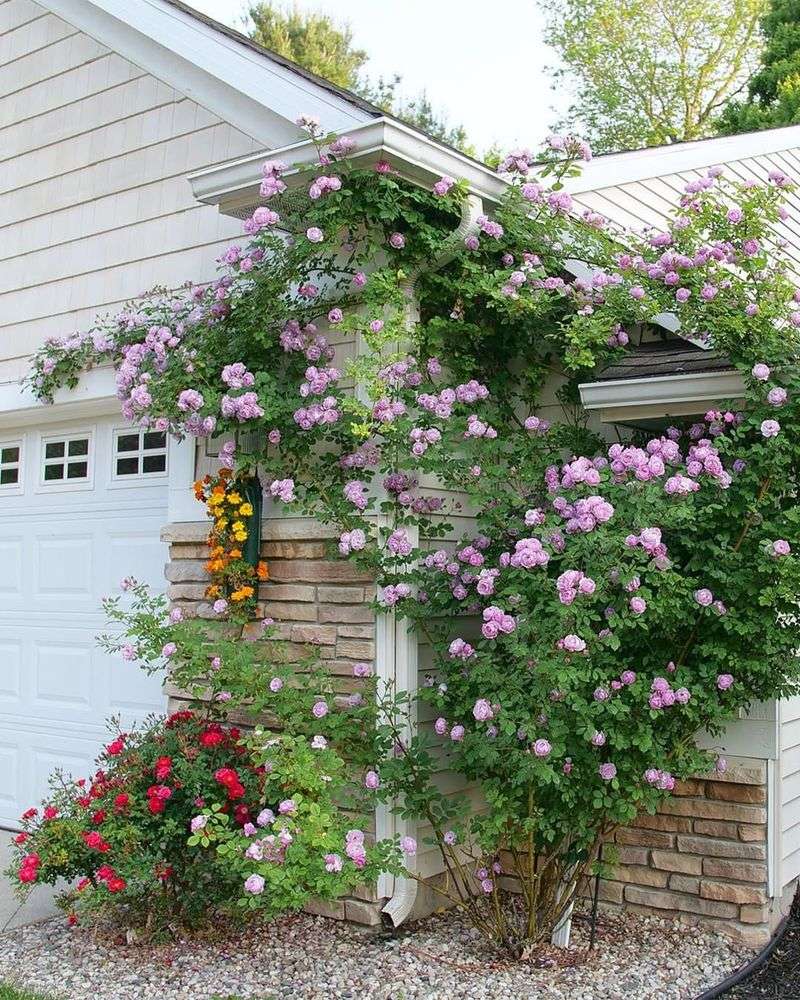
Some roses stop you in your tracks the moment you spot them, and Rise Up Lilac Days is exactly that kind of rose. Its soft lavender-purple blooms carry a sweet, light fragrance that drifts across the yard on Oregon’s cool morning air.
Gardeners across the state have been reaching for this variety because it is compact enough for smaller fences but still puts on a stunning show.
Rise Up Lilac Days grows to about four feet tall, making it one of the more manageable climbers in the group. It does not need a ton of space, which is great for urban Oregon gardens in Portland or Eugene where fence lines are shorter.
The blooms repeat reliably through summer and into fall, so you get color for months.
Training this rose along a fence is straightforward. Use soft garden ties to gently guide the canes horizontally, which encourages more blooms to form along the entire length.
Oregon’s rainy springs actually help this rose establish quickly. It is also known for solid disease resistance, which matters a lot in wetter Pacific Northwest climates.
Feed it a balanced rose fertilizer in early spring, and it will reward you generously all season long with those gorgeous purple clusters.
2. Eden Climber
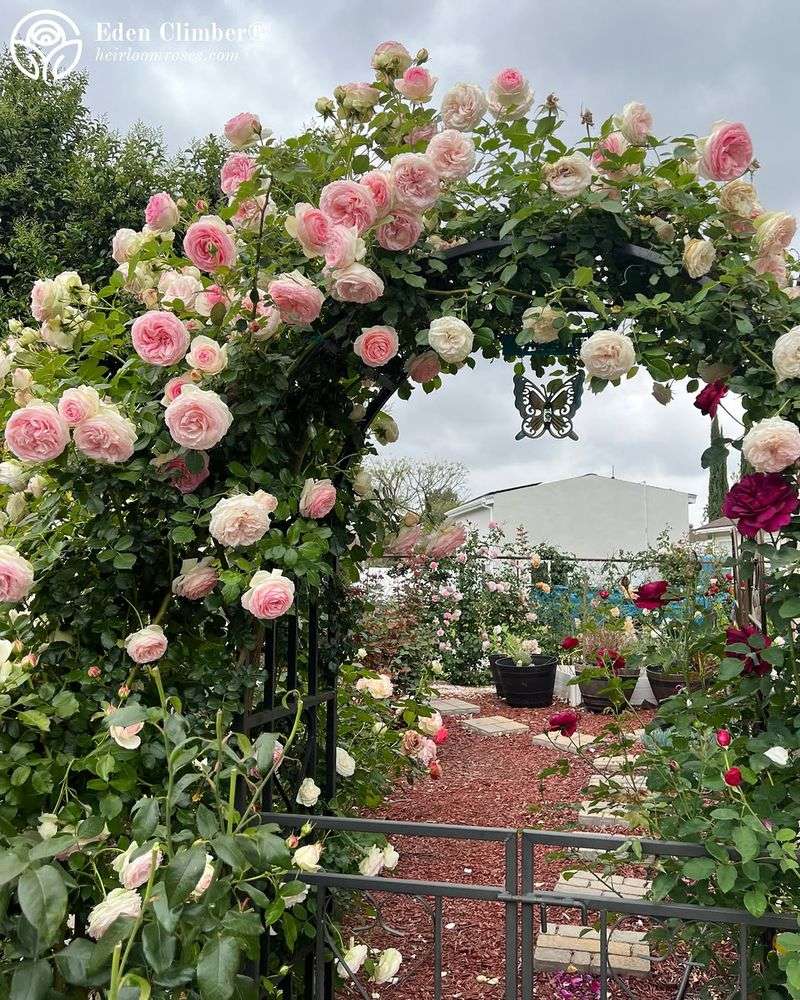
Walk past a fence covered in Eden Climber blooms and you will instantly understand why it is one of the most beloved climbing roses in Oregon. The flowers are large, cupped, and packed with petals in soft shades of creamy white and blush pink.
They look like something straight out of a romantic painting, and they smell absolutely wonderful.
Oregon gardeners have been training Eden Climber along fences for decades, and it remains a top pick at nurseries in Salem, Bend, and the Portland metro area. It grows vigorously, reaching up to ten feet or more, so it works beautifully on tall wooden privacy fences.
The canes are flexible enough to train in multiple directions, letting you create sweeping arches of blooms.
One of the best things about this rose is its reliability. It blooms repeatedly from late spring through autumn, and it handles Oregon’s wet winters better than many other large-flowered climbers.
Your Oregon Garden Changes Every Week. Your Plan Should Too.
Gardening in Oregon changes quickly throughout the season. Every Friday you’ll receive a simple weekly plan showing exactly what to plant, prune, fertilize, harvest, and protect so you never miss the right timing.
Pruning in late winter helps keep the plant tidy and encourages fresh new growth. Plant it in a spot that gets at least six hours of sun, and give it rich, well-draining soil.
Eden Climber is truly a statement plant that turns any ordinary fence into a breathtaking garden feature.
3. Cherry Frost
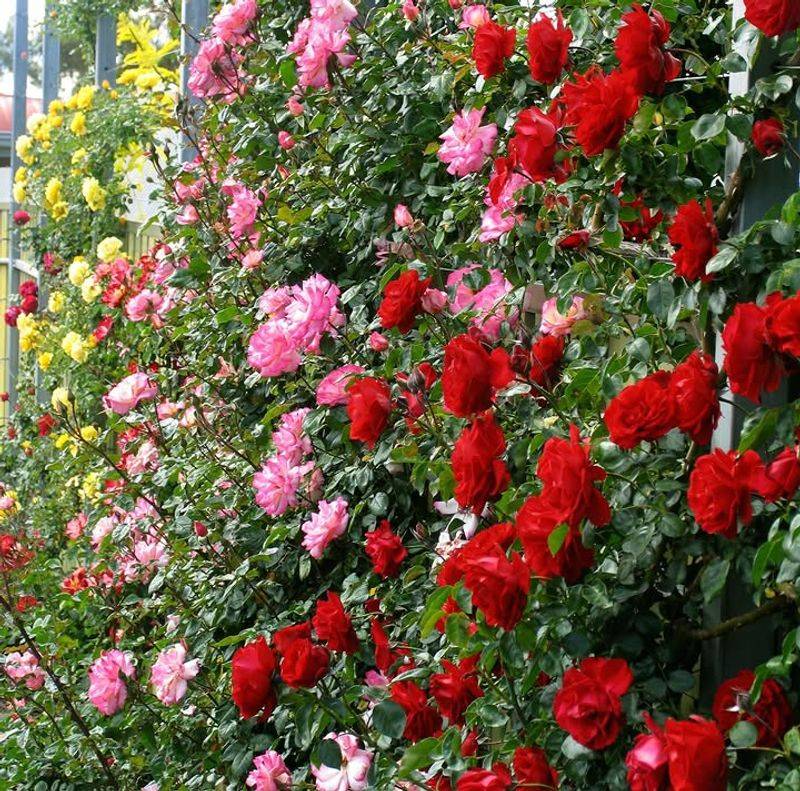
Bold, bright, and impossible to ignore, Cherry Frost brings a burst of energy to any Oregon fence line. The blooms are a striking bicolor combination of cherry red and creamy white, and they appear in cheerful clusters that last from early summer well into fall.
If you want a rose that makes people slow their cars down to look, this is the one.
Cherry Frost is a newer variety that has quickly earned a loyal following among Oregon rose growers. It was bred for toughness, and it shows.
The plant handles temperature swings well, which is useful in areas like the Rogue Valley where summer heat can be intense. It also shows excellent resistance to black spot and powdery mildew, two common problems in the Pacific Northwest.
Training Cherry Frost along a fence is genuinely fun. The canes are fairly pliable when young, so you can spread them out wide to maximize bloom coverage.
Secure the canes with soft ties at regular intervals, and try to angle them slightly downward or horizontally to trigger more lateral flowering shoots. Water deeply but infrequently to encourage strong root development.
Oregon gardeners who have grown this variety say it is one of the most carefree climbing roses they have ever had in their yards, and the color show it delivers every season is truly spectacular.
4. James Galway
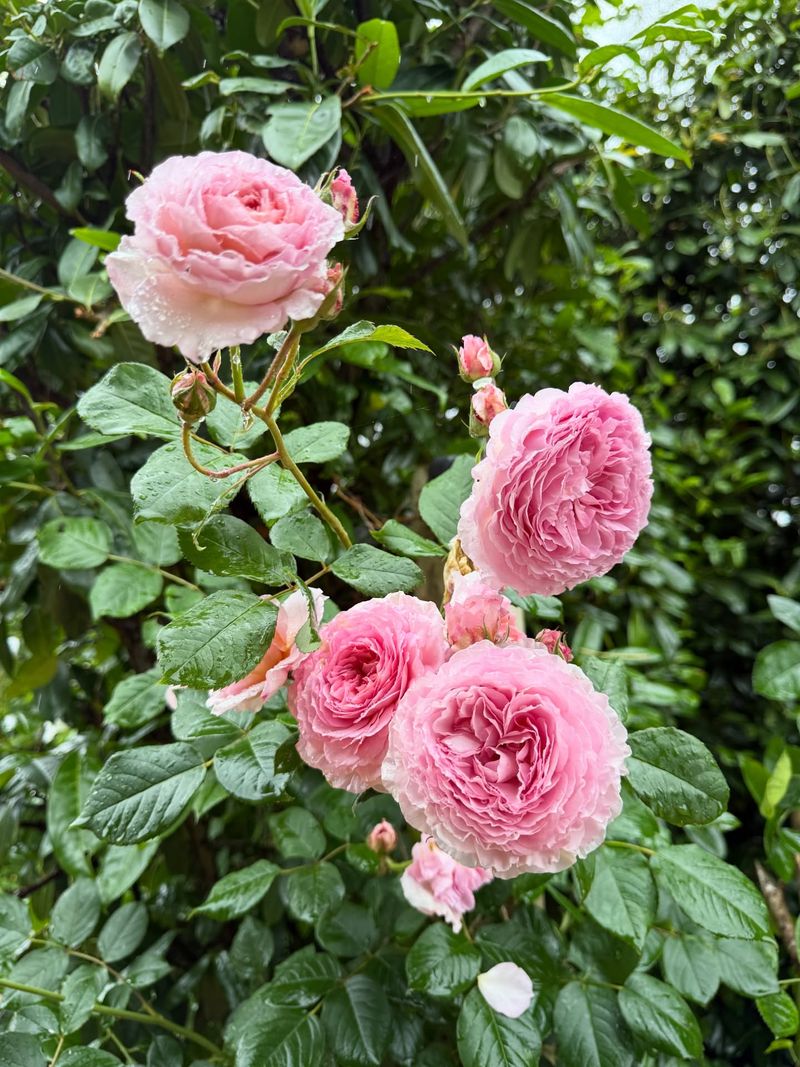
Named after the famous Irish flutist, James Galway the rose has its own kind of music going on every time it blooms. The flowers are large, deeply cupped rosettes in a warm, rich pink that softens to a lighter blush toward the edges.
They have a classic old-rose fragrance that Oregon gardeners absolutely adore.
This variety grows with real ambition. It can reach eight to twelve feet tall, making it one of the larger climbers on this list.
That size makes it an ideal candidate for training along tall board fences or even over garden archways in larger Oregon yards. The canes are strong and sturdy, and they respond well to being tied horizontally along fence rails.
James Galway is bred by David Austin Roses, which means it carries that coveted combination of old-fashioned flower form and modern disease resistance. It blooms in flushes throughout the growing season, with the first flush in late spring being especially spectacular.
In Oregon’s Willamette Valley, where conditions are often ideal for roses, this variety puts on a show that rivals anything you would see in a professional rose garden. Prune lightly after each flush to encourage the next round of blooms, and give it a generous mulch layer to protect the roots through Oregon’s wet, cold winters.
5. Colette
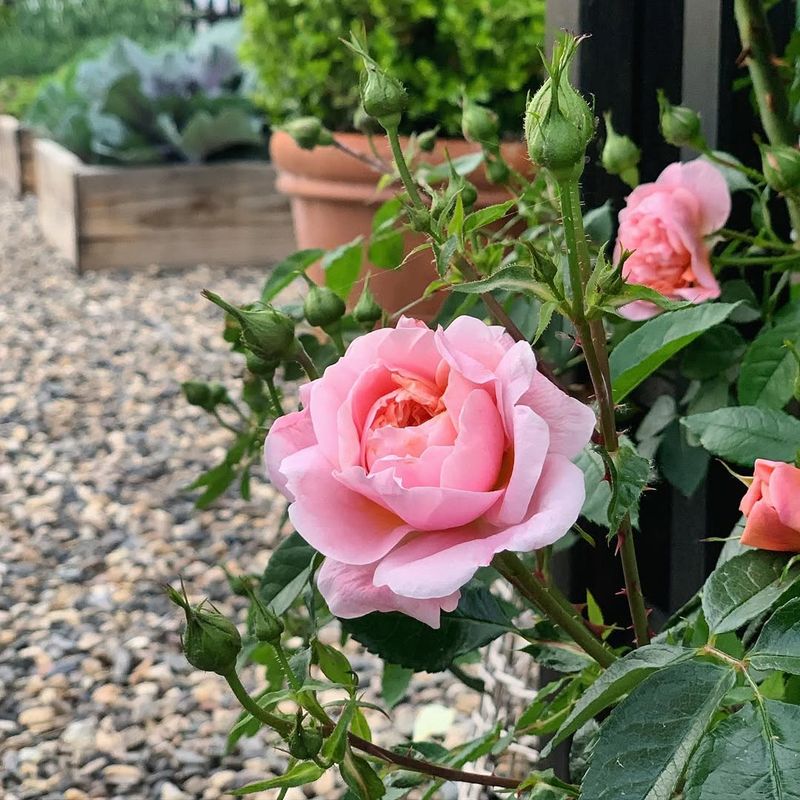
There is something undeniably charming about Colette, the climbing rose that seems to whisper rather than shout. Its soft pink blooms are cupped and full of petals, arranged in elegant clusters that sway gently in Oregon’s coastal breezes.
The fragrance is light and fresh, with a hint of old rose sweetness that makes spending time near the fence an absolute pleasure.
Colette was introduced by the French rose house Meilland, which has a long history of breeding exceptional climbing roses. Oregon gardeners have embraced it enthusiastically, especially in coastal communities like Cannon Beach and Astoria where salty air and cool temps can be tough on other varieties.
Colette handles those conditions with surprising resilience.
This rose grows to about eight feet and produces blooms repeatedly from late spring through early fall. It pairs beautifully with gray or white fences, where the pink tones really pop against a neutral background.
When training Colette, spread the canes as horizontally as possible along the fence rails to maximize the number of flowering shoots. The more horizontal the cane, the more blooms you get.
Feed it monthly during the growing season with a rose-specific fertilizer, and deadhead spent blooms regularly to keep the plant focused on producing fresh flowers. Oregon gardeners consistently rank Colette among their favorite repeat-blooming climbers.
6. Lady In Red
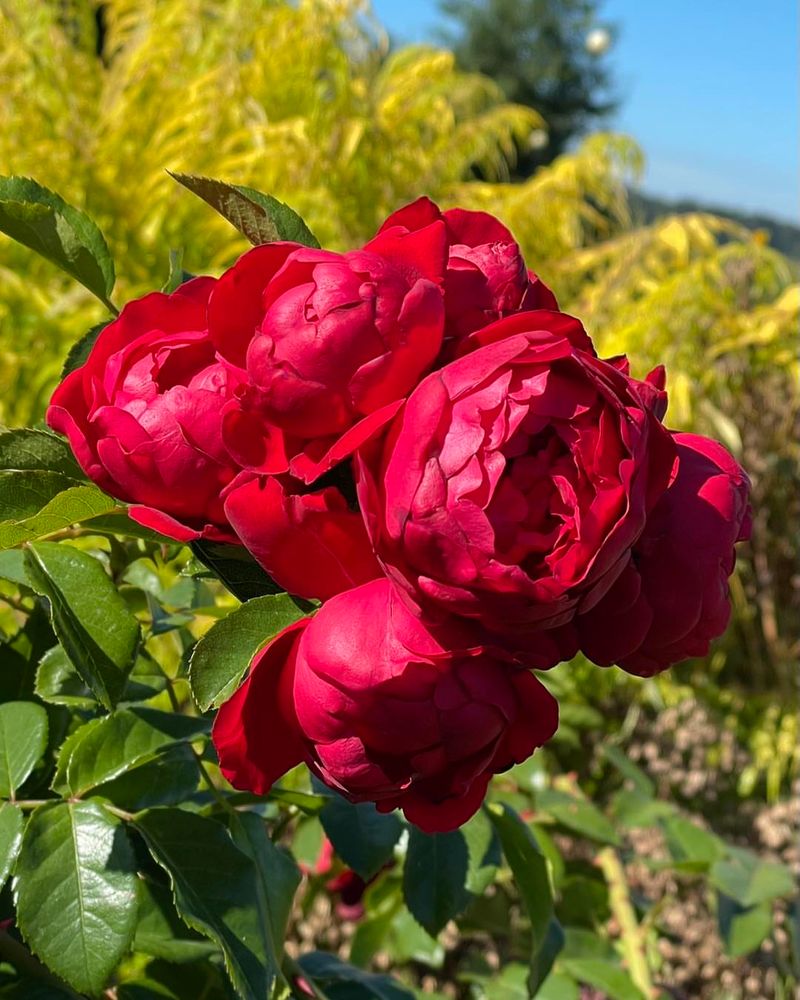
Few climbing roses command attention the way Lady in Red does. The blooms are a deep, vivid scarlet that practically glows against the green of the foliage, and the contrast is especially striking when trained along a dark wooden fence.
Oregon gardeners who grow this variety say it is the first thing visitors notice when they walk into the backyard.
Lady in Red is a vigorous grower with strong, upright canes that respond well to training. It reaches about six to eight feet, which makes it versatile enough for a range of fence heights.
The blooms appear in clusters, and they repeat reliably through summer and into early fall. The flowers have a mild, pleasant fragrance that adds to the overall experience of being near the plant.
One standout quality of this variety is its toughness. It was specifically bred to resist the fungal diseases that can be so troublesome in Oregon’s wet climate.
That means less spraying and more enjoying, which is exactly what busy Oregon gardeners want. Plant it where it gets full sun for best performance, and make sure the soil has good drainage.
Adding compost to the planting hole gives the roots a nutrient-rich start. Lady in Red is a bold, confident rose that brings serious drama and color to any Oregon fence line throughout the growing season.
7. Teasing Georgia
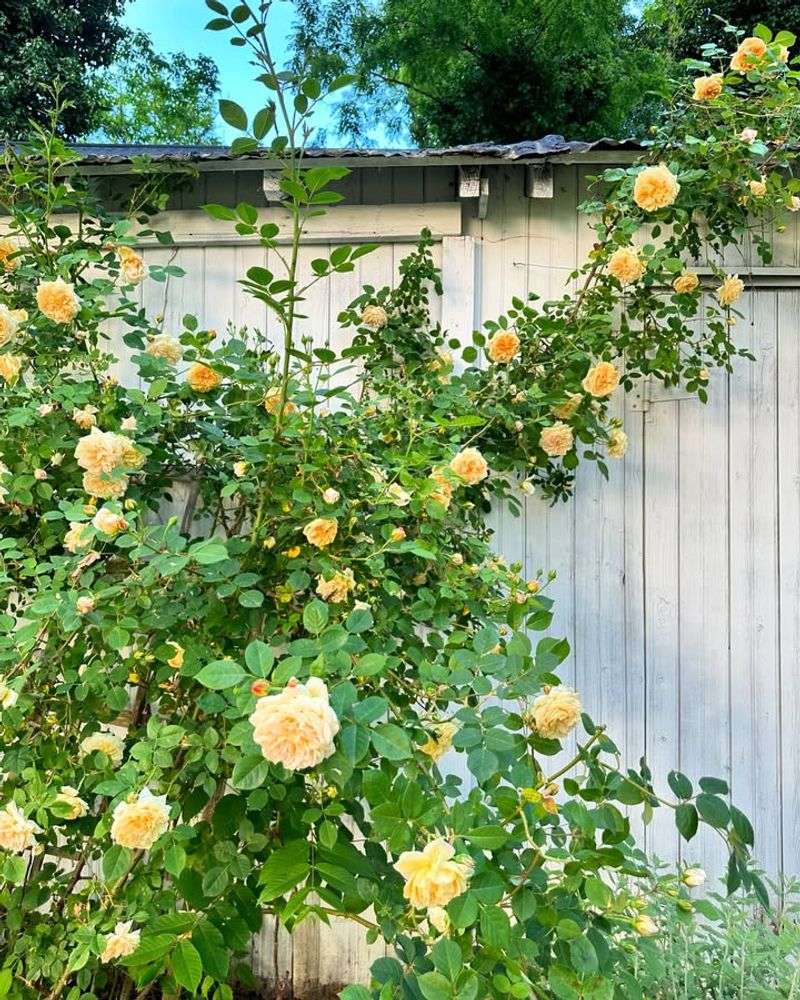
Warm, sunny, and full of personality, Teasing Georgia is the climbing rose that brings a golden glow to Oregon fences. The blooms are a rich, buttery yellow at the center that fades to a softer lemon at the outer petals.
Each flower is deeply cupped and packed with layers of petals, giving it that lush, old-fashioned look that so many gardeners love.
Another standout from David Austin Roses, Teasing Georgia has earned its place as a top choice among Oregon rose enthusiasts. It grows vigorously to around ten feet and produces an impressive first flush of blooms in late spring, followed by repeat flowering through summer and fall.
The fragrance is medium strength with a pleasant tea-rose character that is never overwhelming.
Training this rose along a fence is deeply satisfying because of how evenly it spreads. The canes are flexible and easy to work with, especially in the first few years of growth.
Oregon gardeners in the Willamette Valley particularly love how well it performs in their rich, loamy soils. Tie the canes at regular intervals using soft jute twine, and aim for a fan-shaped spread along the fence.
Prune out any crossing or dead canes in late winter to keep the plant open and airy. Teasing Georgia is a showstopper that delivers season after season with minimal fuss.
8. Bathsheba
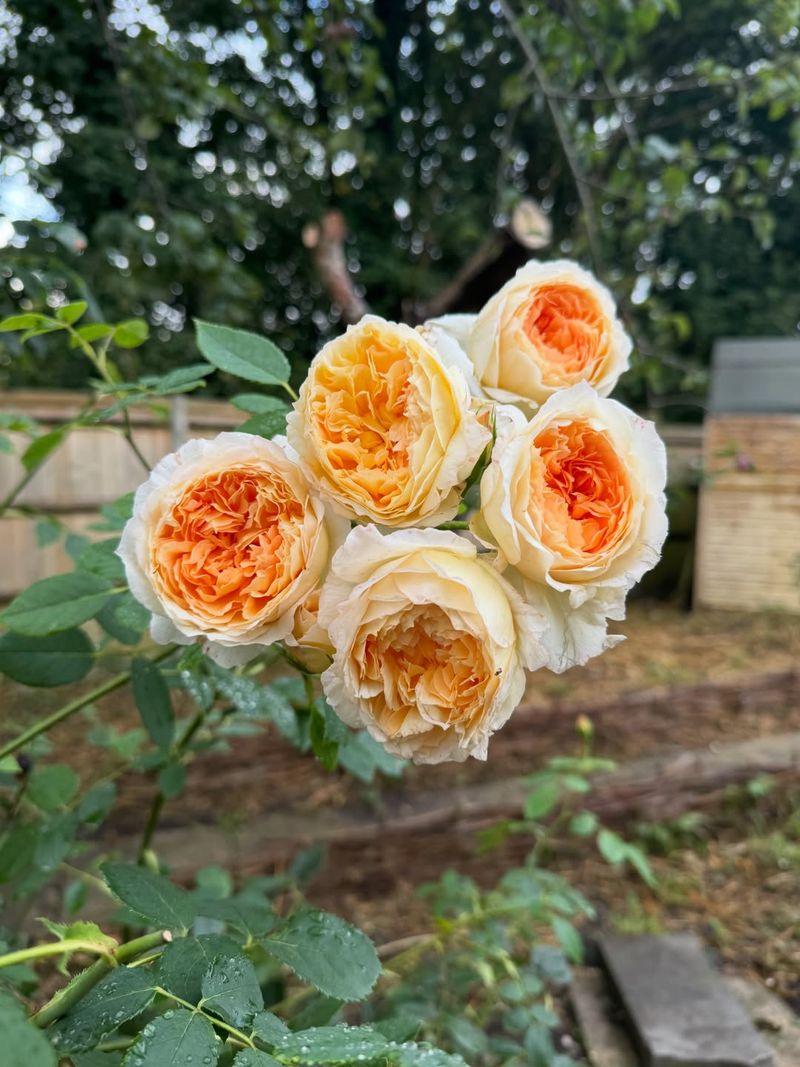
If roses had personalities, Bathsheba would be the warm, welcoming one who always makes you feel at home. Its blooms are a dreamy mix of apricot, honey, and soft peach, all swirled together in deeply cupped flowers that look hand-painted.
The fragrance is one of the most complex and enchanting of any climbing rose available to Oregon gardeners today.
Bathsheba was introduced by David Austin Roses and has quickly become a favorite in Pacific Northwest gardens. What sets it apart from other apricot climbers is its incredible shade tolerance.
Most climbing roses need full sun, but Bathsheba performs well even on partially shaded fences, making it a lifesaver for Oregon gardens where tall trees or neighboring structures block some of the light.
It grows to around twelve feet and produces multiple flushes of bloom throughout the season. The first flush in late spring is breathtaking, but the repeat blooms through summer and fall keep the show going.
Oregon gardeners in areas like Lake Oswego and Corvallis have raved about how well it handles the region’s cool, damp springs without skipping a beat. Train the canes horizontally to encourage maximum blooming, and give the plant a good feed of rose fertilizer in early spring.
Bathsheba is a truly special rose that rewards patient, attentive gardeners with an unforgettable display.
9. Above All
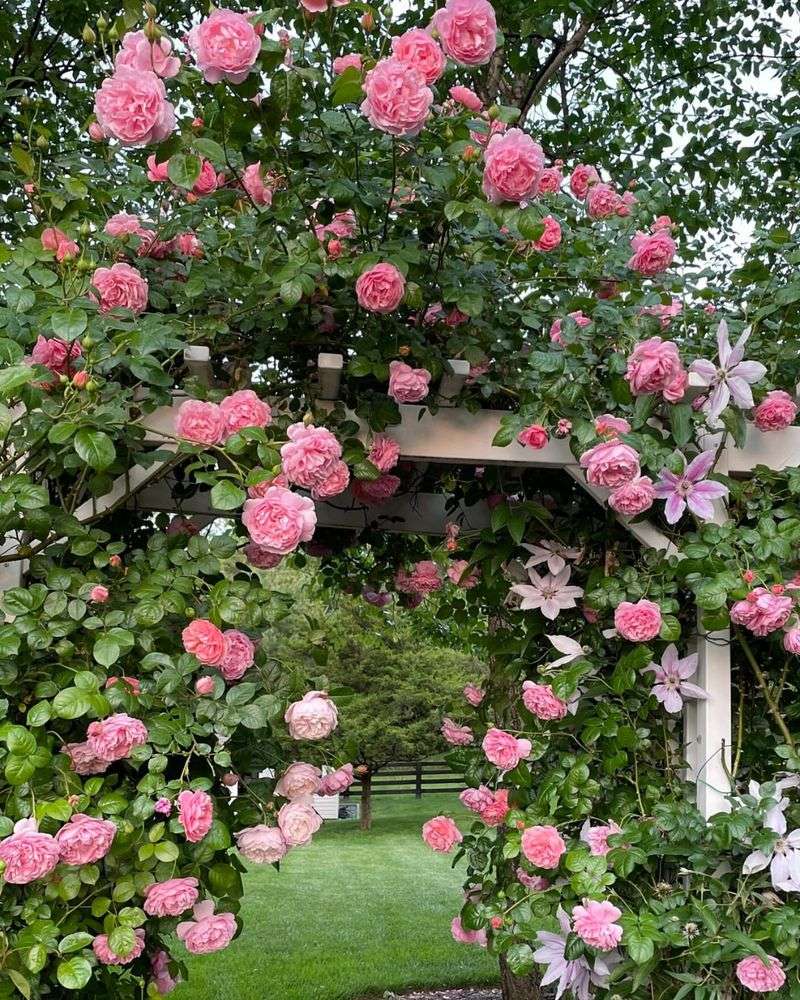
Standing tall and proud, Above All lives up to its name in every possible way. This climbing rose produces some of the largest individual blooms you will find on any climber, with flowers measuring up to five inches across in a warm, glowing shade of orange-pink.
When those big blooms open along a fence in an Oregon garden, the effect is genuinely jaw-dropping.
Above All is one of the tallest climbers on this list, capable of reaching fourteen feet or more in ideal conditions. That makes it perfect for training along tall privacy fences or covering large expanses of chain-link in Oregon neighborhoods.
Despite its impressive size, it is not a difficult rose to manage. The canes are strong but pliable, and they respond well to being tied and trained in the first couple of years.
The repeat-blooming habit of Above All is another major selling point. Oregon gardeners get a spectacular first flush in early summer, followed by additional waves of color through the season.
It also carries a lovely light fragrance that adds to the experience of walking past it on a warm Oregon evening. Plant it in full sun with rich, well-amended soil for best results.
Above All has been turning heads at Oregon nurseries and garden shows, and it deserves a spot on every fence-loving gardener’s wish list this season.
10. The Lady Of The Lake
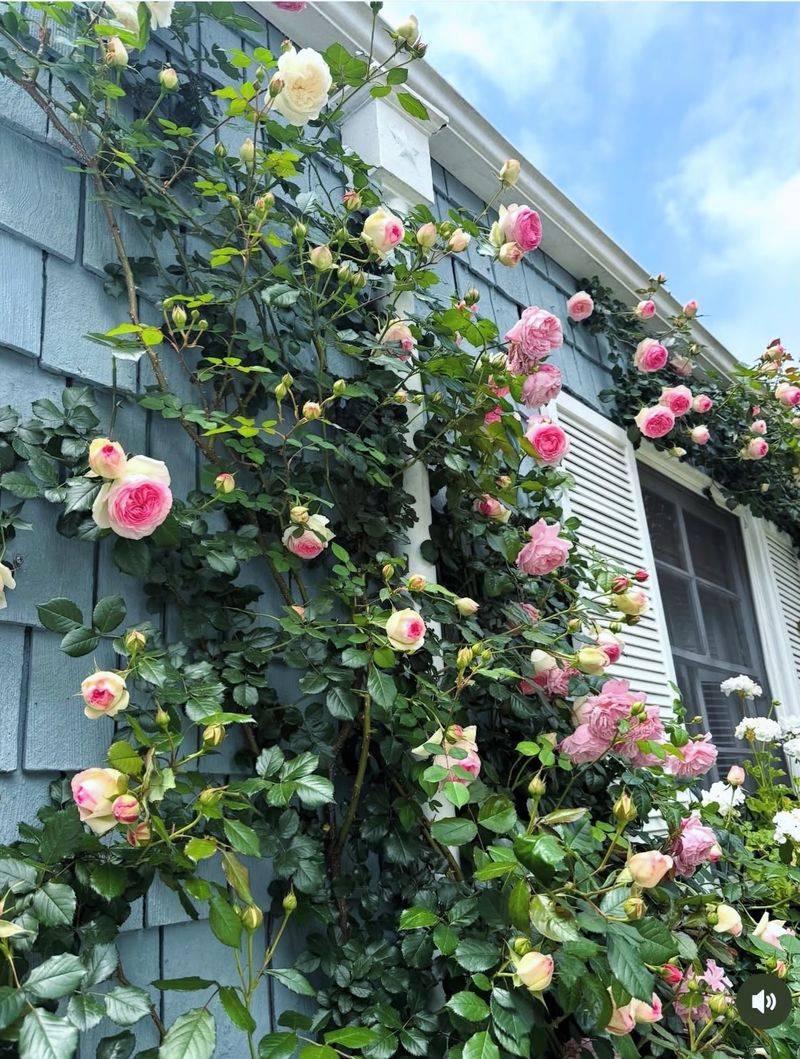
There is something almost magical about The Lady of the Lake, a climbing rose that feels like it belongs in a fairy tale garden. Its blooms are small, semi-double, and carried in large, sweeping clusters of soft pink that create a waterfall effect when trained along a fence.
The overall look is romantic and a little wild, like something that has been growing in an enchanted Oregon forest for centuries.
Another David Austin introduction, The Lady of the Lake is known for exceptional vigor and flexibility. It can reach up to fifteen feet, and its long, arching canes are ideal for draping over tall fences or even along the top of a garden wall.
Oregon gardeners in the wine country region around McMinnville have found it especially well-suited to their slightly warmer, drier summers compared to the coast.
What really sets this variety apart is its bloom power. The flowers appear in massive clusters that can contain dozens of individual blooms, creating a cloud of pink that is visible from across the yard.
The fragrance is fresh and fruity, often described as reminiscent of fresh apples. It blooms once in a spectacular late-spring flush.
Train the long canes carefully along fence rails using soft ties, and give it plenty of room to spread. The Lady of the Lake is a once-seen, never-forgotten rose that Oregon gardeners are proudly showing off this season.