The Secret To Growing Basil In Ohio That Never Stops Producing
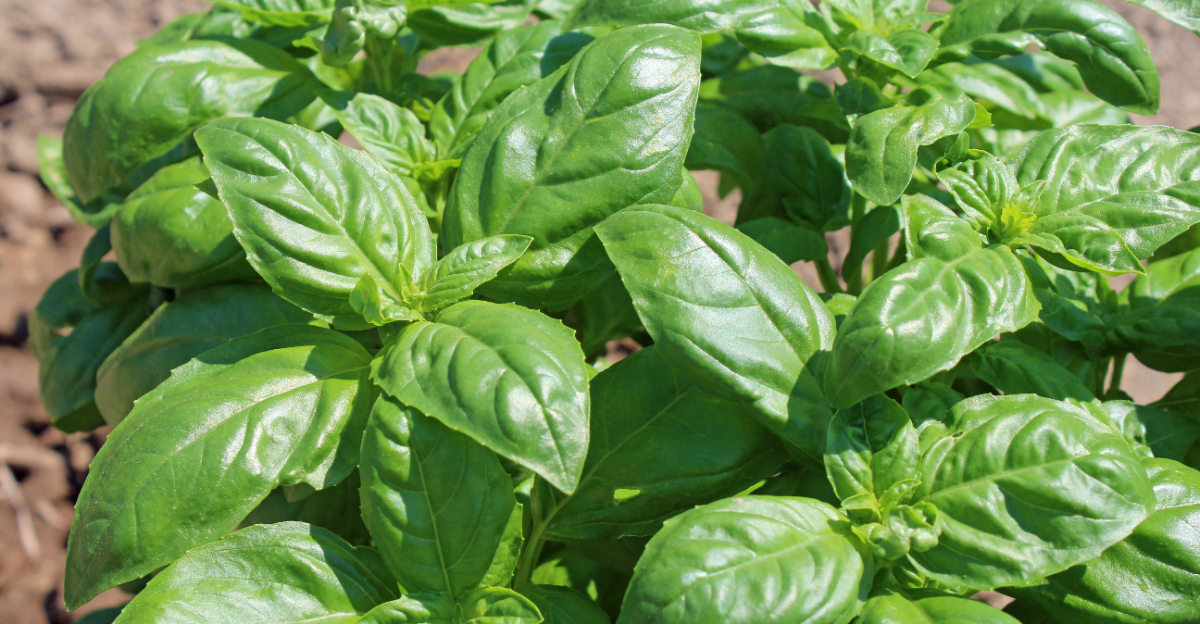
Basil has a reputation for being easy, and for the first few weeks it usually lives up to that. It comes in looking lush, smells incredible, and sits on the porch like it has no intention of going anywhere.
Then Ohio’s summer gets going, and things start to unravel faster than most gardeners expect. It bolts, it yellows, it gets woody in the middle, and before long the plant that looked so promising in May is barely worth picking from.
Most gardeners blame the weather or assume they just got unlucky with a bad plant. But Ohio weather is not the real villain here.
Basil in Ohio is entirely manageable once you understand what the plant actually needs to keep producing, and it is not what most people are doing with it.
1. Start With The Sunniest Spot In The Garden
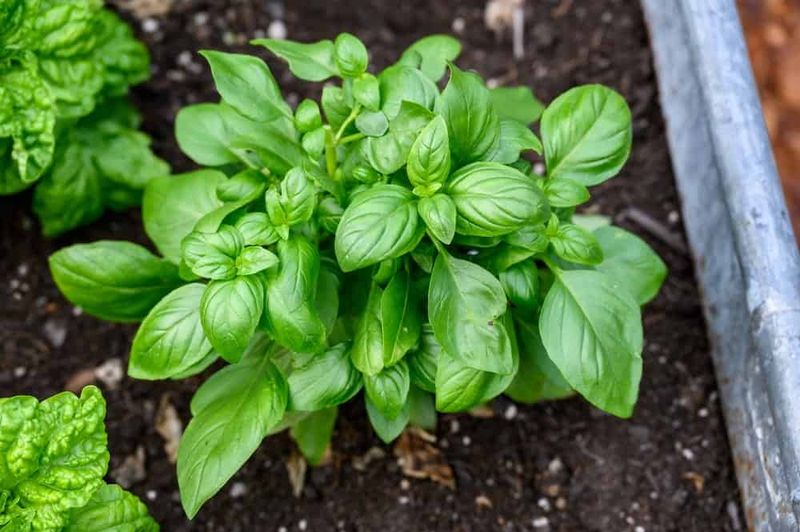
Sunlight is the engine that drives every leaf your basil plant will ever produce. Ohio gardeners who tuck basil into a shady corner often end up with tall, spindly stems and a thin handful of pale leaves.
Aim for a spot that gets a solid six to eight hours of direct sun each day, and your plant has a much better shot at dense, fragrant growth through the warm season.
South-facing garden beds, sunny patios, and spots near a vegetable garden often work well. Raised beds are especially useful in Ohio because they warm up faster in spring and often drain better after heavy rain.
A warm, sunny microclimate near a brick wall or fence may help stretch the harvest a little longer before fall cold settles in.
Too much shade pushes basil to stretch toward the light instead of filling out with harvestable leaves. Weak, stretched growth also makes plants more prone to moisture problems, which are already a real concern during Ohio’s humid summers.
Picking the right location from the start is the first step toward steady, reliable harvests. Even container growers can take advantage of this by simply moving their pots to follow the sun across a deck or patio throughout the day.
2. Give The Roots Loose Soil That Drains Fast
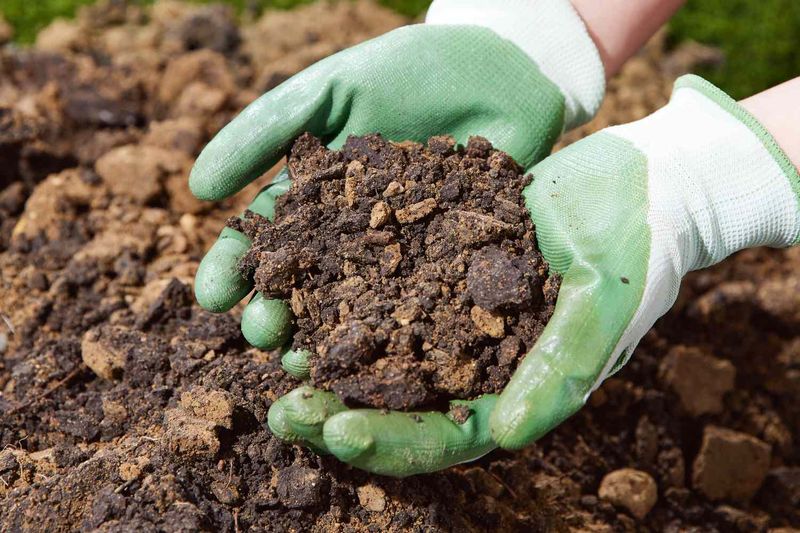
Heavy clay soil is one of the most common challenges Ohio gardeners face, and basil roots are not fans of sitting in waterlogged ground after a summer thunderstorm.
Soggy soil cuts off the oxygen roots need to stay healthy and can cause leaves to yellow and growth to stall.
The fix is simpler than most people expect.
Working a few inches of finished compost into your garden bed before planting makes a noticeable difference. Compost loosens dense clay, improves drainage, and adds a steady supply of nutrients without the need for heavy fertilizers.
Ohio State University Extension recommends improving native clay soils with organic matter to support vegetable and herb gardens alike.
Raised beds filled with a quality garden mix are another smart option, especially for yards that hold water after heavy rain. Containers with drainage holes can solve many drainage problems for patio and balcony growers.
Your Ohio Garden Changes Every Week. Your Plan Should Too.
Gardening in Ohio changes quickly throughout the season. Every Friday you’ll receive a simple weekly plan showing exactly what to plant, prune, fertilize, harvest, and protect so you never miss the right timing.
Basil planted in loose, well-draining soil grows fuller and responds much better to regular harvesting. Healthy roots mean the plant can bounce back quickly after you cut stems for the kitchen.
Skip the compacted spots, the low areas that puddle after rain, and any location where water lingers more than an hour or two after a storm.
3. Water Deeply And Keep Soggy Roots Away
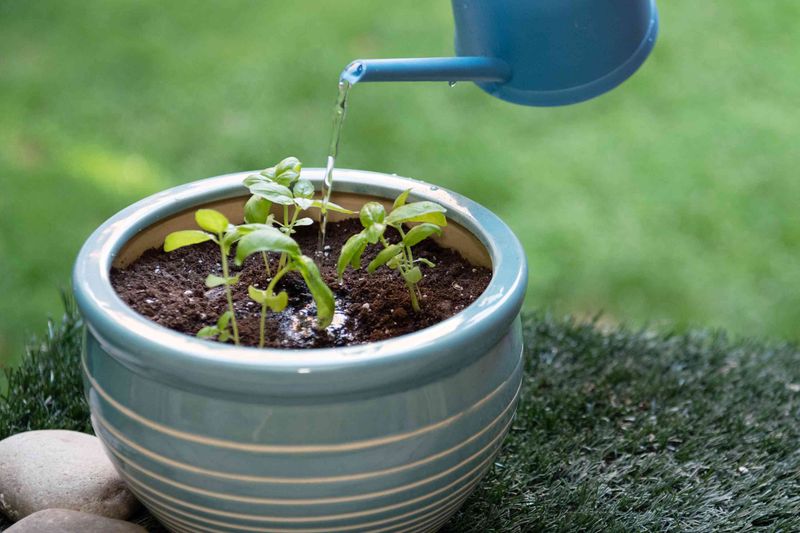
Ohio summers can swing from dry and scorching to soggy and stormy within the same week, which makes consistent watering a real skill for basil growers.
Basil does not handle drought well, especially plants growing in containers, but it also struggles when roots sit in saturated soil for too long.
The goal is steady, moderate moisture rather than extremes in either direction.
A simple way to check is to press your finger about an inch into the soil. If it feels dry at that depth, it is time to water.
If it still feels damp, wait another day and check again. Watering at the base of the plant rather than overhead helps keep leaves dry, which reduces the chance of fungal problems during humid Ohio weather.
Early morning is the best time to water because any moisture that splashes onto the leaves has time to dry before evening. This matters more during Ohio’s sticky, humid stretches in July and August when wet foliage overnight can invite problems.
Container-grown basil dries out faster than in-ground plants, so check pots daily during heat waves.
Deep, thorough watering encourages roots to grow down rather than staying shallow, which makes plants more resilient during dry spells between Ohio’s summer rain events.
4. Cut Above Leaf Branches To Spark New Growth
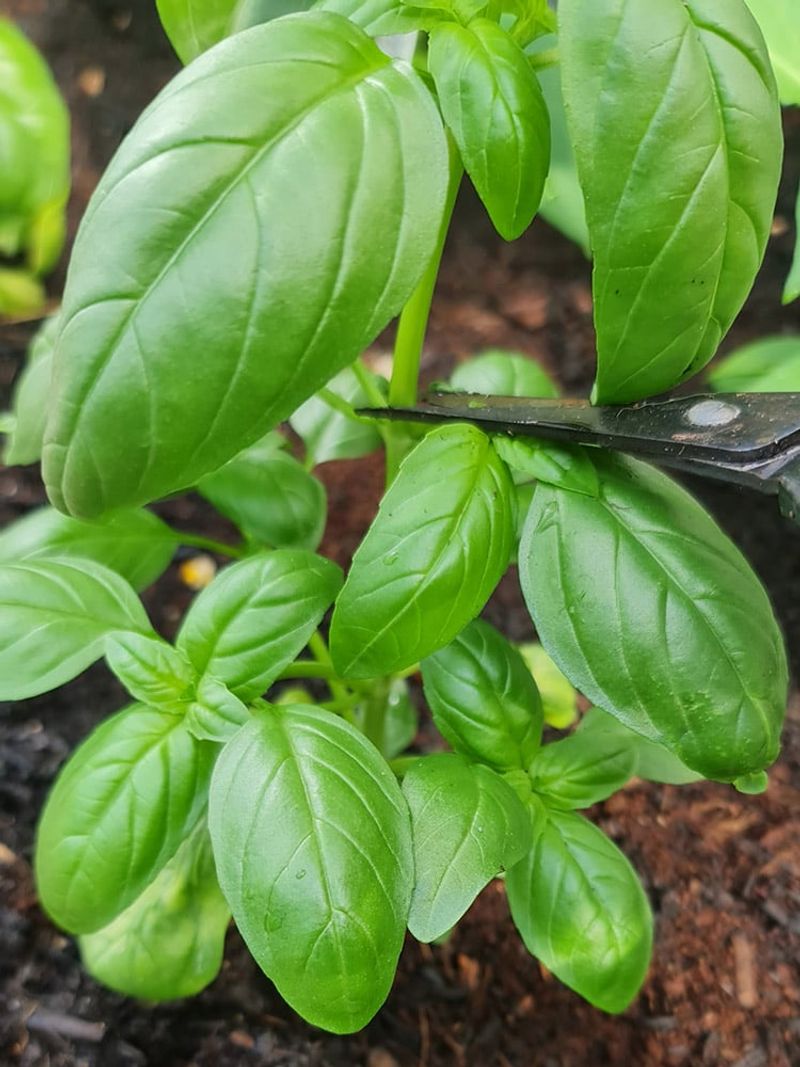
Most first-time basil growers make the same mistake: they pull leaves one by one from the bottom up, leaving a bare stem that slowly stops producing. The real trick to a plant that keeps going all season is knowing exactly where to make your cut.
Look for a spot on the stem where two small side shoots or leaves are growing out from either side, then snip the stem just above that point.
Those two little side shoots will each grow into a full new branch after the cut, which means every harvest actually doubles the number of growing tips on your plant.
Repeat this process each time you harvest and your basil will get wider and fuller rather than tall and thin.
A bushy plant produces far more usable leaves per week than a single tall stem ever could.
Sharp, clean scissors or pruning snips work better than tearing stems by hand, which can bruise the plant and leave ragged cuts. Make the cut close above the leaf pair but not so tight that you nick the small shoots.
Beginners sometimes worry about cutting too much, but basil is remarkably responsive to this kind of pruning. Harvesting this way every week or two during Ohio’s warm season keeps the plant in a steady cycle of growth and production.
5. Harvest Often Before Stems Turn Tall And Leggy
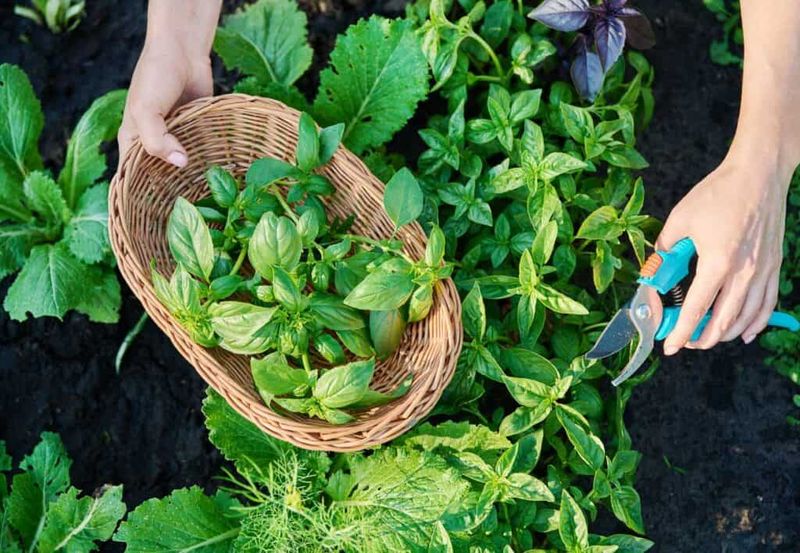
Leaving basil alone for too long is one of the fastest ways to end up with a plant that outgrows its usefulness. Regular picking is what keeps the plant compact, leafy, and productive throughout Ohio’s warm season.
Think of each harvest as a maintenance task, not just a kitchen moment.
Ohioline, the Ohio State University Extension resource, recommends harvesting fresh herbs after morning dew has dried from the leaves.
Harvesting after dew has dried helps keep leaves cleaner and easier to handle, and gentle handling matters because damaged herb leaves and stems can lose some of their aromatic oils.
Bruised leaves turn dark quickly, which affects both appearance and taste.
Ohio cooks have plenty of reasons to harvest often. Fresh basil is perfect for summer tomato salads, homemade pesto, pasta dishes, infused water, and fresh pizza straight from a backyard grill.
Keeping a small colander on the porch and snipping a few stems every few days builds a steady habit. Frequent harvesting also prevents the plant from putting all its energy into growing tall and going to seed before the end of the season.
A plant harvested consistently from mid-June onward can stay productive well into September in most parts of Ohio, giving you weeks of fresh flavor from a single plant.
6. Pinch Flower Buds Early To Keep Leaves Coming
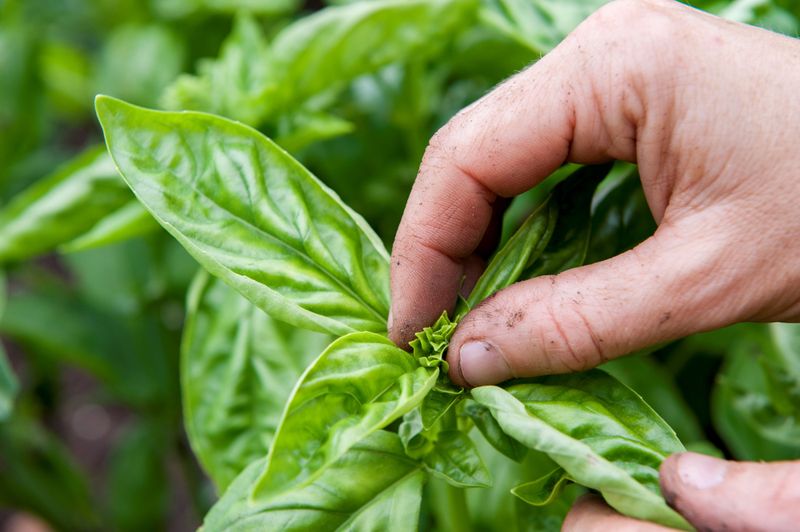
Somewhere around midsummer, your basil plant will start sending up a tall center spike topped with small, tightly packed flower buds.
This is the plant shifting its energy toward reproduction, and for gardeners focused on leaf production, catching this stage early makes a real difference.
Pinch those buds off as soon as you spot them and the plant redirects that energy back into growing fresh leaves.
The process is quick and satisfying. Just use your fingers or small scissors to snap off the bud cluster at the top of the spike.
Do this every few days during peak summer because new buds can appear quickly in warm weather. The more consistently you remove them, the longer your plant stays in its productive leafy stage.
Leaf quality can shift once flowering begins in earnest, with some gardeners noticing a stronger or slightly different flavor profile in the leaves. This does not mean the plant is finished or that the leaves are unusable.
Many Ohio gardeners simply prefer keeping the harvest going as long as possible before the first cool nights of fall slow growth naturally.
Pinching buds is a low-effort habit that takes only a minute or two during your regular garden check and pays off in weeks of extra harvests through the heart of Ohio’s growing season.
7. Use Containers For Bigger Patio Harvests
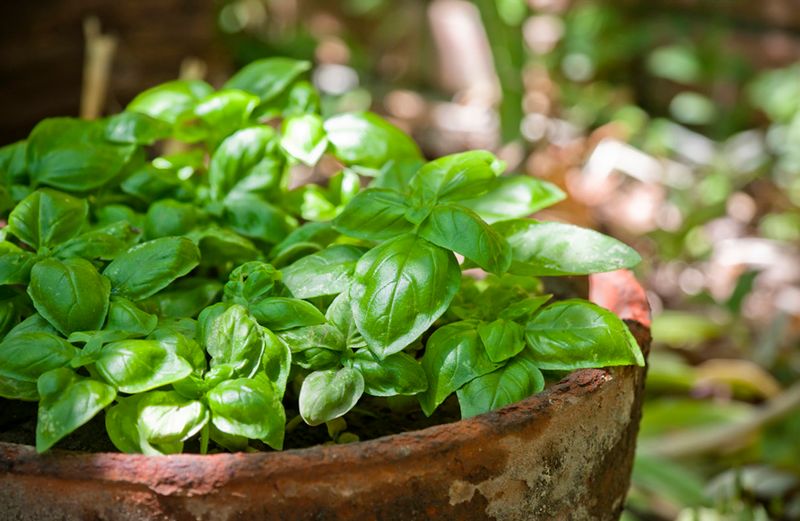
Not every Ohio gardener has a big sunny bed to work with. Patios, apartment balconies, small urban yards, and spaces with poor drainage can all produce excellent basil harvests when you grow in containers.
Pots warm up quickly in spring sunshine, drain well when they have proper holes, and give you the flexibility to move plants around as the light shifts through the day.
Choose a container that is at least eight to ten inches wide and deep enough for roots to spread comfortably. Drainage holes are non-negotiable.
A pot that holds standing water at the bottom will create the same soggy root problems you were trying to avoid in the ground. Fill it with a quality potting mix rather than straight garden soil, which tends to compact in containers and restrict drainage.
Ohio summers can be intense, and containers dry out faster than in-ground beds, especially during heat waves. Plan to check pots daily and water more frequently than you would for garden plants.
Placing containers near a south or west-facing wall gives them extra reflected heat and light, which basil genuinely loves.
Container growing also makes it easier to bring plants indoors for a few nights if a late spring cold snap threatens after you have already started the season.
For Ohio gardeners with limited space, a single well-tended container can produce enough basil for a whole summer of cooking.
8. Let One Plant Bloom To Feed Ohio Pollinators
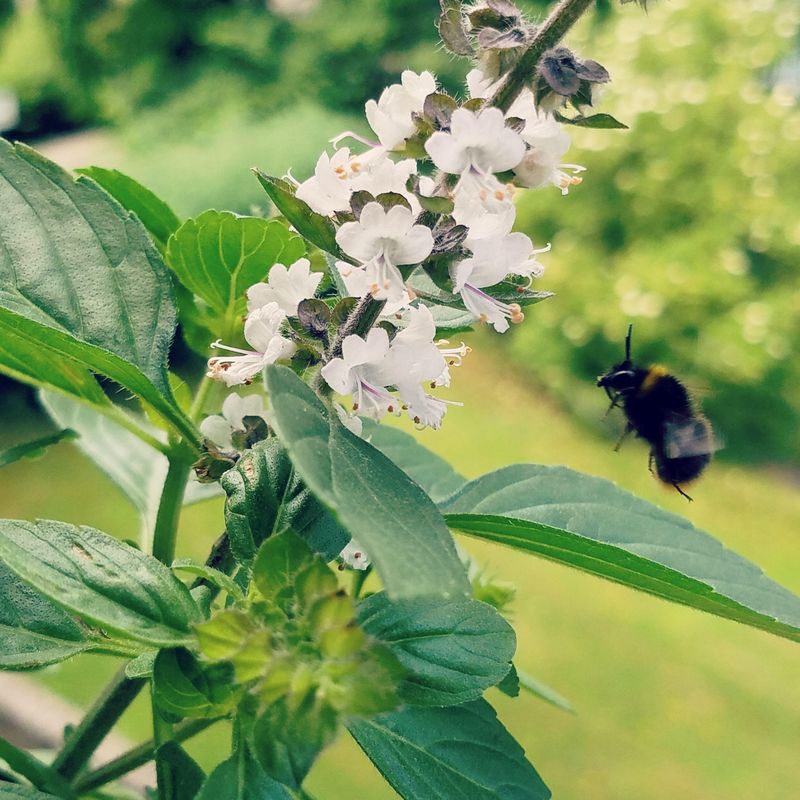
Here is a tip that turns your herb garden into something a little bigger than just a food source. If you are growing more than one basil plant this season, consider letting a single plant go ahead and flower while keeping the rest pinched for leaves.
Basil flowers attract bees, butterflies, and other beneficial insects that help pollinate the rest of your garden.
Ohio State University Extension pollinator resources note that flowering herbs, including basil, can draw in native bees and honeybees during the summer months.
A single blooming plant near your vegetable garden can support pollinators that may also visit crops like squash, cucumbers, melons, tomatoes, and nearby flowers.
The small white or pale purple basil blooms may look modest, but they are genuinely attractive to a range of beneficial insects.
Letting one plant flower does not contradict the advice in the flower-pinching section. Think of it as a deliberate division of labor across your plants.
Most of your basil stays productive and leafy for the kitchen, while one plant gets to complete its natural cycle and benefit the broader garden ecosystem.
The flowering plant will eventually slow its leaf production, but by that point in the season, your other pinched plants are still going strong.
It is a low-effort way to support Ohio’s pollinator population while still keeping plenty of fresh basil coming in for your own cooking.