The 8 Best Shrubs For Florida Corners Where Nothing Seems To Grow Right
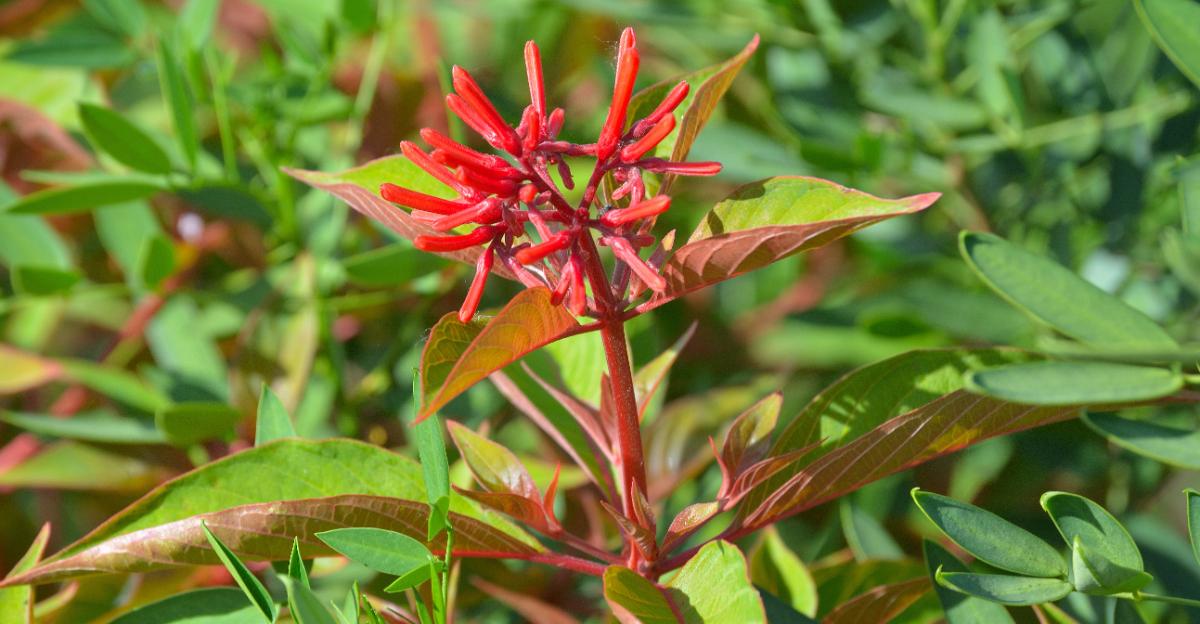
Every Florida yard has that one corner. You know the one.
Maybe it gets blasted with afternoon sun and dries out in a day, or it stays damp long after every rain and smells like it. You have tried a few things there, watched them struggle, and quietly given up.
That corner has been sitting there, half bare, making the whole yard look unfinished.
Florida’s toughest spots have a way of humbling even experienced gardeners, because the conditions there push most ordinary plants past their limit.
Wrong drainage, wrong light, wrong soil, and suddenly nothing wants to cooperate. Most people cycle through three or four plants before they realize the problem is not effort, it is a mismatch.
But some shrubs were practically built for exactly this kind of punishment. They do not just survive problem corners, they actually settle in and fill out the way you always hoped something would.
Your yard has been waiting for the right plant, not a better gardener.
1. Brighten Shady Corners With Beautyberry
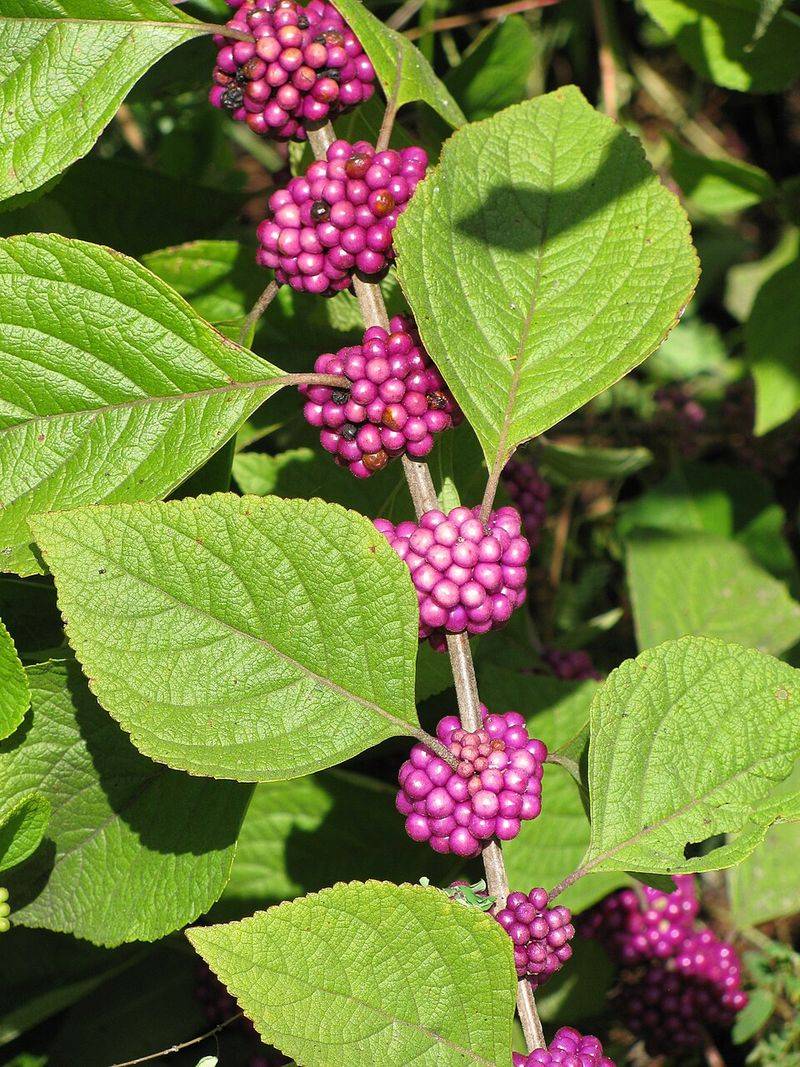
Purple berry clusters that practically glow in the shade make American beautyberry one of the most recognizable native shrubs.
Callicarpa americana is a true native that earns its place in woodland edges, informal garden beds, and shady corners where more structured plants refuse to cooperate.
It brings genuine seasonal interest from late summer into fall, when those vivid berries appear and birds arrive to enjoy them.
Beautyberry grows best in partial to light shade and tolerates a range of soil types, including sandy soils, as long as drainage is reasonable. It benefits from some moisture but handles dry spells once established.
Spacing should be generous because mature plants can spread four to six feet wide or more. This is not a shrub for tight, formal corners where a tidy silhouette is expected.
North and Central Florida gardeners will find beautyberry broadly useful and easy to establish. South Florida gardeners can also use it where conditions fit, though it tends to look its best in sites with some seasonal variation.
In late winter or early spring, cutting plants back hard encourages fresh, vigorous growth and a fuller shape. The mistake to avoid is forcing it into a cramped formal corner.
Its loose, arching habit is part of its charm, and fighting that shape with constant pruning will frustrate you every season.
2. Fill Dry Spots With Simpson’s Stopper
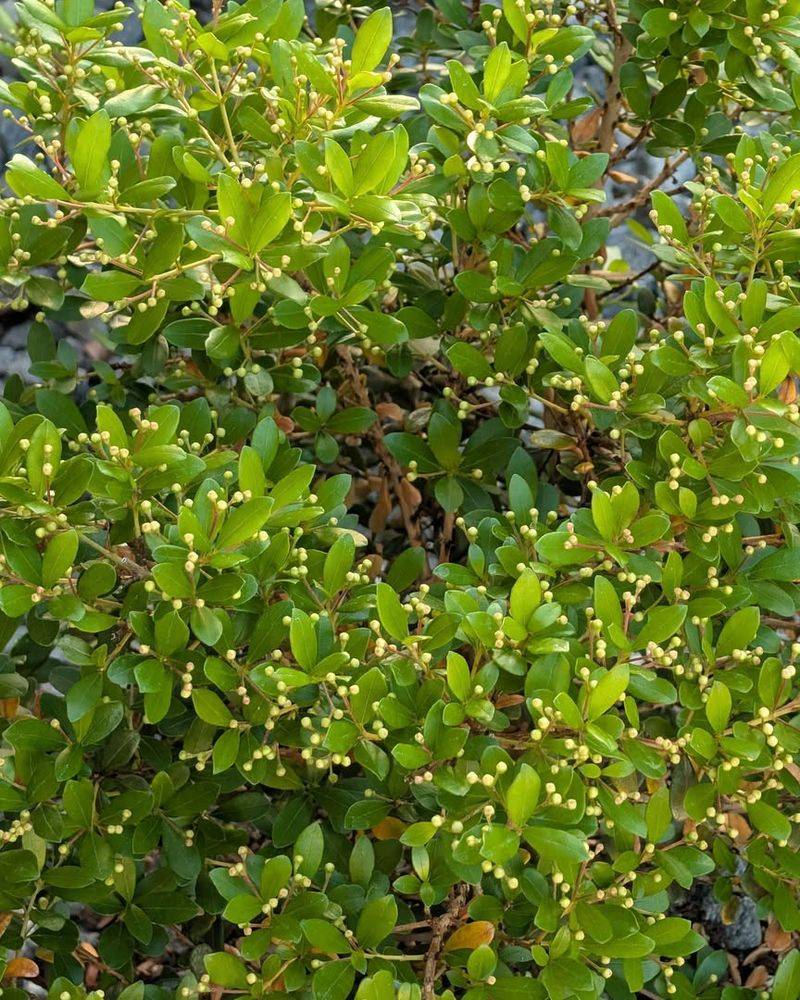
A corner that bakes dry all summer and barely gets irrigation is exactly the kind of spot where Simpson’s stopper earns its reputation.
Myrcianthes fragrans is a native shrub or small tree that delivers dense, evergreen foliage, fragrant white flowers, and small orange-red berries that wildlife love.
It brings a polished, structured look to corners that feel unfinished or bare.
Once established, Simpson’s stopper handles drought reasonably well and prefers well-drained soil. It does not perform well in soggy corners, so skip it if the spot stays wet after rain.
Your Florida Garden Changes Every Week. Your Plan Should Too.
Gardening in Florida changes quickly throughout the season. Every Friday you’ll receive a simple weekly plan showing exactly what to plant, prune, fertilize, harvest, and protect so you never miss the right timing.
Give it full sun to partial shade and plan for a mature size that can reach ten feet or more in height, though regular pruning keeps it compact. Always check the space near walls, walkways, or fences before planting because this shrub has real presence at maturity.
Gardeners in the central and southern part of the state have the easiest time with Simpson’s stopper, and it performs well in warm coastal sites.
Gardeners up north should check local cold hardiness data and cultivar availability before planting. Prolonged hard freezes can damage it in the Panhandle or northern inland areas.
A practical tip is to mulch well around the base after planting to retain soil moisture during the establishment period. The mistake to avoid is planting it in a low spot that collects standing water after heavy rains.
3. Soften Damp Corners With Buttonbush
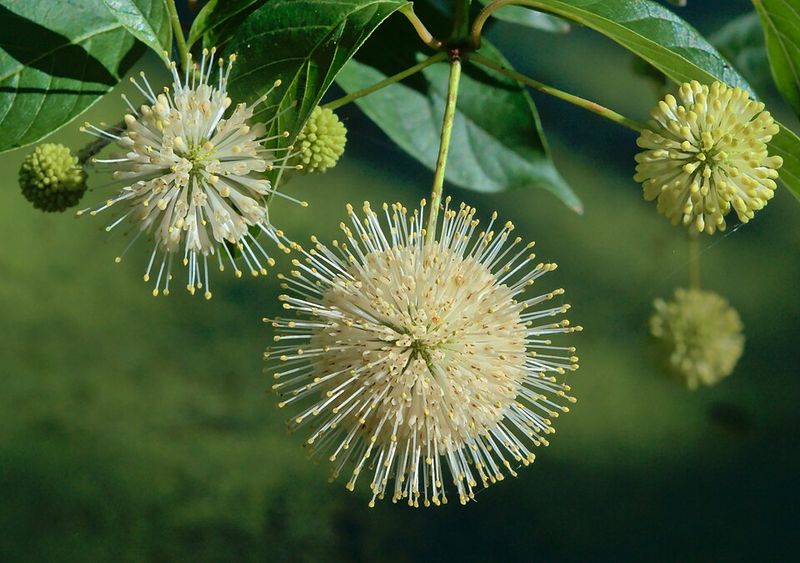
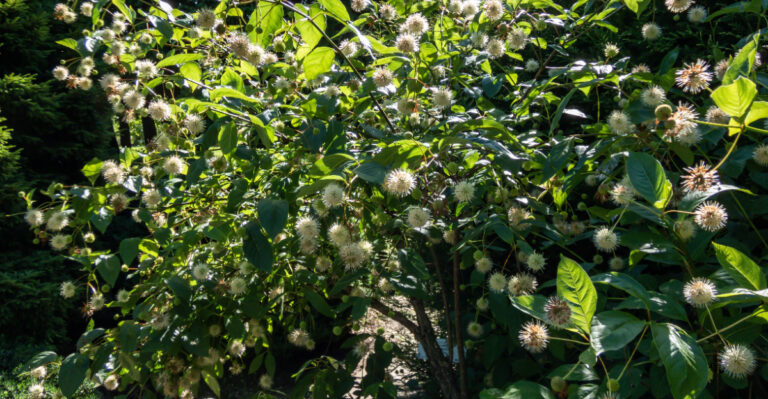
Round, white, pincushion-like flowers that pollinators absolutely love make buttonbush one of the most ecologically valuable shrubs you can plant in a wet corner.
Cephalanthus occidentalis is a native plant that genuinely thrives where most shrubs rot.
That includes rain garden areas, pond edges, low spots that collect runoff, and corners that stay moist through much of the year.
Few native shrubs handle saturated soil as reliably as this one.
Buttonbush grows in full sun to partial shade and adapts to a wide range of moist to wet soils. It can get large, sometimes reaching six to twelve feet tall and wide, so it is not the right choice for a tiny foundation corner.
Plan spacing accordingly and give it room to develop its natural form. The flowers attract bees, butterflies, and hummingbirds, and the seeds feed waterfowl and songbirds through fall and winter.
Buttonbush is broadly native across the state and performs in regions where moist conditions exist. The key is matching it to a consistently damp site rather than trying to use it in average or dry soil.
Gardeners in drier corners should look at a different shrub on this list. A useful maintenance tip is to prune it in late winter before new growth begins to manage its size.
The mistake to avoid is planting it where the soil dries out completely for extended stretches, which stresses the plant noticeably.
4. Use Coontie Where Roots Crowd The Soil
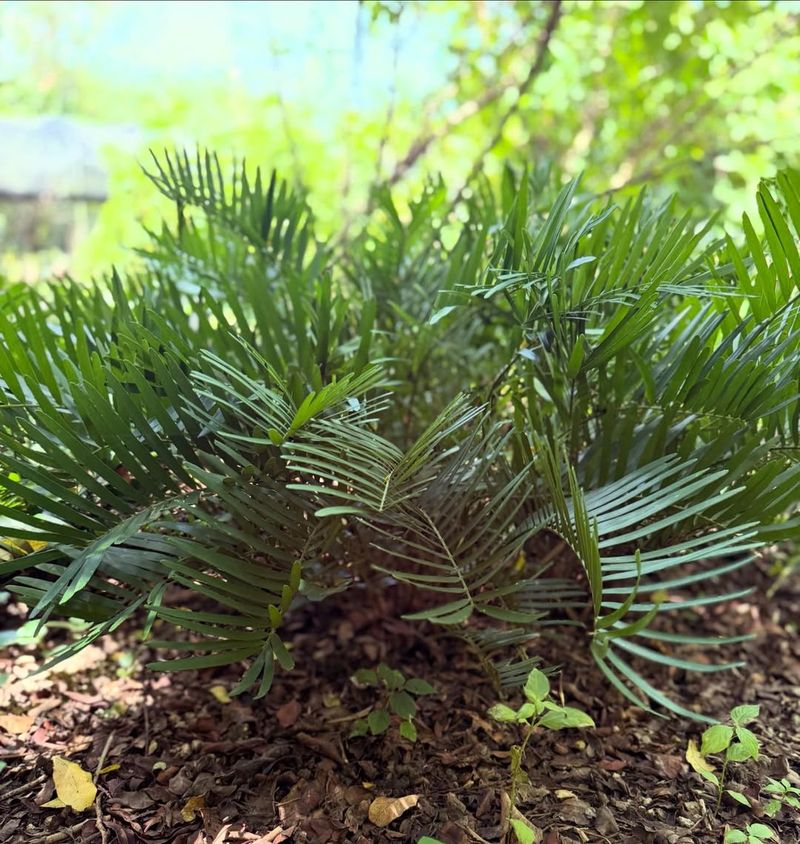
Tree roots that have stolen all the good soil from a corner are no match for coontie.
Zamia integrifolia is a native cycad-like plant. It handles root competition, sandy soil, partial shade, and dry conditions once established better than almost any other low-growing shrub option in the state.
It has a prehistoric look that adds texture and structure to corners where typical flowering shrubs simply give up.
Coontie stays low, usually reaching two to three feet in height, which makes it ideal for foundation corners, narrow beds, and spaces under tree canopies .
It needs well-drained soil and should never be planted too deeply, as burying the crown encourages rot.
Once established, it is genuinely drought-tolerant and requires very little maintenance beyond occasional cleanup of older fronds.
Gardeners in the central and southern part of the state will find coontie easiest to grow and most reliable year-round. Coontie can be used throughout Florida in well-drained sites, though plants may look best where extreme cold and poor drainage are not issues.
Coontie is also the host plant for the atala butterfly, a beautiful South Florida native butterfly that depends on it for reproduction. Choosing coontie supports local biodiversity in a meaningful way.
The mistake to avoid is overwatering, which is one of the fastest ways to stress or lose a coontie in humid climate.
5. Plant Firebush In Hot Sunny Corners
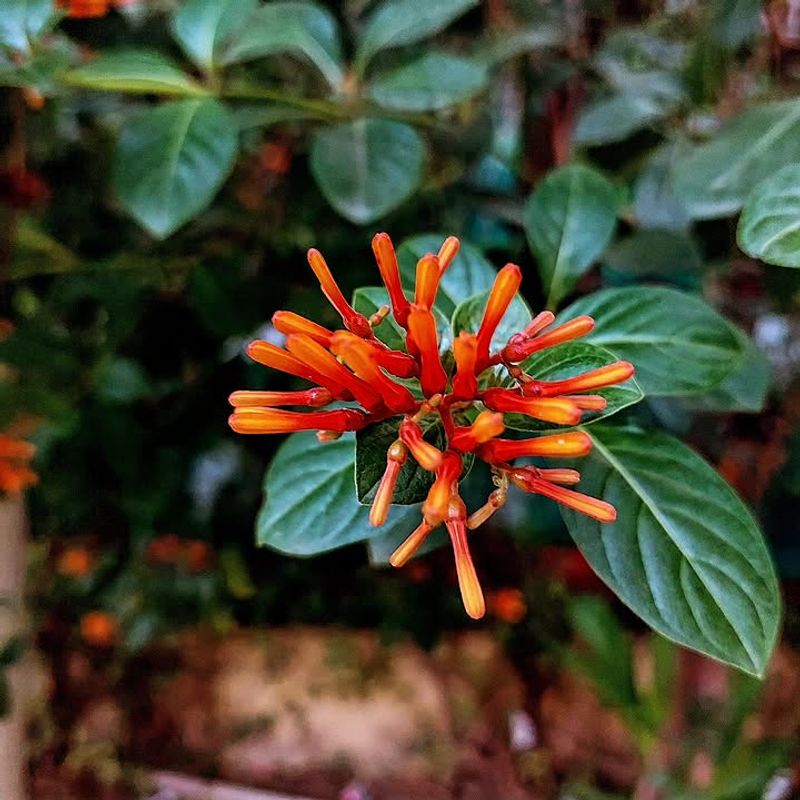
Hot, sun-baked corners that reflect heat off walls, driveways, or fences are genuinely tough spots, and firebush handles that challenge better than almost any other native shrub.
Hamelia patens, the native form, produces tubular orange-red flowers almost constantly through the warm months and pulls in hummingbirds and butterflies like a magnet.
Few shrubs deliver that level of wildlife action while tolerating the kind of punishing heat that bounces off a south-facing stucco wall.
Native firebush grows best in full sun and well-drained soil. It can reach six to ten feet tall and wide in warm climates, so check the mature size before planting near air-conditioning units, windows, or narrow walkways.
Spacing of at least four to six feet from structures is a smart starting point. It handles drought reasonably well once established but performs even better with occasional deep watering during extended dry spells.
Gardeners in the central and southern region get the most consistent performance from firebush year-round. In northern parts, it may freeze back during cold winters but often returns from the roots when temperatures warm.
One important caution: non-native lookalike cultivars are sometimes sold at nurseries.
Always ask specifically for the Florida native form, Hamelia patens var. patens, to get the best ecological value and regional fit.
The mistake to avoid is crowding it into a tiny corner without space for its natural spread.
6. Try Wild Coffee In Protected Shade
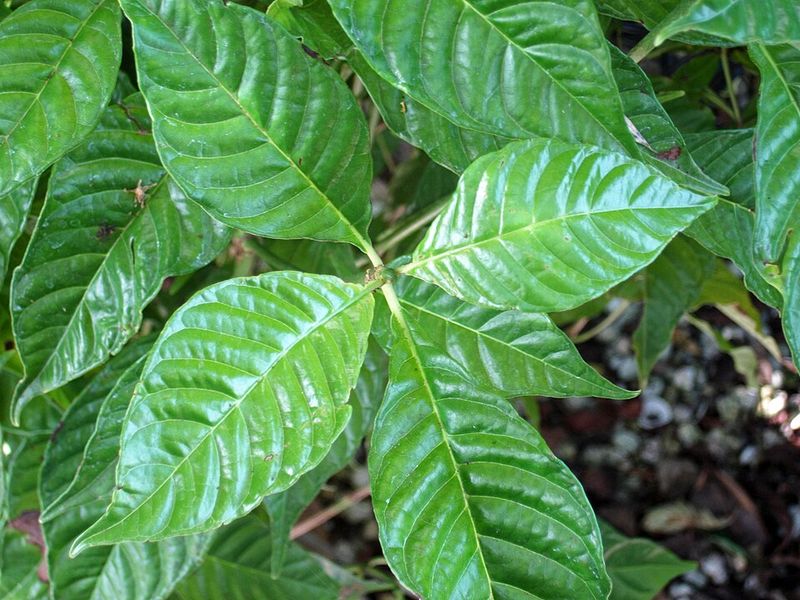
Shaded corners tucked under a large tree canopy or along a north-facing foundation can feel impossible to plant, but wild coffee seems almost designed for exactly those spots.
Psychotria nervosa is a native shrub that prefers shade to part shade, warmth, and reasonably moist but well-drained soil.
It produces glossy, deeply veined leaves that look elegant even without flowers, and its small red berries attract birds through fall and winter.
Wild coffee grows best in central and southern regions, where winters are mild enough to keep it looking its best year-round.
In northern part of the state, it can be cold-sensitive and may struggle through hard freezes unless planted in a very protected microclimate near a wall or structure that holds warmth.
Gardeners in the Panhandle or northern inland areas should check local hardiness data before investing in a planting.
Despite the name, wild coffee is not the coffee plant used for your morning drink, so skip the brewing experiments. It typically reaches four to six feet tall and wide, which works well for mid-size shaded corners.
Afternoon sun exposure is something to avoid because harsh direct light bleaches the foliage and stresses the plant. Mulching generously around the base helps retain moisture and keeps roots cool during hot summers.
The mistake to avoid is putting wild coffee in an exposed, sunny corner or a cold, unprotected spot where winter temperatures frequently drop hard.
7. Anchor Salty Corners With Cocoplum
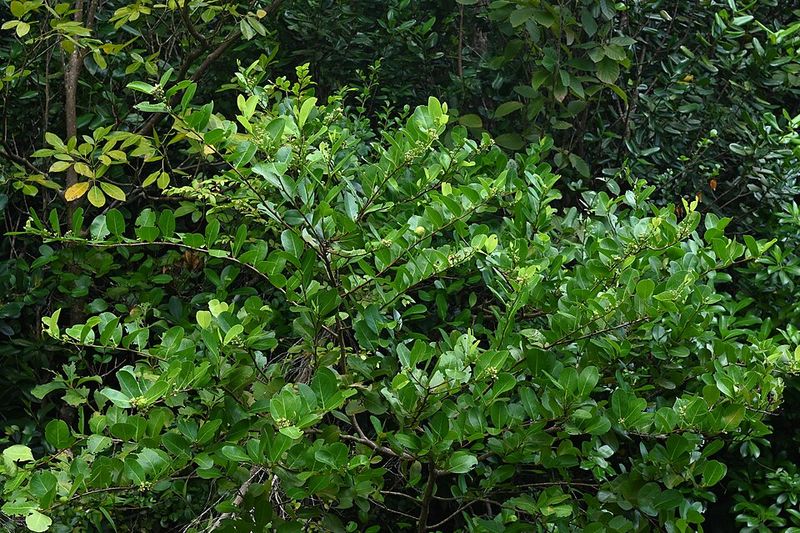
Coastal corners that take a beating from salt spray, sandy soil, and relentless sun are a special kind of difficult, and cocoplum handles those conditions with real toughness.
Chrysobalanus icaco is a native shrub that grows naturally along coastlines. It offers dense, rounded foliage, edible fruit, and reliable screening for corners that need a visual barrier as much as they need a survivor.
It is one of the better choices for warm coastal landscapes where salt damage takes out less-adapted plants quickly.
Cocoplum grows in full sun to partial shade and tolerates sandy, low-fertility coastal soils.
It can be maintained as a formal hedge through regular pruning or left to grow in a more natural, informal shape.
Mature size varies but can reach ten feet or more without pruning, so checking space near walls, fences, and driveways before planting is essential. The fruit attracts wildlife, and the dense canopy provides good nesting cover.
South Florida and warm coastal Central Florida are where cocoplum performs most reliably. Most northern gardens are simply too cold for it unless a very protected microclimate exists, and even then, results are inconsistent.
Gardeners in the Panhandle or northern inland areas should look for a hardier alternative.
After planting, a deep mulch layer helps establish roots faster in sandy coastal soil.
The mistake to avoid is recommending cocoplum statewide without being clear about its cold-hardiness limitations in northern parts of the state.
8. Choose Walter’s Viburnum For Tough Hedges
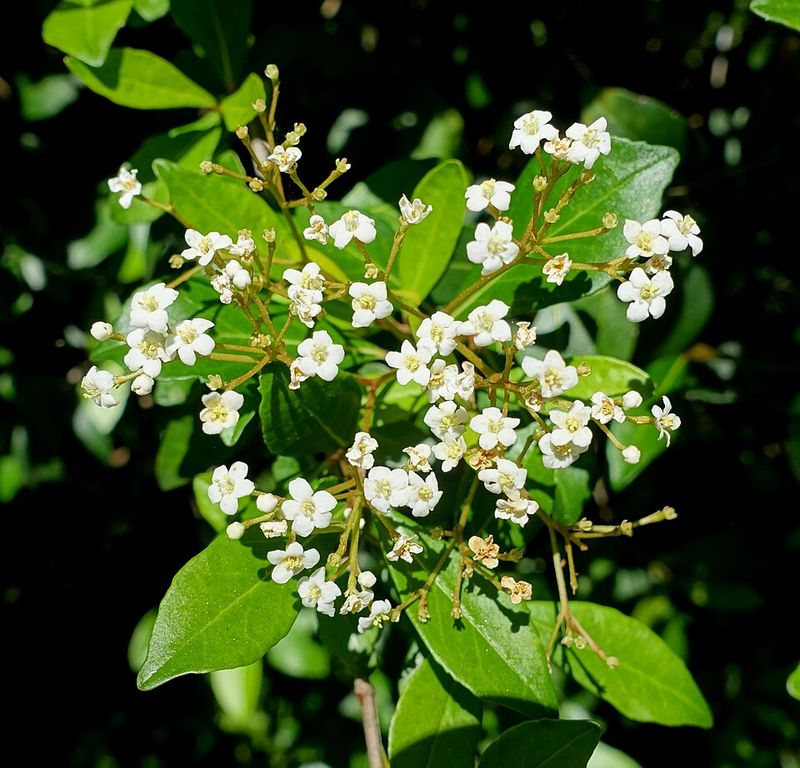
Structure is sometimes exactly what a difficult corner needs. Walter’s viburnum delivers it without requiring the level of babysitting that more temperamental shrubs demand.
Viburnum obovatum is a native shrub that can work as a dense hedge, a privacy screen, or a naturalistic corner anchor depending on how it is pruned and spaced.
Its small white flowers attract pollinators in late winter and early spring, and the dark berries that follow bring in birds through the warmer months.
Walter’s viburnum grows in full sun to partial shade and adapts to a range of soils, including sandy and clay types, with reasonable drainage.
It tolerates brief dry spells once established and is more cold-hardy than many native shrubs. This makes it one of the better choices for many North and Central Florida landscapes, with cultivar selection especially important farther south.
Mature size depends on the cultivar, with some selections staying compact at four to six feet and others reaching fifteen feet or more without pruning.
Northern and central gardeners will find Walter’s viburnum among the most reliable native hedging options available. Southern gardeners can also use it in suitable sites, though growth patterns and cultivar selection may vary.
Always check the mature size of the specific cultivar before planting near walls, fences, or rooflines. Shearing it constantly into a tight formal box stresses the plant and reduces flowering.
The mistake to avoid is planting a large-form cultivar too close to a structure and then fighting its natural size every season.