Why North Carolina Gardeners Who Never Divide Their Daylilies End Up With Fewer Blooms Every Year
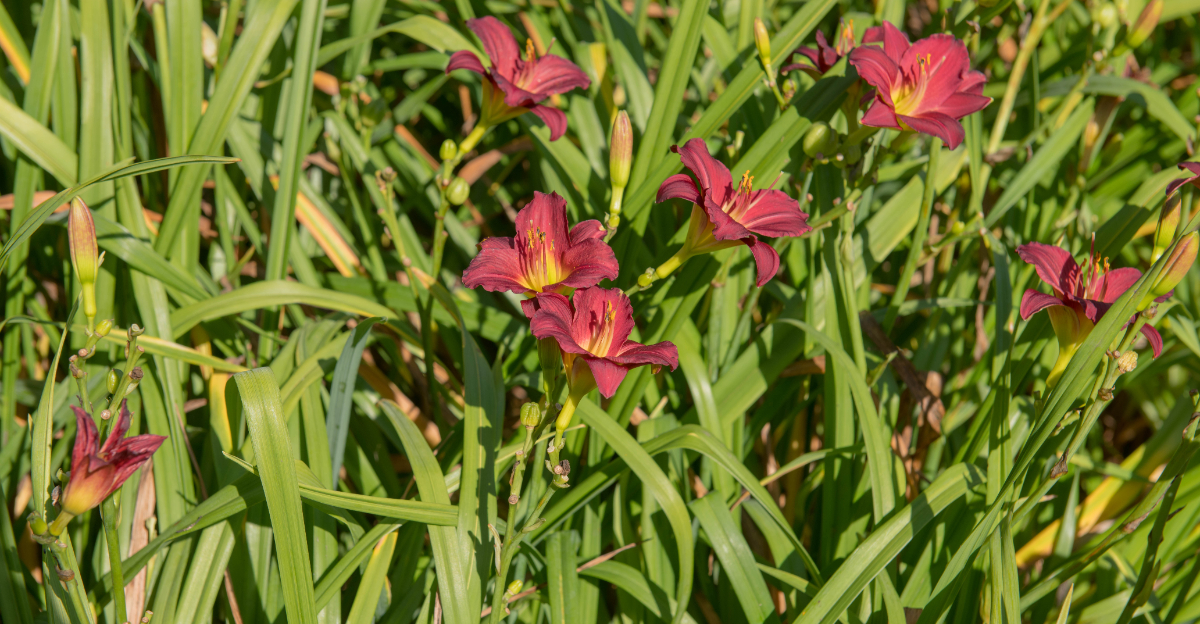
Daylilies have a reputation for being nearly impossible to get wrong. They spread on their own, survive neglect, and come back every year without much encouragement.
That reputation is mostly deserved. But there is one thing they need that most gardeners never think about, and skipping it costs you flowers season after season without any obvious explanation.
A daylily clump that never gets divided keeps growing outward while the center slowly weakens. The roots get overcrowded, competing for the same water and nutrients in an increasingly tight space.
The plant responds the only way it can, by putting out fewer blooms each year while still looking just healthy enough that nothing seems wrong. It’s a gradual change, easy to miss until you look back at old photos and realize your daylilies used to be covered in flowers.
Dividing them resets that process completely, and the difference the following season is hard to argue with.
1. Crowded Clumps Compete With Themselves
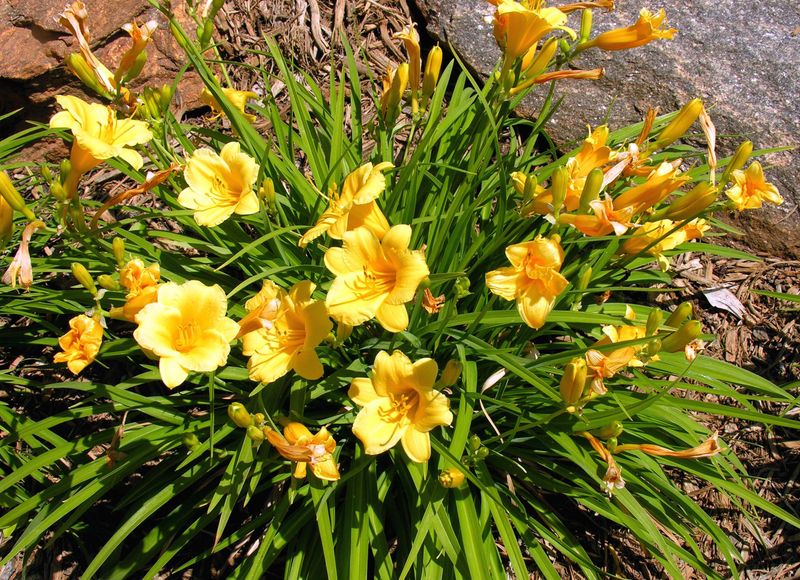
Picture a school cafeteria where every student is fighting over the last tray of food. That is almost exactly what happens when daylilies grow too close together for too long.
Each fan, which is a single shoot with its own roots, needs space, water, and nutrients to produce flowers. When dozens of fans pack into one tight clump, none of them get enough of anything to thrive.
Daylilies are naturally vigorous spreaders, and in the warm, fertile soils of North Carolina, they multiply faster than many gardeners expect.
A clump that looked perfect two years ago can quietly become a tangled mass of roots and fans competing heavily with one another.
The blooms start to shrink, the flower stalks become shorter, and eventually the whole clump just looks tired.
Separating those fans gives every individual plant its own territory to work with. Freshly divided sections almost always rebound with stronger growth and noticeably more flowers the very next season.
Gardeners across the Piedmont and Coastal Plain regions of North Carolina consistently report dramatic improvements after dividing clumps that had been left alone for four or more years.
Giving your daylilies a little breathing room is one of the simplest investments you can make for a more colorful, rewarding garden all summer long.
2. Dense Centers Become Less Vigorous Over Time
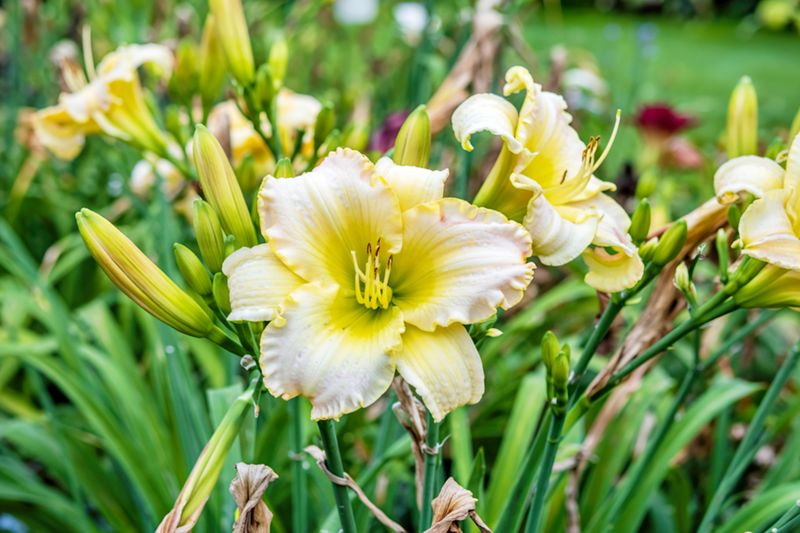
Here is something that surprises a lot of gardeners: the oldest part of a daylily clump is usually the least productive part. Over several years, the center of a large clump tends to become woody, exhausted, and far less capable of producing healthy flower scapes.
Meanwhile, the outer edges, where newer fans are actively growing, stay relatively strong and green.
The result is a clump that looks full from a distance but is actually hollow in terms of blooming potential. North Carolina gardeners who skip division for five or more years often notice that their flower beds look lush but produce surprisingly few flowers.
The foliage keeps growing, which can be deceiving, but the real goal of a daylily garden is those stunning blooms, not just green leaves.
Your North Carolina Garden Changes Every Week. Your Plan Should Too.
Gardening in North Carolina changes quickly throughout the season. Every Friday you’ll receive a simple weekly plan showing exactly what to plant, prune, fertilize, harvest, and protect so you never miss the right timing.
When you divide the clump, you remove the spent center sections and replant only the vigorous outer fans. Those younger sections have fresh energy stored in their roots and are ready to put that energy directly into flower production.
Many experienced gardeners in the Triangle and Charlotte areas treat division as a regular reset button for their beds.
Separating healthy fans from tired centers is the fastest way to restore the kind of full, reliable blooming that made you fall in love with daylilies in the first place.
3. Flower Stalk Production Gradually Drops
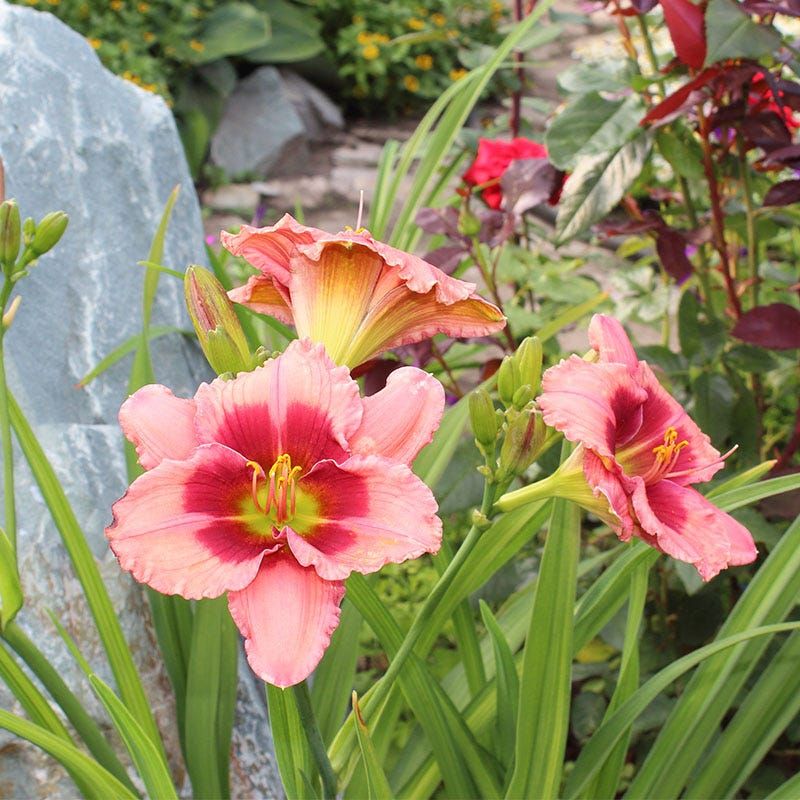
One of the clearest warning signs that your daylilies need dividing is a slow but steady drop in flower stalk production. You might notice it first as just a slightly slower season, then the next year it seems even quieter.
Before long, a plant that used to send up ten or fifteen scapes is barely managing three or four. That gradual decline is not random bad luck.
When a clump becomes too crowded, each fan has to work harder just to survive. Resources that should go toward building strong flower scapes get redirected into maintaining root systems and basic leaf growth instead.
The plant is not failing, it is simply prioritizing survival over reproduction, which means fewer blooms for you each season.
Daylilies across North Carolina, from the mountains to the coast, respond remarkably well once they are divided and given fresh soil and space.
Gardeners who divide on a regular schedule, roughly every three to four years depending on the cultivar and growing conditions, consistently enjoy full, productive flower displays season after season.
Fresh divisions planted in good soil with a little compost worked in will often double or triple their scape count within a single growing season.
Keeping up with division is not extra work; it is the kind of maintenance that pays you back with a garden full of gorgeous color every single summer.
4. North Carolina Heat Increases Stress On Crowded Clumps
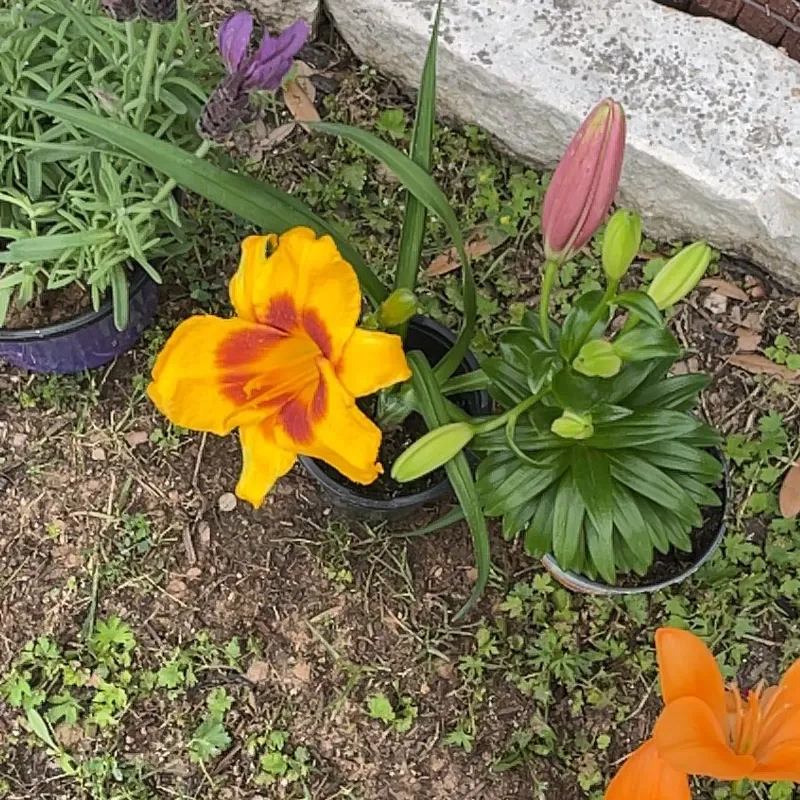
North Carolina summers are no joke. Between the blazing heat of July and August and the thick, sticky humidity that settles across the state, plants are already working hard just to stay cool and hydrated.
For daylilies packed into overcrowded clumps, that seasonal heat turns into a serious problem that directly cuts into bloom production.
Dense root masses trap heat and make it harder for moisture to reach every part of the clump evenly. Outer fans may pull water before inner fans even get a chance, leaving the center of the clump chronically stressed during the hottest months.
Stressed plants do not bloom well, plain and simple. They focus their limited energy on basic survival rather than producing the flowers you are hoping to see.
Dividing your daylilies before summer arrives gives each section more soil contact and better access to water when temperatures soar.
Gardeners in the Sandhills and Coastal Plain regions of North Carolina, where summer heat can be especially intense, often find that divided plants hold up far better through August than crowded ones do.
Spacing fans properly also allows the soil around them to retain moisture more efficiently, which makes a real difference during dry spells.
A little planning before the heat arrives can mean the difference between a dazzling display and a disappointing, sparse flower season that leaves you wondering what went wrong.
5. Poor Airflow Encourages Disease Problems
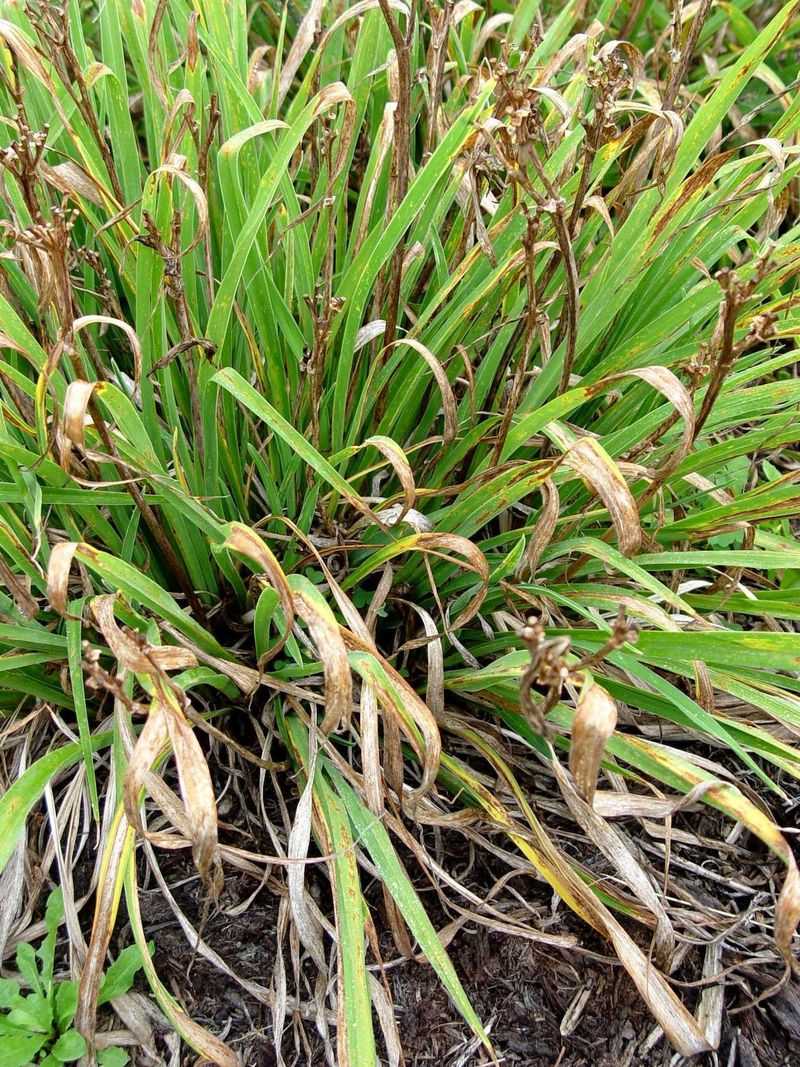
Thick, tightly packed daylily foliage might look impressive at first glance, but it creates the perfect conditions for fungal diseases to move in and cause trouble.
When fans are pressed together with no room for air to circulate, moisture sits on the leaves longer after rain or irrigation.
In North Carolina, where spring and early summer can bring long stretches of wet weather, that trapped humidity becomes a real invitation for problems like daylily leaf streak and other fungal issues.
Daylily leaf streak, caused by the fungus Aureobasidium microstictum, is one of the most common diseases seen in North Carolina gardens. It shows up as yellow streaks running along the leaf blades, eventually turning brown.
Overcrowded clumps make this disease spread much faster because infected foliage stays in constant contact with healthy leaves. Once it takes hold in a crowded bed, it is hard to manage without also addressing the underlying spacing problem.
Dividing your clumps opens up the canopy and allows air to move freely between fans, which helps foliage dry out faster after wet weather. That simple change dramatically reduces the conditions that fungal diseases need to spread.
Gardeners in the humid eastern part of North Carolina especially benefit from regular division as a disease prevention strategy. Healthy airflow means healthier plants, and healthier plants always produce more of those beautiful blooms you planted them for.
6. Dividing Restores Root Space And Plant Energy
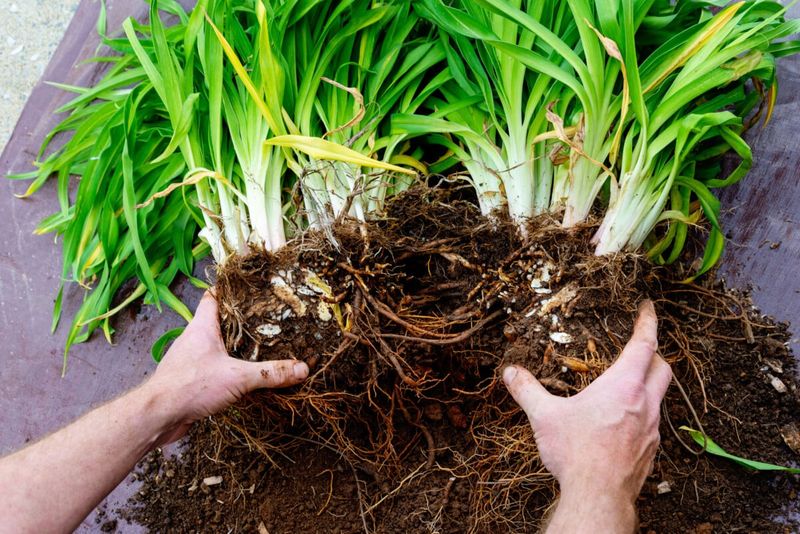
There is something almost magical about pulling apart a tangled daylily clump and seeing all those healthy white roots ready to grow again. Division is not just about making more plants; it is about giving existing plants the root space they need to truly thrive.
When roots have room to spread out into fresh soil, they absorb water and nutrients far more efficiently than roots crammed into a dense, exhausted mass.
Think of it like repotting a houseplant that has been stuck in the same small container for years. The moment you move it to a bigger pot with fresh soil, it rebounds with new energy and often blooms more than it has in a long time.
Daylilies respond the same way. Freshly divided fans planted into good garden soil, especially soil enriched with compost, put on noticeably stronger growth and produce more flower scapes in the seasons that follow.
In North Carolina, where growing seasons are long and warm, divided daylilies have plenty of time to establish themselves and store energy for a spectacular bloom season ahead.
Whether you garden in the mountain foothills near Asheville or in the flat coastal regions near Wilmington, giving your daylily roots fresh territory to explore makes an immediate and visible difference.
Division is genuinely one of the most rewarding garden tasks you can do, with results that show up right where you want them most.
7. Nutrient Uptake Becomes Less Efficient In Big Clumps
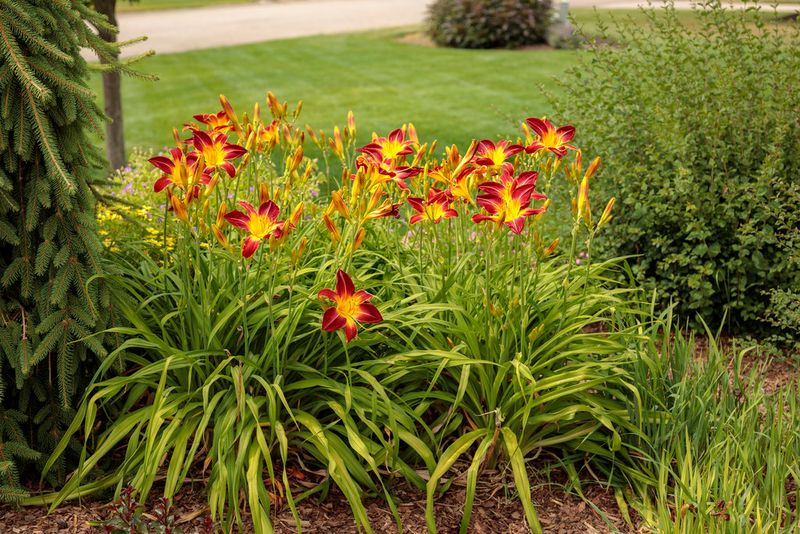
Soil nutrients are not unlimited, and a large, overcrowded daylily clump can exhaust the nutrients in its immediate area surprisingly fast. Every fan in that clump is drawing from the same pool of nitrogen, phosphorus, potassium, and trace minerals.
When dozens of fans compete for those same resources, each one ends up with less than it needs to produce strong stems and vibrant flowers.
Even if you fertilize regularly, nutrients applied to a densely packed clump have a harder time reaching the inner root zone where older fans are struggling the most.
Water carries fertilizer down through the soil, but in a tight, compacted root mass, that movement becomes restricted.
The outer fans intercept much of what you apply before it ever reaches the center, leaving those inner sections chronically undernourished no matter how much fertilizer you add.
Separating clumps into smaller, well-spaced divisions allows each fan to access the full nutrient profile of the surrounding soil without competition.
Gardeners in North Carolina who divide their daylilies and then amend the planting area with compost or a balanced slow-release fertilizer often see a remarkable turnaround in plant health and bloom production within a single season.
Nutrients that were previously spread too thin across too many competing roots suddenly become available in full to each individual division.
That renewed access to soil nutrition is one of the key reasons divided daylilies consistently outbloom their overcrowded counterparts.
8. Bloom Size May Decrease Without Division
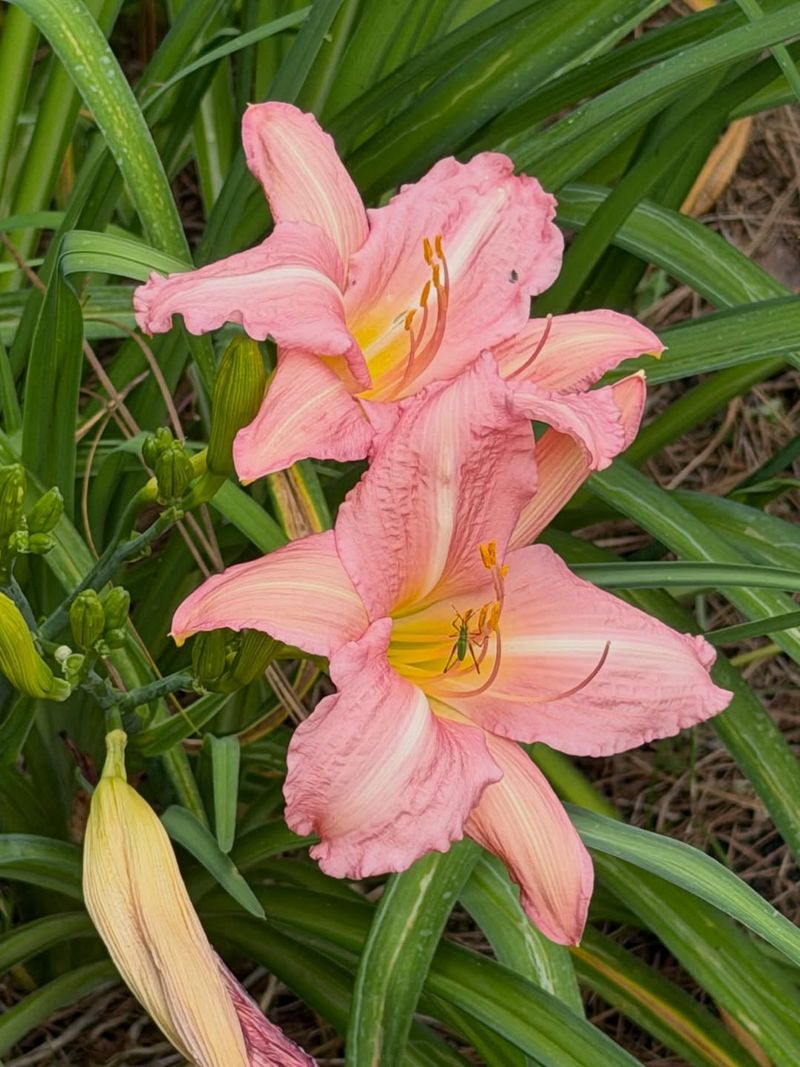
Size matters when it comes to daylily blooms, and overcrowding is one of the sneakiest reasons flowers start shrinking from season to season.
When a clump is stressed from competition, the plant simply does not have enough resources to build large, showy flowers.
Instead, it produces smaller blooms on weaker stems, and the overall display looks noticeably less impressive than it once did.
Many North Carolina gardeners assume that smaller flowers are just a natural part of aging for their daylilies. In reality, the cultivar has not changed and the plant has not lost its genetic potential.
What has changed is the growing environment. Tight, exhausted root systems cannot support the same level of flower production that a healthy, well-spaced division can achieve when given proper growing conditions.
Freshly divided fans replanted with good spacing and a little soil preparation often bloom with noticeably larger, more vibrant flowers within one to two seasons.
The stems become stronger and taller, the blooms open wider and hold their color better, and the entire display looks more like what you fell in love with when you first planted them.
Across North Carolina, from community gardens in Raleigh to home landscapes in Greensboro, gardeners who commit to regular division consistently enjoy larger, bolder daylily flowers.
Giving each fan the resources it needs to build a full, beautiful bloom is what division is ultimately all about.
9. Spring Or Early Fall Division Usually Works Best
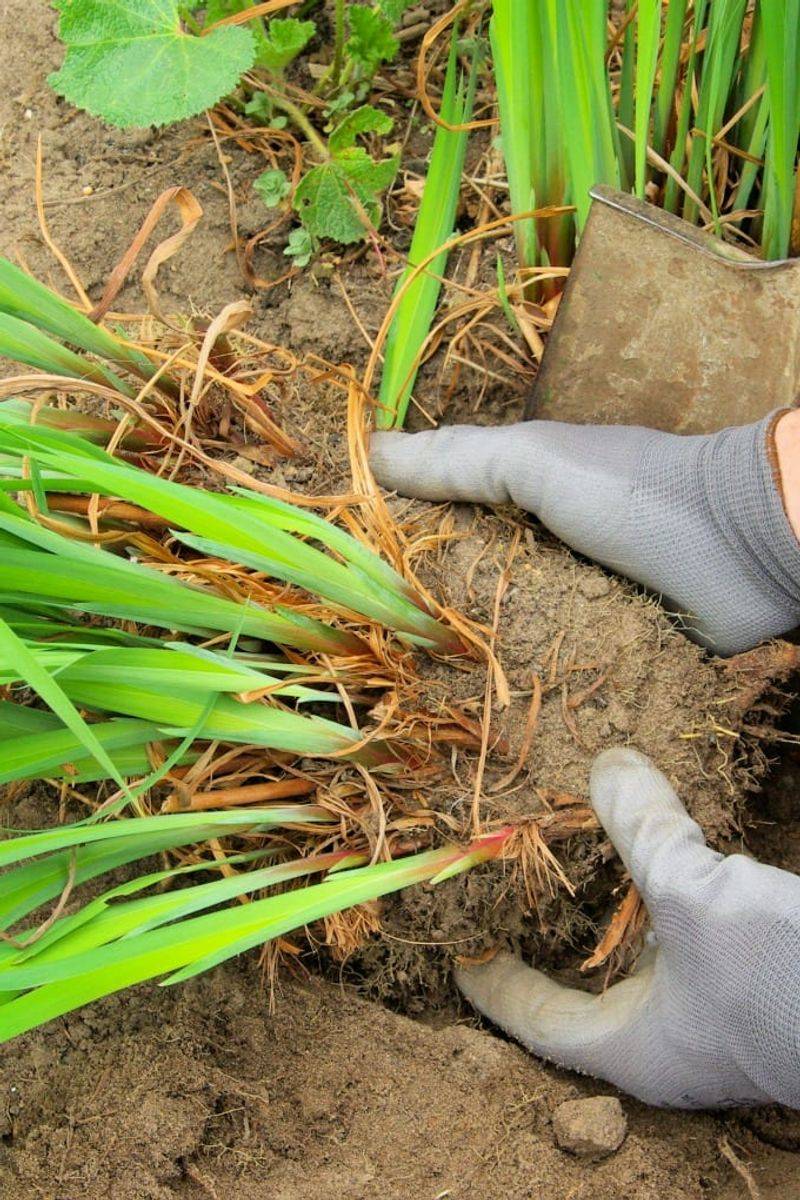
Timing your daylily division correctly makes a big difference in how well the plants recover and how quickly they get back to blooming.
In North Carolina, the two best windows for division are early spring, just as new growth emerges, and early fall, roughly six to eight weeks before the first frost.
Both of these periods offer cooler temperatures and more reliable soil moisture, which reduces the stress on newly separated fans.
Spring division works especially well because the plants are just waking up and their energy reserves are strong. Roots establish quickly in warming soil, and the fans have the entire growing season ahead of them to settle in and build toward a great bloom year.
Early fall division is equally effective because the intense summer heat has passed, the soil is still warm enough for root growth, and cooler air temperatures make it much easier for transplants to avoid wilting stress.
Avoid dividing during the peak of North Carolina summers if you can help it. July and August heat can put significant stress on freshly divided plants before their roots have a chance to anchor in.
If you miss the spring window, early September is usually a reliable backup across most of the state.
Mark your calendar, gather a sharp spade and a garden fork, and set aside an afternoon for one of the most satisfying and productive tasks a North Carolina daylily gardener can tackle all year.
10. Some Daylilies Can Go Several Years Before Needing Division
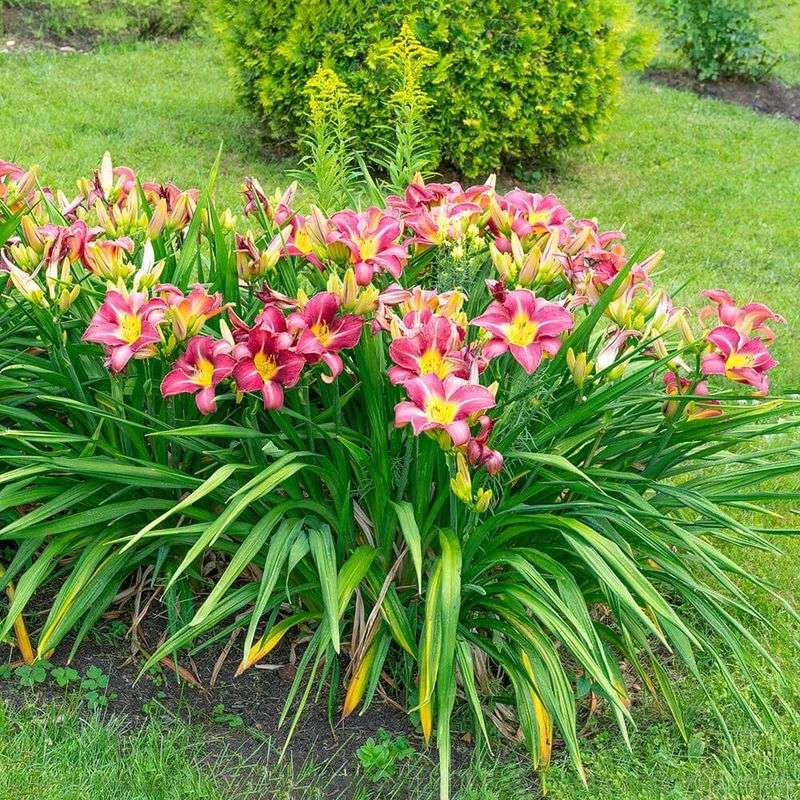
Not every daylily on your property is secretly struggling under the surface. Some cultivars are slower spreaders by nature, and in certain soil types and growing conditions, a clump can stay productive for five or even six years before division becomes truly necessary.
Knowing your specific plants and watching for the early signs of decline is more valuable than following a rigid schedule that treats all daylilies the same way.
Tetraploid daylilies, which have larger and bolder flowers, often spread more slowly than diploid types and may not need dividing as frequently.
Daylilies grown in poorer, sandier soils common in parts of eastern North Carolina also tend to spread more slowly than those grown in the rich, amended soils of a well-maintained garden bed.
Watching your plants closely each season gives you much better guidance than any general rule of thumb.
The clearest signals that division is overdue include a noticeable drop in bloom count, smaller flowers than in previous years, a hollow or dying-looking center, and fans that seem to push each other out of the ground.
When you start seeing two or more of those signs together, it is time to get your spade out regardless of how long it has been.
North Carolina gardeners who stay observant and respond to what their plants are actually showing them always end up with healthier, more beautiful daylily gardens than those who either divide too early or wait far too long.