These Native North Carolina Vines Outperform Clematis On A Hot South Facing Fence
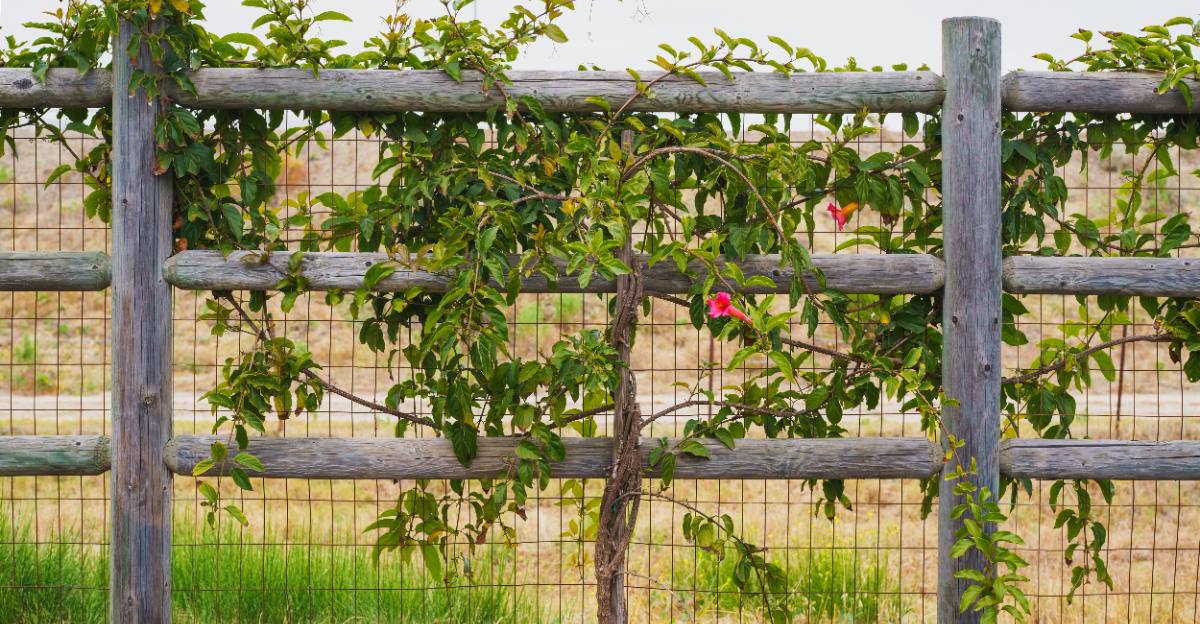
A south facing fence in a North Carolina yard is one of the most challenging spots in the entire garden.
Heat radiates off that surface all day, reflected light intensifies the temperature even further, and summer afternoon sun hits it with full intensity for hours without relief.
Clematis struggles in those conditions despite its widespread use on fences and trellises across the state, often producing its best performance in cooler spots and declining noticeably when pushed into sustained, reflected heat.
Native North Carolina vines were shaped by exactly that kind of exposure over generations, growing across rock faces, climbing fence lines in full sun, and handling the combination of heat and drought that shuts down less adapted plants by midsummer.
Several of them bloom with a boldness that matches or exceeds clematis, support local wildlife in ways that non native vines cannot, and return each season with more vigor than the last.
For a hot south facing fence, they are not just a substitute for clematis, they are the better choice from the start.
1. Carolina Jessamine Brings Spring Color Without Clematis Fuss
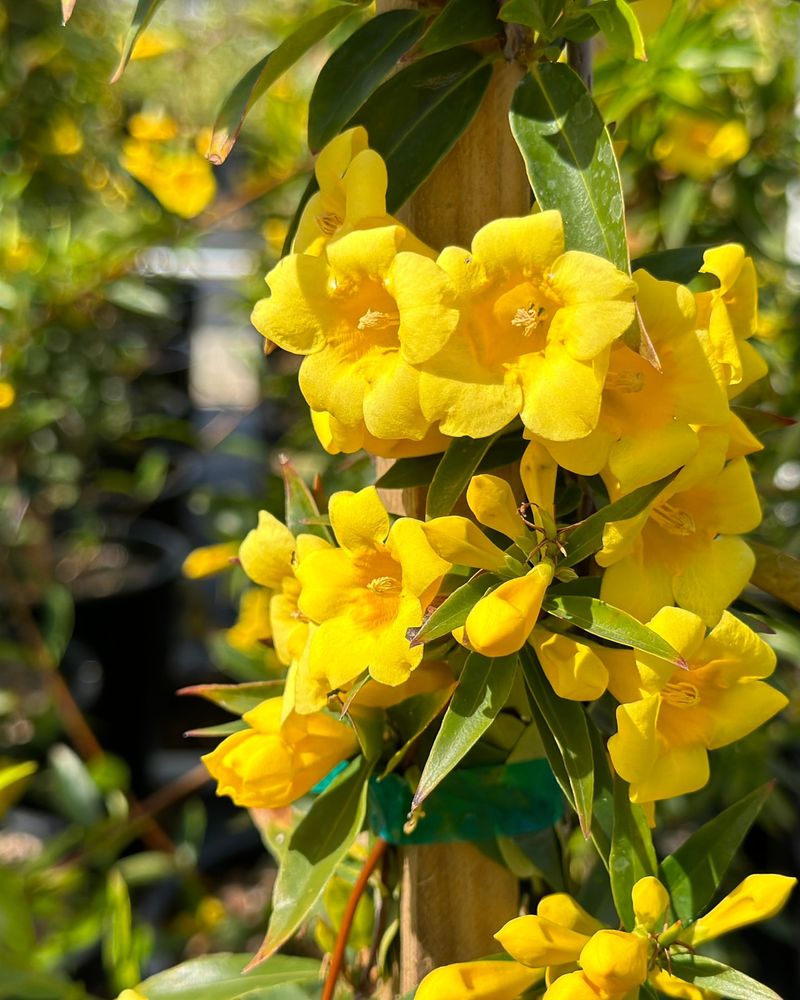
Few sights in a spring garden are as cheerful as Carolina Jessamine bursting into bloom along a sunny fence.
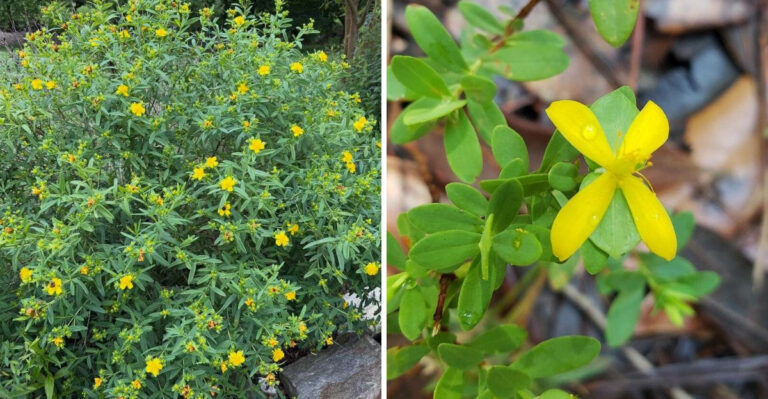
This evergreen to semi-evergreen native vine produces masses of bright yellow, trumpet-shaped flowers from late winter through early spring, often before most other plants even wake up.
Hummingbirds and early pollinators absolutely love it, making it a smart choice for wildlife-friendly yards.
Carolina Jessamine thrives in full sun and prefers moist, well-drained soil, though it handles periods of dry weather once it settles in. On a hot south-facing fence, it holds its own far better than many clematis options that wilt under intense summer heat.
The glossy foliage stays attractive even after the blooms fade, giving your fence season-long good looks.
Planting it in spring or fall gives roots time to establish before extreme temperatures arrive. Water regularly during the first growing season, then ease back once the plant is rooted in.
Train young stems onto a wire or trellis support early, because the twining habit needs guidance. Prune lightly right after flowering to keep the shape tidy and encourage strong new growth.
One important note for North Carolina gardeners with families: all parts of this plant are toxic if eaten. Place it thoughtfully, away from areas where children, pets, or livestock have easy access to the foliage or flowers.
2. Coral Honeysuckle Handles Heat And Hummingbirds Love It
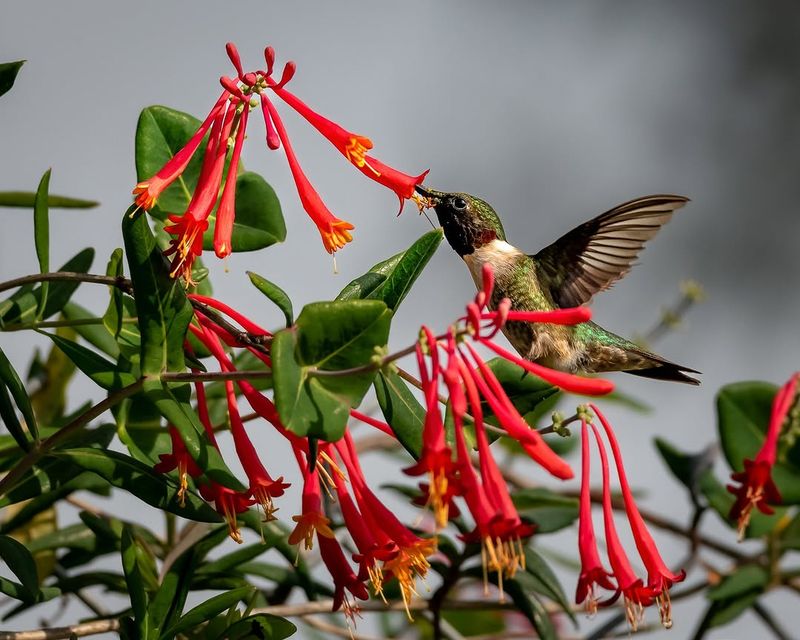
When hummingbirds show up in a North Carolina garden, there is a good chance Coral Honeysuckle is somewhere nearby. Unlike its invasive cousin Japanese honeysuckle, this native species plays nicely in the landscape and never takes over neighboring plants.
The long season of red tubular blooms runs from spring well into summer, keeping pollinators and hummingbirds coming back for weeks.
On a hot south-facing fence, Coral Honeysuckle performs reliably when you give roots a thick layer of mulch to hold moisture. Consistent soil moisture during the first year makes a huge difference in how well the plant establishes.
Your North Carolina Garden Changes Every Week. Your Plan Should Too.
Gardening in North Carolina changes quickly throughout the season. Every Friday you’ll receive a simple weekly plan showing exactly what to plant, prune, fertilize, harvest, and protect so you never miss the right timing.
Once rooted, it handles heat and humidity with ease, which is more than most clematis varieties can claim in the same spot.
Training this vine is straightforward. Guide the twining stems onto a wire fence or trellis support, and the plant will climb steadily on its own.
Prune after the main flush of flowers fades to reduce tangling and encourage a fresh round of blooms. Avoid heavy pruning in late fall, as some flower buds form on older wood.
Keeping the plant tidy is mostly a matter of removing crossing or crowded stems once a year.
North Carolina gardeners who want a fence covered in color without fighting an aggressive spreader will find Coral Honeysuckle an honest, hardworking choice that rewards minimal effort with maximum impact.
3. Crossvine Covers A Sunny Fence Fast
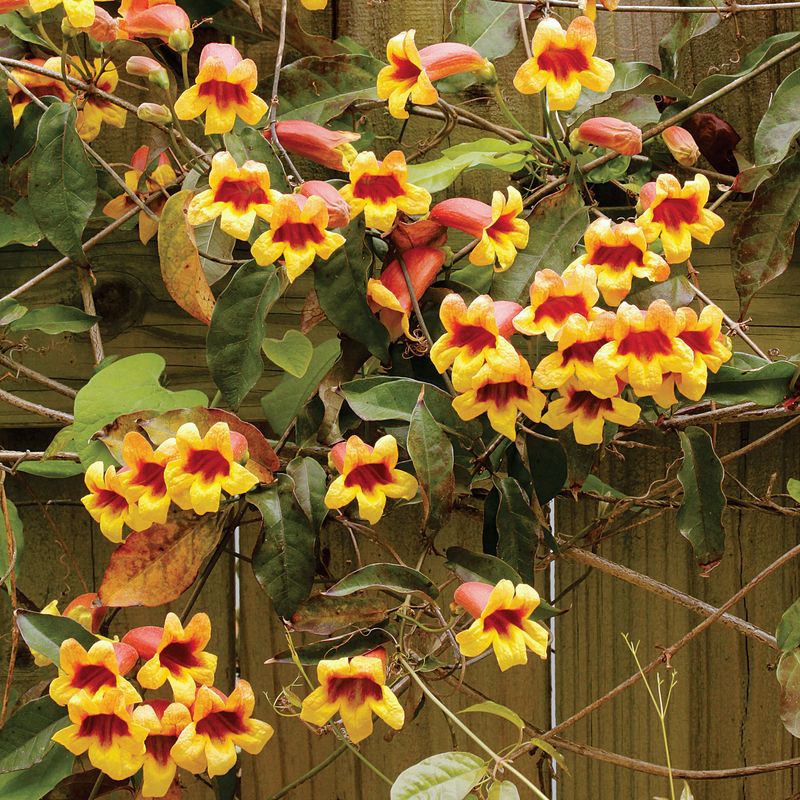
Crossvine earned its reputation as a fast mover, and North Carolina gardeners with a bare fence to fill will appreciate that quality immediately.
Native to the state, this semi-evergreen vine produces striking trumpet-shaped flowers in shades of orange, red, and yellow every spring, creating a bold display that stops people in their tracks.
The blooms attract hummingbirds and early bees before many other plants get started. On a hot, south-facing fence, Crossvine handles the heat without complaint.
North Carolina’s warm, humid climate is genuinely where this plant feels most at home, and it grows noticeably faster here than many clematis options that prefer cooler roots and milder summers.
The tendrils grip fence wires, wood, and masonry with strong adhesive discs, so the vine climbs without much help from you.
Give each plant plenty of space, at least six feet apart, because the spread can be impressive in a good growing season. Use sturdy fence posts and wire supports because the weight of a mature vine adds up quickly.
Water regularly during the establishment period, then pull back once roots are settled. Prune after spring flowering to manage size and shape, removing older woody stems to encourage fresh growth from the base.
Spacing and support planning before planting saves a lot of work later. Crossvine is a committed climber, and giving it a strong structure from day one keeps the plant looking intentional rather than wild.
4. Passionflower Turns A Fence Into A Pollinator Magnet
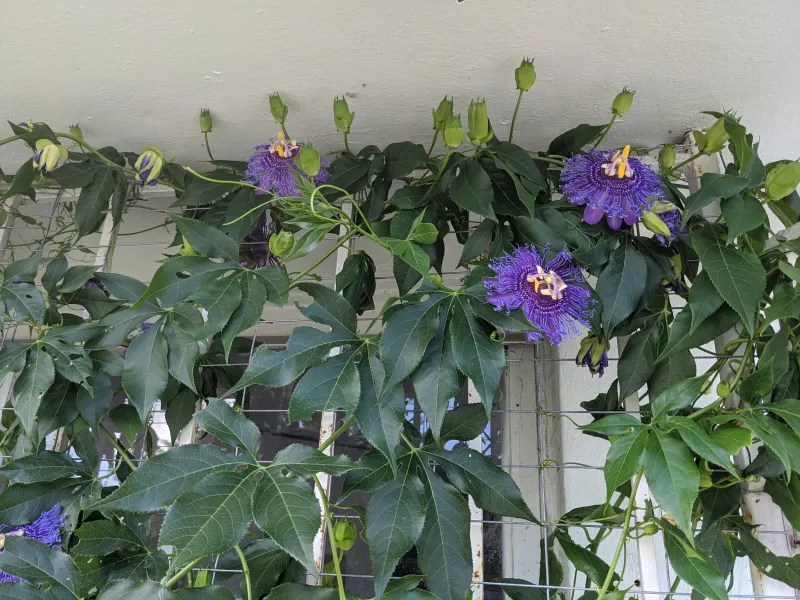
Nothing on a garden fence stops visitors in their tracks quite like a Passionflower in full bloom.
The flowers of Passiflora incarnata are unlike anything else in a North Carolina garden, featuring a complex ring of purple and white fringed petals that look almost too exotic to be native.
And yet this plant is completely at home in the state, growing happily in full sun with the kind of summer heat that sends other vines into survival mode.
Passionflower is a key host plant for Gulf fritillary butterflies, meaning the caterpillars feed on the foliage as part of their life cycle. Planting it on a south-facing fence essentially turns that structure into a butterfly nursery.
Bees work the flowers steadily through summer, and the yellow fruits that follow attract additional wildlife to the yard.
One thing to plan for is root spreading. Passionflower sends out underground runners that pop up nearby, so choose a spot where a little spread is welcome or where you can easily manage new shoots.
Train the twining stems up a wire fence or wooden trellis by hand when plants are young, and the vine takes over from there.
Managing growth does not require harsh chemicals. Simply pull unwanted shoots when they appear, or redirect them along the fence.
North Carolina gardeners who embrace the slightly wild energy of this vine end up with one of the most interesting and productive fence plants in the entire region.
5. Trumpet Vine Is Bold Enough For Tough Heat
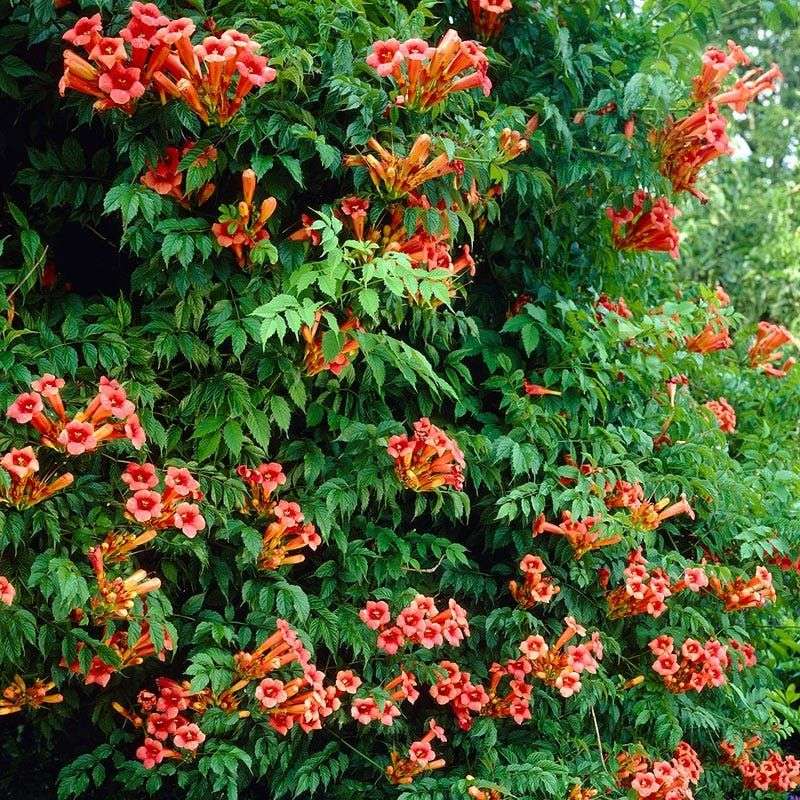
If you want a vine that genuinely does not care how hot a south-facing fence gets in a North Carolina summer, Trumpet Vine is your answer.
The orange-red trumpet flowers are some of the most vibrant blooms in any native plant lineup, and hummingbirds treat them like a favorite restaurant, returning again and again through the long bloom season.
Few other vines deliver this combination of heat toughness and wildlife value.
Honesty matters here though. Trumpet Vine is a vigorous grower, and it needs a fence or support structure that can handle real weight and strong attachment.
It clings using aerial rootlets that grip wood, masonry, and metal tightly. Planting it against house siding or near wooden trim boards is not a good idea, because the rootlets can work their way under surfaces over time.
Choose a sturdy metal or wooden fence post setup away from structures you want to protect. Prune hard in late winter before new growth begins, cutting stems back to two or three buds to keep the plant a manageable size.
Root suckers will appear in the surrounding soil, especially in good growing years, and pulling them when small prevents unwanted spread.
North Carolina gardeners who give Trumpet Vine the right spot and a firm pruning schedule end up with one of the most spectacular native vines in the Southeast.
The reward is a fence absolutely covered in hummingbird-friendly color from midsummer through early fall.
6. Virginia Creeper Gives A Fence Fast Coverage And Fall Color
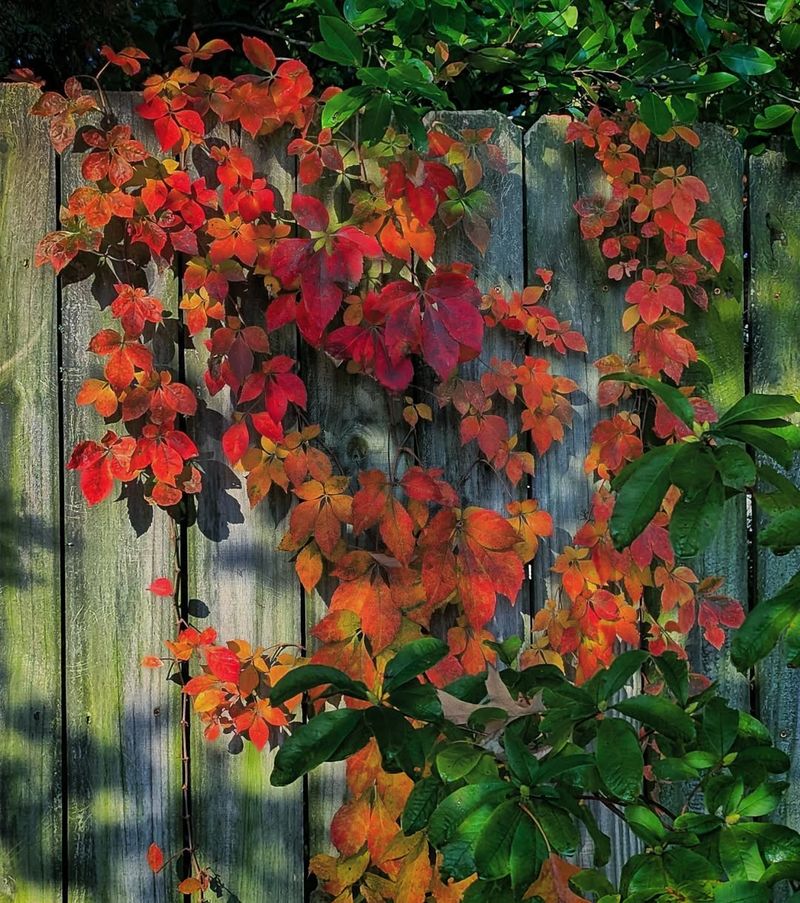
Virginia Creeper might be the most underrated native vine growing across North Carolina right now. Gardeners often walk past it in the wild without a second glance, but put it on a south-facing fence and watch what happens.
The five-leaflet foliage covers structures quickly, turning a bare fence into a lush green wall by midsummer and then exploding into brilliant red and burgundy color every fall.
Heat, humidity, clay soil, and dry spells are no match for Virginia Creeper once it gets established. North Carolina conditions suit it perfectly, and it handles the tough microclimate of a south-facing fence far better than many ornamental choices.
Birds go after the dark blue berries in autumn, adding wildlife activity to the already impressive visual display.
Placement deserves careful thought before planting. The adhesive discs on the tendrils cling very strongly to wood, brick, and painted surfaces, so removing the vine from a wall later takes real effort.
Fences, arbors, and chain-link structures are ideal spots where the cling works in your favor rather than against you.
Pruning once or twice a year keeps Virginia Creeper from swallowing nearby shrubs or climbing into trees. The berries are mildly toxic if eaten in quantity, so place the vine where children and pets are unlikely to snack on them.
Gardeners who pick the right spot will have a low-maintenance, high-impact fence plant that looks great in every season.
7. American Wisteria Gives Gardens A Safer Wisteria Choice
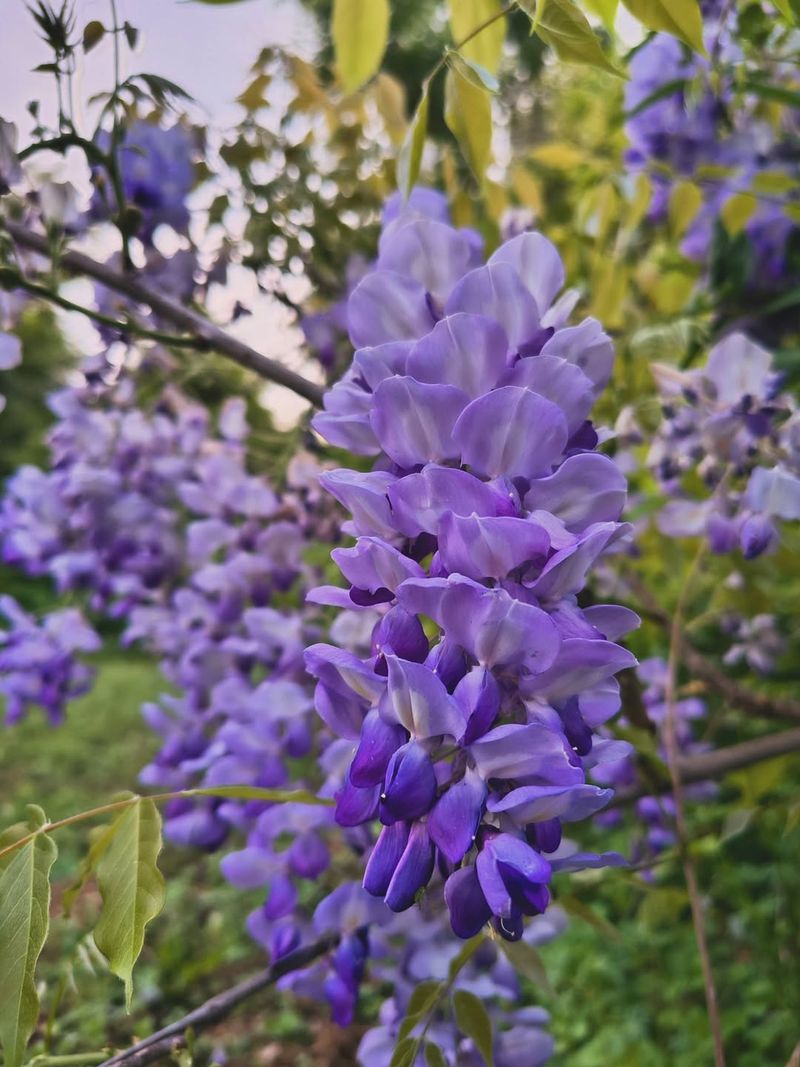
Wisteria has a complicated reputation in North Carolina, and most of the blame belongs to the Asian species that have escaped gardens and overtaken forests across the region. American Wisteria is a completely different story.
Native to the Southeast, Wisteria frutescens offers the same romantic clusters of purple flowers without the aggressive spreading habit that makes the Asian types such a problem for local ecosystems.
On a sunny fence or arbor, American Wisteria blooms in late spring and often produces a second flush of flowers in summer when conditions stay favorable.
The fragrant purple clusters are shorter and more compact than Asian wisteria blooms, but they are genuinely beautiful and attract bumblebees and other pollinators in large numbers.
Full sun and moist, well-drained soil bring out the best flowering performance.
Training this vine requires patience and a sturdy support structure. Use heavy-gauge wire or a solid wooden arbor, because the stems become woody and substantial over time.
Prune after the first bloom flush, cutting back long shoots to encourage branching and more flower buds. Avoid heavy pruning in fall or winter, as you risk removing next season’s blooms.
North Carolina gardeners who have always wanted wisteria on a fence but worried about it taking over will find the native species a genuinely manageable option.
It may take two or three years to bloom freely, but the wait is absolutely worth it once the flowers arrive in force.
8. Virgin’s Bower Is The Native Clematis That Can Take North Carolina Sun
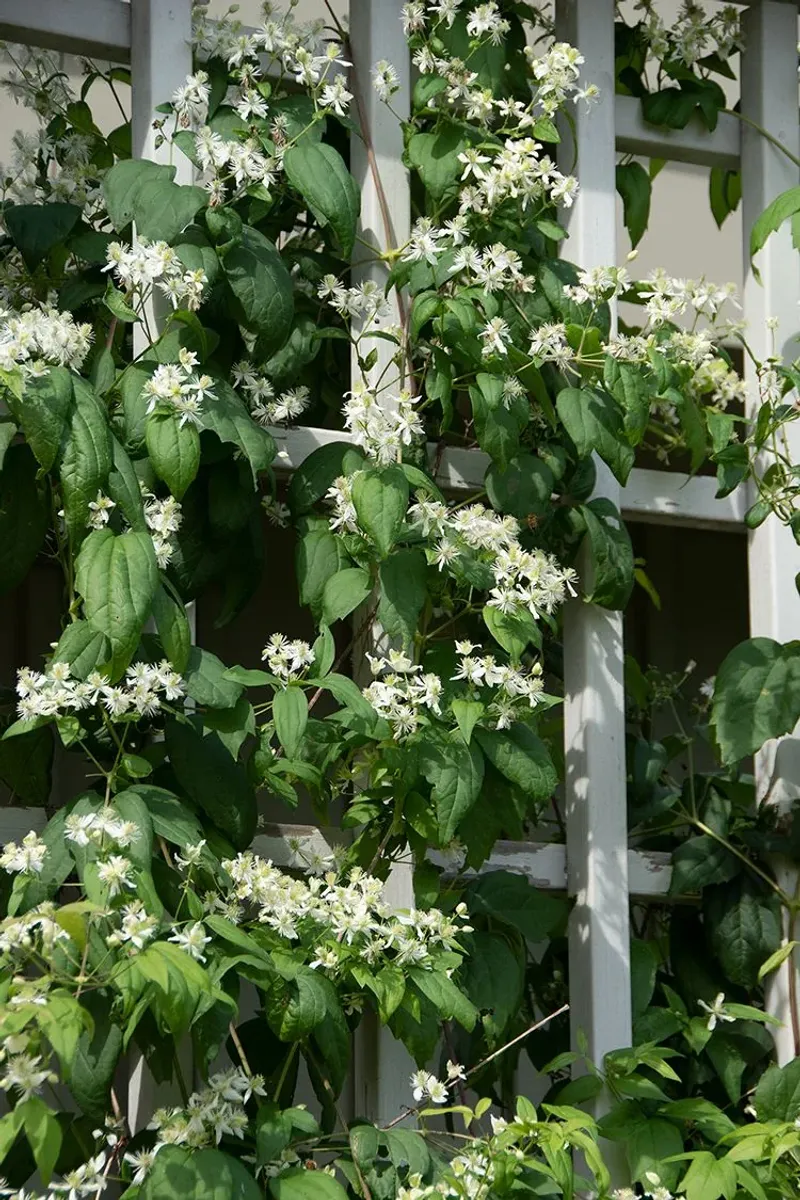
Most gardeners picture large showy hybrid blooms when they hear the word clematis, but Virgin’s Bower throws that expectation out the window in the best possible way.
This native clematis produces clouds of small white flowers in late summer, right when many other vines are winding down for the season.
The timing alone makes it valuable, filling that late-season gap with fresh color and pollinator activity.
After the flowers fade, fluffy silver seed heads cover the vine and catch morning light in a way that looks almost magical on a fence or trellis. Birds use the silky fibers for nesting material, adding another layer of wildlife value to an already useful plant.
The combination of late bloom time and ornamental seed heads gives this vine a very long season of interest.
Virgin’s Bower handles full sun to part shade, making it more flexible than many hybrid clematis options. Keep roots mulched to maintain soil moisture, especially on a hot south-facing fence where the ground dries quickly in summer.
Steady moisture during the first growing season helps the plant establish a strong root system before facing North Carolina’s intense summer heat.
Pruning is simple because Virgin’s Bower blooms on new growth. Cut stems back hard in late winter or very early spring before growth begins, and the vine will push out vigorous new shoots that carry the summer flowers.
Gardeners who want a native clematis with real toughness will not find a better fit than this one.