9 Fragrant Plants That Give Your California Yard Privacy And Beautiful Scent
Privacy plants are common in California yards, but most of them stop at function. They block the view and that is it.
Adding fragrance to the equation changes the whole experience of being outside. The right plants can create a living screen that also fills your yard with scent on warm evenings, during morning watering, or whenever a breeze moves through.
The long growing season gives them time to fill in, and the heat actually intensifies the oils that produce scent in many of these varieties. You get a barrier that looks intentional, smells incredible, and brings in pollinators as a bonus.
A wood fence or a block wall does one job. A well chosen fragrant plant does three or four at once.
Some of the best options grow faster than most people expect and require very little once they are settled in.
1. California Lilac
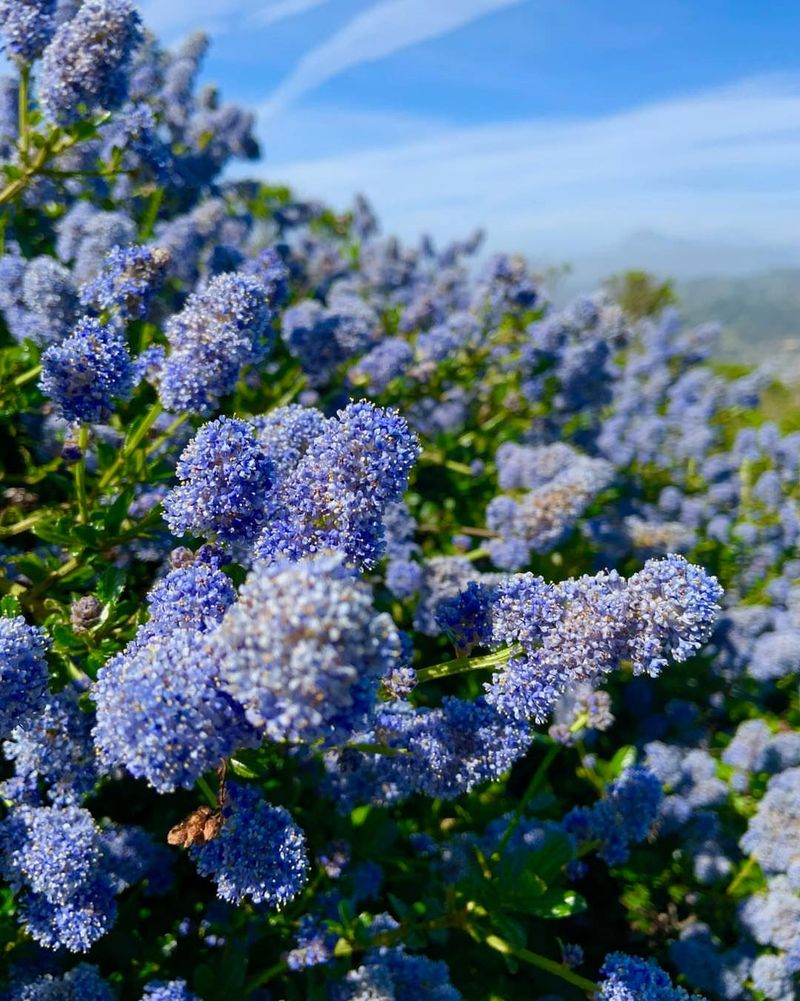
Few native plants put on a show quite like California Lilac. When it blooms in spring, the whole shrub erupts in dense clusters of tiny blue or purple flowers that practically stop you in your tracks.
The fragrance is sweet and clean, carried easily on a warm afternoon breeze.
Ceanothus grows fast and full, making it one of the best choices for a natural privacy screen. Depending on the variety you choose, it can reach anywhere from three feet to over twelve feet tall.
Some varieties spread wide enough to fill a large space without much help from you.
Because it is native, it thrives in well-drained soil and full sun. Once established, it needs very little water, which is a huge bonus in drought-prone areas.
It also fixes nitrogen in the soil, which means it actually helps improve the ground around it.
Bees absolutely love California Lilac, so expect your yard to become a buzzing hub of activity during bloom season. Birds are also drawn to the plant for shelter and food.
Planting a few together along a fence line or property border creates a thick, fragrant wall of color that looks as good as it smells.
2. Coyote Ceanothus
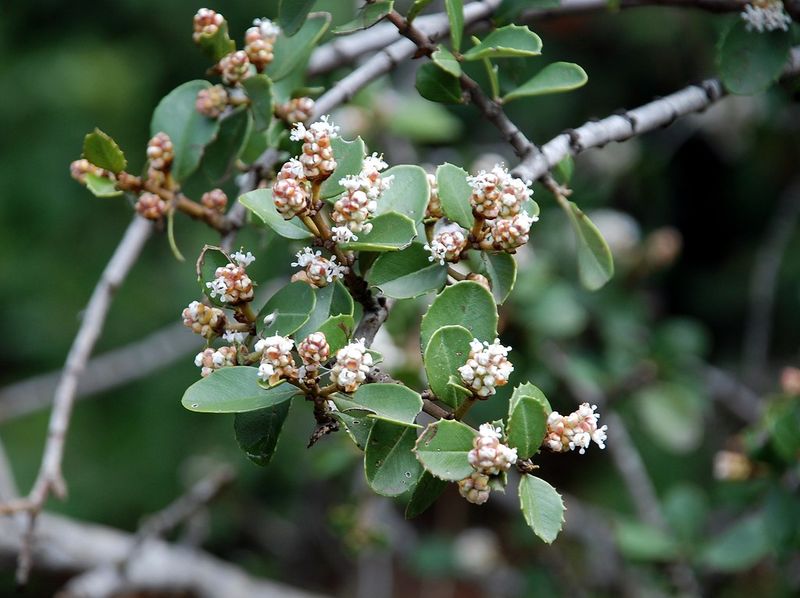
Not every plant gets to claim endangered status and still charm its way into home gardens, but Coyote Ceanothus manages to do exactly that. Native to a small region in Santa Clara County, this rare shrub has a quiet elegance that makes it worth seeking out.
Its white flower clusters may be smaller than those of other Ceanothus species, but they carry a light, pleasant fragrance that drifts through the air on warm days.
Growing up to six feet tall and equally wide, it forms a sturdy, rounded shape that works beautifully as a natural privacy barrier. The dense branching pattern means it fills in quickly, giving you that screen you are looking for without waiting years for results.
Coyote Ceanothus is well suited to dry, rocky, or clay-heavy soils that other plants struggle in. It prefers full sun and needs little water once it has settled into the ground.
Planting it in a spot with good drainage will keep it healthy and strong through the seasons.
Your California Garden Changes Every Week. Your Plan Should Too.
Gardening in California changes quickly throughout the season. Every Friday you’ll receive a simple weekly plan showing exactly what to plant, prune, fertilize, harvest, and protect so you never miss the right timing.
By growing this plant in your yard, you are also doing a small part to support a species that faces real pressure in the wild. It attracts native bees and adds ecological value to your space.
That makes it a smart and meaningful choice for any garden.
3. Mock Orange
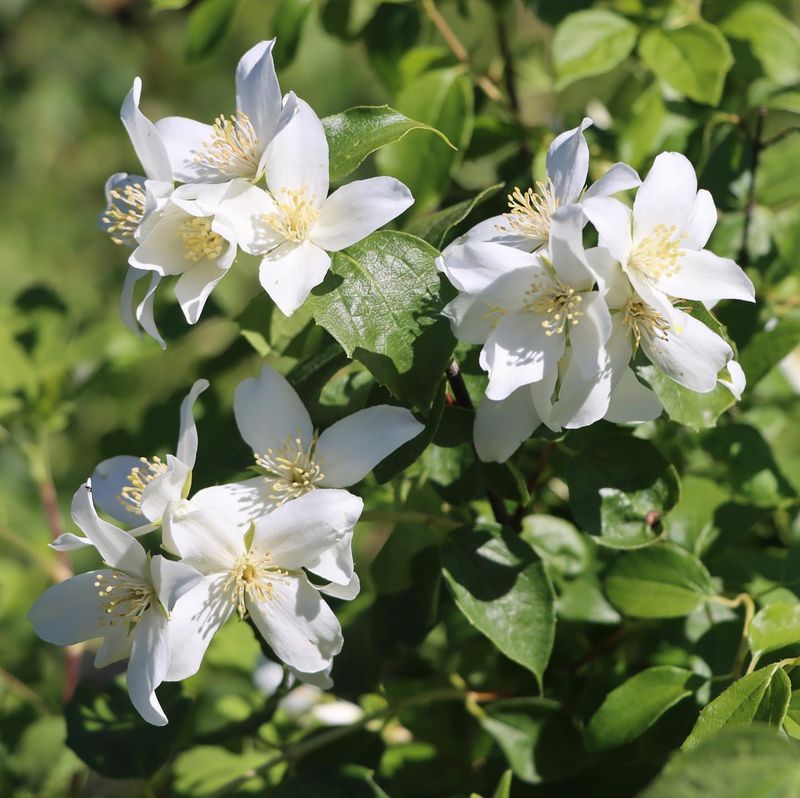
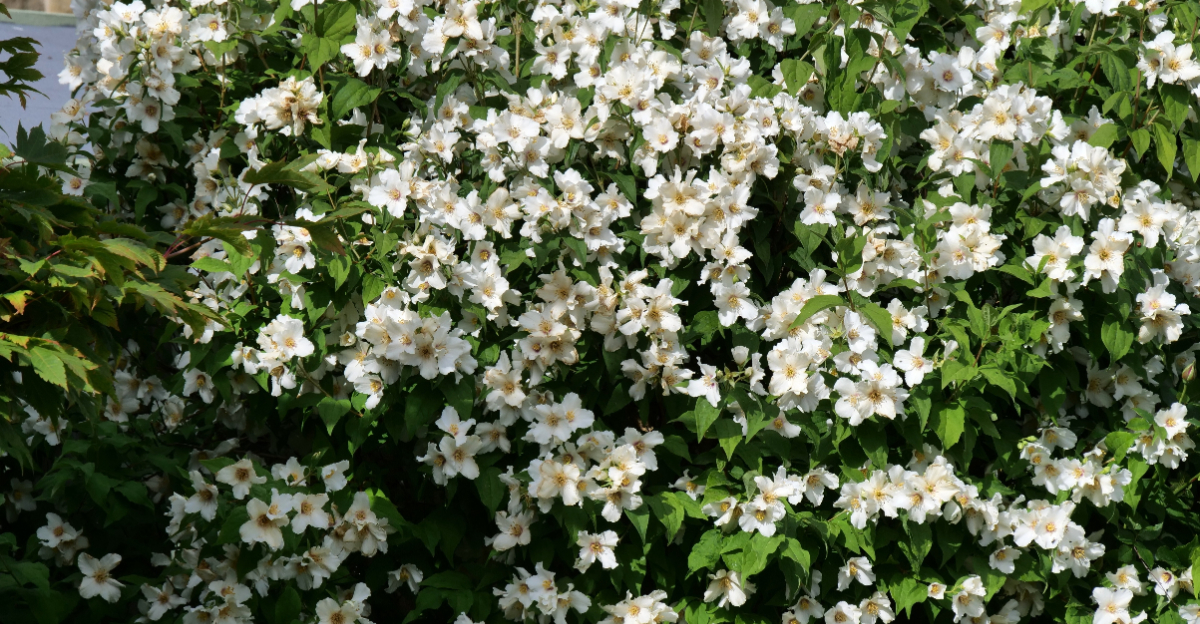
There is something wonderfully nostalgic about the scent of Mock Orange. The fragrance is rich and citrusy, almost like a mix of orange blossoms and vanilla, and it can fill your entire backyard on a warm evening.
When this shrub blooms in late spring or early summer, the white flowers practically glow against the bright green leaves.
Philadelphus lewisii is the state flower of Idaho, but it grows beautifully throughout California too. It reaches six to ten feet tall and spreads generously, making it an excellent choice for creating a lush, full privacy screen along a fence or property line.
The arching branches give it a relaxed, natural look that fits well in both formal and casual garden styles.
One of the great things about Mock Orange is how adaptable it is. It handles full sun to partial shade and tolerates a range of soil types.
While it does appreciate some water during dry months, it is not overly demanding once it gets established in your yard.
Pruning after the blooms fade helps keep the plant tidy and encourages stronger flowering the following year. Butterflies and bees visit the flowers regularly, adding extra life to your garden.
If you want a plant that rewards you with breathtaking fragrance and solid privacy, Mock Orange is a top contender.
4. Bush Anemone
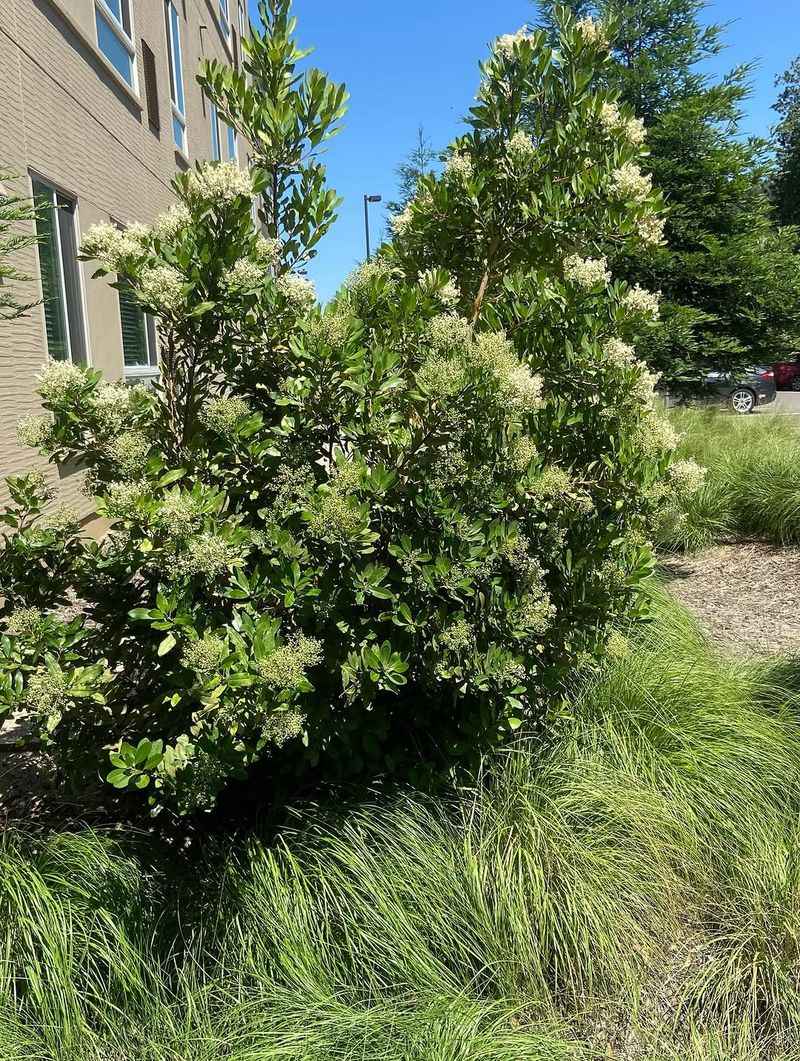
Bold, beautiful, and surprisingly underused, Bush Anemone is one of the most striking native shrubs. The flowers are large and white with a ring of golden yellow stamens at the center, giving them a look similar to a wild rose.
They bloom in late spring to early summer and carry a soft, sweet fragrance that makes them hard to walk past without pausing to take a sniff.
Carpenteria californica grows naturally in only a small area of Fresno County, but it adapts well to garden settings across much of California. It reaches six to eight feet in height and develops a dense, upright form that is ideal for creating privacy along a wall or fence.
The glossy, dark green leaves stay on the plant year-round, so you get screening even when the flowers are not in bloom.
This shrub does best in full sun to light shade and prefers well-drained soil. Once established, it is quite drought-tolerant, making it a practical choice for water-conscious gardeners.
Avoid overwatering, as soggy roots can cause problems for this plant.
Occasional light pruning after flowering keeps it looking neat and full. Native bees are especially fond of the flowers, and birds use the dense branches for cover.
Bush Anemone brings a touch of rare beauty to any yard that most visitors will stop and admire.
5. Cleveland Sage
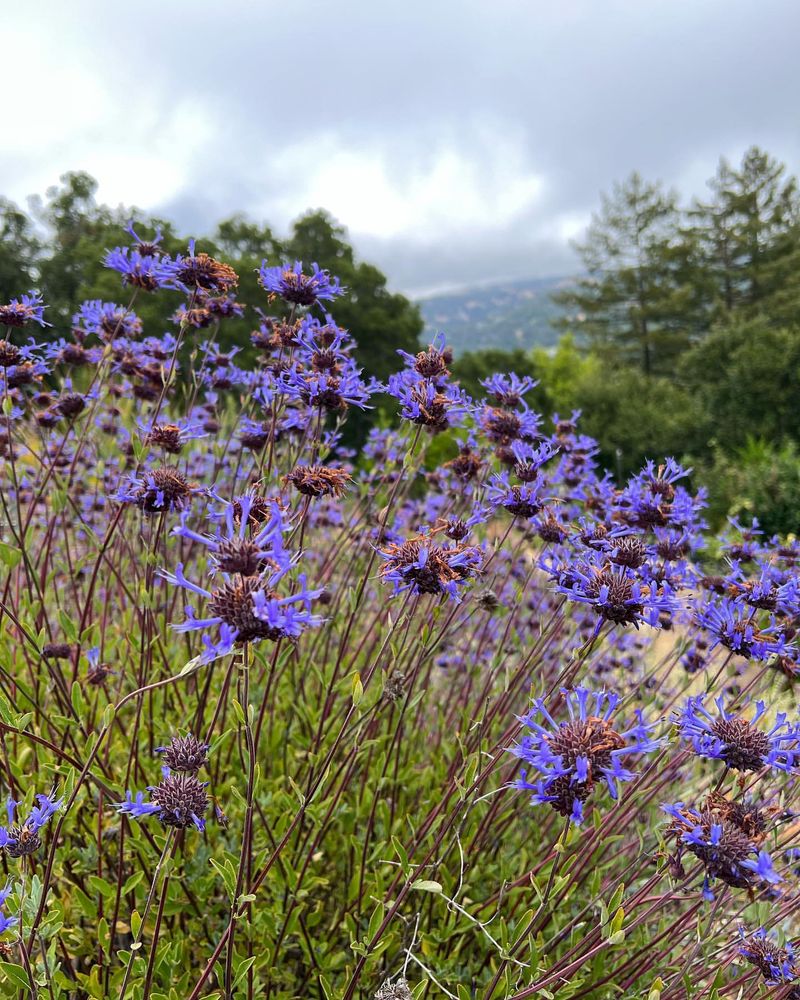
If you have ever brushed against Cleveland Sage on a warm afternoon, you already know why gardeners are obsessed with it. The scent is intense, herbal, and deeply aromatic, often described as a mix of sage and eucalyptus with a hint of something wild.
Even without touching the plant, the fragrance drifts through the air and transforms the feel of your whole yard.
The silvery-green leaves are attractive on their own, but when the violet-blue flower whorls appear in late spring, the plant becomes truly spectacular. It grows three to five feet tall and about as wide, forming a rounded, full shape that works well as a low to mid-height privacy border.
Plant several together for a continuous fragrant hedge that also looks stunning.
Cleveland Sage is built for summers. It thrives in full sun, handles heat with ease, and needs very little supplemental water once established.
Sandy or rocky, well-drained soil suits it perfectly, and it actually struggles in overly rich or wet conditions.
Hummingbirds, bees, and butterflies flock to the flowers, making your yard feel alive with activity during bloom season. The dried flowers and leaves hold their scent for a long time, so some gardeners even harvest small bundles for use indoors.
For fragrance alone, few plants on this list can compete with the bold personality of Cleveland Sage.
6. Western Sweetshrub
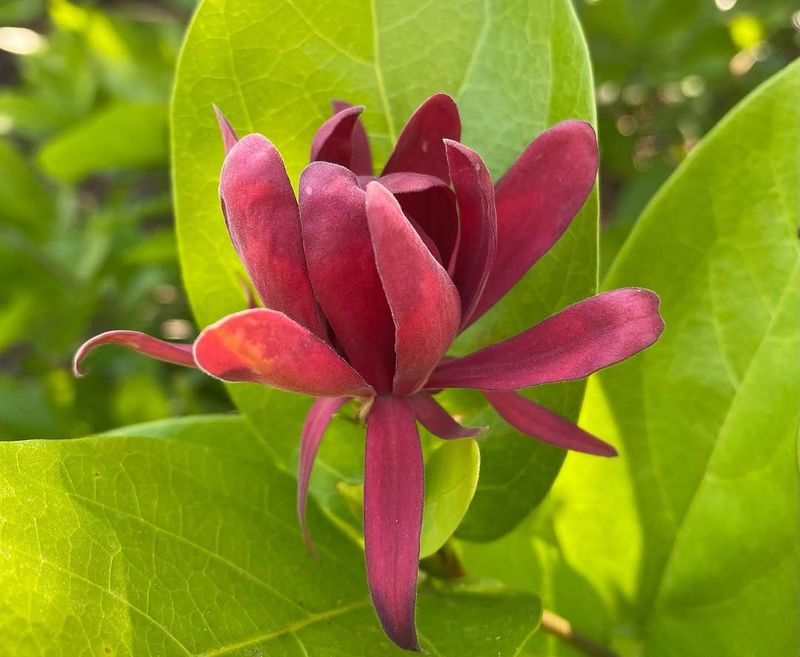
Some plants earn their common name perfectly, and Western Sweetshrub is one of them. The dark burgundy-red flowers have a spicy, fruity fragrance that is unlike anything else in the garden.
It is warm and rich, a little like red wine mixed with a hint of strawberry, and it tends to get stronger in the heat of the afternoon sun.
Calycanthus occidentalis is native to the stream banks and moist canyons, which tells you something important about what it likes. It prefers spots with more moisture than most natives, making it an excellent choice for low-lying areas of your yard or places near a water feature.
It grows six to ten feet tall and wide, creating a lush, full barrier that provides serious privacy.
The large, glossy leaves are attractive throughout the growing season, and the unusual flowers appear from late spring through summer, giving you a long window of fragrant enjoyment. Unlike many of the plants on this list, it actually tolerates partial shade, which opens up more planting options in a typical yard.
Birds and native insects visit the flowers, and the thick growth offers excellent shelter for small garden wildlife. If you have a shady corner or a damp area where other plants struggle, Western Sweetshrub might be exactly the solution you have been looking for.
It is a reliable, fragrant, and visually interesting addition to any landscape.
7. Chaparral Honeysuckle
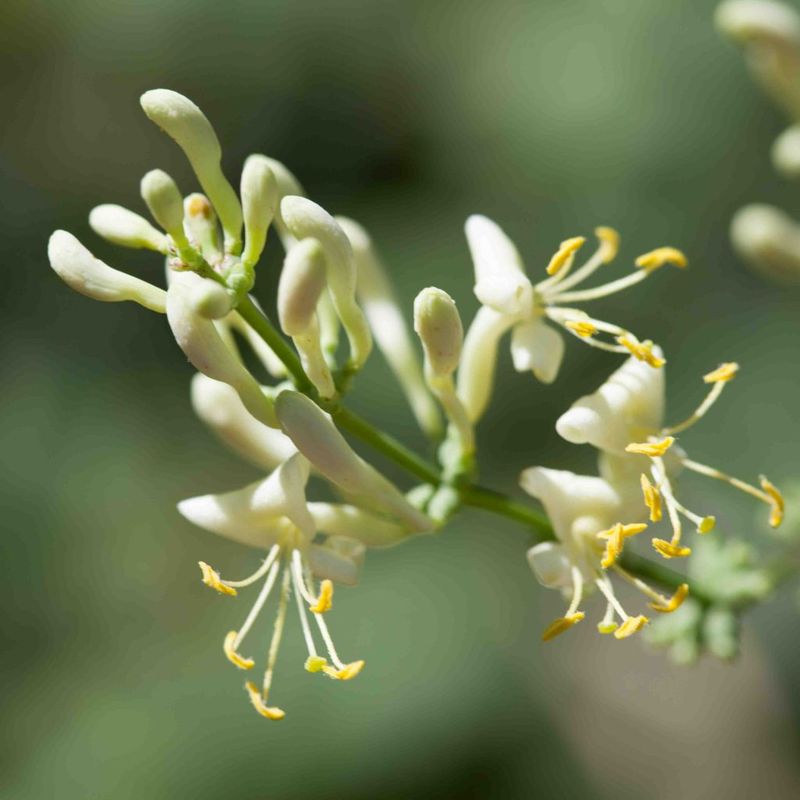
When you want fragrance and privacy but also need a plant that can climb and sprawl, Chaparral Honeysuckle steps up in a big way. This native vine produces small, creamy yellow tubular flowers that carry a light, sweet honeysuckle scent.
It is not as overpowering as some exotic honeysuckle varieties, but that subtlety is actually part of its charm.
Lonicera subspicata grows along fences, trellises, and walls with ease. It can reach eight to fifteen feet in length, which makes it highly effective for covering a fence or creating a living screen along a property edge.
The rounded, blue-green leaves stay on the plant much of the year, giving you year-round coverage.
This plant is tough and adaptable. It grows in full sun to partial shade and handles dry conditions well once it is established.
Because it is a true native, it fits naturally into local ecosystems and supports native wildlife without becoming invasive like some non-native honeysuckles can.
Hummingbirds are particularly drawn to the tubular flowers, and watching them dart in and out of the vine is one of the simple joys of having this plant in your yard. The small berries that follow the flowers attract birds as well.
For a fence line or bare wall that needs both beauty and coverage, Chaparral Honeysuckle is a smart and satisfying choice.
8. Pink Flowering Currant
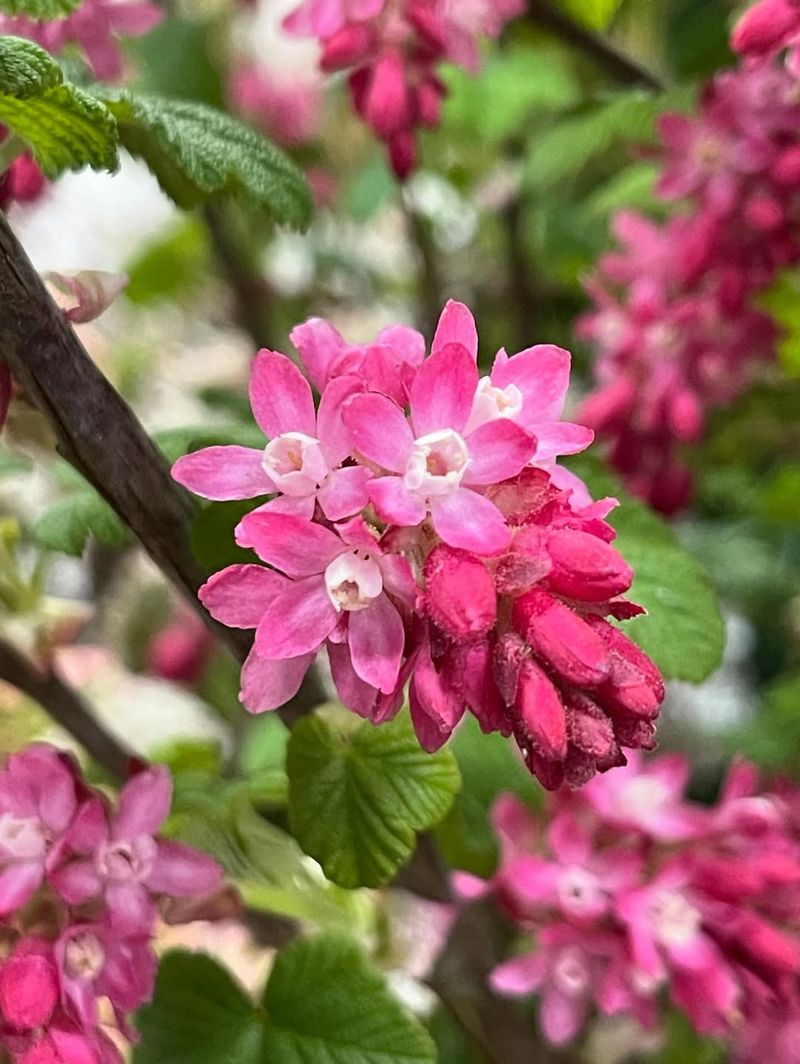
Early spring in a garden gets a lot more exciting when Pink Flowering Currant is part of the picture. Long before most plants even think about waking up, this shrub bursts into cascading clusters of deep pink to rose-colored flowers that hang like tiny chandeliers from its branches.
The fragrance is distinctive and slightly spicy, with a resinous quality that is hard to describe but easy to love.
Ribes sanguineum var. glutinosum is a coastal native that grows naturally in shady canyons and wooded slopes. In the garden, it reaches five to eight feet tall and develops a full, arching shape that works well as a privacy screen or informal hedge.
The lobed leaves are attractive and provide good coverage throughout the spring and summer months.
It performs best in partial shade to full sun and tolerates a range of soil conditions. While it appreciates some water during dry spells, it is reasonably drought-tolerant once it has had a season or two to settle in.
Coastal and inland California gardens both welcome this plant with open arms.
Hummingbirds are among the first visitors to arrive when the flowers open, often showing up before most other garden plants have even leafed out. Small dark blue berries follow the flowers and attract songbirds through summer.
Planting Pink Flowering Currant near a seating area lets you enjoy both the fragrance and the wildlife activity up close.
9. Toyon
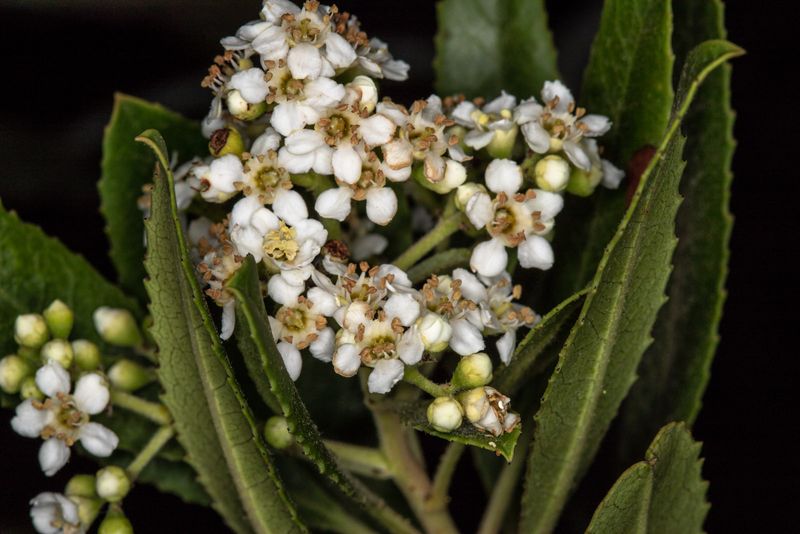
Toyon has a history that few other plants can match. It is believed to be the plant that gave Hollywood its name, as the hills were once covered in its bright red winter berries, which reminded early settlers of English holly.
That kind of backstory alone makes it worth planting, but Toyon has plenty of other qualities to recommend it.
The white flower clusters that appear in summer carry a soft, pleasant fragrance that attracts bees and butterflies by the hundreds. After the flowers fade, the plant shifts into its winter glory, producing masses of vivid red berries that birds absolutely love.
It grows six to fifteen feet tall and develops a dense, rounded form that makes an excellent tall privacy screen.
Heteromeles arbutifolia thrives in full sun and is highly drought-tolerant once established, which makes it one of the most practical native plants for yards. It handles poor soil well and rarely needs fertilizing.
The leathery, dark green leaves stay on the plant year-round, so your privacy screen never goes bare.
Few plants offer this level of year-round interest. Spring brings fragrant white blooms, summer transitions into ripening berries, and winter delivers a spectacular show of red.
Cedar waxwings, robins, and mockingbirds flock to the berries, turning your yard into a lively nature scene. Toyon is a true classic that earns its place in any yard that values beauty, privacy, and wildlife value equally.