The Biggest Mistake Michigan Gardeners Make With Peonies In Spring
Peonies are forgiving plants in most respects, but they have one non-negotiable requirement that Michigan gardeners get wrong more often than any other. Planting depth.
Plant the eyes too deep and the peony grows healthy foliage every spring but never blooms.
Michigan’s freeze and thaw cycles complicate this further, because soil movement over winter can gradually push crowns deeper than they were originally planted, turning a correctly planted peony into a problem over time.
The fix is simple once you know what to look for, but most gardeners spend seasons blaming the wrong things before depth ever comes up as the answer.
If your peonies have been all leaves and no blooms, this is almost certainly the reason.
1. Why Peonies Stop Blooming When They Are Buried Too Deeply
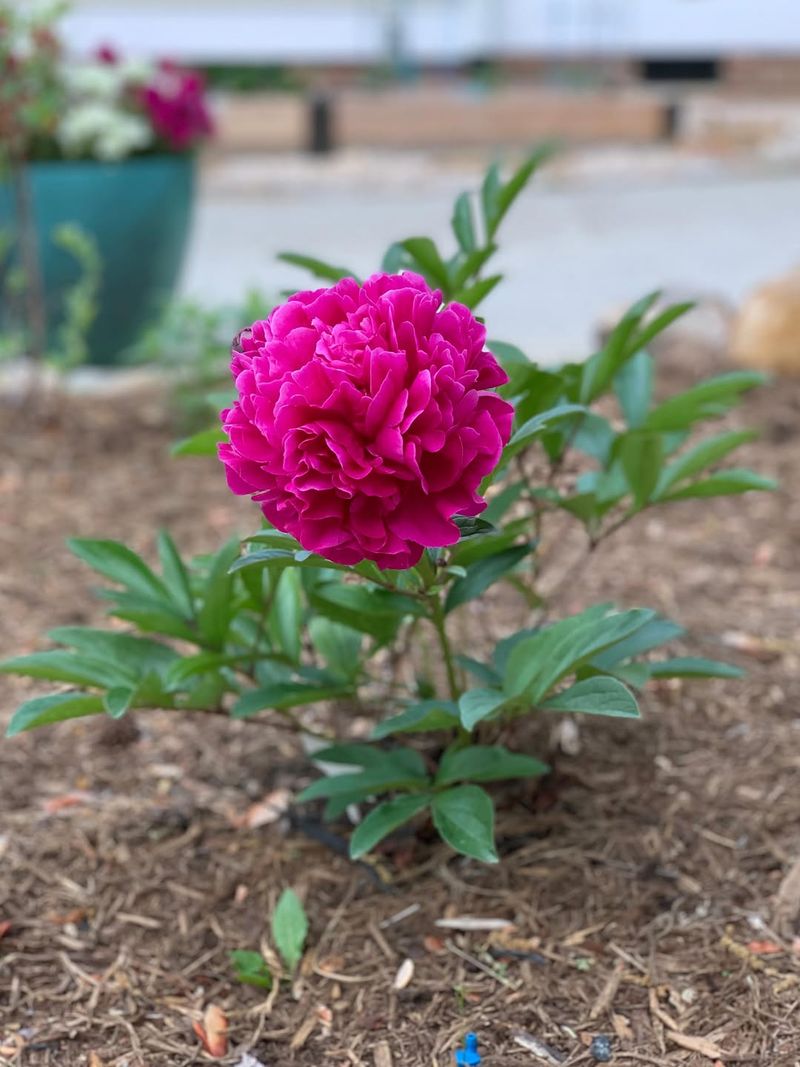
Picture a peony plant packed with healthy, dark green leaves every spring, yet not a single flower in sight.
That frustrating scenario plays out in Michigan gardens more often than most people realize, and the reason almost always comes back to planting depth.
When peonies are buried too deeply, the part of the plant responsible for blooming simply cannot do its job well.
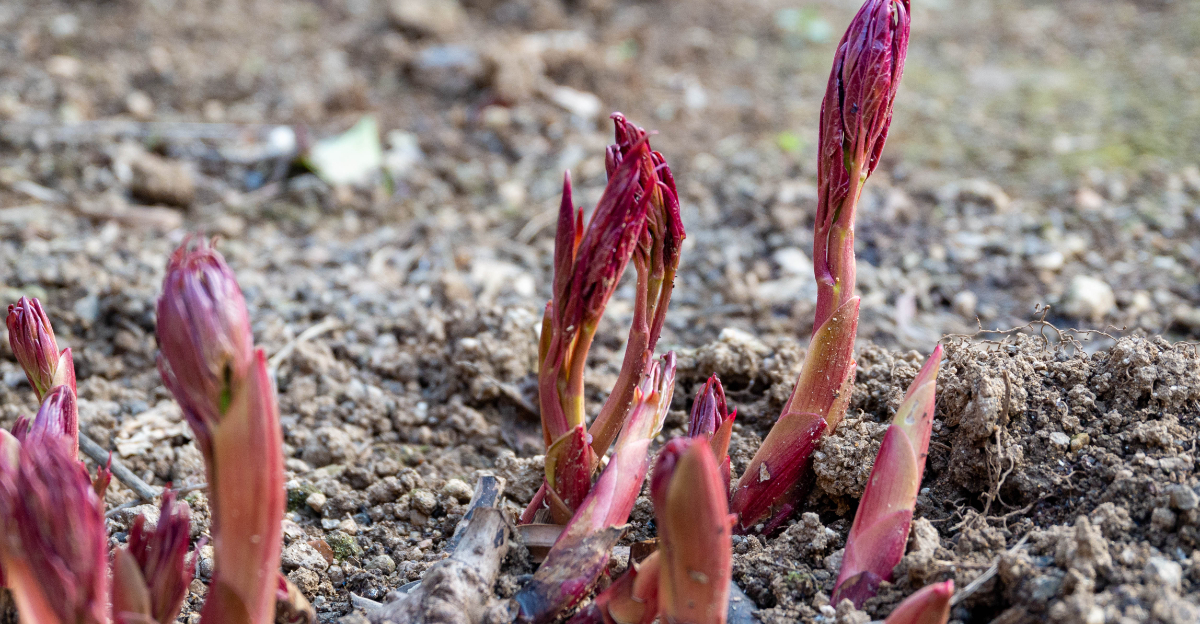
Peony crowns have small reddish or pink growth points called eyes. Those eyes need to sit close to the soil surface so they can absorb the right amount of sunlight, warmth, and cold.
In Michigan’s climate, where winters are long and cold, that chill exposure is actually helpful, but only when the crown is positioned correctly near the top of the soil.
Bury the crown too deep, and the plant spends most of its energy just pushing growth upward through extra layers of soil rather than producing flowers.
Deeply planted peonies often look perfectly healthy in every other way. They put out strong stems and full foliage, which is exactly why so many gardeners miss this problem for years.
The plant is surviving, but it is not thriving the way it should. Some gardeners assume the variety is just a shy bloomer or blame weather, never realizing the crown is sitting two or three inches below where it should be.
Depth is everything with peonies, and understanding that fact is the first step toward getting those gorgeous blooms back on track every single season.
2. The Exact Depth Peonies Actually Need
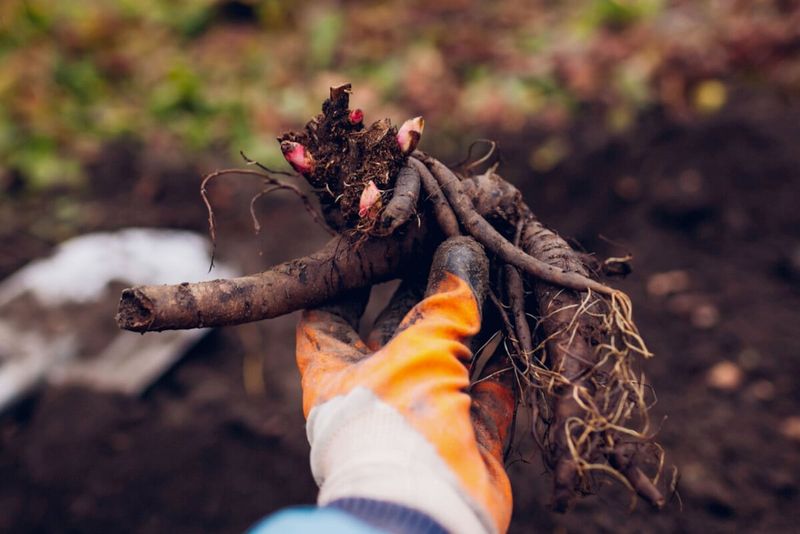
Knowing the right number can save years of frustration. For most gardens, peony eyes should sit right around one to two inches below the soil surface.
That small window makes a surprisingly big difference, and getting it right from day one sets the plant up for decades of reliable, beautiful blooms.
The one-inch depth works especially well in gardens with loose, well-draining soil that warms up quickly in spring.
When soil is on the sandier side or in a raised bed, staying closer to one inch helps the eyes catch enough warmth early in the season.
In northern Michigan, where spring arrives later and soils stay cool longer, planting at a full two inches provides just a little more insulation without pushing the crown too far below the surface.
Your Michigan Garden Changes Every Week. Your Plan Should Too.
Gardening in Michigan changes quickly throughout the season. Every Friday you’ll receive a simple weekly plan showing exactly what to plant, prune, fertilize, harvest, and protect so you never miss the right timing.
Heavy clay soil, which is common across much of Michigan, changes the math slightly. Clay holds moisture and stays compacted, which means even a crown planted at two inches can feel more buried than it would in lighter soil.
In those situations, erring toward the shallower end of that one-to-two-inch range is usually the smarter move.
Some experienced gardeners even plant with the eyes barely one inch under, especially in poorly drained spots.
The goal is always to keep the crown accessible to light and temperature changes above, not locked away beneath heavy, wet soil.
Measuring carefully at planting time, rather than guessing, is one of the easiest habits a gardener can build for long-term peony success.
3. How Mulch Slowly Buries Peonies Over Time
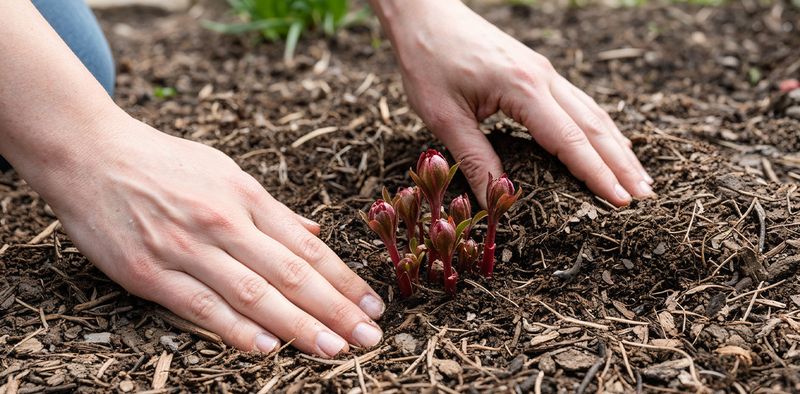
Mulch is one of the best tools in any gardener’s toolbox, but with peonies, too much of a good thing quietly causes real problems.
Every fall, many Michigan gardeners add a fresh layer of mulch to protect their beds through winter.
Over several years, those layers stack up, and the peony crown ends up sitting much deeper than it did when first planted. Think about how this builds up over time.
A gardener adds two inches of wood chips one fall, then another inch or two the next year, and before long the crown that was correctly positioned at one inch below the surface is now buried under four or five inches of decomposing organic material.
The plant responds by pushing harder to reach light, putting energy into stems and leaves instead of flowers.
Moisture also gets trapped around the crown when mulch piles up too close, which can encourage fungal issues like botrytis blight, a common problem for peonies in humid summers.
A simple rule helps avoid this: keep mulch no deeper than two inches around peonies, and always pull it a few inches away from the crown itself.
In fall, a light protective layer is fine for winter, but it should be raked back in early spring before new growth appears.
Checking mulch depth every spring takes only a minute and can make the difference between a plant that blooms reliably and one that keeps disappointing year after year.
Staying consistent with this habit keeps crowns right where they belong.
4. Clay Soil Makes Deep Planting Problems Even Worse
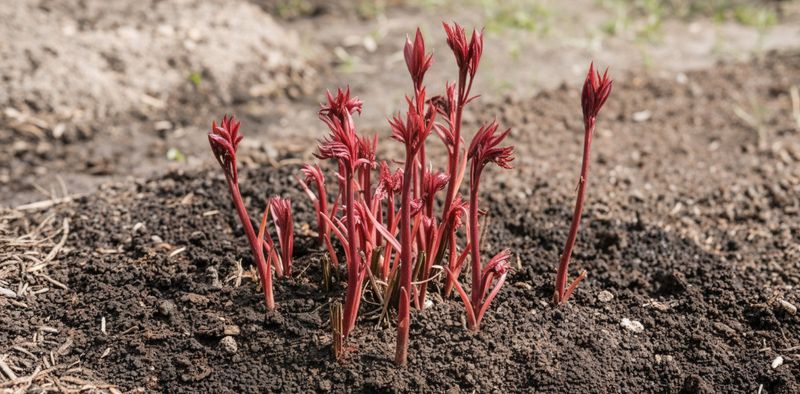
Clay soil covers a large portion of Michigan’s lower peninsula, and while it holds nutrients well, it creates a tough environment for peonies planted even slightly too deep.
The density and moisture-holding capacity of clay amplifies every problem that comes with incorrect planting depth, making it one of the most important factors gardeners need to account for.
When a peony crown sits too deep in clay, two things happen at once. First, the crown is surrounded by soil that stays wet far longer than looser soil types, which stresses the roots and discourages blooming.
Second, the compact structure of clay limits airflow around the crown, creating a stagnant environment that slows growth.
Peonies need their roots to breathe a little, and clay makes that much harder, especially when the crown is not close enough to the surface where conditions are more favorable. The fix starts before planting.
Working compost, coarse sand, or perlite into clay soil improves drainage and loosens the structure around the roots.
Raised beds are another excellent option in areas with especially heavy clay, since they allow full control over soil composition.
When replanting in clay, aim for the shallower end of the depth range and consider mounding the planting area slightly so water drains away from the crown rather than pooling around it.
Michigan gardeners who take the time to amend their clay soil before planting peonies almost always see stronger blooming and healthier plants season after season compared to those who plant straight into unimproved clay.
5. Why Mature Peonies Sometimes Bloom Less Every Year
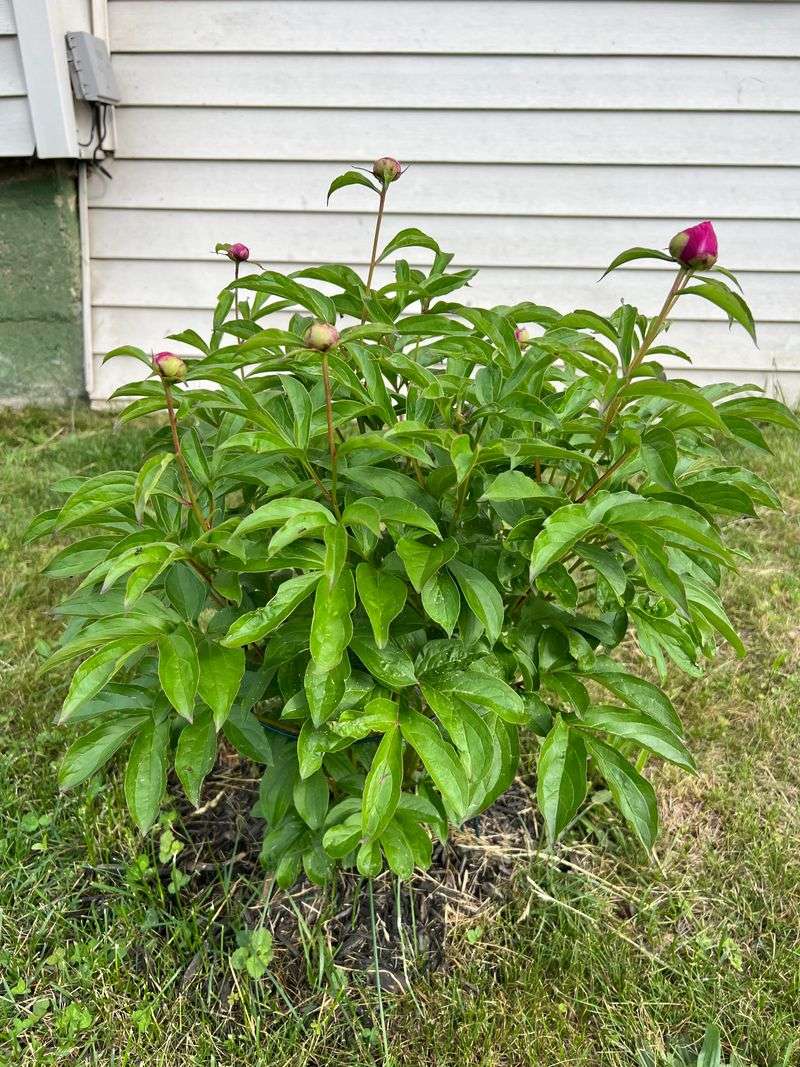
Watching a peony that used to dazzle suddenly produce fewer flowers each spring is genuinely confusing, especially when nothing obvious seems to have changed.
The plant looks healthy, the garden gets the same care, and yet the blooms keep getting more scarce.
Gradual crown burial is one of the most overlooked explanations for this slow decline in flowering.
Soil naturally settles over time, especially after rain, foot traffic near garden beds, and repeated freeze-thaw cycles that are very common in Michigan winters. Each small shift pushes the crown a little deeper.
Add mulch buildup and the organic matter that breaks down and adds to soil volume, and a crown that started at the correct depth can end up an inch or more too deep within just a few years.
The plant does not send out a warning signal. It just quietly blooms less and less as the crown sinks further from the surface. Spotting this early makes correction much easier.
Watch for plants that produce noticeably fewer buds than they did two or three years ago, stems that seem to struggle to emerge in spring, or crowns that feel buried when you gently probe the soil with your finger.
Any of these signs suggest the depth has shifted. Catching the problem at the one-to-two-inch-too-deep stage means a relatively simple correction.
Waiting until the crown is four or five inches down makes the fix more involved and recovery slower.
Staying attentive to your peonies each spring keeps small problems from turning into bigger ones over time.
6. The Best Time To Fix Deeply Planted Peonies In Michigan
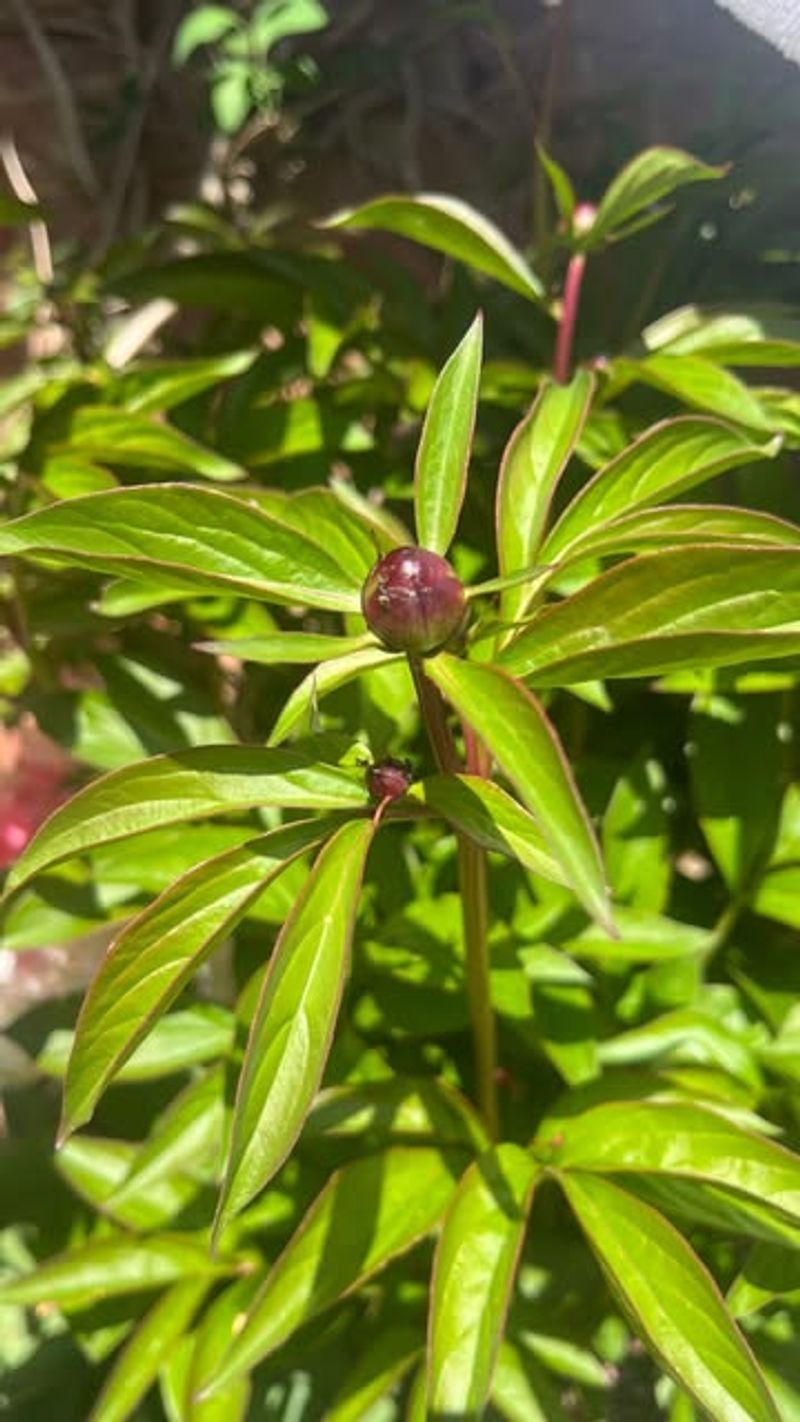
Timing matters a lot when it comes to correcting peony planting depth, and gardeners have a reliable window that works well across most of the state.
Early fall, typically from late August through mid-October, is widely considered the best time to lift and reset peonies that have been sitting too deep.
At this point in the season, the plant has finished its active growing cycle and is beginning to prepare for dormancy.
In southern Michigan, the window stretches a little longer, with mid-October still being workable in many years.
Further north, moving quickly in late August or early September gives the plant more time to settle roots before hard frosts arrive.
The goal is to give the replanted crown at least four to six weeks in the ground before the soil freezes solid.
That time allows new root growth to anchor the plant and helps it recover from being disturbed. After lifting, do not rush the process.
Gently shake away loose soil, look for the pink or red eyes on the crown, and take a moment to assess the overall health of the root system.
Trim away any soft or damaged sections with a clean, sharp tool before replanting at the correct depth.
Water well after replanting and add a light layer of mulch once the ground cools, but keep it away from the crown itself.
Most peonies bounce back well after a fall correction and return to strong blooming within one to two growing seasons, which makes the effort absolutely worth it.
7. How To Replant Peonies Without Delaying Future Blooms
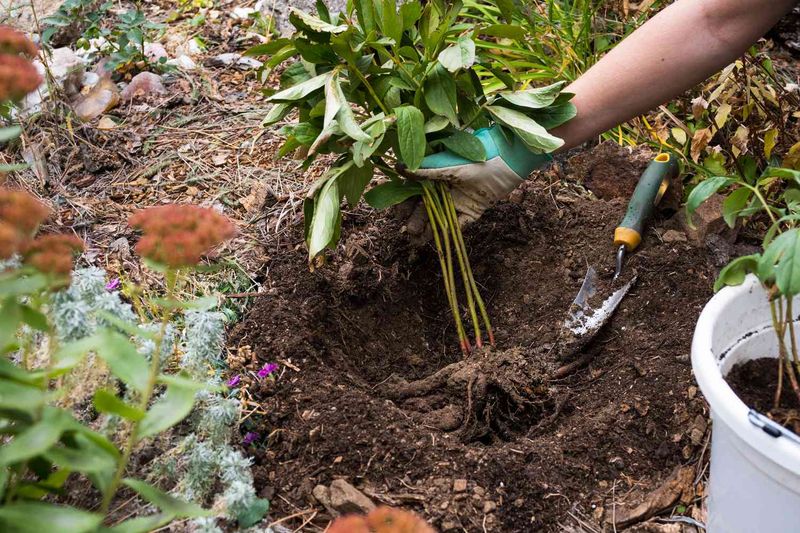
Replanting a peony the right way the first time around saves a lot of waiting. When done carefully, most peonies return to full blooming within one to two seasons after being correctly repositioned.
Rushing the process or skipping key steps is usually what causes long delays, so taking things step by step makes a real difference in how quickly the plant recovers.
Start by digging a wide, generous hole, at least 18 inches across and deep enough to comfortably fit the root without bending it. Mix compost into the removed soil to improve texture and drainage.
Set the crown in place and check that the eyes are sitting no more than one to two inches below where the final soil surface will be.
Backfill gently, firming the soil around the roots without packing it too tightly, and water thoroughly to settle everything in place.
Spacing matters too. Peonies need good airflow around them to stay healthy, so plant them at least three feet apart from neighboring plants.
After replanting, water consistently during dry spells through fall until the ground freezes. Come spring, pull back any mulch early so the crown gets full sun and warmth as soon as possible.
Resist the urge to fertilize heavily right after replanting, as too much nitrogen can push leafy growth at the expense of flowers.
A balanced, low-nitrogen fertilizer applied lightly the following spring is plenty.
Following these steps gives replanted peonies the best possible start and keeps future bloom seasons on track.
8. Why Correct Planting Depth Matters More In Michigan Than Warmer States
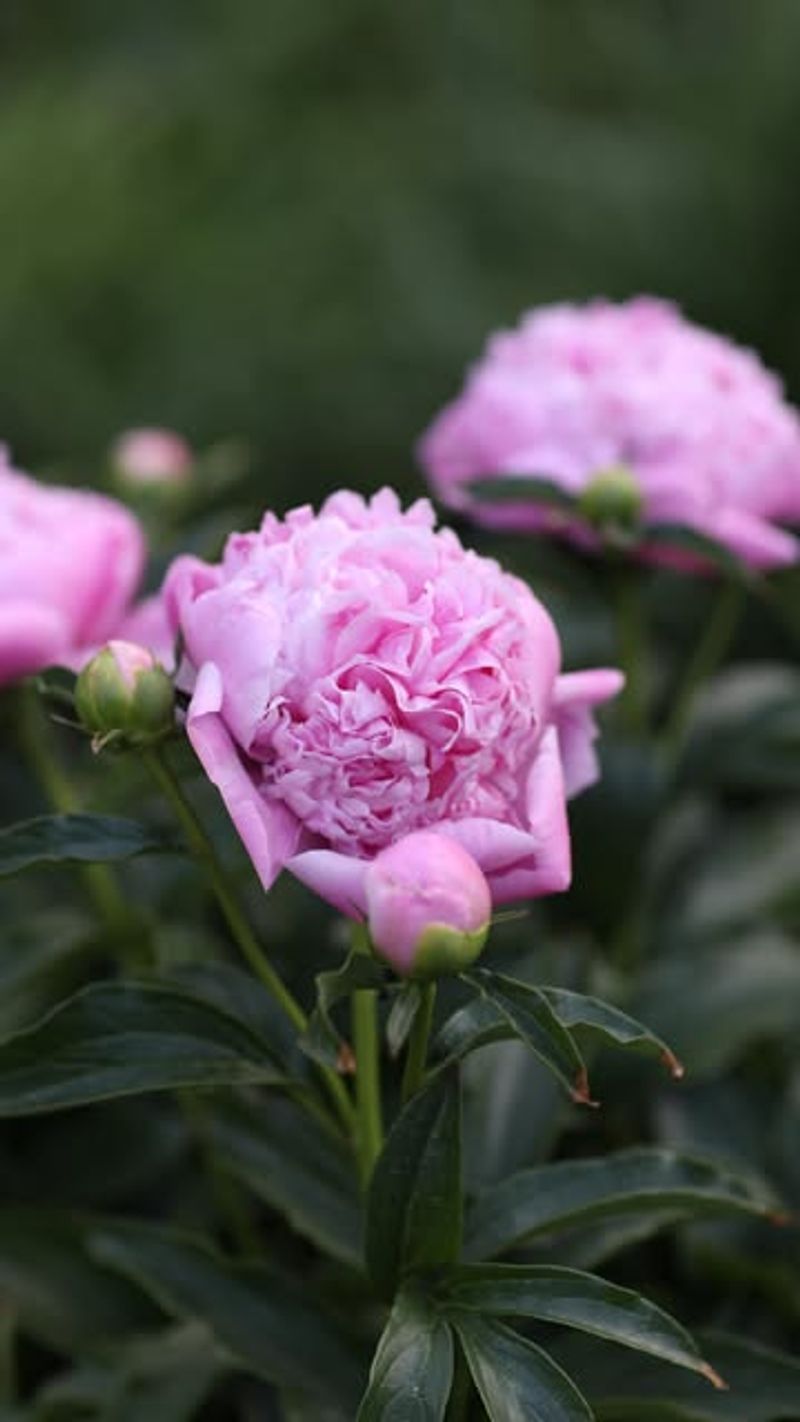
Peonies are famously cold-hardy plants, and Michigan’s long winters actually work in their favor, but only when the crown is positioned correctly.
The cold chill that Michigan winters deliver is something peonies genuinely need to trigger strong spring blooming.
Gardeners in warmer southern states sometimes struggle to get peonies to bloom at all because winters are not cold enough.
Michigan gardeners have a natural advantage, and proper planting depth is what allows the plant to use that cold weather effectively.
When the crown sits too deep, it is insulated from the temperature fluctuations happening near the soil surface.
That insulation sounds protective, but it actually works against the plant’s natural blooming cycle.
The eyes need to experience those cold temperatures clearly and consistently through winter in order to break dormancy properly in spring.
Deeply buried crowns in Michigan often produce weak, sparse flowering not just because of energy issues, but because the cold signal they receive is muffled by too much soil above them.
Gardeners who plant at the correct one-to-two-inch depth are essentially letting the climate do the work for them.
The state’s reliable winters, combined with proper positioning, create near-perfect conditions for peonies to perform at their very best year after year.
Regions with mild winters cannot replicate that natural advantage.
Keeping crowns shallow, amending heavy soil, managing mulch carefully, and checking depth every few years is really all it takes to enjoy massive, fragrant blooms reliably throughout Michigan’s beautiful early summer season for many decades to come.