9 Florida Plants That Thrive In Shallow Soil Where Other Plants Struggle
Shallow soil stops most Florida gardeners cold. Dig six inches down in the wrong spot and you hit rock, sand, or hardpan that roots cannot push through.
Plants stall, sit there looking sorry for a season, and eventually you pull them out and try something else. Rinse and repeat until that patch of yard just becomes the place where plants go to disappoint you.
Here is what most people miss though. Shallow soil is not the enemy, it is just a filter.
It weeds out the wrong plants and leaves room for the ones that actually belong there.
Florida has a surprisingly strong lineup of natives and adapted species that put down shallow, spreading root systems and absolutely run with it.
Stop fighting that spot with plants built for deep, rich soil. These options work with what is actually there, and once they settle in, they tend to outperform everything you tried before them.
1. Plant Coontie In Root Crowded Spots
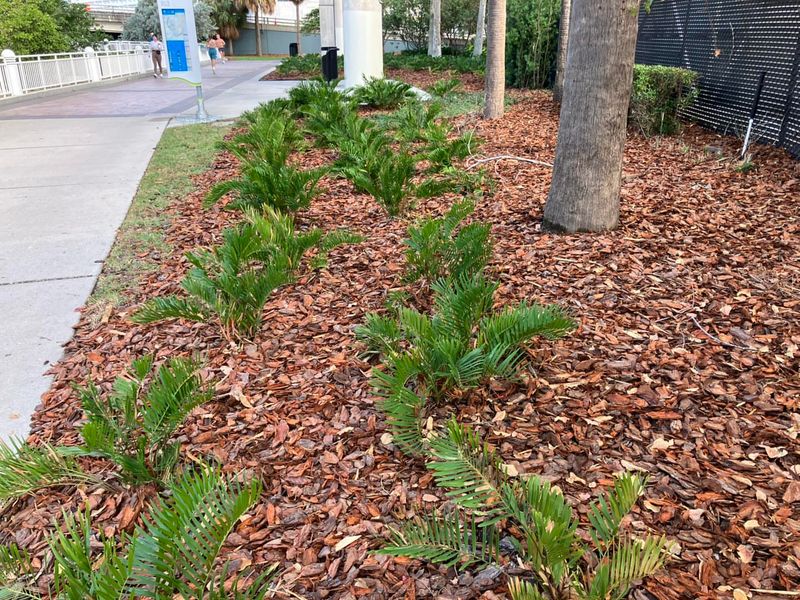
Root-crowded spots under mature oaks and palms are some of the most punishing planting zones in any Florida yard. Coontie, a native cycad-relative, is one of the few plants that can genuinely hold its own in those conditions.
Its deep, starchy taproot allows it to anchor into thin, rocky, or root-filled soil where most ornamentals give up within a season.
Coontie is a native plant and has a long history here, long predating modern landscaping trends. Central and southern gardeners have the widest range of suitable planting sites.
However, coontie can perform well in northern region when planted in a spot with good drainage and some protection from hard freezes. It handles partial shade and filtered light beautifully, making it one of the better options for the dry understory beneath large trees.
Give it well-drained soil, moderate spacing of about three to four feet apart, and consistent water only during the first establishment season. Bonus: coontie is the sole larval host plant for the stunning atala butterfly.
One mistake to avoid is burying the crown too deep at planting. Keep the base of the plant at or just above the soil surface to prevent crown rot in heavy rain events.
2. Use Beach Sunflower In Sandy Soil
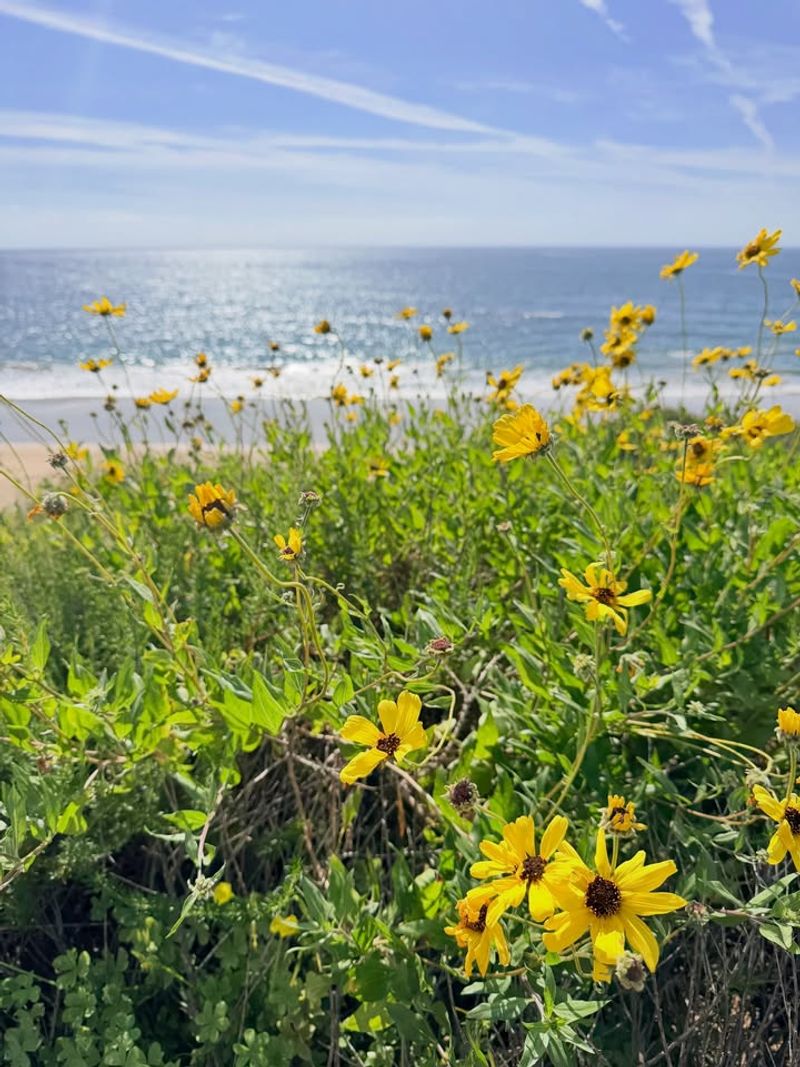
Sandy soil that heats up fast, drains in seconds, and holds almost no moisture is exactly where beach sunflower feels at home.
Most gardeners discover this native by accident, spotting it growing happily along roadsides, dune edges, and sunny coastal strips where nothing else seems to survive.
That toughness is not a fluke.
Beach sunflower, Helianthus debilis, is a true native wildflower and groundcover that thrives in full sun and fast-draining, nutrient-poor soil. Coastal gardeners across central and southern region find it especially reliable.
It can work in many sunny northern sites as well, though it may behave more like an annual in colder winters. Salt tolerance makes it a real asset near the coast.
Space plants about two to three feet apart and expect them to fill in and spread beyond that over time. Occasional trimming keeps the planting looking tidy and encourages fresh blooms.
Your Florida Garden Changes Every Week. Your Plan Should Too.
Gardening in Florida changes quickly throughout the season. Every Friday you’ll receive a simple weekly plan showing exactly what to plant, prune, fertilize, harvest, and protect so you never miss the right timing.
Pollinators, especially native bees, visit the cheerful yellow flowers regularly. Avoid planting beach sunflower in soggy or shaded spots, where it quickly declines.
Also avoid tucking it into a small, contained bed where its spreading habit will push against borders, edging, or neighboring plants faster than expected.
3. Try Perennial Peanut For Thin Sunny Beds
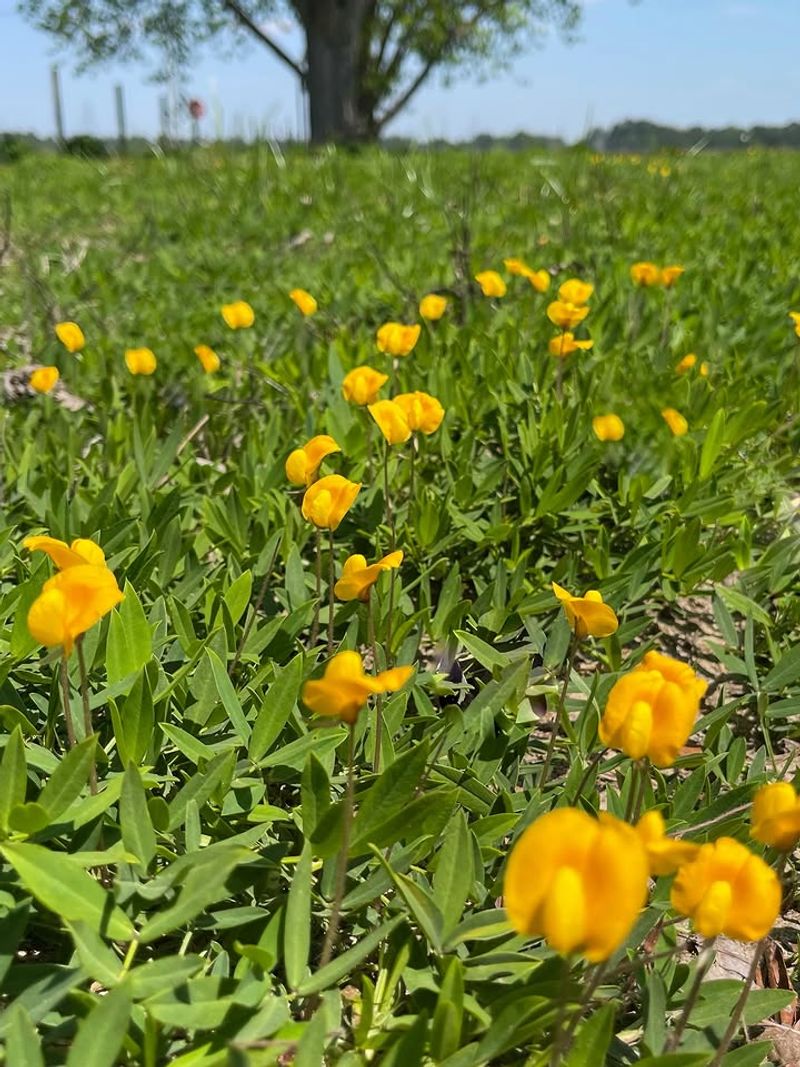
Narrow strips between sidewalks and fences are notoriously hard to plant. The soil is often compacted, shallow, and bone dry, and turf grass rarely looks good there for long.
Perennial peanut has become a go-to Florida-Friendly option for exactly these kinds of thin, sunny, low-maintenance sites.
To be clear, perennial peanut is not a native plant. It originates from South America and is classified as a Florida-Friendly groundcover, meaning it has been evaluated and found useful in landscapes when used appropriately.
It is widely recommended by UF IFAS for sunny, well-drained beds where a low-growing, nitrogen-fixing groundcover is needed. Full sun is essential for good flowering and dense coverage.
Perennial peanut spreads by underground runners and can eventually crowd out weeds once established, which makes it appealing for low-maintenance strips. Warmer parts of the state, including Central and South, tend to get the best year-round performance.
In northern regions, it may go dormant during cold snaps. One important point: do not use perennial peanut in a native-only landscape design, since it does not qualify as a native.
Avoid planting it in shaded beds or poorly drained soil, where it will thin out and underperform quickly.
4. Grow Muhly Grass Where Soil Runs Shallow
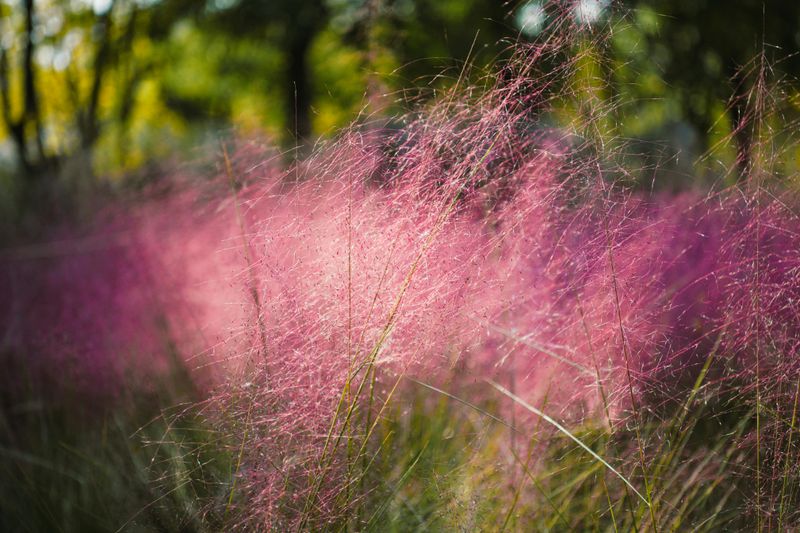
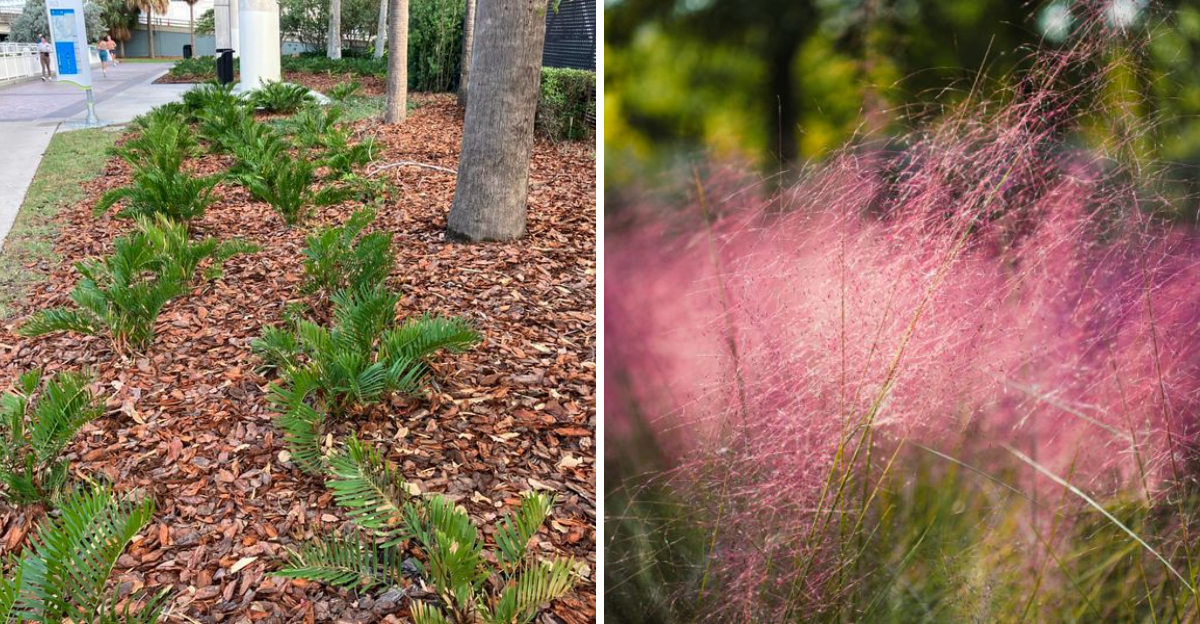
Every October, muhly grass reminds gardeners why native plants deserve more credit. The airy pink-purple bloom clouds that appear in fall are hard to match for seasonal color, and the plant earns that display without needing deep, rich soil to do it.
Sandy, shallow, fast-draining sites are where muhly grass performs most reliably.
Muhly grass, Muhlenbergia capillaris, is a native ornamental grass found across much of the state. It works well in full sun with good drainage and is broadly adaptable from North through South Florida when site conditions match its preferences.
Mass plantings along open borders, dry slopes, and sunny median strips show off its soft, fine texture all season, not just during bloom time.
Space plants about two to three feet apart to allow each clump to develop its full, rounded form. Established plants are quite drought tolerant and rarely need supplemental irrigation once they have settled in.
Cut clumps back in late winter before new growth begins to keep the planting tidy. Avoid planting muhly grass in dense shade or in areas with consistently wet or poorly drained soil, where it tends to rot at the base rather than thrive.
Give it room and sun and it delivers every year.
5. Add Blanket Flower To Hot Dry Edges
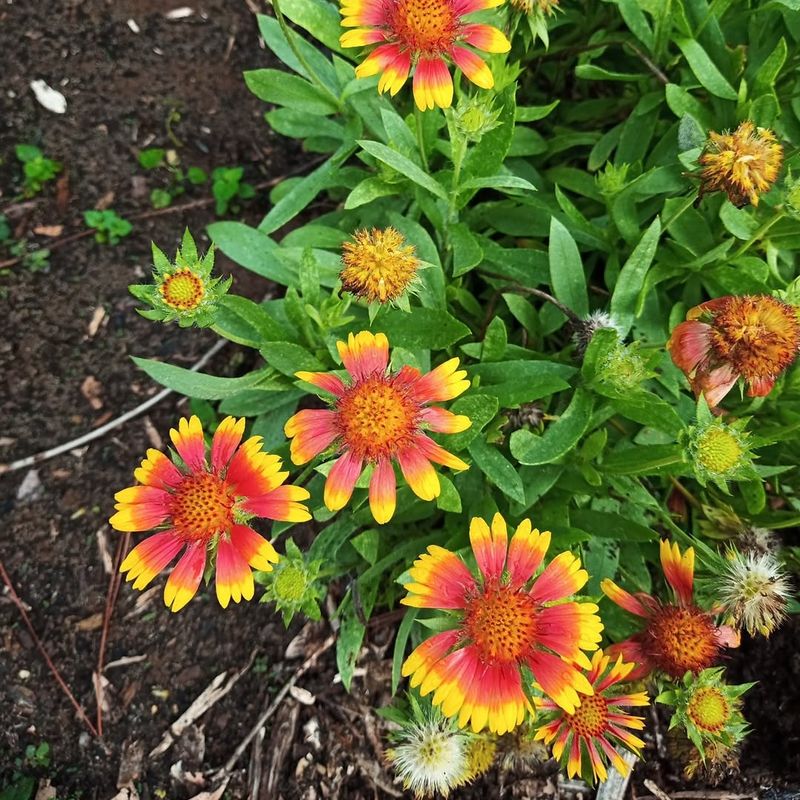
Mailbox beds, road edges, and sunny strips near driveways collect heat like a skillet in July.
Most flowering plants wilt fast in those spots, but blanket flower seems almost offended by the suggestion that heat and lean soil should slow it down.
Gaillardia pulchella is a Florida-Friendly wildflower that actually performs better in poor, well-drained, shallow soil than in heavily amended beds.
Rich, moist soil tends to make blanket flower floppy and short-lived. Sandy, fast-draining, low-fertility soil keeps the plants compact and blooming hard.
Full sun is non-negotiable. Coastal and sandy inland sites across Central and South region are especially well suited.
However, blanket flower grows statewide and is a reliable performer in North Florida too. The bold red, orange, and yellow blooms attract pollinators all season.
Scatter seeds directly onto bare sandy soil in fall or early spring and water lightly until germination. Once established, supplemental irrigation is rarely needed except during extended dry spells.
Avoid fertilizing heavily, since too much nitrogen pushes leafy growth at the expense of flowers. Also avoid planting in spots that collect standing water after rain.
Blanket flower does not tolerate wet feet and will decline quickly in poorly drained areas, even in otherwise sunny locations.
6. Choose Railroad Vine For Coastal Sand
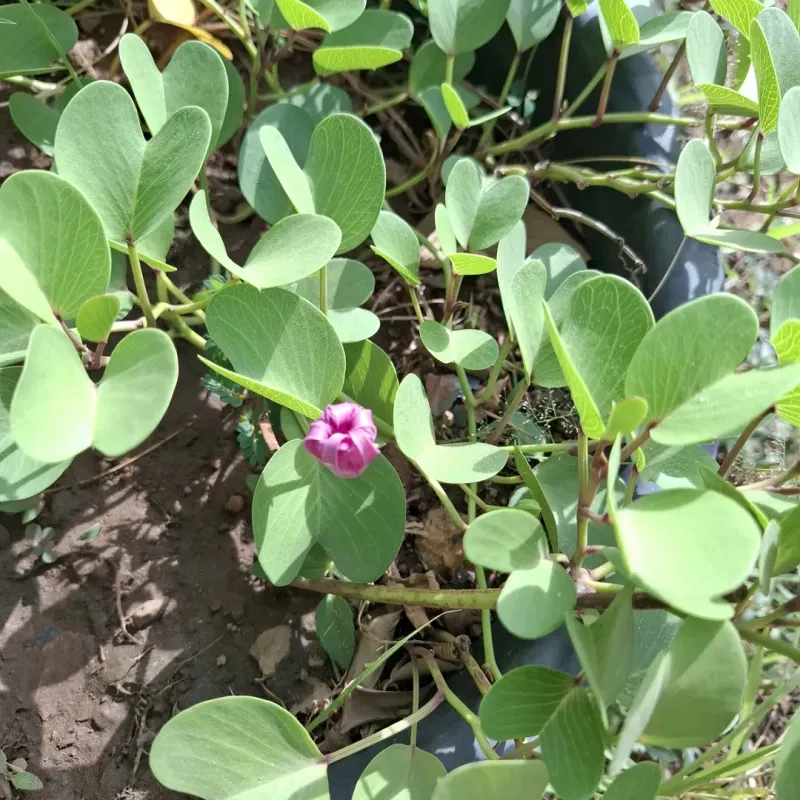
Few plants can handle the full force of a beachside site: blinding sun, salt spray, scorching sand, and almost zero topsoil. Railroad vine, Ipomoea pes-caprae, takes all of that without flinching.
Watching its long trailing stems run across open coastal sand, dotted with purple-pink morning glory flowers, it becomes obvious why this native has been holding dunes together long before anyone thought to plant it intentionally.
Railroad vine is a native coastal groundcover with exceptional salt tolerance and an ability to root into shallow, nutrient-poor sand as it spreads. It is best suited for coastal dunes, open sandy sites, and harsh seaside conditions in Central and South Florida.
Warm temperatures and full sun are essential for strong performance.
This is not a plant for small contained beds or shaded inland spots. Its trailing stems can run many feet in a season, which is an asset on a wide sandy slope but a problem in a tight residential border.
Excellent drainage and full sun are required. Avoid planting railroad vine anywhere that its aggressive spread will become unmanageable, such as near foundation plantings, manicured lawn edges, or small courtyard beds.
Match it to a large, open, sun-drenched coastal site and it will reward you with minimal effort.
7. Use Sunshine Mimosa As A Low Spreader
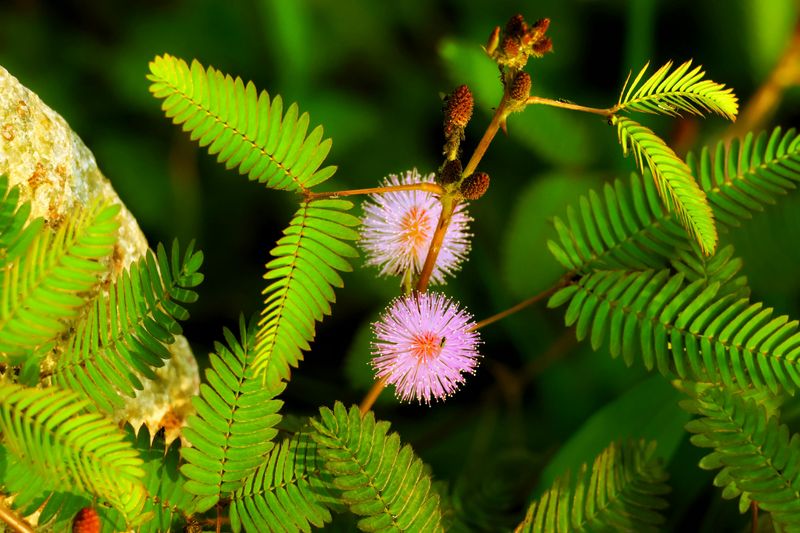
Pink puffball flowers about an inch across, leaves that fold gently when touched, and a spreading habit that slowly covers bare sandy ground: sunshine mimosa is one of those plants that surprises people the first time they see it.
Most gardeners do not expect a groundcover to be this charming.
Sunshine mimosa, Mimosa strigillosa, is a native groundcover that spreads by runners along the soil surface, rooting as it goes.
It works well in sunny to lightly shaded, well-drained, shallow soil and is sometimes used as a low-maintenance lawn alternative in areas where traditional turf struggles.
It handles sandy, nutrient-poor soil without complaint and is broadly available and usable across much of the state. Check local nursery availability, since it is not always stocked at big-box garden centers.
Space plants about two to three feet apart and let them fill in naturally. Occasional mowing at a high setting can keep the planting tidy and encourage fresh growth.
Pollinators, particularly native bees, visit the flowers regularly. Avoid planting sunshine mimosa in areas with heavy foot traffic, since repeated crushing of the stems damages the planting over time.
Also avoid using it in tight, formal borders where its spreading runners will require constant edging to keep contained.
8. Try Dwarf Walter’s Viburnum Near Walkways
Walkway beds are tricky. The soil is often thin from compaction or root competition, space is limited, and anything that grows too large becomes a pruning headache.
Dwarf forms of Walter’s viburnum offer a practical answer for these tight, shallow spots where a full-size shrub would quickly overwhelm the area.
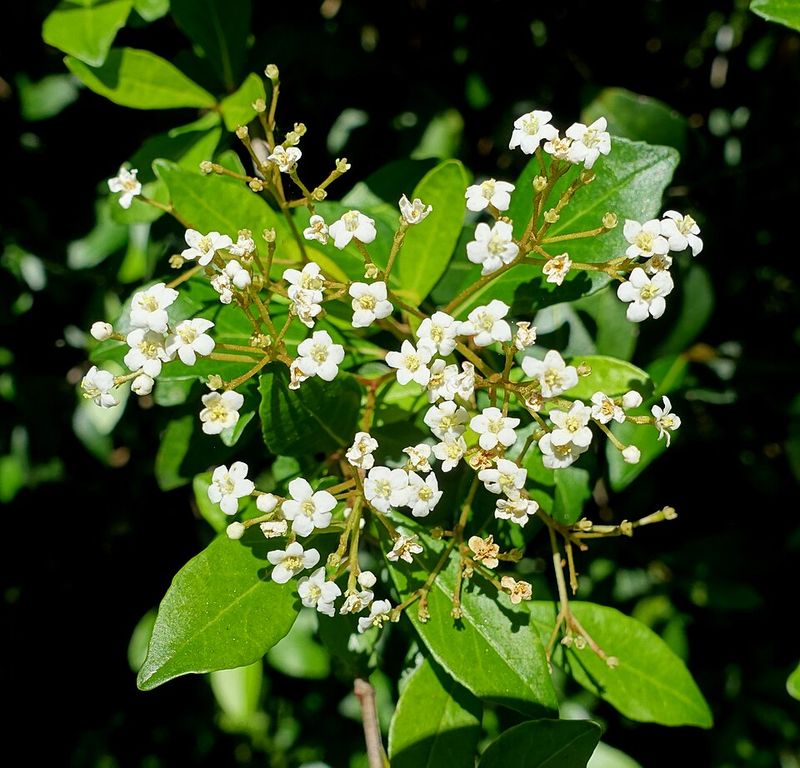
Walter’s viburnum, Viburnum obovatum, is a native shrub found naturally across most of the state, excluding the Keys.
The species itself can grow quite large, but compact cultivars selected for smaller size are far better suited to narrow beds near walkways, driveways, and foundations.
These dwarf forms top out at roughly two to four feet depending on the cultivar, making them manageable in shallower, more confined planting areas.
Walter’s viburnum tolerates sun to partial shade and prefers reasonably well-drained soil. It is adaptable to a range of soils, including sandy types, and handles moderate drought once established.
White spring flowers attract pollinators, and the plant provides wildlife value through its small fruits. One practical tip: research the specific cultivar size before buying, since sizes vary.
The biggest mistake is planting a full-size Walter’s viburnum in a narrow bed and then shearing it repeatedly to keep it small, which stresses the plant and reduces its natural appeal.
9. Plant Fakahatchee Grass In Tough Corners
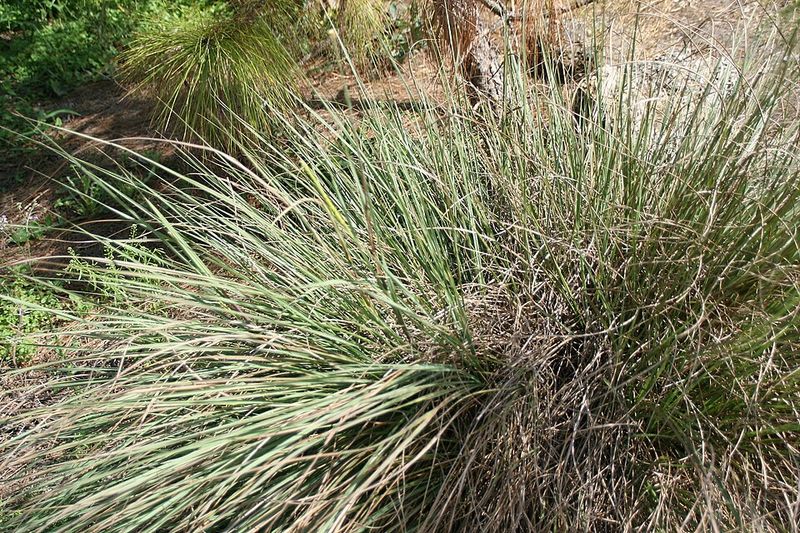
That shady, awkward corner where the fence meets the shed, where the soil is shallow and half the time damp, half the time bone dry, is exactly the kind of spot that stumps most gardeners. Fakahatchee grass, Tripsacum dactyloides, handles that kind of inconsistency better than most plants its size.
Fakahatchee grass is a native ornamental grass with bold, arching foliage and a substantial clump form that brings real presence to difficult landscape corners and naturalistic beds.
Unlike many ornamental grasses, it can tolerate partial shade as well as full sun, and it adapts to a range of moisture conditions once established.
That flexibility makes it useful in spots where soil depth is limited but moisture levels shift with the season. It grows across much of the state and is well adapted to both sandy and heavier soils.
Allow at least four to five feet of space around each plant, since mature clumps can reach four feet tall and equally wide. Cut old foliage back in late winter to refresh the planting for spring.
One practical tip: Fakahatchee grass is a host plant for several skipper butterfly species, adding ecological value to your yard. Avoid planting it too close to walkways or foundations, since the mature clump size will eventually crowd and overhang any structure within its reach.