These Are The Shrubs North Carolina Gardeners Should Never Plant Near A Foundation
Foundation plantings are one of the first things visitors notice about a home, and one of the most common sources of long term regret for North Carolina homeowners.
The wrong shrub planted close to a foundation looks fine for a season or two and then creates problems that are expensive and frustrating to fix.
Root systems that damage foundations, growth that traps moisture against siding, and shrubs that outgrow their space and need constant cutting back all trace back to one bad planting decision.
North Carolina’s warm climate and long growing season speed up the timeline on these problems considerably.
A shrub that stays manageable for years in a cooler state can overwhelm a foundation planting here within a single decade.
These are the shrubs most commonly planted near North Carolina foundations that should have gone somewhere else, and why each one causes more trouble than it is worth in that spot.
1. Cherry Laurel
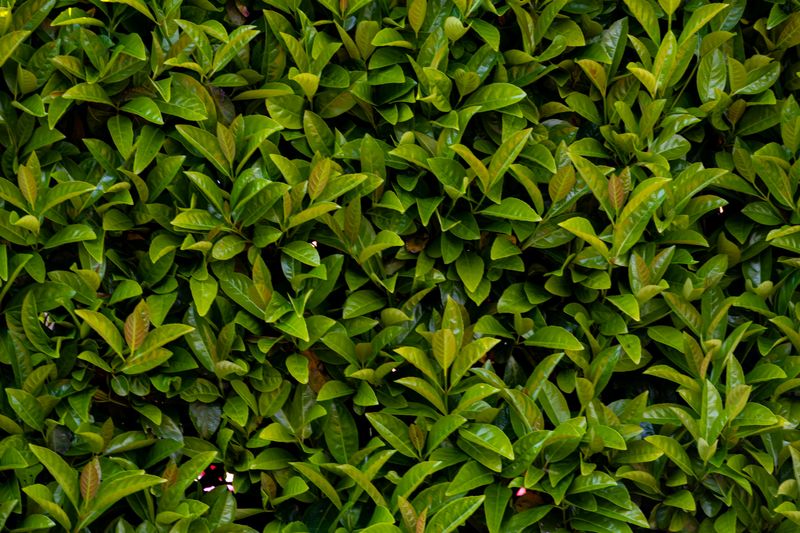
Walk through almost any older North Carolina neighborhood and you will spot them everywhere: Cherry Laurels crammed right up against brick walls, their glossy leaves pressing into siding and crowding out everything around them.
Prunus laurocerasus is a fast-growing evergreen that many homeowners plant expecting a tidy, manageable hedge.
What they actually get is a shrub that can reach 10 to 18 feet tall and nearly as wide, often within just a few years in the South’s warm, humid climate.
The real trouble starts when that dense canopy sits tight against your home. Airflow gets cut off almost completely, and moisture from rain and humidity has nowhere to go.
Fungal diseases like shot hole fungus and powdery mildew thrive in those stagnant, damp conditions, spreading quickly across the foliage and sometimes onto nearby plants.
Repairing that kind of damage takes consistent treatment and time. Root competition is another concern worth taking seriously.
Cherry Laurel develops an aggressive root system that competes with your foundation plantings and can work its way into soil near footings over time.
Keeping it trimmed back requires heavy-duty pruning at least twice a year, which quickly becomes a major seasonal chore.
If you love the look of a dense evergreen screen, consider planting Prunus laurocerasus at least 8 to 10 feet from any structure.
Better yet, use it as a back-of-border plant where it has room to reach its full size without crowding your home or creating ongoing maintenance problems.
2. Camellia Japonica
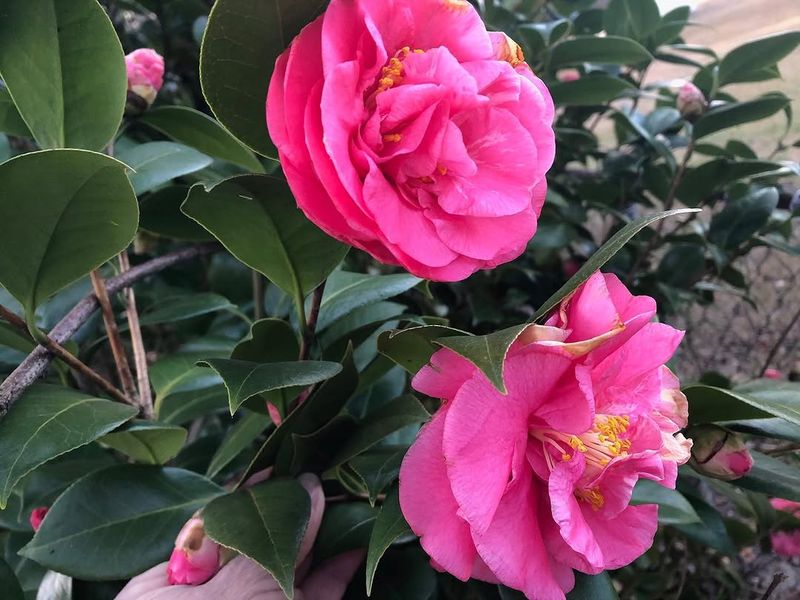
Few plants feel more Southern than a Camellia in full bloom, and it is easy to understand why so many homeowners tuck Camellia japonica right beside their front doors or beneath their windows.
The blooms are stunning, the evergreen foliage is elegant, and at the nursery these plants look perfectly compact.
Fast forward ten or fifteen years, though, and that charming little shrub can easily measure 10 to 12 feet tall and 6 to 8 feet wide, sometimes even larger in favorable conditions.
When Camellia japonica matures against a foundation, the dense canopy starts blocking windows and restricting natural light inside the home.
Your North Carolina Garden Changes Every Week. Your Plan Should Too.
Gardening in North Carolina changes quickly throughout the season. Every Friday you’ll receive a simple weekly plan showing exactly what to plant, prune, fertilize, harvest, and protect so you never miss the right timing.
Branches press against siding and window frames, holding moisture against the surface and creating conditions where rot and mildew can develop.
Pruning a mature camellia into a manageable shape near a wall is genuinely difficult work, and cutting it back too hard can stress the plant significantly. Airflow is another factor that gets overlooked at planting time.
Camellias planted too close together or too close to structures are more vulnerable to camellia petal blight and scale insects, both of which spread more easily in low-airflow environments.
The good news is that Camellia japonica is a spectacular plant when given the right location.
Planting it at least 6 to 8 feet from your foundation, ideally in a mixed border or as a specimen plant, lets it develop its natural form beautifully. You get all the blooms and none of the wall-crowding regrets.
3. Nandina
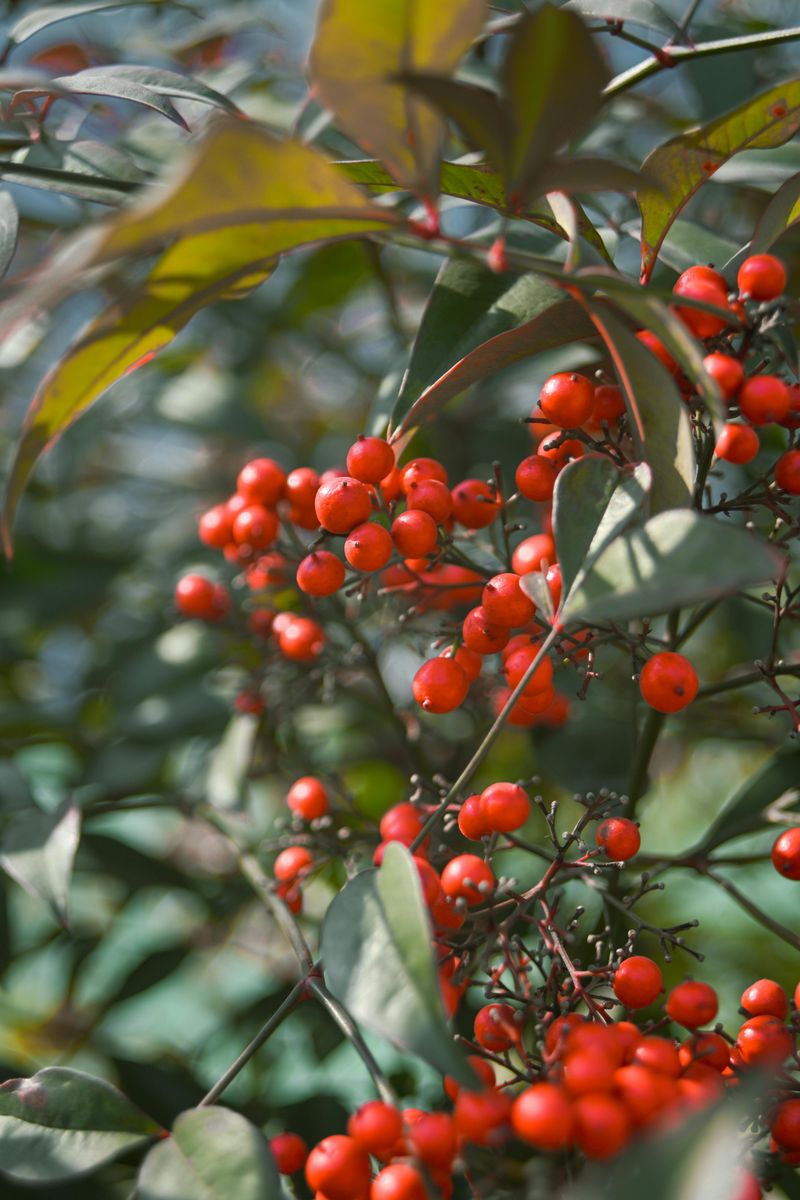
Nandina shows up in foundation beds across North Carolina so often that it almost feels like a default landscaping choice.
Nandina domestica, commonly called heavenly bamboo, has that appealing combination of fine-textured foliage, seasonal color, and red berries that make it look great in garden center displays.
The problem is that older standard varieties are surprisingly aggressive spreaders, and they are much harder to manage in tight foundation beds than most people realize.
The berries are the main culprit behind Nandina’s spreading habit.
Birds eat them enthusiastically and carry the seeds into surrounding areas, which is why you will often find Nandina seedlings popping up in mulch beds, along fence lines, and even in natural areas well beyond your yard.
Several states have listed standard Nandina varieties as invasive, and while North Carolina has not issued a full ban, the ecological concern is real and worth taking seriously.
In a cramped foundation bed, Nandina also tends to get leggy and woody at the base over time, losing its attractive layered look and becoming a tangle of stiff canes that are awkward to prune.
Removing an established clump is harder than it looks because the root system is persistent and tough.
If you want that same delicate, feathery texture with warm fall color near your foundation, consider native alternatives like Virginia sweetspire or inkberry holly.
They offer comparable visual interest, stay more predictable in size, and support local wildlife without the spreading concerns that come with older Nandina domestica varieties.
4. Arborvitae
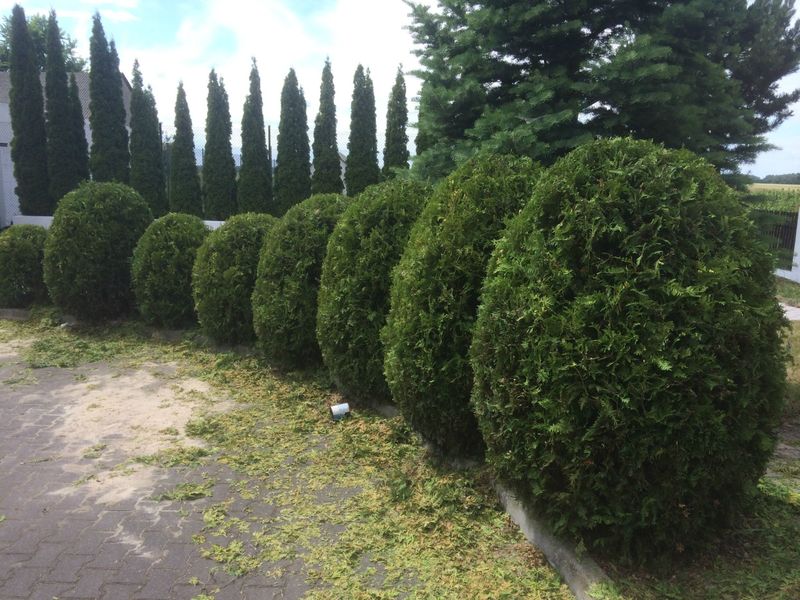
Arborvitae is one of the most popular screening plants sold at garden centers across the country, and it is not hard to see why.
Thuja occidentalis offers a tall, narrow evergreen form that looks tidy and structured right out of the container.
Homeowners across North Carolina buy them by the dozen, often planting them in tight rows directly against foundation walls to create a fast privacy screen.
Unfortunately, that setup creates a long list of problems that show up gradually over several growing seasons. One of the biggest issues is heat and airflow.
Foundation walls, especially those with southern or western exposure, reflect significant heat during summer.
Arborvitae planted directly against these surfaces experience temperature extremes that stress the plant and cause foliage to brown, particularly on the wall-facing side.
Combined with poor airflow between the shrub and the structure, fungal issues and spider mite infestations become far more common.
Mature Thuja occidentalis can reach 10 to 15 feet tall and 3 to 4 feet wide depending on the variety, but many popular cultivars like Green Giant are actually Thuja plicata hybrids that grow considerably larger.
Planting them without accounting for mature width means they will eventually press hard against walls, clog gutters, and block windows.
Spacing Arborvitae at least 4 to 6 feet from your foundation and choosing appropriately sized cultivars for the space makes a significant difference.
When used correctly, they are excellent plants; it is simply the placement near foundations where they consistently create trouble for homeowners.
5. Privet
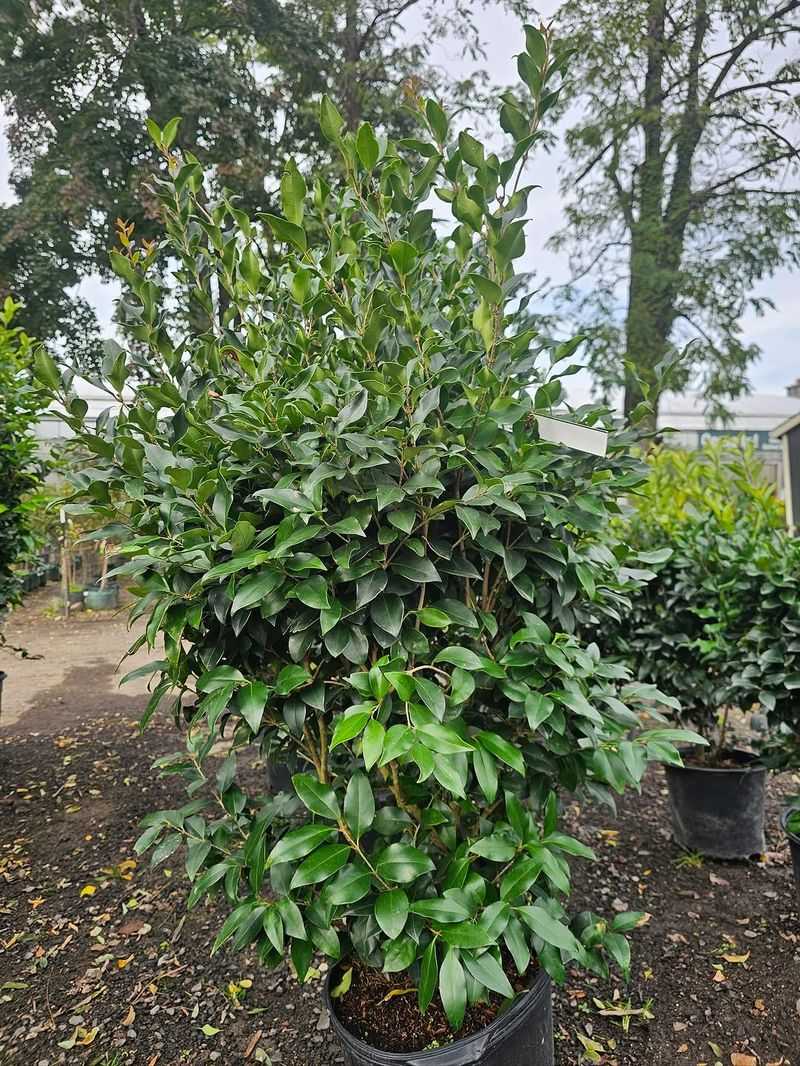
Privet grows fast. Faster than most homeowners expect, faster than most pruning schedules can keep up with, and fast enough to turn a tidy foundation planting into a tangled mess within a single growing season.
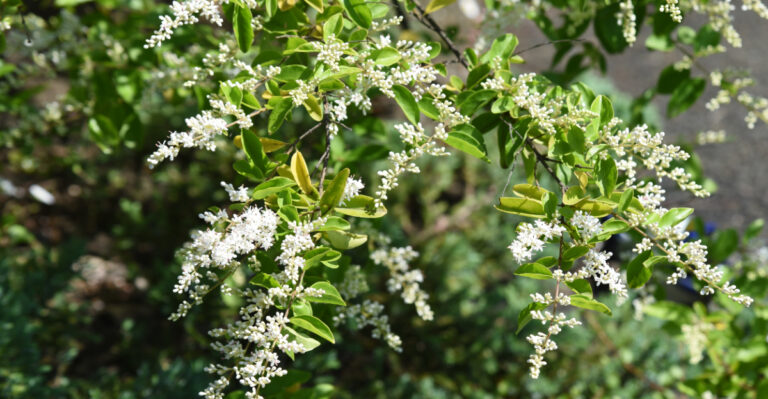
Both Ligustrum sinense, the Chinese privet, and Ligustrum japonicum, the Japanese privet, are common in North Carolina landscapes, and both have earned a reputation for being genuinely difficult to manage once they get established near a structure.
Chinese privet in particular is considered one of the most invasive shrubs in the southeastern United States.
It spreads through berries that birds distribute widely, and it roots aggressively in disturbed soil, which makes foundation beds a perfect launching pad for its spread into surrounding areas.
Homeowners who plant it expecting a low-maintenance evergreen hedge often find themselves fighting it back multiple times per year just to keep it off the siding and away from windows.
Beyond the maintenance burden, privet planted close to a foundation creates persistent moisture and airflow problems.
The dense canopy holds humidity against walls, and the root system can become surprisingly extensive over time.
Removing an established privet is a significant project that often requires stump treatment to prevent regrowth from the root system.
If you want a fast-growing evergreen screen near your home, consider wax myrtle or native inkberry as alternatives.
Both offer excellent screening capability, stay more proportionate in managed landscapes, and do not carry the invasive risk that makes Ligustrum sinense and Ligustrum japonicum such poor long-term foundation choices.
6. Skip Laurel
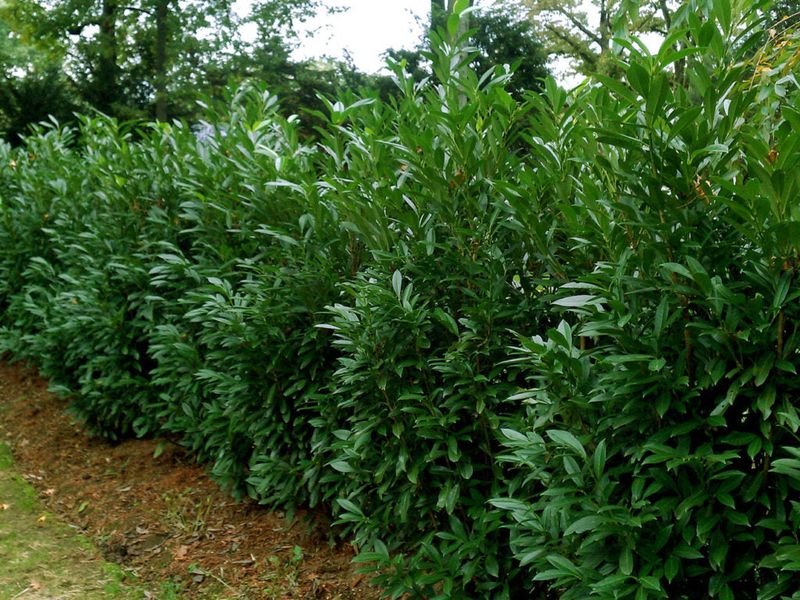
Skip Laurel gets marketed as a more refined, slightly smaller alternative to Cherry Laurel, and in the right setting that description holds up reasonably well.
Prunus laurocerasus Schipkaensis has a cleaner, more compact form and handles shade better than many evergreen screening shrubs.
The catch is that “more compact” is relative, and when Skip Laurel gets planted directly against a foundation in a warm, humid climate like North Carolina’s, the problems are remarkably similar to its larger cousin.
Mature Skip Laurel can reach 8 to 10 feet tall and spread 5 to 7 feet wide, sometimes wider in ideal growing conditions.
When planted in a standard foundation bed that is only 3 or 4 feet wide, those shrubs will quickly outgrow the available space and start pressing against walls, windows, and downspouts.
The dense canopy traps moisture against the foundation, and in North Carolina’s summer humidity that creates exactly the conditions that fungal diseases like powdery mildew and shot hole need to establish and spread.
Airflow matters enormously for this plant. Skip Laurel planted with good spacing in open areas tends to stay healthier and require far less corrective pruning than the same plant jammed into a narrow foundation bed.
The sweet spot for foundation placement is a minimum of 5 to 6 feet from the wall, with plants spaced generously to allow air movement between them.
Used as a background hedge or planted in a wide border with room to breathe, Prunus laurocerasus Schipkaensis is genuinely attractive and useful.
Near a foundation, it consistently creates more work than it is worth.
7. Japanese Holly
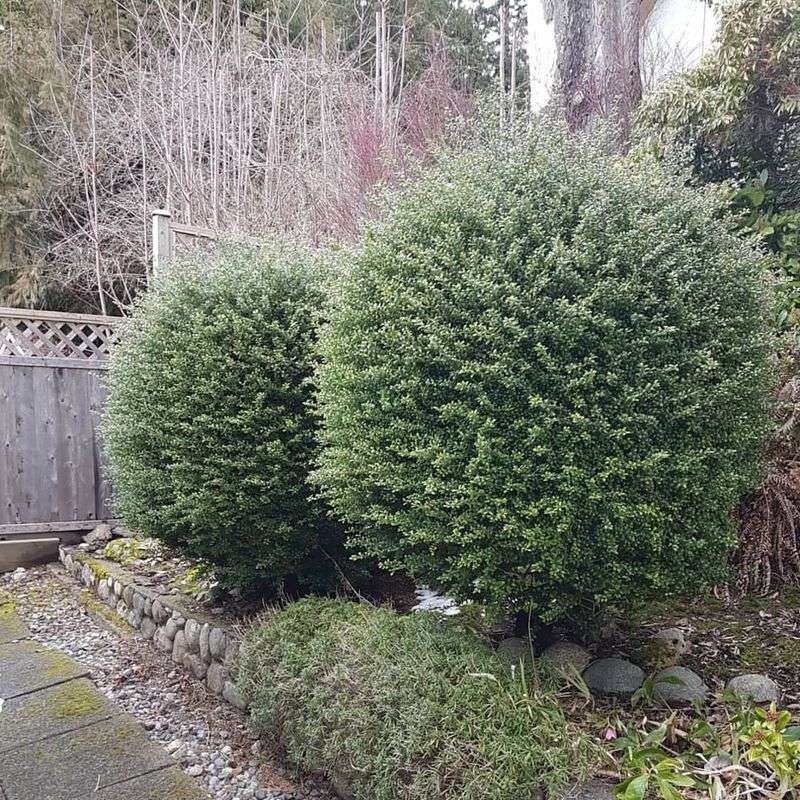
Japanese Holly has a polished, evergreen look that makes it one of the most commonly used foundation shrubs in the Southeast.
Ilex crenata produces small, glossy leaves and a naturally rounded form that photographs beautifully in landscape design portfolios.
The trouble is that those tidy little mounds in the nursery catalog rarely stay tidy once they are planted in North Carolina’s growing conditions, and foundation beds tend to bring out the worst in them over time.
Mature Ilex crenata plants can spread 4 to 8 feet wide depending on the cultivar, and many homeowners underestimate that width when they space them at planting time.
As plants fill in and start overlapping, the interior canopy becomes dense and shaded, trapping humidity close to the wall.
That combination of poor airflow and persistent moisture creates ideal conditions for root rot, particularly in clay-heavy soils that hold water near foundations after heavy rain.
Constant shaping becomes necessary when Japanese Holly gets crowded against a wall or walkway.
Trimming it back hard to keep it off the siding means repeatedly cutting into older wood, which can leave the plant looking sparse and uneven.
There is also a real susceptibility to black root rot, caused by the fungus Thielaviopsis basicola, which spreads easily in wet, compacted foundation beds.
Giving Ilex crenata at least 4 feet of clearance from the wall and choosing smaller cultivars like Soft Touch or Helleri for tight spaces makes a meaningful difference in long-term plant health and maintenance workload.
8. Oleander
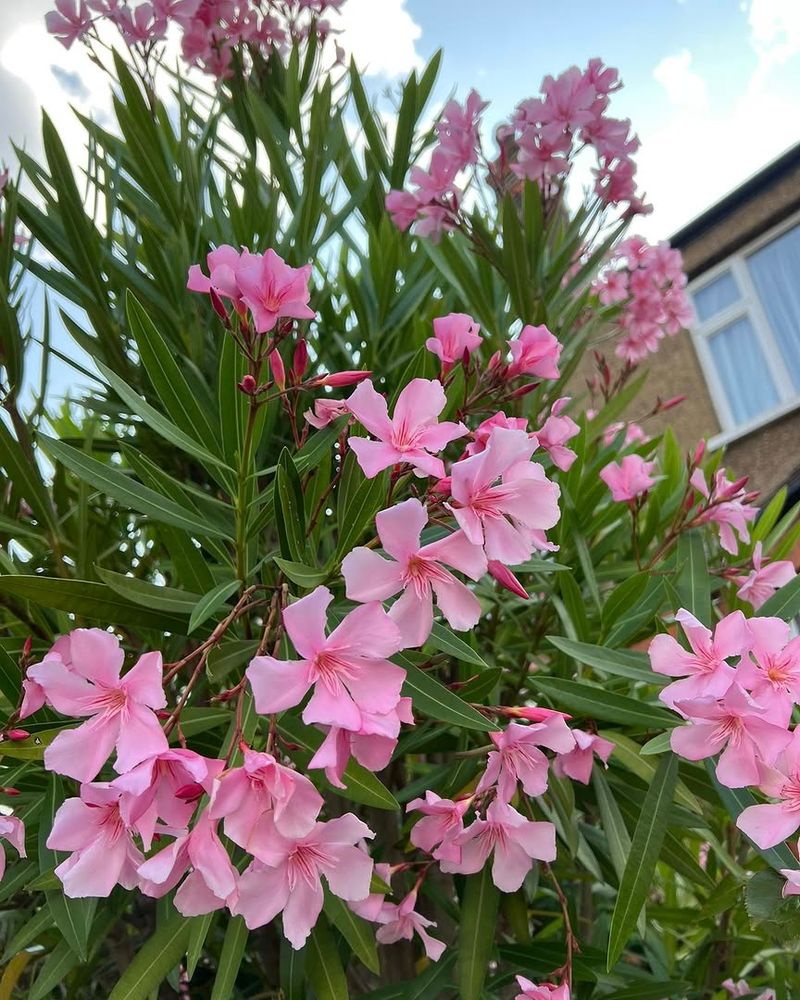
Oleander has a bold, tropical quality that feels right at home along North Carolina’s coast.
Nerium oleander produces clusters of showy flowers in pink, white, red, or yellow, and in the warmer parts of the state, particularly in the Wilmington area and coastal counties, it can grow into a substantial multi-stemmed shrub that adds real drama to a landscape.
That same dramatic size, however, is exactly what makes it a risky choice near a home’s foundation.
In coastal North Carolina, where temperatures rarely drop low enough to cut Nerium oleander back hard, these plants can reach 8 to 12 feet tall and nearly as wide over time.
When planted close to a foundation, that bulk creates ongoing maintenance challenges as branches push against siding, press over rooflines, and block windows.
The dense canopy also restricts airflow significantly, holding moisture against walls and encouraging mildew and surface deterioration on painted or wood-sided homes.
Cold hardiness is another factor that complicates foundation placement.
Move inland to the Piedmont or mountains and Oleander becomes far less reliable, often experiencing significant top damage in colder winters.
That freeze-and-recover cycle near a foundation creates unpredictable growth patterns and an inconsistent appearance that is frustrating to manage.
For coastal gardeners who love that lush, flowering presence near the house, planting Nerium oleander at least 8 feet from any structure gives it room to perform beautifully without creating structural or maintenance headaches.
Paired with proper sightlines and open space, it is a genuinely spectacular plant in the right location.
9. Butterfly Bush
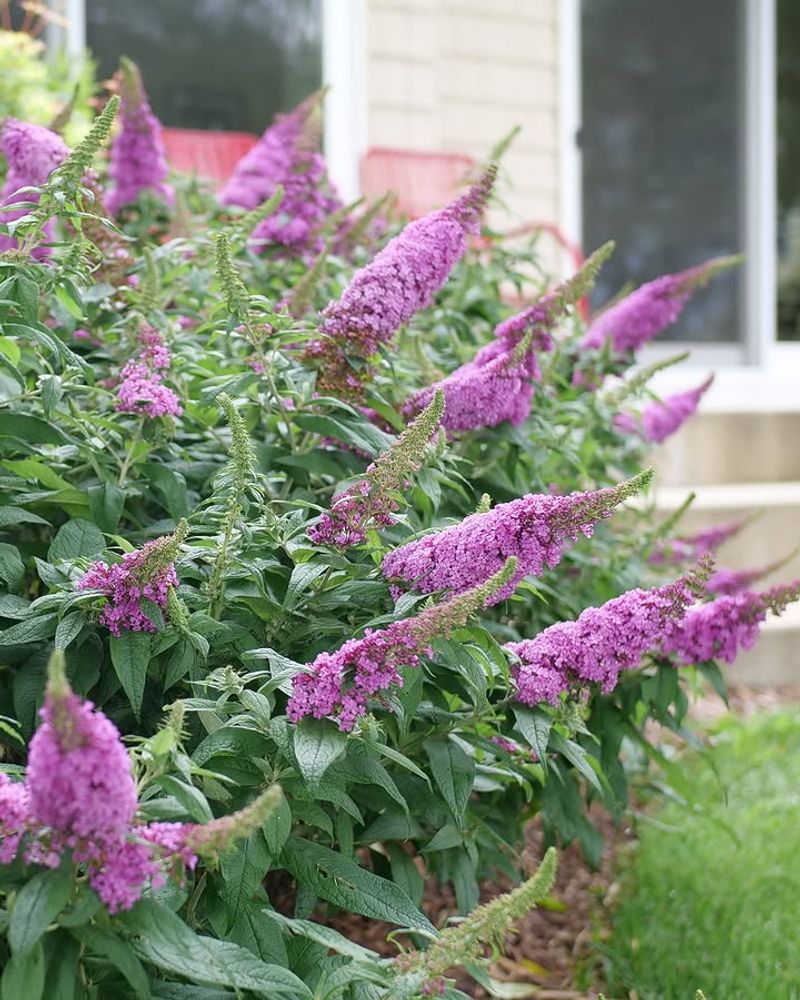
Butterfly Bush earns its name every summer, drawing clouds of pollinators to its long, fragrant flower spikes in shades of purple, pink, white, and yellow.
Buddleja davidii is genuinely one of the most visually rewarding summer-blooming shrubs you can grow, and that beauty makes it tempting to plant right outside a window or beside a front entryway where you can enjoy it up close.
The reality of how fast and wide it grows, though, makes foundation placement a decision most gardeners come to regret.
A healthy Buddleja davidii in North Carolina can shoot up 6 to 10 feet tall and spread 5 to 8 feet wide in a single growing season, especially after being cut back in late winter.
That kind of explosive seasonal growth means a plant that looks perfectly sized in April can be pressing hard against your siding and blocking your windows by July.
Even with annual hard pruning, managing that volume of growth in a narrow foundation bed is a constant effort that takes real time every season.
Reseeding is another issue that catches many gardeners off guard. Butterfly Bush produces enormous quantities of seed that spread easily, and seedlings can pop up in unexpected spots around the yard and beyond.
For gardeners who want that same pollinator-friendly energy near their home without the size and reseeding concerns, native alternatives like buttonbush, native spicebush, or Carolina sweetshrub are excellent substitutes.
They support local pollinators beautifully, stay more predictable in size, and fit naturally into foundation plantings without overwhelming the space season after season.