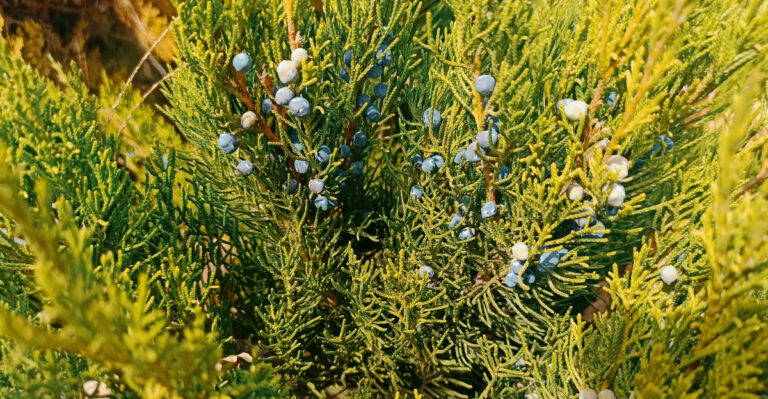
The Bagworm Problem That Sneaks Up On North Carolina Gardeners Every Late Spring
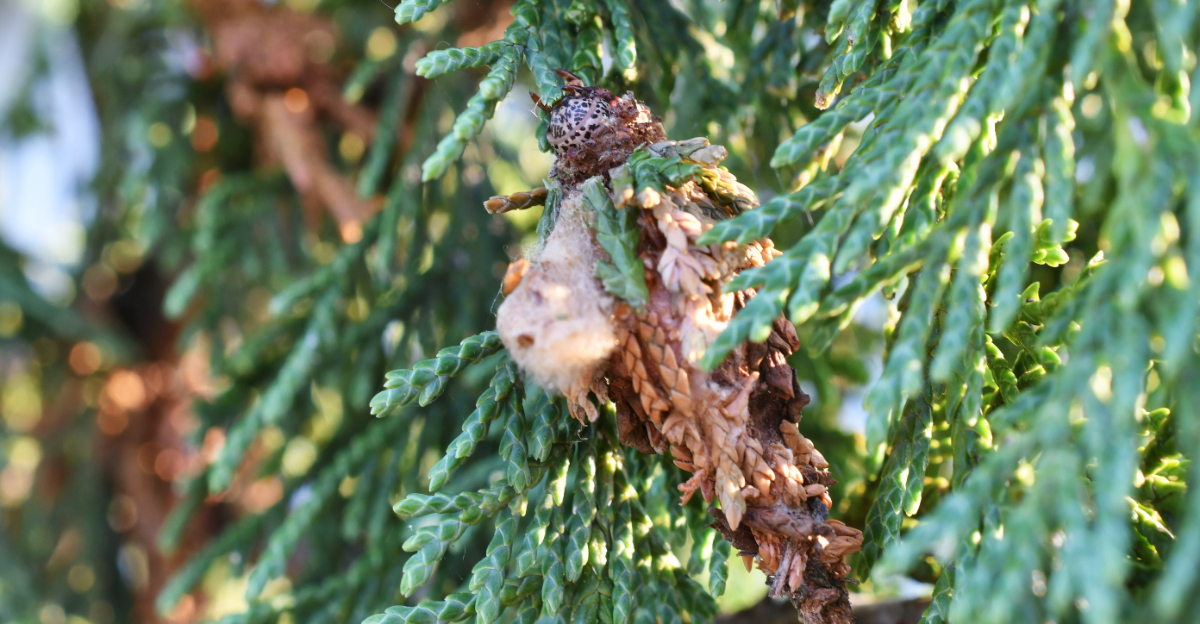
Bagworms are easy to miss in late spring, and that is exactly what makes them such a persistent problem across North Carolina.
The small bags blending into evergreen foliage look like natural plant growth to most gardeners, and by the time the damage becomes obvious the population has already expanded well beyond the point where control is simple.
Junipers, arborvitae, and Leyland cypress are common targets across the state, but bagworms feed on a wider range of trees and shrubs than most homeowners realize.
Late spring is the most important window for dealing with them because the larvae are small, actively feeding, and far more vulnerable to treatment than they will be later in the season.
Wait too long and the bags harden, feeding slows, and the options for getting ahead of next year’s population shrink considerably. Catching this problem early in North Carolina makes every difference in the outcome.
1. Bagworms Often Go Unnoticed Until Serious Damage Has Already Started
Spotting a bagworm infestation early is one of the trickiest challenges a home gardener can face.
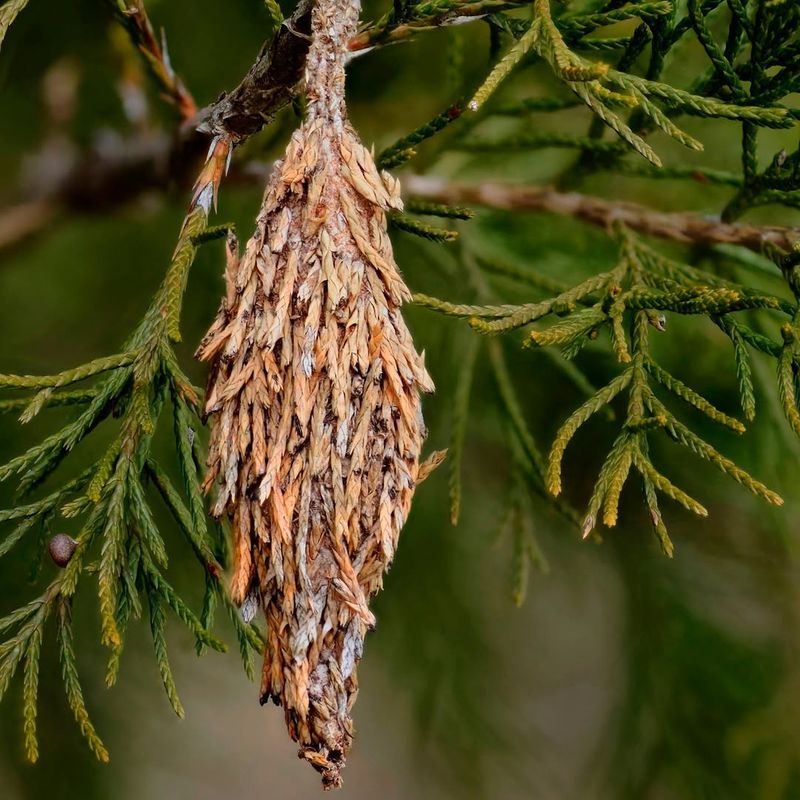
The pest responsible, Thyridopteryx ephemeraeformis, spends its early weeks hidden inside a tiny silk bag decorated with bits of foliage and twigs.
These small cases blend so well into evergreen branches that most people walk right past them without a second glance.
The bags start out barely the size of a fingernail, making them almost impossible to notice from a distance.
As the caterpillar inside grows and feeds, the bag gets bigger and the surrounding foliage begins to thin out.
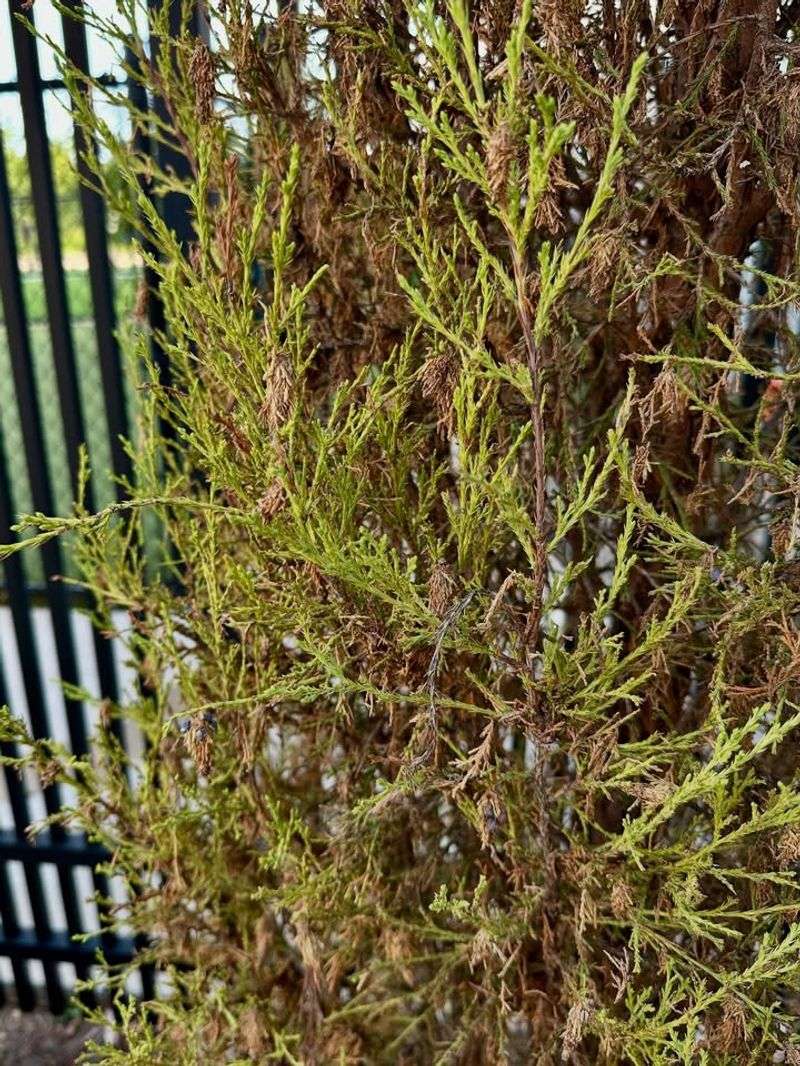
By the time browning patches appear on your arborvitae or juniper, the caterpillars have often been feeding for several weeks already.
Early warning signs include small brown specks hanging from branch tips, subtle thinning in dense evergreen foliage, and a slight dullness in leaf color that does not match normal seasonal changes.
Running your hand slowly along branches in late spring and checking for tiny hanging cases is one of the most reliable ways to catch an infestation before it grows.
Checking your plants weekly during May and June gives you the best chance of catching these pests while they are still small and manageable.
2. North Carolina Evergreens Are Especially Vulnerable To Bagworms
Certain plants simply attract bagworms more than others, and North Carolina landscapes are full of exactly those plants.
Thyridopteryx ephemeraeformis has a strong preference for Juniperus spp., Thuja spp., and Cupressocyparis leylandii, which are among the most commonly planted evergreens across the state.
Arborvitae, junipers, and Leyland cypress planted as privacy screens or foundation shrubs tend to experience the most visible feeding damage.
These plants are popular choices for homeowners because they grow quickly, stay green year-round, and provide excellent privacy.
Unfortunately, those same qualities make them prime targets for bagworm populations that are looking for dense, reliable foliage to feed on throughout the season.
A long row of tightly planted Leyland cypress, for example, can support a surprisingly large number of caterpillars before the damage becomes obvious.
Your North Carolina Garden Changes Every Week. Your Plan Should Too.
Gardening in North Carolina changes quickly throughout the season. Every Friday you’ll receive a simple weekly plan showing exactly what to plant, prune, fertilize, harvest, and protect so you never miss the right timing.
Monitoring these specific plants during late spring and early summer is the smartest approach for any North Carolina gardener.
Walk the length of your evergreen plantings every week or two starting in May, paying close attention to interior branches where bags often go unnoticed the longest.
Catching infestations on arborvitae and junipers while the caterpillars are still young gives you the most options for managing the problem before serious feeding damage sets in on your landscape plants.
3. Bagworms Build Their Protective Cases From Pieces Of Your Plants
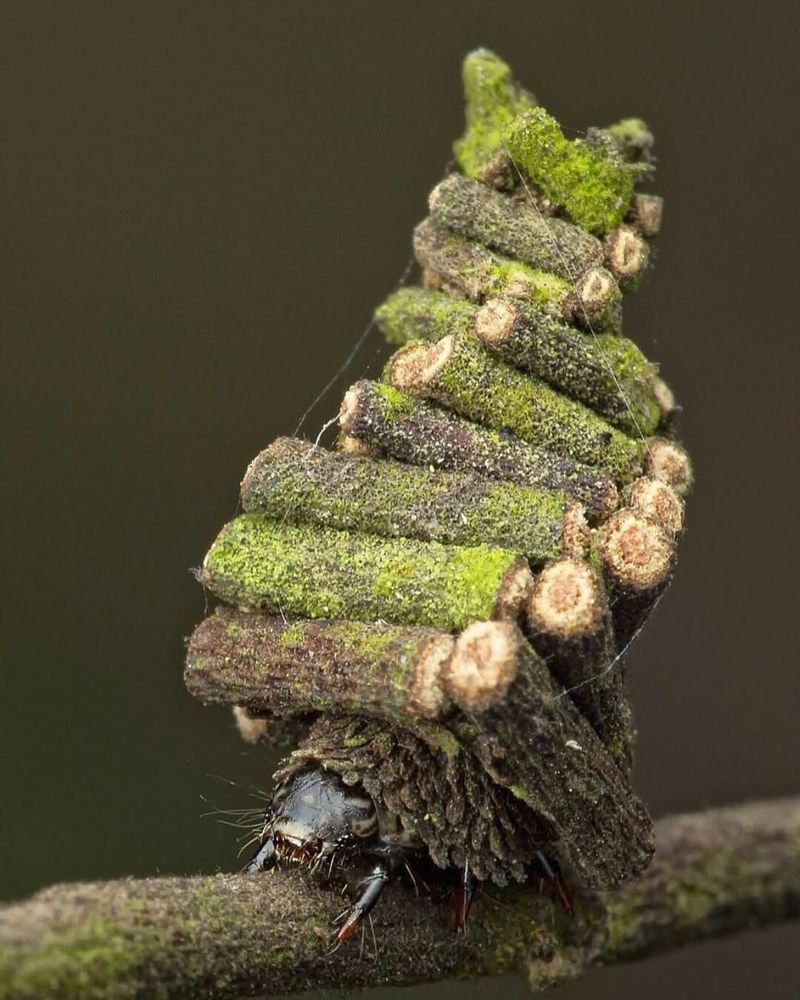
Few garden pests are as clever about self-protection as the bagworm.
Thyridopteryx ephemeraeformis caterpillars begin spinning a silk case almost immediately after hatching, and they waste no time decorating it with tiny fragments of whatever plant they are feeding on.
Bits of foliage, small twigs, and bark pieces all get woven into the outer layer, creating a disguise that mimics the surrounding branches almost perfectly. What makes this behavior so remarkable is how well it actually works.
The finished bag looks and feels like a natural part of the plant, which fools both gardeners and many natural predators.
As the caterpillar grows, the bag grows with it, with the larva continuously adding new plant material to the open end while staying safely tucked inside.
By midsummer, a fully developed bag can reach two inches or more in length and is packed tightly enough to protect the caterpillar from light rain and casual inspection.
The more plant material available, the faster the bags develop and the harder they become to distinguish from normal foliage. This is exactly why early inspection matters so much.
Catching those bags when they are still small and loosely constructed gives you a much better chance of dealing with the infestation before the caterpillars settle in for a long season of heavy feeding on your landscape plants.
4. Late Spring Is The Most Important Time To Catch Bagworms Early
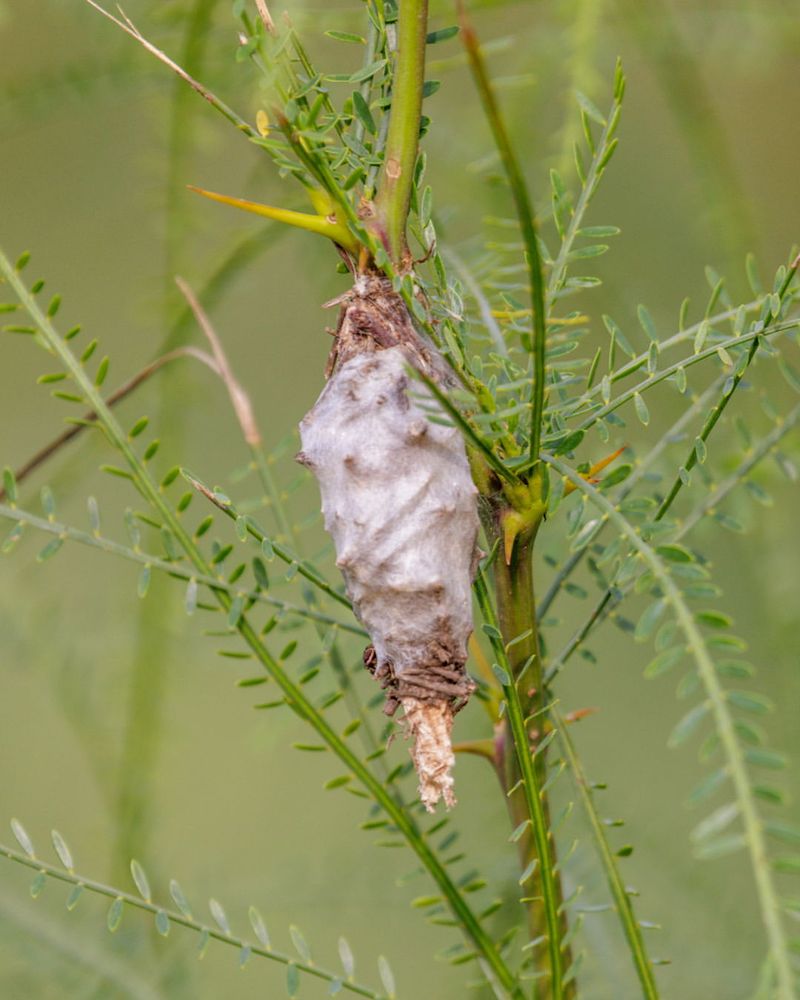
Timing is everything when it comes to managing bagworms successfully, and late spring is without question the most critical window of the entire season.
Thyridopteryx ephemeraeformis eggs typically hatch in North Carolina between late April and mid-May, depending on temperature and local conditions.
Those first few weeks after hatching are when the young caterpillars are smallest, most active, and easiest to manage.
Young bagworms travel by ballooning, releasing silk threads that catch the breeze and carry them to new host plants.
This means a single infested shrub can spread the problem to nearby evergreens within a short time if nothing is done.
Acting during this early window, before the caterpillars have settled and begun building larger bags, dramatically improves your chances of protecting your landscape plants. In North Carolina’s warm climate, the season moves quickly.
What starts as a manageable number of tiny bags in early May can become a full-scale infestation by June if left unchecked.
Making a habit of walking your evergreen plantings every week or two from late April through June is one of the best investments of time you can make as a gardener.
Setting a reminder on your phone or calendar to check your arborvitae, junipers, and Leyland cypress during this period keeps you ahead of the problem rather than reacting to it after damage has already taken hold.
5. Bagworm Damage Is Often Mistaken For Heat Or Drought Stress
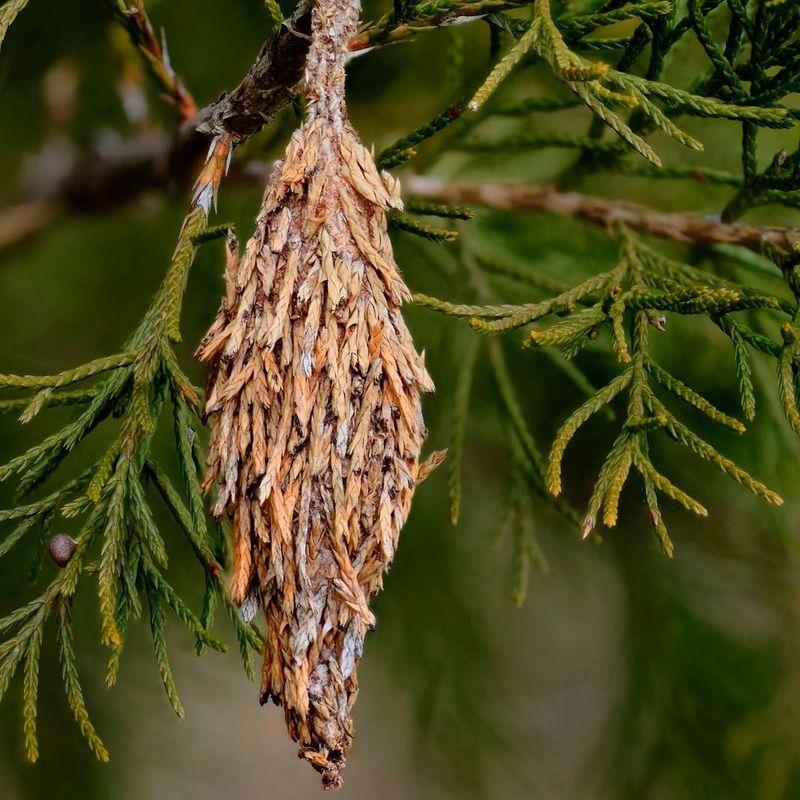
Many North Carolina gardeners spend weeks trying to fix a watering problem that is not actually a watering problem at all.
Thyridopteryx ephemeraeformis feeding damage creates symptoms that look remarkably similar to drought stress, heat scorch, or even winter dieback.
Thinning foliage, browning branch tips, and a general look of weakness are all signs that something is wrong, but they do not automatically point to bagworms without a closer look. The confusion is completely understandable.
North Carolina summers are hot and humid, and evergreens do sometimes struggle with heat and inconsistent watering during dry stretches.
When a homeowner sees brown patches on their arborvitae in June, the first instinct is usually to water more or check the soil.
Unfortunately, by the time someone thinks to look for bagworms, the infestation may have already been feeding for a month or more. The key difference is texture and pattern.
Drought stress tends to affect a plant more evenly, while bagworm feeding creates irregular brown patches that often start near the tips of specific branches where bags are attached.
Looking closely for small hanging cases among the browning foliage is the fastest way to tell the difference.
Once you find even a few bags, you know the real problem and can shift your energy toward addressing the actual cause rather than chasing a watering solution that will not help your struggling plants.
6. Hand Removal Still Works Well For Small North Carolina Infestations
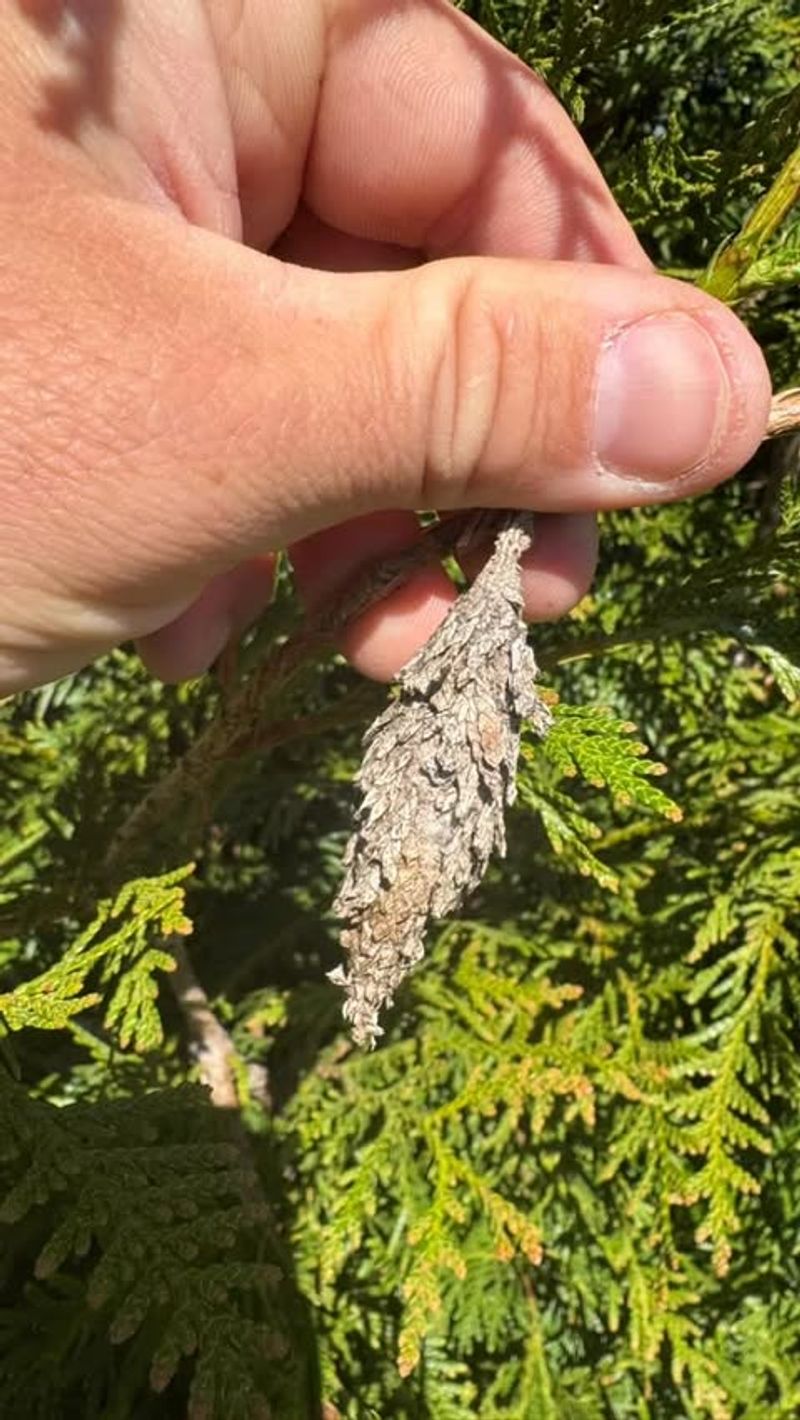
Sometimes the most effective solution is also the simplest one.
For small infestations caught early in the season, hand removal of bagworm cases from Thyridopteryx ephemeraeformis is one of the most reliable and chemical-free approaches available to home gardeners.
A pair of gloves, a bucket, and a little patience are all you really need to get started. Walking your evergreen plants in late spring and carefully pulling bags off branches by hand can make a noticeable difference in population levels for the following season.
Each bag removed in late fall or winter may contain hundreds of eggs, so removing them before spring hatching is especially valuable.
Bags collected during the growing season should be dropped into soapy water or sealed in a bag and placed in the trash rather than left on the ground, where caterpillars can simply crawl back to nearby plants.
Hand removal works best on smaller shrubs and young trees where you can realistically reach most of the branches.
On tall Leyland cypress or large junipers, a pole pruner or ladder may be needed to reach higher bags.
Combining hand removal with regular monitoring throughout the season gives you a practical, low-cost strategy that reduces future populations without any chemical inputs.
Many North Carolina gardeners find that staying consistent with this approach over two or three seasons leads to noticeably fewer bagworms on their landscape plants year after year.
7. Bagworms Spread Faster In Overcrowded Evergreen Plantings
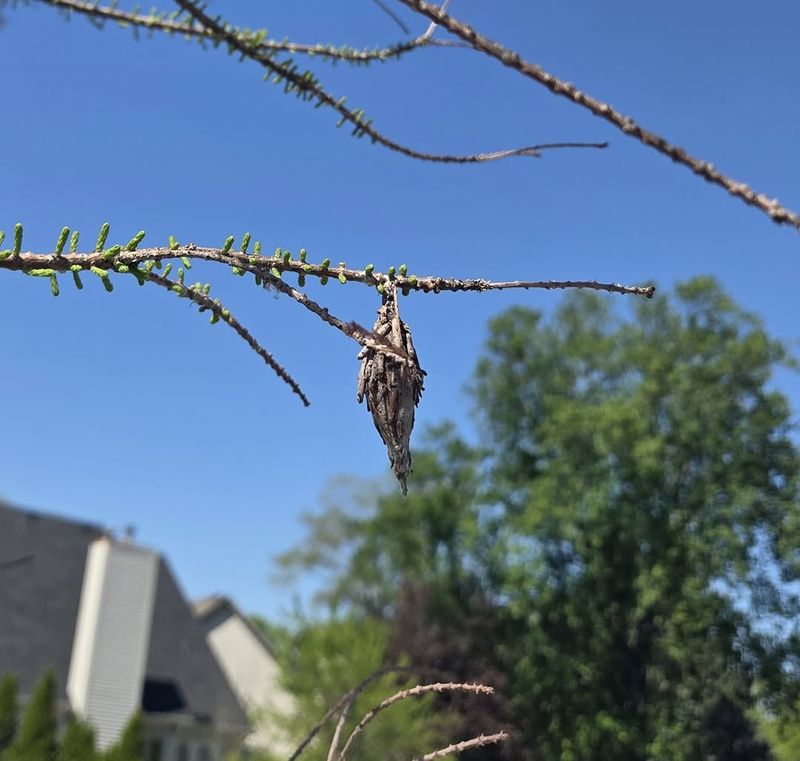
Planting evergreens too close together creates more problems than just competition for nutrients and light.
Dense, overcrowded plantings of arborvitae, juniper, and Leyland cypress create exactly the kind of environment where Thyridopteryx ephemeraeformis populations thrive and spread quickly.
When branches overlap and intertwine, caterpillars can move from plant to plant with almost no effort, and inspections become far more difficult for the homeowner.
Humidity builds up inside tightly packed evergreen rows, and reduced airflow keeps foliage damp longer after rain or morning dew.
These conditions stress the plants over time, and stressed plants are consistently more vulnerable to pest pressure than healthy, well-maintained ones.
A long privacy hedge planted without proper spacing may look lush in the first few years but can quietly become a bagworm breeding ground by the time the shrubs mature.
Pruning overcrowded plantings to improve airflow and visibility is one of the most practical long-term steps a North Carolina gardener can take.
Removing crossing branches and thinning interior growth makes it much easier to spot bags during your seasonal inspections.
When planting new evergreens, following recommended spacing guidelines for each species helps prevent the crowding problem from developing in the first place.
Giving plants enough room to grow without touching their neighbors keeps the whole planting healthier and easier to monitor through the seasons.
8. Birds And Beneficial Insects Help Control Young Bagworms
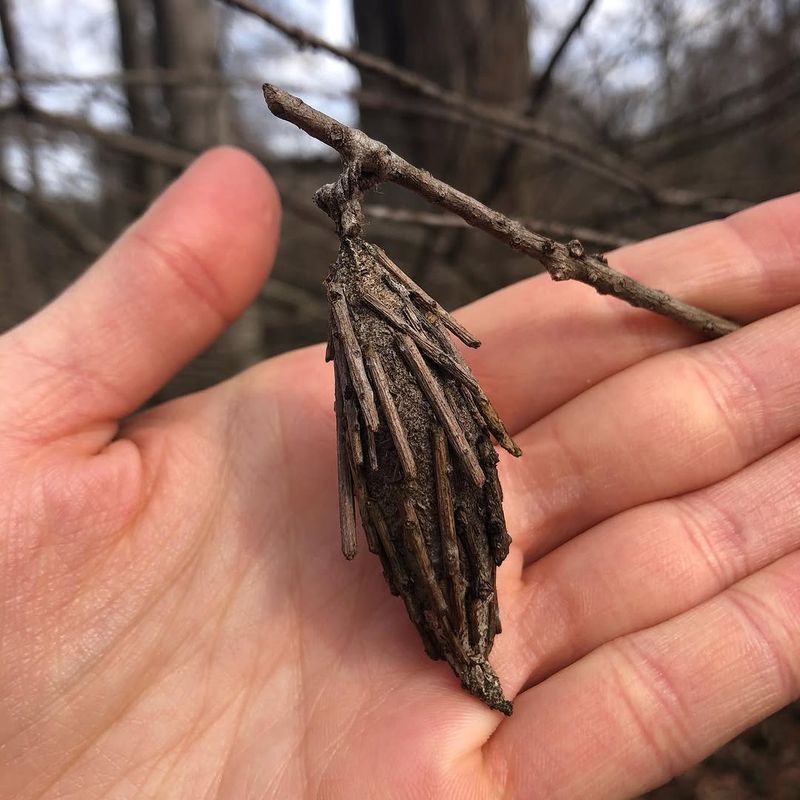
Nature has its own bagworm management team, and North Carolina landscapes that support diverse wildlife benefit from some genuinely helpful allies.
Thyridopteryx ephemeraeformis populations are naturally kept in check by a range of predators, including birds, parasitic wasps, and several species of beneficial insects that target young caterpillars before they have a chance to build up large numbers.
Birds are among the most effective natural controllers of young bagworms. Chickadees, nuthatches, and wrens are well known for picking bags off branches and extracting the caterpillars inside.
Encouraging these birds in your yard by providing water sources, native plantings, and brush piles gives them a reason to spend time in your garden and work through your evergreens on a regular basis.
Parasitic wasps, including species in the Ichneumonidae family, also play an important role by laying eggs inside bagworm larvae.
The wasp larvae then develop inside the caterpillar, reducing the number that survive to reproduce.
Supporting these beneficial insects means avoiding broad-spectrum chemical applications that would harm them along with the pests.
Planting a diversity of flowering plants near your evergreens provides nectar and habitat that keeps beneficial insect populations active throughout the growing season.
A balanced landscape with healthy soil, varied plantings, and welcoming wildlife habitat naturally keeps pest populations lower over the long run without requiring constant intervention from the gardener.
9. One Missed Season Can Lead To Much Bigger Bagworm Problems Next Year
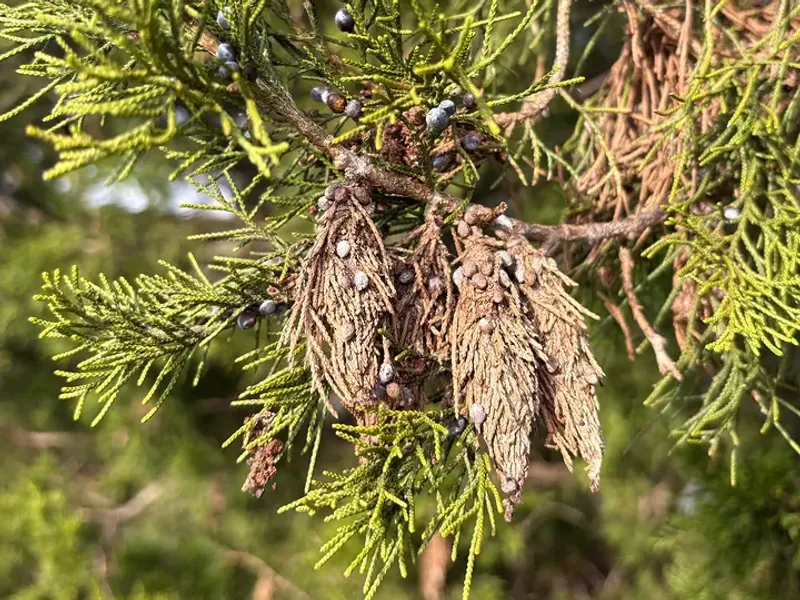
Bagworm problems have a way of compounding quietly from one year to the next.
Each mature female Thyridopteryx ephemeraeformis can lay between 500 and 1,000 eggs inside her bag before the season ends, and those eggs spend the winter safely protected inside the hanging case.
When spring arrives and temperatures warm, all of those eggs hatch and the new caterpillars spread out across nearby plants to begin feeding all over again.
A single overlooked plant with a dozen bags at the end of summer can easily contribute thousands of new caterpillars to your landscape the following spring.
Multiply that across several untreated shrubs and the scale of the problem becomes clear very quickly.
What felt like a minor issue in one season can turn into a genuinely overwhelming infestation twelve months later if no action is taken.
Removing bags in late fall and winter, after the growing season ends but before spring hatching begins, is one of the most effective preventive steps available.
Walking your evergreen plantings during the dormant season with fresh eyes often reveals bags that were hidden by summer foliage and easy to miss during the growing months.
Staying consistent with this winter scouting routine, even in years when the infestation seemed light, prevents populations from quietly building to a level that becomes much harder to manage.
A little effort each winter pays off enormously the following spring across your entire landscape.
10. Healthy Well-Spaced Plants Recover Better From Bagworm Feeding
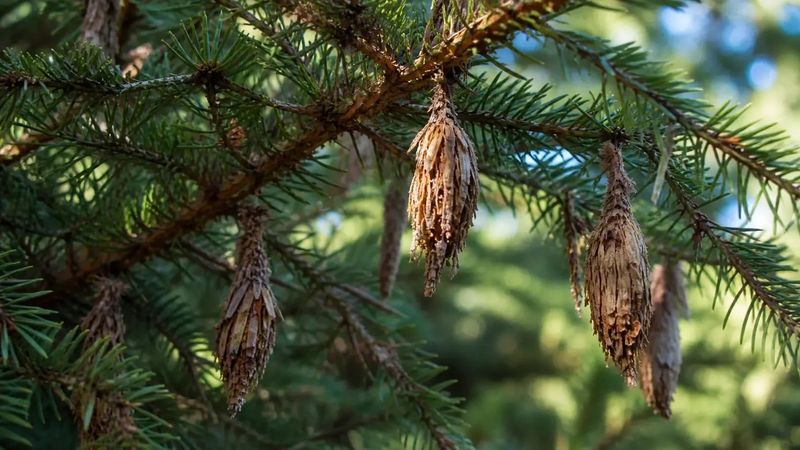
Recovery after bagworm feeding is very much possible, and the condition of your plants before and after an infestation makes a huge difference in how well they bounce back.
Thyridopteryx ephemeraeformis feeding strips foliage from branches, and on evergreens like arborvitae and juniper, that missing foliage may not always regrow from bare wood.
But plants that are otherwise healthy and well-established tend to push new growth from unaffected areas far more effectively than stressed or weakened ones.
Proper watering is one of the most important recovery tools available. Deep, consistent watering during dry stretches helps stressed evergreens redirect energy toward new growth rather than simply trying to survive.
Applying a layer of organic mulch around the base of affected plants helps retain soil moisture and regulate root temperature during the heat of summer, giving the plant better conditions for recovery.
Good spacing and airflow also play a real role in how quickly plants recover. When shrubs have room to breathe and sunlight can reach the interior branches, new growth is more vigorous and consistent.
Avoid heavy fertilizing immediately after an infestation, as a sudden flush of soft new growth can actually attract additional pest pressure.
Instead, focus on balanced soil health, consistent moisture, and gentle pruning of any truly damaged branches.
With the right care, many North Carolina evergreens that experience moderate bagworm feeding can recover well and return to full health within one or two growing seasons.