9 Reasons A Praying Mantis In Your New York Garden Is A Good Sign
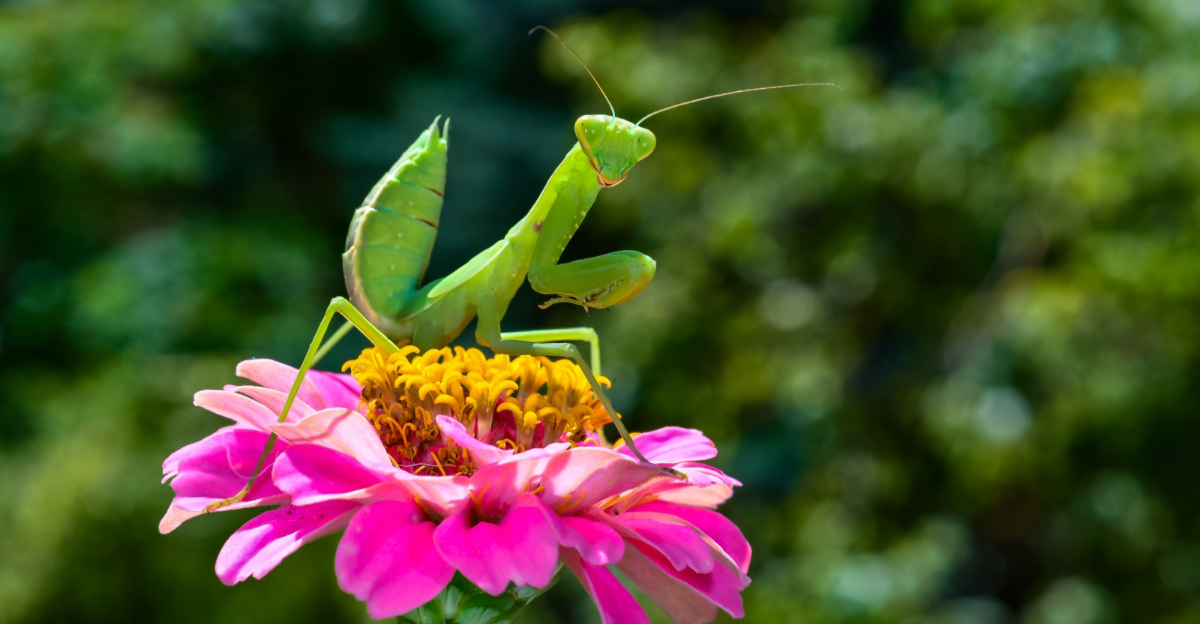
You were just walking through your New York garden, minding your own business, when something on your tomato plant made you freeze. Perched right there, still as a statue and twice as dramatic, sat a visitor you definitely did not invite but absolutely could not ignore.
It looked ancient. It looked intentional.
It looked like it had been waiting for you. Here is the thing about this particular guest: it does not show up just anywhere.
It is extraordinarily picky, almost offensively selective, about where it decides to spend its time. Your New York garden made the cut, and that says something genuinely wonderful about the little ecosystem you have been quietly building out back.
So before you rush off to google what you just saw, take a moment to appreciate what this visit might actually mean. Consider this nature’s way of telling you that you are doing something very right out there.
1. Your Garden Is Full Of Its Favorite Prey
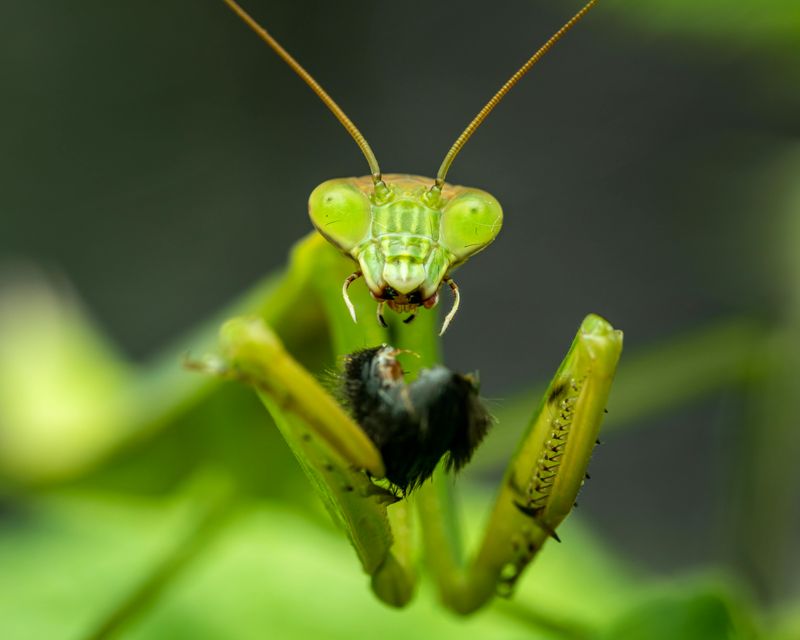
A praying mantis doesn’t go where the food isn’t. Think of it like a seasoned New York chef who only opens a restaurant in a neighborhood with the best ingredients.
If one has landed in your garden, congratulations, your yard is basically a buffet. Mantises feast on grasshoppers, crickets, moths, beetles, and aphids.
They’re not picky eaters, but they do need a steady supply. A garden buzzing with insect activity is exactly what draws them in and keeps them around.
Healthy gardens tend to attract a wide range of insects naturally. Flowers, vegetables, and herbs all pull in different bug species throughout the season.
That diversity is what makes your space so attractive to a predator built for variety. Planting a mix of flowering plants and vegetables creates layered insect activity at different heights.
That layered setup gives the mantis multiple hunting zones to work with. Basically, your New York garden became a hunting ground it couldn’t resist.
Keeping some leaf litter and ground-level plants also supports the insects mantises love most. You don’t need a wild, overgrown space to make it work.
A well-tended garden with natural variety is more than enough to earn a visit.
2. Dense Plants Give It Perfect Ambush Cover

Stillness is a superpower, and the praying mantis has mastered it completely. This insect doesn’t chase its meals.
It waits, blends in, and strikes with speed that the human eye can barely follow. Dense plantings give it the ideal stage for that performance.
Thick foliage acts like camouflage clothing for a creature that already looks like a leaf. Bushes, tall perennials, and layered garden beds create pockets of shadow and cover.
Those hidden spots are exactly where a mantis prefers to station itself before a meal walks by.
Gardens with varied plant heights offer the most opportunity. A mantis can tuck into a shrub at eye level with passing moths or crouch low in ground cover waiting for beetles.
Your New York Garden Changes Every Week. Your Plan Should Too.
Gardening in New York changes quickly throughout the season. Every Friday you’ll receive a simple weekly plan showing exactly what to plant, prune, fertilize, harvest, and protect so you never miss the right timing.
The more structural variety your plants offer, the more useful your space becomes.
Ornamental grasses are especially popular with these hunters. Their long, overlapping blades create a natural blind that’s nearly impossible to see through from a bug’s perspective.
Planting a few clumps near your garden border can dramatically increase the odds of a mantis setting up camp. Dense planting also signals a healthy, established garden.
That kind of environment tells the mantis your space has been around long enough to support a reliable food chain. Stability is something this insect actively seeks out.
3. It Needs The Warmth Your Garden Provides
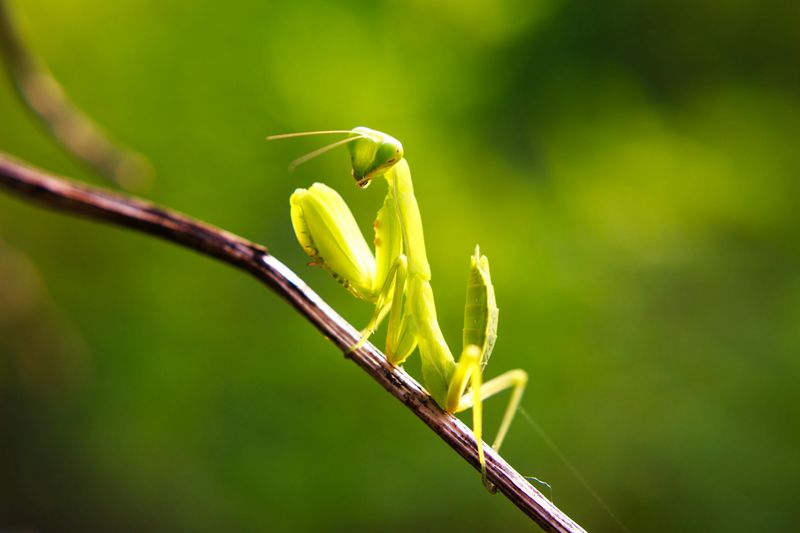
Warm microclimates are like prime real estate for cold-blooded insects. A south-facing New York garden bed that soaks up afternoon sun can be several degrees warmer than the surrounding yard.
That extra heat makes a surprising difference to a creature that relies on the environment to regulate its body temperature. Praying mantises are generally most active during warm weather, typically preferring temperatures on the warmer side of summer.
Below comfortable ranges, their movements slow and their hunting becomes less effective.
A garden that traps and holds warmth through stone pathways, brick borders, or dense mulch becomes an ideal habitat. Raised beds are particularly attractive for this reason.
The soil in a raised bed warms faster in spring and holds heat longer into fall. That extended warm season gives a mantis more active hunting time than a ground-level garden might offer.
Dark-colored mulch absorbs sunlight and radiates warmth back into the surrounding air. If your garden uses dark bark or compost as a ground cover, you’ve accidentally created a thermal comfort zone.
A mantis will absolutely notice and appreciate that.
Even container gardens near a sunny wall can create the right conditions. Reflected heat from a painted fence or brick wall adds meaningful warmth to the immediate area.
Your New York garden’s sun exposure may be the single biggest reason this insect chose your yard over the neighbor’s.
4. Your Garden Is Low On Pesticides

Pesticides don’t discriminate.
They wipe out the bad bugs and the good ones with equal efficiency, leaving behind a garden that looks clean but functions like a desert. A praying mantis will not stick around in a chemically treated space because its food supply simply won’t survive there.
The presence of a mantis in your garden is an encouraging sign that your space supports a healthy, chemical-light environment. These insects are sensitive to pesticide residue, and they tend to avoid areas where their prey has been heavily treated.
Seeing one suggests your garden is doing something right on that front. Mantises also eat insects that have ingested pesticides, which can harm them through a process called secondary poisoning.
Their instincts seem to steer them away from contaminated zones over time. A yard that skips the spray bottle becomes significantly more attractive to them.
Going pesticide-free doesn’t mean accepting plant damage. Companion planting, neem oil, and encouraging natural predators like mantises create a balanced system that controls pests without chemicals.
The mantis itself can handle a surprising number of garden pests on its own. If you’ve been gardening organically, even for just one season, that effort shows.
Your garden has become a refuge in a landscape where chemical use is common. That clean environment is exactly what drew this remarkable insect through your gate.
5. Tall Stems Give It Prime Hunting Perches

Elevation matters in the hunting world. A mantis perched high on a plant stem has a clear sightline in every direction, giving it a tactical advantage that ground-level insects simply don’t have.
Tall plants in your garden are essentially watchtowers for this expert predator.
Sunflowers, hollyhocks, tall salvias, and staked tomato plants all create vertical structure that a mantis loves to climb. From those heights, it can spot flying insects like moths and flies before they even sense danger.
The strike happens fast, usually within a fraction of a second once the target is close enough.
Vertical hunting perches also help mantises regulate their exposure to heat and shade. On a hot afternoon, a stem near a leafy canopy offers shade without sacrificing the height advantage.
That kind of flexibility makes tall-stemmed plants doubly useful to them. Staking your garden plants for support does more than protect them from wind.
Those wooden stakes and bamboo poles become additional perch points that a mantis will happily claim. Don’t be surprised to find one clinging sideways on a garden stake at dusk.
Gardens that mix tall and short plants create a natural hunting gradient. A mantis can work its way up and down through the layers depending on where prey is most active.
Building vertical variety into your planting plan makes your space almost irresistible to these aerial hunters.
6. Nearby Water May Attract The Insects It Hunts
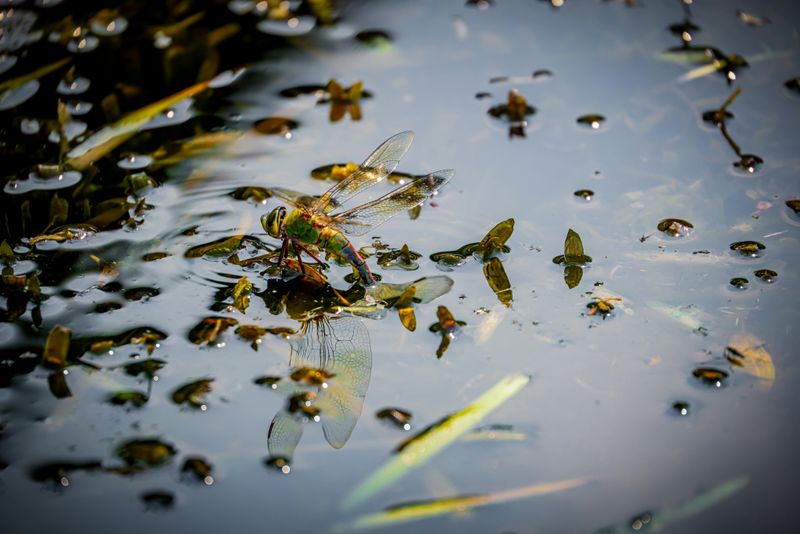
Standing water is a magnet for insects, and a praying mantis knows exactly where its next meal is likely to appear.
Mosquitoes breed in still water. Dragonflies patrol pond edges.
Beetles and flies gather near moisture.
If your garden has a birdbath, a small pond, or even a consistently damp corner, you’ve created a permanent insect gathering spot. Water features don’t need to be large to have an impact.
Even a shallow dish of water tucked among your plants draws thirsty insects throughout the day. A mantis positioned nearby is essentially sitting at the head of the buffet line.
Moisture also encourages plant growth, which in turn supports more insect life. Areas near water sources tend to have lusher, denser vegetation that provides both cover and prey.
That combination is exactly what a skilled ambush predator looks for when scouting territory. If you have a rain garden or a low-lying bed that collects runoff after storms, that’s an especially rich hunting zone.
Water-loving plants like cardinal flower and swamp milkweed bring in butterflies and bees that a mantis won’t ignore. Planting near those moisture zones can concentrate insect activity in one convenient location.
Keeping your water feature clean prevents mosquito overpopulation while still attracting the right insects. A balanced water source supports a healthy food web.
Your mantis visitor already figured that out before you did.
7. Your Garden Has Fewer Predators
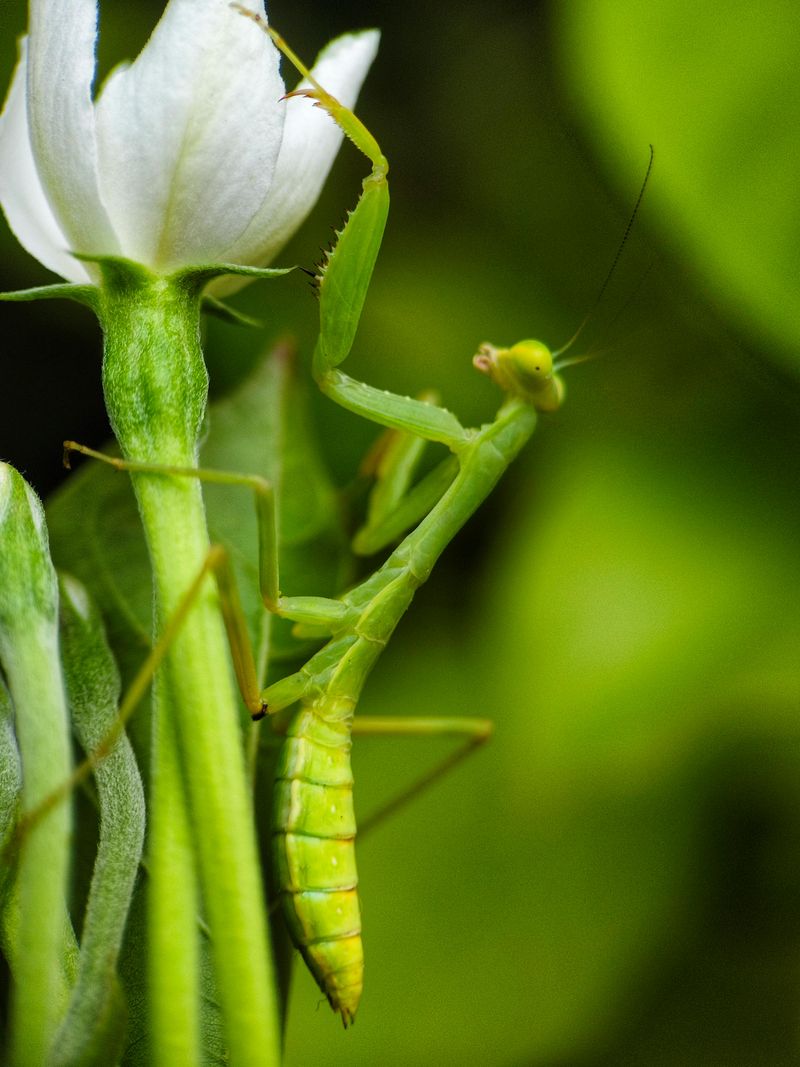
Safety is not a small consideration for an insect that stands out when it moves.
Despite its fierce reputation as a hunter, the praying mantis is also prey to birds, bats, and larger predators.
A garden with fewer threats is a garden worth staying in. Urban and suburban yards with fenced perimeters tend to limit the movement of ground predators like cats and raccoons.
High foot traffic from pets and free-roaming wildlife can make a mantis feel exposed and unsafe. A quieter garden with minimal disturbance gives this patient hunter the calm it needs to stay put.
Spacing any feeders away from your main garden beds reduces general activity in the immediate area and keeps that section of your yard more settled. Spacing feeders away from your main garden beds strikes a balance that benefits everyone.
Mantises that feel safe in a space will stay through multiple life stages. A female may even lay her egg case, called an ootheca, directly on your plants or fence posts.
That’s the highest compliment a mantis can offer: she trusted your garden enough to raise her next generation in it. Noticing what isn’t in your garden can be just as revealing as what is.
A calm, low-traffic space with minimal predator pressure is rare in a busy neighborhood. Your garden earned that reputation one peaceful afternoon at a time.
8. Flowering Plants Bring A Steady Stream Of Pollinators
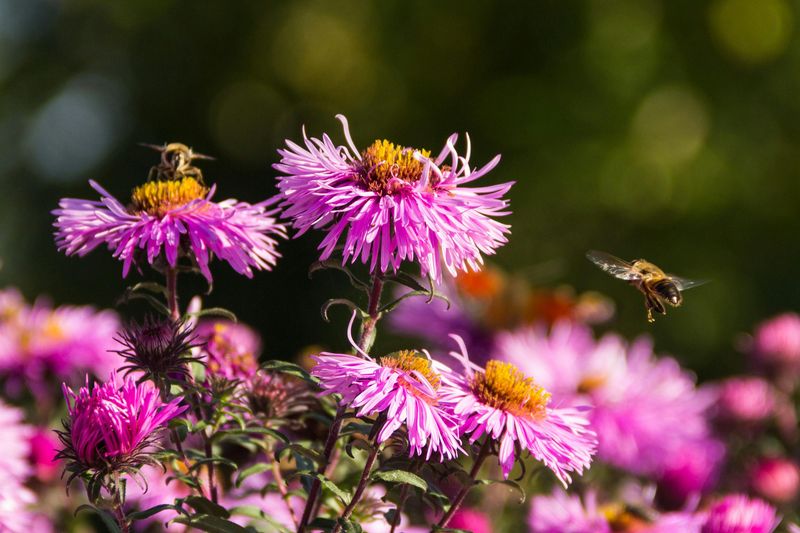
Pollinators are basically a delivered meal service, and flowering plants are the menu. Bees, butterflies, and hoverflies all visit blooms on a predictable schedule, moving from flower to flower with reliable consistency.
A mantis that positions itself near a popular bloom has essentially found a front-row seat to an all-day feast. Native flowering plants are especially powerful attractors.
Species like black-eyed Susans, coneflowers, and milkweed bring in a wide range of pollinator species from spring through fall. That long bloom window keeps insect activity going well past midsummer, giving a mantis plenty of opportunity.
The behavior of pollinators makes them particularly easy targets.
A bee focused on collecting pollen is not paying attention to its surroundings the way a free-flying insect might. That single-minded focus makes it vulnerable to a predator that specializes in patience and precision.
Planting in clusters rather than single stems concentrates pollinator activity in one spot.
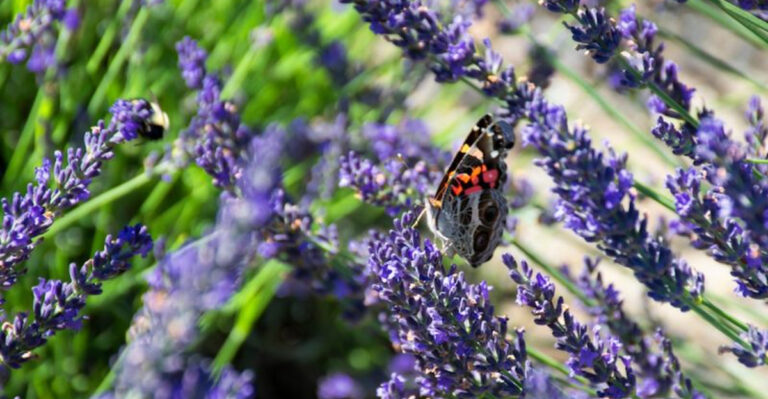
A mass planting of lavender or zinnias becomes a busy landing zone that a mantis can monitor from a single perch. Smaller, scattered plantings spread the activity too thin to be worth the effort.
Flowering plants also extend the visual complexity of your garden. Layered blooms at different heights create multiple ambush zones across a small area.
For a praying mantis, a well-planted flower garden is less a garden and more a perfectly designed hunting ground.
9. The Calm Stability Suits Its Patient Hunting Style
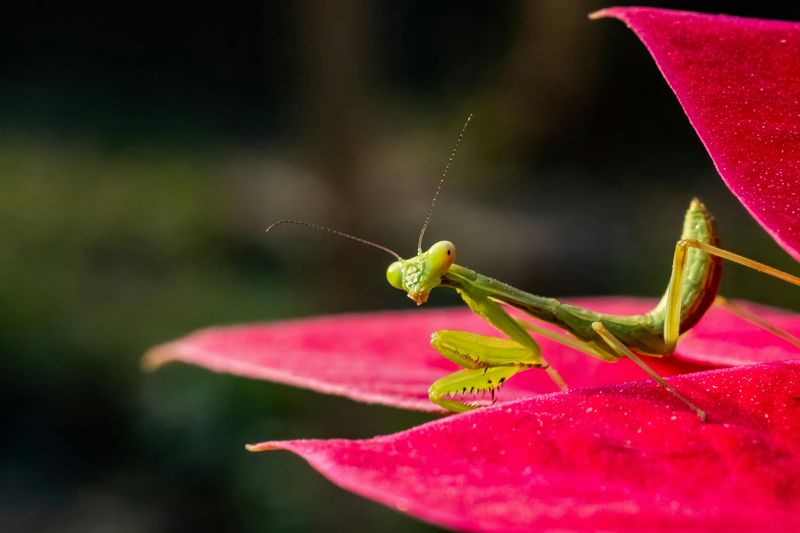
Some hunters sprint. The praying mantis waits.
Its entire survival strategy is built on stillness, camouflage, and the kind of patience that most creatures simply don’t have. A chaotic, frequently disturbed garden is the last place this insect wants to set up its ambush.
Gardens that aren’t constantly being rearranged, replanted, or trampled offer the stability a mantis depends on. When plants stay in place long enough for insects to establish patterns, a mantis can learn those patterns and exploit them.
Predictable prey movement is a huge advantage for an animal that relies on ambush over pursuit. Consistent gardening habits that avoid unnecessary disruption make a real difference.
Leaving sections of the garden undisturbed for several days at a time allows insect populations to normalize. That normalization is what creates the reliable hunting conditions a mantis needs to thrive.
Noise and vibration from lawn equipment can scatter insects and disrupt the mantis’s carefully chosen position. Scheduling mowing and trimming away from the main garden beds, or doing it less frequently, reduces that disturbance.
Even small adjustments to your routine can make the space feel significantly more welcoming to wildlife. A praying mantis that finds calm in your garden will return season after season.
That steady presence keeps pest populations in check without any effort from you. The best thing you can do for your garden is sometimes simply to leave it alone and let the mantis do its work.