These Are The Fastest Growing Hedges Oregon Homeowners Are Planting For Privacy
Nobody wants to feel like they’re gardening in a fishbowl. If your yard is a little too visible to neighbors, passing traffic, or that one nosy dog who always stops at your fence, a fast-growing hedge might be exactly what your outdoor space needs.
Oregon is actually a fantastic state for growing privacy screens because the climate in most regions is gentle enough to support a wide range of vigorous, good-looking plants.
Some of these hedges can put on serious growth in just a season or two, turning an exposed yard into a genuinely private retreat faster than you might expect.
The trick is picking the right plant for your specific corner of Oregon and your own very personal tolerance for trimming.
1. Green Giant Arborvitae Builds Privacy Fast
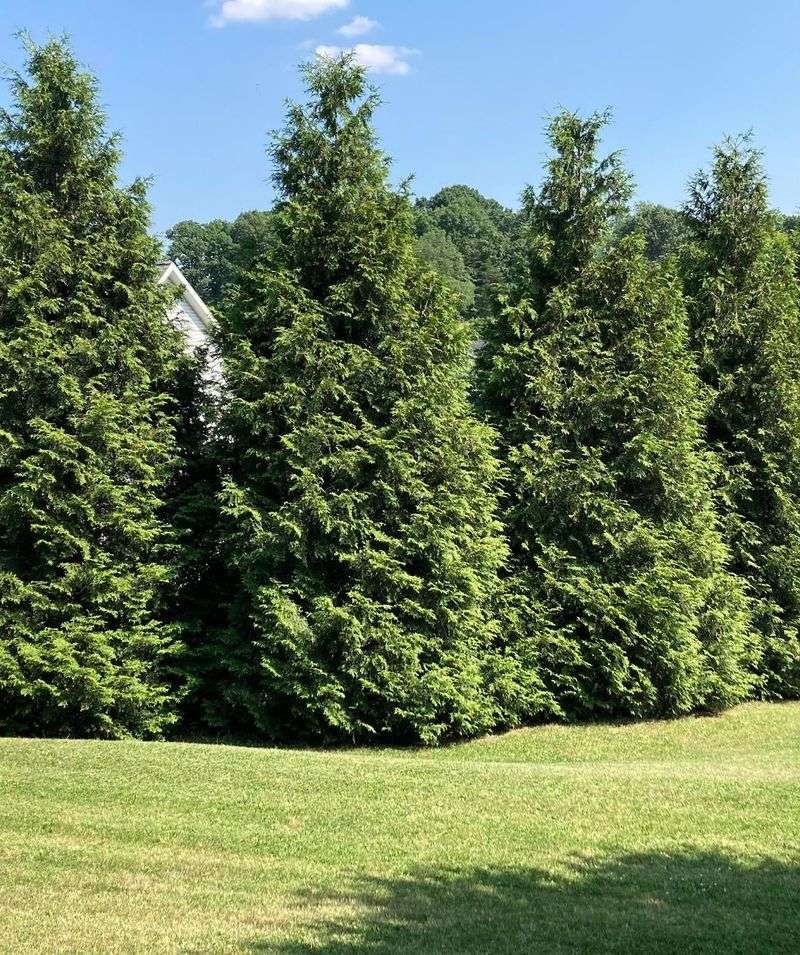
Few screening plants in Oregon backyards match the sheer speed and reliability of Green Giant Arborvitae.
This evergreen conifer can grow three to five feet per year under good conditions, which means a young plant can reach fence-topping height within just a few seasons.
For homeowners who want dense, year-round coverage without a long wait, it delivers results that slower hedges simply cannot match.
Green Giant thrives across much of Oregon, performing well in the Willamette Valley and other areas with mild, moist winters and warm summers. It tolerates a range of soil types as long as drainage is reasonable, and it handles wet winters without much trouble.
In hotter, drier parts of the state, consistent watering during the first couple of summers helps it get established before summer heat sets in.
Mature plants can reach 30 to 40 feet tall and 12 to 15 feet wide without pruning, so spacing and placement matter a great deal. Planting too close to a fence, structure, or property line can create problems down the road.
Most gardeners space them five to eight feet apart and allow them to grow naturally into a solid wall of green.
Deer tend to leave Green Giant alone compared with other arborvitae varieties, which is a real advantage in Oregon neighborhoods near open spaces or rural edges.
Minimal maintenance and fast fill-in make this one of the most popular privacy hedges homeowners plant today.
2. Leyland Cypress Grows Fast For Screening
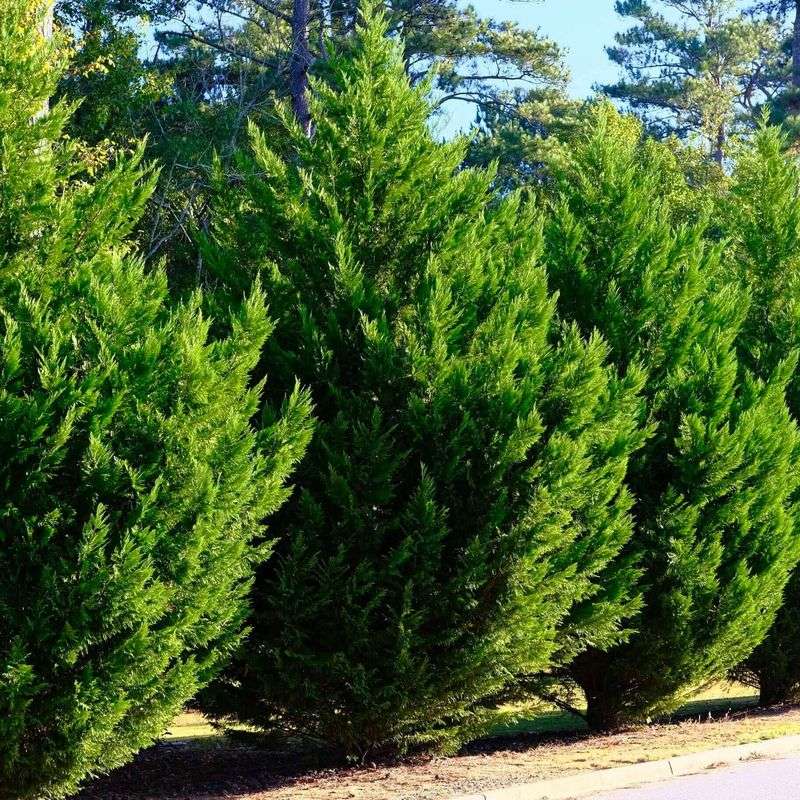
Walking past a neighbor’s yard screened by a wall of Leyland Cypress, it is easy to understand why this tree became so popular for privacy planting.
It grows quickly, often putting on two to three feet or more per year, and its dense, feathery foliage fills in with a soft texture that looks appealing along a fence line or property border.
Homeowners in the Willamette Valley and coastal areas have relied on it for decades as a go-to screening tree.
Leyland Cypress handles Oregon’s rainy winters reasonably well and adapts to a variety of soil conditions. It does best in full sun and appreciates good air circulation, which helps reduce the risk of fungal issues that can affect plants grown in tight, humid spaces.
Spacing plants properly and avoiding overly wet, poorly drained sites will help them stay healthy over the long term.
Your Oregon Garden Changes Every Week. Your Plan Should Too.
Gardening in Oregon changes quickly throughout the season. Every Friday you’ll receive a simple weekly plan showing exactly what to plant, prune, fertilize, harvest, and protect so you never miss the right timing.
One thing gardeners should keep in mind is that Leyland Cypress can grow quite large if left unpruned. Without regular trimming, plants can reach 60 to 70 feet tall, which is far more than most residential yards need.
Pruning annually while plants are young helps maintain a manageable, attractive hedge height and encourages denser branching closer to the ground.
For homeowners who want fast coverage along a side yard or back fence and are willing to stay on top of occasional trimming, Leyland Cypress offers one of the quickest paths to a full evergreen screen in Oregon landscapes.
3. English Laurel Fills In Fast
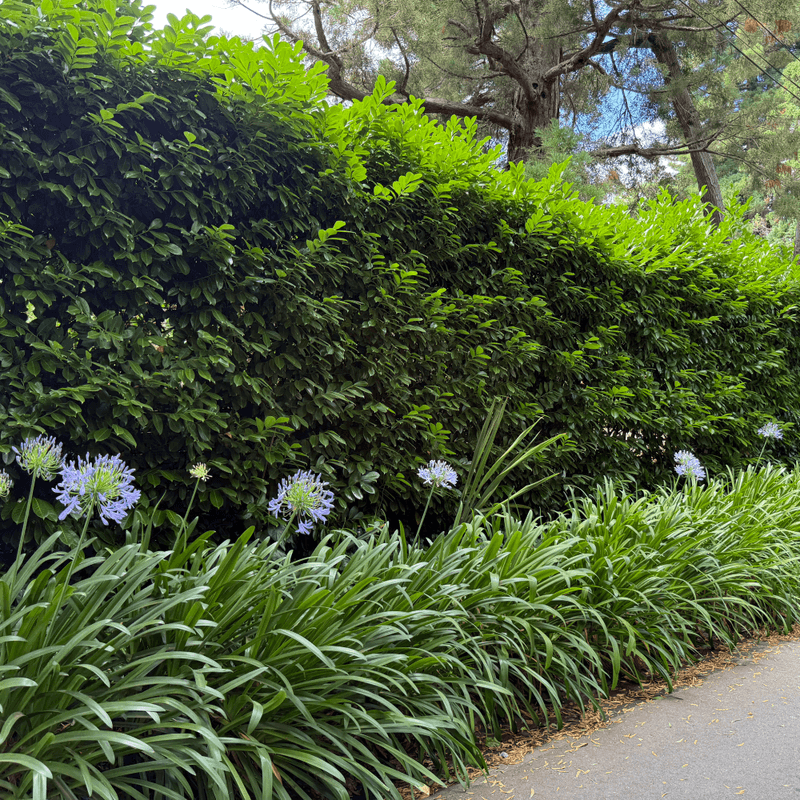
Bold, glossy leaves and a vigorous growth habit make English Laurel one of the most eye-catching fast-growing hedges in Oregon home landscapes.
Under good conditions it can put on two to three feet of growth per year, and its large, deep green foliage creates a lush, tropical-looking screen that fills in fence lines and side yards with impressive speed.
It is a plant that makes an immediate visual impact even when young.
English Laurel grows well across western Oregon, where mild winters and moist conditions suit it well. It tolerates shade better than many other fast-growing hedges, which makes it a useful option for fence lines that receive limited direct sun.
In shadier spots it may grow a bit more slowly, but it still fills in more reliably than many alternatives that struggle without full sun exposure.
The main thing to be aware of is that English Laurel is a genuinely large shrub. Left unpruned, it can reach 20 to 30 feet tall and spread quite wide.
Most homeowners keep it trimmed to a manageable height, which requires using loppers or a hand pruner rather than hedge shears, since shears can leave cut edges on the large leaves that turn brown and look untidy.
It is also worth noting that English Laurel has naturalized in parts of western Oregon and is considered invasive in some areas.
Checking local guidelines before planting and removing any berries before they spread is a responsible step for gardeners who choose this hedge.
4. Portugal Laurel Brings Polished Privacy
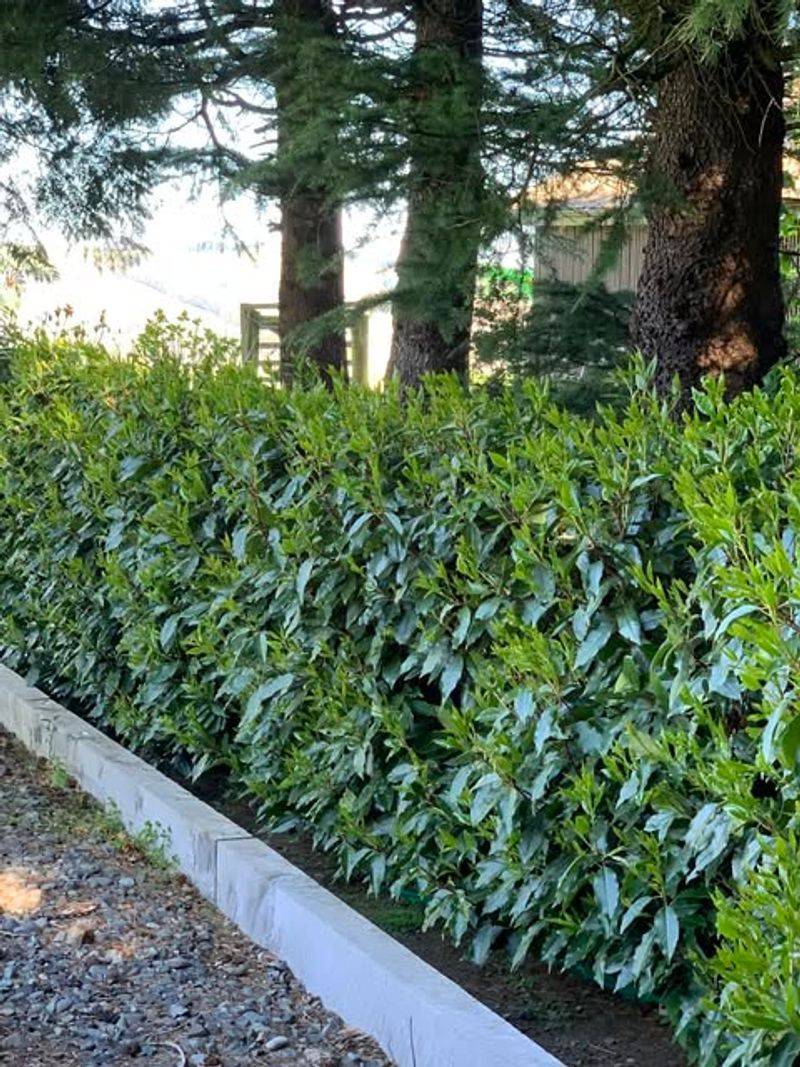
There is something quietly elegant about a well-grown Portugal Laurel hedge that sets it apart from the bolder, faster-growing options on this list.
Its smaller, darker leaves give it a refined, polished look that suits formal and semiformal landscapes, and it responds well to trimming into a clean, structured hedge.
Homeowners who want privacy screening with a bit more visual sophistication often find Portugal Laurel to be a satisfying choice.
Growth is somewhat slower than English Laurel or Green Giant Arborvitae, typically one to two feet per year, but it still fills in considerably faster than many traditional hedging plants.
In Oregon, it performs well across a range of conditions, handling both the wet winters of the western valleys and the hotter, drier summers of some interior areas better than some other broadleaf evergreens.
Good drainage is helpful, especially during the long wet season.
Portugal Laurel tends to top out at around 10 to 20 feet when left unpruned, making it more manageable in smaller yards than some of the larger screening trees on this list.
It also produces small white flowers in late spring that attract pollinators, which is a pleasant bonus in a garden setting.
The dark berries that follow are attractive to birds, though they should not be eaten by people.
Unlike English Laurel, Portugal Laurel is not considered invasive in Oregon, which gives it a meaningful advantage for gardeners who want a responsible, long-lasting evergreen hedge that looks sharp with regular maintenance.
5. Wax Myrtle Grows Quickly And Softly Screens
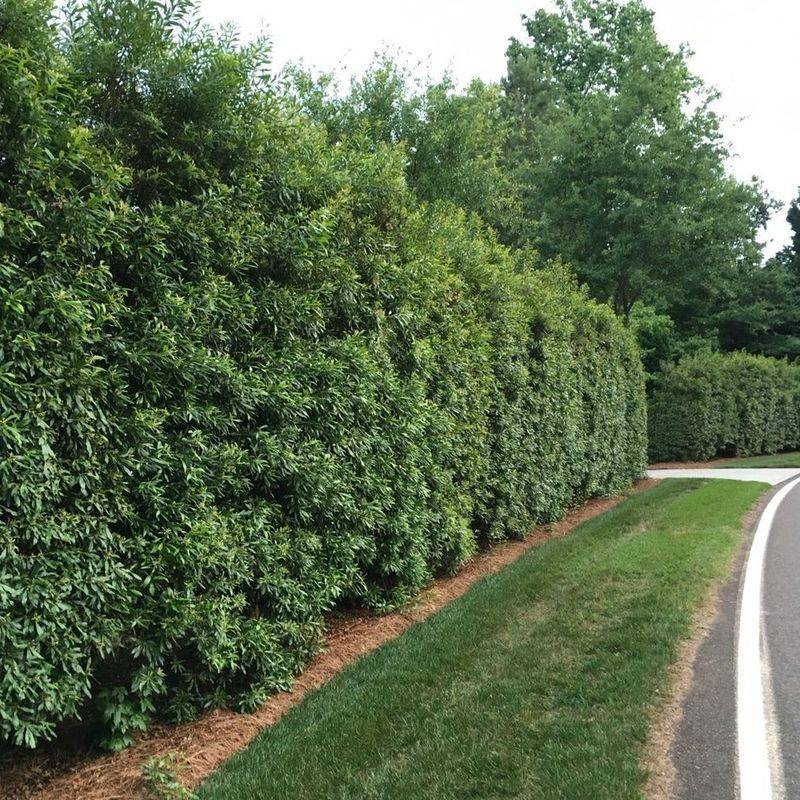
For Oregon homeowners who prefer a more naturalistic, relaxed look along their fence line, Wax Myrtle offers a fast-growing alternative to the more formal evergreen options.
Its aromatic, fine-textured foliage has a pleasant scent when brushed, and the plant has a naturally graceful, multi-stemmed form that softens hard edges in a yard without looking stiff or overly manicured.
It feels right at home in Pacific Northwest landscapes.
Wax Myrtle can grow two to three feet per year under good conditions, and it reaches a mature height of around 10 to 20 feet depending on the cultivar and site.
It is especially well-suited to western Oregon, where it tolerates both moist soils and seasonal flooding better than many other fast-growing hedges.
This makes it a practical option for low-lying areas or spots near downspouts where water tends to collect.
It handles coastal conditions reasonably well, tolerating salt spray and wind exposure that would stress other hedging plants.
For homeowners near the coast who struggle to find fast-growing evergreen screens that hold up through stormy winters, Wax Myrtle is worth serious consideration.
It also tends to attract birds, which enjoy the small waxy berries the plant produces in fall and winter.
Maintenance is modest compared with some faster-growing options. Light trimming once or twice a year keeps it tidy and encourages denser branching.
It can also be allowed to grow more freely for a softer, wilder screen that blends naturally into informal garden settings.
6. Escallonia Adds Fast Evergreen Coverage
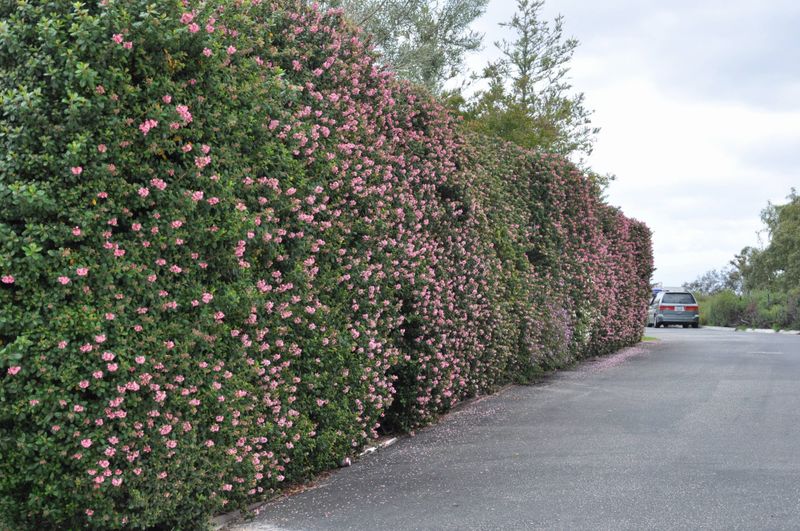
Not every fast-growing hedge has to sacrifice flowers for function, and Escallonia proves that point beautifully.
This broadleaf evergreen shrub produces clusters of small pink or red blooms in summer while maintaining dense, glossy foliage that screens yard views effectively year-round.
Oregon homeowners who want both privacy and seasonal color often find it to be a rewarding hedge choice that does double duty in the landscape.
Escallonia grows at a moderate to fast pace, typically one to two feet per year, and it reaches a mature height of around six to ten feet depending on the variety.
It is particularly well-suited to Oregon’s coastal areas, where it handles salt spray, wind, and mild maritime winters with notable resilience.
In the Willamette Valley it also performs well, though it may need some protection from hard freezes in colder inland locations.
One of its practical advantages is that it responds well to pruning, making it easy to maintain as a tidy, formal hedge or to allow a slightly looser, more informal shape.
Trimming right after flowering encourages fresh growth and helps keep the plant dense from the base up.
Bare lower stems can become an issue if plants are pruned too heavily all at once, so gradual shaping tends to give better results.
Escallonia is also relatively drought-tolerant once established, which is useful during dry summers. For homeowners who want fast evergreen coverage with ornamental appeal, it is a hedge worth adding to the shortlist of options for privacy planting.