What Georgia Homeowners Are Putting Out For Eastern Bluebirds This Spring
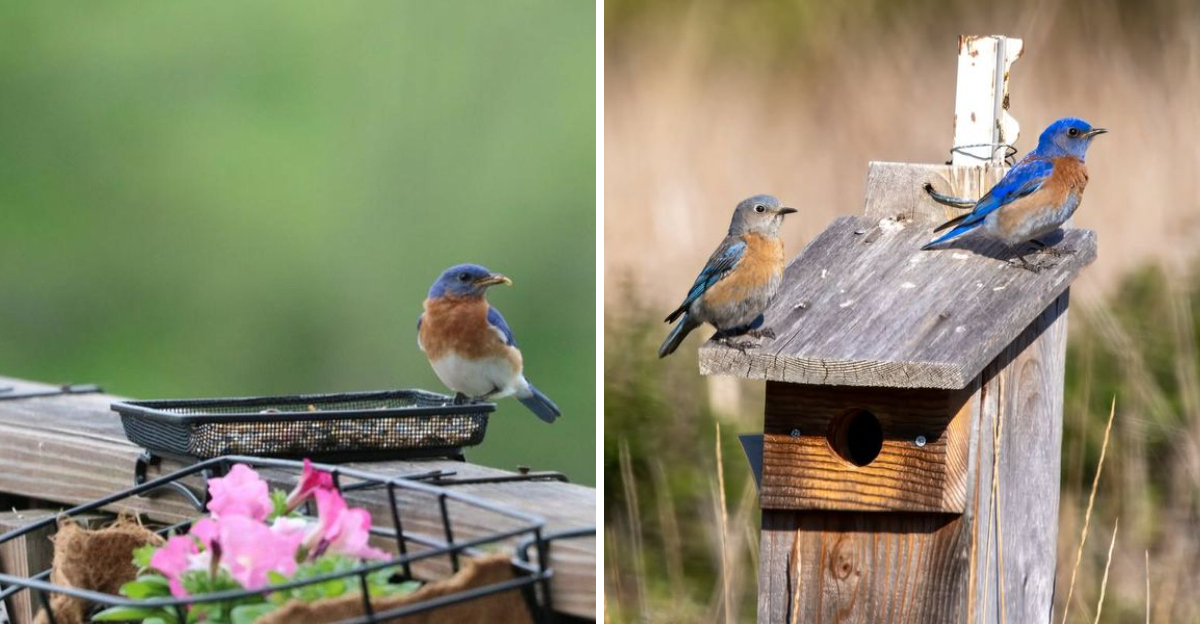
Bluebirds can completely change how a backyard feels once spring activity starts picking up in Georgia. One day the yard seems quiet, then suddenly bright blue flashes start appearing near fences, feeders, and garden beds early in the morning.
Some homeowners see them constantly every year, while others barely notice them at all.
The difference often comes down to a few simple things placed around the yard at the right time. Bluebirds look for open areas where food is easy to spot, safe places to rest, and reliable water once temperatures begin warming up.
Even small backyard changes can make a noticeable difference surprisingly fast during spring.
Many people focus only on bird feeders while overlooking the features that actually make bluebirds stay longer. Nesting spots, nearby plants, and open feeding areas usually matter much more once nesting season begins.
A yard that attracts bluebirds regularly often starts feeling far more lively through the rest of spring and summer.
1. Mealworms Placed Near Open Feeding Areas
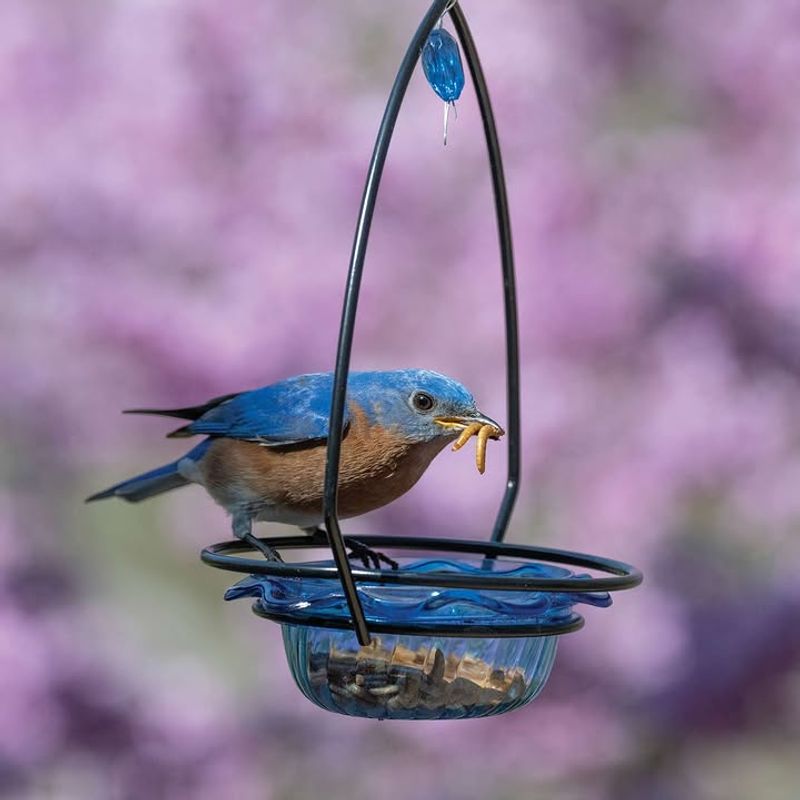
Live mealworms are hands-down the fastest way to pull bluebirds into your yard. Bluebirds are insect eaters at heart, and mealworms match their natural diet almost perfectly.
Place them in a shallow dish with smooth sides so the worms stay put. Ceramic or glass dishes work well because bluebirds can spot the movement inside.
Open feeding areas matter just as much as the food itself. Bluebirds prefer to land, look around, and feel safe before eating.
Avoid placing feeders directly under dense tree cover.
Start with a small amount each morning, around a tablespoon or two. Leftover mealworms can attract unwanted visitors, so fresh daily portions work best.
Dried mealworms are a convenient backup when live ones are not available. However, many bluebirds show a clear preference for live worms, especially during early spring when they need high-protein food for nesting energy.
Consistency matters more than quantity. Bluebirds remember reliable food sources and return to them regularly.
Once they find your feeder, they will check it every single day. Keep the dish clean and refill it at the same time each morning for the best results.
2. Shallow Water Sources With Easy Perching Spots
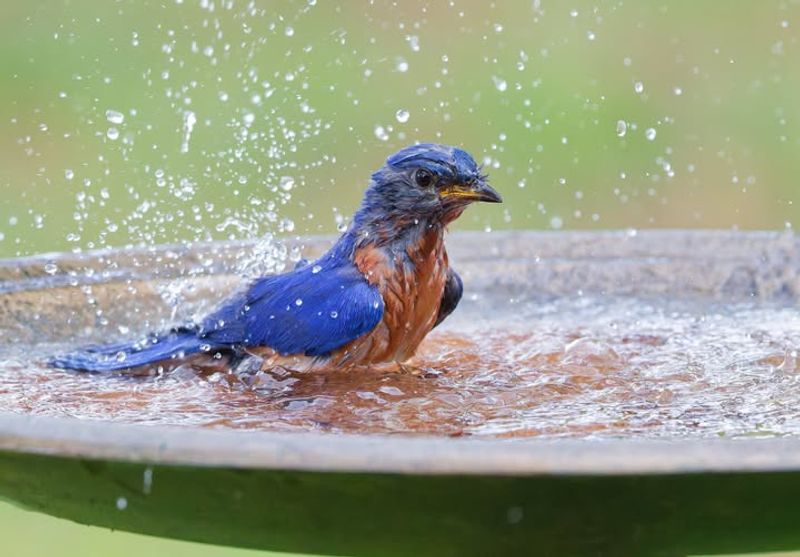
Water is just as important as food, and bluebirds are surprisingly picky about how they access it. Shallow dishes with a maximum depth of about one to two inches work best.
Rough-textured edges give birds a secure grip when they land. Smooth ceramic or slippery plastic rims can make birds hesitant to approach.
Placement matters a lot. Set the birdbath in an open area with a clear sightline in all directions.
Bluebirds feel vulnerable near water and need to watch for threats while bathing.
A nearby perch, like a low branch or a simple wooden stake, gives them a spot to land and survey before hopping in. Without a perch close by, many birds simply move on.
Moving water is a major bonus. A small dripper or solar-powered fountain creates ripples and sound that attract birds from a surprising distance.
Your Georgia Garden Changes Every Week. Your Plan Should Too.
Gardening in Georgia changes quickly throughout the season. Every Friday you’ll receive a simple weekly plan showing exactly what to plant, prune, fertilize, harvest, and protect so you never miss the right timing.
Even a slow drip from a hose works well in a pinch.
Keep the water fresh by changing it every two to three days. Algae buildup can make water unappealing and potentially harmful.
A quick rinse with a brush is all it takes to keep things clean and welcoming throughout the spring season.
3. Native Berry Shrubs That Hold Fruit Into Spring
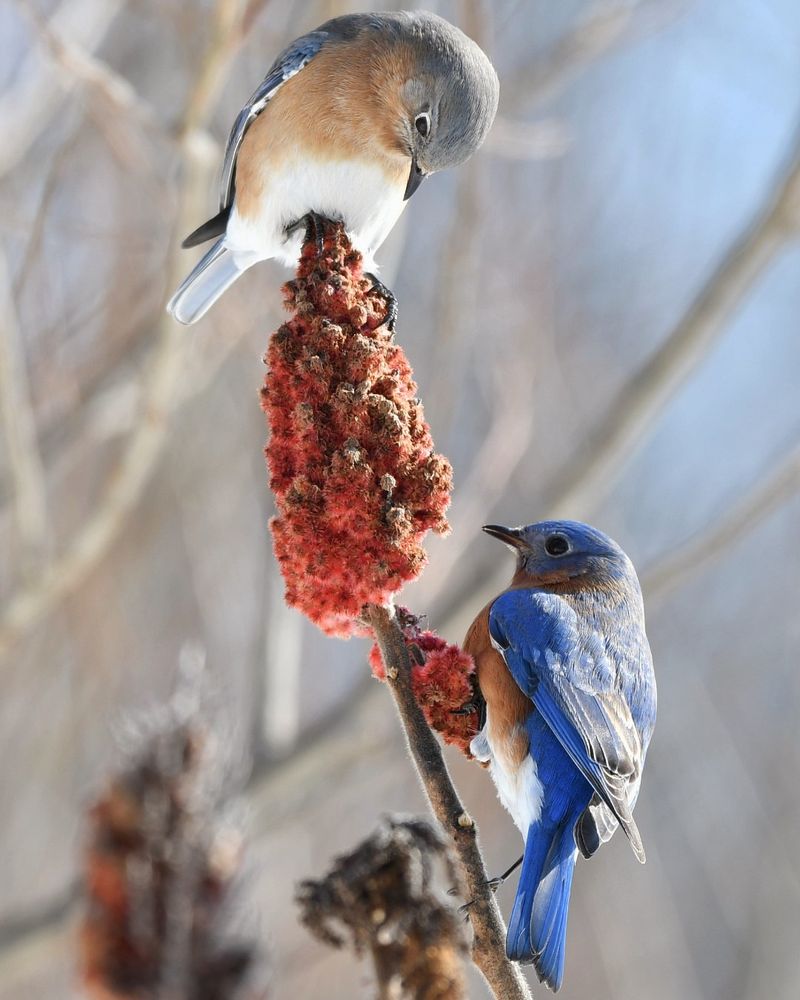
Not every berry shrub holds its fruit long enough to matter. Bluebirds need food sources that carry through late winter and into early spring, before insects become widely available again.
American beautyberry is a standout choice for yards across the Southeast. Its vivid purple berries often persist on the branches well into March, giving bluebirds a reliable snack during the transition period.
Winterberry holly is another solid option. It keeps its bright red berries through the colder months, and bluebirds will strip the branches clean once they discover the plant.
It grows well in moist spots that other shrubs might struggle in.
Eastern red cedar is technically a tree but functions like a berry-producing shrub in many yards. Its small bluish cones are a favorite among bluebirds and other thrushes throughout the spring.
Plant native shrubs in clusters rather than single specimens. A grouping of three or more plants creates a more visible and abundant food source that birds can find from the air.
Check with a local native plant nursery before buying. Not every variety labeled as native performs the same way in every yard.
Soil type, drainage, and sun exposure all affect how well these plants fruit each year.
4. Nest Boxes Positioned Away From Heavy Shade
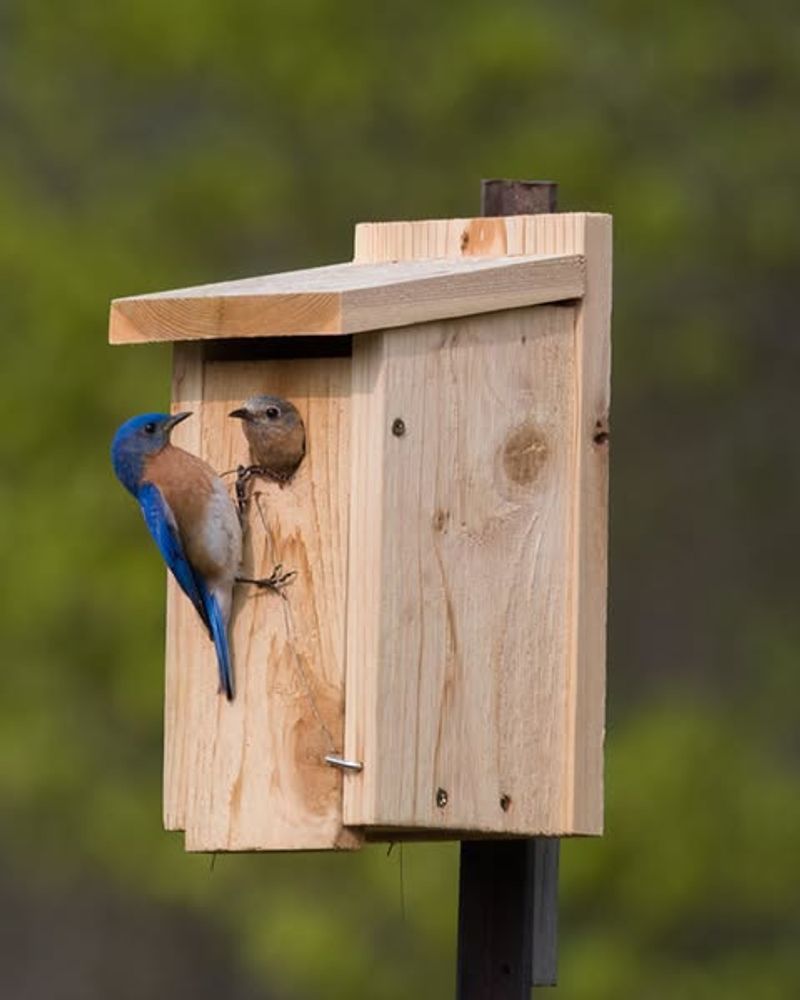
Bluebirds are cavity nesters, meaning they raise their young inside enclosed spaces rather than open cup nests. Nest boxes are one of the best ways to support them during breeding season.
Shade is a real problem for bluebird boxes. Boxes placed under heavy tree canopy tend to attract wrens and other competitors rather than bluebirds.
A spot with morning sun and afternoon shade is close to ideal.
Mount boxes on smooth metal poles rather than wooden posts or trees. Metal poles are much harder for predators like raccoons and snakes to climb.
A pole baffle adds an extra layer of protection.
Face the entrance hole away from prevailing winds, which typically come from the southwest in spring. Bluebirds prefer a box entrance that faces east or southeast when possible.
Spacing between boxes matters. Bluebirds are territorial and will not nest too close to another pair of their own kind.
Place boxes at least 100 yards apart in open areas.
Check boxes every week or two during nesting season. Remove old nesting material after each brood to encourage a second or even third clutch.
Bluebirds can raise multiple broods per season when conditions are right and boxes are well-maintained throughout the spring and summer months.
5. Suet Crumbles Offered During Cooler Spring Mornings
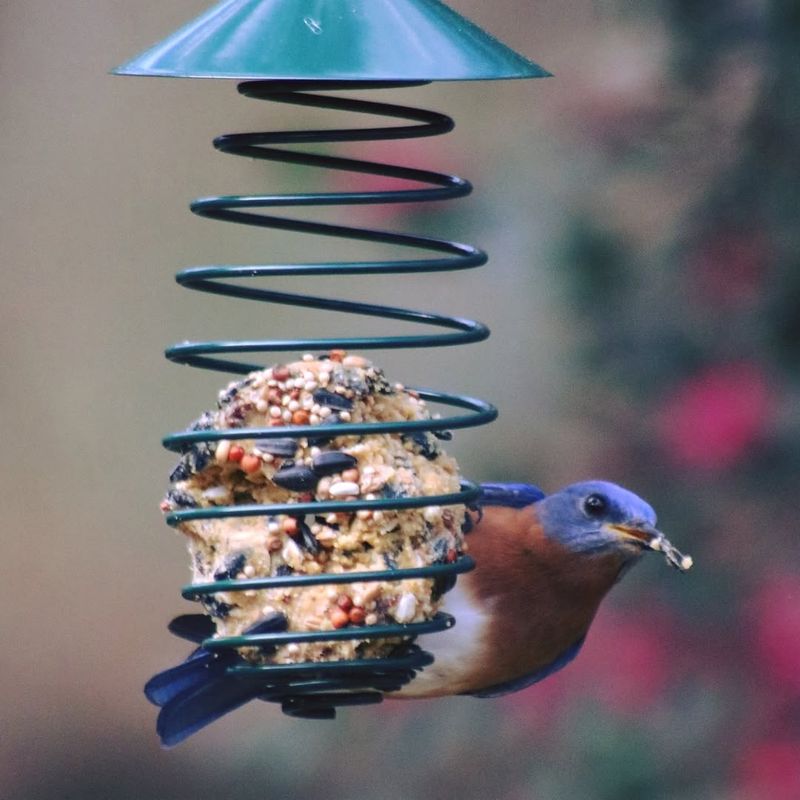
Suet gets a lot of attention as a winter food, but it can be just as useful on cool spring mornings when insects are still scarce. Bluebirds need high-fat, high-energy food during the early weeks of nesting season.
Standard suet cakes are not the best format for bluebirds. They tend to favor crumbles or small chunks placed in a flat dish rather than hanging cage feeders designed for woodpeckers.
Suet blended with mealworms or berries tends to get more attention from bluebirds than plain beef suet. Look for products specifically labeled for insect-eating birds at your local feed or garden store.
Timing matters when offering suet in spring. Once daytime temperatures climb consistently above 70 degrees Fahrenheit, plain suet can soften and turn rancid quickly.
Switch to no-melt suet formulas as the season warms up.
Place the dish near an existing perch or feeding area where bluebirds already visit. Introducing a new food in a familiar spot increases the chances they will actually try it.
Offer suet crumbles in small amounts at first. Bluebirds are cautious around new foods, and a dish that sits untouched for days can spoil before they build the confidence to try it.
Start small and refresh daily for the best response.
6. Crushed Eggshells During Nesting Season
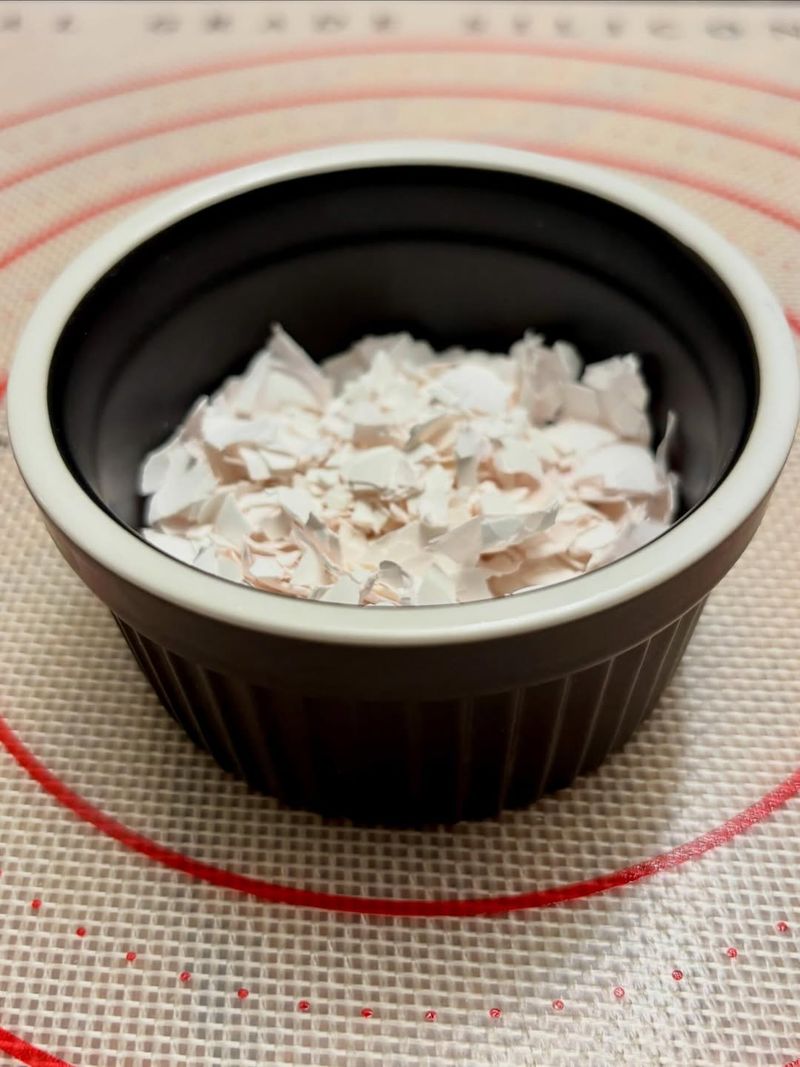
Female bluebirds burn through calcium fast during egg-laying season. Crushed eggshells are one of the simplest and most affordable ways to help replenish what they lose.
Save shells from your kitchen throughout the winter and early spring. Rinse them thoroughly and let them air dry completely before crushing.
Damp shells can grow mold, which you want to avoid entirely.
Bake the dried shells at 250 degrees Fahrenheit for about ten minutes before crushing. This step removes any residual bacteria and makes the shells safer for birds to consume without risk.
Crush the shells into small, irregular pieces rather than fine powder. Pieces about the size of a pea or smaller seem to get the most attention from bluebirds and other nesting species in the yard.
Place the crushed shells in a shallow dish near your regular feeding area. Female bluebirds will visit frequently during the egg-laying period, which typically spans several days per clutch.
Other backyard birds also benefit from this calcium source. Robins, Carolina wrens, and mockingbirds have all been observed taking crushed eggshells during spring nesting season.
Keeping a small dish stocked costs almost nothing and supports multiple species at once. Refresh the dish every few days to keep the contents dry and clean.
7. Wooden Perches Installed Near Feeding Spaces
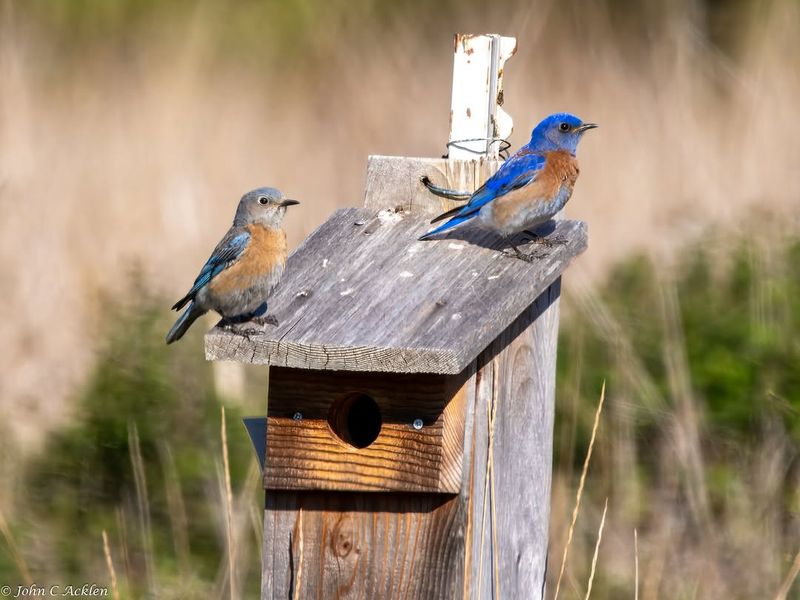
Bluebirds are perch hunters. Before they swoop down to grab a mealworm or berry, they almost always pause on an elevated spot to scan the area first.
Without a nearby perch, many bluebirds will skip a feeder entirely. Adding a simple wooden dowel or natural branch stake near your feeding station can make a noticeable difference in visits.
Height matters more than most people expect. Perches set between four and six feet off the ground seem to be the sweet spot for bluebirds in typical backyard settings.
Too low and they feel exposed. Too high and the angle to the feeder becomes awkward.
Natural wood perches blend into the yard better than metal or plastic. A short section of a thin branch, maybe half an inch in diameter, mimics what bluebirds use in the wild along field edges and fence lines.
Place the perch within ten to fifteen feet of the feeder. Bluebirds prefer short, direct flights between perching and feeding spots.
Longer distances make them more cautious about committing to a landing.
Install multiple perches at varied heights and angles around your feeding area. Bluebirds are territorial and will sometimes chase each other off a single perch.
Having two or three options nearby reduces competition and keeps more birds feeding comfortably at the same time.
8. Soft Fruit Pieces Added To Platform Feeders
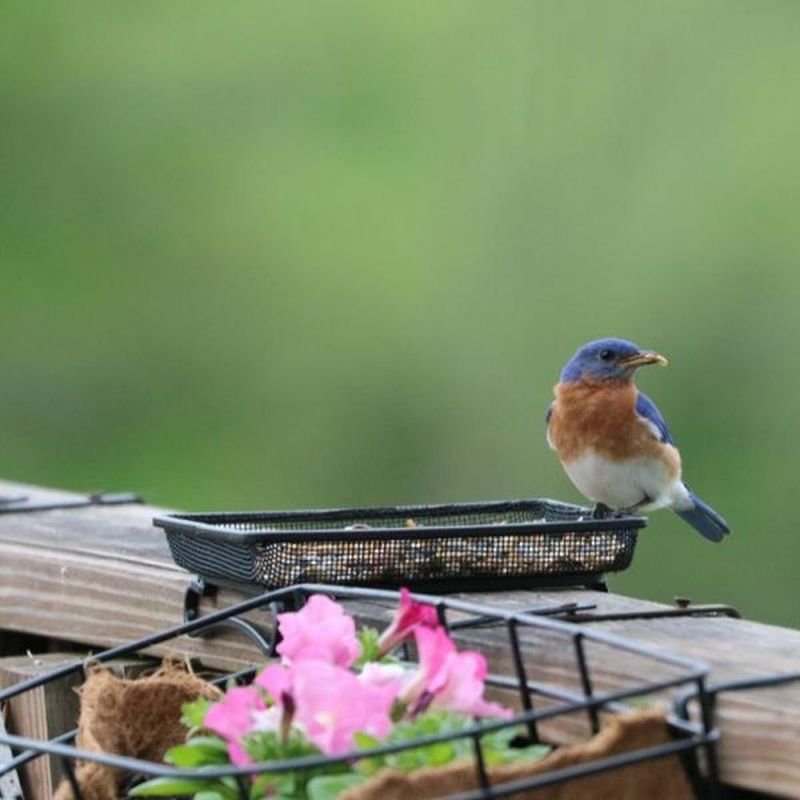
Bluebirds are not typically thought of as fruit eaters, but soft fruit can be a useful supplemental food during early spring when insects are still inconsistent.
Chopped blueberries, grapes, and small pieces of ripe banana have all drawn bluebird attention at platform feeders.
Cut fruit into pieces no larger than a pea. Bluebirds have small beaks and prefer food they can swallow in one or two quick bites without wrestling with it on the feeder surface.
Platform feeders work better than tube or cage-style feeders for this purpose. Bluebirds like an open landing surface with clear sightlines.
A flat tray feeder placed on a post in an open area matches their natural feeding behavior closely.
Fresh fruit spoils quickly, especially in warm spring temperatures. Check the feeder twice daily and remove any uneaten fruit before it ferments or attracts insects you do not want around the yard.
Avoid offering citrus fruits or overly tart varieties. Bluebirds consistently show a preference for sweeter, softer options.
Stick with what they naturally encounter in the wild, like small native berries.
Introducing fruit alongside mealworms on the same feeder can help bluebirds discover it faster. Once they are already visiting for worms, they often sample whatever else is on the tray with minimal hesitation.