These California Native Grasses Outcompete Weeds Without Any Watering
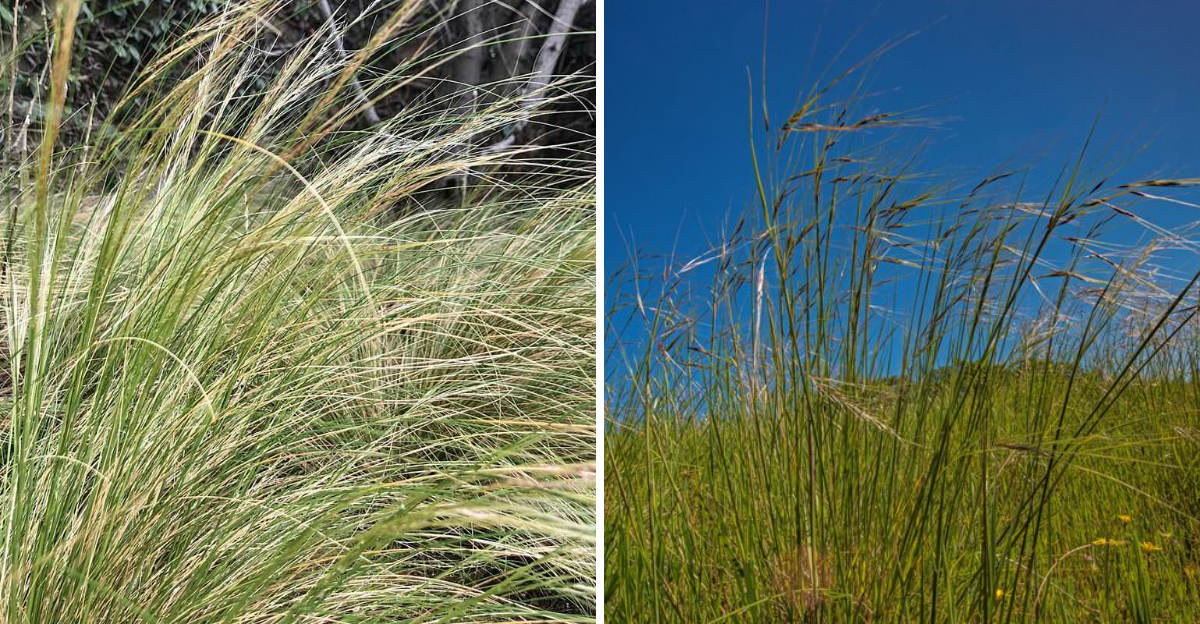
Weeds are sneaky. You clear them out on a Saturday, feel really good about yourself, and then two weeks later they are back like nothing happened.
If that cycle sounds exhausting, that is because it is. Here is something a lot of gardeners are figuring out though: sometimes the best way to fight weeds is to simply stop leaving them room to show up.
Native grasses are genuinely brilliant at this. They fill in densely, handle California’s dry summers like total pros, and create a ground-level layer that makes it seriously difficult for weeds to get comfortable.
And let’s be honest, they look incredible doing it too. That wild, flowing, effortlessly
California aesthetic? Native grasses basically invented it. Fighting weeds season after season is so last year.
1. Purple Needlegrass Builds Dense Native Coverage
Bare ground in a yard can feel like a standing invitation for weeds to move in and settle.
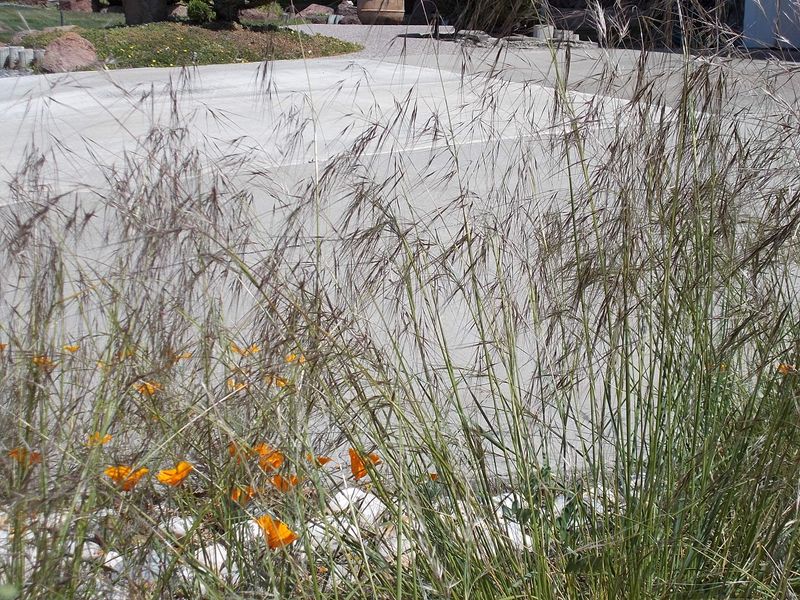
Purple needlegrass, California’s official state grass, is one of the most reliable native options for gradually closing off that open space and making it harder for weeds to establish over time.
This grass forms dense, upright clumps that spread slowly but steadily as it matures. Once established, its thick root system reaches deep into the soil, which helps it stay green longer into the dry season than many other grasses.
The roots also compete with nearby weed seedlings for moisture and nutrients, giving the native grass a real advantage in dry California conditions.
In a home landscape, purple needlegrass works well in front yards, along borders, and on gentle slopes where low-water coverage is the goal.
It produces beautiful feathery seed heads in spring that catch the light and move with the breeze, giving the planting a soft, natural look that feels right at home in a native garden.
Gardeners should expect it to take one to two full growing seasons before it starts filling in noticeably. During that establishment window, some weeding and occasional irrigation may still be needed depending on the site.
Once it is settled in, though, its dense growth habit and deep roots make it one of the stronger weed-competing grasses available to home gardeners working with dry, sunny planting areas.
2. Foothill Needlegrass Handles Dry California Slopes
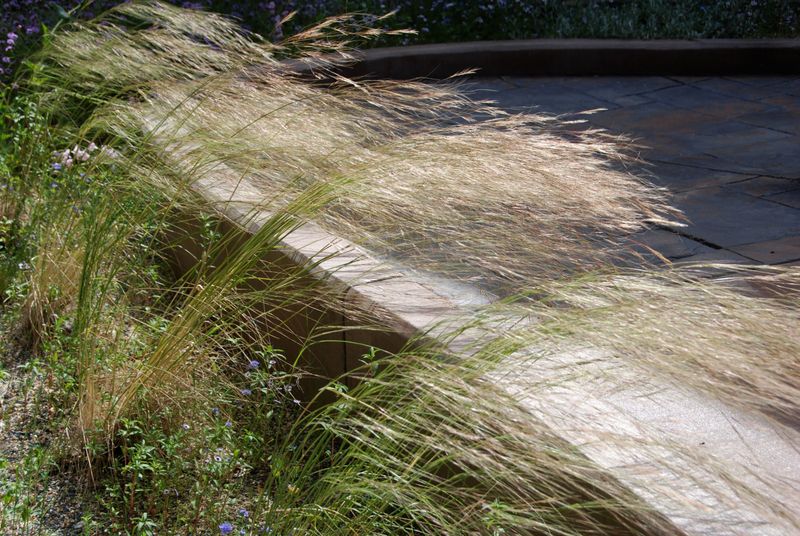
Sloped ground is one of the hardest spots to keep weed-free in a yard. Soil shifts, water runs off quickly, and weeds seem to find every gap before desirable plants have a chance to fill in.
Foothill needlegrass is a California native that handles these challenging conditions with a quiet kind of toughness that earns it a lot of respect among native plant gardeners.
Compared to purple needlegrass, foothill needlegrass is finer in texture and a bit more relaxed in its growth habit. It forms graceful, arching clumps that look soft and natural on slopes, in open borders, or scattered through a low-water meadow planting.
The fine leaf blades and delicate seed heads give it a light, airy quality that pairs well with native wildflowers and shrubs.
Your California Garden Changes Every Week. Your Plan Should Too.
Gardening in California changes quickly throughout the season. Every Friday you’ll receive a simple weekly plan showing exactly what to plant, prune, fertilize, harvest, and protect so you never miss the right timing.
On dry slopes, its value goes beyond looks. The clumps spread gradually over time, and as they fill in, they reduce the amount of bare soil available for weed seeds to germinate.
A dense planting of foothill needlegrass, once established, creates a layer of living ground cover that competes reasonably well with common weeds like wild mustard and annual bromes.
Establishment still requires some attention. Newly planted clumps may need supplemental water during their first dry season, especially on exposed slopes where soil dries out fast.
Patience is part of the process, but once foothill needlegrass is rooted in and growing confidently, it tends to hold its ground well across a range of dry California conditions.
3. Nodding Needlegrass Fills In With Soft Natural Texture
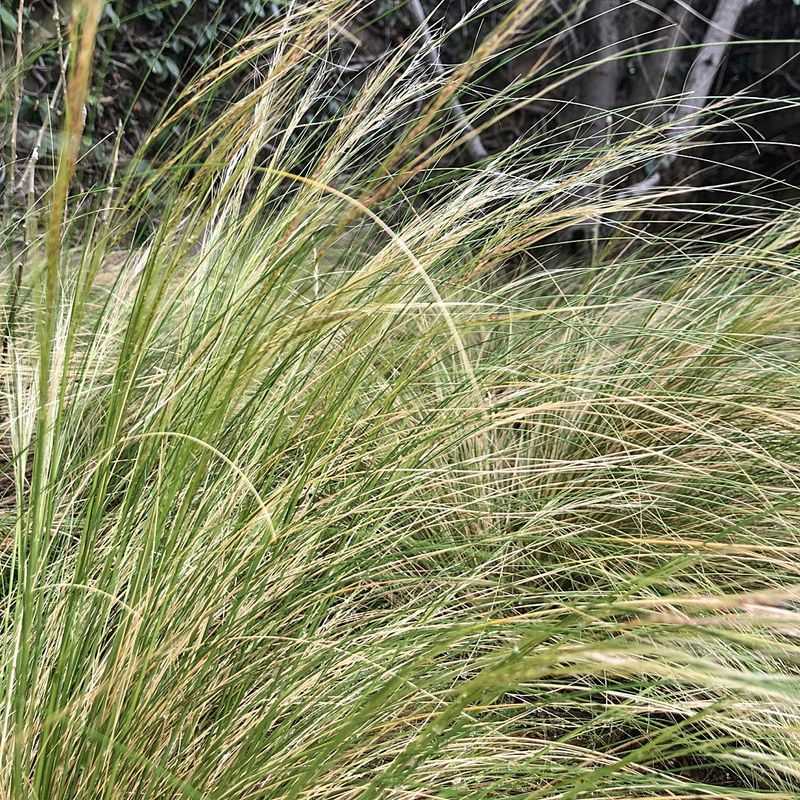
Some grasses announce themselves boldly, but nodding needlegrass takes a softer approach. Its seed heads droop gently at the tips, giving the whole plant a relaxed, almost whimsical quality that looks especially beautiful when a breeze moves through a planting.
For gardeners who want texture and movement along with practical weed competition, this grass delivers on both counts.
Nodding needlegrass grows in loose, arching clumps and tends to do well in the kind of open, sunny spots that are common in yards and native garden beds.
It is well-suited to the dry conditions of central and southern California, where summer heat and low rainfall make it difficult to keep non-native grasses looking their best without extra water.
As a weed competitor, nodding needlegrass earns its place by gradually occupying space and shading the soil around its base.
A maturing clump creates a zone where weed seeds have a harder time germinating because light and moisture are less available at ground level.
Over time, a planting of nodding needlegrass can noticeably reduce the amount of weeding needed in a bed or border.
One thing gardeners appreciate about this grass is that it self-seeds modestly in the right conditions, which can help a planting fill in more naturally over several seasons. That said, site preparation before planting matters a great deal.
Removing existing weeds thoroughly before putting nodding needlegrass in the ground gives it the best possible start in a California garden.
4. Blue Grama Holds Its Own In Hot Dry Spots
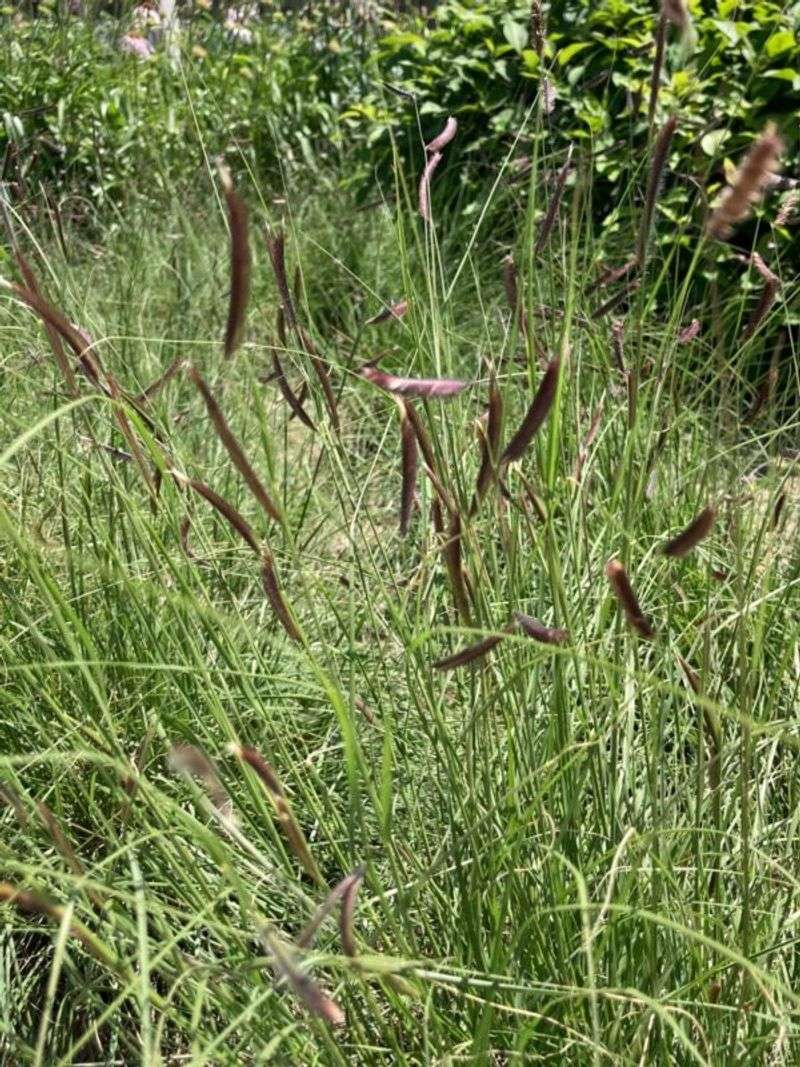
Open, sunny spots with poor soil and intense summer heat can feel nearly impossible to plant. Most grasses struggle in these conditions, but blue grama seems almost unbothered by them.
Native to dry grasslands across western North America, this compact, fine-textured grass brings a quiet resilience to California gardens where other plants give up.
Blue grama grows in low, dense tufts and is best known for its unusual seed heads, which curve into a distinctive shape that looks a bit like a tiny comb or eyelash held sideways on the stem.
These seed heads appear in summer and stay on the plant into fall, adding visual interest during the months when many other plants look worn out from the heat.
In a California home landscape, blue grama works well in rock gardens, dry borders, and open areas where low-growing, drought-tolerant coverage is the goal.
Its dense, low growth habit means it occupies ground close to the soil surface, which can reduce the open space where weed seeds would otherwise germinate and take hold.
It is worth noting that blue grama is not a California native in the strictest sense, as it originates from the Great Plains and interior West, but it performs well in dry conditions and is widely used in low-water landscapes.
Gardeners should still plan for an establishment period with some supplemental irrigation before expecting this grass to hold its own against weed pressure on its own.
5. Why Native Grasses Help Reduce Weed Pressure Over Time
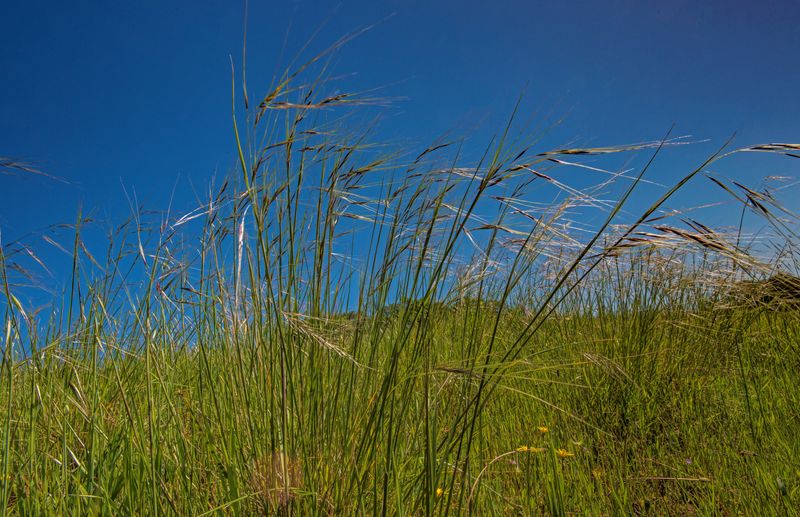
Weeds are opportunists. They move into bare soil quickly, especially in California where dry summers leave the ground exposed and vulnerable for long stretches.
Native grasses help change that equation, not overnight, but gradually and meaningfully as they settle in and expand their coverage across a planting area.
The key is how these grasses grow. Most California native grasses form tight clumps that expand slowly over time.
As those clumps mature and spread, they shade the soil around their bases, which reduces light availability for weed seeds trying to germinate nearby.
Dense root systems also compete with weeds for water and nutrients in the upper layers of soil, where many annual weeds do most of their feeding.
A well-planted native grass area does not eliminate weeds completely, but it can meaningfully reduce how many get started and how fast they spread.
Gardeners often notice that after two or three growing seasons, the amount of hand-weeding needed in a native grass planting drops noticeably compared to the early establishment years.
Mulching between clumps during establishment also helps suppress weeds while the grasses are still young and not yet filling in. Over time, as the grasses grow denser, the mulch layer becomes less critical.
The combination of dense native grass coverage, deep roots, and reduced bare soil is what gives these plants their long-term weed-competing value in a California garden. It takes patience, but the results tend to be worth the wait for most gardeners.
6. Why Establishment Still Matters Before A Grass Can Compete Well
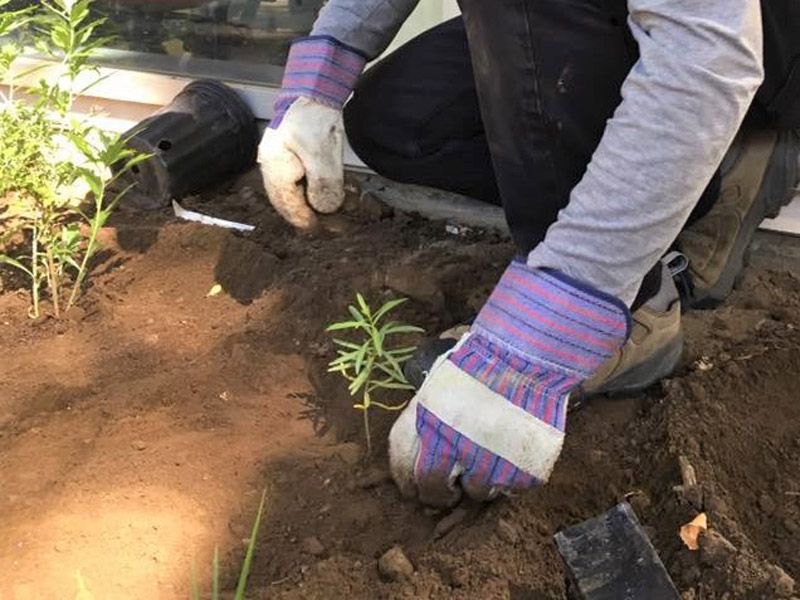
One of the most common misunderstandings about native grasses is that they are tough from the moment they go into the ground.
In reality, even the hardiest California native grass needs time and some support before it can compete effectively with established weeds.
Skipping the establishment phase is one of the main reasons native grass plantings struggle in their first season.
Most California native grasses do best when planted in fall, which gives them the cool, wet months to develop their root systems before summer heat arrives.
During that first year, supplemental watering is often necessary, even for grasses that will eventually need little or no summer water once they are fully established.
The roots need time to reach deep enough into the soil to access stored moisture on their own.
Site preparation also plays a big role in how well a grass competes once it is in the ground.
Removing existing weeds thoroughly before planting, whether by hand, smothering, or repeated cultivation, gives young native grasses a much better chance to establish without being overwhelmed by competition right away.
Starting with clean soil is one of the most practical things a gardener can do.
Once established, these grasses become far more self-sufficient and begin to deliver on their weed-competing potential.
The first season can feel slow and a little discouraging, but gardeners who stick with the process through that early period tend to see a real shift in how the planting looks and performs by the second and third year.