Mistakes Texas Gardeners Make With Crape Myrtles Every Single Summer
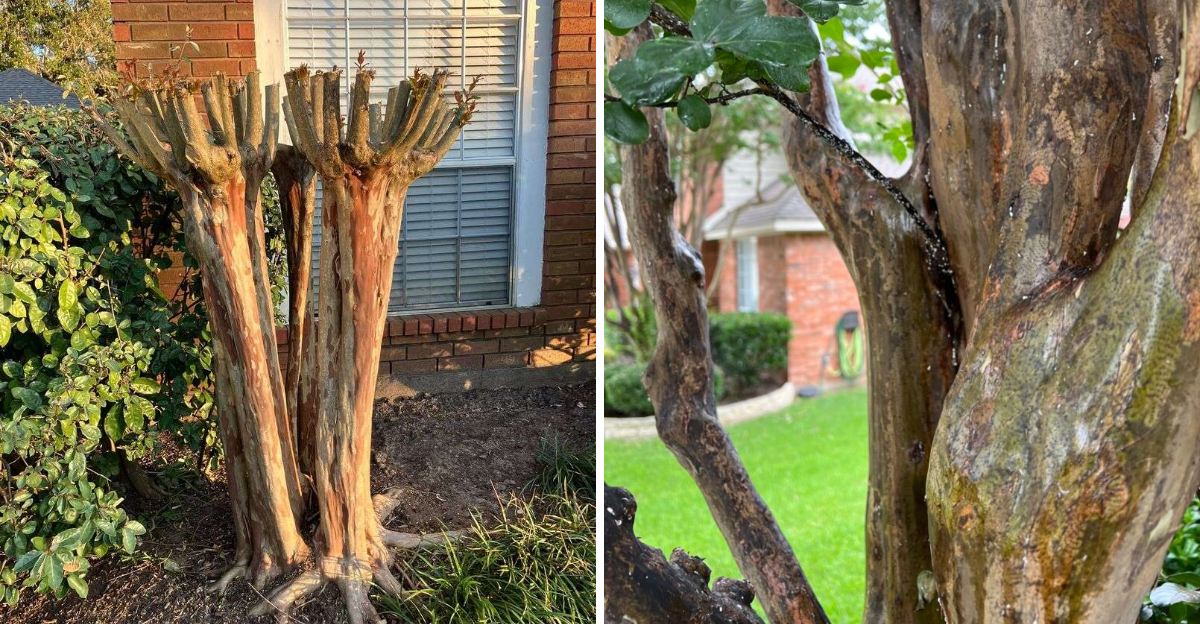
Crape myrtles are basically the celebrities of the Texas landscape, and honestly, they’ve earned it. Those bold bursts of color lighting up front yards all summer long are hard to compete with.
But here’s the thing: even the toughest, most heat-tolerant tree has its limits, and gardeners tend to make the same crape myrtle mistakes on repeat once summer rolls around.
More pruning! More fertilizer! More of everything!
Spoiler alert: that approach usually backfires. These trees are resilient, but they genuinely respond better to correct timing, smart watering, and catching small problems before the heat turns them into big ones.
The good news is that a few straightforward adjustments made right now can completely change how your crape myrtle looks, blooms, and handles the long stretch of a Texas summer.
1. Topping The Tree
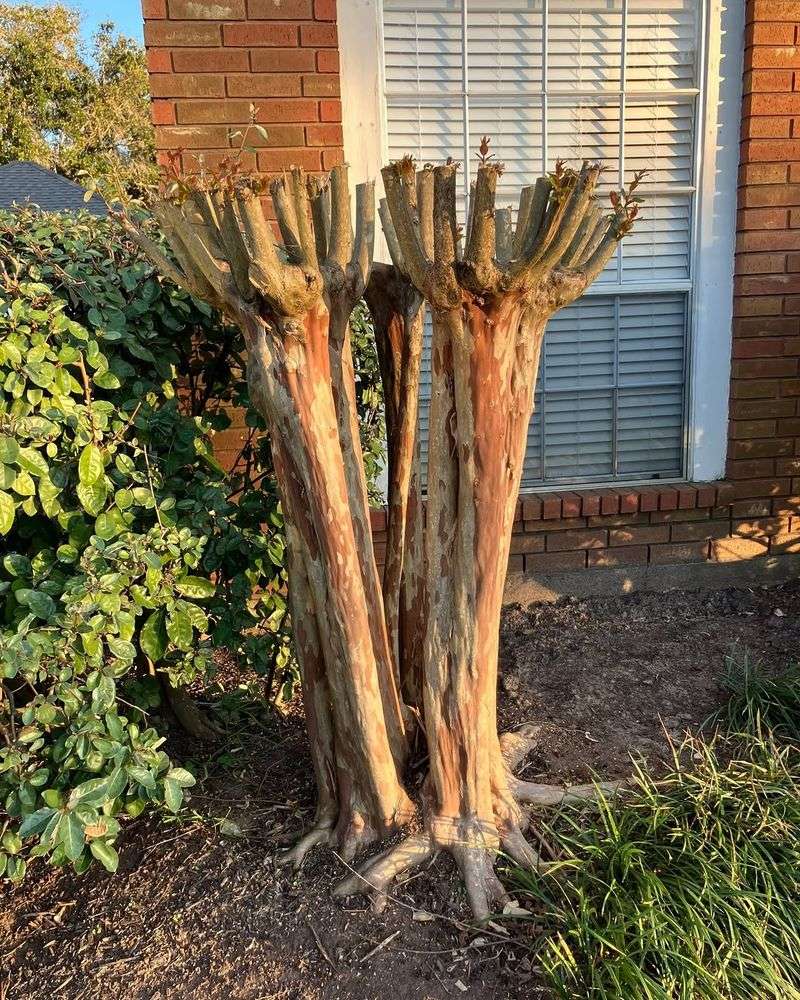
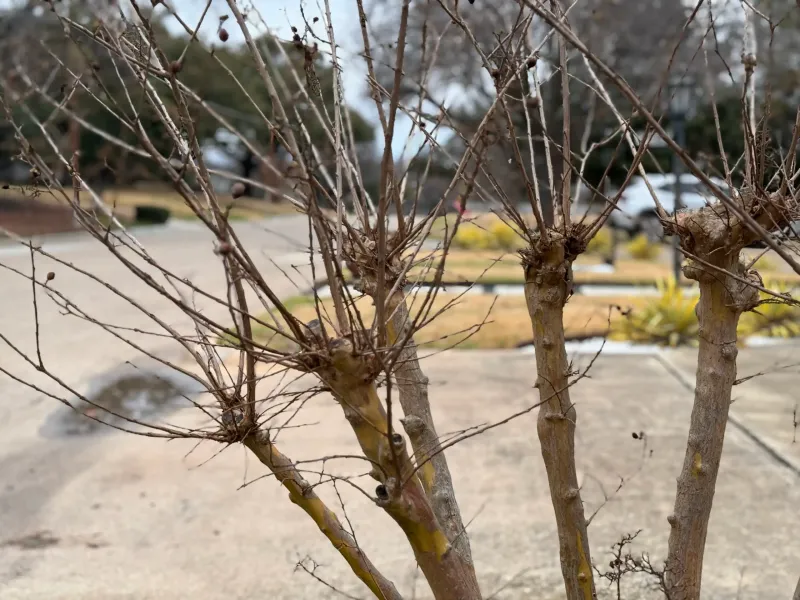
Few sights in a Texas neighborhood are as frustrating to a knowledgeable gardener as a row of crape myrtles hacked down to thick, stubby trunks every year.
This practice, often called crape murder, involves cutting the main branches back to the same point repeatedly, leaving large wounds that the tree struggles to seal properly.
Over time, those cuts produce swollen, knobby stubs that weaken the overall structure and make the tree look unnatural.
Topping does not improve blooming. In fact, it forces the tree to push out a flush of weak, fast-growing shoots that are more prone to snapping in summer storms.
Those thin shoots also tend to droop heavily under the weight of flower clusters, which is the opposite of what most homeowners want.
Crape myrtles bloom on new growth, so proper light shaping in late winter or early spring is all most trees need to perform well. Removing crossing branches, damaged wood, and suckers at the base is usually enough to keep the canopy open and healthy.
Once Texas summers arrive, the tree should be left alone to bloom.
Topping at any time of year causes long-term structural damage that cannot easily be undone, and trees that get topped repeatedly often develop a cluttered, weeping canopy that never quite recovers its natural graceful form.
2. Doing Major Summer Pruning
Watching a crape myrtle burst into full bloom in July garden is one of summer’s real rewards, which makes it surprising how often gardeners reach for their pruning tools right in the middle of the show.
Heavy pruning during summer removes the very flower clusters that have been developing for weeks, and it forces the tree to redirect energy toward wound response and new growth rather than finishing its bloom cycle.
Major cuts made during summer heat also leave the tree more vulnerable. Open pruning wounds in hot, humid Texas weather can invite fungal pathogens and opportunistic insects.
Bark tissue that is actively growing during summer does not seal as efficiently as wounds made during the dormant season, which means large cuts linger open longer and create more risk.
Light cleanup is a different matter. Removing a few crossing twigs or trimming a branch that is rubbing against a structure is fine during summer.
Your Texas Garden Changes Every Week. Your Plan Should Too.
Gardening in Texas changes quickly throughout the season. Every Friday you’ll receive a simple weekly plan showing exactly what to plant, prune, fertilize, harvest, and protect so you never miss the right timing.
The problem comes when gardeners remove large limbs or make significant reductions to the canopy while the tree is in full growth. Late winter, just before new buds begin to swell, is the recommended window for any meaningful structural pruning on crape myrtles.
Waiting until that window protects the blooms gardeners look forward to all year and gives wounds the best conditions for sealing cleanly.
3. Ignoring Aphids And Sooty Mold
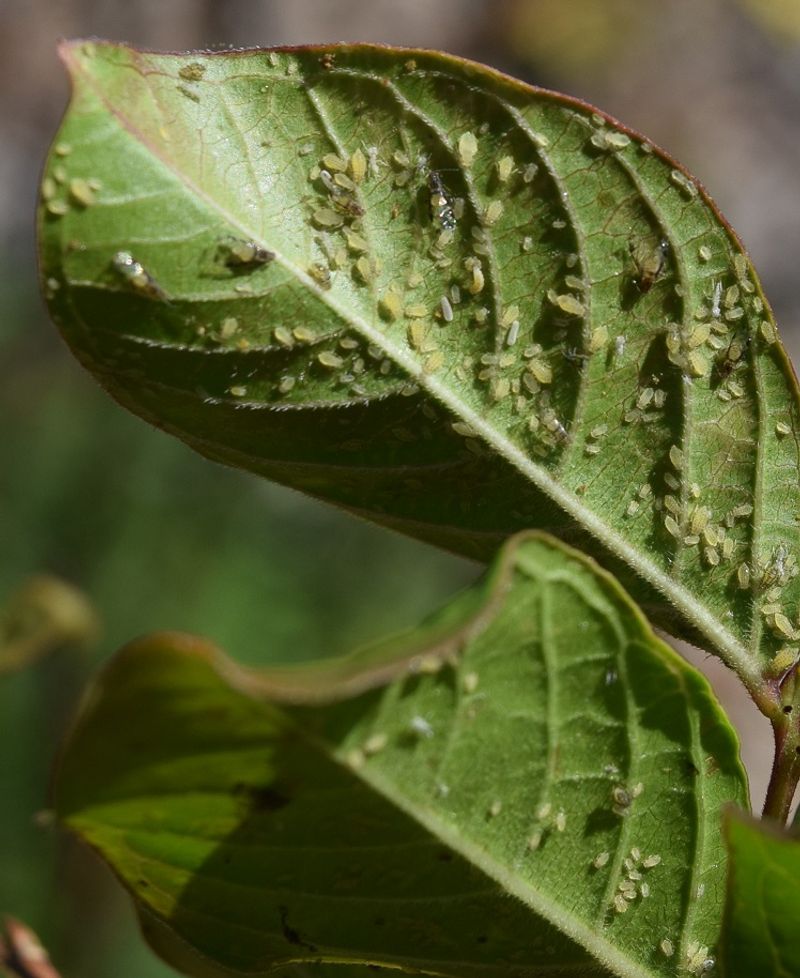
Sticky leaves on a crape myrtle are usually the first clue that something is feeding on the tree, and in Texas summers, that something is almost always aphids.
Crape myrtle aphids are a specific species that targets these trees almost exclusively, and they tend to build up fast once temperatures climb in late spring and early summer.
They congregate on new growth and the undersides of leaves, sucking sap and excreting a sugary waste called honeydew.
That honeydew drips onto lower leaves, branches, and anything sitting beneath the tree, including patio furniture and parked cars. A black fungus called sooty mold then colonizes the sticky surface, turning leaves and stems dark and grimy-looking.
Sooty mold does not infect the tree directly, but heavy coating blocks sunlight from reaching leaf surfaces, which reduces the tree’s ability to photosynthesize efficiently during the season it needs energy most.
Checking new growth and leaf undersides regularly through the summer gives gardeners a chance to catch aphid populations before they explode.
A strong spray of water from a garden hose knocks aphids off effectively and is often enough to keep populations manageable.
Beneficial insects like lady beetles and lacewings also feed on aphids naturally. When populations are heavy, a targeted insecticidal soap or horticultural oil application can help reduce numbers without causing harm to pollinators visiting nearby blooms.
4. Missing Crape Myrtle Bark Scale
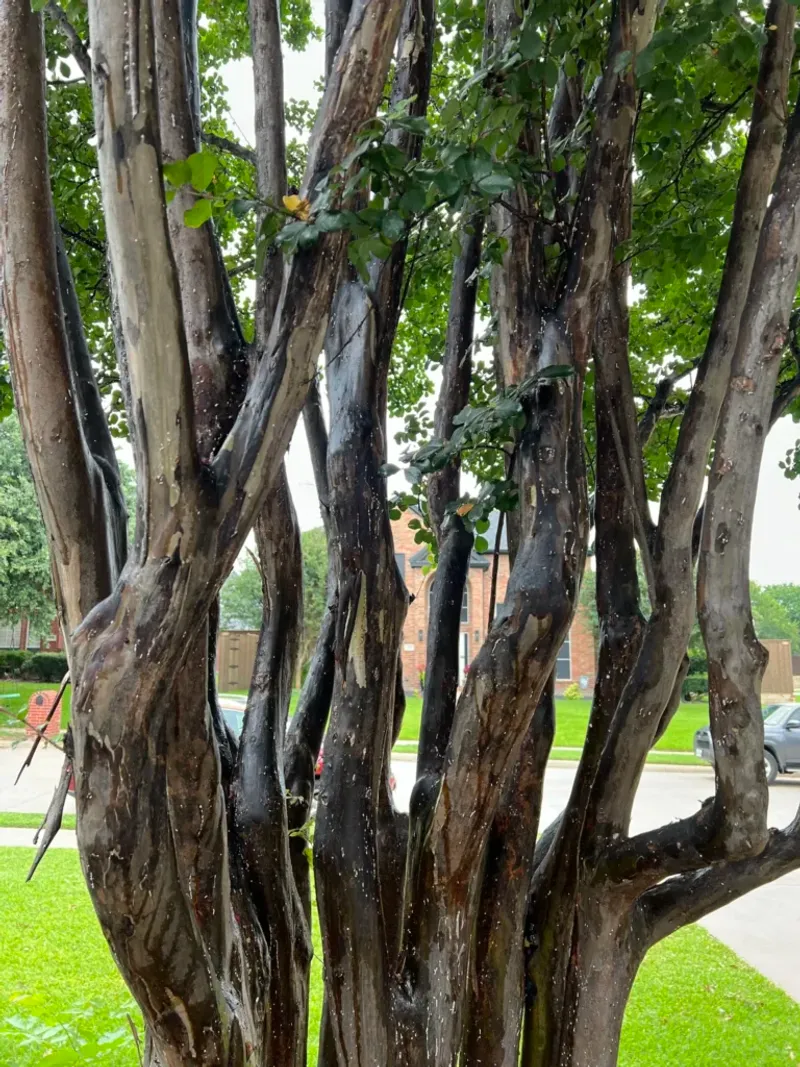
Bark scale on crape myrtles is a relatively newer pest in Texas, but it has spread widely across the state and catches many homeowners off guard.
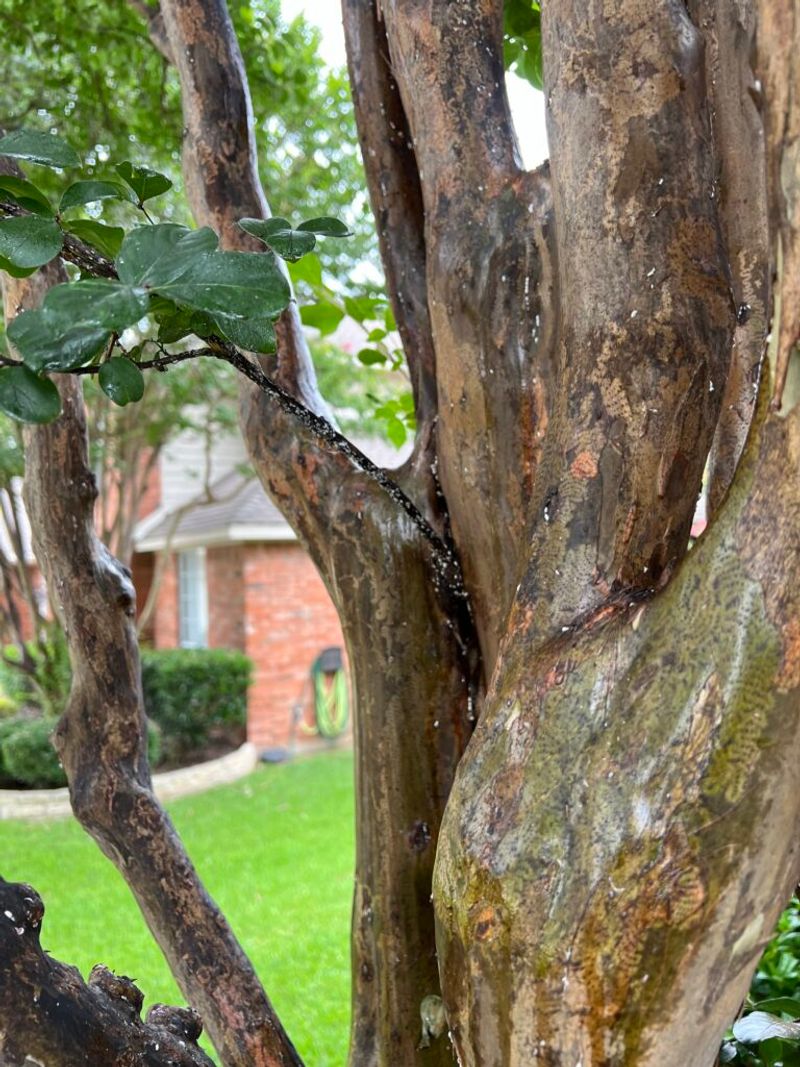
Unlike aphids that cluster on leaves, crape myrtle bark scale attaches directly to the trunk, main branches, and even smaller stems, where it feeds on the tree’s vascular tissue beneath the bark.
Infested areas develop a crusty, white or gray waxy coating that can look almost like a fungal growth at first glance.
One of the clearest signs of bark scale is heavy sooty mold on the trunk and lower branches, often much thicker and more persistent than what aphids alone produce.
The honeydew produced by bark scale drips down the trunk and soaks into bark crevices, creating dark staining that can make an otherwise healthy-looking tree appear diseased.
Heavily infested trees may show reduced bloom and slower growth over several seasons.
Systemic insecticide treatments applied as a soil drench in spring offer the most effective control for established infestations, allowing the product to move through the tree’s vascular system before peak scale activity in summer.
Scrubbing accessible areas of the trunk and branches with a soft brush and diluted insecticidal soap can also reduce scale populations on smaller trees.
Gardeners who catch bark scale early tend to have much better results than those who wait until the infestation becomes severe across the entire canopy.
5. Overwatering Established Trees
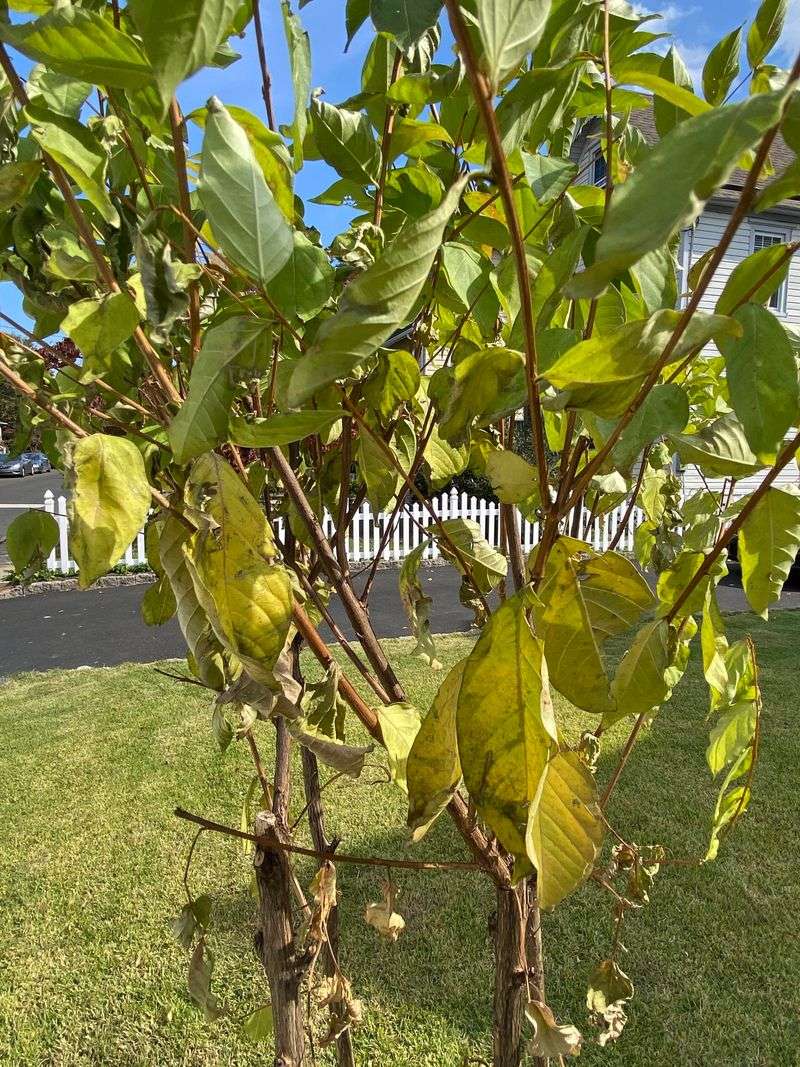
One of the more counterintuitive mistakes gardeners make is giving established crape myrtles too much water during summer.
It seems logical to water more when temperatures push past 100 degrees, but crape myrtles that have been in the ground for several years develop deep, extensive root systems that are quite capable of accessing soil moisture on their own.
Constant irrigation keeps the root zone saturated and reduces the oxygen availability that roots need to function properly.
Roots sitting in consistently wet soil are more susceptible to root rot caused by soilborne pathogens like Phytophthora, which thrives in warm, waterlogged conditions.
Trees experiencing root issues often show symptoms that look like drought stress, including wilting leaves and poor growth, which can lead gardeners to water even more and worsen the problem.
It becomes a frustrating cycle that can take a full season to diagnose correctly.
Newly planted crape myrtles do need regular watering through their first one to two summers while they establish.
After that, most Texas landscapes with typical clay or loamy soils hold enough moisture between rain events to support a healthy, established tree.
Checking soil moisture a few inches below the surface before turning on the hose is a simple habit that prevents overwatering.
Deep, infrequent watering encourages roots to grow downward, which actually makes the tree more resilient through Texas dry spells and heat waves.
6. Overfertilizing
There is a certain satisfaction in feeding your plants and watching them respond with lush, fast growth, but crape myrtles in Texas can be pushed too far in that direction with repeated summer fertilizer applications.
Excess nitrogen, which is the primary driver of leafy growth in most fertilizers, encourages the tree to put energy into producing more foliage rather than developing the flower buds that make crape myrtles worth growing in the first place.
Heavy fertilizing also produces soft, rapid new growth that is more attractive to aphids and more vulnerable to fungal diseases like powdery mildew, which can be a problem during periods of high humidity.
Lush, tender shoots are simply easier for pests to penetrate than the tougher growth produced by a tree growing at a natural pace.
Crape myrtles are not heavy feeders, and most established trees growing in average Texas soil do just fine with a single application of a balanced, slow-release fertilizer in early spring before growth begins.
That one feeding generally provides enough nutrition to support a full season of healthy growth and strong blooming.
Fertilizing again in midsummer or late summer pushes new vegetative growth late in the season, which may not harden off properly before cooler fall temperatures arrive.
Letting the tree settle into its natural growth rhythm through summer usually produces better blooms and a healthier overall structure than frequent feeding ever does.
7. Misreading Disease Or Pest Damage As Drought
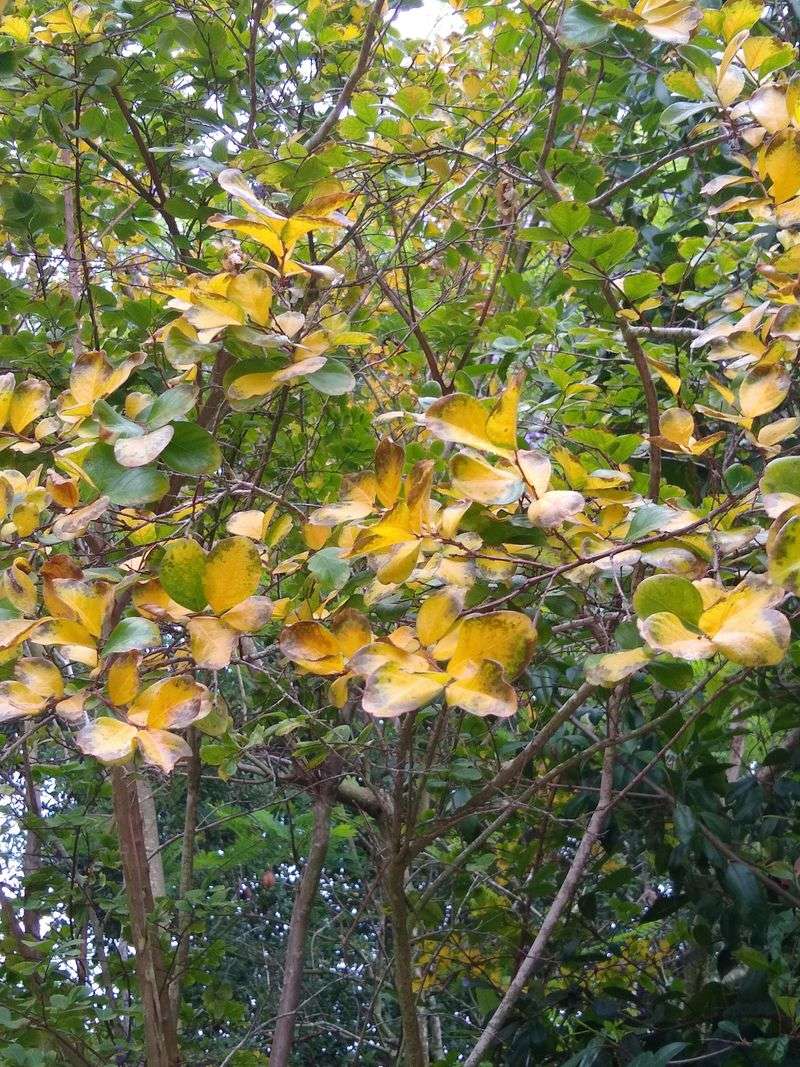
Wilting, yellowing leaves, and a generally tired appearance on a crape myrtle in July can look like classic drought stress, but in Texas, those same symptoms can point to several different problems that extra water will not fix.
Powdery mildew, a fungal disease that appears as a white or gray powdery coating on leaves and new shoots, is common during periods when warm days are followed by cool, humid nights.
It causes leaves to look distorted and unhealthy in ways that are easy to confuse with heat stress.
Aphid feeding and bark scale infestations both reduce the tree’s ability to move nutrients and water efficiently, which produces wilting and leaf discoloration that mirrors drought symptoms.
Gardeners who respond only by increasing irrigation end up with wet soil but a tree that still looks stressed because the actual problem has not been addressed.
Taking a close look at the leaves, stems, and trunk before reaching for the hose is a habit that pays off quickly in a summer garden.
Flip leaves over to look for insects or egg masses, check the bark surface for unusual coatings, and look at the overall pattern of damage.
Drought stress tends to show up evenly across the canopy, while pest and disease problems often start in one area and spread outward.
Correctly identifying the cause of stress leads to the right solution rather than a season of ineffective guesswork.
8. Treating Deadheading As Mandatory
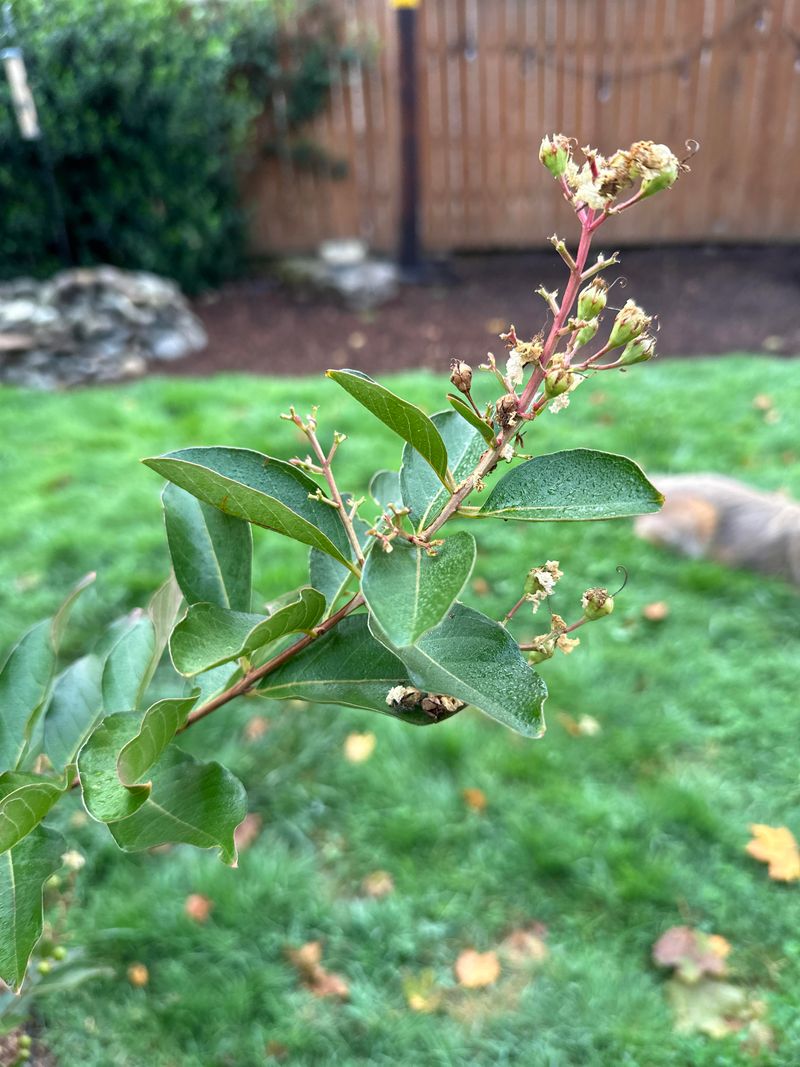
Spent crape myrtle flower clusters left on the tree through summer eventually form small, round seed pods that cling to the branches well into fall and winter.
Some gardeners find those pods untidy and feel pressure to remove them constantly, turning deadheading into a time-consuming summer chore.
The reality is that deadheading is optional rather than essential, and skipping it does not harm the tree in any meaningful way.
That said, removing spent blooms before seed pods fully develop can encourage the tree to push out a second or even third flush of flowers during the season.
Crape myrtles in Texas have a long enough growing season to rebloom if deadheaded reasonably soon after the first flush fades.
The key word is encouragement rather than obligation, because trees that are not deadheaded still bloom well and remain healthy without any intervention.
For gardeners who enjoy the extra blooms, light deadheading by snipping just behind the spent flower cluster is all it takes. Cutting back far into the branch removes more than necessary and can look awkward as the season continues.
For those who prefer a lower-maintenance approach, leaving the seed pods in place is a perfectly reasonable choice.
Birds occasionally feed on the seeds, and the dried pods add a subtle textural interest to the winter silhouette of a crape myrtle in a Texas yard.
Neither approach is wrong, and both can work well depending on personal preference and available time.