8 Clues A Skunk Is Secretly Living In Your Maryland Yard
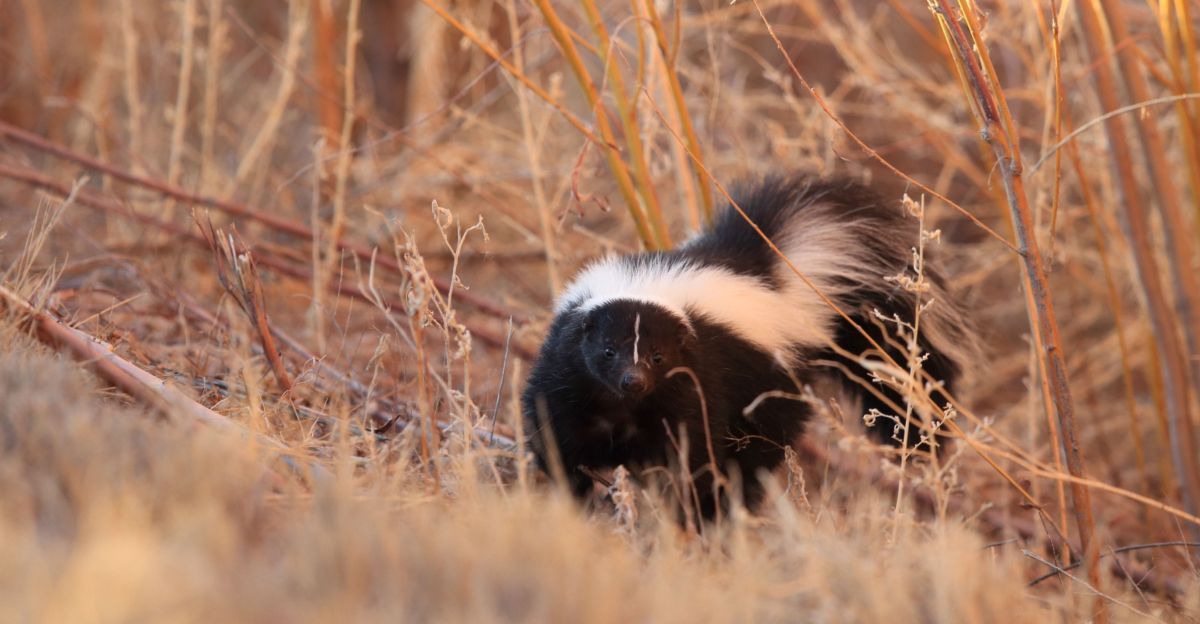
Something smells off in your backyard, and before you blame the compost bin, consider this: you might have a skunk living rent-free on your property.
In many parts of Maryland skunks are one of the most common backyard visitors, and they are remarkably good at going unnoticed.
They work at night, move quietly, and have low interest in introducing themselves.
Most homeowners only find out they have one when a dog gets too curious or the smell hits on a warm evening with the windows open.
The tricky part is that skunks leave plenty of clues, you just need to know what you are looking for.
Maryland yards are practically designed with skunks in mind.
Most homeowners have no idea how attractive their property looks to one passing through at night.
And if any of these eight signs sound familiar, you already have your answer.
That Unmistakable Smell Is Hanging Around Your Yard

You step outside for your morning coffee and something stops you cold: a thick, sulfuric odor hanging in the air like a warning sign.
That smell is one of the most reliable clues a skunk has taken up residence nearby.
Skunks do not spray randomly, but they do release small amounts of musk regularly just from moving through their territory.
Even without a full-on defensive blast, the scent can linger for hours.
Especially on humid Maryland mornings, when the air is heavy and still.
Many homeowners mistake the odor for a gas leak or something rotting somewhere in the yard.
If the smell comes and goes over several days without a clear source, a skunk living under your deck or shed is a strong possibility.
The odor tends to be strongest near entry points like gaps under porches, crawl spaces, or thick brush along the fence line.
Early morning and late evening are peak activity times, so those are the moments when the scent will be most noticeable.
Try to note whether the smell is concentrated in one area of the yard or drifting across the whole space.
A localized odor near a structure almost always points to a den site.
A widespread smell could mean the animal was startled and sprayed somewhere on your property.
Either way, do not brush it off as a passing skunk in the neighborhood.
Your nose is telling you something important, and the next clue in your yard will likely confirm it.
Small, Cone-Shaped Holes Are Appearing In The Lawn
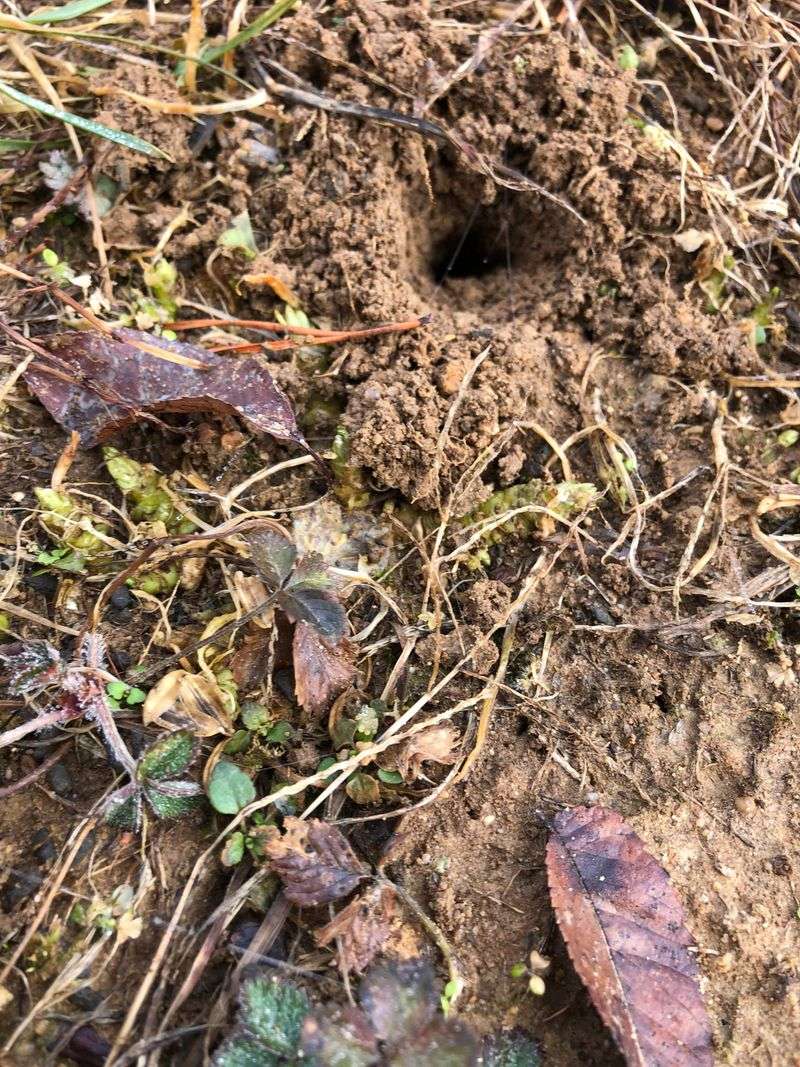
Overnight, your lawn went from smooth and green to looking like a tiny golf course gone wrong.
Small, cone-shaped holes about two to three inches wide are one of the most recognizable signs of skunk activity in a yard.
Skunks are relentless grub hunters, and they use their strong front claws to dig precisely into the soil where they sense larvae just below the surface.
Each hole is neat and conical, which sets skunk digging apart from the messier, wider excavations made by raccoons or armadillos.
If your lawn has a grub problem, which is extremely common in Maryland during late summer and fall, you are basically running a skunk buffet.
Your Maryland Garden Changes Every Week. Your Plan Should Too.
Gardening in Maryland changes quickly throughout the season. Every Friday you’ll receive a simple weekly plan showing exactly what to plant, prune, fertilize, harvest, and protect so you never miss the right timing.
Japanese beetle larvae and other turf-damaging grubs are among their favorite foods.
In a strange way, skunks are doing your lawn a small favor by removing pests.
However, the digging itself causes real damage, especially when it happens night after night across a large area of turf.
Homeowners often blame moles or voles for the holes, but the cone shape and shallow depth are giveaways pointing directly to a skunk.
Check your lawn in the early morning light when the damage is freshest and easiest to spot.
If the holes appear in clusters or follow a zigzag path across the grass, the animal is onto something.
It is methodically working a scent trail toward grubs underground.
Check your lawn for grubs first, then treat.
Take away the food source, and you take away the whole reason they showed up in the first place.
Trash Cans Keep Getting Raided Overnight
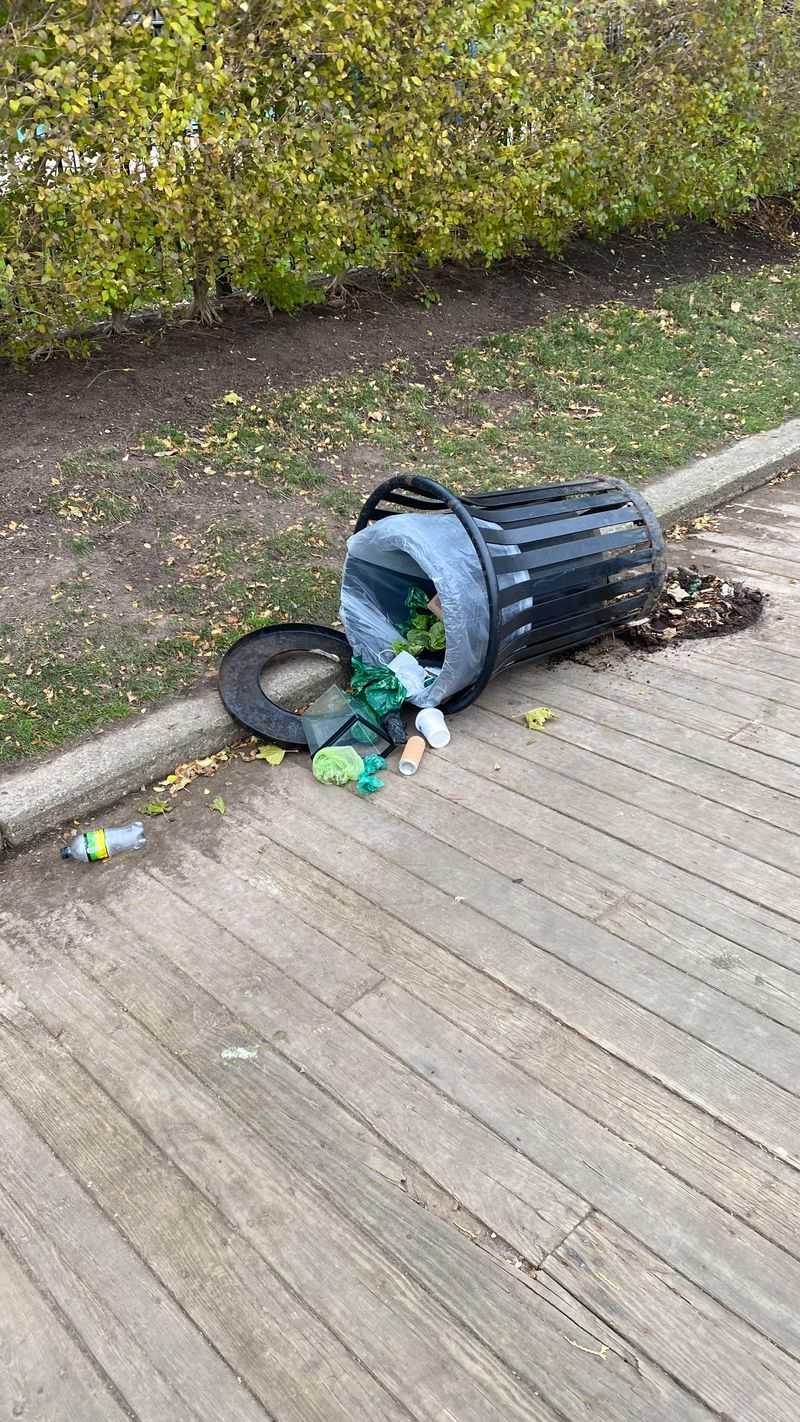
Three nights in a row.
Trash cans tipped over, garbage spread across the driveway like a yard sale nobody asked for.
Skunks are opportunistic eaters, and an unsecured trash can is essentially a free restaurant open every night of the week.
While raccoons get most of the blame for trash raids, skunks are equally capable and far quieter about it.
A skunk will nudge a can with its snout, use its front paws to tip lighter containers, and dig through bags methodically.
It is looking for food scraps, fruit peels, and meat waste.
The difference between raccoon damage and skunk damage is usually the scale.
Raccoons tend to make a bigger mess and scatter trash over a wider area, while skunks are more focused and methodical in their scavenging.
If you notice the garbage disturbed but not completely destroyed, a skunk is the more likely culprit.
Raccoons tend to go all in, skunks are messier in a quieter, more methodical way.
Skunk visits to trash areas also tend to leave behind that faint musky odor, which is your best confirmation clue.
Securing your bins with bungee cords or a locking lid is the fastest way to break this habit before it becomes a nightly routine.
Bringing cans into the garage overnight during warm months makes a significant difference.
Once a skunk learns your trash schedule, it will return at the same time every night with impressive consistency.
Cutting off the food supply is always the first and most effective step toward reclaiming your yard.
Fur Caught On The Fence
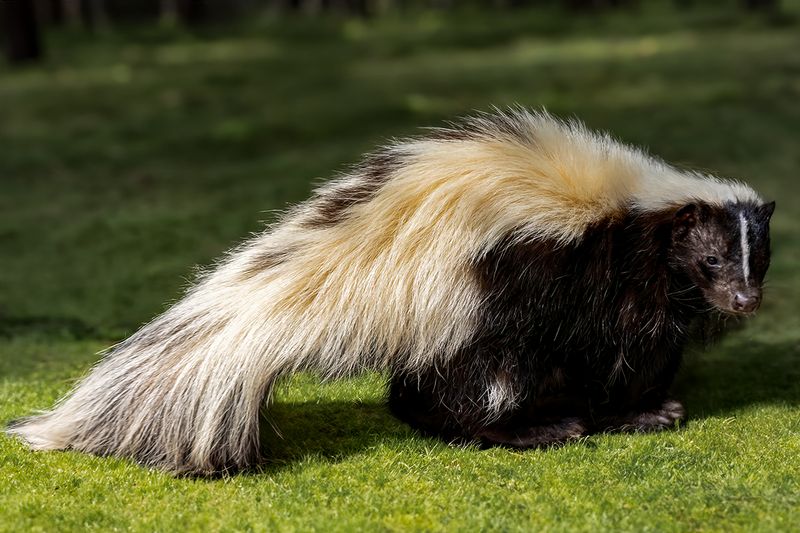
Tiny tufts of black and white fur stuck to the bottom of your fence are easy to miss, but they are one of the most direct pieces of evidence you can find.
Skunks squeeze under or through fence gaps regularly.
Their coarse fur snags on rough wood, wire mesh, and chain-link edges as they pass through.
The black and white coloring makes the hair relatively easy to identify once you know what you are looking at.
Get close to the lower sections of your fence, especially near the ground where gaps are widest.
Look for small clumps of fur caught in splinters or wire loops.
This kind of physical evidence is particularly useful because it tells you exactly where the animal is entering and exiting your property.
Knowing the access point lets you take targeted action rather than guessing where to place deterrents or seal entry points.
Skunk fur is coarser and thicker than cat fur, and the distinct two-toned pattern removes most doubt about what animal left it behind.
Check fence corners, areas near compost bins, and spots where the fence meets the ground after a rain.
Wet fur tends to stick more visibly to surfaces.
Pay special attention to gaps beneath wooden gates.
Photographing what you find can help a wildlife professional confirm the species if you are uncertain.
Each strand of evidence builds a clearer picture.
The more you find, the closer you are to knowing exactly where your uninvited guest is spending its nights.
Insect Nests Are Getting Ripped Open Overnight
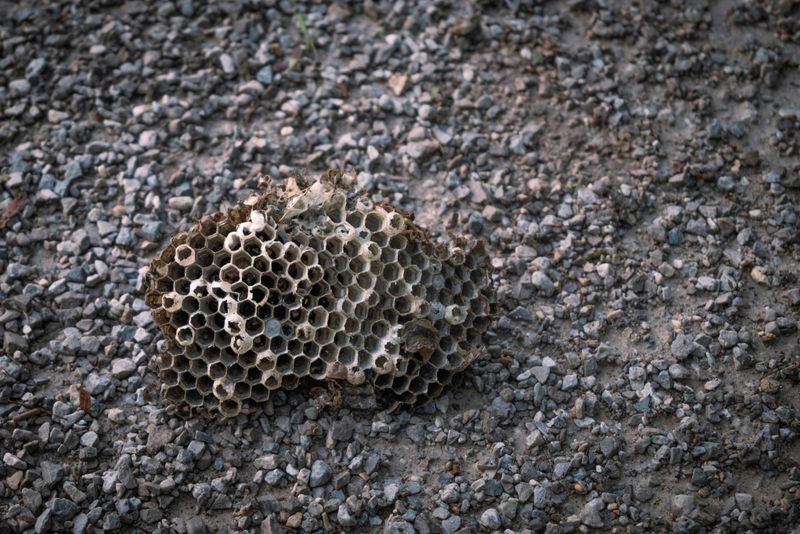
Image Credit: © Chris F / Pexels
Destroyed.
Shredded.
Scattered across the grass like something went through it with a purpose.
Finding a demolished ground nest first thing in the morning is a startling sight, but it is also a very specific clue.
Skunks have a remarkable tolerance for stings, and they actively seek out ground-nesting bee and wasp colonies as a protein-rich food source.
Yellow jacket nests buried just beneath the soil surface are a particular favorite.
A skunk will scratch and dig until the colony is fully exposed and consumed.
This behavior is one of the more surprising skunk habits because most animals avoid stinging insects entirely.
Their thick fur and tough skin act as a natural barrier, allowing them to endure stings that would send most other animals running.
If you have noticed ground nests disappearing overnight in your yard, a skunk is a very strong suspect.
Especially during late summer, when yellow jacket colonies are at peak size.
The damage pattern is distinctive: a shallow, scraped-out depression in the soil with nest material pulled outward in all directions from the center.
Moles create tunnels beneath the surface, while skunks work from the top down, leaving a messy crater rather than a clean burrow entrance.
Homeowners sometimes feel relieved when a ground nest is gone, since yellow jackets can be aggressive and dangerous.
However, that relief should be paired with awareness that a skunk is actively patrolling your yard at night.
Where there are insects, there is a skunk willing to work for them.
Your yard may be offering far more meals than you realize.
A Chunky Black-And-White Animal Keeps Appearing At Dusk
There it is.
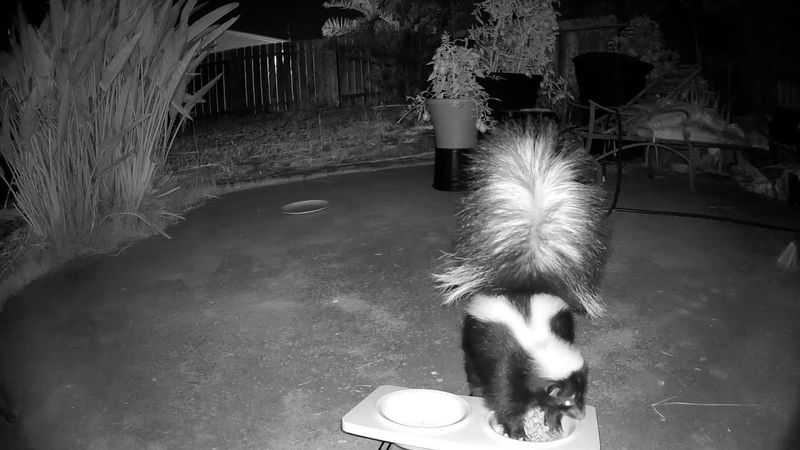
A slow-moving shape near the fence line, and you almost wrote it off as the neighbor’s cat, until it turned around and the white stripe came into sharp focus.
Skunks are most active during the hour just after sunset and the hour just before sunrise.
A dusk sighting in your own backyard is a classic sign of a resident animal, not just a passing visitor.
A skunk that is just traveling through will move quickly and disappear.
One that has made your yard its home base will appear in the same general area night after night, following familiar routes between its den and food sources.
Adult skunks are stockier than most people expect, roughly the size of a house cat but lower to the ground with a distinctive waddling walk.
The bold black and white pattern is not camouflage but a warning signal, and it works remarkably well on most predators.
If you spot one from your back window or porch, resist the urge to go outside or let pets out immediately.
A startled skunk can spray up to fifteen feet with surprising accuracy, and the smell is nearly impossible to remove from clothing or pet fur quickly.
Motion-activated cameras are an excellent tool for confirming repeated visits without putting yourself in a risky situation.
Place a camera near known digging sites or along fence lines where you have found fur evidence.
One night is a visit.
Three nights in a row is a lease agreement.
Something Is Living Under The Deck Or Shed
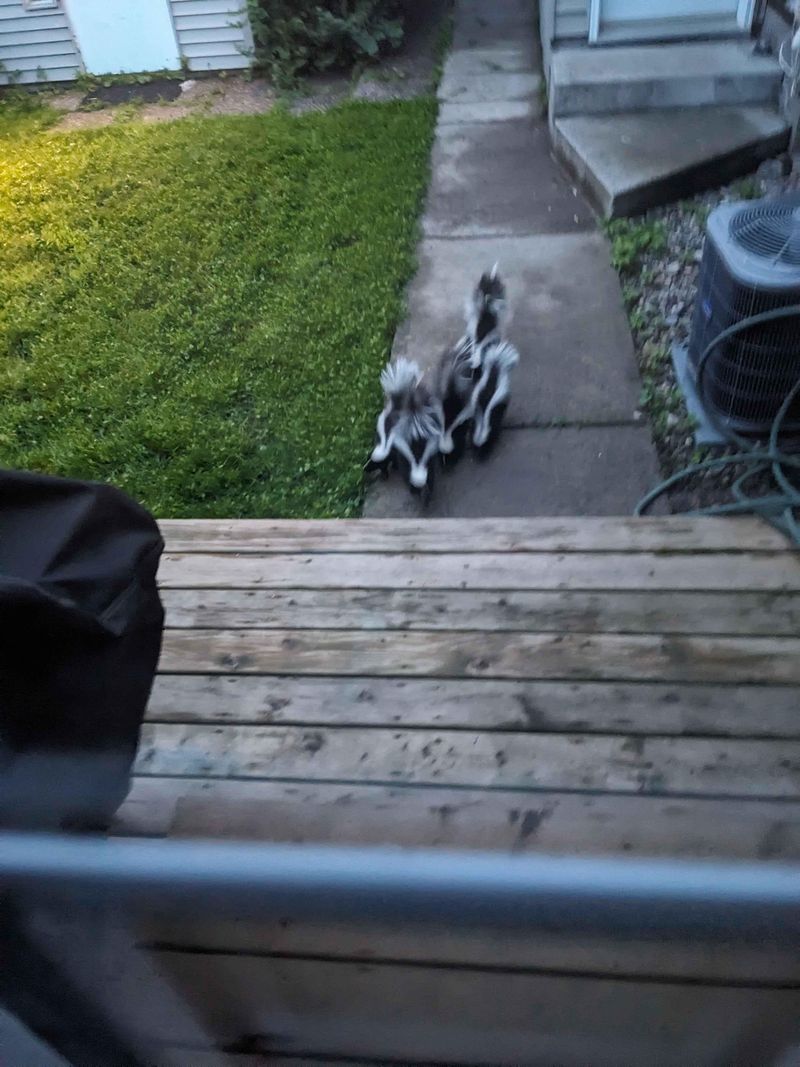
Something is living under your deck, and it is not paying rent.
A faint but persistent odor combined with scratching sounds at night is one of the clearest signals that a skunk has moved in.
Skunks are den animals, and the dark sheltered space under a deck or storage shed suits them perfectly.
Protected from wind, hidden from predators, and close to a food supply.
They do not build elaborate structures, but they will excavate a shallow burrow beneath the foundation and pull in leaves and grass for bedding.
The entrance hole is usually about four to six inches wide, just large enough for the animal to squeeze through comfortably.
Fresh soil pushed outward from the opening is a telltale sign of recent digging activity.
Skunk dens also tend to accumulate small debris like insect shells, berry seeds, and bits of fur near the entrance over time.
Female skunks are especially likely to den under structures in spring when they are raising young, which means one skunk can quickly become six or seven.
Listening for soft shuffling sounds beneath the floorboards in the evening is another way to confirm activity without disturbing the animal.
Never seal off a den entrance without first confirming the animals have left, since trapping a mother and her young inside creates a much bigger problem.
A wildlife professional can help assess the situation and recommend the safest removal approach for your specific setup.
Acting early, before a family is established, makes the whole process significantly easier and less stressful for everyone involved.
Garden Beds Are Getting Torn Up Overnight
Weeks of watering.
Careful planting.
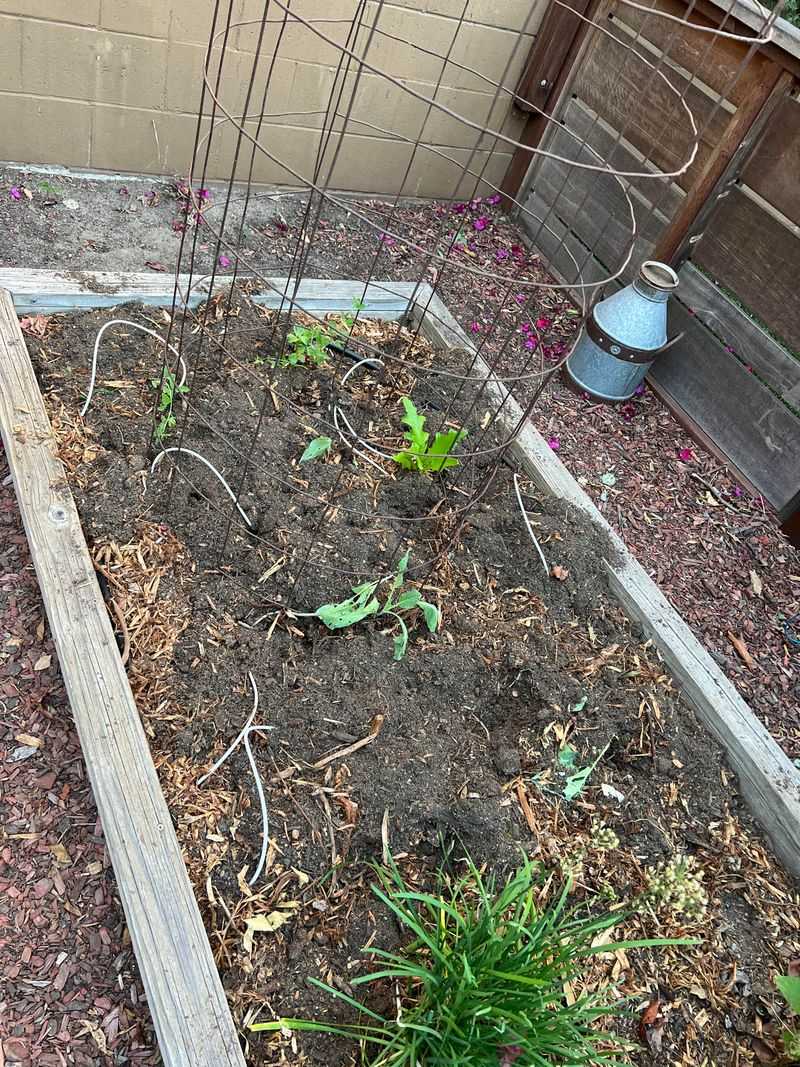
And now half the bed looks like something went through it with a tiny rototiller.
Garden beds are prime skunk hunting grounds.
The loose, moist soil makes it easy to detect and dig for grubs, earthworms, and beetle larvae just below the surface.
The damage typically appears as scattered soil, partially uprooted plants, and a series of shallow scrapes rather than deep tunnels or large craters.
Skunks are not after your vegetables specifically, though they will eat fallen fruit and ripe produce if it is within reach.
Their primary goal is the insect life thriving in the rich soil of a well-tended garden bed.
Raised beds with solid wooden or metal sides offer some protection, but ground-level beds bordered by landscape timbers are easy targets.
Mulched areas are particularly attractive because the organic material underneath hosts a dense population of insects and worms.
A thin layer of hardware cloth buried just below the soil surface can deter digging without harming the garden or any wildlife.
Motion-activated sprinklers are another surprisingly effective option, since skunks dislike sudden bursts of water and will quickly learn to avoid the area.
The pattern of damage in a garden bed can help confirm a skunk is your culprit.
Rabbits and groundhogs leave very different types of destruction.
Catch it early, and you still have a season worth saving.