These Are The Best Boxwood Alternatives That Instantly Elevate North Carolina Front Yards
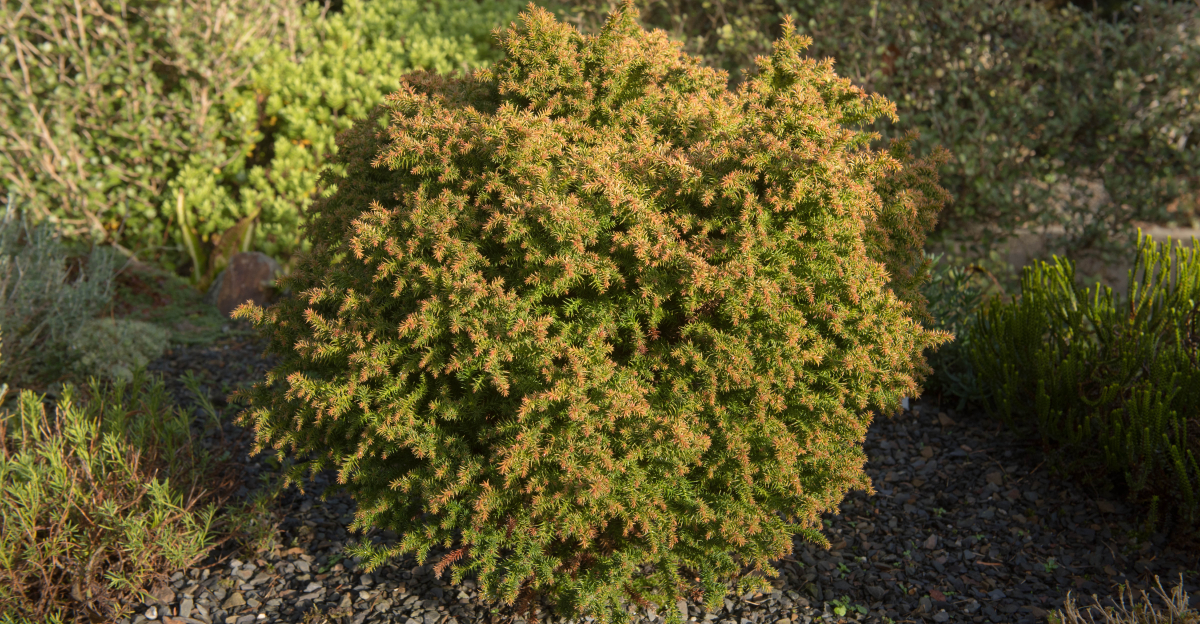
Boxwood has defined the look of North Carolina front yards for decades, but the combination of boxwood blight, blight-related decline, and a growing awareness of better options is pushing more homeowners to reconsider.
The familiar rounded green shrubs that line walkways and anchor foundation plantings across the state are no longer the obvious choice they once were.
North Carolina’s heat, humidity, and disease pressure have made boxwood maintenance increasingly demanding, and the alternatives available today are not just substitutes.
Several of them outperform boxwood in structure, seasonal interest, and long-term durability in this climate.
A front yard replanted with the right alternative shrubs can look more refined and more distinctive than one still relying on plants that are quietly struggling across the state.
1. Inkberry Holly
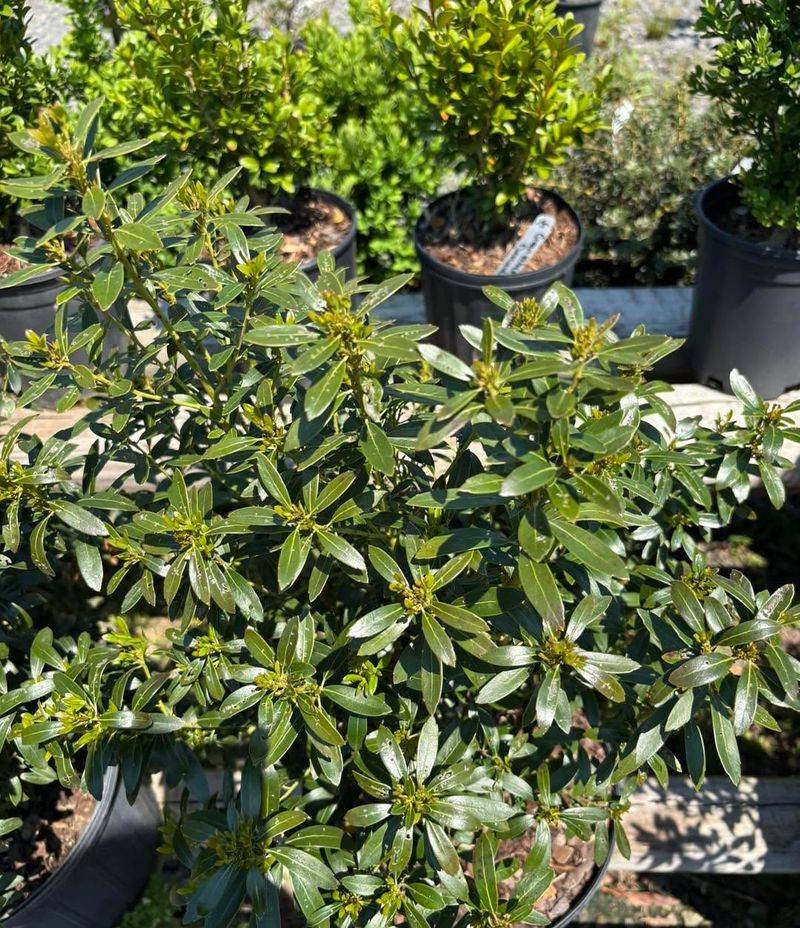
Native plants have a way of just fitting in, and Inkberry Holly proves that point beautifully.
Known botanically as Ilex glabra, this eastern North American native grows naturally across the Carolinas, which means it already knows how to handle the heat, humidity, and occasional sogginess that come with life in the Tar Heel State.
That built-in toughness is a huge advantage over traditional boxwoods, which often struggle when summer gets muggy.
Compact cultivars like ‘Shamrock,’ ‘Gem Box,’ and ‘Strongbox’ are the ones worth planting in foundation beds. These selections stay tidy without aggressive pruning, typically reaching two to four feet tall and wide depending on the cultivar.
Full sun to part shade works well, but inkberry actually thrives with some afternoon shade, which suits many shaded front-yard beds perfectly. The soil should be acidic, moist, and well-drained, though inkberry tolerates brief wet periods better than most shrubs.
Pruning is simple. A light trim in early spring keeps the shape clean without stressing the plant.
Space compact cultivars about three feet apart to allow good airflow and prevent any fungal issues. The small black berries that appear in fall are a bonus, attracting birds and adding seasonal interest.
For North Carolina homeowners who want a reliable, low-fuss evergreen with genuine regional roots, Inkberry Holly is hard to beat.
2. Dwarf Yaupon Holly
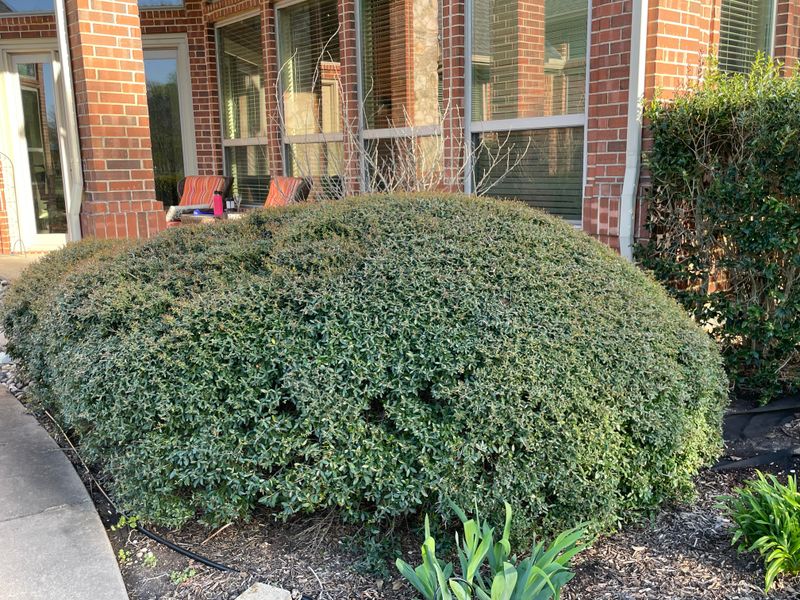
Few shrubs match the sheer toughness of Dwarf Yaupon Holly, and North Carolina gardeners have known this secret for years. Ilex vomitoria is native to the Southeast, and its dwarf cultivars bring all that rugged reliability into a compact, manageable package.
Heat waves, coastal salt spray, stretches without rain, and heavy summer humidity barely slow this plant down. That kind of resilience is exactly what busy homeowners need in a foundation shrub.
Popular compact selections include ‘Nana,’ ‘Schillings,’ and ‘Bordeaux,’ each staying in the two-to-three-foot range with minimal effort.
The small, glossy leaves give a refined texture that reads almost formal from the street, especially when lightly sheared into rounded or boxy shapes.
Full sun produces the densest growth, but part shade is handled gracefully. Well-drained soil is preferred, though yaupon adapts to a wide range of soil conditions better than most ornamental shrubs.
Shaping is easy and forgiving. Pruning in late winter or early spring keeps the form tight without triggering excessive flushing.
Your North Carolina Garden Changes Every Week. Your Plan Should Too.
Gardening in North Carolina changes quickly throughout the season. Every Friday you’ll receive a simple weekly plan showing exactly what to plant, prune, fertilize, harvest, and protect so you never miss the right timing.
Space plants about two to three feet apart depending on the cultivar for a cohesive, hedge-like appearance.
Dwarf Yaupon works beautifully in formal foundation designs, coastal landscapes, and low-maintenance yards where the goal is consistent good looks with minimal intervention.
Its native status also supports local wildlife, making it a genuinely smart choice.
3. Compact Distylium
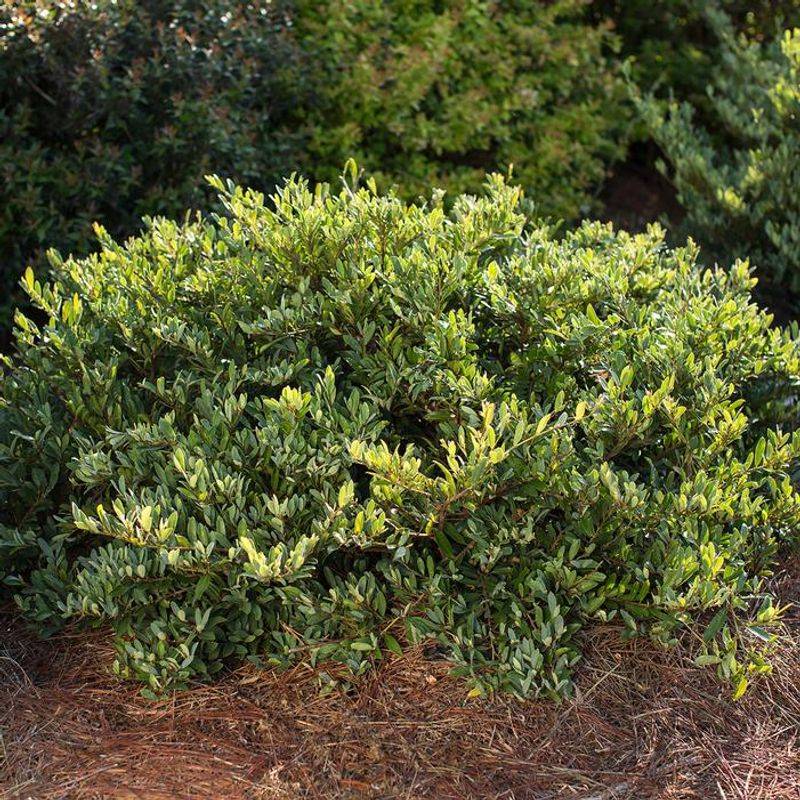
Distylium has quietly become one of the most talked-about shrubs in Southern landscaping, and for very good reason.
These hybrid evergreens, sold under names like ‘Coppertone,’ ‘Vintage Jade,’ and ‘Emerald Heights,’ bring a sleek, modern texture to foundation beds that boxwoods simply cannot match in terms of disease resistance.
Southern nurseries and landscape professionals have embraced distylium because it performs consistently even through the hottest, most humid North Carolina summers without skipping a beat.
Mature size varies by cultivar. ‘Vintage Jade’ stays low and spreading, around two feet tall and four to five feet wide, while ‘Emerald Heights’ can reach three to four feet with a slightly more upright form.
These differences matter when planning a foundation bed, so always check the cultivar tag before purchasing.
Full sun to part shade suits most distylium selections, and well-drained soil is important since standing water causes problems over time.
Pruning needs are refreshingly minimal. Most compact cultivars naturally maintain a clean, mounding shape without frequent trimming, which saves time and effort throughout the growing season.
It is worth noting that distylium is not native to North Carolina. It originates from Asia, so wildlife value is more limited compared to native options.
Still, for homeowners who want a truly low-maintenance, disease-resistant, modern-looking evergreen that thrives in the Southern heat, compact distylium is an outstanding choice.
4. Dwarf Loropetalum
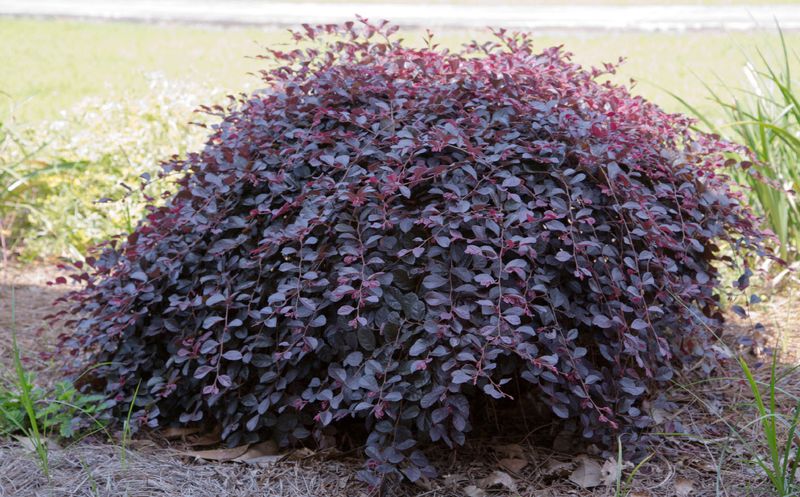
Purple foliage in a foundation bed turns heads, and Dwarf Loropetalum delivers that drama without requiring constant attention.
Loropetalum chinense var. rubrum is the botanical name behind those striking burgundy-to-deep-purple leaves that make front yards pop from the street.
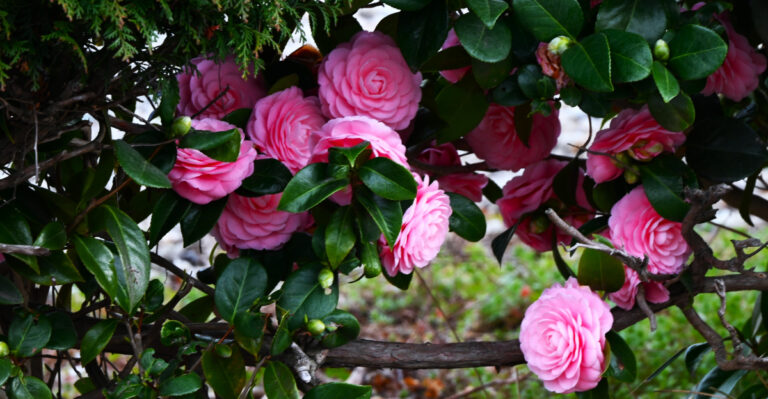
In spring, the plant covers itself in cheerful pink fringe-like flowers that add another layer of seasonal interest. It is genuinely one of the most visually exciting evergreen options available for North Carolina landscapes.
The key word here is dwarf. Standard loropetalum can easily reach eight to ten feet tall, which surprises many homeowners who planted what they thought was a small shrub.
Compact cultivars like ‘Purple Pixie,’ ‘Plum Delight,’ and ‘Little Rose Dawn’ stay in the two-to-four-foot range and are far better suited to front-yard foundation beds.
Always confirm the mature size of the specific cultivar before planting to avoid outgrown beds down the road.
Full sun to part shade works well, with richer foliage color developing in brighter light. Well-drained soil is important, and good airflow around the plants helps prevent any fungal issues during humid summer months.
Pruning right after the spring bloom keeps the shape tidy without removing next year’s flower buds. Space dwarf selections about two to three feet apart for a lush, filled-in look.
For homeowners craving year-round color and texture with minimal care, this shrub absolutely delivers.
5. Sweetbox
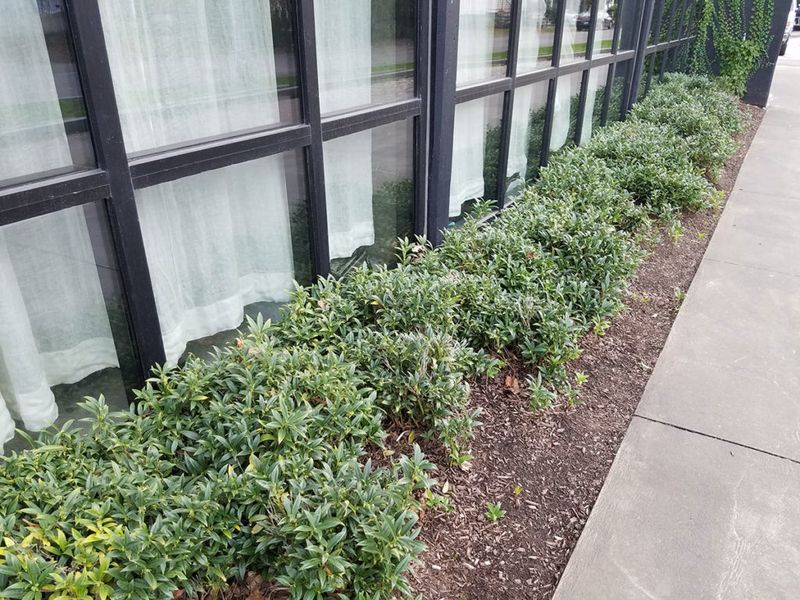
Not every front yard is drenched in sunshine, and shaded foundation beds have long been a challenge for gardeners looking for tidy evergreen structure. Sweetbox, known botanically as Sarcococca hookeriana and related species, fills that gap in a way few other plants can.
It stays low, glossy, and evergreen in conditions where most shrubs struggle, and it rewards patient gardeners with surprisingly fragrant small white flowers in late winter, just when the garden needs a mood boost most.
Mature size is modest and manageable. Most Sarcococca species grown in home gardens reach about two to four feet tall and spread gradually through suckering, which can actually help fill a foundation bed naturally over time.
The rich, well-drained soil with consistent moisture is important for strong performance. Sweetbox does not tolerate drought well, so shaded beds that retain some moisture after rain are ideal placements across North Carolina gardens.
Pruning needs are minimal since the plant naturally maintains a tidy, layered shape without much intervention. Deer resistance is generally good, though no plant is completely immune in areas with heavy deer pressure.
Placement matters most with sweetbox. Protected spots on the north or east side of a home, under overhanging eaves or beneath established trees, suit it perfectly.
For gardeners who need a reliable, fragrant, shade-tolerant evergreen that brings genuine elegance to difficult spots, Sweetbox is a genuinely rewarding option worth planting.
6. Dwarf Wax Myrtle
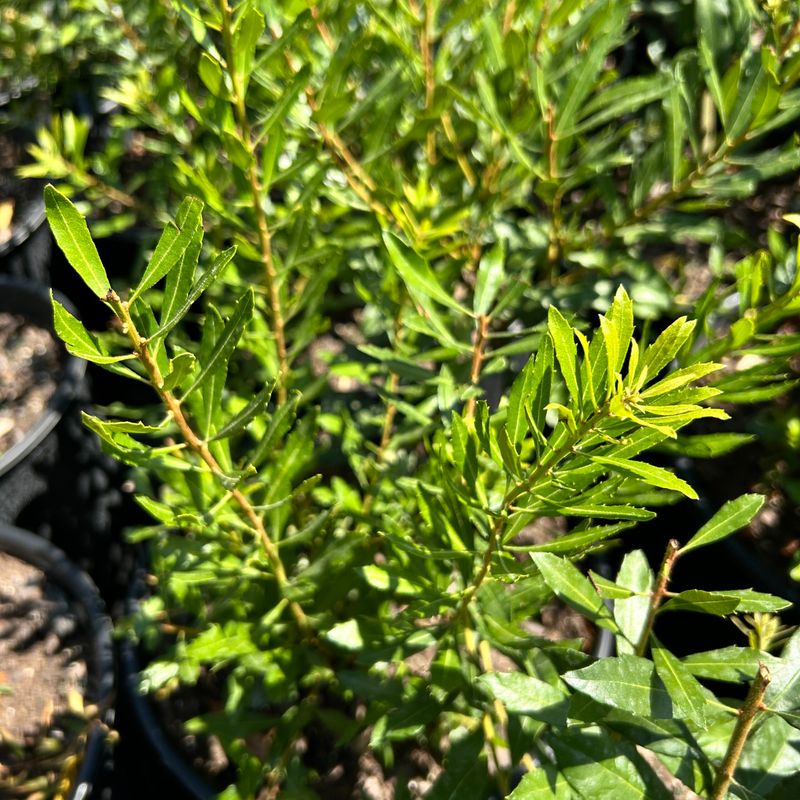
There is something refreshingly honest about a plant that thrives exactly where it naturally belongs, and Dwarf Wax Myrtle fits North Carolina like it was made for the place.
Morella cerifera, also known as Myrica cerifera, is a native Southeastern shrub that handles coastal salt spray, sandy soil, summer heat, and stretches without rain once it gets established.
Compact selections bring all that regional toughness into a size that actually fits a typical front-yard foundation bed without taking over.
The straight species wax myrtle is vigorous and can easily reach ten to fifteen feet, which makes it completely wrong for most foundation plantings.
Compact selections and cultivars stay in the four-to-six-foot range with regular pruning, providing a semi-formal look with aromatic, gray-green foliage that smells wonderful when brushed.
Full sun produces the best density and most attractive growth habit. Well-drained soil is important, and good airflow helps keep the foliage clean during humid summer months.
Pruning two to three times per season keeps compact selections looking sharp without exhausting the plant.
Space plants about four feet apart to allow proper airflow and room for natural spread. Small waxy berries appear in fall and winter, attracting birds and adding seasonal texture.
For North Carolina homeowners near the coast or in the Piedmont who want a tough, aromatic, wildlife-friendly native alternative to boxwood, Dwarf Wax Myrtle is a practical and genuinely satisfying choice.
7. Virginia Sweetspire
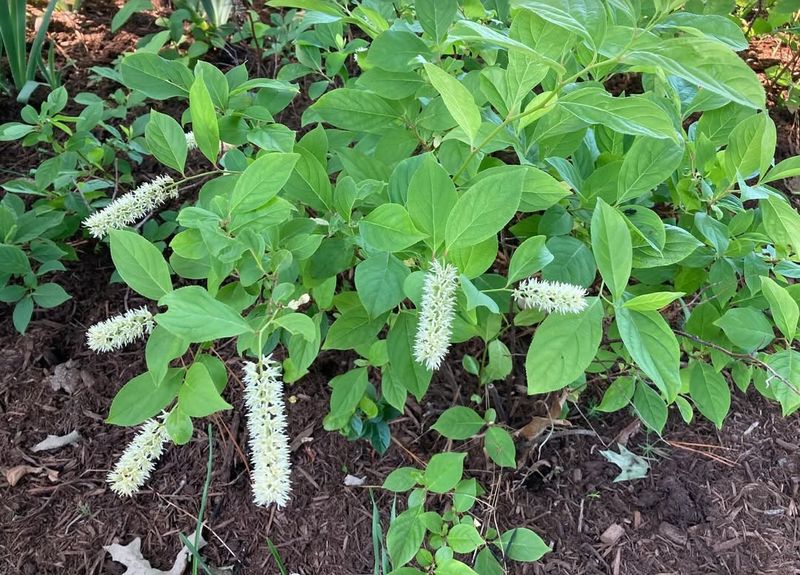
Some plants earn their place in a landscape through sheer personality rather than formal structure, and Virginia Sweetspire is exactly that kind of plant.
Itea virginica is a native deciduous shrub that brings fragrant white flower spikes in late spring to early summer, handsome deep green summer foliage, and some of the most brilliant fall color you can find on a shrub this size.
It is not a boxwood lookalike in the traditional clipped-hedge sense, but it adds layered beauty to mixed foundation beds that boxwoods simply cannot provide.
Mature size typically reaches three to five feet tall with a similar spread, and the plant spreads gradually through suckering to form a full, natural colony over time.
Popular cultivars like ‘Henry’s Garnet’ and ‘Little Henry’ stay on the smaller end and are better suited to tighter foundation spaces.
Moist, slightly acidic soil suits Virginia Sweetspire best, and it performs remarkably well along the edges of rain gardens or low spots in the yard where other shrubs might struggle.
Full sun to part shade works well, with shadier sites producing slightly less flower production but still attractive foliage. Pruning after flowering keeps the size manageable and encourages fresh growth.
The spreading habit means it works best in naturalistic or mixed foundation beds rather than formal, rigidly structured plantings.
For homeowners who want native beauty, seasonal interest, and genuine low-maintenance performance, Virginia Sweetspire brings real character to any North Carolina front yard.
8. Podocarpus
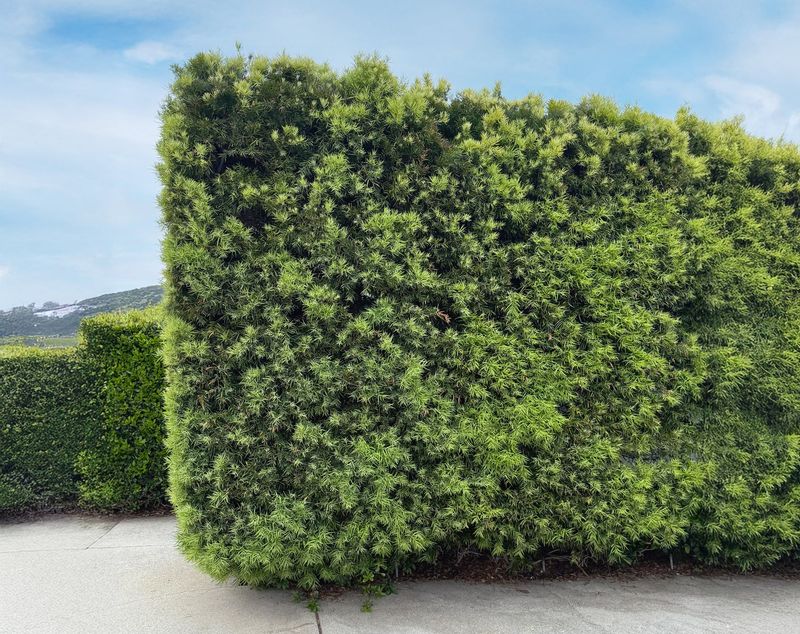
Elegant, refined, and surprisingly easy to shape, Podocarpus brings a sophisticated texture to North Carolina front yards that stands apart from typical broadleaf evergreens.
Podocarpus macrophyllus, sometimes called Yew Pine or Buddhist Pine, produces long, rich green, needle-like leaves on graceful branches that respond beautifully to pruning.
Many homeowners in coastal and warmer Piedmont areas have used it for decades as a formal hedge, accent, or foundation plant with excellent results.
Cold hardiness is the most important factor to consider before planting. Podocarpus macrophyllus is generally reliable in USDA zones 7b through 10, which covers much of coastal North Carolina and the warmer Piedmont.
In colder inland sites, mountain regions, or areas prone to hard freezes, this plant can suffer significant damage and is not a reliable long-term choice. Placement near a south or southeast-facing wall provides helpful protection in borderline zones.
Without pruning, mature plants can reach fifteen to twenty feet or more, so regular shaping is essential to keep them as manageable foundation shrubs. Pruning two to three times per year maintains a tidy, dense form and encourages compact growth.
Well-drained soil is critical since Podocarpus does not tolerate wet roots. Space plants four to six feet apart for a formal hedge effect.
For coastal and warmer Piedmont homeowners who want a bold, architectural evergreen with genuine pruning versatility, Podocarpus is a standout performer worth serious consideration.
9. Dwarf Japanese Cedar
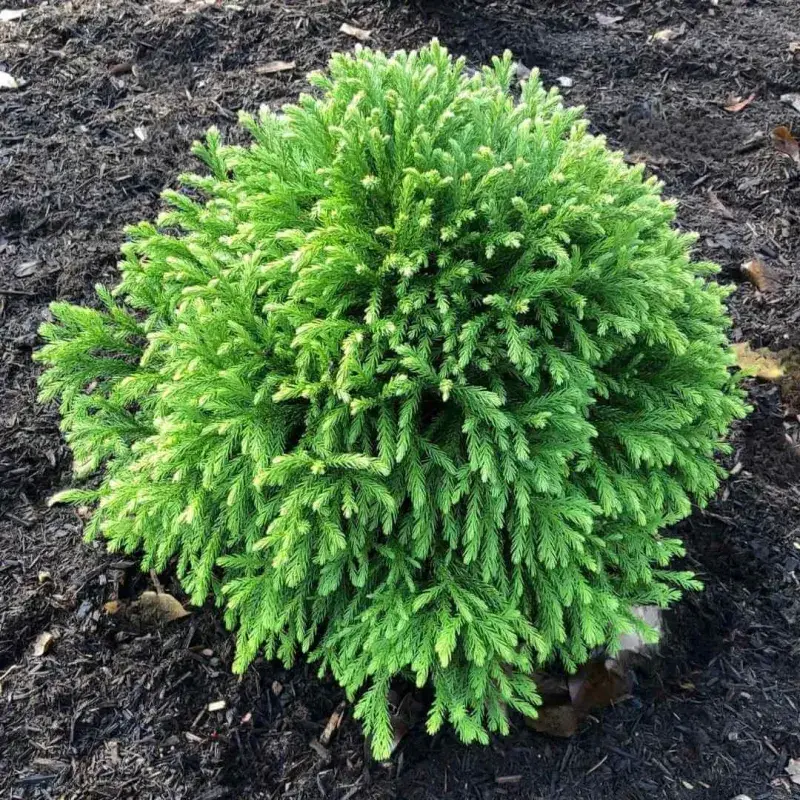
Most people think of Japanese Cedar as a towering specimen tree, but the compact cultivars tell a completely different story.
Dwarf Cryptomeria japonica selections bring soft, feathery, year-round texture to foundation beds in a way that formal clipped boxwoods never could.
The foliage shifts from rich green in summer to warm bronze or reddish tones in winter, giving the plant a seasonal personality that keeps the front yard interesting through every month of the year.
Cultivar selection matters significantly since sizes vary widely. ‘Globosa Nana’ stays at about two to three feet tall and wide with a dense, rounded form.
‘Elegans Compacta’ grows slightly larger, reaching four to six feet with a more upright habit. ‘Black Dragon’ offers very dark foliage in a compact columnar shape.
Knowing the mature size of the specific cultivar you choose helps avoid outgrown beds and unnecessary pruning battles later on.
Full sun to part shade suits most dwarf Cryptomeria selections, with full sun producing the densest, most attractive growth. Well-drained soil is important since soggy roots cause problems over time.
Pruning needs are low for most compact cultivars, which naturally hold a clean shape without frequent shearing. Space plants according to mature width to allow good airflow and room to develop naturally.
Used as individual accents or low evergreen anchors in a mixed foundation bed, dwarf Japanese Cedar adds genuine year-round structure that sets a front yard apart from the ordinary.
10. Rosemary
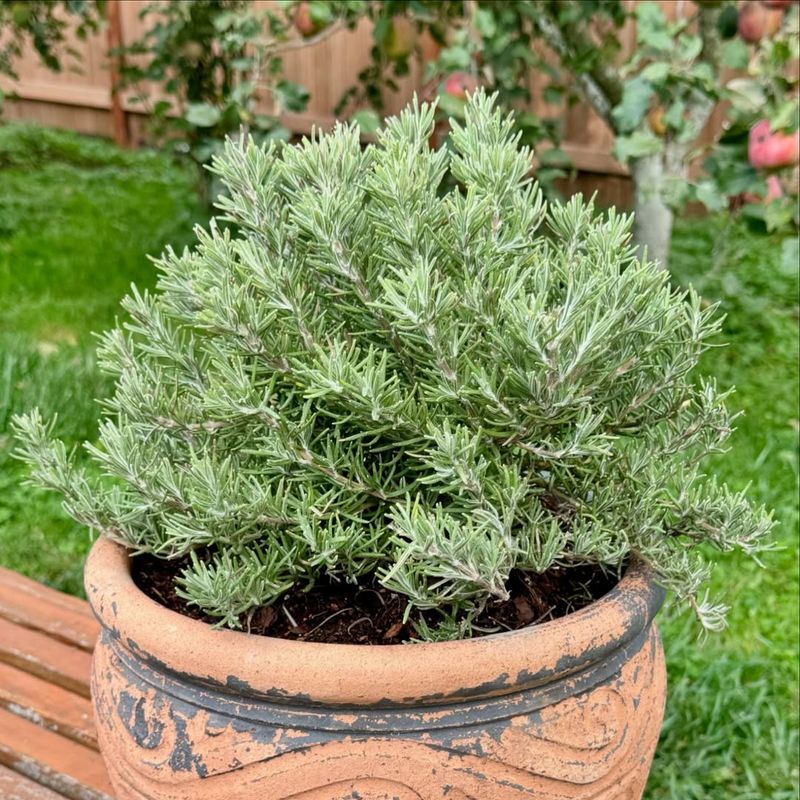
Rosemary pulls off something most ornamental shrubs cannot: it looks beautiful, smells incredible, and you can cook with it.
Salvia rosmarinus, formerly known as Rosmarinus officinalis, brings narrow, aromatic silver-green foliage and small blue to purple flowers to sunny front-yard beds in a way that is both functional and genuinely attractive.
Upright selections like ‘Tuscan Blue’ and ‘Blue Spires’ grow with enough structure to serve as formal evergreen accents in well-designed landscapes.
Heat and drought tolerance are real strengths of rosemary once it establishes in well-drained soil. Sharp drainage is absolutely non-negotiable.
Heavy clay soil or any spot where water pools will cause root problems quickly, regardless of how much sun the plant receives. Raised beds or amended, fast-draining soil solve this problem effectively across many North Carolina yards.
Full sun is essential for the best growth, fragrance, and flower production.
Winter hardiness varies across the state. Coastal areas and the warmer Piedmont handle rosemary reliably through most winters.
Mountain regions and colder inland sites carry more risk, and hard freezes can damage or finish established plants entirely. Pruning after flowering keeps the shape tidy and prevents the woody, open habit that older unpruned plants develop.
Rosemary works best as a fragrant evergreen accent rather than a formal clipped hedge replacement for boxwood.
For sunny, well-drained front yards in warmer parts of North Carolina, it brings sensory richness and culinary charm that no traditional boxwood could ever offer.