8 Tough Arizona Garden Plants That Thrive Without Constant Watering
Arizona summers can make even healthy gardens feel hard to keep up with. Plants dry out faster, watering starts taking more time every week, and high-maintenance areas quickly become frustrating once extreme heat settles in.
Reliable drought-tolerant plants make a huge difference in those conditions. Many stay full, colorful, and healthy without needing constant attention just to get through the week.
Strong roots and heat tolerance help them push through dry stretches that leave thirstier plants struggling in full sun.
Gravel beds, walkways, and exposed corners often become the toughest spots to manage during summer.
Filling those areas with hardy plants can cut down on watering while still keeping the yard attractive through the hottest part of the season.
A tougher plant selection also means fewer problems during long dry periods when daily watering starts feeling endless.
1. Red Bird Of Paradise Blooms Through Extreme Heat
Blazing summer heat barely slows this plant down.
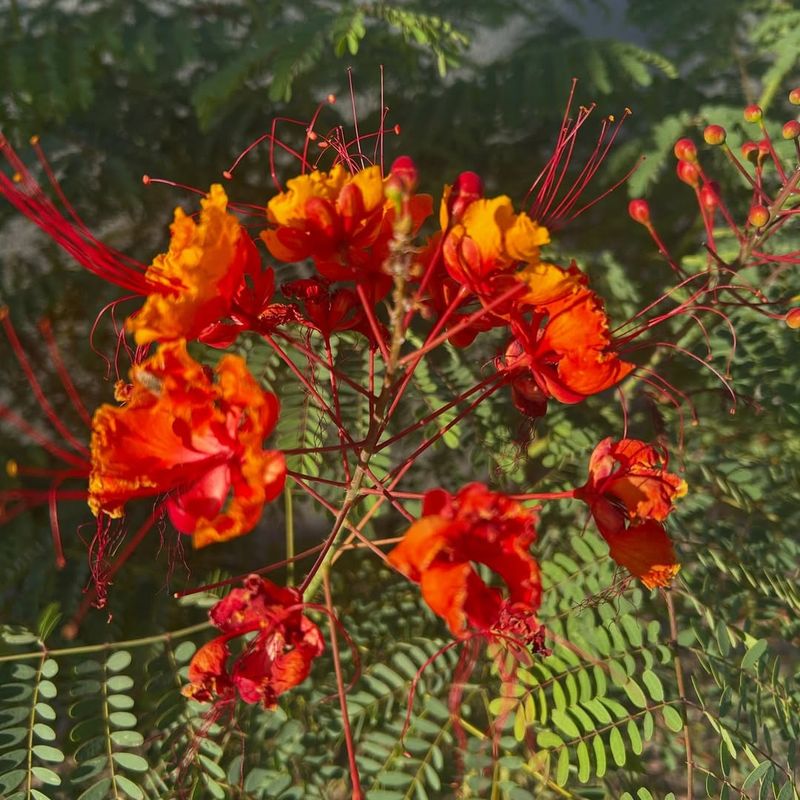
Red Bird of Paradise, known botanically as Caesalpinia pulcherrima, pumps out clusters of vivid orange and red blooms right when most other plants are struggling to stay upright.
It handles full sun without complaint. Rocky, sandy soil is actually preferred, and once established, it rarely needs supplemental water beyond natural rainfall in most low-desert landscapes.
Expect the plant to reach six to ten feet tall and wide at maturity. That size makes it a strong choice for privacy screening or a bold focal point near a patio or fence line.
Hummingbirds and butterflies are drawn to the flowers consistently throughout the warm months. That wildlife activity adds real movement and interest to any yard without extra effort from you.
One thing to know upfront: this plant is frost-sensitive. In colder zones, it may drop back to the ground in winter, but it typically regrows from the roots come spring.
Cutting back damaged or lifeless stems in late winter keeps the plant looking clean and encourages fresh growth.
Fertilizing is optional. Healthy soil and decent drainage matter far more than any fertilizer schedule for keeping this plant at its best year after year.
2. Bear Grass Survives Dry Conditions Without Much Trouble
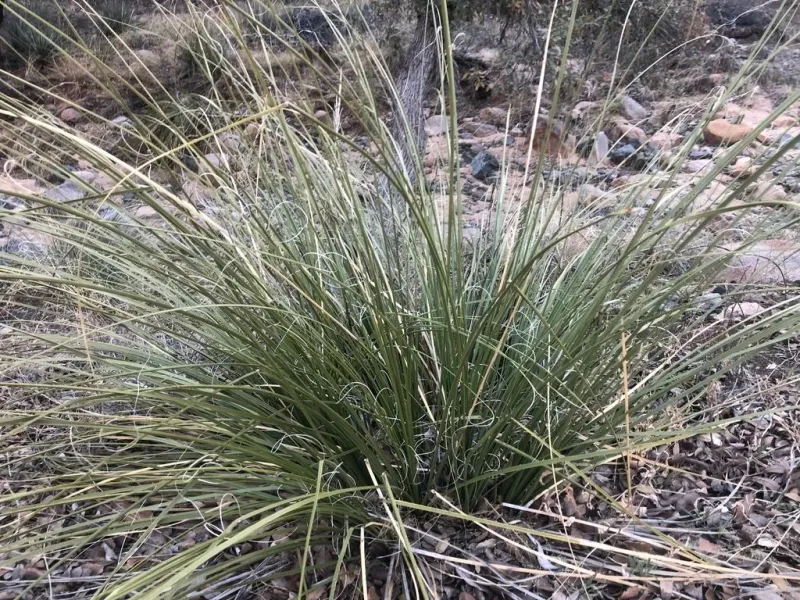
Not everyone wants flowers. Sometimes you just need structure, and Bear Grass delivers that in a way few plants can match in hot, dry landscapes.
Nolina microcarpa grows as a fountain of long, narrow, arching leaves that look sharp and architectural year-round. It handles full sun, poor rocky soil, and extended dry spells without showing much stress at all.
Mature clumps can reach three to four feet tall and spread just as wide. Established plants need almost no supplemental irrigation once rooted in well-draining ground.
That is a genuine advantage in water-restricted areas.
In late spring, tall flower stalks shoot up from the center of mature plants. These creamy white plumes can reach six feet or more and attract pollinators reliably.
After blooming, the stalks dry out and can be cut back or left in place for natural texture.
Bear Grass is native to desert grasslands and thrives in conditions that match that origin. Overwatering is actually more of a risk than underwatering with this plant.
Your Arizona Garden Changes Every Week. Your Plan Should Too.
Gardening in Arizona changes quickly throughout the season. Every Friday you’ll receive a simple weekly plan showing exactly what to plant, prune, fertilize, harvest, and protect so you never miss the right timing.
Soggy soil causes root problems far faster than drought stress does. Plant it in a spot with excellent drainage, give it a good soak after planting, and then mostly leave it alone.
It genuinely rewards neglect more than attention, making it a smart pick for low-maintenance desert landscapes across the Southwest.
3. Outback Sunrise Emu Bush Stays Colorful With Minimal Water
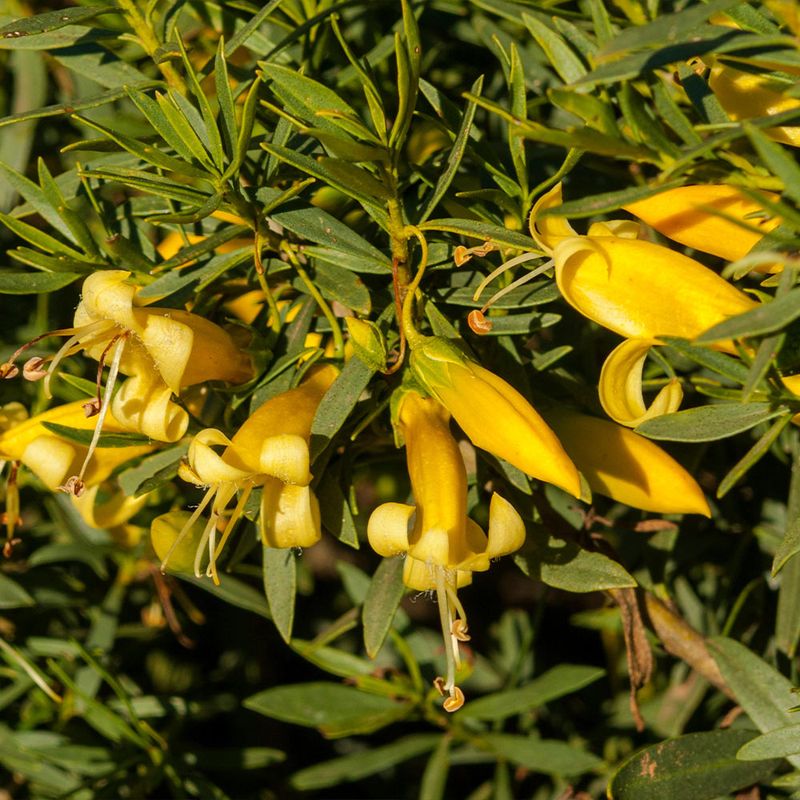
Color that refuses to quit, even in the driest stretches of the year. Outback Sunrise Emu Bush earns that reputation fast once you see it blooming through conditions that would stress most landscape plants.
Eremophila hybrids like this one originate from Australia, where dry heat and poor soils are simply normal.
That background translates well to low-desert gardens, where well-draining soil and full sun are easy to provide.
Tubular orange flowers appear heavily during cooler months. Blooming often continues sporadically through spring and into early summer.
Hummingbirds visit the flowers regularly. That makes this shrub a practical choice for supporting local pollinators without a lot of fuss.
Mature plants typically reach three to five feet tall and wide. That compact size fits well in mixed borders, along walls, or as a low informal hedge.
No aggressive pruning is needed, though a light trim after the main bloom cycle helps keep the shape tidy.
Watering deeply but infrequently after establishment is the right approach. Weekly or biweekly irrigation during summer usually keeps the plant healthy without overworking the roots.
Avoid overhead watering when possible, since wet foliage in humid stretches can invite fungal issues.
Planted correctly in gritty, fast-draining soil, this shrub performs reliably with very little ongoing input from the gardener.
It rewards smart placement more than constant care.
4. Red Push Pistache Holds Its Bright Red Growth Longer
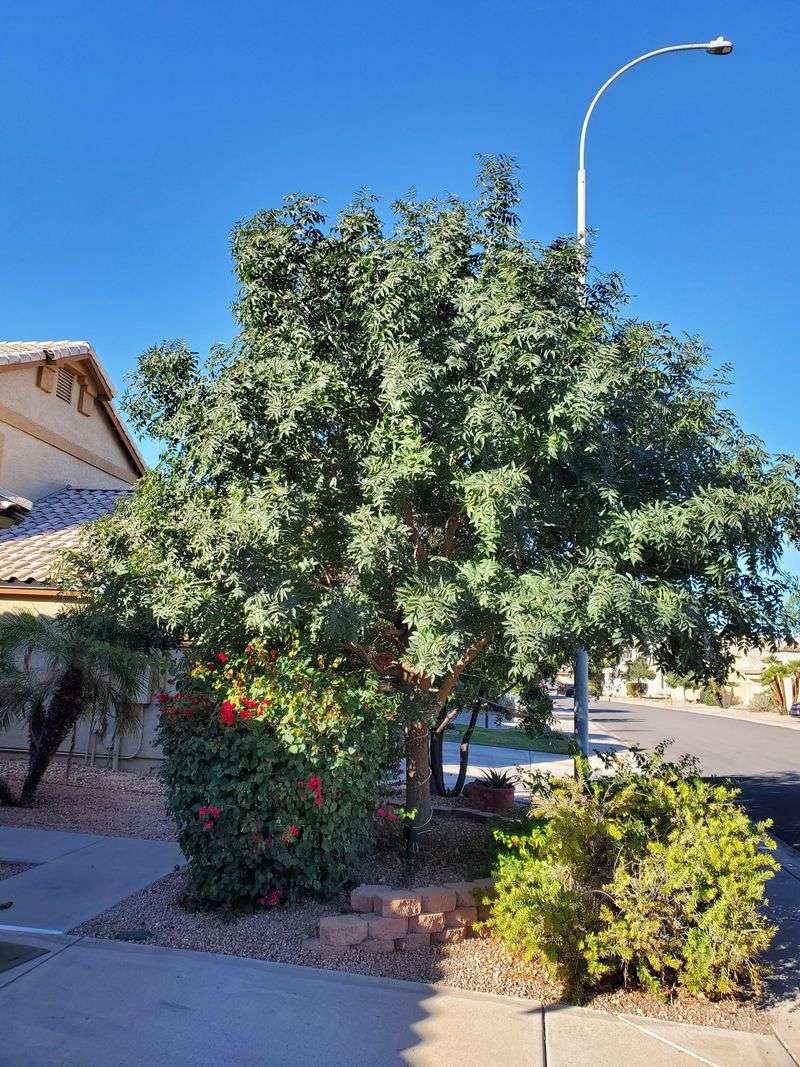
Red growth that actually lasts longer than a few days is rare in ornamental trees. Red Push Pistache makes that a real feature, not just a seasonal flash that disappears before you notice it.
Pistacia x Red Push is a hybrid valued for its vivid burgundy-red new foliage in spring and its reliable fall color in warm climates.
It grows into a rounded shade tree, typically reaching twenty to thirty feet tall at full maturity.
Water needs are moderate compared to many shade trees. Once established in well-draining soil, it handles dry stretches well without looking ragged.
Deep, infrequent watering encourages roots to grow downward, which strengthens the tree over time.
Fall color in desert landscapes can be inconsistent, but Red Push Pistache delivers reliable orange and red tones before leaf drop.
That seasonal shift adds visual interest to yards where autumn color is otherwise hard to achieve.
Full sun is preferred, and the tree handles reflected heat from walls and pavement reasonably well. That tolerance for tough urban conditions makes it a practical choice for street-side planting or large residential yards.
Soil quality matters at planting time. Amending native caliche-heavy soil with organic material before planting gives roots a better start.
After the first year or two of establishment watering, the tree becomes noticeably more self-sufficient and requires less hands-on attention from the homeowner.
5. Chocolate Flower Reblooms Through Hot Weather
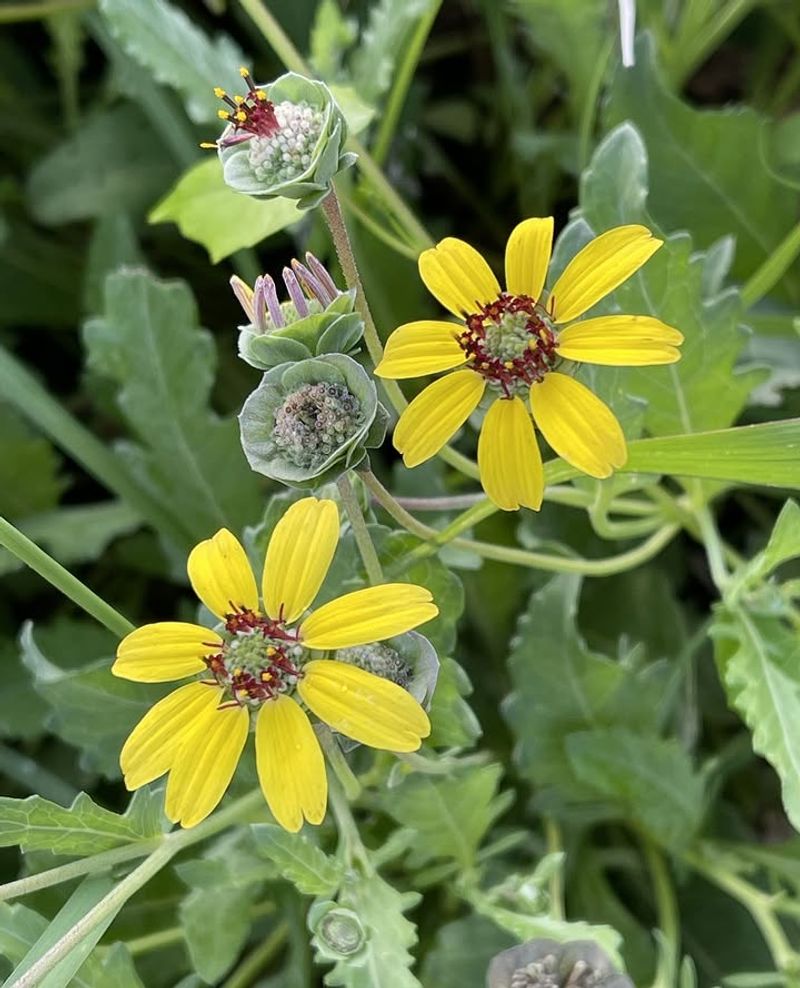
Yes, it actually smells like chocolate. Berlandiera lyrata, commonly called Chocolate Flower, releases a genuine cocoa scent from its blooms in the cool morning hours, and that alone makes it worth growing.
Native to desert grasslands across the Southwest, it is completely adapted to heat, drought, and poor soil.
Once planted in a sunny spot with decent drainage, it asks for very little in return and delivers consistent blooms from spring through fall.
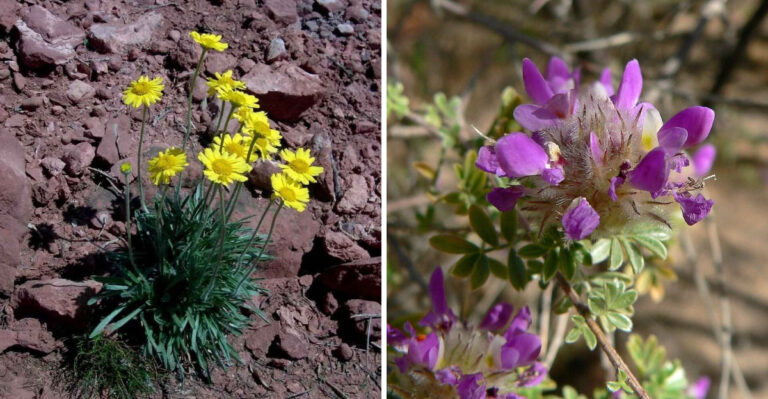
Yellow daisy-like flowers appear on slender stems that reach about one to two feet tall. The plant itself stays low and spreading, forming a casual ground-level clump that works well along pathways or at the front of a mixed border.
Deadheading spent blooms encourages faster reblooming, though the plant will continue flowering even without it. Cutting back the whole plant by about half in midsummer can refresh growth and push a stronger late-season flush of flowers.
Water needs are genuinely low after establishment. Twice-monthly deep watering during summer is usually enough to keep the plant blooming well.
Overwatering is a more common mistake than underwatering with this species. Soggy roots in summer heat cause more problems than a dry spell would.
Planting in raised beds or bermed areas with fast-draining native soil gives the roots the conditions they prefer.
Pair it with globemallow or bear grass for a low-water planting with varied texture and color.
6. Globemallow Tolerates Harsh Sun Better Than Many Perennials
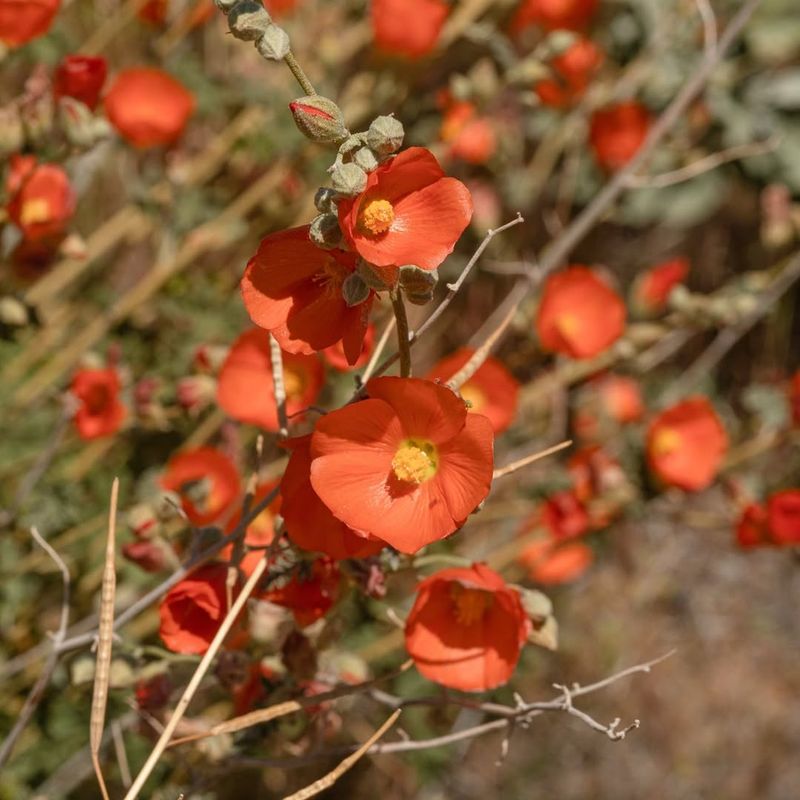
Bright orange cups scattered across silver-green foliage, blooming hard through triple-digit heat.
Globemallow is one of those plants that looks almost too cheerful for how rough its growing conditions actually are.
Sphaeralcea ambigua is native to desert washes and rocky slopes. That explains its comfort with poor soil, intense sun, and long dry spells.
It does not just tolerate those conditions. The plant often performs better there than in pampered garden beds with rich soil and frequent water.
Plants typically grow two to three feet tall and wide. Bloom time runs from late winter through spring, with a secondary flush possible in fall if monsoon rains arrive.
The orange color is most common, but pink and lavender forms exist and are worth seeking out for variety.
Cutting back the plant after the main spring bloom keeps it from getting woody and encourages fresh growth.
A hard trim to about six inches in late summer often triggers new foliage and sets up better fall flowering.
Deer tend to browse this plant, which is worth knowing before placing it along open desert edges. Fencing or placement near other thorny plants can reduce that pressure.
Water deeply at planting and then taper off quickly. Once roots are established, twice-monthly summer watering is usually plenty.
Plants in fast-draining rocky soil often need slightly more frequent irrigation than those in heavier native ground. Adjust based on what you observe.
7. Golden Barrel Stays Healthy In Rocky Dry Soil
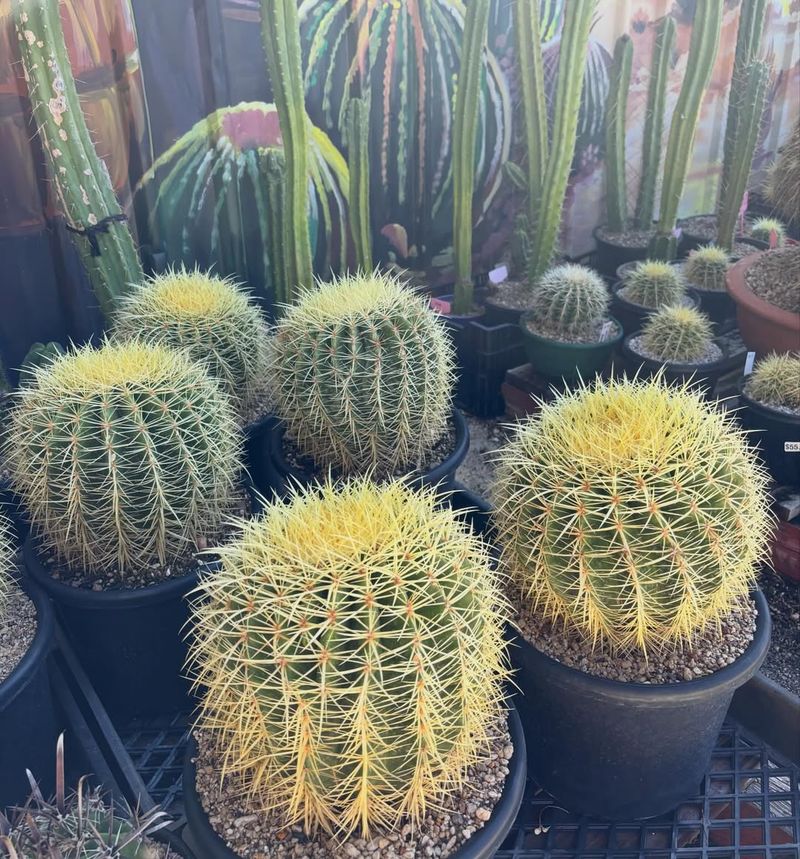
Few plants are more iconic in desert landscaping than the Golden Barrel Cactus. That round, golden form is instantly recognizable, and its low-maintenance nature makes it a consistent favorite in hot, rocky landscapes.
Echinocactus grusonii grows slowly into a perfectly spherical shape covered in sharp golden-yellow spines. Mature specimens can reach two feet tall and wide, though that size takes many years to achieve.
Younger plants are easier to source and establish well when planted in well-draining rocky or gravelly soil.
Full sun is essential. Plants placed in partial shade tend to grow unevenly and lean toward light over time.
Positioning in a spot that gets direct sun for most of the day produces the best shape and spine color.
Water needs are extremely low. During summer, once-monthly deep watering is usually sufficient for established plants.
In winter, watering can be reduced further or stopped entirely in most low-desert areas. The biggest risk with Golden Barrel is overwatering, which leads to root and base rot that is very hard to reverse.
Planting in clusters of three or five creates a striking visual grouping without requiring much space or care.
Top-dressing with decomposed granite rather than organic mulch helps keep moisture away from the base.
Wear thick leather gloves when handling this plant. Those spines are not decorative.
They are sharp enough to cause real injury, and they break off in skin easily. Plan placement carefully before you commit to a spot.
8. Hedgehog Cactus Grows With Very Little Water
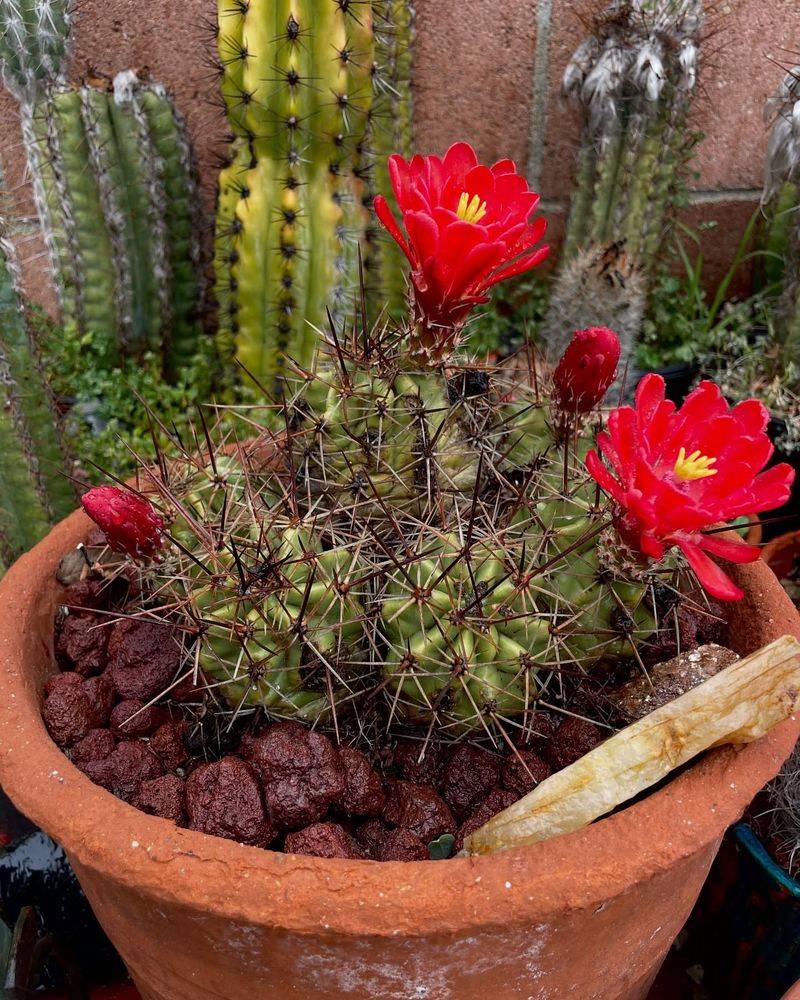
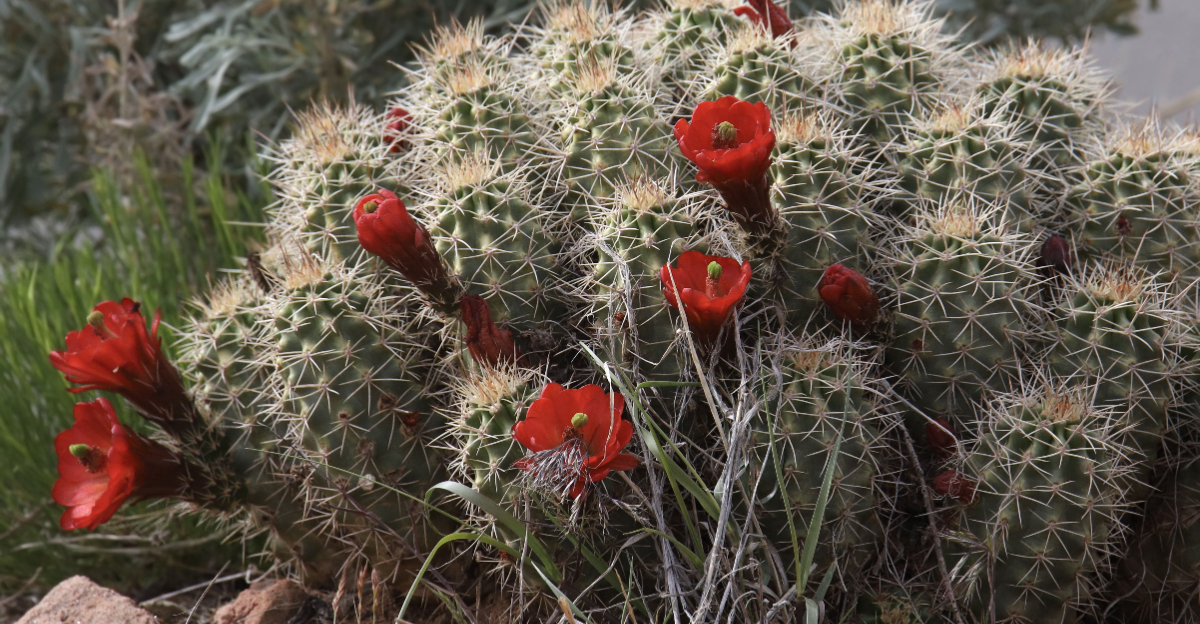
Small in size, massive in impact. Hedgehog Cactus puts on one of the most vivid floral shows of any cactus in the Southwest, and it does it with almost no water and zero fuss from the gardener.
Echinocereus triglochidiatus forms tight clumping mounds of cylindrical stems covered in dense spines.
Clusters grow slowly but spread over time into impressive low mounds that look great against boulders, gravel, or at the base of larger desert shrubs.
Flowers appear in spring and are hard to miss. Deep magenta and bright red blooms open wide on top of each stem and last for several days.
The color contrast against the spiny green stems is genuinely striking. Hummingbirds are strongly attracted to these blooms and will visit repeatedly while they are open.
Soil drainage is the most important factor for long-term success. Rocky, gritty soil with no standing water after rain is ideal.
In heavier clay soils, planting in a raised area or amended bed with added pea gravel improves drainage significantly.
Water needs after establishment are minimal. In Arizona, natural monsoon rainfall often provides enough summer moisture for healthy growth.
Supplemental watering once or twice a month during the driest stretches supports better flowering the following spring. Avoid wetting the stems directly when irrigating.
Water at the base and let soil dry out fully between sessions. That simple habit keeps root problems from developing over time.