Follow These 7 Tips For Watering Petunias In Ohio And Keep Them Blooming Longer
Nobody buys petunias hoping for average. They go in the ground looking like a promise, all color and potential, and Ohio gardeners expect them to deliver all season long.
The ones that do share something in common and it has nothing to do with the variety on the label or the amount of sunshine they get.
Watering is the variable that separates a petunia bed that turns heads in August from one that looked great in May and quietly fell apart by July.
It sounds simple because it is simple, but simple does not mean obvious. A few small adjustments to how and when water hits these plants changes everything about how they perform.
Ohio summers are long enough to either reward that attention or expose the absence of it.
1. Check The Soil Before You Reach For The Watering Can
Before you grab the hose, take ten seconds to check the soil. Stick your finger about an inch into the potting mix or garden bed.
If it feels moist at that depth, your petunias probably do not need water yet. If it feels dry, that is your cue to water deeply and thoroughly.
Surface soil can fool you. On a warm afternoon, the top layer of a container can look bone dry while the root zone just an inch or two below still holds plenty of moisture.
The opposite can also happen in small pots during hot, breezy weather, where the whole pot dries out faster than you expect.
This simple finger test saves you from two of the most common petunia problems: overwatering and underwatering. Both cause stress, and both can slow down blooming.
Petunias need consistent moisture, but their roots do not do well sitting in soggy conditions for long.
Checking the soil every day or two during the growing season builds a helpful routine. You will start to notice how quickly your specific containers dry out compared to your flower beds.
Pots in full sun on a south-facing porch will dry much faster than a shaded window box or a garden bed with rich, well-amended soil.
Good drainage is just as important as watering. Make sure containers have drainage holes so excess water can escape.
Without proper drainage, even the right amount of water can lead to root stress over time. Healthy roots are the foundation of full, colorful petunia plants that keep blooming reliably all season long.
2. Water Deeply So Roots Grow Stronger
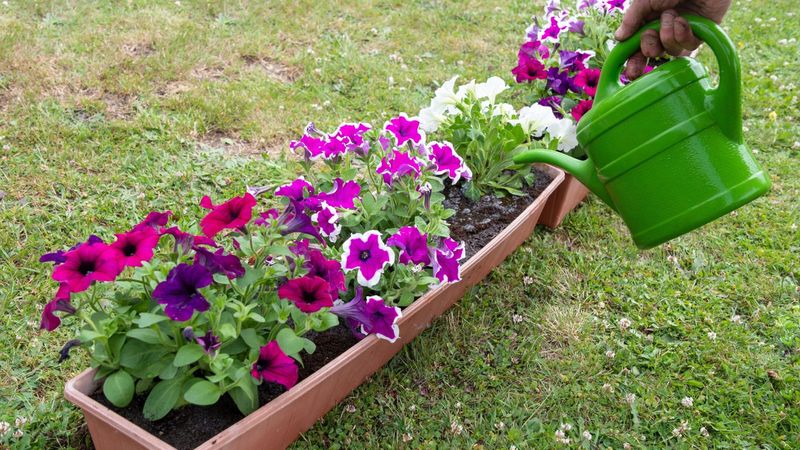
A quick splash of water on top of the soil might look like enough, but it rarely does the job. Shallow watering only wets the top layer of the potting mix or garden bed, which encourages roots to stay near the surface instead of growing deeper.
Shallow roots make plants more vulnerable to heat and dry spells.
Deep watering means applying water slowly and steadily until it reaches the full root zone. For containers and hanging baskets, keep watering until you see moisture draining freely from the bottom holes.
Your Ohio Garden Changes Every Week. Your Plan Should Too.
Gardening in Ohio changes quickly throughout the season. Every Friday you’ll receive a simple weekly plan showing exactly what to plant, prune, fertilize, harvest, and protect so you never miss the right timing.
That is your confirmation that water has moved all the way through the pot and the roots have had a proper drink.
In flower beds, deep watering encourages roots to follow moisture downward into the soil. Plants with deeper root systems handle warm days better than those with roots clustered near the surface.
They are better anchored, more stable, and more capable of pulling up nutrients along with water.
Light, frequent sprinkles can actually create problems over time. They keep the surface damp, which can invite surface mold or make it harder to judge when the root zone actually needs water.
Watering less often but more thoroughly tends to produce healthier, more resilient plants.
Take your time when watering. A slow, steady pour at the base of each plant does more good than a fast spray across the top.
For large containers or full garden beds, a soaker hose or drip system can make deep watering easier and more consistent.
It also saves you from standing there with a hose every single morning.
3. Adjust Your Schedule For Pots, Baskets, And Beds
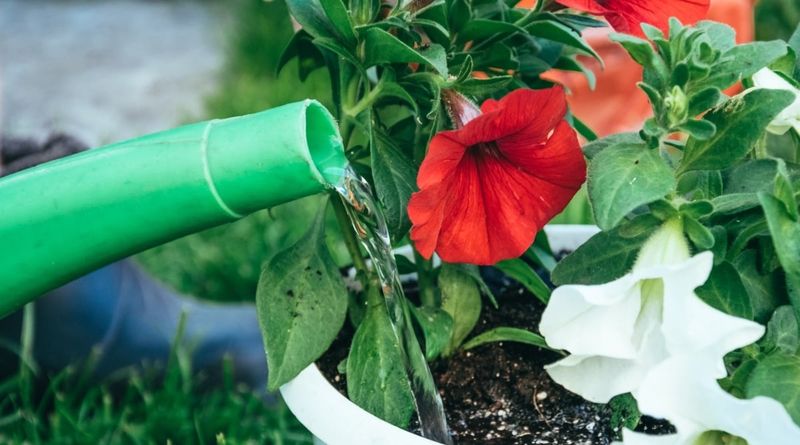
Not all petunias need water on the same schedule, even if they are growing in the same yard. Location makes a huge difference.
Hanging baskets and small porch pots are the thirstiest because they have limited soil volume and are exposed to sun and wind from all sides. On a hot, breezy day, a hanging basket can dry out completely in just a few hours.
Window boxes and railing planters fall somewhere in the middle. They hold more soil than a small pot but still dry faster than an in-ground bed.
Check them every day during warm weather, especially if they face south or west and get strong afternoon sun.
Flower beds and border plantings in the ground have a clear advantage. Garden soil, especially when amended with compost, holds moisture longer and buffers plants against rapid drying.
Petunias in well-prepared beds may only need watering every few days during moderate weather, compared to daily watering for containers.
Pot size also matters more than most gardeners realize. A small four-inch pot dries out much faster than a large twelve-inch container.
If your smaller pots need watering twice a day during heat waves, consider moving them to a slightly shadier spot during the hottest part of the afternoon.
Drainage holes are non-negotiable for containers. Without them, water collects at the bottom and the roots sit in wet conditions that cause stress over time.
The type of potting mix matters too. Lightweight mixes dry faster, while heavier mixes with added moisture-retaining materials hold water a bit longer.
Knowing what you are working with helps you water more accurately.
4. Water In The Morning When You Can
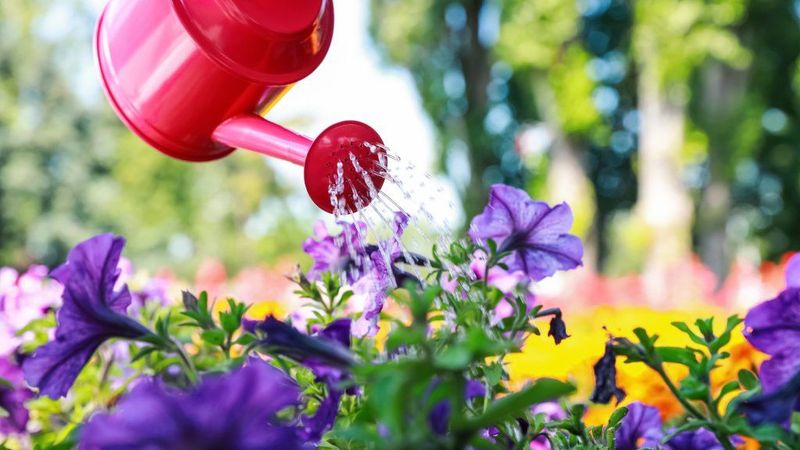
Morning is the best time to water your petunias, and the reason is pretty straightforward. Watering early gives the plants time to absorb moisture before the heat of the day builds.
Roots are active and ready to take up water, and any foliage that accidentally gets wet has hours of warm air and sunlight to dry off before evening.
Wet leaves that stay damp overnight create conditions that can encourage fungal issues. Ohio summers bring stretches of warm, humid nights, and foliage that never fully dries is more vulnerable to spotting and disease pressure.
Morning watering helps reduce that risk without requiring you to do anything complicated.
Evening watering can work when mornings are not possible. Many gardeners with busy schedules water after work and still grow beautiful petunias.
The key is to aim water at the base of the plant rather than soaking the flowers and foliage. Keeping the leaves drier matters more than the exact time of day you water.
Midday watering during peak summer heat is not ideal but will not harm plants if the soil is dry and they need water. Some water will evaporate before it reaches the roots, but a thirsty plant in the afternoon heat still benefits from a drink.
Do not skip watering just because the timing is not perfect.
Building a morning routine around watering takes just a few minutes and pays off in healthier, more vigorous plants.
Even a quick soil check every morning helps you stay ahead of moisture swings before they show up as wilting or stalled blooms later in the day.
5. Keep Leaves Drier To Avoid Trouble In Humid Weather
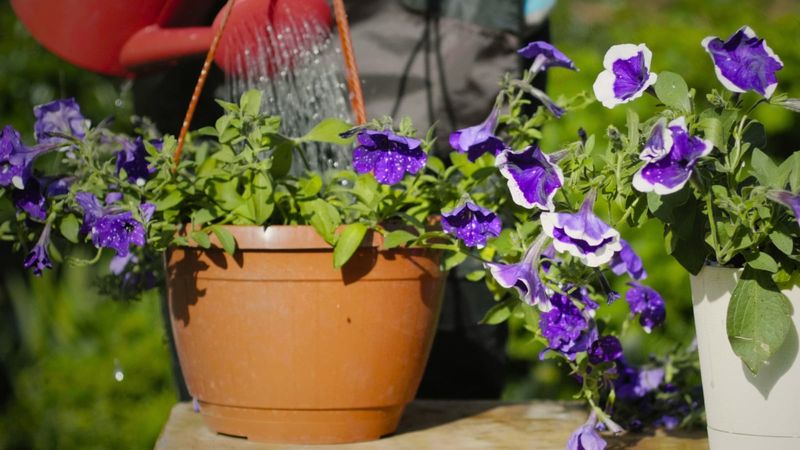
Summers here bring long stretches of warm, sticky humidity, and petunias can struggle when their foliage stays wet for extended periods.
Damp leaves and flowers create a favorable environment for fungal problems like botrytis and powdery issues that can cause spotting, browning, and reduced bloom quality.
Keeping the leaves as dry as possible is a simple and effective way to protect your plants.
The fix is easy: aim your water at the soil, not the plant. A watering wand with a gentle head lets you direct water precisely at the base of the plant without splashing the foliage.
Drip irrigation is another excellent option for flower beds and larger containers because it delivers moisture directly to the root zone with minimal leaf contact.
Hand watering with a standard hose nozzle works fine as long as you are careful about where the water goes. Avoid spraying across the tops of plants or showering them from above like a rainstorm.
A slow, targeted pour at ground level gets the job done with far less risk to the foliage.
Overhead sprinklers are convenient for lawns but are not the best routine method for petunias. If your irrigation system sprays your flower beds, try to run it in the early morning so leaves have the full day to dry.
Occasional overhead watering from rain is unavoidable and completely fine. The goal is to avoid making it a daily habit.
Good air circulation around your plants also helps. Petunias planted too closely together or tucked into tight corners with limited airflow take longer to dry after watering or rain.
Proper spacing keeps things healthier from the start of the season.
6. Watch For Signs Of Too Much Or Too Little Water
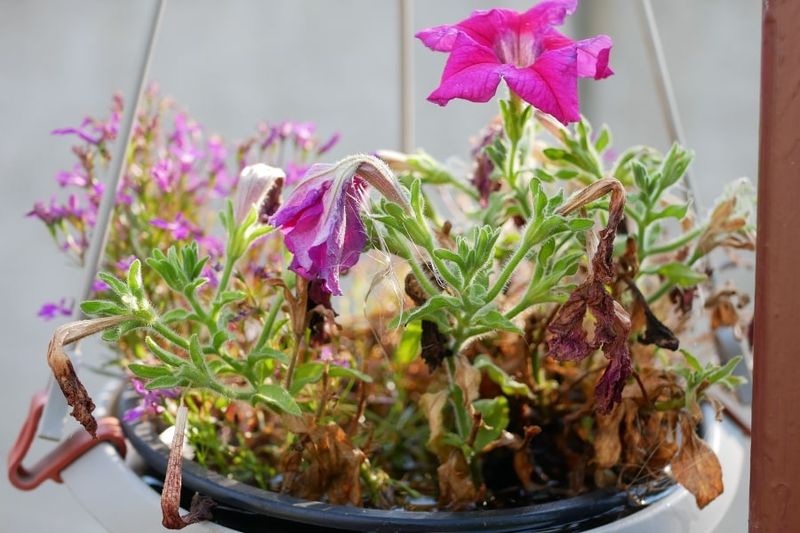
Your petunias will tell you when something is off with their water supply. The trick is knowing what to look for and not jumping to conclusions too quickly.
Both too much and too little water can cause your plants to look stressed, and the symptoms sometimes overlap in ways that make it easy to misread the situation.
Underwatering shows up as wilting, especially during the hottest part of the day. The soil feels dry an inch or more below the surface, and the edges of leaves may look crispy or faded.
Blooming can slow down or stop entirely when plants are consistently running dry. A good deep watering usually helps them bounce back within a day or two.
Overwatering has its own set of symptoms. Yellowing leaves, especially on the lower part of the plant, are a common sign.
The soil feels wet or soggy even several days after watering. Stems may look limp even though the soil is moist, which can signal root stress from sitting in poorly drained conditions for too long.
Before you add more water or hold back, always check the soil first. A wilting plant on a hot afternoon might just need a drink, or it might be sitting in wet soil with stressed roots that cannot absorb moisture properly.
Checking the moisture level before reacting saves you from making the problem worse.
Healthy petunias grow with steady, consistent moisture and well-drained soil. When something looks off, the soil check is always your best first step.
Catching problems early gives you the best chance to correct course before growth and blooming are seriously affected.
7. Change Your Watering Routine As Summer Heat Builds
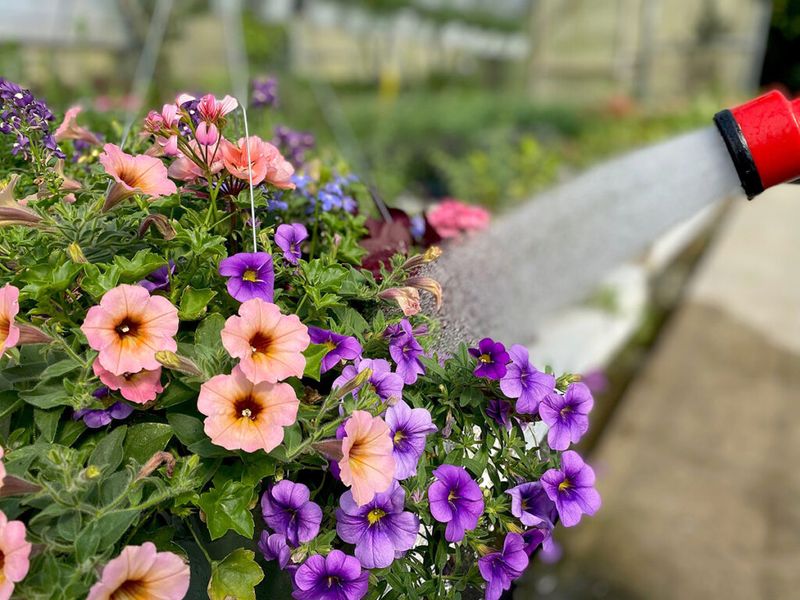
A watering routine that worked perfectly in late May may not be enough by mid-July. As temperatures climb and summer heat settles in, petunias use more water, and their containers dry out faster.
Plants that have been growing since spring also have larger root systems that demand more moisture than they did as young transplants.
Hanging baskets are especially quick to dry out during hot spells. On a day with strong sun, low humidity, and a steady breeze, a basket can go from adequately moist to bone dry in just a few hours.
Checking baskets daily, or even twice on the hottest days, is not excessive. It is just what they need during peak summer heat.
Mulching your flower beds lightly helps slow moisture loss from the soil surface. A thin layer of shredded bark or straw around in-ground petunias keeps the root zone cooler.
It also reduces how quickly the top layer of soil dries out between watering sessions. Do not pile mulch right against the stems, though.
Keep a small gap to allow airflow.
Container plants sometimes get root-bound by midsummer, meaning roots have filled the pot and there is less soil to hold moisture.
If a container dries out extremely fast even after thorough watering, it may be time to move the plant into a slightly larger pot with fresh potting mix.
Stay flexible and keep checking your soil rather than sticking to a fixed calendar schedule. Summer weather in this state can shift quickly, and your plants will always give you better guidance than any rigid watering timetable ever could.
Paying attention is the most useful tool you have.