Native Ohio Vines That Outperform Clematis On Fences And Trellises
Clematis is great. Nobody is here to argue that.
Those big, showy blooms climbing up a trellis are genuinely hard to beat, and plenty of gardeners have built their whole fence line around them.
But lately, more and more gardeners have been asking a pretty interesting question: what if there’s something even better suited to Ohio’s soil, climate, and wildlife?
Native vines don’t always get the attention they deserve, and that’s honestly a shame. Some of them bring a looser, more natural look that fits an Ohio landscape beautifully.
Several of them produce stunning blooms, cover a fence like they mean it, and bring in pollinators and birds in ways that clematis simply can’t match. They belong here, and it shows.
So if you’re ready to think beyond the classics, Ohio’s native vines might just surprise you. In the best possible way.
1. Trumpet Honeysuckle Adds Bright Native Color
Few sights along an Ohio fence line stop a passerby quite like a trumpet honeysuckle in full bloom.
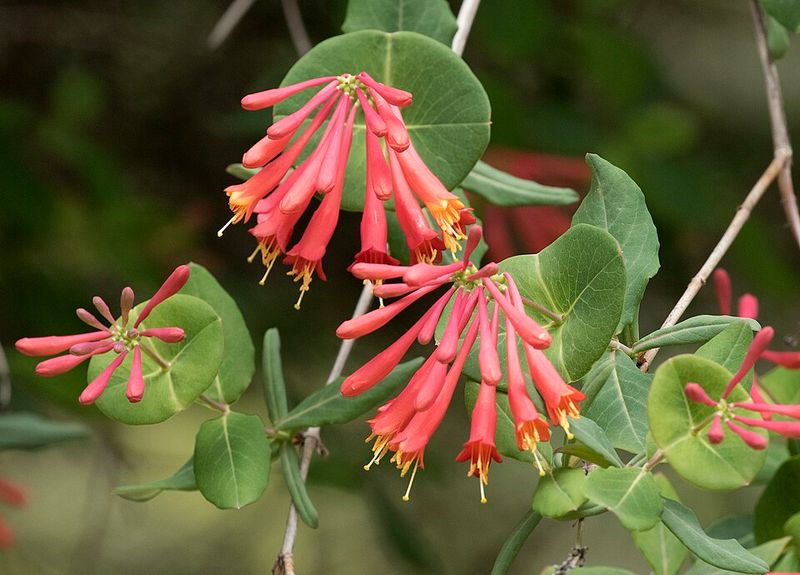
This native vine, known botanically as Lonicera sempervirens, produces clusters of slender, tubular flowers in shades of coral red and soft orange that light up a trellis from late spring well into summer.
Unlike its invasive Japanese cousin, trumpet honeysuckle plays nicely in a home landscape without smothering neighboring plants or spreading aggressively into the yard. It brings the kind of cheerful vertical color that can make a plain fence feel far more alive.
It also gives a fence line a softer, more welcoming look without feeling overly formal.
Hummingbirds absolutely love this vine. The long, narrow flowers are shaped almost perfectly for hummingbird feeding, and an Ohio garden with trumpet honeysuckle on the fence will often see regular hummingbird visits from spring through early fall.
Songbirds also appreciate the bright red berries that follow the blooms, adding another season of wildlife interest to the trellis.
On a fence or porch trellis, trumpet honeysuckle twines its stems steadily upward and can reach anywhere from ten to twenty feet depending on the site and growing conditions.
It handles summers well and tolerates some shade, though it tends to bloom most heavily in full sun.
The foliage stays attractive through the season, with a blue-green color that pairs nicely with wooden fences and stone walls.
For gardeners wanting native color without the management headaches of more vigorous vines, trumpet honeysuckle sits in a comfortable middle ground.
It brings regional character, seasonal interest, and genuine wildlife value to any vertical space in the home landscape.
2. Virgin’s Bower Softens Fences With White Blooms
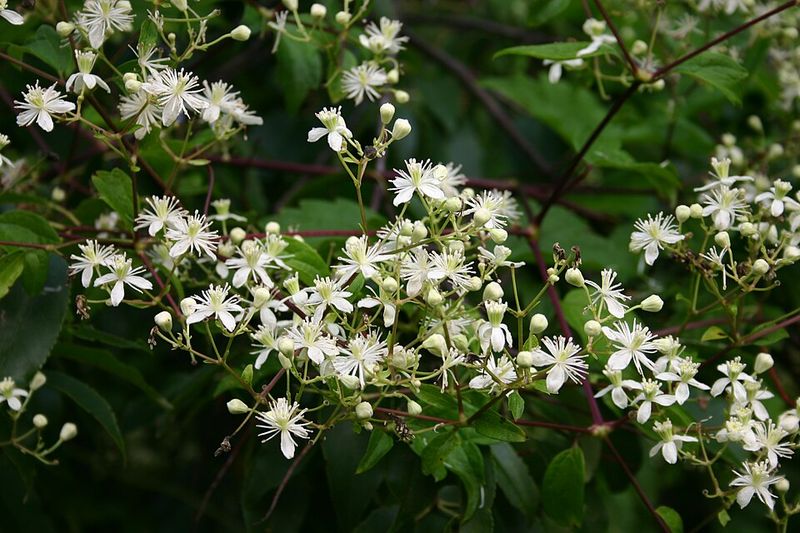
Stretching across a fence in late summer, virgin’s bower creates the kind of soft, frothy display that makes neighbors stop and ask what it is.
This native Ohio vine, Clematis virginiana, belongs to the same genus as the popular garden clematis but has its own wild, airy character that feels distinctly at home in Ohio landscapes.
Your Ohio Garden Changes Every Week. Your Plan Should Too.
Gardening in Ohio changes quickly throughout the season. Every Friday you’ll receive a simple weekly plan showing exactly what to plant, prune, fertilize, harvest, and protect so you never miss the right timing.
Its small white flowers appear in late July and August, arriving after most showy garden vines have already finished their main flush of bloom. That later bloom window gives an Ohio fence line fresh life just when many summer plantings start to look a little tired.
The timing alone makes virgin’s bower worth considering. Late summer color is genuinely hard to find among climbing plants, and this vine fills that gap naturally without needing much encouragement.
After flowering, it develops feathery, silvery seed heads that catch the light in early fall and give the fence a soft, textured look well into October.
Virgin’s bower climbs by wrapping its leaf stems around supports, which means it works well on wire fences, lattice panels, and open trellises where it can find something to grip.
It can grow quite vigorously in good conditions, so it suits larger fence runs or spots where coverage is the main goal rather than a tidy, compact display.
Giving it room to spread makes management easier.
As a native plant, it supports pollinators and provides seeds that songbirds find useful in fall.
For gardeners who want a native alternative with a real connection to the clematis family, virgin’s bower offers a genuinely interesting and seasonally distinct option for fences and trellises.
3. American Wisteria Brings Graceful Trellis Color
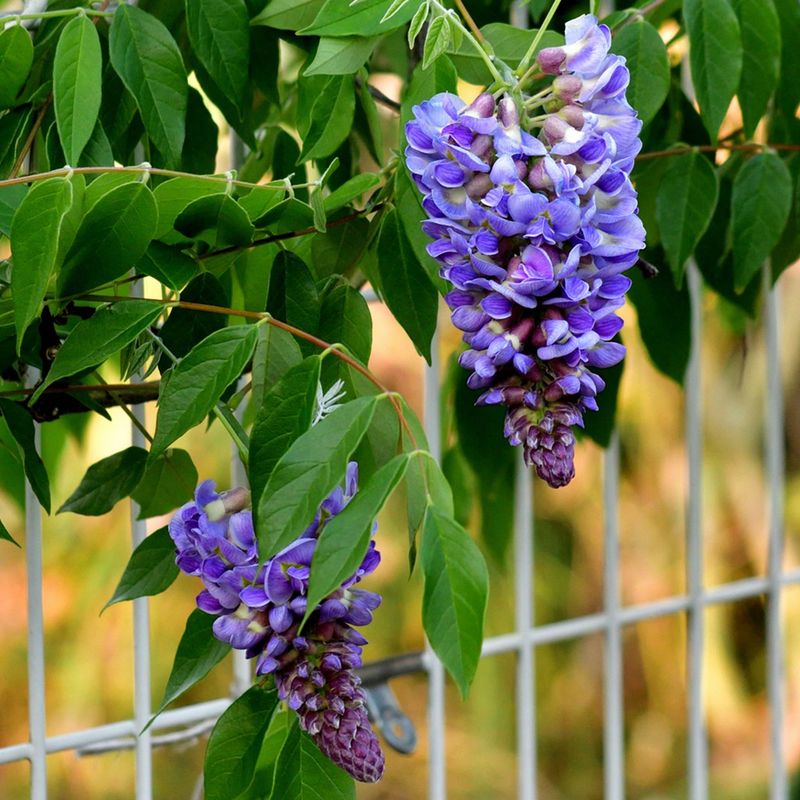
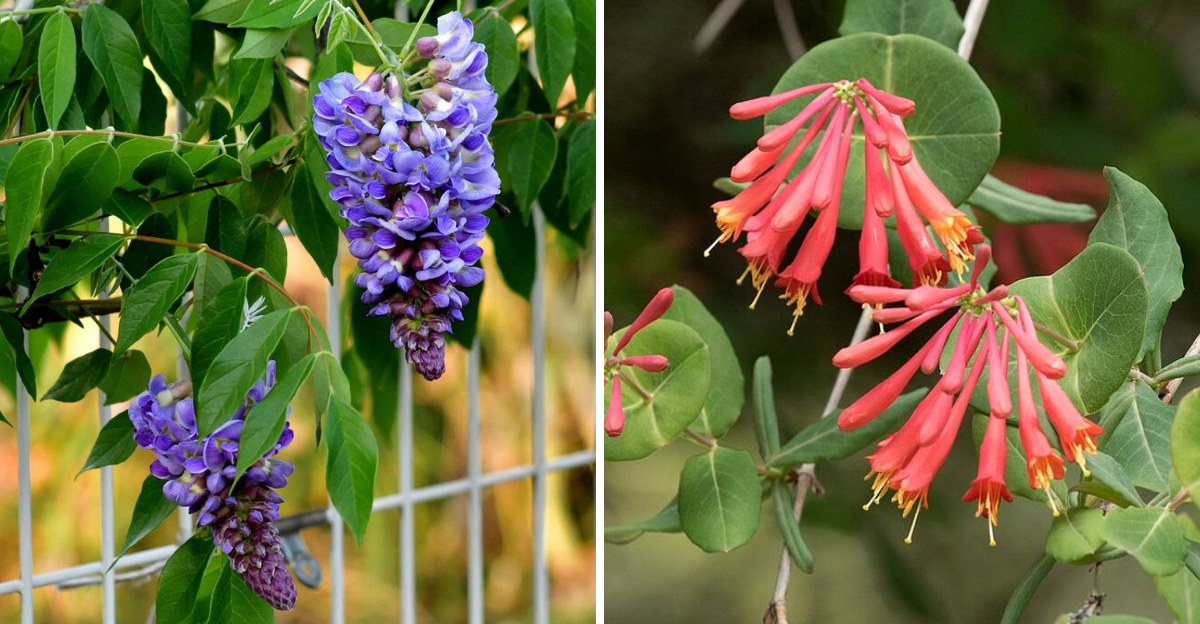
Wisteria on a trellis is one of those images that makes a garden feel genuinely romantic, and American wisteria delivers that look without the aggressive takeover that Asian wisteria species are well known for.
Wisteria frutescens, the native American species, produces hanging clusters of lavender to purple flowers in late spring, and some cultivars rebloom lightly through summer, which extends the seasonal interest on an Ohio trellis considerably.
It gives a fence or arbor that soft, classic flowering look without making the space feel overrun.
Compared to Japanese or Chinese wisteria, the American species is notably more restrained.
It still grows with energy and needs a sturdy support structure, but it does not typically strangle large trees or rip apart wooden structures the way its non-native relatives sometimes do.
On a heavy-duty trellis, pergola, or strong fence post system, American wisteria can be managed with annual pruning and kept looking attractive year after year.
The fragrance of the flowers is mild and pleasant, filling the air near a porch or seating area without being overwhelming. Pollinators visit the blooms regularly, and the vine provides useful cover for nesting birds when it fills in well.
In Ohio, it tends to establish over two to three growing seasons before putting on its most impressive floral display, so some patience is needed in the early years.
For gardeners who have always wanted wisteria on a trellis but worried about losing control of the plant, American wisteria offers a more manageable path to that classic climbing vine look with genuine native credentials and real regional character.
4. Virginia Creeper Covers Fences Fast
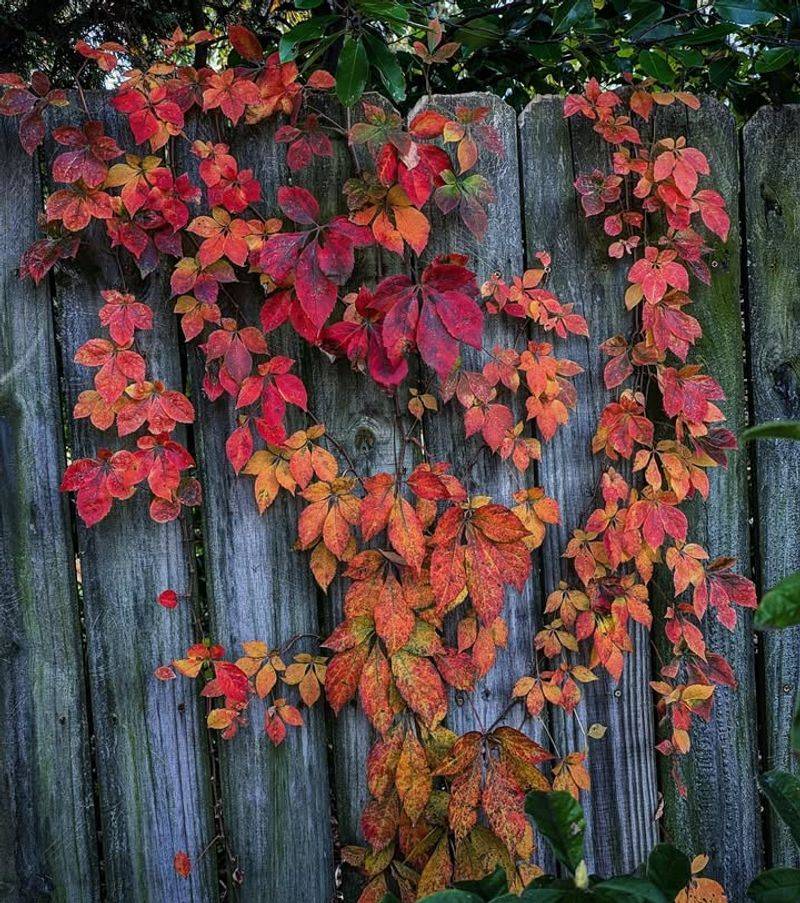
Homeowners who need a fence covered quickly often find Virginia creeper to be one of the most reliable native vines available in Ohio.
Parthenocissus quinquefolia climbs with adhesive tendrils that grip wood, brick, stone, and wire fencing firmly, allowing it to spread across a large fence run in just a few growing seasons.
Its five-leaflet foliage creates dense, layered coverage that works well as a natural privacy screen through the warmer months. It also gives a fence line a fuller, more established look without relying on a shrub border below it.
The real showstopper comes in fall. Virginia creeper turns an intense, vivid red in October, often well ahead of surrounding trees and shrubs, which makes an Ohio fence line look spectacular during peak autumn color.
Few climbing plants offer that kind of seasonal drama, and for gardeners who want a fence that earns its keep through multiple seasons, this vine delivers consistently.
Summer brings small, inconspicuous flowers that develop into dark blue-black berries by late summer. Those berries are an important food source for migrating birds, including several thrush and warbler species that move through Ohio in fall.
The dense foliage also provides nesting cover and insect habitat that benefits a range of wildlife in the home landscape.
Virginia creeper does spread with real purpose, so it suits larger fence sections better than small, tidy trellises. Trimming it back once or twice during the growing season keeps it within bounds without much difficulty.
For gardeners wanting fast, attractive, wildlife-friendly fence coverage, Virginia creeper is a genuinely practical native option worth planting.
5. Trumpet Creeper Brings Bold Color And Growth
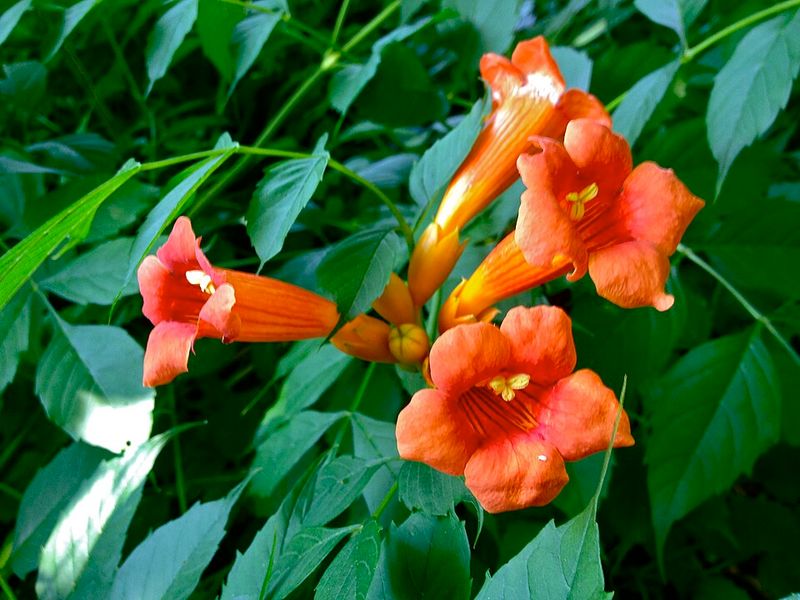
Gardeners who have watched a fence sit bare and underwhelming through summer often find trumpet creeper to be one of the most dramatically satisfying solutions available in Ohio.
Campsis radicans produces large, flaring, orange-red trumpets from midsummer into early fall, creating a bold vertical display that stands out from a considerable distance.
Hummingbirds are drawn to the flowers reliably, and a fence covered in trumpet creeper during July and August becomes an active, lively part of the garden. Few native vines bring that much late-summer energy to a structure.
It is worth being straightforward about the vigor of this vine. Trumpet creeper is a strong grower that can reach thirty feet or more and will spread by underground runners if left unchecked.
On a sturdy fence with regular management, it can be kept in a reasonable space, but it is not the right choice for a small decorative trellis or a spot where the goal is a tidy, contained display.
It suits fence lines along property edges, along barn walls, or on heavy wooden structures where its energy can be directed without causing problems.
The foliage is attractive through the season, with dark green compound leaves that fill in well and provide decent coverage between bloom cycles.
In Ohio, the vine handles summer heat without complaint and tends to bloom most heavily during the warmest stretches of the season.
For gardeners with the right space and a sturdy structure, trumpet creeper offers some of the boldest native color available on a fence or trellis, along with reliable hummingbird activity that adds real life to the landscape.