Native Georgia Trees To Plant Instead Of Bradford Pear In Front Yards
Bradford pear trees had a serious front-yard era in Georgia. They showed up with spring flowers, a tidy shape, and that “look at me” curb appeal homeowners loved.
Then came the less charming part. These trees can spread into natural areas, crowd native plants, and turn a pretty planting choice into a landscape headache.
Not exactly the legacy anyone wants by the mailbox. Luckily, Georgia has plenty of native trees with real personality.
Think spring blooms, graceful branches, wildlife value, and front-yard beauty that feels more connected to the local landscape. Eastern redbud, serviceberry, fringetree, dogwood, and other native options can bring the charm without the same invasive baggage.
A smarter tree swap can make a yard look better, support birds and pollinators, and give the neighborhood something much nicer to admire.
1. Eastern Redbud Adds Early Spring Color
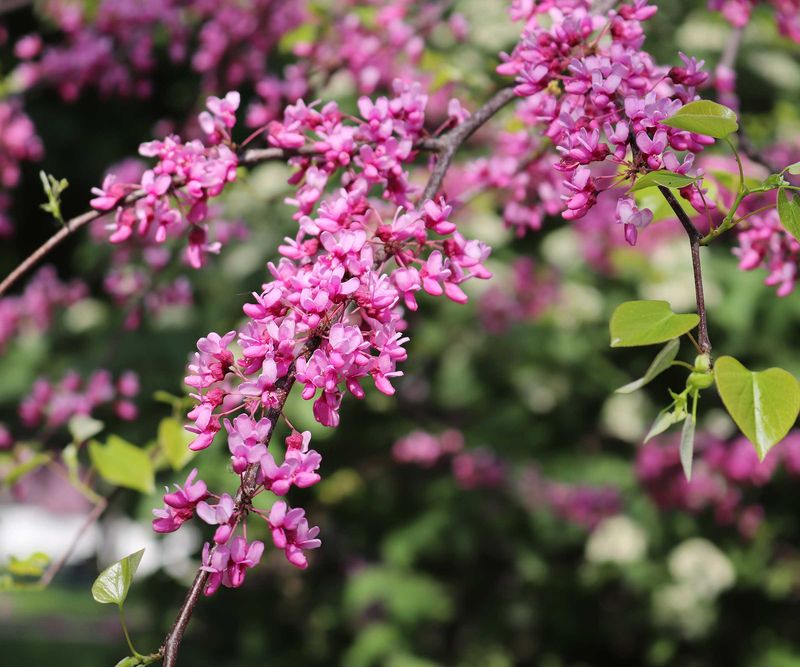
Few sights in a Georgia front yard stop neighbors in their tracks quite like an Eastern Redbud bursting into bloom in late winter or early spring.
Before the leaves even appear, the branches get covered in clusters of rosy-pink to magenta flowers that create a striking contrast against the sky.
That early color is one of the main reasons homeowners are choosing this tree as a Bradford pear replacement.
Eastern Redbud is a native understory tree that tends to top out between 20 and 30 feet tall, which makes it a comfortable fit for most residential front yards. It works well near driveways, along walkways, or planted as a focal point in a lawn area.
The heart-shaped leaves that follow the blooms add a soft, attractive texture through summer, and the foliage turns yellow in fall for one more seasonal moment.
In Georgia, Eastern Redbud grows well in full sun to partial shade and adapts to a range of soil types, though it does appreciate good drainage.
Young trees benefit from regular watering during dry spells in the first couple of seasons while they establish roots.
Spacing the tree at least 15 feet from structures gives it room to develop its naturally rounded canopy. Native bees are especially fond of the early blooms, giving this tree real habitat value alongside its strong visual appeal.
2. Chickasaw Plum Brings Native White Blooms
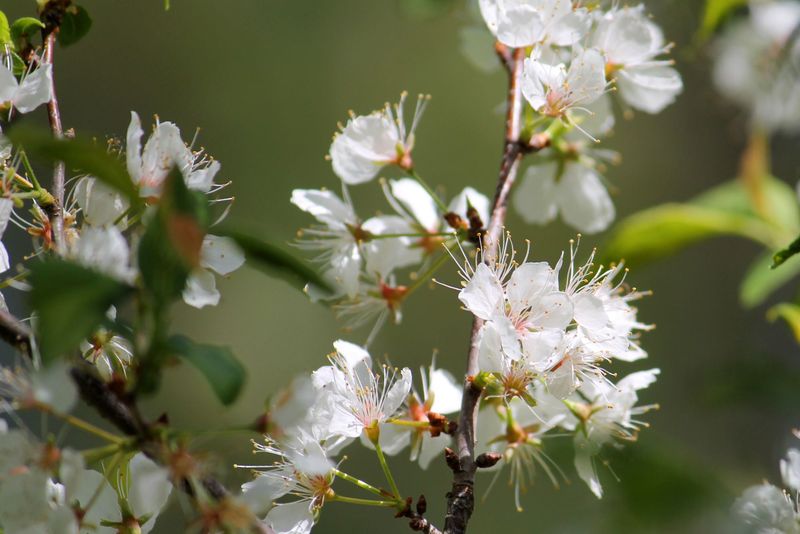
Chickasaw Plum is one of those native Georgia trees that tends to surprise people when they see it in full bloom. In early spring, before the leaves fill in, the branches get smothered in small white flowers that create a soft, cloud-like effect from a distance.
The bloom timing is close to Bradford pear, which makes it a natural visual substitute for homeowners who love that early white flower show but want a tree that behaves better in the landscape.
This small native tree usually stays between 15 and 25 feet tall, and it can develop a naturally multi-stemmed or slightly irregular form that gives it a relaxed, cottage-garden character.
In a Georgia front yard, it works nicely as a specimen tree in an open lawn or near a mailbox area where its spring display can be appreciated up close.
Your Georgia Garden Changes Every Week. Your Plan Should Too.
Gardening in Georgia changes quickly throughout the season. Every Friday you’ll receive a simple weekly plan showing exactly what to plant, prune, fertilize, harvest, and protect so you never miss the right timing.
The small yellow-red fruits that follow the blooms attract birds and other wildlife through summer, adding another layer of habitat value.
Chickasaw Plum grows well in full sun and handles a range of soil conditions, including sandy or slightly dry soils that are common in parts of Georgia.
It tends to be fairly low-maintenance once it gets established, though young trees do benefit from consistent watering during dry periods in the first growing season.
Giving it enough open space to spread helps show off its natural form and encourages the best flowering each spring.
3. American Fringetree Offers Soft Flower Clusters
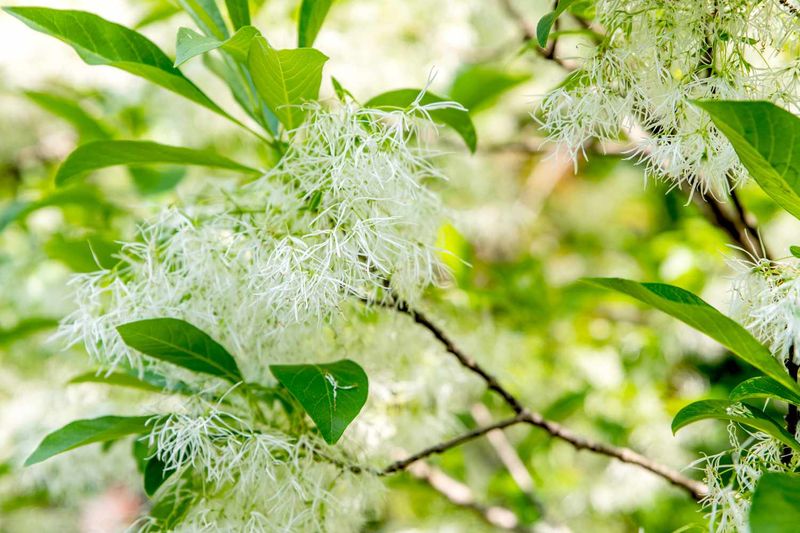
Walking past an American Fringetree in full bloom feels a little like seeing something out of a fairy tale.
The long, feathery white flower clusters hang from the branches in late spring and create a soft, almost cloud-like effect that is genuinely hard to replicate with any other tree.
Homeowners who want a front yard tree with real visual drama but without the aggressive spreading habit of Bradford pear will find a lot to appreciate here.
American Fringetree is a native small tree or large shrub that typically reaches 12 to 20 feet tall, making it a manageable size for most front yard settings in Georgia.
It tends to develop a rounded, open canopy that allows light to filter through, which can work well near entryways, along fences, or as a focal point in a lawn bed.
The dark blue berry-like fruits that appear in late summer attract birds, especially mockingbirds and other species common across Georgia.
This tree grows well in full sun to partial shade and does best in moist, well-drained soil, though it can adapt to average conditions once established.
In Georgia, planting it in a spot with morning sun and some afternoon shade can help it thrive during hot summers.
Young trees tend to grow slowly at first, so patience pays off. With steady watering in the first two seasons, American Fringetree settles in and rewards homeowners with blooms that genuinely stand out in any neighborhood.
4. Serviceberry Adds Blooms And Seasonal Interest
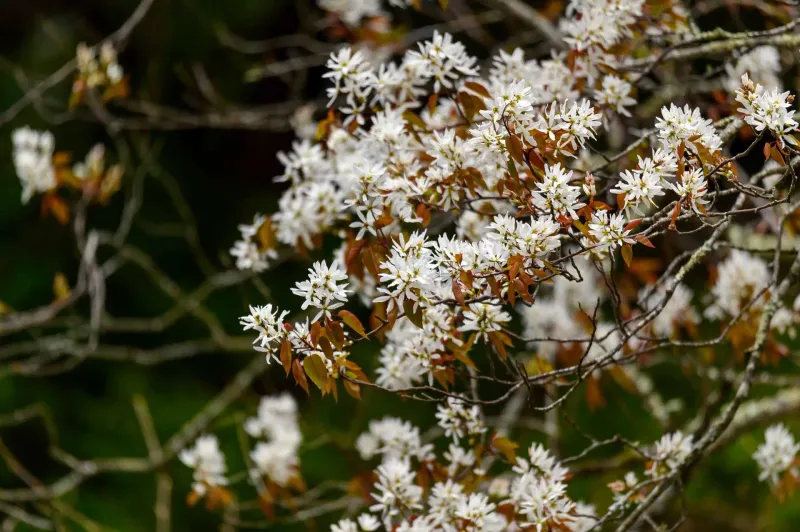
Serviceberry earns its place in a Georgia front yard by delivering something interesting in almost every season. White flowers open in early spring, often before most other trees have even woken up from winter.
Those blooms give way to small, blueberry-like fruits in late spring and early summer that birds find irresistible, and the foliage shifts to warm orange and red tones in fall.
Homeowners replacing Bradford pear will find that Serviceberry offers a comparable spring flower display without the invasive tendencies.
The tree generally stays between 15 and 25 feet tall depending on the species, and it tends to develop an upright to rounded shape that fits comfortably in a front yard without crowding nearby structures.
It can be planted as a single specimen or in a small grouping near a front walk or driveway to create a layered, naturalistic look.
Serviceberry grows well in full sun to partial shade and prefers moist, well-drained, slightly acidic soil, which is common across much of Georgia.
It tends to handle the transition from cooler to warmer seasons well, though consistent moisture during dry spells helps young trees establish more quickly.
The wildlife value of Serviceberry is genuinely strong, with the fruits drawing cedar waxwings, robins, and other birds that many homeowners enjoy watching. Few native trees pack this much multi-season appeal into such a manageable size for residential front yards.
5. Flowering Dogwood Brings Classic Georgia Beauty
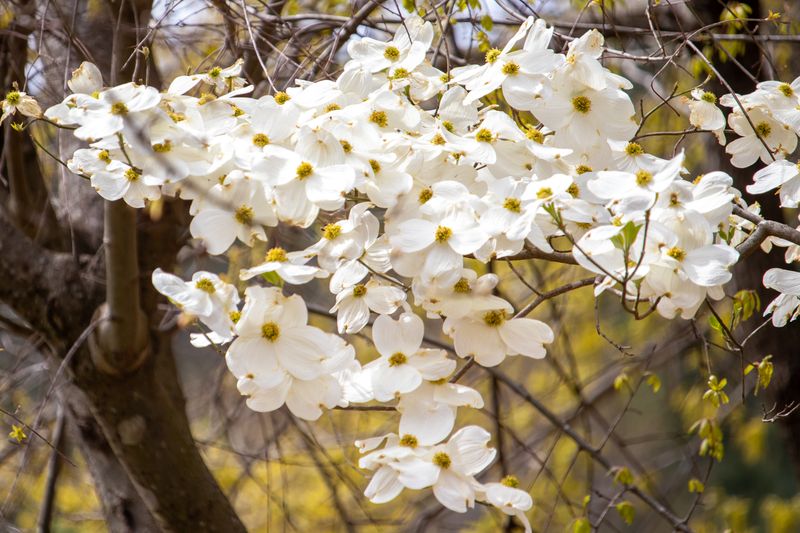
No native tree is more closely tied to the feeling of spring in Georgia than Flowering Dogwood. The broad white or pink bracts that surround the small true flowers create one of the most recognized and beloved spring displays in the entire Southeast.
For many homeowners, it is the tree that signals the season has truly arrived, and it fits naturally into front yards of almost any style.
Flowering Dogwood typically grows 15 to 30 feet tall and develops a horizontal branching pattern that gives it a graceful, layered appearance even when it is not in bloom.
That structure works beautifully in front yards where a tree with a defined canopy can frame a home without blocking views or overwhelming the space.
The red berries that appear in fall attract birds, and the foliage turns deep red before dropping, giving the tree a strong seasonal presence from early spring through late fall.
In Georgia, Flowering Dogwood grows best in partial shade to full sun with well-drained, slightly acidic, moist soil rich in organic matter. Planting it where it gets some protection from the harsh afternoon sun can help it stay healthy during hot Georgia summers.
Mulching around the base helps retain moisture and moderate soil temperature. Young trees benefit from regular watering through the first two seasons.
With the right placement, Flowering Dogwood can become one of the most admired trees on any Georgia street.
6. Carolina Silverbell Adds Graceful Spring Flowers
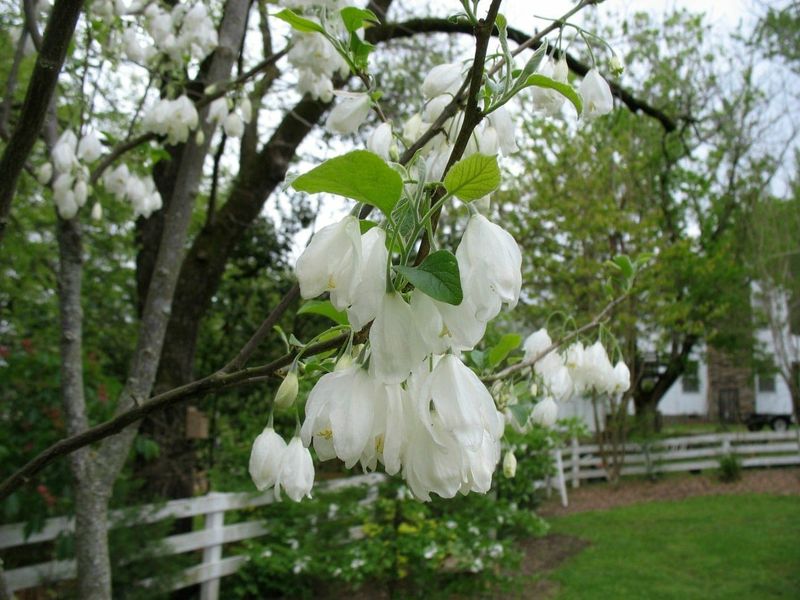
Carolina Silverbell has a quiet elegance that makes it stand out from most other small flowering trees.
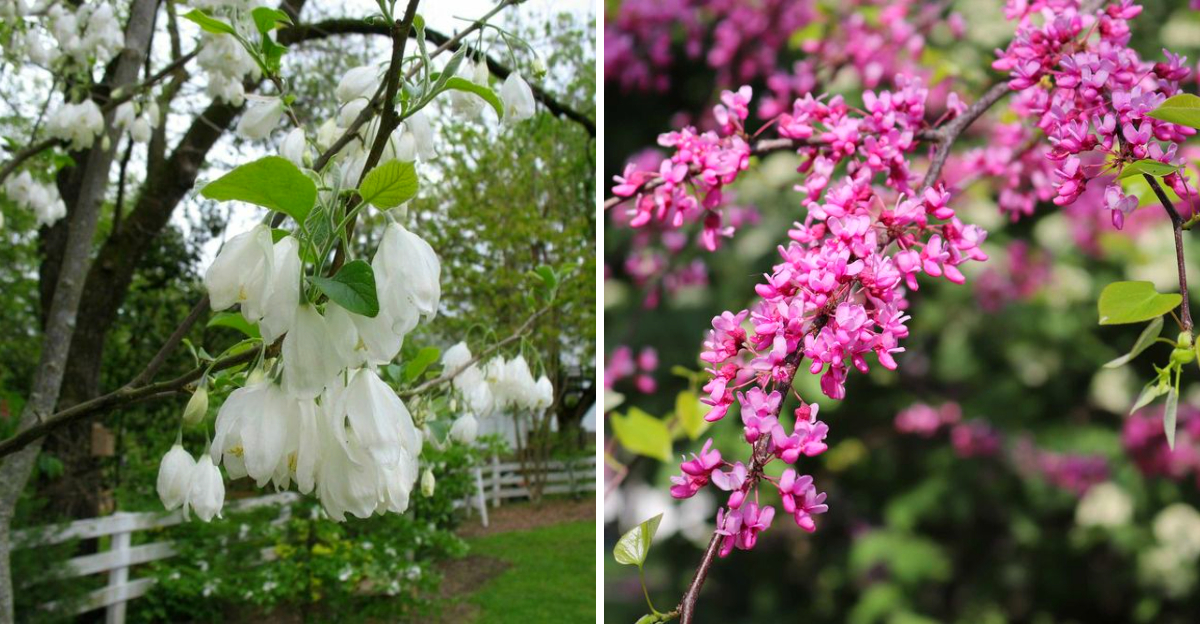
The small, white, bell-shaped flowers hang downward from the branches in mid to late spring, creating a delicate, dangling display that catches the light and draws the eye in a subtle but lovely way.
It is not as flashy as some flowering trees, but up close it has a charm that many homeowners find genuinely appealing.
This native tree generally grows 20 to 30 feet tall and develops a rounded to irregular canopy that works well in front yard settings where a medium-sized ornamental tree is needed.
It can serve as a specimen tree in a lawn, or it can be placed near a corner of the home where its gentle canopy can soften the architecture.
The yellow fall foliage adds one more seasonal layer before the leaves drop.
Carolina Silverbell does best in partial shade to full sun and prefers moist, well-drained, acidic soil with good organic content, conditions that are fairly easy to find across much of Georgia.
It tends to be a good choice for yards that have some shade from nearby larger trees, since it naturally grows as an understory species.
Consistent watering during dry periods in the first couple of growing seasons helps it settle in.
Once established, Carolina Silverbell is a low-fuss tree that brings graceful seasonal beauty to Georgia front yards without any of the spreading problems associated with Bradford pear.
7. Red Buckeye Brings Bold Color To Small Yards
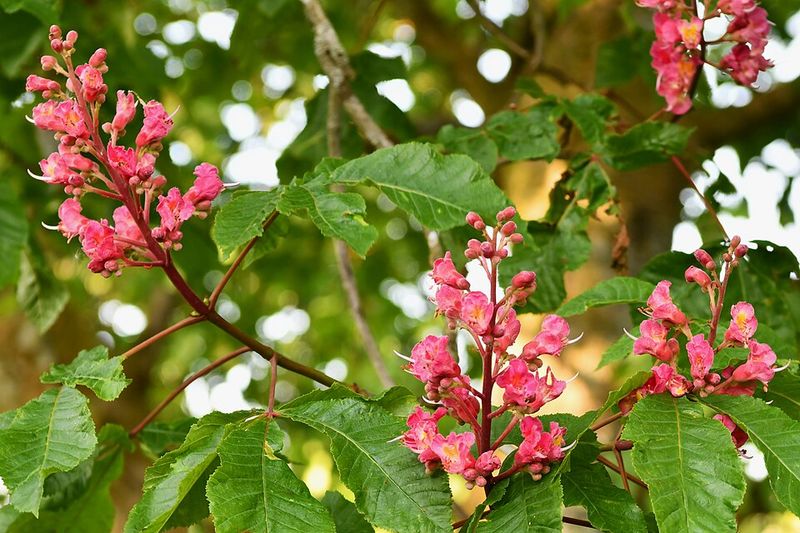
Red Buckeye is the kind of tree that makes hummingbirds change course mid-flight. The upright clusters of bright red tubular flowers appear in early spring, right when ruby-throated hummingbirds are migrating through Georgia, and the timing is no coincidence.
For homeowners who want a front yard tree that pulls in wildlife and turns heads at the same time, Red Buckeye is a genuinely exciting native option.
This small native tree usually tops out between 10 and 20 feet tall, which makes it one of the more compact choices on this list.
That manageable size is actually an advantage for Georgia front yards with limited space, tight foundation areas, or narrow planting strips between the sidewalk and the home.
The large, bold, palmate leaves give it a tropical-looking texture through summer that adds visual interest even after the flowers have finished.
Red Buckeye grows well in partial shade to full sun and prefers moist, well-drained soil. In Georgia, it tends to do especially well in spots with some afternoon shade, since the foliage can scorch a bit in intense summer heat and dry conditions.
The leaves may drop earlier than other trees in a dry summer, but the tree bounces back reliably each spring. Mulching around the base helps keep moisture in the soil and roots cool.
For smaller Georgia front yards that need a flowering native tree with real personality, Red Buckeye earns serious consideration.
8. Musclewood Fits Neatly Into Front Yard Spaces
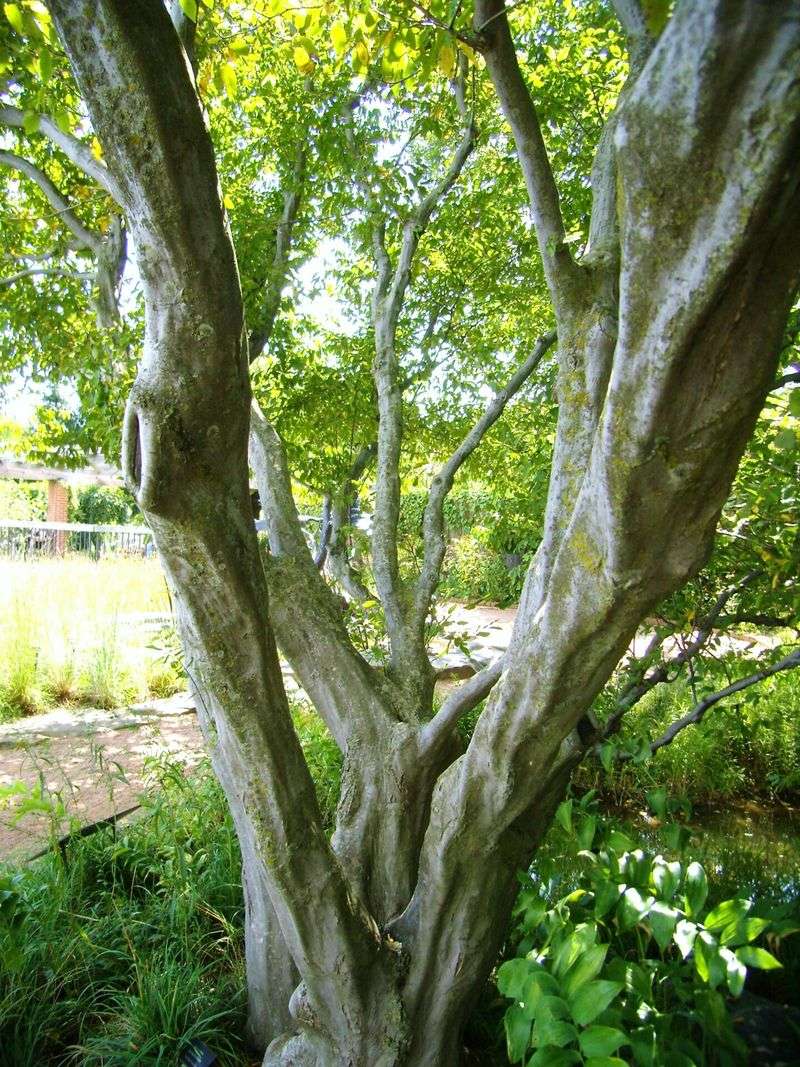
Musclewood gets its name from the smooth, gray, muscle-like ridges that run along its trunk and branches, giving it one of the most distinctive bark textures of any native Georgia tree.
Even in winter, when the leaves are gone, the trunk alone makes this tree worth a second look.
For homeowners who want a front yard tree with year-round visual interest and a naturally graceful form, Musclewood offers something a little different from the typical ornamental choices.
This native understory tree stays fairly small, usually reaching 20 to 30 feet tall at most, and it develops a slow, steady growth habit that makes it easy to manage in a front yard setting.
The compact size and tidy canopy make it a good fit for narrow planting areas, foundation beds, or spots near walkways where a larger tree might eventually crowd the space.
In spring, small catkins add subtle seasonal texture, and the foliage turns orange and red in fall.
Musclewood grows well in partial to full shade and prefers moist, well-drained soil with decent organic matter, making it a strong candidate for Georgia front yards that get filtered light under a larger tree canopy.
It tends to be a slow grower, so planting a container-grown specimen rather than a very small seedling can help get the visual effect going sooner.
Once established, it requires minimal care and holds up well through Georgia summers with reasonable moisture and a layer of mulch around the base.