Why Avocado Leaves Turn Yellow In June In California And How To Fix It
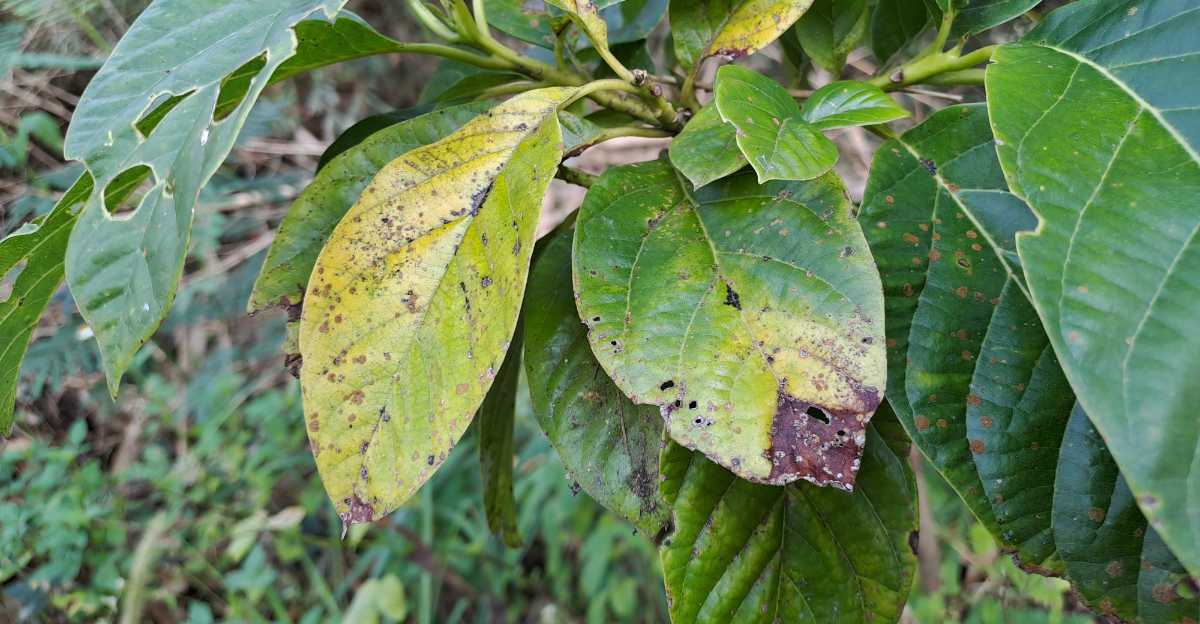
Avocado trees can be moody in June, and yellow leaves are one of their favorite ways to make gardeners nervous.
One week the tree looks lush and happy. Then a few leaves start fading, and suddenly you are staring at it like it owes you an explanation.
In California, early summer can bring a mix of heat, dry air, and watering mistakes that avocado trees do not always forgive quietly.
Yellowing leaves can mean the tree is stressed, but the reason is not always obvious at first glance. Sometimes the problem starts below the soil.
Other times, the leaves are reacting to a change in weather or care. That is what makes this issue so frustrating. A yellow leaf is not a full diagnosis.
It is more like the tree waving a tiny flag and asking you to look closer before summer gets tougher.
1. Older Leaves May Be Shedding Naturally
Not every yellow leaf means trouble. Sometimes your avocado tree is simply doing what all trees do, letting go of its older leaves to make room for new growth.
This process is completely normal and tends to happen more noticeably in late spring and early summer.
Avocado trees hold onto their leaves for about a year before shedding them. When June rolls around and temperatures climb, older leaves on the inner branches or lower canopy often turn yellow and drop.
You might see a small pile of leaves under the tree and feel worried, but this is usually just the tree refreshing itself.
The key is knowing where the yellowing is happening. If the yellow leaves are mostly older, larger, and located toward the base or inside of the canopy, natural shedding is likely the cause. New leaves at the tips should still look green and healthy.
You do not need to do anything special in this case. Just keep up with your regular watering and fertilizing schedule.
Raking up the fallen leaves is a good idea to keep the area clean and reduce the chance of pests or fungal issues settling in around the base of the tree.
Watching the pattern over a few weeks will help you feel confident that nothing more serious is going on.
2. Water Stress Shows Up Fast In Heat
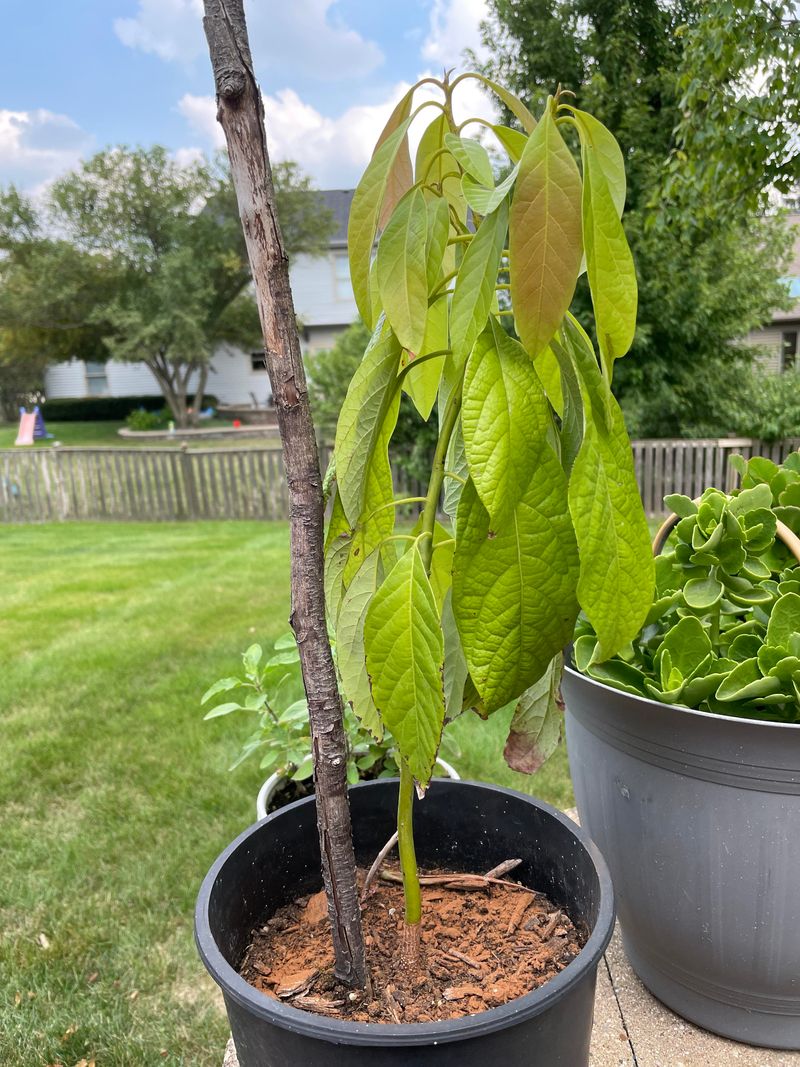
June heat in our state can be brutal, and avocado trees feel every degree of it. When temperatures rise quickly and there is not enough water reaching the roots, the tree responds fast. Yellow leaves are one of the earliest warning signs of water stress.
Avocado trees need deep, consistent watering, especially during hot months. Shallow or irregular watering causes the roots to dry out between sessions.
When roots cannot pull up enough moisture, the leaves start to yellow and may even curl at the edges.
A good rule is to water slowly and deeply so the moisture reaches at least 18 to 24 inches into the soil.
Using a drip system or soaker hose works well for this. Watering two to three times per week during a heat wave is often necessary for mature trees.
Your California Garden Changes Every Week. Your Plan Should Too.
Gardening in California changes quickly throughout the season. Every Friday you’ll receive a simple weekly plan showing exactly what to plant, prune, fertilize, harvest, and protect so you never miss the right timing.
Check the soil about six inches down before watering. If it feels dry at that depth, your tree needs water soon. If it still feels moist, wait another day or two.
Avocado trees do not like to sit in soggy soil, but they also cannot handle going too dry for long.
Getting the balance right during June is one of the most important things you can do to keep your tree looking its best through the summer season ahead.
3. Overwatering Can Damage Avocado Roots
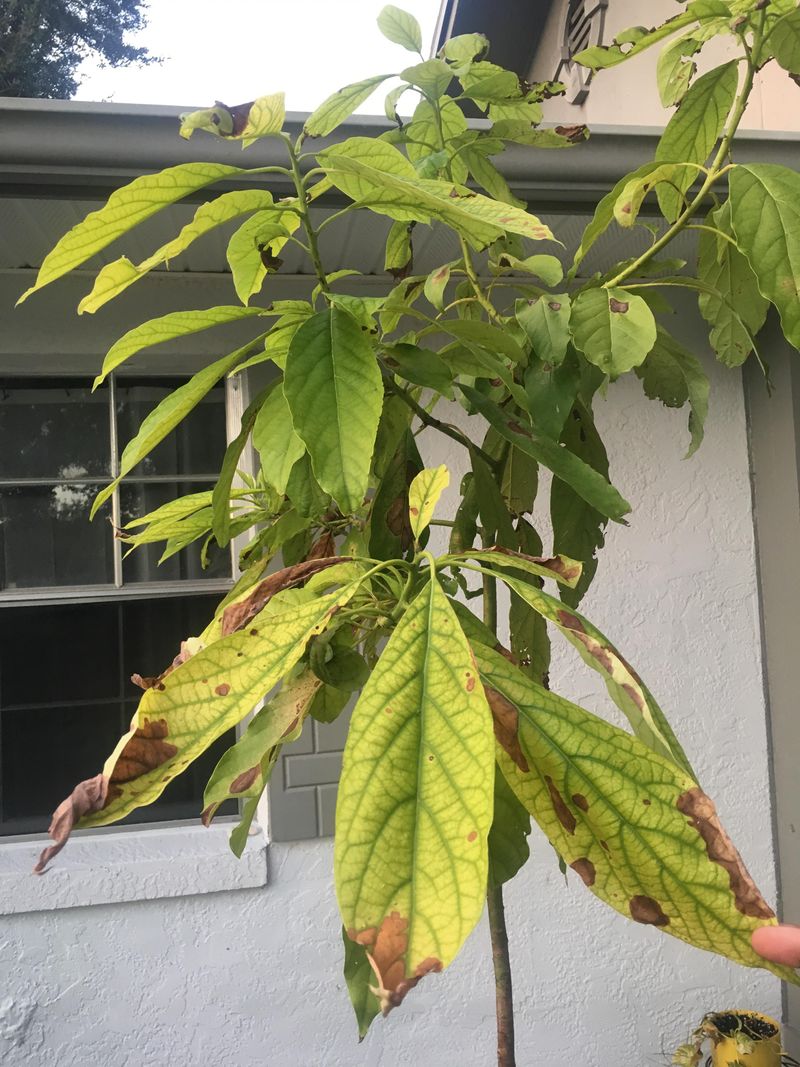
Here is something that surprises a lot of new avocado growers. Too much water can cause yellow leaves just as easily as too little.
Overwatering is actually one of the most common mistakes people make, especially when they are trying hard to keep their tree cool during a hot June. When the soil stays too wet for too long, the roots cannot get the oxygen they need.
Waterlogged roots start to break down, and the tree loses its ability to absorb nutrients properly. The result is pale, yellow leaves that may look limp or soft, even though the soil is wet.
Root rot caused by overwatering is a serious problem. The fungus Phytophthora cinnamomi thrives in wet conditions and attacks avocado roots quickly.
If you notice yellowing paired with a general decline in the tree despite regular watering, overwatering may be the issue.
Pull back on watering and let the soil dry out a bit between sessions. Make sure your irrigation system is not running too frequently.
Also check that water is not pooling around the base of the tree after each watering session.
Improving drainage around the root zone can help a lot. Adding coarse compost to the top layer of soil can also help balance moisture levels without letting the roots stay too wet for too long.
4. Salt Buildup Can Yellow Leaf Tips
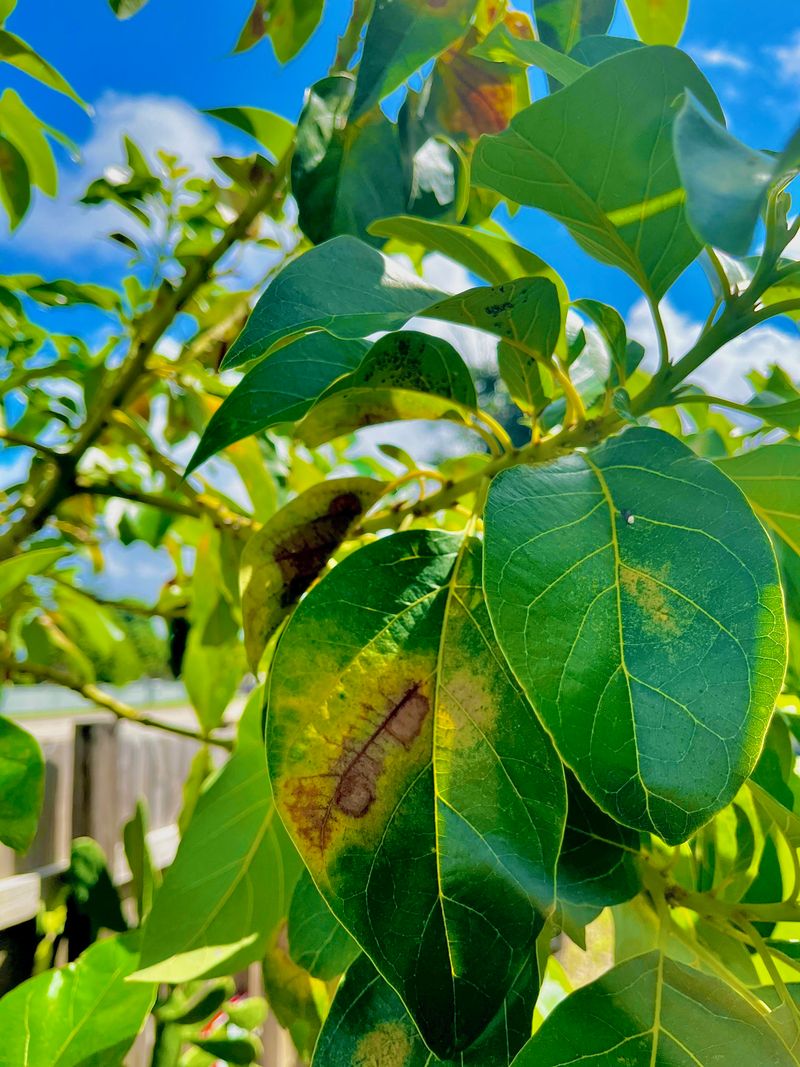
Have you ever noticed yellow or brown tips on your avocado leaves even when the rest of the leaf looks fine?
That pattern is a classic sign of salt buildup in the soil. It is a common problem in many parts of our state, especially in areas with hard water or where fertilizers have been used heavily over time.
Salts accumulate in the root zone when water evaporates and leaves minerals behind. Over time, high salt levels pull moisture away from the roots instead of letting the roots absorb it.
The leaves react by turning yellow at the tips and edges first, then browning as the damage spreads.
Using recycled or reclaimed water for irrigation can make this problem worse, since that water often contains higher salt concentrations. Checking your local water quality report is a smart first step if you suspect this is the issue.
Flushing the soil with clean water is the most effective fix. Run your irrigation slowly and deeply for a longer-than-usual period to push accumulated salts down below the root zone. Do this two or three times over several weeks.
Switching to a low-salt fertilizer can also help prevent the problem from returning. Keeping a layer of mulch around the tree helps reduce how quickly water evaporates from the soil, which naturally slows the rate of salt accumulation over the growing season.
5. Poor Drainage Can Turn Leaves Pale
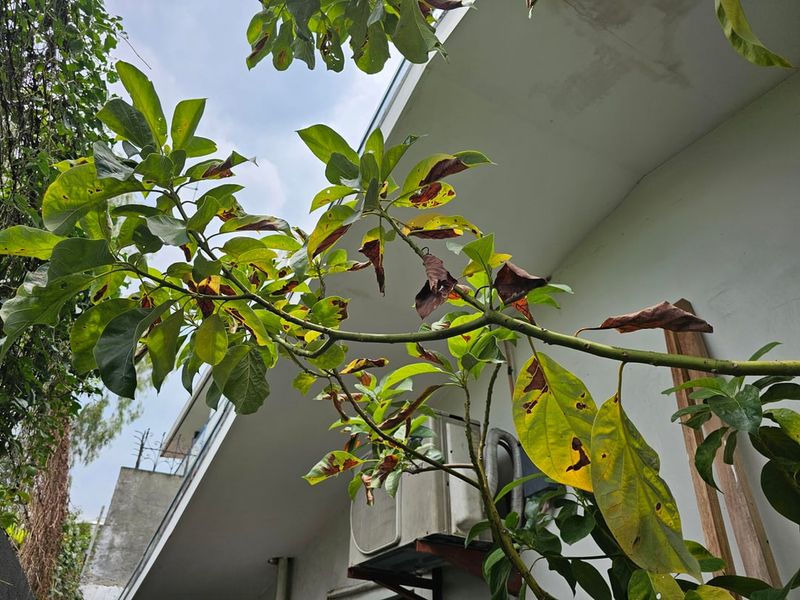
Soil that drains poorly is a quiet enemy of avocado trees. These trees have shallow, sensitive root systems that need well-aerated soil to stay healthy.
When water sits in the root zone too long, the roots suffocate and the tree cannot take up nutrients effectively. Pale, washed-out yellow leaves are a common result.
Heavy clay soils found in many parts of our state are a big contributor to this problem. Clay holds water well but does not let it move through quickly enough.
During June when you are watering more frequently, clay soil can become saturated faster than you expect.
One way to check your drainage is to dig a hole about 12 inches deep, fill it with water, and watch how fast it drains. If the water is still sitting there after an hour, your drainage is poor and your tree may already be struggling because of it.
Fixing drainage takes some effort but it is worth it. You can amend the soil by mixing in perlite, coarse sand, or compost to loosen the texture.
Raising the planting area slightly or building a small berm can also help water move away from the root zone more naturally.
For trees already in the ground, top-dressing with compost and aerating the surrounding soil regularly can improve conditions over time without disturbing the shallow roots your tree depends on.
6. Sunburn Can Scorch Exposed Leaves
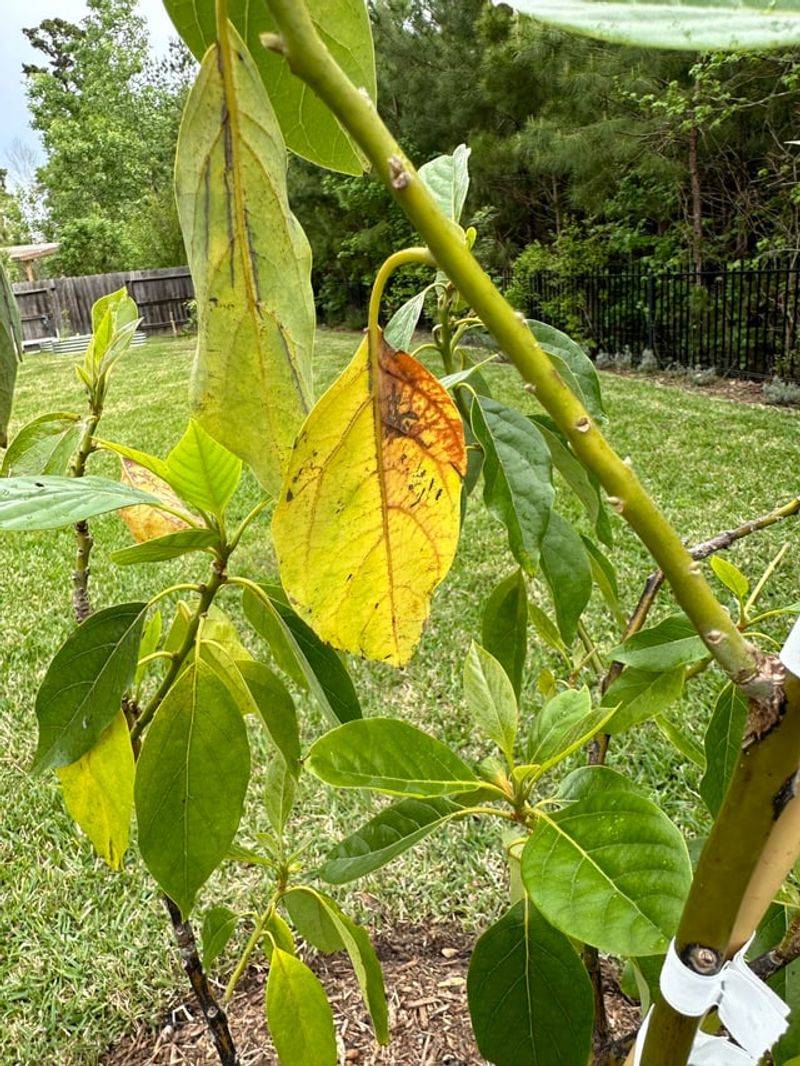
Most people think of sunburn as a people problem, but avocado trees can get it too. In June, the sun in our state is intense and the days are long.
Leaves that are suddenly exposed to direct, harsh sunlight can scorch quickly, turning yellow, bleached, or even tan on the surface.
Sunburn on avocado leaves often appears on the side of the tree facing south or west, where afternoon sun hits the hardest.
Young trees and recently pruned trees are especially vulnerable because they have less canopy to shade their own inner branches and leaves.
The damaged areas usually look pale yellow or almost white in the center, sometimes with a papery texture.
Unlike other yellowing causes, sunburn damage does not spread to the whole leaf uniformly. It tends to show up in patches or on one side of the leaf only.
Shade cloth is one of the most practical solutions for protecting young or vulnerable trees during peak summer heat.
A 30 to 40 percent shade cloth draped over the canopy or set up on a frame nearby can reduce leaf scorch significantly. Avoid heavy pruning in late spring so the tree keeps its natural shade.
Whitewash paint made for trees can also be applied to exposed trunks and major branches to reflect sunlight and reduce heat stress during the hottest weeks of summer in your garden.
7. Low Nitrogen Can Make Growth Look Weak
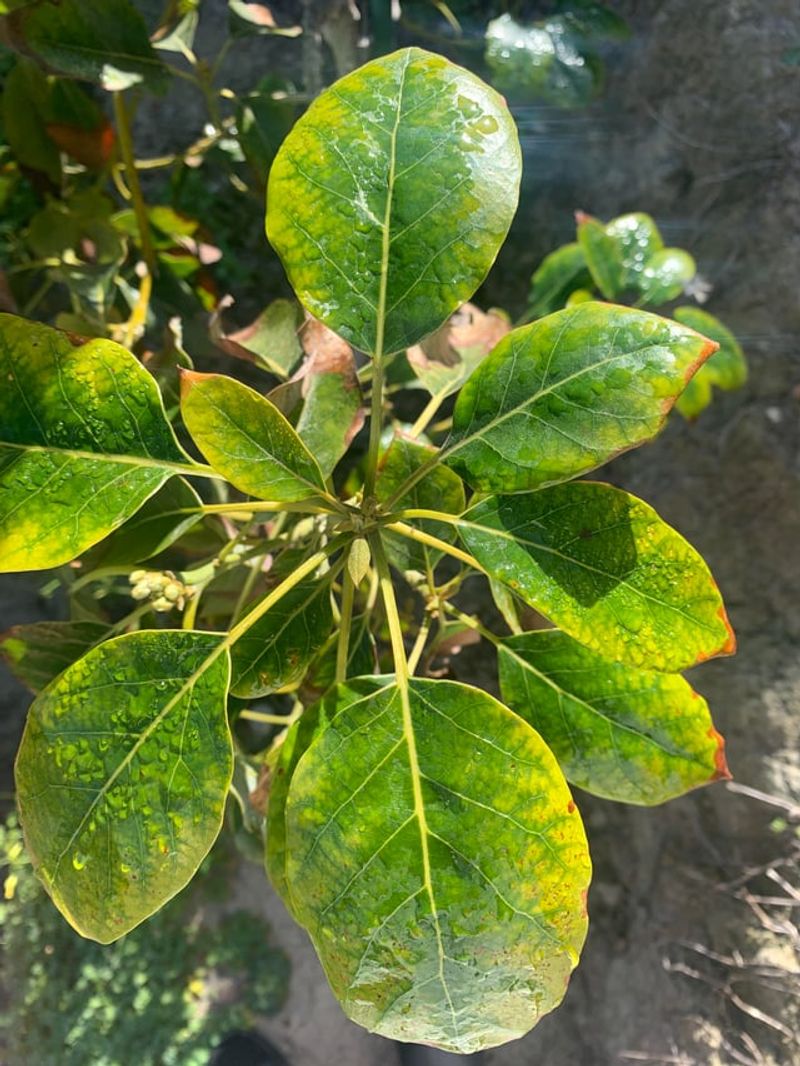
Nitrogen is one of the most important nutrients for any leafy plant, and avocado trees are no exception.
When nitrogen levels in the soil drop too low, the whole tree starts to look pale and tired. Leaves turn a uniform light yellow or yellow-green, and new growth may appear thin and weak compared to a healthy tree.
June is actually a critical feeding time for avocado trees. The tree is actively growing, setting fruit, and pushing energy into new shoots.
If it does not have enough nitrogen available in the soil, it will start pulling it from older leaves, causing them to yellow and drop earlier than usual.
Nitrogen can be depleted quickly in sandy soils or in areas that get a lot of rain or irrigation, since it washes out easily.
If you have not fertilized your tree since early spring, a nitrogen boost in June can make a noticeable difference within a few weeks.
Use a balanced citrus and avocado fertilizer that includes nitrogen, or apply a slow-release granular fertilizer around the drip line of the tree. Avoid placing fertilizer right against the trunk. Water it in well after applying.
Organic options like blood meal or fish emulsion also work well and are gentler on the soil ecosystem.
Regular fertilizing every six to eight weeks during the growing season keeps nitrogen levels steady and your tree looking full and green all summer long.
8. Iron Chlorosis Shows Up On New Leaves
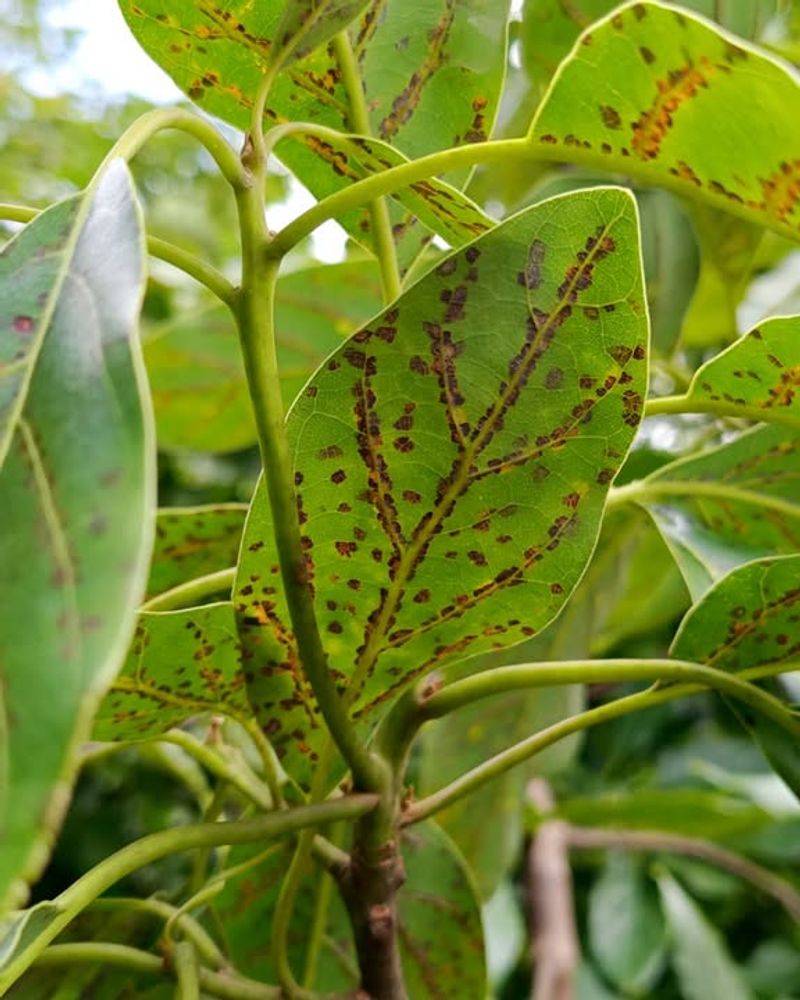
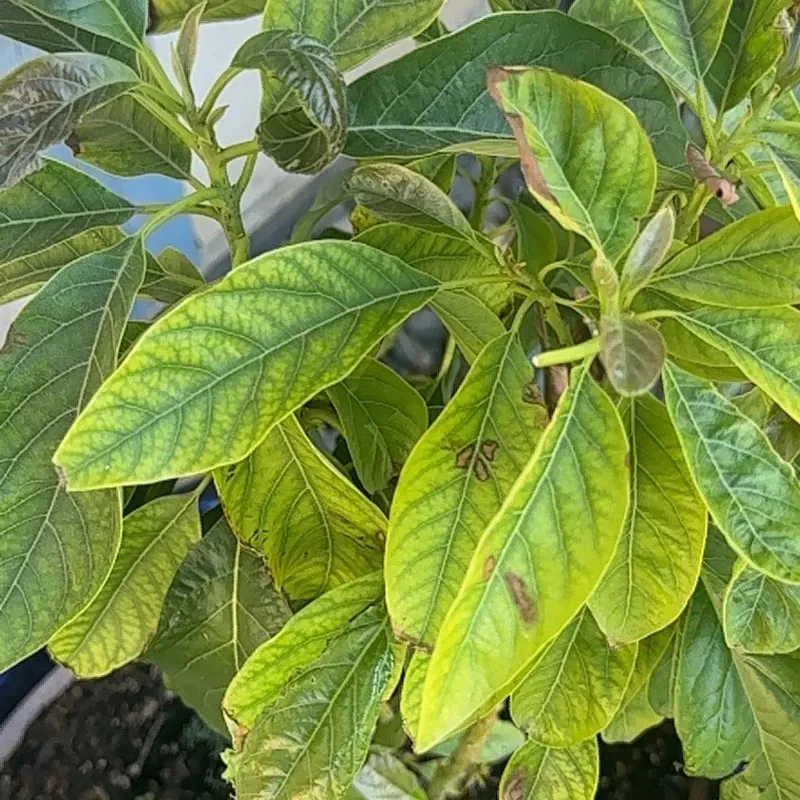
One of the most recognizable nutrient problems in avocado trees is iron chlorosis. Unlike nitrogen deficiency, which yellows the whole leaf evenly, iron chlorosis has a very distinct look.
The area between the leaf veins turns bright yellow while the veins themselves stay dark green, creating a striking striped pattern.
What makes this especially telling is where it shows up. Iron chlorosis appears on the newest, youngest leaves at the tips of branches, not on the older foliage lower on the tree. If you see that pattern in June, iron availability is likely the issue.
Interestingly, the soil often has plenty of iron in it. The problem is usually pH. When soil pH is too high, typically above 7.0, iron becomes chemically locked and the roots cannot absorb it even when it is present.
Alkaline soils are common in many areas of our state, making this a widespread issue. Lowering soil pH is the long-term fix. Applying soil sulfur around the drip line gradually brings pH down over several weeks.
For a faster response, chelated iron products are available at most garden centers and can be applied as a soil drench or foliar spray.
Foliar sprays work especially quickly because the iron goes directly into the leaf tissue. Repeat applications may be needed throughout the summer to keep new growth looking healthy and green.
9. Mulch Helps Protect Shallow Roots
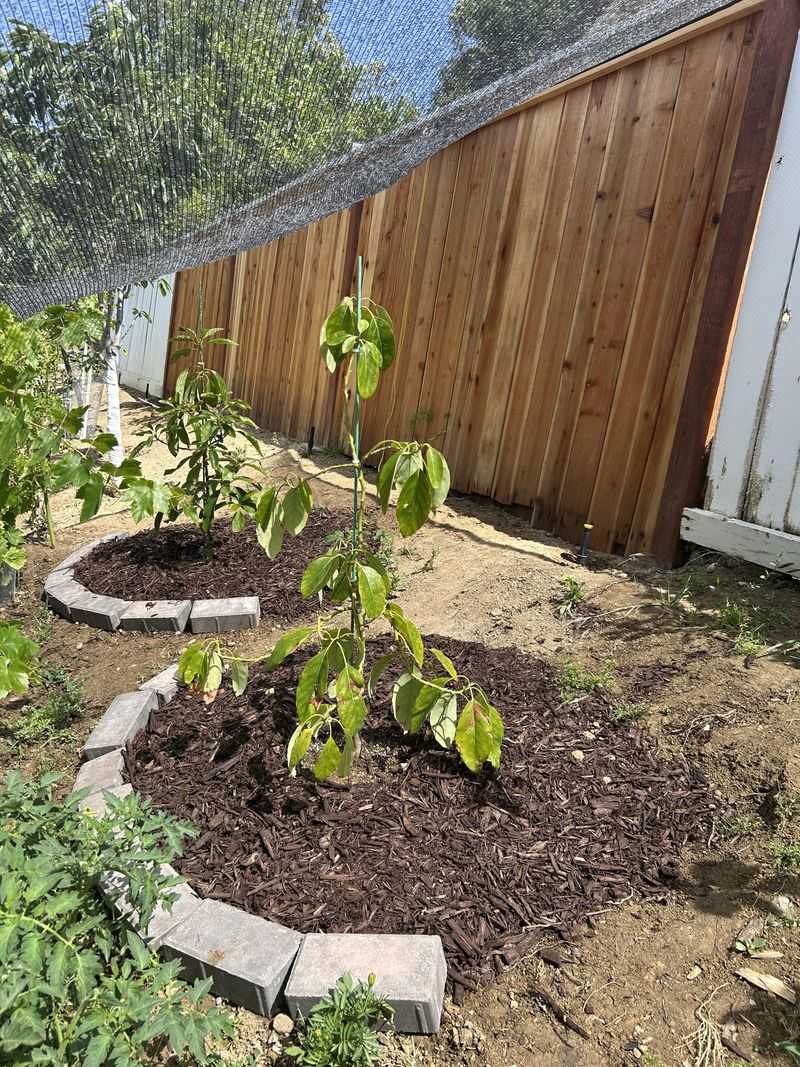
Mulch might seem like a simple gardening trick, but for avocado trees it is genuinely one of the best tools you have.
Avocado roots are unusually shallow, spreading out just a few inches below the soil surface. That makes them extremely sensitive to heat, dryness, and soil compaction during hot summer months.
A thick layer of organic mulch around the base of your tree acts like a protective blanket. It keeps the soil cooler by several degrees on hot June days, reduces how fast moisture evaporates, and slowly breaks down to add nutrients back into the soil over time.
All of those benefits directly reduce the stress that leads to yellow leaves. Wood chips, straw, and shredded bark all work well as mulch for avocado trees. Aim for a layer about three to four inches deep.
Spread it out to the drip line of the tree, which is roughly where the outermost branches end.
Keep the mulch a few inches away from the trunk to prevent moisture buildup against the bark.
Refreshing your mulch layer at the start of June is a smart seasonal habit. Over winter and spring, the old mulch breaks down and thins out.
Topping it up before the heat peaks gives your tree the best protection right when it needs it most.
Consistent mulching year after year also improves soil structure and supports a healthier, more resilient root system overall.