These Are The Florida Backyard Plants That Make Outdoor Spaces Usable In Summer Heat
Florida summers have a way of turning a beautiful backyard into a space nobody wants to touch. The heat index climbs, the humidity settles in, and outdoor living goes from enjoyable to genuinely uncomfortable fast.
Most homeowners just accept it, closing the back door from June through September and waiting it out. But that’s starting to change.
Across Florida neighborhoods, people are discovering that the right plants do more than add color to a yard. They reshape how a space actually feels.
Shade canopy, natural airflow, ground temperature, strategic planting addresses all of it in ways a ceiling fan or umbrella simply can’t match.
So what exactly are homeowners putting in the ground to make their outdoor spaces functional again during the hottest months of the year?
The answer comes down to a specific group of plants that thrive in the conditions that send everything else into survival mode.
1. Live Oak Provides Long-Term Shade
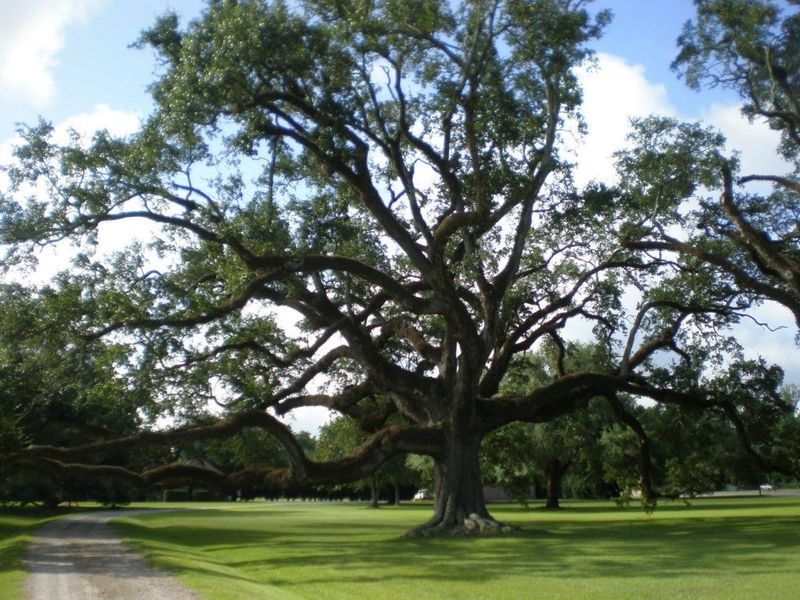
Real summer comfort starts with shade, and few trees deliver it the way a live oak does. Quercus virginiana is a native Florida tree with a broad, spreading canopy that can eventually cover a wide portion of a backyard.
That canopy is the goal. Once a live oak matures, it can make a patio or seating area feel genuinely cooler and more usable on even the hottest afternoons.
The honest part is that live oak is a long-term investment. It does not grow fast enough to solve this summer’s heat problem.
Young trees need time, good placement, and patience before they deliver meaningful shade. Plan for the mature size carefully, because a full-grown live oak can spread very wide and its roots are strong and far-reaching.
Keep the tree well away from buildings, driveways, patios, and overhead lines. Check with a local Extension office or certified arborist about placement before you plant.
The roots deserve real space, and so does the canopy. In the right spot, though, a live oak can anchor a backyard landscape for generations.
It is one of the most rewarding shade investments a homeowner in this state can make.
2. Sabal Palm Adds Breezy Summer Structure
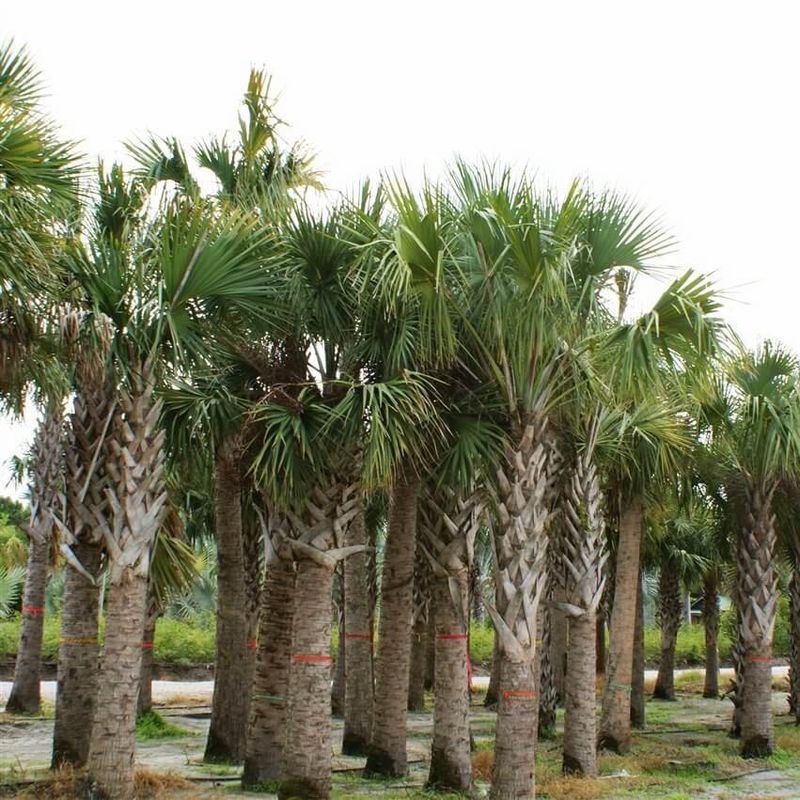
A palm can shape a space even without a wide canopy. Sabal palmetto, commonly called cabbage palm, is the official state tree and one of the most recognizable native plants in local backyards.
It adds height, vertical structure, and a relaxed tropical feel that signals summer in the most pleasant way possible.
Sabal palm does not provide the broad, spreading shade that an oak does. Its canopy is open and airy, which means it filters some light but will not cool a seating area the way a large shade tree would.
Think of it as a structural plant that helps define outdoor spaces and pair beautifully with lower shrubs and shade-providing trees planted nearby.
Placement is worth thinking through. A grouping of sabal palms can frame a patio edge or anchor a corner of the yard with a sense of presence and height.
Your Florida Garden Changes Every Week. Your Plan Should Too.
Gardening in Florida changes quickly throughout the season. Every Friday you’ll receive a simple weekly plan showing exactly what to plant, prune, fertilize, harvest, and protect so you never miss the right timing.
Single specimens work as focal points in sunny open areas. They tolerate coastal winds, salt air, and wet or dry soil conditions well, making them adaptable across most of the state.
Pairing them with plants that offer more horizontal coverage gives you structure and shade working together in the same space.
3. Simpson’s Stopper Creates A Cooler Privacy Screen
Privacy can make a hot patio feel calmer. When a backyard feels open and exposed, it is harder to relax, even in the shade.
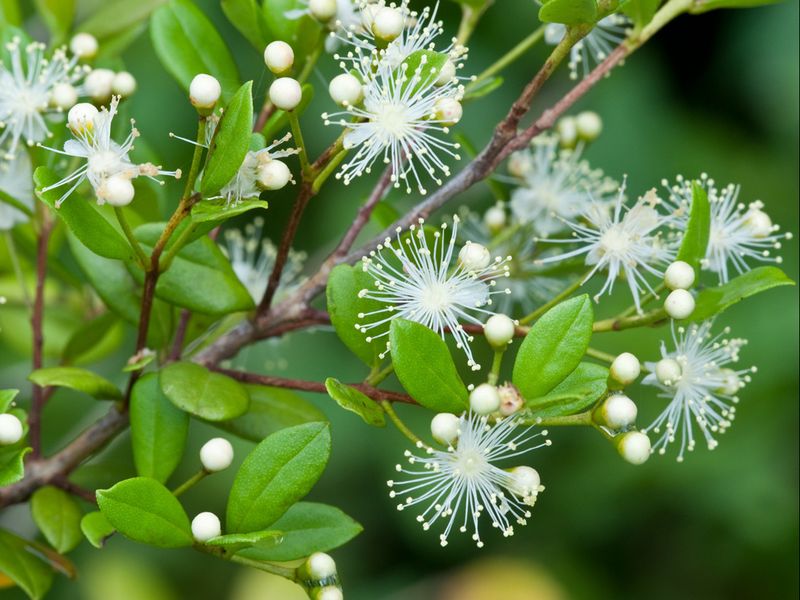
Simpson’s stopper, known botanically as Myrcianthes fragrans, is a native evergreen shrub. It can grow into a dense, tidy screen along fences, patio edges, or property lines.
It gives a backyard a sense of enclosure that makes outdoor seating feel more like a room.
This plant produces small white flowers with a pleasant fragrance and orange-red berries that attract birds and other wildlife. The foliage is dense enough to block sightlines and soften the visual edge between your yard and the outside world.
It can be maintained as a formal hedge with occasional trimming or left to grow in a more natural, informal shape depending on your preference.
Simpson’s stopper grows well in full sun to partial shade and handles the humidity and heat of warm seasons without much fuss. It tends to be moderate in its growth rate, so it takes some time to fill in as a full screen.
Planting closer together can speed up coverage near a patio or seating area. It is a reliable, wildlife-friendly choice for adding privacy and a greener, more enclosed feel to exposed outdoor spaces.
4. Firebush Brings Heat-Tough Color Near Seating Areas
Color helps outdoor spaces feel alive, and firebush earns its place near sunny seating areas by delivering warm, vivid blooms through the hottest months of the year.
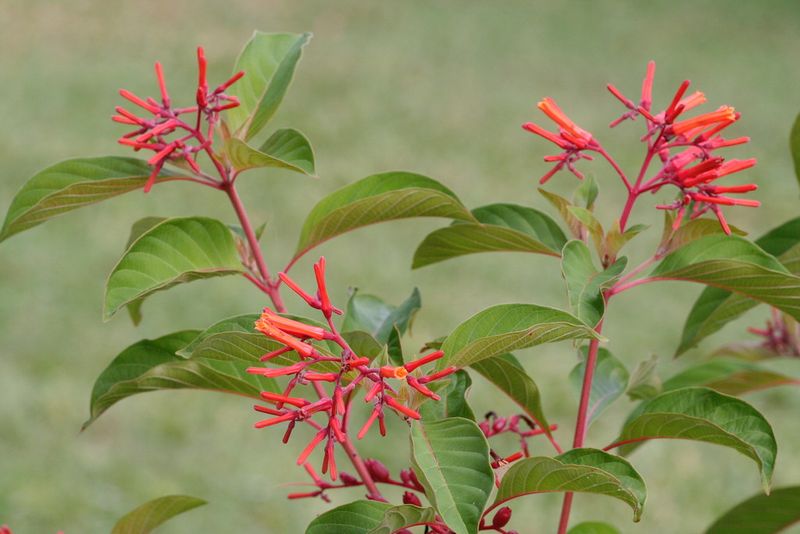
Hamelia patens is a native shrub that thrives in the heat and humidity that slows many other plants down.
Its tubular orange-red flowers attract hummingbirds and butterflies, which adds movement and energy to a patio edge or garden border.
Firebush can grow quite large in southern and central regions where winters stay mild. In northern parts of the state, it may behave more like a perennial, cutting back in cold weather and returning from the roots in spring.
Either way, it comes back strong and fills in quickly once warm weather arrives. Some cultivars stay more compact, so checking the specific form before planting helps with sizing expectations.
Plant firebush in a sunny spot where it gets good air circulation. It handles poor soils and dry conditions reasonably well once established, though it also does fine with regular summer rainfall.
Use it as an informal screen near the edge of a patio, along a sunny fence line, or as a lush border plant that keeps pollinators visiting all season. It is one of the most rewarding warm-season shrubs for open, sunny backyard spaces.
5. Coontie Adds Low-Maintenance Tropical Texture
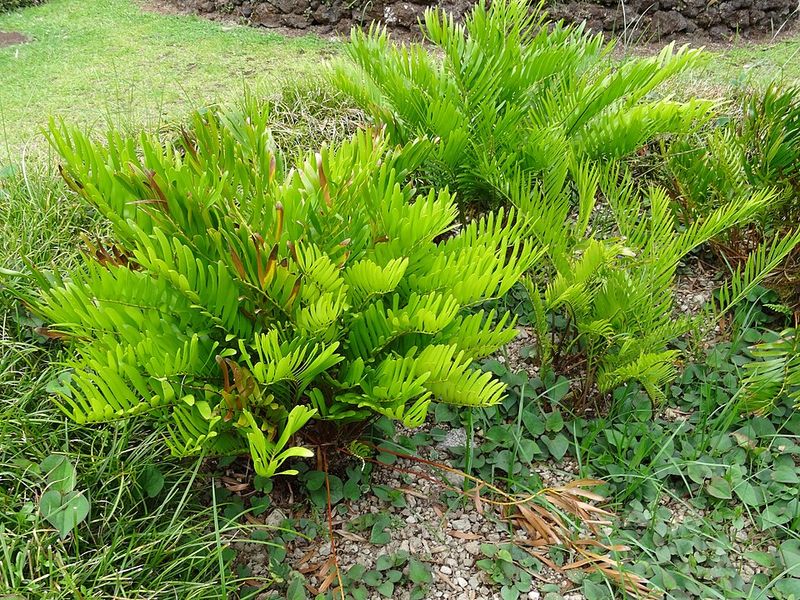
Low texture matters near paths and patios. Coontie, known botanically as Zamia integrifolia, is a native cycad that brings a compact, palm-like look to garden beds without taking over a space.
Its dark green, arching fronds create a lush, tropical feel. They work well at the edges of patios, along walkways, or in layered foundation plantings where you want something interesting at ground level.
One of coontie’s best qualities is how little it demands once it settles in. It grows slowly, which means it stays in place and does not require constant trimming or reshaping.
It handles both sun and partial shade reasonably well, making it adaptable to different spots in a backyard. Coontie is also the host plant for the Atala butterfly, a striking native species that depends on it for reproduction.
Think of coontie as a texture plant rather than a shade provider. It will not cool a patio on its own, but it adds a layered, finished look to outdoor spaces that feels more tropical and intentional.
Pair it with taller shrubs or shade trees to build a planting that has structure at multiple heights. It is a low-fuss, high-reward plant for anyone who wants a native, low-maintenance garden edge.
6. Coral Honeysuckle Shades A Patio Trellis
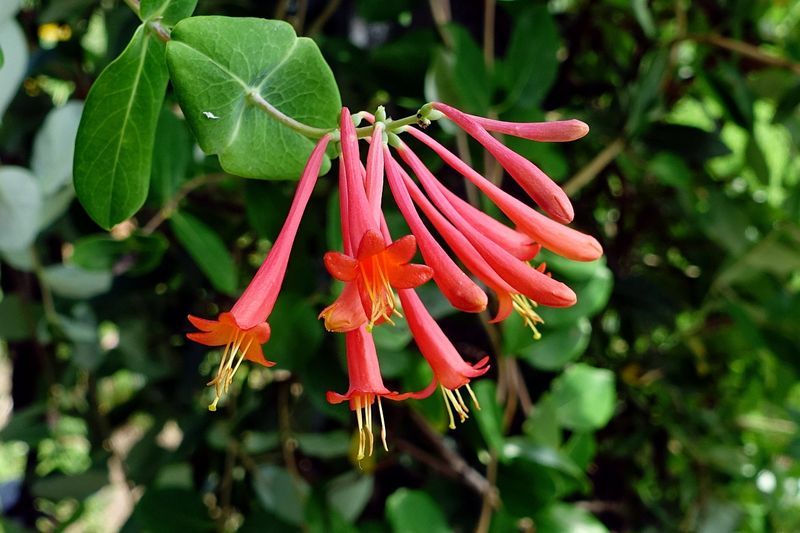
A trellis can turn vertical space into real relief, and coral honeysuckle is one of the best native vines for the job. Lonicera sempervirens climbs readily over trellises, arbors, and fences.
It creates a curtain of green foliage that filters sunlight and softens the hard lines of outdoor structures. Training it over a patio roof or pergola gives you a layer of dappled shade that makes sitting outside feel noticeably more comfortable.
The tubular red and orange flowers are a reliable draw for hummingbirds during the warm season. In warmer southern and central regions, coral honeysuckle tends to stay evergreen or nearly so.
In northern parts of the state, it may drop its leaves during cold spells but usually returns reliably once temperatures warm back up. Either way, it fills in quickly once established and active growth kicks in.
Plant it where the vine has something to climb and where you want vertical greenery fast. It does well in full sun to partial shade and handles the humidity of rainy season without much trouble.
Unlike some ornamental vines, coral honeysuckle is not considered invasive and plays well in native landscapes. It is a smart, low-maintenance choice for anyone looking to add filtered shade and wildlife value to a patio structure.
7. Muhly Grass Softens Hot Open Spaces
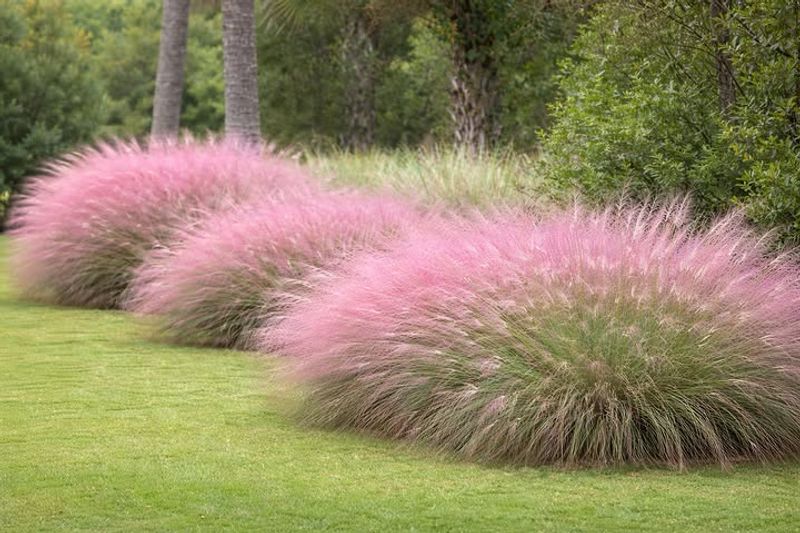
Soft movement makes open areas feel less harsh, and muhly grass does exactly that in a sunny backyard. Muhlenbergia capillaris is a native ornamental grass that produces airy, pink-purple plumes in the fall, but its value runs longer than one season.
The fine-textured foliage sways gently in the breeze and adds a soft, relaxed quality to spots that would otherwise feel bare and exposed under the summer sun.
Muhly grass does not create shade, so it will not cool a seating area on its own. What it does is soften the visual harshness of hot, open spaces.
Use it along pool edges, driveway borders, sunny patio surrounds, or as a mass planting in a dry, open area where you want texture without irrigation demands. It is drought-tolerant once established and handles poor, sandy soils well.
Plant it in full sun for the best growth and most dramatic bloom. Muhly grass is low-maintenance in the truest sense.
It rarely needs fertilizer, handles dry stretches without complaint, and requires only an occasional cutback to stay tidy. Planting in groups of three or more creates a bigger visual impact than single specimens.
For large open spaces, mass plantings can transform a flat, featureless yard into something that feels layered and alive.
8. Sweetbay Magnolia Adds Fragrant Summer Shade
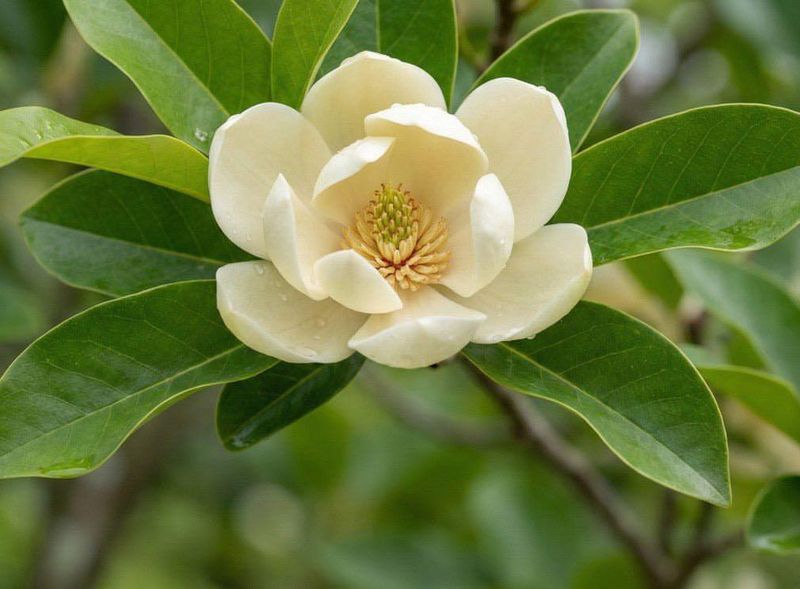
Fragrance adds another reason to sit outside, and sweetbay magnolia brings both scent and soft shade to the right backyard spot. Magnolia virginiana is a native tree with creamy white flowers that bloom in late spring and into summer.
They fill the air with a light, sweet fragrance that makes spending time outdoors feel like a genuine pleasure rather than a chore.
Sweetbay tends to prefer moister sites than many drought-adapted natives. If your yard has a low spot, a rain garden area, or a spot that stays consistently moist, sweetbay often performs well there.
In drier spots, it may need more attention to get established. Mature size varies depending on the region and the specific growing conditions.
Checking with a local Extension source for expected height and spread in your area is a smart step before planting.
The canopy is lighter and more open than a live oak, so it provides filtered shade rather than deep shade. Near a small patio or seating corner, that filtered light can feel pleasant without making the space feel closed in.
Sweetbay is semi-evergreen in warmer regions and may drop more leaves in the northern parts of the state during cold winters. Either way, it is a graceful, fragrant choice for a backyard that has room for a medium-sized native tree.
9. Walter’s Viburnum Builds A Native Privacy Hedge
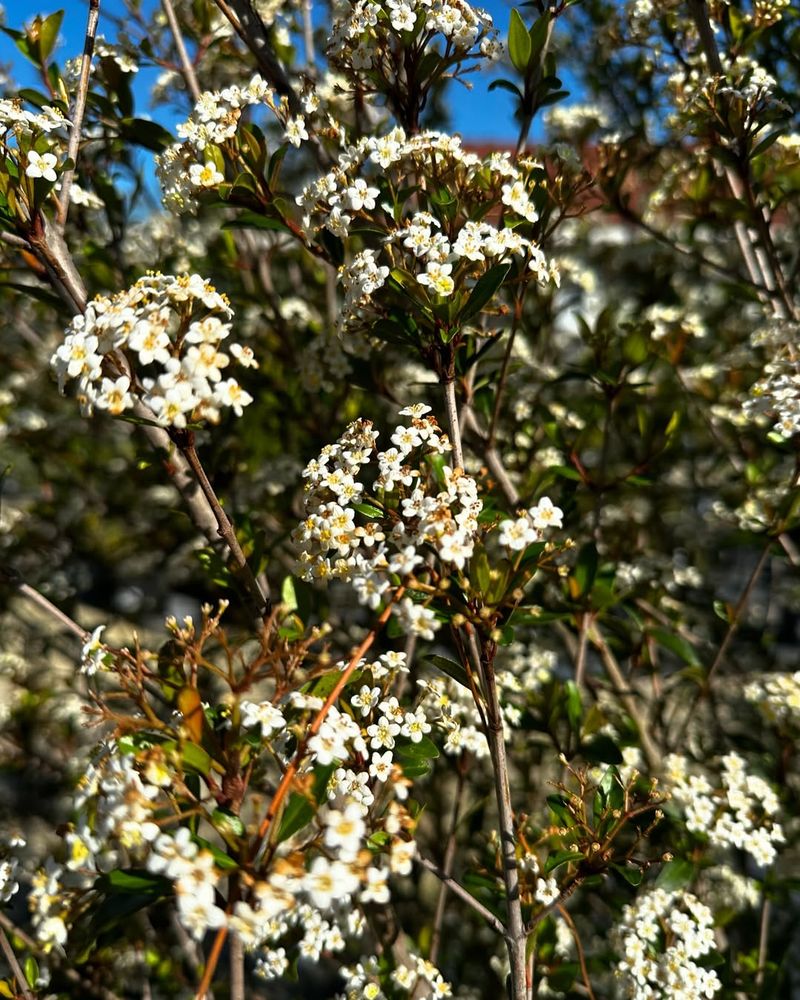
A hedge can change how exposed a yard feels, and Walter’s viburnum is one of the most reliable native shrubs for building that sense of enclosure.
Viburnum obovatum is a Florida native that can be shaped into a formal hedge or allowed to grow in a more naturalistic screen.
Either way, it creates a solid green wall that blocks sightlines and reduces the open feeling of a hot backyard. It also gives outdoor seating areas a more sheltered, room-like quality.
Selection matters with this plant because different forms vary in size and compactness. Some cultivars stay shorter and tighter, making them easier to manage near patios and fences.
Others grow taller and wider, which suits larger property lines or back borders where you want a fuller screen. Checking the specific cultivar before purchasing helps match the plant to the space.
Walter’s viburnum produces clusters of small white flowers that attract pollinators, and the berries that follow provide food for birds. It handles full sun to partial shade and adapts to a range of soil conditions found in local backyards.
Once established, it is relatively low-maintenance and does not demand heavy irrigation. For anyone who wants privacy, wildlife value, and a greener, more enclosed feel in a hot outdoor space, this shrub is a practical and rewarding choice.
10. Dwarf Palmetto Creates Cool Tropical Structure
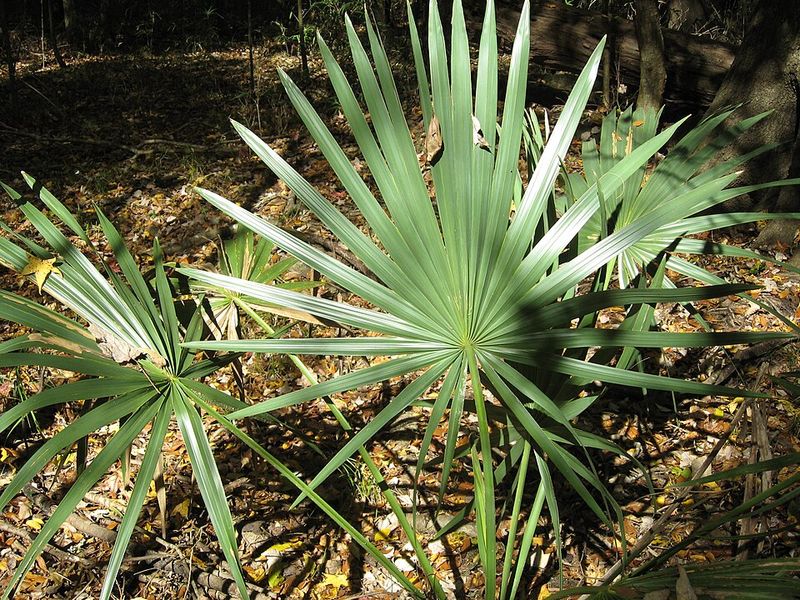
Small palm-like plants can cool the look of a corner without taking over the space. Sabal minor, commonly called dwarf palmetto, is a native understory palm.
It brings a lush, tropical feel to shaded edges, moist spots, and low-lying areas where larger plants might overwhelm the scale. Its fan-shaped fronds add structure and a layered tropical look without growing into a towering tree.
Dwarf palmetto tends to prefer spots with some moisture and partial to full shade. That makes it a good fit for areas under tree canopies or along the shadier edges of a yard.
It grows slowly, which means it stays manageable for a long time and does not demand frequent reshaping. In the right spot, it fills in as a ground-level anchor that holds a planting together visually.
Use it in corners where you want a tropical look without committing to a large plant. Pair it with taller native shrubs or shade trees to build a layered planting that has depth and texture at multiple levels.
Spacing and regional conditions can affect how it performs, so checking with a local Extension resource for guidance specific to your area is a helpful step.
For shaded corners and moist spots, dwarf palmetto is a quietly effective structural plant that earns its place in a native backyard landscape.