Heat-Tolerant Flowers To Plant In Michigan Pots Before Summer
Container gardening in Michigan comes with a particular challenge that in-ground beds do not. Pots heat up fast, dry out faster, and put plants under stress that even a hot summer day in the garden would not fully replicate.
A lot of flowers that look beautiful in spring containers start to struggle the moment July arrives and the temperatures hold steady for days at a time.
Choosing the right plants before summer begins makes an enormous difference in how those containers look by August.
Some flowers are genuinely built for sustained heat and bounce back quickly after dry spells. They hold their color, keep producing blooms, and stay presentable through the kind of Michigan summers that push everything else in the pot to its limit.
1. Lantana
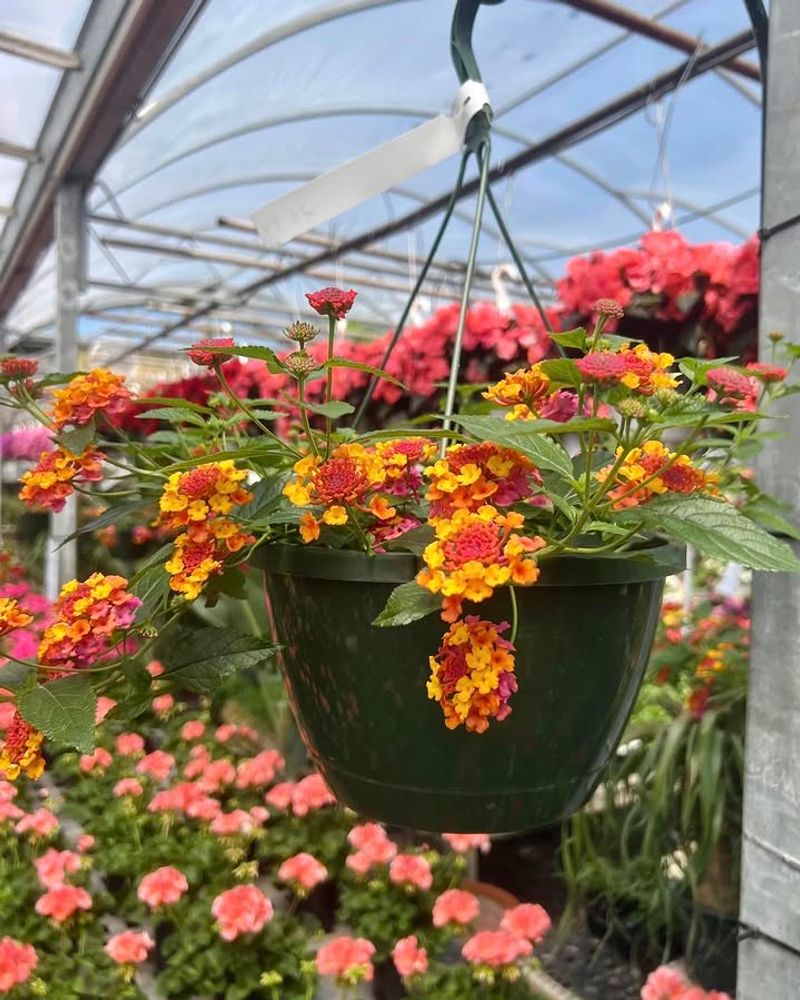
Few flowers put on a show quite like Lantana camara when the summer heat cranks up. While other plants start looking stressed and faded, Lantana responds to hot sunny days by producing even more of its vibrant, multicolored flower clusters.
That alone makes it one of the smartest choices a Michigan gardener can make for a patio container.
Lantana absolutely loves full sun and needs at least six to eight hours of direct sunlight each day to bloom its best. Plant it in a container with excellent drainage holes, because sitting in wet soil will cause root problems fast.
A well-draining potting mix works perfectly, and adding a layer of gravel at the bottom of the pot helps water move through efficiently.
Watering needs are moderate. Allow the top inch of soil to dry out between waterings, especially during cooler stretches, to avoid overwatering.
Once heat arrives consistently, you may need to water every one to two days depending on pot size and sun exposure.
Removing spent blooms is not strictly necessary since Lantana is fairly self-cleaning, but removing old flower heads does encourage faster reblooming.
Butterflies and hummingbirds absolutely flock to Lantana, turning your patio into a lively pollinator hub all summer long.
A slow-release fertilizer applied at planting time keeps growth strong without requiring constant feeding throughout the season.
2. Angelonia
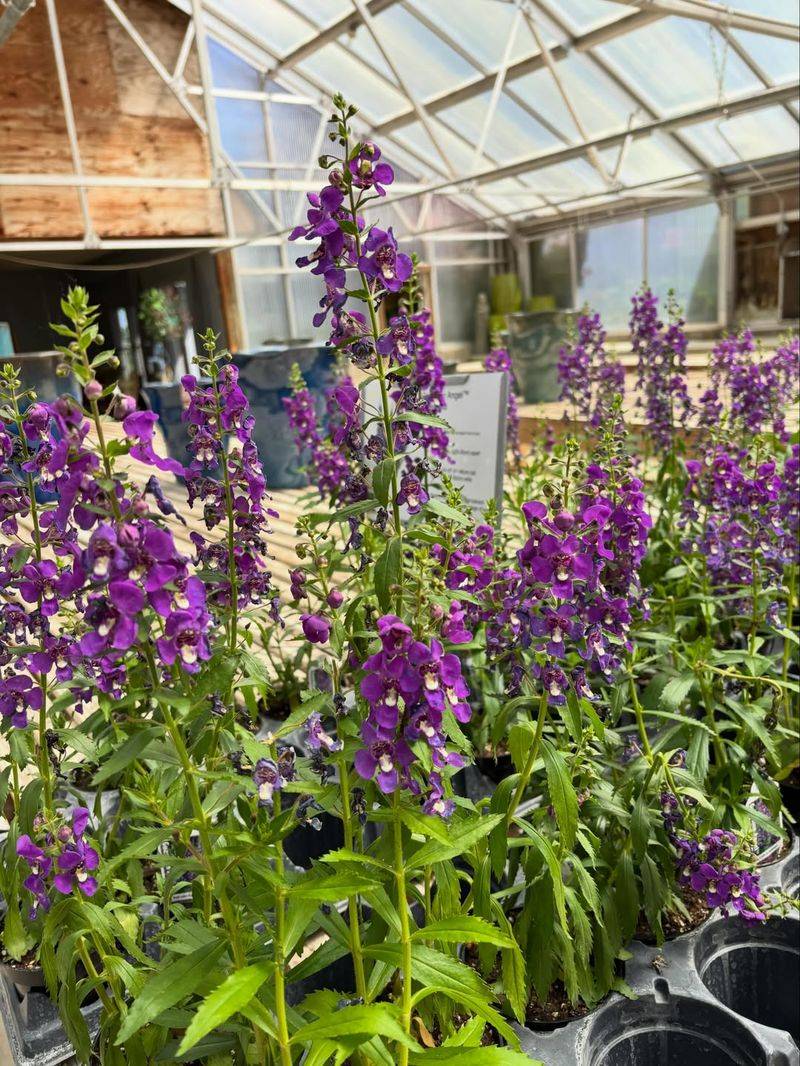
Angelonia angustifolia has earned a well-deserved reputation as one of the most reliable heat-loving annuals for container gardening in Michigan.
Sometimes called summer snapdragon, it produces tall, elegant spikes covered in small orchid-like flowers that keep blooming through the hottest weeks of the season without missing a beat.
What makes Angelonia stand out is how gracefully it handles heat and humidity together. Many cool-season annuals start declining once summers fully arrive, but Angelonia actually seems to enjoy those warm, muggy days.
Plant it where it receives full sun for best performance, aiming for at least six hours of direct light daily.
When planting in containers, space plants about ten to twelve inches apart to allow good airflow around the stems. Choose a pot that holds at least two gallons of soil per plant so roots have room to spread comfortably.
A high-quality potting mix with perlite mixed in improves drainage and keeps roots happy through summer heat.
Your Michigan Garden Changes Every Week. Your Plan Should Too.
Gardening in Michigan changes quickly throughout the season. Every Friday you’ll receive a simple weekly plan showing exactly what to plant, prune, fertilize, harvest, and protect so you never miss the right timing.
Watering consistently is key. Angelonia appreciates evenly moist soil but does not want to sit in soggy conditions.
Check the soil every day or two during peak summer heat and water when the top inch feels dry. Feed with a balanced liquid fertilizer every two weeks to support steady blooming.
One bonus worth knowing: Angelonia is naturally resistant to deer, which gardeners will certainly appreciate.
3. Zinnias
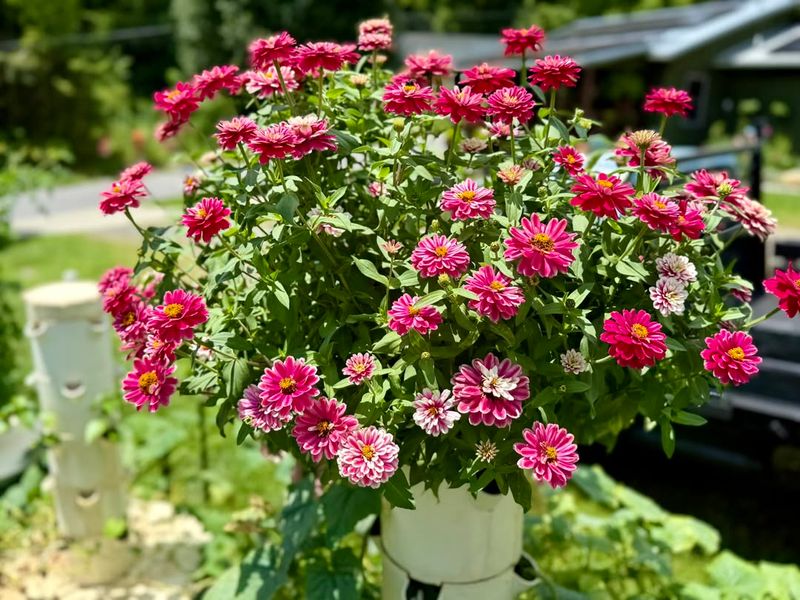
Zinnias are the kind of flower that makes you stop and stare. Zinnia elegans produces bold, richly colored blooms in nearly every shade imaginable, and they perform especially well during the hottest part of Michigan summers when many other annuals start fading.
If you want serious color in your pots from June straight through September, Zinnias are a rock-solid choice.
Hot, sunny weather is exactly where Zinnias shine brightest. Plant them in containers that receive a full day of sun, at least six to eight hours, and watch them reward you with nonstop blooms.
Good airflow around the plants matters a lot with Zinnias since they can develop powdery mildew in humid, stagnant conditions. Space plants eight to twelve inches apart and avoid overhead watering whenever possible.
Water at the base of the plant to keep foliage dry, which dramatically reduces the risk of fungal problems.
Allow the top inch of soil to dry slightly between waterings, but do not let pots dry out completely during extreme heat waves. A balanced fertilizer every two to three weeks keeps plants producing vigorously.
Removing spent blooms is one of the best habits you can build with Zinnias. Removing spent blooms regularly prevents seed formation and signals the plant to keep pushing out new flowers.
Butterflies absolutely love Zinnias, and a pot full of them will attract painted ladies, swallowtails, and monarchs throughout the entire season.
4. Vinca
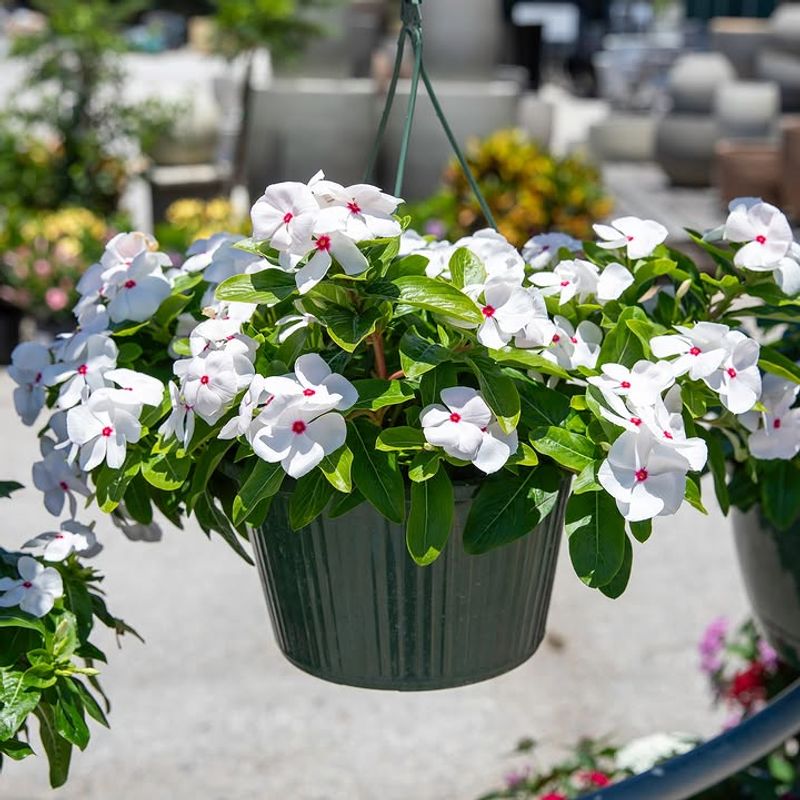
Vinca, known botanically as Catharanthus roseus, might just be the toughest annual flower you can put in a container.
It thrives under conditions that would cause most bedding plants to struggle, tolerating intense sun, high heat, and even brief dry spells without losing its cheerful, round blooms.
Gardeners who have tried it once rarely go back to anything else for hot, sun-baked spots.
One of Vinca’s greatest strengths is its ability to keep blooming steadily through dry, sunny stretches that other plants simply cannot handle. The glossy, dark green foliage stays clean and attractive all season, providing a beautiful backdrop for the flowers.
Colors range from bright white and soft pink to deep magenta, coral, and lavender, giving you plenty of options for designing a patio container arrangement.
Drainage is critical for Vinca. Sitting in wet or poorly drained soil leads to root rot quickly, so always choose containers with drainage holes and use a well-draining potting mix.
Allow the top layer of soil to dry out between waterings rather than keeping the pot consistently moist.
Space plants ten to twelve inches apart in containers to encourage good air circulation and bushy growth. Vinca is largely self-cleaning, meaning you rarely need to remove spent flowers manually.
Bloom production stays strong with a slow-release fertilizer applied at planting, plus a light liquid feeding every three to four weeks through summer.
5. Salvia
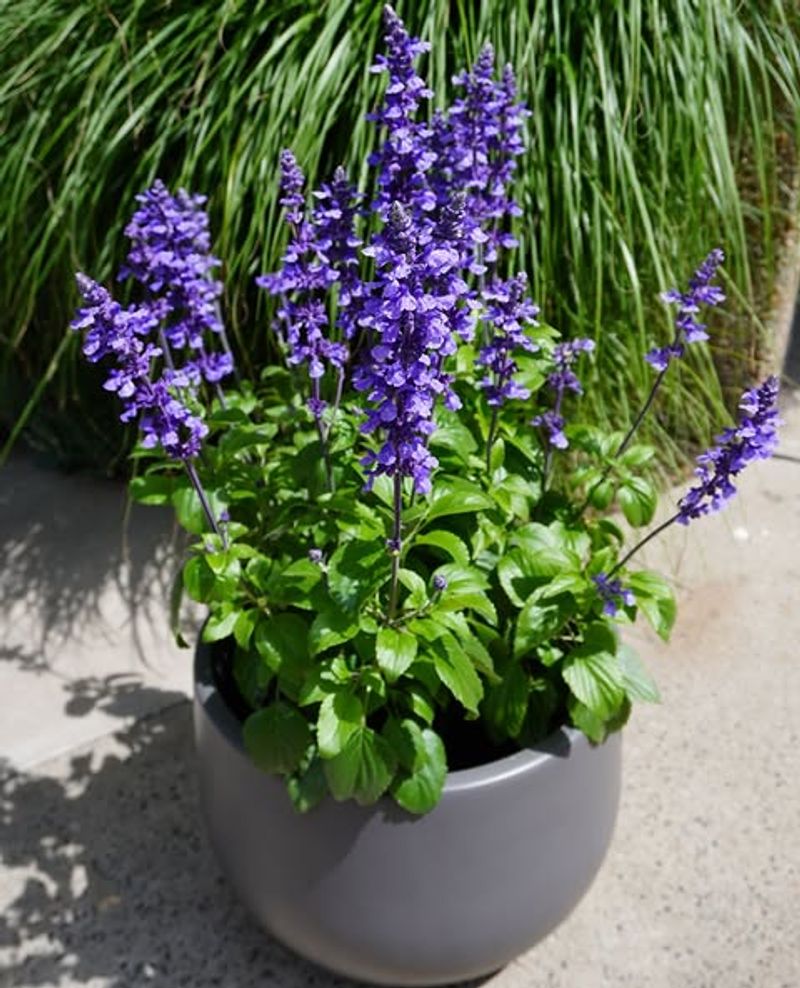
Ornamental Salvias bring a vertical drama to container gardens that few other summer flowers can match.
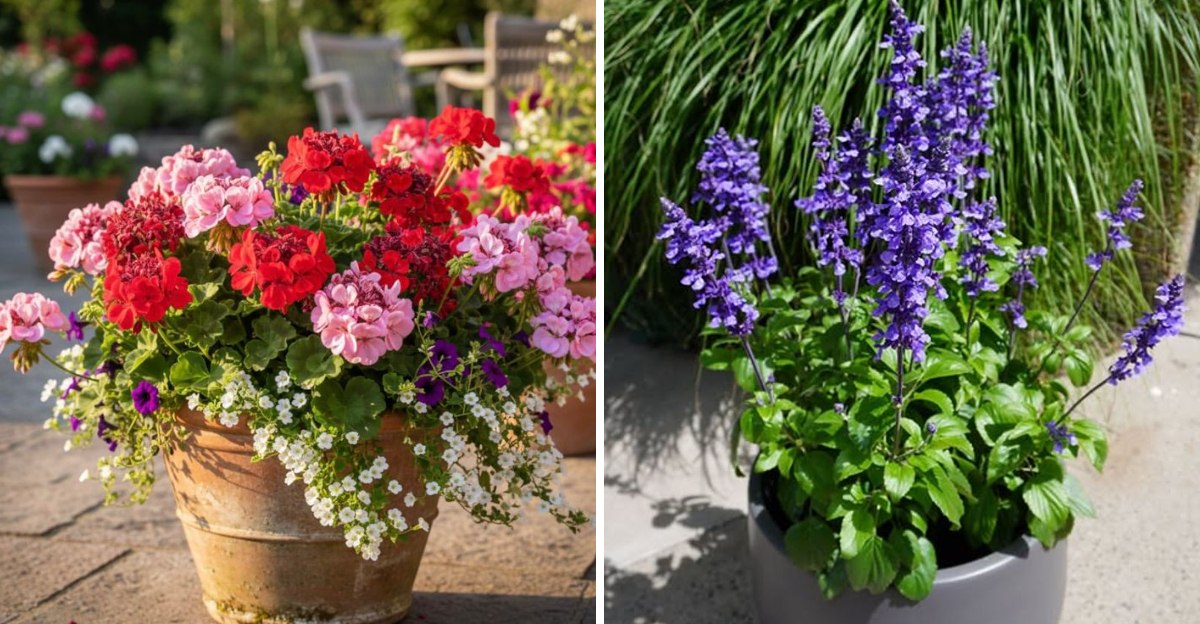
Salvia splendens, with its vivid red flower spikes, and Salvia farinacea, which produces elegant blue and violet wands of color, are both exceptional performers in hot Michigan summers.
Plant either variety in a sunny patio pot and you have a built-in hummingbird magnet from June through frost. Both species thrive in full sun and genuinely prefer warm temperatures once established.
Salvia splendens is especially bold in color and works beautifully as a centerpiece plant in large containers, while Salvia farinacea has a more delicate, airy texture that pairs wonderfully with trailing or mounding companions.
Together, they create layered, eye-catching combinations that hold up beautifully through summer heat.
Water these Salvias consistently but avoid overwatering. Allow the top inch of soil to dry slightly between waterings, and make sure containers drain freely.
During peak summer heat, daily watering may be necessary, especially in smaller pots that dry out quickly under direct sun exposure.
Removing spent flower spikes encourages fresh new blooms to push up from the base regularly. Feed with a balanced fertilizer every two weeks during the growing season to keep plants vigorous and blooming heavily.
Hummingbirds, bees, and butterflies all visit Salvia regularly, making it one of the most ecologically rewarding choices for a summer container garden.
6. Portulaca
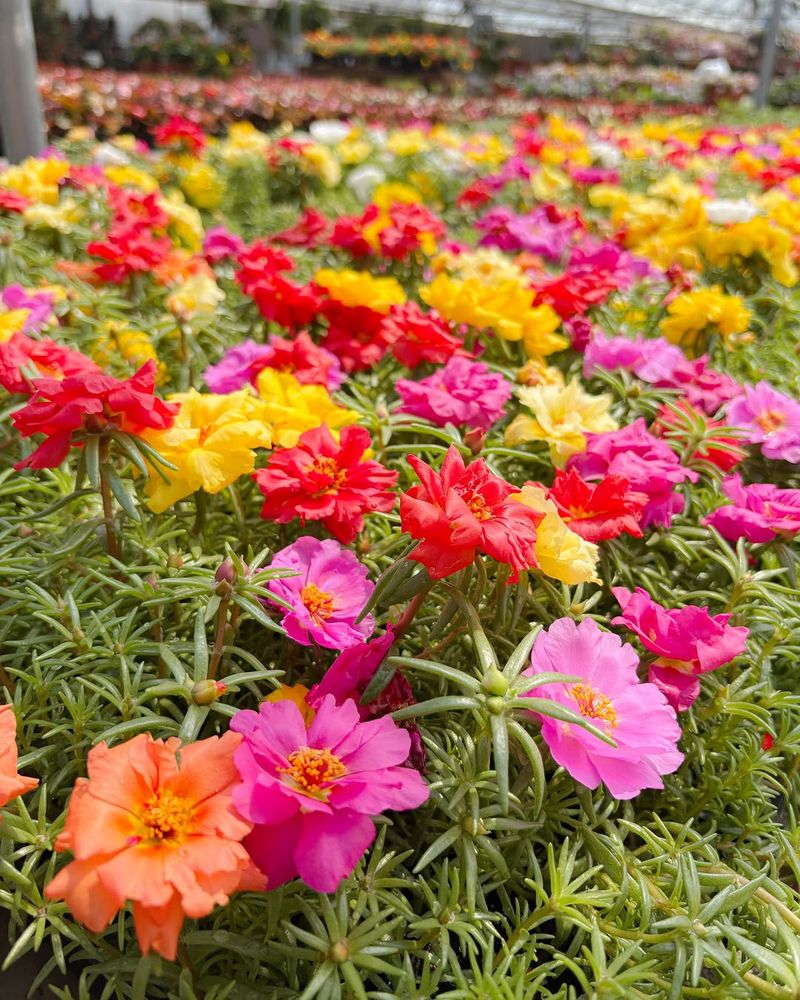
Portulaca grandiflora, commonly called moss rose, is one of those quietly remarkable plants that thrives where others simply cannot.
Give it scorching sun, poor soil, and minimal water, and it will reward you with a carpet of jewel-bright flowers that look almost too good to be real.
For Michigan gardeners dealing with hot, south-facing patios or sun-baked balconies, Portulaca is practically made for those spots.
The flowers themselves are stunning, coming in shades of hot pink, golden yellow, vivid orange, soft white, and deep red, often with a silky, almost translucent petal texture.
They open wide in full sun and close in the evening or on cloudy days, which is just part of their natural charm.
Succulent stems and leaves store moisture efficiently, which is exactly why this plant handles dry spells so well.
Drainage is the single most important factor for Portulaca success. Containers must have excellent drainage holes, and a sandy or gritty potting mix works far better than heavy, moisture-retaining blends.
Overwatering is the fastest way to run into problems, so water only when the soil has fully dried out between sessions.
Full sun placement is non-negotiable. Portulaca needs at least six to eight hours of bright direct sunlight to bloom consistently.
Fertilizer needs are low compared to many annuals, so a light application of balanced granular fertilizer at planting is usually enough to carry plants through most of the summer season beautifully.
7. Geraniums
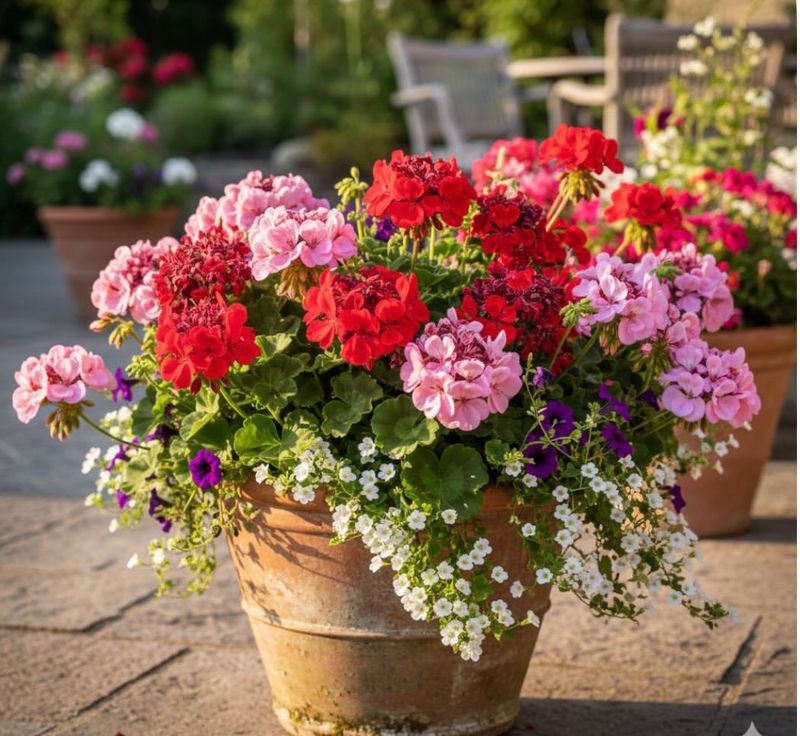
Geraniums have been a porch and patio favorite for generations, and there is a very good reason they keep showing up in container gardens across Michigan every summer.
Pelargonium x hortorum, the classic zonal geranium, offers bold flower clusters, attractive rounded foliage, and a dependable blooming habit that holds up well through warm summer weather when planted and cared for correctly.
One thing that makes Geraniums so satisfying is how responsive they are to good care. Give them full sun, at least six hours daily, and they produce big, round flower heads in shades of red, pink, salmon, coral, white, and bicolor combinations.
They do appreciate a slight break from the most intense afternoon sun in Michigan, so a spot with morning sun and light afternoon shade keeps them looking their freshest on the hottest days.
Airflow matters quite a bit with Geraniums. Planting them with enough space between neighbors, roughly twelve inches in mixed containers, reduces humidity around the stems and helps prevent fungal leaf issues.
Water thoroughly but allow the top inch of soil to dry before watering again, since consistently wet soil stresses the roots.
Removing spent blooms is important for Geraniums. Removing spent flower clusters promptly encourages the plant to redirect energy into producing fresh blooms rather than setting seed.
Feed every two weeks with a balanced liquid fertilizer to maintain strong, colorful growth throughout the entire Michigan summer season.
8. Verbena
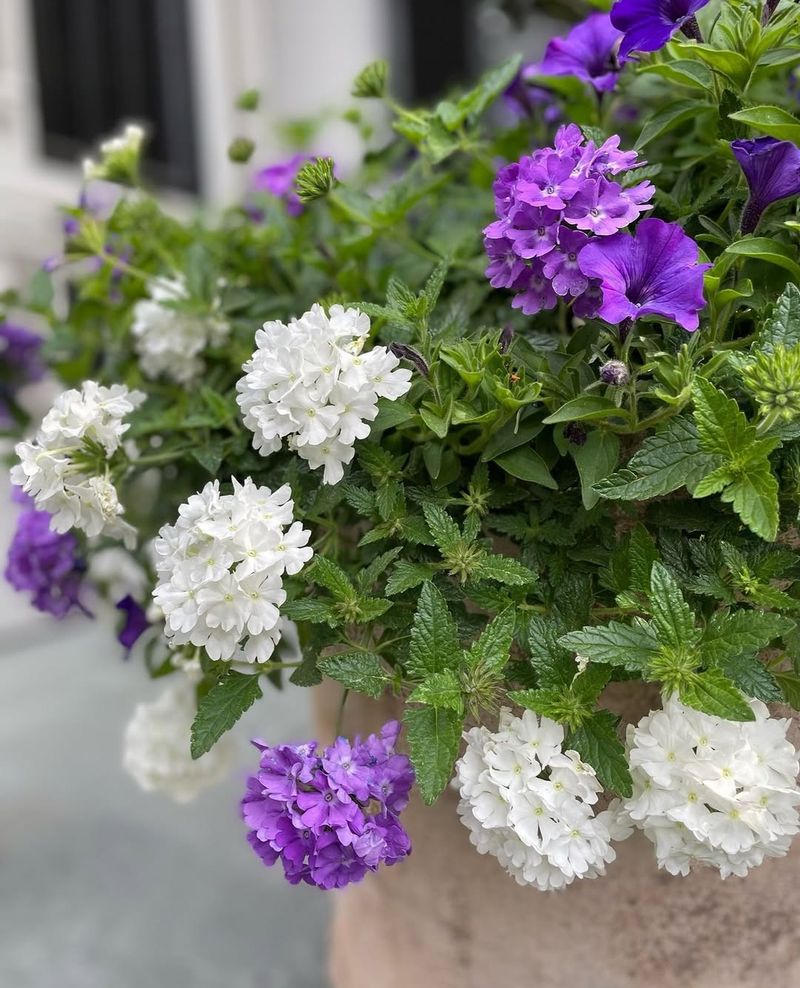
Verbena hybrids bring a carefree, cascading energy to container gardens that is hard to replicate with any other plant.
Clusters of small, brilliantly colored flowers spill gracefully over the edges of pots and hanging baskets, creating a waterfall effect that looks spectacular all summer long.
Butterflies and pollinators absolutely love Verbena, making it as ecologically valuable as it is beautiful.
Heat and sunshine are Verbena’s best friends. Once temperatures climb into the seventies and eighties, Verbena hits its stride and blooms with impressive intensity.
Plant it in a spot that receives at least six hours of full sun daily, and use a container with strong drainage since Verbena does not tolerate soggy roots well at all.
Spacing matters when planting multiple Verbena plants together. Give each plant ten to twelve inches of space so air can circulate freely around the stems.
Good airflow reduces the risk of powdery mildew, which can occasionally be an issue in humid Michigan summers, especially in crowded containers without much breathing room.
Trimming Verbena back by about one third in midsummer rejuvenates the plant and triggers a fresh flush of blooms heading into August and September. Water when the top inch of soil feels dry, and fertilize every two weeks with a bloom-boosting liquid fertilizer.
The combination of consistent feeding and occasional trimming keeps Verbena producing color from planting day right through the first Michigan frost.
9. Calibrachoa
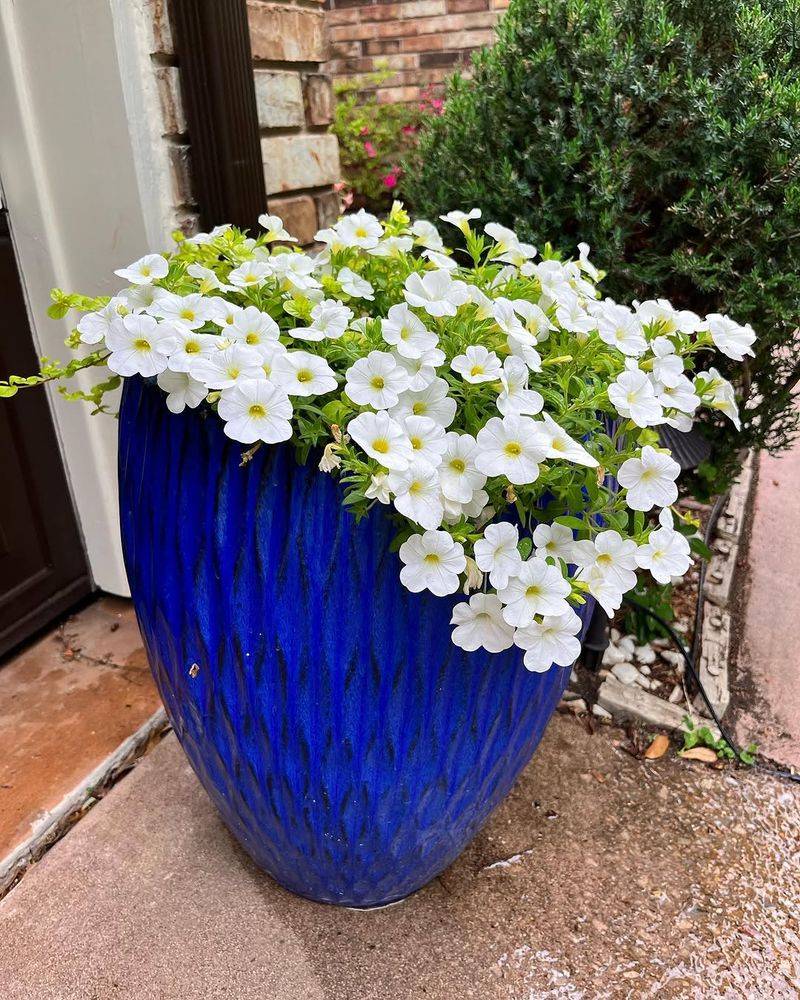
Calibrachoa hybrids, often called million bells, earn their nickname honestly. A single healthy plant can produce hundreds of small, petunia-like flowers simultaneously, creating a dense, colorful display that looks almost unreal.
For Michigan gardeners who want maximum visual impact in hanging baskets or patio pots, Calibrachoa is consistently one of the top performers available at garden centers each spring.
Warm weather genuinely brings out the best in Calibrachoa. Once summer temperatures settle in, the plants push out new blooms at a rapid pace, filling containers with color in shades of pink, purple, coral, yellow, white, red, and bicolor patterns.
Full sun placement is ideal, with at least five to six hours of direct light daily keeping bloom production strong and consistent. Feeding is one of the most important factors for Calibrachoa success.
These plants are heavy feeders compared to many other annuals, so a water-soluble fertilizer applied every seven to ten days throughout the growing season makes a noticeable difference in bloom density and plant health.
Skipping fertilizer leads to pale foliage and reduced flowering fairly quickly. Drainage must be excellent since Calibrachoa is prone to root problems in waterlogged soil. Use a premium, well-draining potting mix and containers with clear drainage holes.
Trim plants back lightly in midsummer if they start looking leggy, because Calibrachoa rebounds quickly after a light trim and produces fresh growth and flowers within a week or two.
10. Marigolds
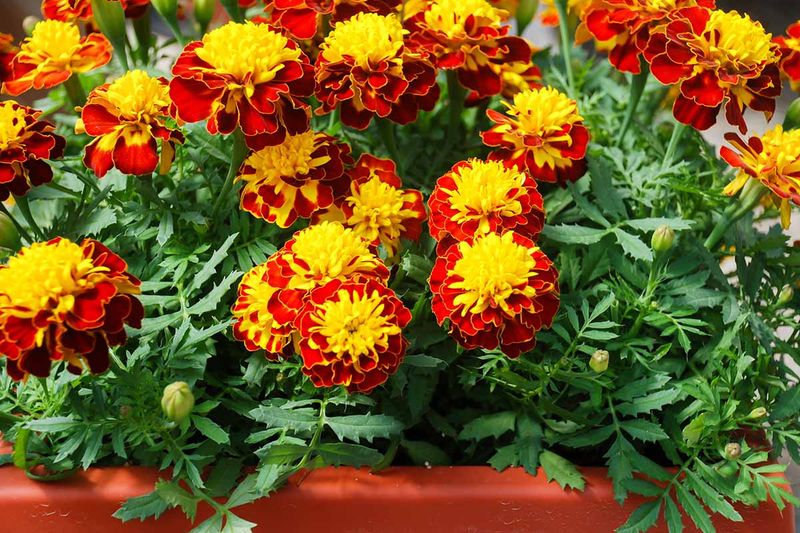
Marigolds are one of those classic summer flowers that never seem to go out of style, and with good reason.
Tagetes patula, the French marigold, stays compact and bushy with layers of ruffled blooms, while Tagetes erecta, the African marigold, grows taller and produces impressively large flower heads in bold shades of orange, gold, and yellow.
Both perform beautifully in Michigan containers from early summer straight through fall.
Hot sunny weather is exactly where Marigolds thrive. They prefer full sun, at least six to eight hours daily, and respond to warm temperatures by blooming with remarkable consistency.
Unlike some annuals that slow down in the heat, Marigolds keep pushing out fresh flowers week after week, making them one of the most reliable sources of long-season color in any patio container.
Water Marigolds at the base rather than overhead to keep foliage dry and reduce the risk of fungal issues. Allow the top inch of soil to dry between waterings since they prefer slightly drier conditions compared to many other annuals.
In very hot weather, smaller pots may need watering every day to prevent stress.
Removing spent blooms regularly is the single best habit for keeping Marigolds flowering heavily all season. Removing old flower heads every few days prevents seed formation and pushes the plant to produce new buds continuously.
Bees and butterflies visit Marigolds regularly, and their natural scent is known to help deter certain garden pests from nearby plants.