Pennsylvania Container Combinations That Hold Up Through July And August
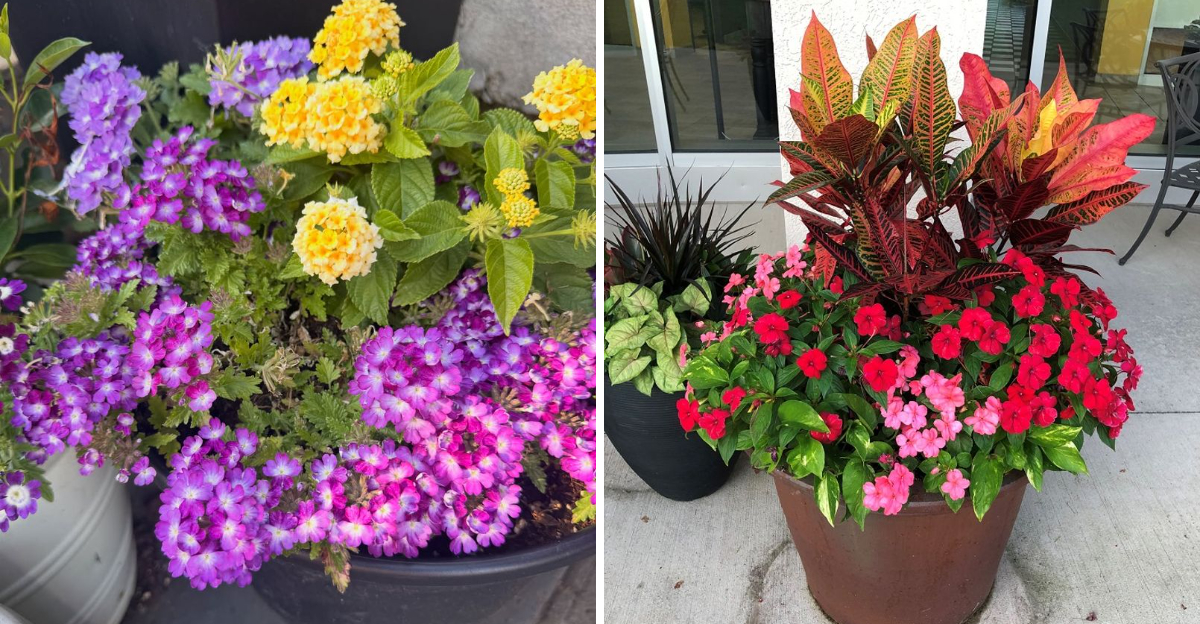
July and August are where most Pennsylvania container plantings start to fall apart. What looked full and balanced in May gets leggy, faded, or just exhausted by midsummer, and suddenly the pots that were a highlight of the yard become something you are trying not to look at.
The problem is usually not the containers themselves or the care they are getting. It is the plants.
Not everything sold for container use in spring is actually built to hold up through the heat and humidity of a Pennsylvania summer, and once those conditions arrive, the gaps in a planting combination become obvious fast.
Building containers around plants that are specifically suited to midsummer performance changes the whole equation.
The right combinations stay full, keep producing color, and look just as good in late August as they did when you first put them together. That kind of staying power takes a little planning upfront but pays off for months.
1. Calibrachoa + Sweet Potato Vine
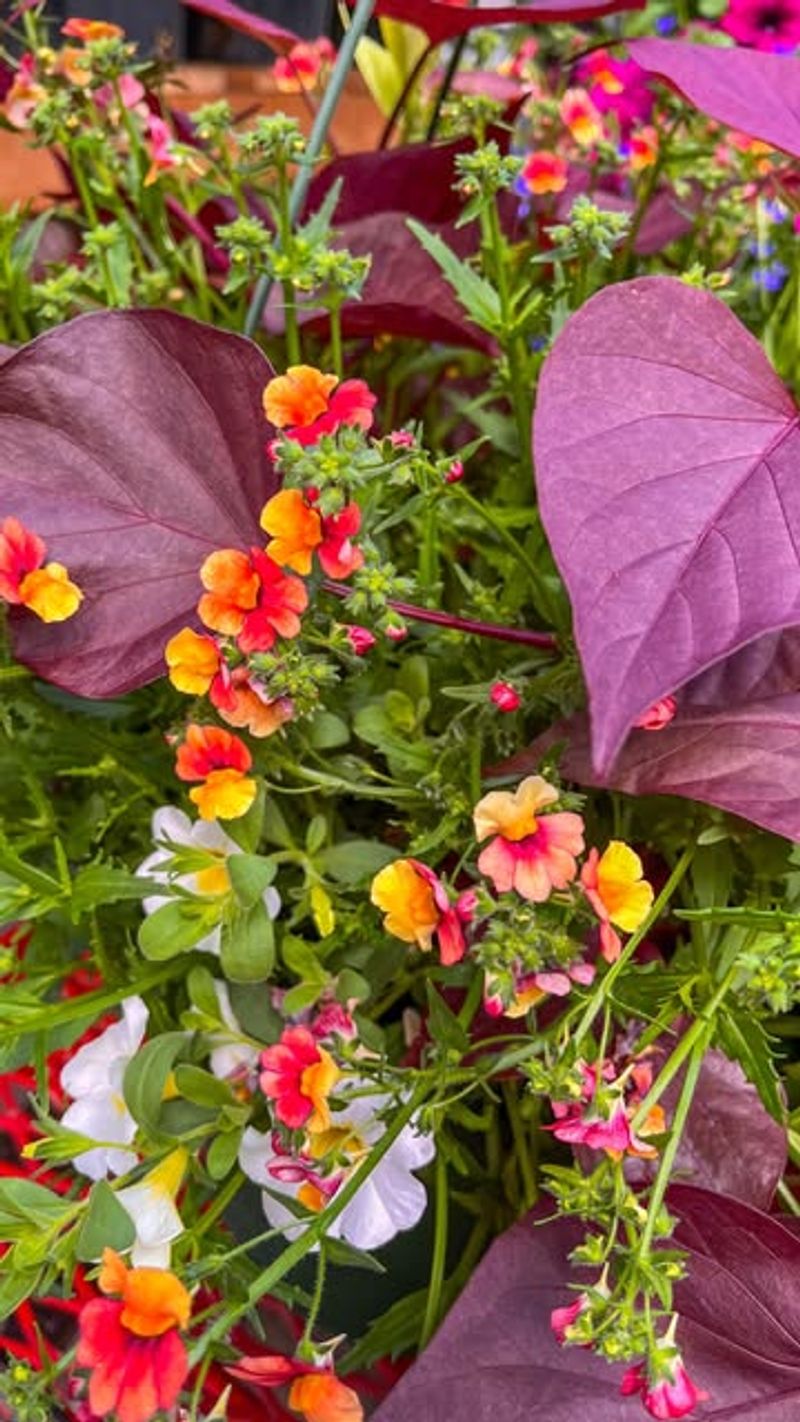
Some plant duos just make sense the moment you see them together. Calibrachoa, often called million bells, pumps out tiny trumpet-shaped blooms nonstop from spring clear through August without much fuss.
Pair it with sweet potato vine, and suddenly your container looks like it came straight from a garden center display.
Sweet potato vine comes in shades of lime green, deep purple, and bronze, which makes it easy to match with almost any calibrachoa color.
The vine trails boldly over the edges of your pot, while calibrachoa fills in the center with mounds of cheerful color. Together, they create a full, lush look that draws attention from the street.
Both plants actually love heat, which is great news for Pennsylvania summers. Calibrachoa does best with regular watering but bounces back quickly if it dries out a little.
Sweet potato vine is even tougher and can handle short dry stretches without looking sad. Use a large container, at least 12 inches wide, so both plants have room to spread. A quality potting mix with slow-release fertilizer gives them a strong start.
Feed every two weeks with a liquid bloom fertilizer to keep calibrachoa flowering heavily into late August. Deadheading is not required since spent blooms drop on their own.
Trim sweet potato vine if it gets too long. Full sun is ideal, though afternoon shade in the hottest weeks can help both plants stay perky and productive longer.
2. Coleus + Impatiens
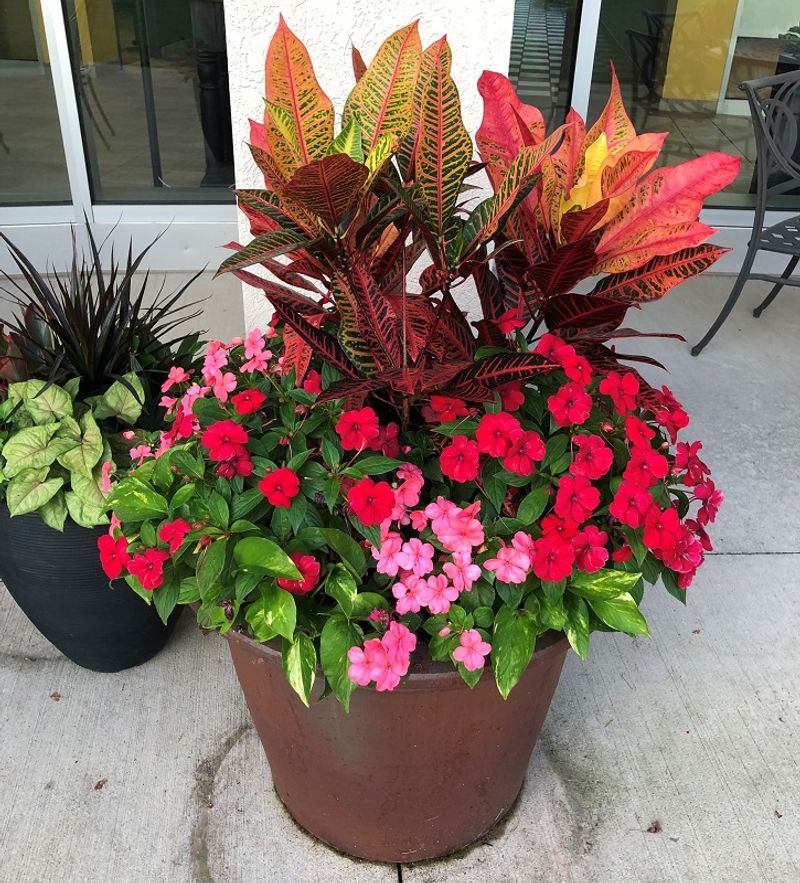
Not every porch or patio in Pennsylvania gets full sun, and that is actually great news for coleus and impatiens lovers. This pairing thrives in the kind of shady spots where other plants struggle to bloom.
If your container sits under a tree, beneath an overhang, or on a north-facing porch, this duo is exactly what you need.
Coleus brings wild, painterly foliage in combinations of red, orange, yellow, green, and purple. No two plants look exactly alike, which keeps things visually interesting all summer long.
Impatiens fill in around coleus with cheerful round blooms in pink, coral, white, or red. The contrast between bold leaves and soft flowers is really hard to beat.
Your Pennsylvania Garden Changes Every Week. Your Plan Should Too.
Gardening in Pennsylvania changes quickly throughout the season. Every Friday you’ll receive a simple weekly plan showing exactly what to plant, prune, fertilize, harvest, and protect so you never miss the right timing.
One thing to know about impatiens: they prefer consistent moisture. Let the soil dry out too much and they will wilt dramatically, though they usually recover quickly once watered.
Coleus is a little more forgiving but still appreciates regular watering during hot Pennsylvania weeks.
Pinch coleus tips every few weeks to keep the plant bushy and full. If coleus starts to flower, pinch those blooms off right away since flowering causes the plant to slow down its gorgeous leaf production.
Impatiens do not need deadheading since old blooms fall off on their own. Use a balanced slow-release fertilizer at planting time and supplement with liquid fertilizer monthly.
A shaded spot with bright indirect light keeps both plants looking their absolute best from June straight through the end of August.
3. Lantana + Verbena
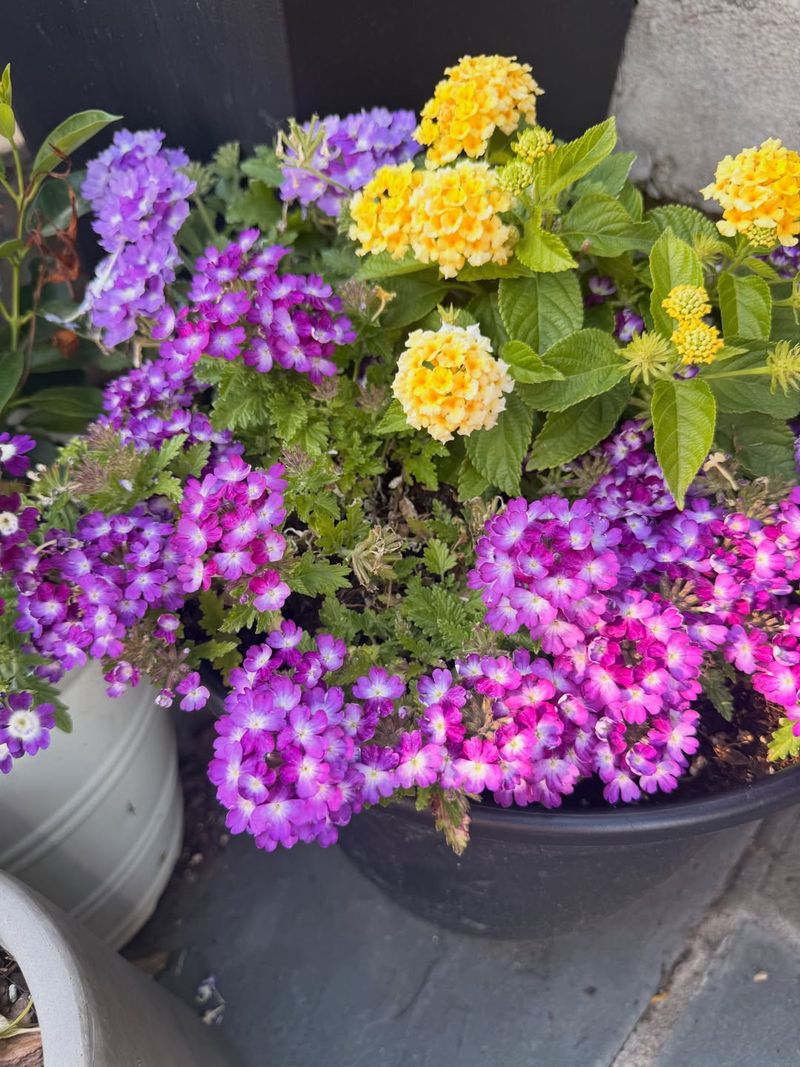
If your container sits in a spot that bakes in full sun all day long, lantana and verbena are basically made for that situation. Both plants are heat lovers that actually perform better as temperatures climb.
While other flowers start looking tired in mid-July, this pair hits its stride and keeps going strong.
Lantana produces clusters of tiny flowers in bold combinations of yellow, orange, red, pink, and white. The clusters change color slightly as they age, which gives each bloom head a multicolored, almost confetti-like appearance.
Verbena sprawls and trails in shades of purple, lavender, red, and white, softening the edges of any pot beautifully.
Fun fact: lantana is actually a favorite of butterflies and hummingbirds. Plant this combination near a window or seating area and you will enjoy a steady stream of pollinators all summer.
Verbena also attracts butterflies, so this container doubles as a mini wildlife garden right on your deck or patio.
Both plants are drought-tolerant once established, but they bloom best with regular watering. Water deeply two to three times per week during the hottest stretches of July and August.
Fertilize every two weeks with a high-phosphorus liquid fertilizer to encourage continuous blooming. Trim verbena back by about one-third in mid-July if it starts to look scraggly.
This refreshes the plant and triggers a fresh flush of blooms within a couple of weeks. Lantana needs very little pruning but benefits from removing spent flower clusters to keep new ones coming.
4. Zinnia + Dusty Miller
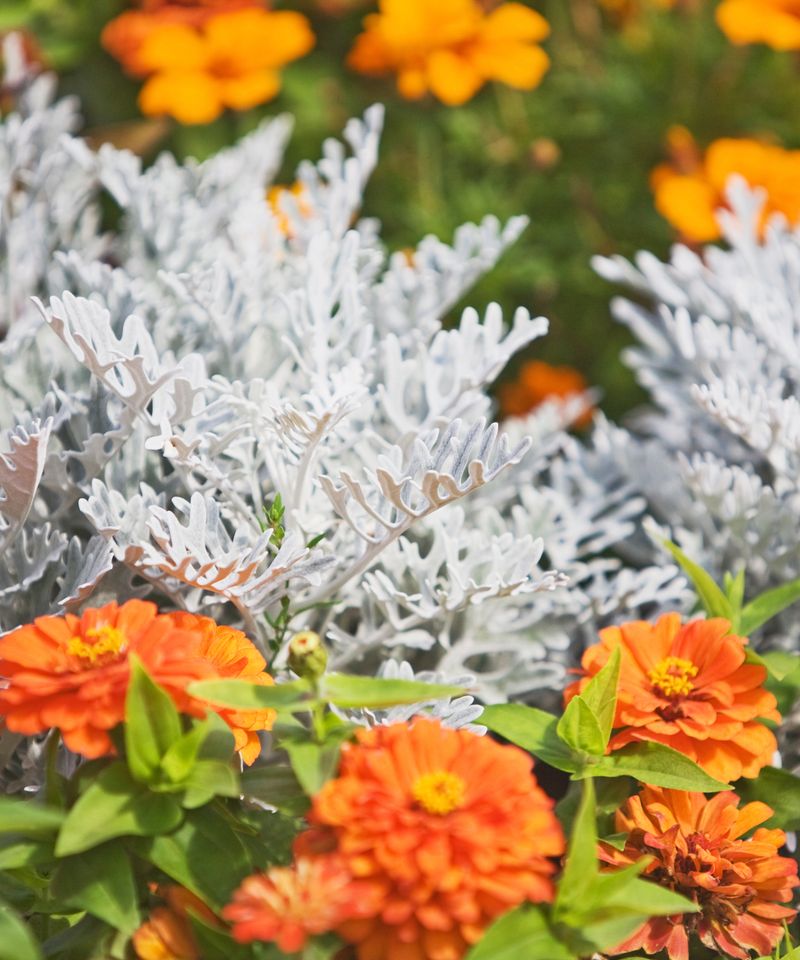
Zinnias are one of the most cheerful flowers you can grow in a Pennsylvania summer container. They come in almost every color imaginable, bloom heavily from June through frost, and practically thrive on neglect.
Add dusty miller beside them and you get a combination that looks sharp, structured, and surprisingly elegant.
Dusty miller brings silvery-white, felt-like foliage that acts almost like a natural highlighter for whatever flower sits next to it. Red zinnias look even bolder against silver leaves.
Orange zinnias pop dramatically. Even soft pink zinnias gain a fresh, crisp quality when paired with this silvery foliage plant. The contrast is simple but genuinely stunning.
Both plants handle heat without complaint, which is exactly what you need when August temperatures in Pennsylvania push into the 90s. Zinnias prefer full sun and good air circulation to stay healthy.
Make sure your container has drainage holes, as soggy roots can cause powdery mildew on zinnia leaves. Dusty miller is actually very drought-tolerant and prefers to dry out a bit between waterings.
Deadhead zinnias regularly to keep the blooms coming strong through late summer. Snip spent flowers right above a leaf node and new buds will follow within days.
Dusty miller rarely needs trimming but can be shaped lightly if it gets too wide for the pot. Use a bloom-boosting fertilizer every two weeks throughout July and August.
A container at least 14 inches wide gives both plants enough room to grow without crowding each other out.
5. Salvia + Trailing Lobelia
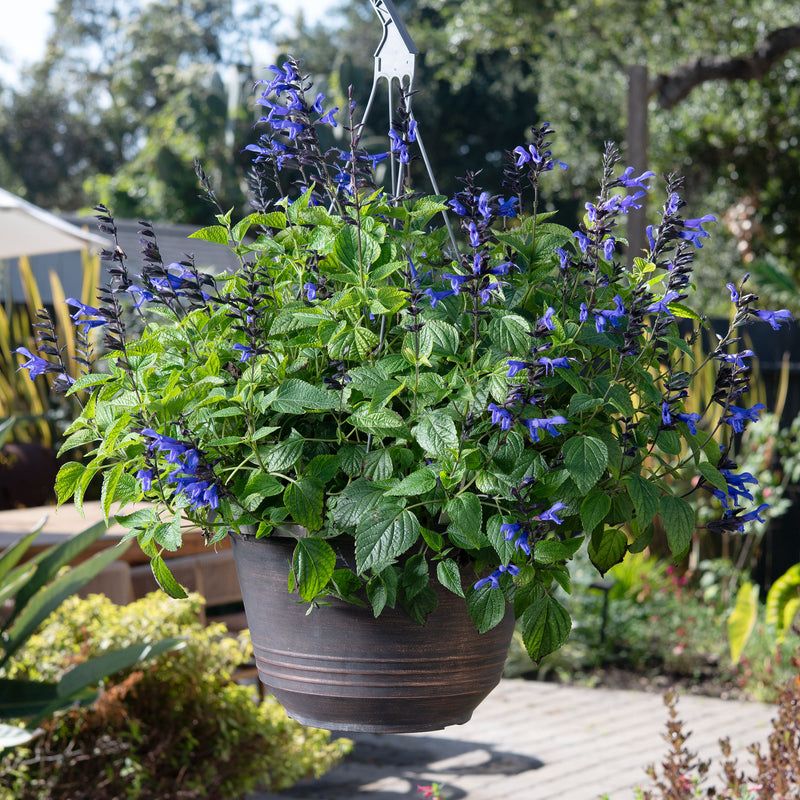
Picture a container with tall, deep blue spikes shooting upward while soft, delicate blooms pour over the edges like a waterfall. That is exactly what salvia and trailing lobelia bring to a summer pot.
The vertical energy of salvia and the flowing grace of lobelia create a combination that looks intentional and well-designed without requiring any special skills.
Salvia, especially varieties like Victoria Blue or Black and Blue, blooms heavily in early summer and often rebounds with a second flush after a light trim in mid-July.
Bees and hummingbirds absolutely love salvia, so placing this container near a garden bed or feeder adds real wildlife value to your yard.
Trailing lobelia cascades in shades of blue, violet, white, and bicolor, adding a soft, romantic feel to any pot.
Lobelia actually prefers cooler temperatures, so it can slow down a bit during the hottest weeks of August in Pennsylvania. Water consistently and provide afternoon shade during heat waves to help lobelia stay lush.
Salvia, on the other hand, handles heat well and keeps blooming even when temperatures are high.
Trim lobelia back by half in mid-summer if it starts to look sparse or leggy. New growth and fresh blooms will follow within two weeks.
Cut salvia stems back after the first bloom cycle fades to encourage a strong second round of flowers. Feed both plants with a balanced liquid fertilizer every two weeks.
A 14-inch or larger container in a spot with morning sun and afternoon shade works best for keeping both plants happy through August.
6. Geranium + Bacopa
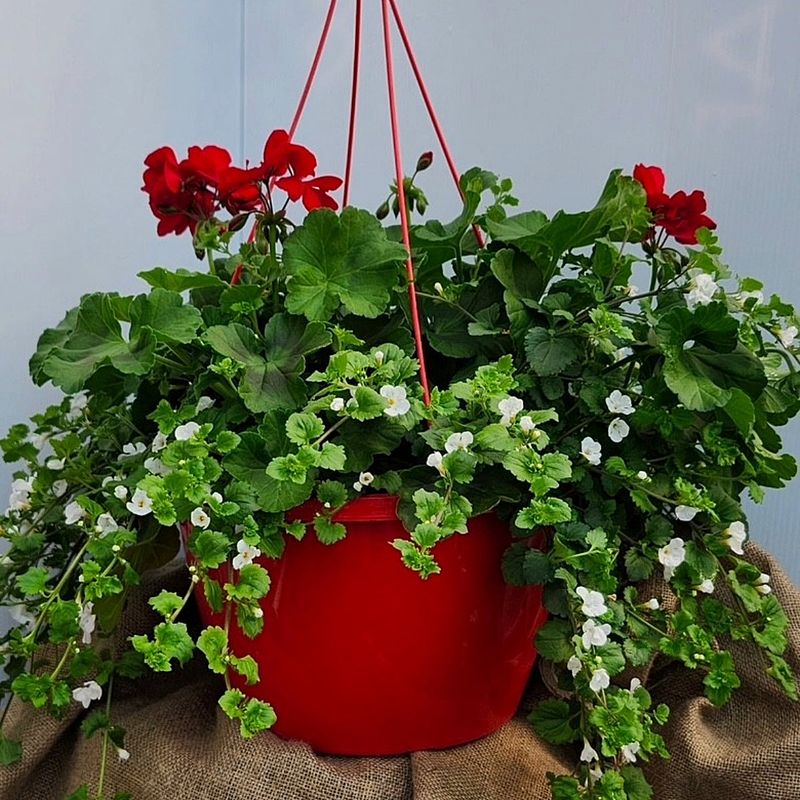
Geraniums have been a porch staple for generations, and for good reason. They are tough, colorful, and incredibly reliable through the heat of a Pennsylvania summer.
Add bacopa as a trailing companion and you get a combination that looks classic, full, and polished without requiring a lot of daily attention.
Bacopa produces tiny star-shaped flowers in white, lavender, or pink that spill gracefully over the edges of any container. The plant grows in a dense, soft mat that contrasts beautifully with the bold, rounded blooms of geraniums.
Together, they fill every inch of a pot and create a layered look that feels lush and intentional.
Geraniums actually prefer to dry out slightly between waterings, which makes them well-suited for busy gardeners who sometimes forget to water.
Bacopa likes a bit more consistent moisture, so watering every other day during hot stretches keeps both plants happy.
Morning watering is best since wet foliage overnight can encourage fungal issues on geranium leaves.
Deadhead geraniums weekly by snapping off old flower heads at the base of the stem. This simple step keeps new blooms coming steadily through August.
Bacopa rarely needs trimming but benefits from a light shaping in mid-July if it gets too wide. Feed both plants with a bloom-focused fertilizer every two weeks for the best results.
Choose a pot with excellent drainage and place it in a spot with at least six hours of direct sunlight daily. Geraniums and bacopa both thrive in full sun and will reward you with color all summer long.
7. Angelonia + Sweet Alyssum
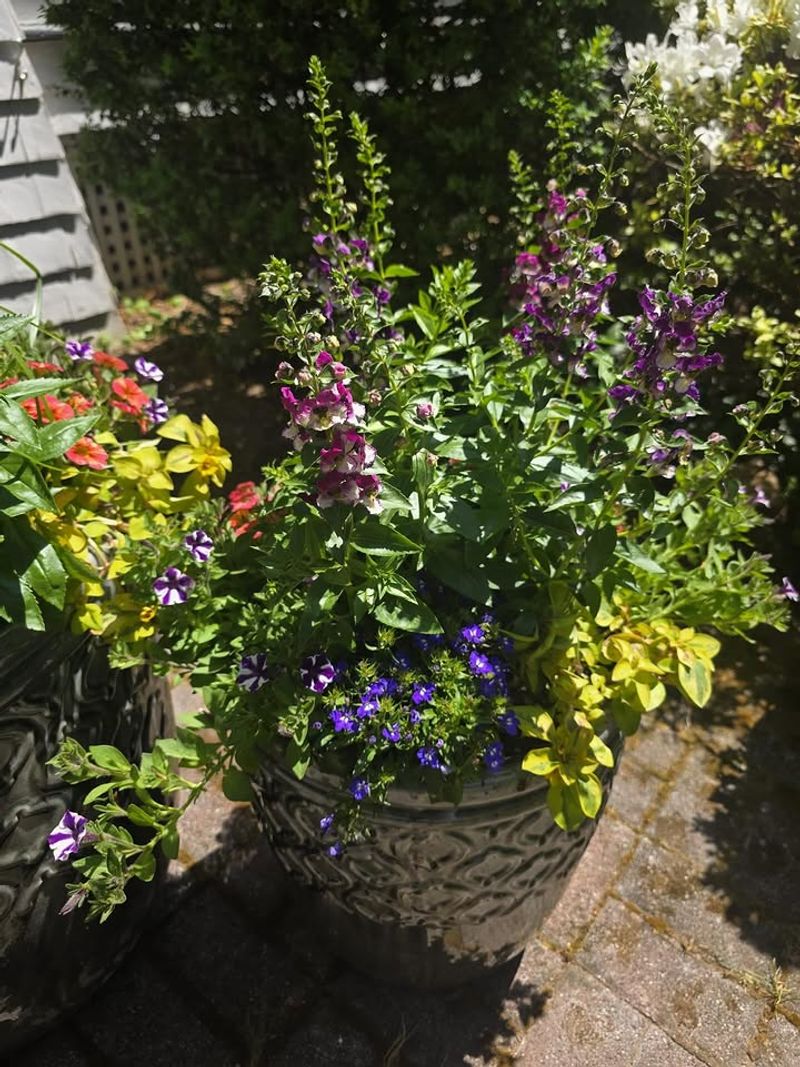
Angelonia is sometimes called the summer snapdragon, and once you grow it, you will understand why gardeners in Pennsylvania keep coming back to it every year.
It blooms nonstop in purple, pink, white, and bicolor shades from early summer right through the end of August. It practically never quits, even during the hottest weeks of the year.
Sweet alyssum is the soft, fragrant companion that makes angelonia shine even brighter. Alyssum produces tiny clusters of white, pink, or purple flowers that spill gently over container edges with a honey-like fragrance that carries beautifully on a warm summer evening.
The combination of tall, structured angelonia and low, flowing alyssum creates a natural balance that looks effortless.
Alyssum can slow down during peak summer heat, but it bounces back reliably once temperatures drop slightly in late August. Trim it back by one-third during mid-summer to encourage fresh growth and new blooms.
Angelonia needs very little maintenance and does not require deadheading since spent flowers drop cleanly on their own.
Both plants perform best in full sun with well-draining soil. Water angelonia deeply but allow the top inch of soil to dry between waterings.
Alyssum prefers even moisture, so check the pot daily during heat waves. Fertilize every two weeks with a balanced bloom fertilizer to keep both plants flowering heavily.
A container at least 12 inches wide gives angelonia enough room to grow tall without tipping. This pairing is low-maintenance, long-blooming, and genuinely beautiful from the first warm days of summer through the final weeks of August.