This Pennsylvania Yard Pest Is Peaking Right Now And Many Homeowners Miss It
Walk out to your rose bushes on a warm July morning in Pennsylvania, and you might notice the leaves look oddly see-through, like little green skeletons.
That lacy, chewed-up look is a calling card most homeowners miss until the damage is already done.
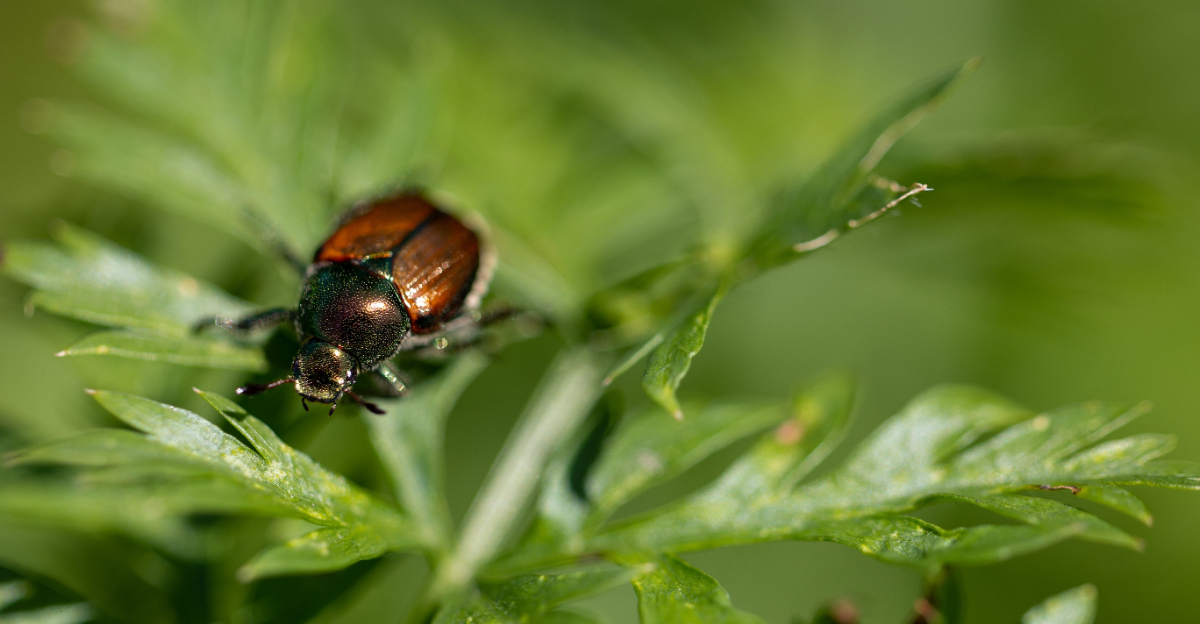
The culprit is the Japanese beetle, a shiny, copper-and-green insect that peaks during summer and can work through your favorite garden plants surprisingly fast.
Pennsylvania gardens are full of the plants these beetles love most, including roses, grapes, linden trees, and raspberries.
Adult beetles typically show up in late June and stay active through August, with peak feeding happening right now in July.
They feed in groups, which means a few beetles can quickly become a crowd on a single branch.
Many homeowners walk right past early damage because the beetles are small and the first signs are subtle.
Knowing what to look for and when to act makes a real difference, and the good news is that managing these beetles does not have to be complicated or expensive.
This guide breaks down everything you need to spot them early, protect your plants, and keep your yard looking its best through the rest of summer.
Meet The Japanese Beetle
Shiny, small, and surprisingly bold, the Japanese beetle is one of the most recognizable summer insects in Pennsylvania yards.
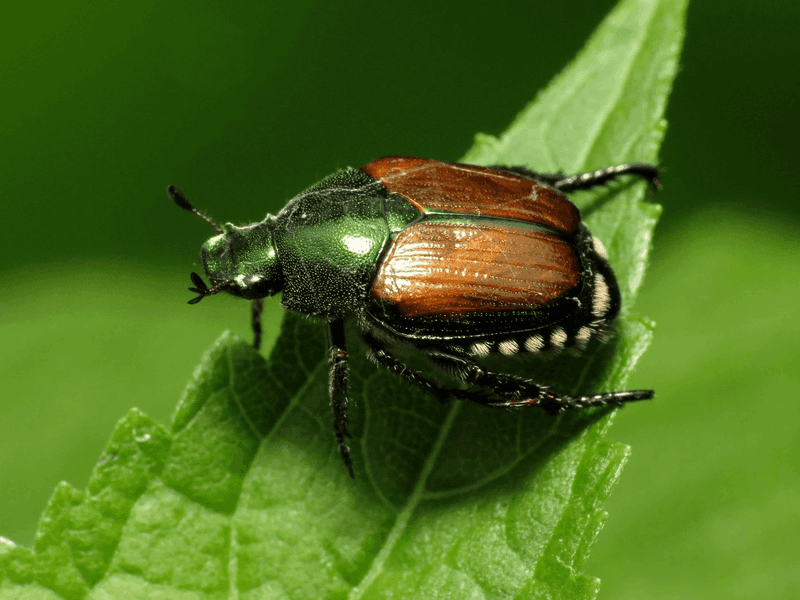
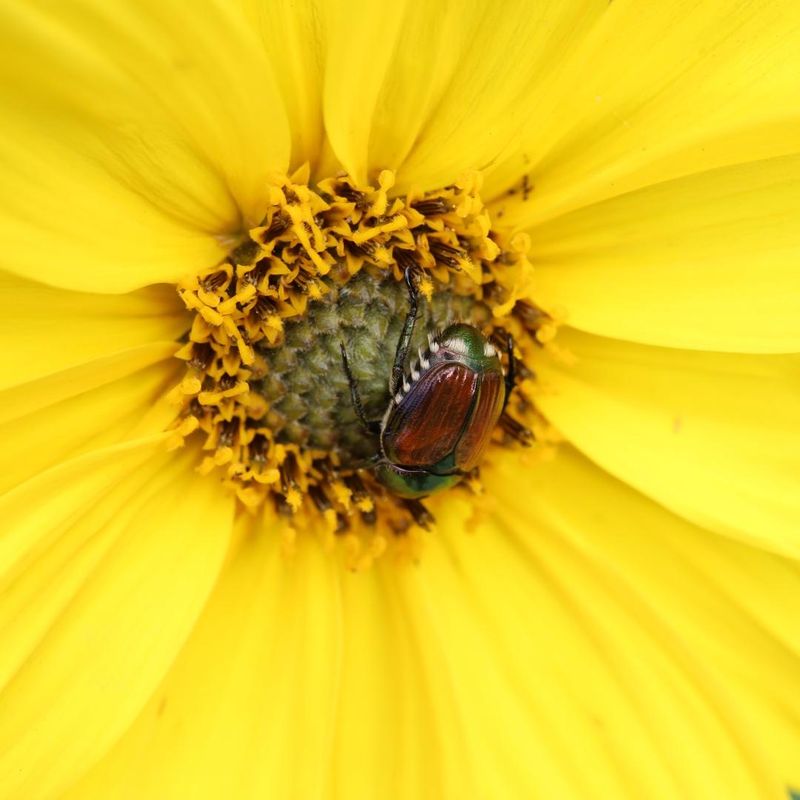
Adults measure about half an inch long, with a metallic green head and thorax and coppery-brown wing covers.
Around the edges of the abdomen, you will notice small white tufts of hair, which are actually one of the easiest ways to confirm an identification. No other common garden beetle in Pennsylvania looks quite like it.
Japanese beetles were accidentally introduced to the United States from Japan in the early 1900s, first spotted near Riverton, New Jersey in 1916.
They have been spreading steadily ever since and are now well established across Pennsylvania.
Penn State Extension notes that adults typically emerge in late June, with populations peaking in July before tapering off through August. That makes right now the heart of their feeding season.
Adult beetles are skeletonizers.
They chew the soft tissue between leaf veins but leave the veins themselves behind, creating that lacy, see-through look that signals their presence.
They feed during warm, sunny days and tend to gather in groups because feeding beetles release a scent that attracts more beetles.
A single plant can go from a few chewed patches to heavily damaged foliage within days.
Spotting them early, before the crowd builds, is the most effective strategy a Pennsylvania homeowner can use this summer.
Skeletonized Leaves Give Them Away
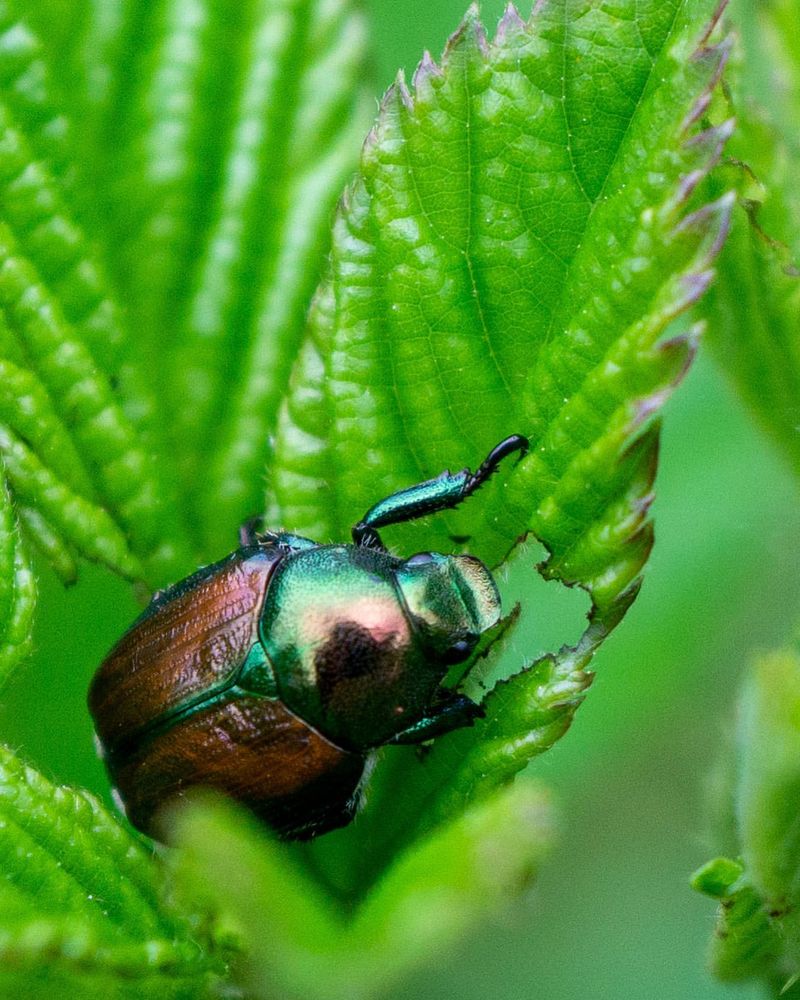
A rose leaf in July should look full, green, and smooth.
When it starts looking like a piece of brown lace with only the veins remaining, that is a textbook sign of Japanese beetle feeding.
This skeletonizing damage is one of the most distinctive clues in the yard, and once you know what it looks like, you will spot it everywhere during peak season.
The beetles chew out the soft, green tissue between the leaf veins but leave the veins intact.
Your Pennsylvania Garden Changes Every Week. Your Plan Should Too.
Gardening in Pennsylvania changes quickly throughout the season. Every Friday you’ll receive a simple weekly plan showing exactly what to plant, prune, fertilize, harvest, and protect so you never miss the right timing.
Over a day or two, the remaining tissue dries out and turns brown.
From a distance, heavily damaged plants can look like they are scorched or suffering from drought stress. Many homeowners assume it is a watering problem and miss the beetles entirely until the plant looks completely ragged.
Look closely at the upper surface of leaves first, since beetles prefer feeding on the top side in full sun.
Check plants in the warmest, sunniest spots in your yard because beetles actively seek out heat.
Early damage often starts near the top of a plant and works downward as the population grows.
A single branch with a few skeletonized leaves is a warning flag worth acting on quickly.
Penn State Extension recommends checking susceptible plants regularly during July. Catching the damage early, when only a few leaves are affected, gives you the best window to respond before populations build and spread to neighboring plants in your garden.
Roses And Grapes Show Damage Fast
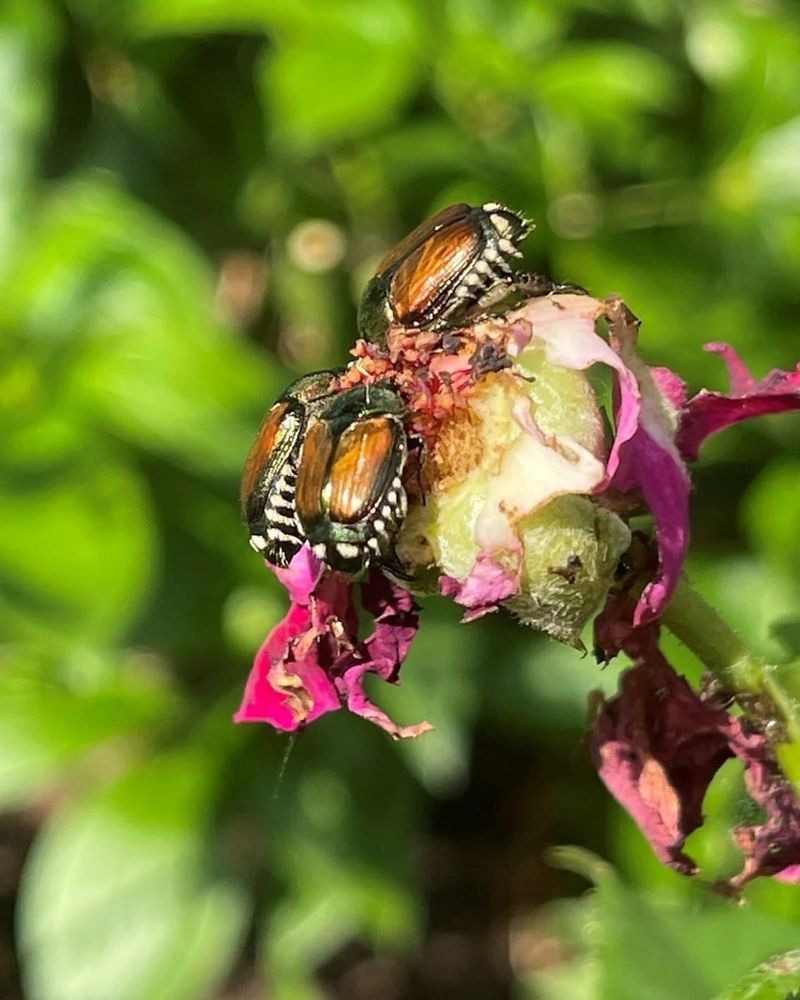
A cluster of shiny beetles on a rose bloom is one of the most frustrating sights a Pennsylvania gardener can face in July.
Roses are among the top preferred host plants for Japanese beetles, and the damage shows up fast.
Beetles chew petals, buds, and leaves simultaneously, leaving blooms ragged and foliage skeletonized within just a couple of days. Hybrid tea roses tend to attract especially heavy feeding.
Grapes are another favorite.
Backyard grape growers in Pennsylvania often notice the undersides of grape leaves turning brown and papery right around mid-July.
Beetles can strip a young grapevine quickly, which stresses the plant and reduces fruit quality. For home grape growers, consistent scouting during July is not optional. It is essential.
Penn State Extension lists more than 300 plant species that Japanese beetles will feed on.
Beyond roses and grapes, watch your linden trees, crabapples, raspberries, and hibiscus closely. Plants growing in full sun tend to attract more beetles than those in shadier spots, so your sunniest garden beds deserve the most attention.
One practical tip is to start your morning rounds at the plants you care about most.
Spotting a small group of beetles early, before they release aggregation pheromones that attract more insects, gives you a real advantage.
Acting fast on your roses and grape leaves keeps the problem from multiplying across the rest of your yard as July rolls on.
Morning Handpicking Works Best
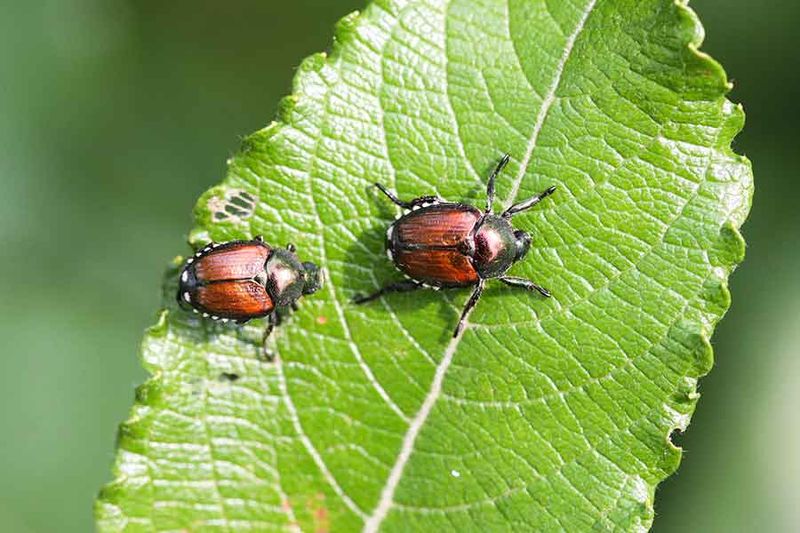
A morning bucket and a little patience might be the most underrated tool in your beetle-fighting kit.
Handpicking is genuinely effective for homeowners with a manageable number of plants, and Penn State Extension recommends it as one of the best low-input options available.
The key is timing. Japanese beetles are sluggish in the early morning when temperatures are cooler, making them much easier to knock off plants without them flying away.
Fill a bucket with warm water and a small squeeze of dish soap.
Hold it under a branch where beetles are clustered, then give the branch a firm, quick shake. The beetles drop straight into the soapy water before they can react. The soap breaks the surface tension so they cannot float or escape.
It sounds almost too simple, but it works remarkably well when done consistently every morning during peak season.
Wear gloves if you prefer, though many gardeners find bare hands work just fine.
Focus your efforts on the most heavily infested plants first, then work outward.
Do not wait until midday when beetles are warm, active, and far more likely to fly off before you can catch them. Morning is your window.
Repeat the process daily or every other day throughout July. Consistency matters more than perfection here.
Removing adults before they can feed and release aggregation scents helps slow the buildup on your plants, giving your garden a real fighting chance through the rest of the beetle season.
Traps Can Backfire Nearby
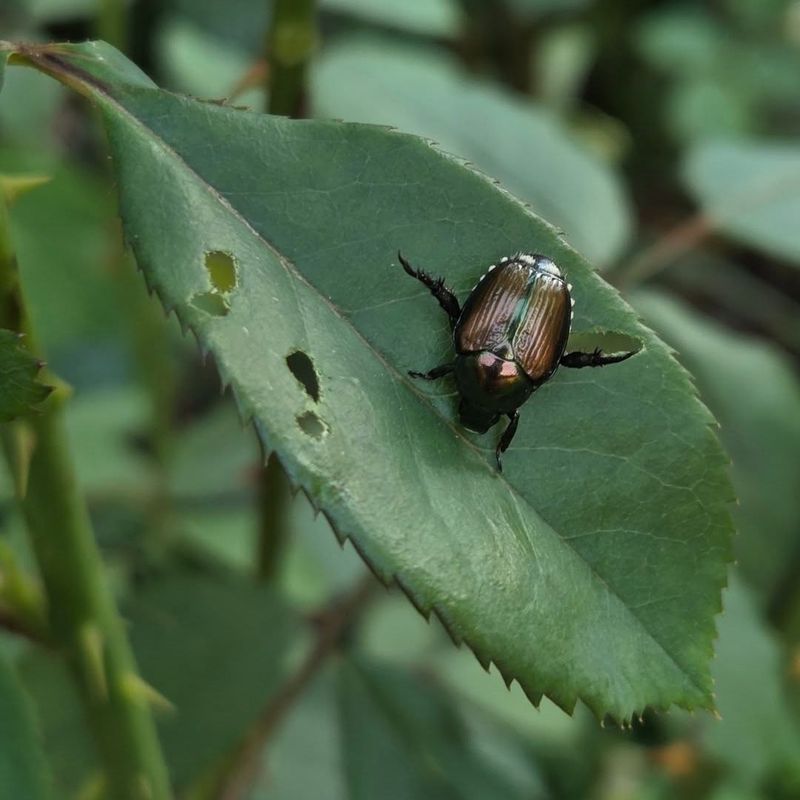
A trap hanging too close to your rose garden might actually be making your beetle problem worse.
Japanese beetle traps use two powerful attractants: a floral lure that mimics the scent of host plants, and a sex pheromone that draws in beetles looking to mate.
Together, these lures are extremely effective at pulling in beetles from a wide area, sometimes from neighboring yards and down the street.
The catch is that traps attract far more beetles than they capture.
Research cited by Penn State Extension shows that traps can actually increase plant damage near the trap location because beetles fly toward the scent, overshoot or avoid the trap, and land on your plants instead.
Homeowners who place traps right in the garden often end up with more feeding damage than those who use no trap at all.
If you want to use a trap, placement matters enormously.
Position it at least 30 feet away from any plants you are trying to protect, ideally at the far edge of your property or in an open area away from garden beds.
Empty the collection bag frequently, especially during peak season, so it does not overflow and release beetles back into the yard.
Traps are not a bad tool, but they need a smart location to work in your favor.
Think of them as a monitoring device placed at a distance rather than a frontline defense stationed in your prized garden beds.
Turf Grubs Need Different Timing
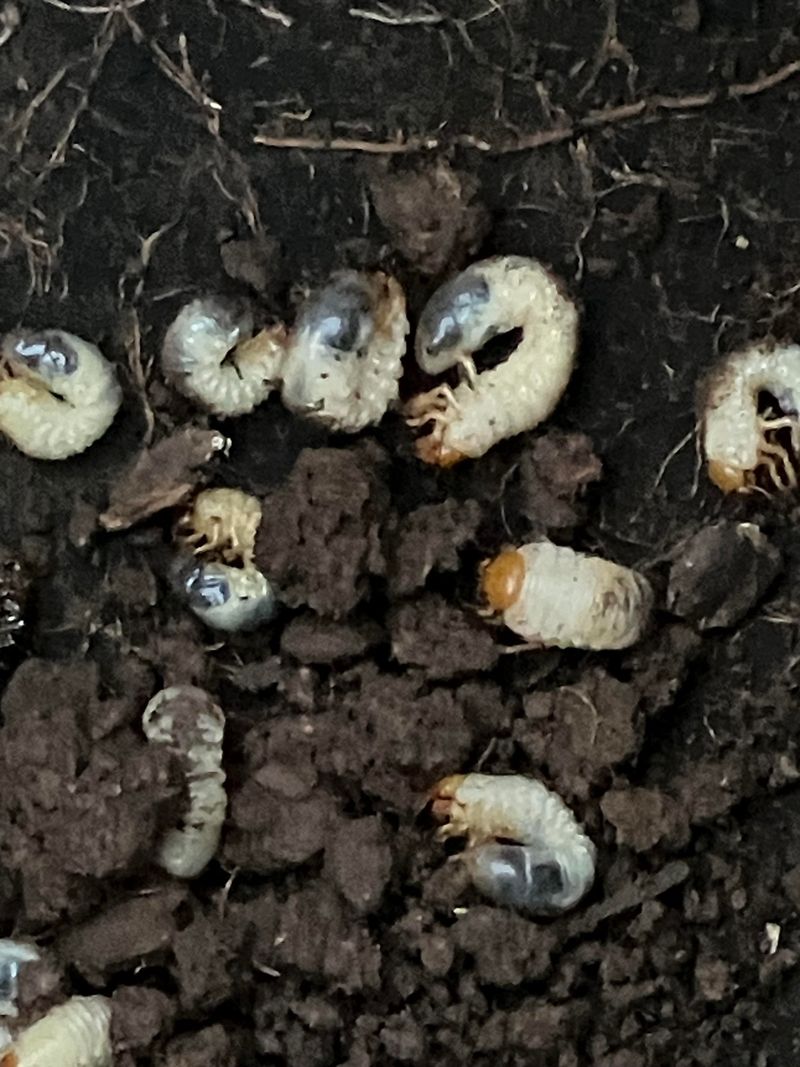
While adult beetles get most of the attention in July, there is a whole second chapter to the Japanese beetle story happening underground.
Female beetles lay eggs in turf grass throughout July and August, and those eggs hatch into white, C-shaped grubs that feed on grass roots through late summer and fall.
Grub damage shows up as brown, spongy patches of turf that pull up easily because the roots have been eaten away.
Managing grubs requires completely different timing than managing adults.
Penn State Extension recommends applying grub control products in late July through August, when newly hatched grubs are small and close to the soil surface.
Waiting until fall means the grubs have moved deeper into the soil where treatments are far less effective. Treating too early, before eggs have hatched, also wastes product and misses the target.
The most effective grub control options for homeowners include products containing imidacloprid or chlorantraniliprole, both of which are widely available at Pennsylvania garden centers.
Always water the product into the lawn after application, since grub controls need to move down through the soil to reach the feeding zone.
Not every brown lawn patch in late summer is grubs.
Check by cutting a square foot of turf and counting grubs in the soil beneath.
Penn State Extension suggests that ten or more grubs per square foot generally warrants treatment. Fewer than that, and your lawn may recover on its own with good watering and care.
Protect Favorite Plants First
You probably cannot protect every plant in your yard from Japanese beetles, and trying to do so can feel overwhelming fast.
A smarter approach is to pick your battles.
Focus your time and energy on the plants that matter most to you, whether that is your rose collection, your backyard grapevines, or a prized Japanese maple that took years to establish.
Kaolin clay is a non-toxic option worth knowing about.
When sprayed on plant surfaces, it creates a fine white coating that irritates beetles and discourages feeding. It washes off with rain, so reapplication is needed, but it works without leaving chemical residues on edible plants like grapes or raspberries.
For ornamental plants where chemical options are acceptable, pyrethrin-based sprays and neem oil can reduce feeding when applied correctly.
These work best as contact treatments applied in the early morning when beetles are present and sluggish.
Systemic insecticides applied to soil offer longer protection but take time to move through plant tissue, making them better suited for prevention than emergency response.
Row covers and lightweight fabric barriers can physically block beetles from reaching plants during peak season.
They work especially well on smaller plants like roses and berry bushes.
Remove covers periodically to check for any beetles that snuck in, and make sure pollinators can still access flowering plants.
Prioritizing protection this way keeps your most valued plants healthy without turning your whole yard into a chemical zone.