Why Arizona Bougainvillea Stops Blooming In Summer And How To Fix It
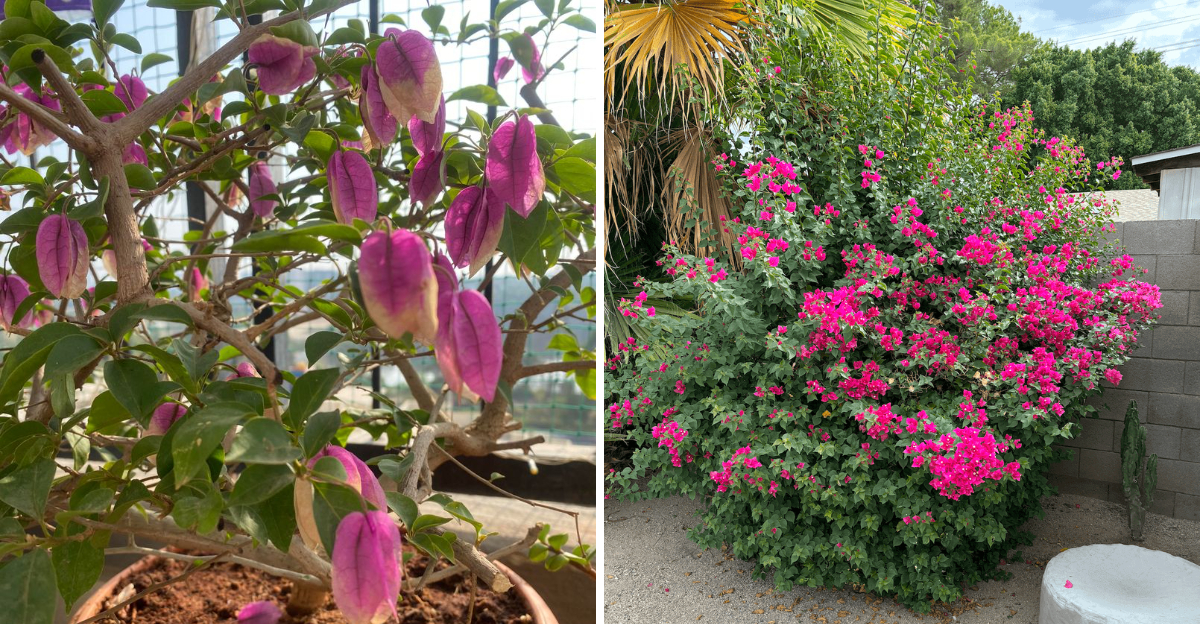
Bougainvillea can cover a wall or fence in color so heavily that it becomes the first thing people notice in an Arizona yard. Then summer arrives, and the bright blooms suddenly start disappearing.
That change catches many homeowners off guard. Everything looked healthy before temperatures started climbing higher day after day.
Most people try to help by watering more often or feeding the plant extra fertilizer.
Bougainvillea does not always respond the way people expect during extreme heat, and some common habits actually reduce blooming even more.
The frustrating part is that the plant usually gives small warning signs before the flowers start fading away.
Once you understand what triggers that slowdown, it becomes much easier to keep color going longer through summer.
1. Too Much Water Pushes Out Leaves Instead Of Color
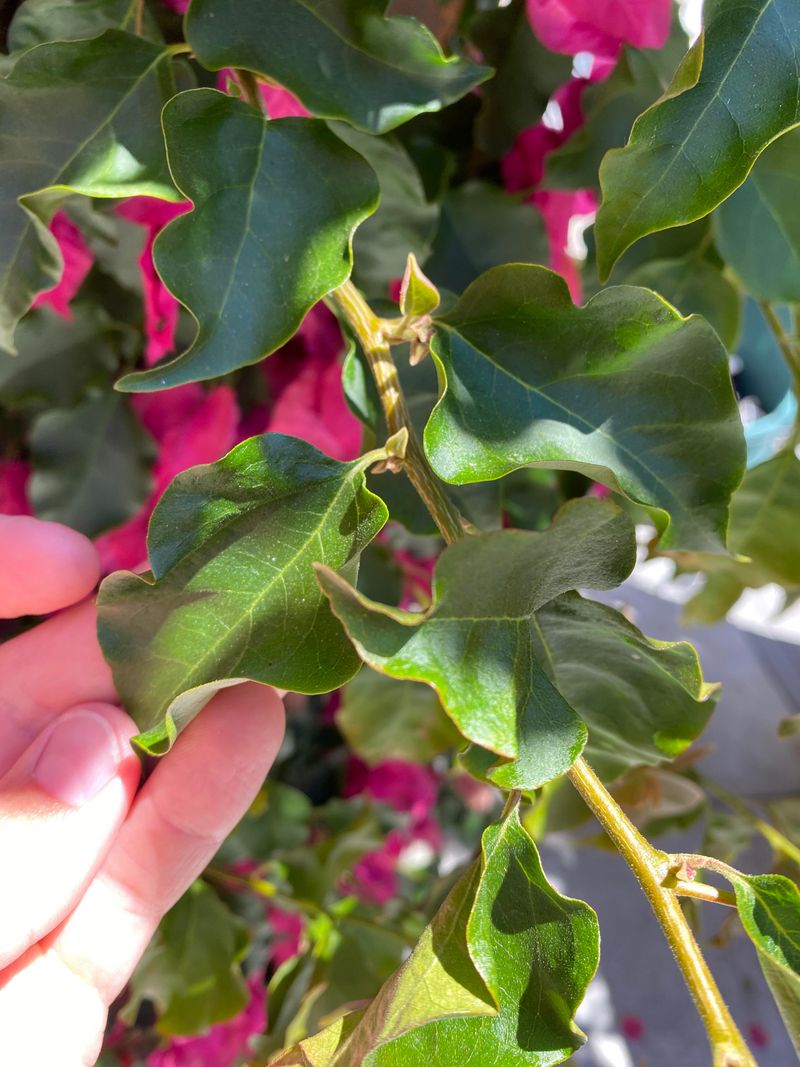
Overwatering is one of the sneakiest reasons bougainvillea stops producing color. Most gardeners assume more water equals healthier plants.
With bougainvillea, that logic backfires fast.
When roots stay too wet, the plant shifts its energy toward pushing out leaves. Green, leafy growth looks healthy at first glance.
But underneath, the plant has no reason to stress itself into flowering.
Bougainvillea actually blooms better under mild drought stress. A slightly dry root zone signals the plant to produce bracts as a survival response.
Consistent moisture removes that trigger entirely.
In Phoenix and Tucson, summer monsoon rains already add moisture to the soil. Watering on top of rain events can easily push the plant into leaf-heavy mode.
Watch the calendar and skip irrigation after a good storm.
Sandy desert soil drains quickly, but clay-heavy patches hold water longer than expected. Before watering again, push a finger two inches into the soil near the base.
If it still feels damp, wait another day or two.
Cutting back on water in late summer can actually restart a bloom cycle. Reduce irrigation gradually over one to two weeks rather than stopping abruptly.
Slow adjustments keep roots stable while nudging the plant back toward flowering.
2. Heavy Shade Reduces Flower Production During Peak Heat
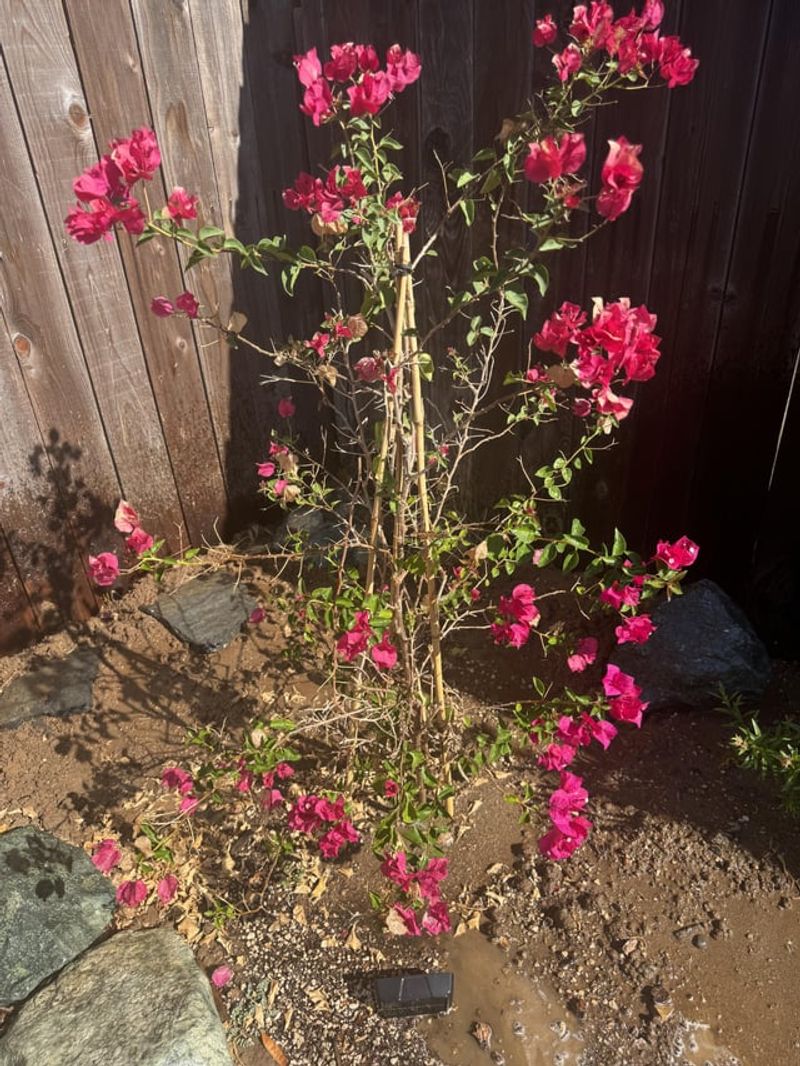
Shade feels like a kindness during brutal summer heat, but bougainvillea does not see it that way. Full sun is not optional for this plant.
It is a requirement.
Bougainvillea needs at least six hours of direct sunlight daily to produce consistent blooms. When shade from trees, patio covers, or nearby structures blocks that light, flower production slows noticeably.
Even partial shade during peak afternoon hours can interrupt a bloom cycle.
During summer, the sun angle shifts slightly in the desert Southwest. A spot that received full sun in spring may get more shade by July as trees fill out.
Check your plant’s light exposure in midsummer, not just in early spring when you planted it.
If a nearby tree has grown larger and now casts shade over your bougainvillea, selective pruning of that tree can restore sun access. Even removing a few branches can make a real difference in light levels reaching the vine.
Walls and fences can also create unexpected shade zones depending on orientation. South and west-facing walls tend to get the most sun exposure in desert climates.
Your Arizona Garden Changes Every Week. Your Plan Should Too.
Gardening in Arizona changes quickly throughout the season. Every Friday you’ll receive a simple weekly plan showing exactly what to plant, prune, fertilize, harvest, and protect so you never miss the right timing.
Repositioning a container plant or training a young vine toward a sunnier wall section can help significantly.
Reflected heat from light-colored walls actually benefits bougainvillea in hot climates. It boosts soil temperature and encourages the stress response that triggers blooming.
3. Cut Back Excess Growth Before Bloom Cycles Slow Down
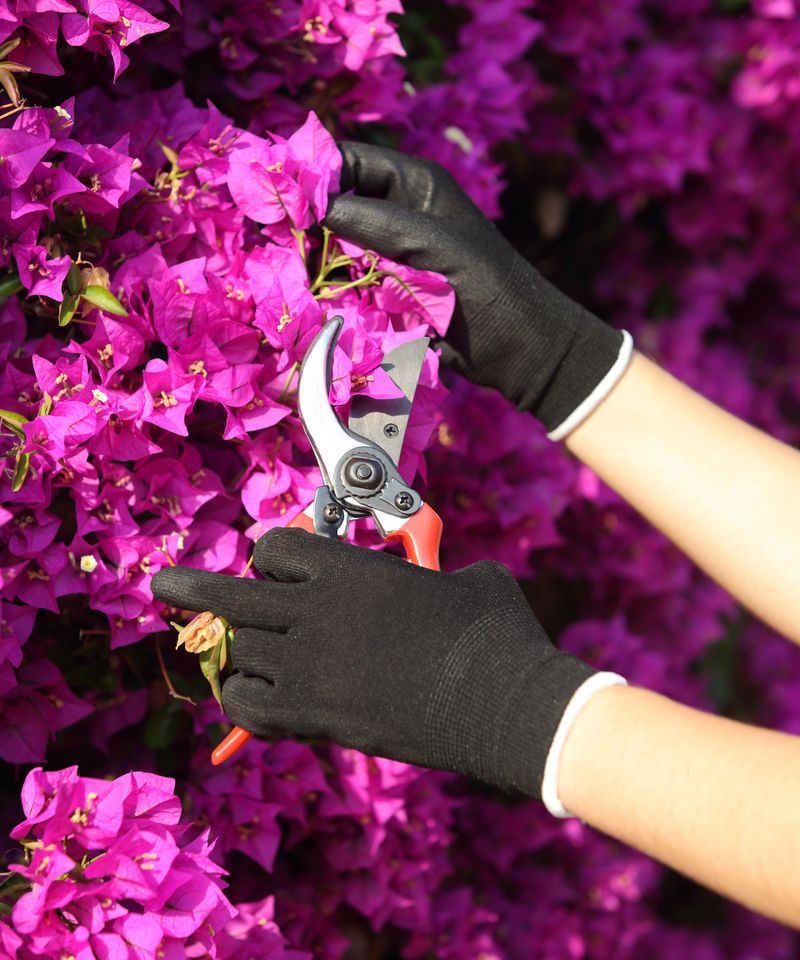
Overgrown bougainvillea puts most of its energy into maintaining long, woody stems rather than producing new flower tips. Pruning at the right time resets that energy toward blooming.
Waiting too long makes the problem worse.
New growth tips are where blooms form. When a plant becomes thick and tangled, fewer fresh tips develop.
Cutting back excess stems forces the plant to push out new growth, which eventually leads to another round of color.
Timing matters more than most people realize. Light pruning in late spring, just before peak summer heat, gives the plant time to push new growth before monsoon season arrives.
That new growth sets up the fall bloom cycle, which is often the most spectacular of the year in desert climates.
Avoid heavy pruning in the middle of a heat wave. Removing large amounts of foliage when temperatures are above 110 degrees can stress the plant more than help it.
Light shaping is fine during peak heat, but save major cuts for when temperatures ease.
Use clean, sharp hand pruners rather than dull blades that crush stems. Cutting just above a leaf node encourages healthy branching.
Leaving stubs or cutting too far below a node can slow recovery.
4. Switch To Deep Watering Instead Of Frequent Shallow Soaks
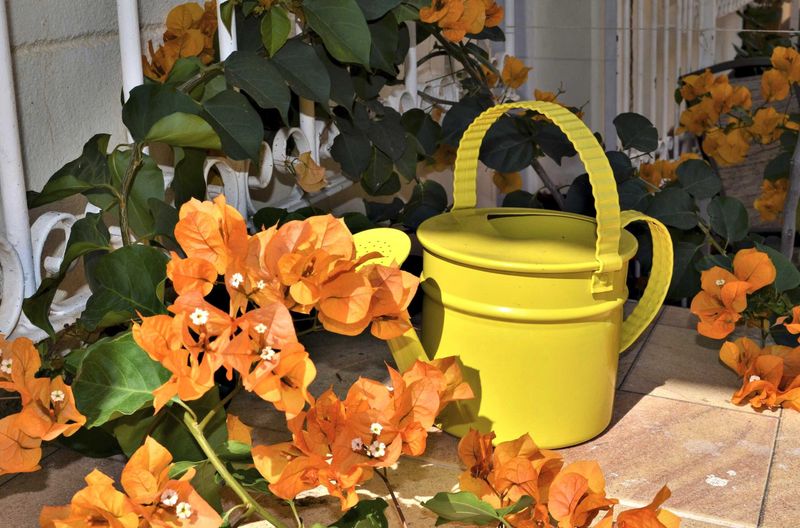
Shallow watering trains roots to stay near the surface. Surface roots dry out fast in desert heat, which stresses the plant in the wrong way.
Deep watering changes that root behavior completely.
When water soaks down twelve to eighteen inches, roots follow it downward. Deeper roots access more stable soil moisture and stay cooler during extreme heat.
A plant with deep roots handles summer stress far better than one with shallow ones.
Frequent light watering also keeps the soil surface consistently moist, which encourages leafy growth over flowering. Bougainvillea responds to periods of dry soil between waterings.
That cycle of wet and dry mimics the natural conditions of its native habitat and triggers the stress response that produces blooms.
Run drip irrigation longer and less often rather than short daily cycles. A single long session every seven to ten days during summer works better than daily five-minute runs.
Adjust based on rainfall and actual soil conditions, not just a fixed schedule.
Check how deep water actually reaches after a watering session. Push a thin rod or wooden dowel into the soil about an hour after watering.
Damp soil will show resistance at the point moisture reaches. If water only penetrates four inches, run the system longer next time.
5. Hold Off On High-Nitrogen Fertilizer During Summer
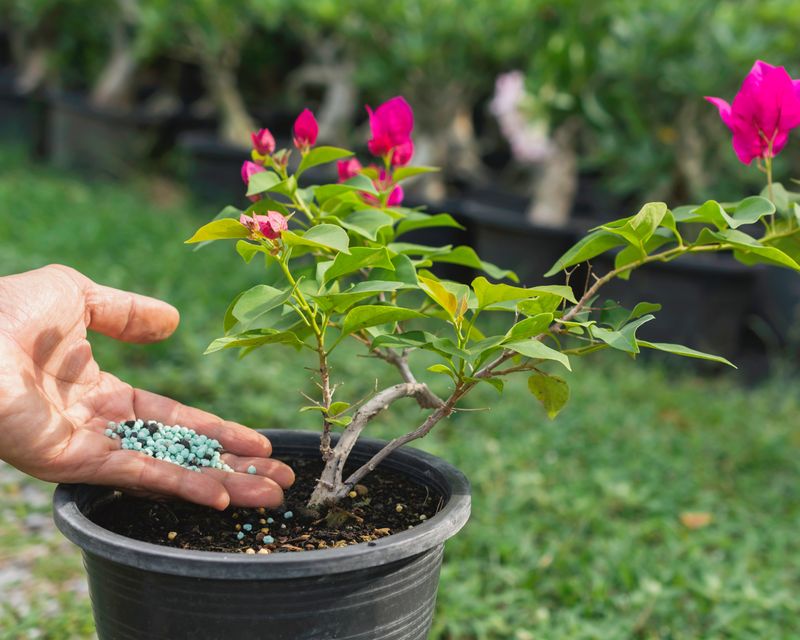
Nitrogen is the nutrient that pushes plants to grow green and leafy. For most garden plants, that is exactly what you want.
Bougainvillea works differently.
High nitrogen during summer sends the plant into a leafy growth frenzy. Stems get longer, leaves get bigger, and bracts disappear almost entirely.
It looks like the plant is thriving, but it has simply been pushed into vegetative mode.
Fertilizers labeled for lawns or general garden use are often high in nitrogen. Check the three numbers on any fertilizer bag before applying it near bougainvillea.
A product with a first number much higher than the other two will likely suppress blooming.
Phosphorus is the nutrient that supports flower and root development. A fertilizer with a higher middle number, like a 5-10-10 blend, encourages blooms rather than foliage.
Low-nitrogen, phosphorus-rich options are widely available at garden centers in the Southwest.
Timing matters just as much as formula. Fertilizing during peak summer heat, especially during monsoon season, can push rapid growth that the plant cannot sustain.
New growth that appears during extreme heat is often weak and prone to sunburn.
A light application of bloom-boosting fertilizer in late summer, as temperatures begin to ease in August or September, gives better results than heavy feeding in July.
6. Clear Away Faded Bracts To Encourage Another Round Of Color
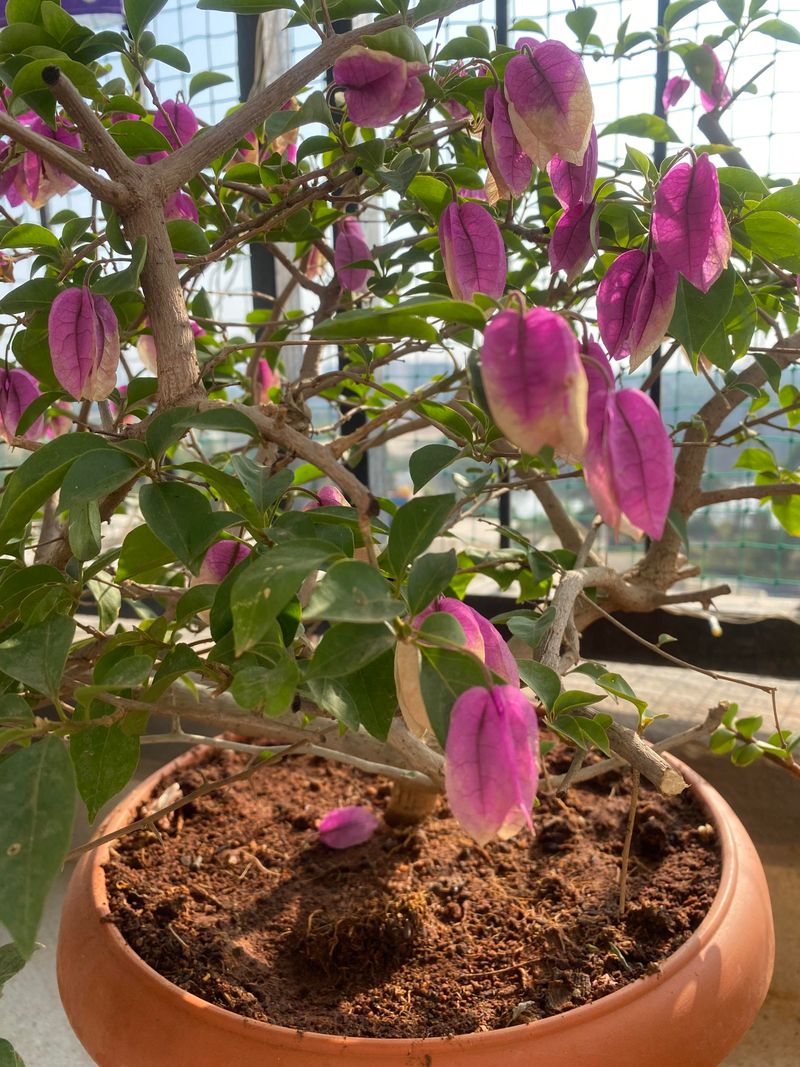
Faded bracts left on the vine send a clear signal to the plant: reproduction is complete, no need to produce more. Removing spent material interrupts that signal and pushes the plant to try again.
Bougainvillea bracts are not true flowers. They are modified leaves that surround the tiny actual flowers in the center.
Once those inner flowers finish, the bracts dry out and turn papery brown. Leaving them in place discourages new bract production.
Deadheading, which simply means removing spent blooms, is a common practice with many flowering plants. Bougainvillea responds well to it, especially during summer when natural bloom cycles slow down.
Clearing faded material consistently throughout the season can extend color longer than leaving the plant untouched.
Use clean pruners or even your fingers to remove faded clusters. Pinch just behind the spent bract cluster, at the point where it meets a stem node.
Avoid pulling hard, which can damage nearby new growth tips.
After clearing spent bracts, give the plant a few days before expecting new ones to appear. New bract clusters develop from fresh growth tips, which take time to mature.
Patience after deadheading is part of the process.
7. Protect Roots From Superheated Concrete With Fresh Mulch
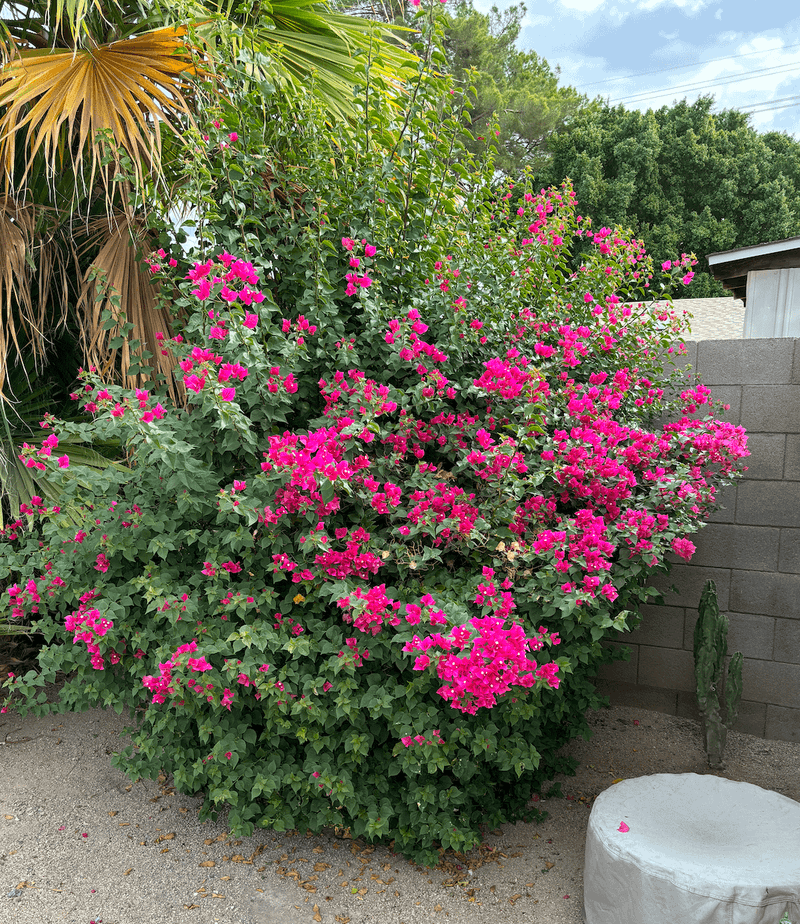
Concrete and pavers absorb enormous amounts of heat during Arizona summers. Ground temperatures near hardscape surfaces can exceed 160 degrees Fahrenheit on a hot July afternoon.
Roots sitting in that environment struggle to function normally.
When root systems overheat, water and nutrient uptake slow down. A plant with compromised roots cannot support bloom production, no matter how well you water or fertilize.
Protecting roots from extreme ground heat is a foundational step that many gardeners overlook.
A three to four inch layer of organic mulch around the base of the plant creates a significant buffer. Wood chips, shredded bark, or even decomposed granite can lower soil temperature by ten to fifteen degrees compared to bare soil next to concrete.
That temperature difference matters a lot to root health.
Keep mulch pulled back a few inches from the main trunk to prevent moisture buildup against the stem. Piling mulch directly against the base can create conditions for fungal issues in the humid monsoon period.
A small gap around the trunk base is enough to prevent problems.
Refresh mulch at the start of summer before ground temperatures peak. Old mulch breaks down and loses its insulating ability over time.
A fresh layer in May or early June sets up better root protection heading into the hottest months.