Low-Maintenance Perennials That Thrive On Neglect In California
There are some plants that act like they need a personal assistant. Miss one watering, and they start looking betrayed.
California gardens do not always have time for that kind of drama, especially when summer heat starts pushing everything harder.
Low maintenance perennials are the easygoing friends of the garden. They settle in, keep growing, and do not demand a big fuss every weekend. That makes them perfect for gardeners who love a pretty yard but do not want plant care taking over their life.
The best ones still bring strong color and good texture, but they do it without acting fragile. Forget a chore now and then, and they usually forgive you. That is the kind of plant energy most people need.
A garden should feel relaxing, not like another needy inbox blinking at you. These tough perennials make lazy gardening look surprisingly stylish.
1. Germander Stays Neat Without Constant Fussing
Few plants manage to look polished and tidy without any real effort, but germander pulls it off with ease.
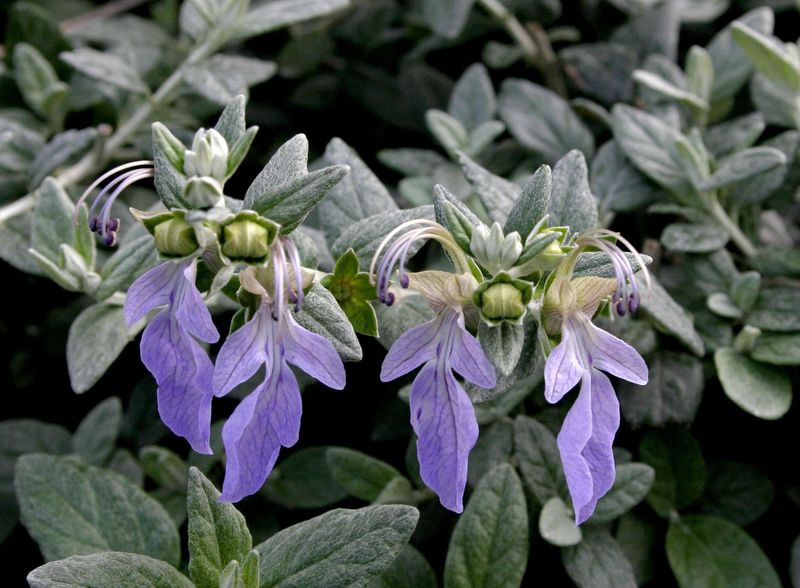
Germander or silver germander, is a woody perennial shrub that produces soft, silver-green leaves and small lavender-blue flowers throughout much of the year.
It grows in a naturally rounded shape that rarely needs hard trimming to stay attractive. Once established, it handles drought like a champion.
It thrives in full sun and well-drained soil, and it actually performs better when you leave it alone rather than fussing over it. Overwatering is one of the few things that can truly set it back, so a hands-off approach works perfectly here.
Germander works beautifully as a low hedge, a border plant, or even a foundation shrub. It pairs well with lavender, rosemary, and other Mediterranean-style plants that share its love of dry, sunny conditions.
Bees and other pollinators are drawn to its small flowers, which adds extra life and movement to the garden.
Expect it to reach about three to five feet tall and wide at maturity. A light trim once or twice a year keeps it looking sharp without much effort.
For low-water gardens in our state, germander is one of the most reliable and underrated choices available to home gardeners today.
2. Santolina Brings Silver Foliage To Dry Borders
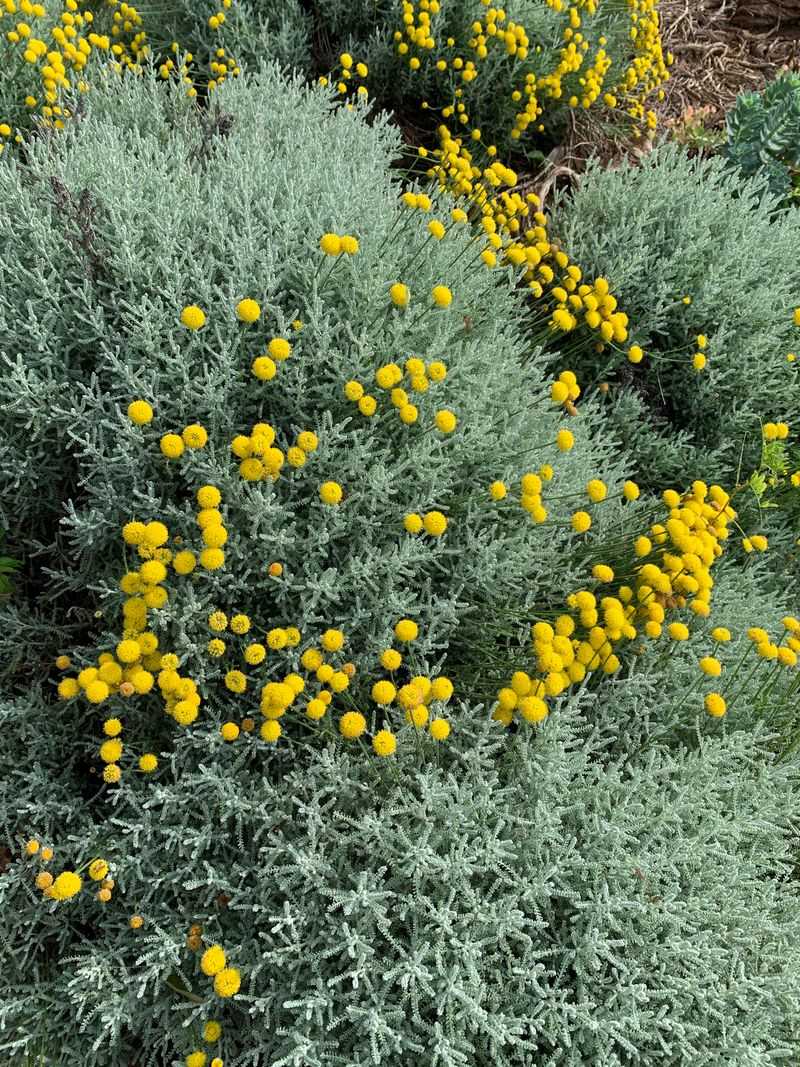
Some plants earn their place in the garden through showy flowers, but santolina earns it through foliage alone.
Santolina chamaecyparissus, often called lavender cotton, sports feathery, silver-gray leaves that practically glow in the sun. The texture and color make it a standout even when it is not in bloom.
When it does bloom, it sends up cheerful little yellow button flowers that add a pop of warm color against all that silver.
The contrast is striking and completely effortless. No deadheading is required, and the plant keeps its shape naturally for most of the year.
Santolina thrives in full sun and poor, well-drained soil. In fact, rich or soggy soil tends to make it leggy and weak, so lean conditions actually help it look its best.
Once established, it rarely needs supplemental watering, making it a smart pick for dry borders and water-wise landscapes.
Your California Garden Changes Every Week. Your Plan Should Too.
Gardening in California changes quickly throughout the season. Every Friday you’ll receive a simple weekly plan showing exactly what to plant, prune, fertilize, harvest, and protect so you never miss the right timing.
It grows to about one to two feet tall and spreads to around three feet wide, making it ideal for edging paths, lining driveways, or filling in dry slopes.
A light shearing after flowering keeps it compact and tidy. Deer tend to avoid it, which is a bonus in many neighborhoods. For silvery texture and low-effort beauty, santolina delivers season after season.
3. Rockrose Blooms Even In Lean, Tough Soil
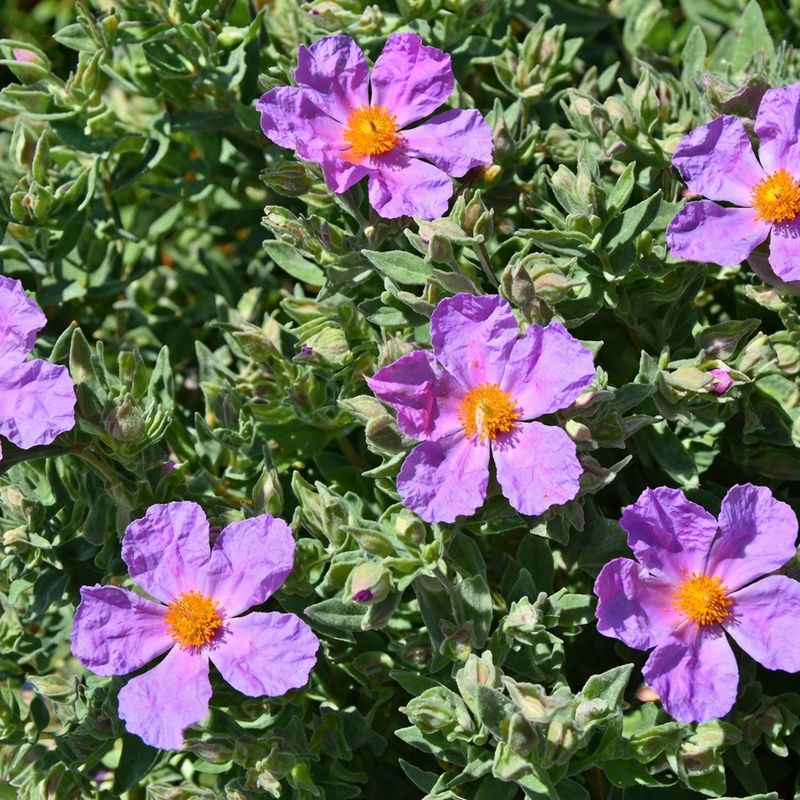
There is something almost rebellious about a plant that blooms more beautifully the less you pamper it.
Rockrose, or Cistus, is exactly that kind of plant. It produces large, papery blooms in pink, white, and purple, yet still thrives in California’s driest conditions.
Rockrose is native to the Mediterranean, so it is perfectly adapted to hot summers, dry winters, and lean soil with poor nutrients.
It does not need fertilizer, and it rarely needs irrigation once it is settled in. Full sun and sharp drainage are the only real requirements for a happy, blooming plant.
Each flower only lasts a day, but the plant produces so many blooms over such a long season that the display feels continuous.
It is a bit like a fireworks show that never quite ends. Pollinators love the open, accessible flowers, and the plant provides good habitat value without any extra effort from the gardener.
Most varieties grow to around three to five feet tall and equally as wide. Pruning is minimal and should be done lightly after the main bloom period.
Avoid cutting into old wood, as rockrose does not regenerate well from hard pruning. For slopes, dry banks, and fire-resistant landscapes, this plant is genuinely hard to beat.
4. Mexican Bush Sage Keeps Going With Little Attention
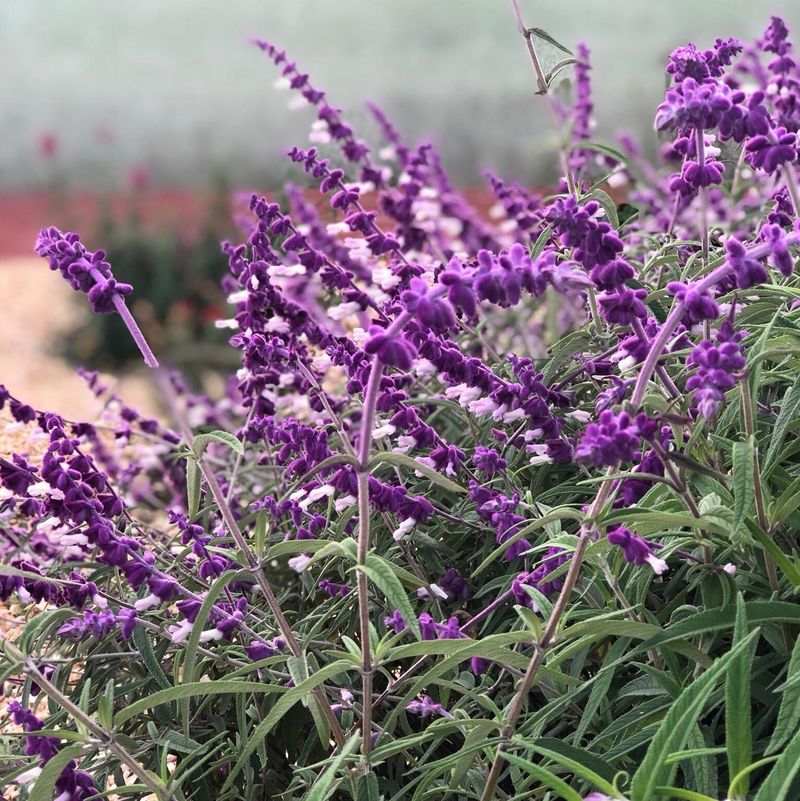
Walk past a patch of Mexican bush sage in late summer or fall, and it is almost impossible not to stop and stare.
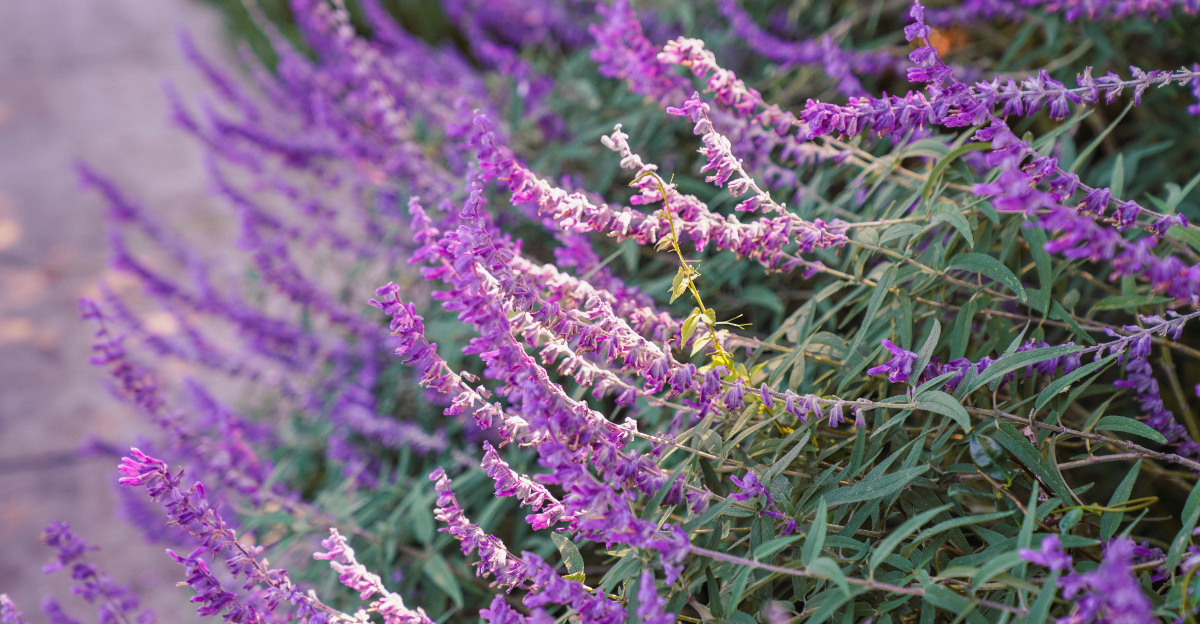
Salvia leucantha produces long, velvety spikes of purple and white flowers that sway gently in the breeze and attract hummingbirds like a magnet. The whole display has a soft, dreamy quality that feels completely out of proportion to how little care the plant needs.
It grows fast, fills in quickly, and tolerates heat and drought with impressive ease. Once established, it gets by on very little supplemental water, especially in coastal and inland areas where morning moisture is common.
Full sun brings out the best bloom production, though it handles partial shade reasonably well.
Mexican bush sage is a woody perennial that can grow four to five feet tall and equally wide in a single season.
It tends to look a bit tired by late winter, but a hard cutback in early spring sends it shooting back with fresh, vigorous growth. That annual reset keeps it looking clean and healthy for many years.
It works well as a back-of-border plant, a screen, or a bold accent near fences and walls. The flowers are also excellent for cutting and drying.
For gardeners who want dramatic late-season color without lifting a finger all summer, Mexican bush sage is an outstanding performer that rarely disappoints.
5. Euphorbia Adds Structure Without Asking For Much
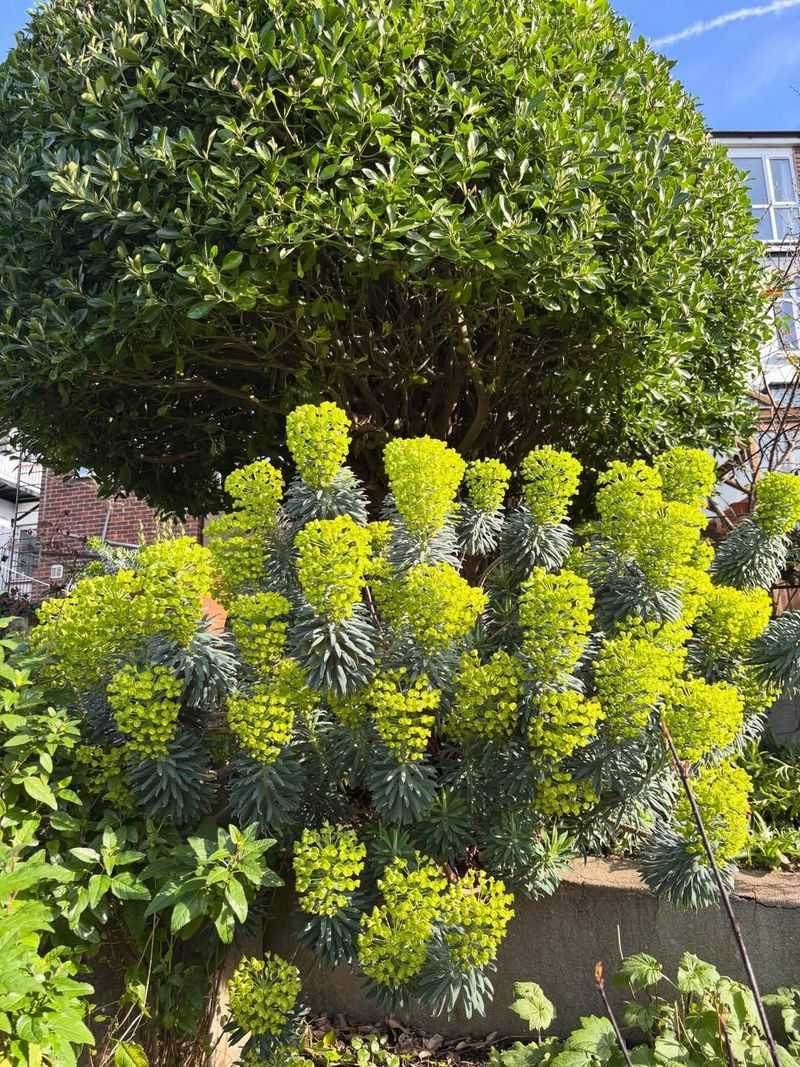
Bold, architectural, and almost completely self-sufficient, euphorbia is the kind of plant that makes other gardeners stop and ask what it is.
Euphorbia characias and its varieties produce striking rosettes of blue-green leaves topped with large, chartreuse flower heads that hold their color for months. The whole plant has a sculptural quality that adds real structure to a garden bed.
One of the most impressive things about euphorbia is how little water it needs once established. It is drought-tolerant to an impressive degree and actually suffers in overly moist or poorly drained soil.
Full sun and lean conditions bring out its best qualities, which is great news for gardeners in our state who deal with dry summers.
A word of caution worth knowing: the milky sap that euphorbia produces when cut is irritating to skin and eyes.
Always wear gloves when pruning or dividing the plant. After the flower heads fade, cutting them back to the base encourages fresh rosettes to develop for the following season.
Euphorbia pairs beautifully with ornamental grasses, lavender, and other Mediterranean perennials. Its unusual color and texture create contrast without clashing. It rarely needs fertilizer, and pests tend to avoid it due to the sap.
For gardeners who want a strong visual anchor in a low-water border, euphorbia is an excellent and long-lived choice.
6. Flax Lily Handles Dry Shade Better Than Most Perennials
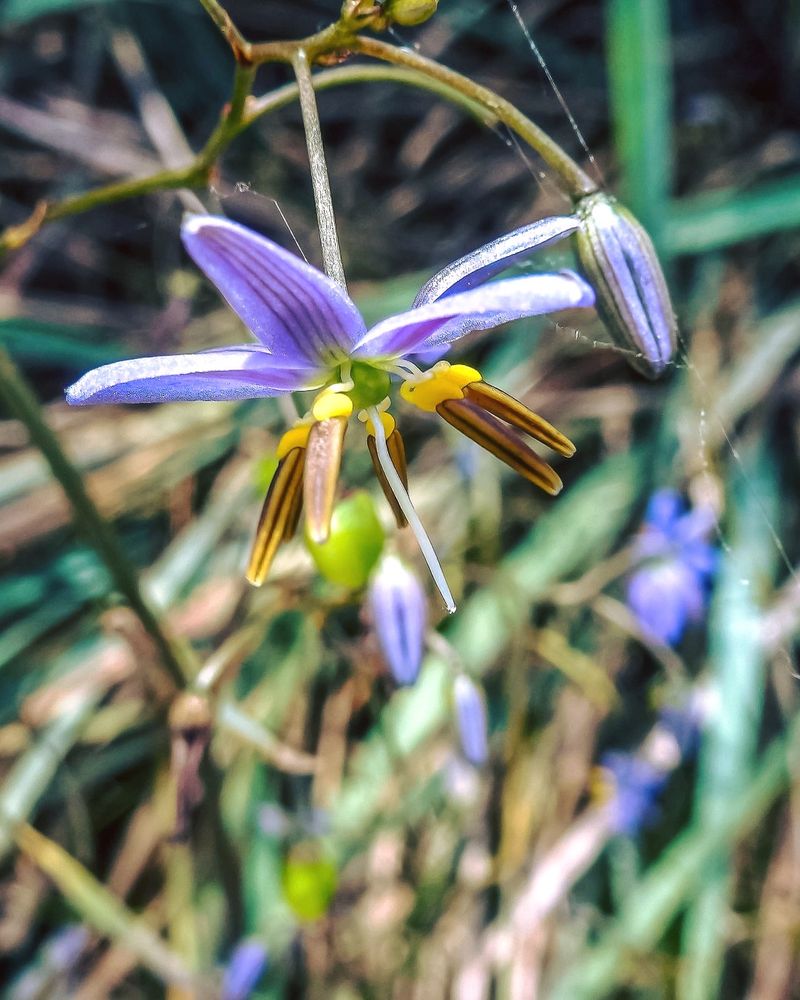
Dry shade is one of the trickiest conditions any gardener faces. Most plants want either shade with moisture or sun with dryness, but rarely both at once. Flax lily, or Dianella, is a rare exception that genuinely thrives where others struggle.
Its long, strap-like leaves form graceful clumps that stay green and attractive even in difficult spots under trees or along shaded walls.
Beyond the foliage, flax lily offers small, star-shaped blue or purple flowers in spring and early summer, followed by glossy berries that add ornamental interest well into fall.
The whole package is surprisingly showy for a plant that asks for so little attention or water.
Flax lily is slow to establish but incredibly durable once it settles in. It tolerates drought, poor soil, and low light without losing its good looks.
It does not spread aggressively, which makes it easy to manage in smaller garden spaces where control matters.
Clumps can be divided every few years to refresh the plant and create new starts for other spots in the garden.
Very little pruning is needed beyond removing old or damaged leaves occasionally. It pairs well with ferns, Japanese forest grass, and other shade-tolerant plants.
For those tricky dry corners under oaks or large shrubs, flax lily is a reliable, long-lasting solution that rewards patience with years of beauty.
7. Lamb’s Ear Shrugs Off Poor Soil And Dry Spells
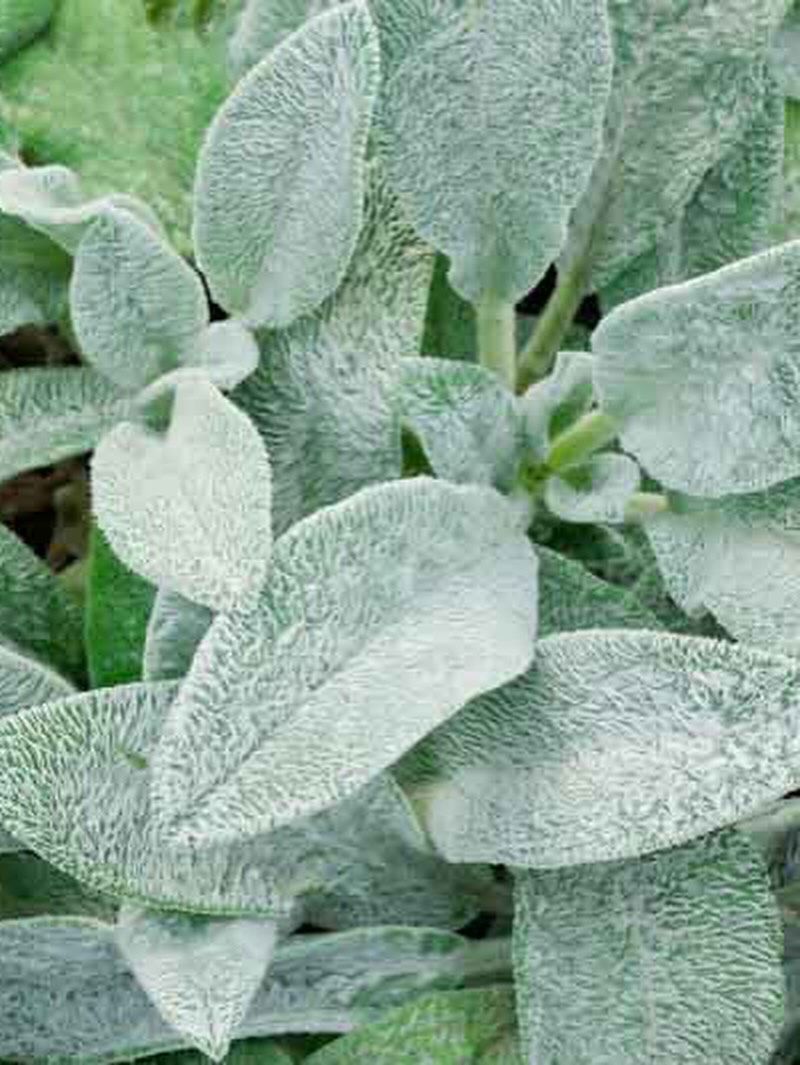
Run your hand across a lamb’s ear leaf and the soft, velvety texture is immediately unforgettable.
Stachys byzantina earns its common name honestly, with thick, silvery leaves covered in fine white hairs that feel almost impossibly soft. Kids love touching it, adults love how it looks, and the plant itself could not care less about poor soil or dry conditions.
It spreads gently to form a dense, weed-suppressing mat that works beautifully as ground cover along paths, under roses, or between stepping stones.
The silver color reflects heat and brightens shaded areas, making it versatile enough to work in many different garden situations. In summer, it sends up tall, fuzzy spikes with tiny pink-purple flowers that pollinators visit eagerly.
Some gardeners prefer to remove the flower stalks before they fully open, since the plant can look a bit untidy as the blooms fade.
Others leave them for the wildlife value and simply trim back after blooming. Either approach works fine, and the plant recovers quickly from both options.
Lamb’s ear prefers full sun but tolerates some afternoon shade in hotter inland areas. It needs excellent drainage, especially in winter, when soggy soil can cause the center of the clump to rot.
Dividing every two to three years keeps it vigorous and prevents overcrowding. For silvery texture, drought tolerance, and easy care, this plant is a proven garden classic.
8. Sea Lavender Brings Airy Blooms To Coastal-Style Gardens
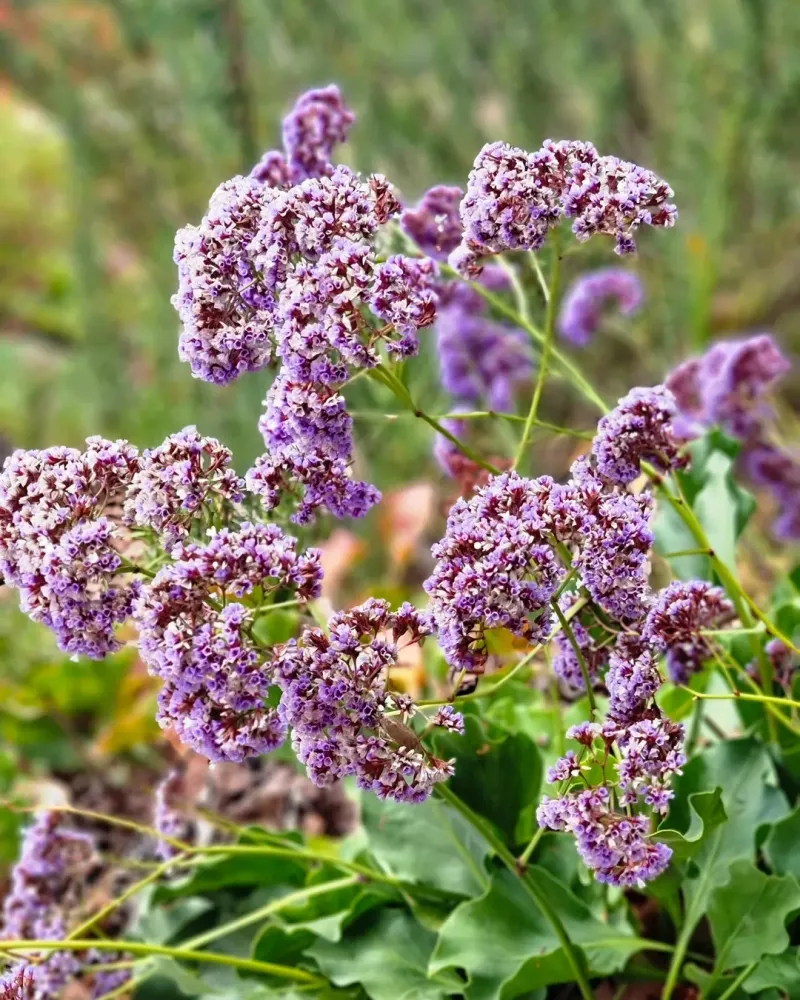
There is a certain magic to plants that produce clouds of tiny flowers rather than one bold bloom, and sea lavender captures that magic perfectly.
Limonium perezii sends up branching stems covered in masses of small purple and white flowers that create a hazy, ethereal effect above its large, dark green leaves. The whole plant looks like something out of a watercolor painting.
Originally from the Canary Islands, sea lavender is perfectly suited to coastal conditions in our state.
It handles coastal conditions and dry summers with ease. Inland gardeners can grow it too, as long as the soil drains well and watering stays light once the plant is established.
The flowers are long-lasting both on the plant and when cut for arrangements. They dry naturally on the stems and hold their color for weeks, which extends the display well beyond the main bloom season.
That dried flower effect gives the garden a soft, textural quality even after fresh blooms have faded.
Sea lavender grows to about two feet tall with a spread of three feet or more. It needs very little fertilizer and rarely attracts serious pest problems. Removing old flower stalks in late winter tidies the plant up and encourages fresh basal growth.
For coastal-inspired gardens or any dry, sunny spot that needs a touch of soft color, sea lavender is a beautiful and reliable performer.