These Tough Groundcovers Survive California Heat Better Than Lawn Grass
Lawn grass can look great in spring, then start acting dramatic once California heat settles in.
One hot week, and that soft green patch may turn patchy, thirsty, and rude to your water bill. Groundcovers can be a smarter answer for spaces where grass keeps struggling.
They stay lower, spread across bare soil, and bring a more natural look without needing constant mowing. Some handle dry spells like they were built for them. Others keep the yard looking full even when summer gets bossy.
That makes them useful for gardeners who want a greener space without chasing a perfect lawn all season.
The goal is not to copy turf exactly. It is to create a yard that looks alive and handles heat with more confidence.
Grass may be the classic choice, but it is not always the toughest one. Some groundcovers are ready to prove it.
1. Silver Ponyfoot Handles Heat With Soft Silver Leaves
Not every plant can look soft and delicate while surviving brutal summer heat, but Silver Ponyfoot pulls it off effortlessly.
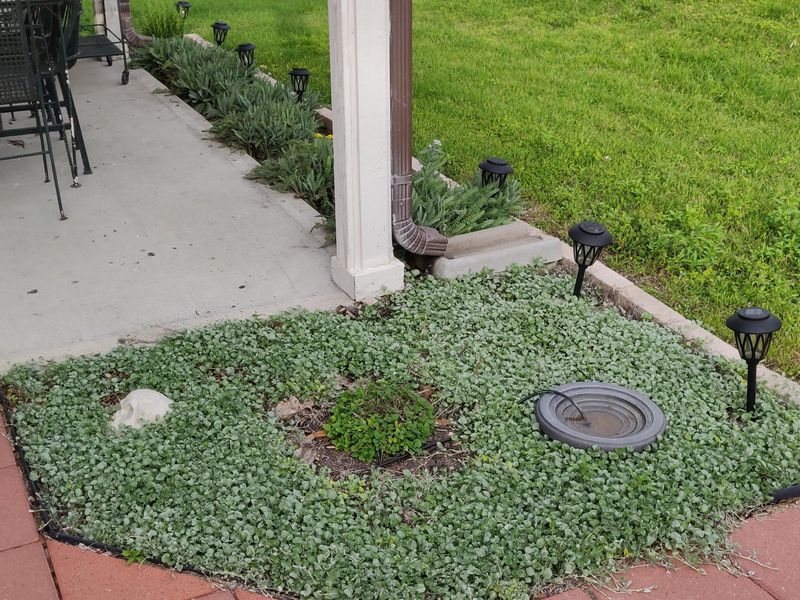
This low-growing groundcover spreads quickly and forms a dense, silvery mat that stays attractive all season long. The round, coin-shaped leaves have a fuzzy texture that gives them that signature silver color.
Silver Ponyfoot thrives in full sun and handles drought conditions better than most plants you would find at a garden center.
It works great as a lawn replacement in small areas, along pathways, or spilling over the edges of raised beds. Once it gets established, it barely needs any attention from you.
The plant grows only about four to six inches tall, so it stays low and tidy without much trimming.
It spreads by trailing stems that root as they go, filling in bare spots naturally over time. That spreading habit makes it especially useful on gentle slopes where erosion can be a problem.
Watering every week or two during dry months is usually enough to keep it looking great. It does not need rich soil and actually does better in sandy or rocky ground with good drainage.
If you want a groundcover that looks soft and inviting but acts tough when summer turns brutal, Silver Ponyfoot is hard to beat.
2. Lamb’s Ear Shrugs Off Dry Soil And Hot Borders
Running your fingers across the leaves of Lamb’s Ear is one of those small garden joys that never gets old.
The thick, felty, silver-gray leaves feel just like the name suggests, and they look stunning lining a sunny border or pathway. Beyond the great texture, this plant is seriously tough when heat and dry soil show up.
Lamb’s Ear handles full sun without flinching and actually prefers soil that drains fast and stays on the dry side.
Overwatering is one of the few things that can cause problems, so planting it in well-draining soil is key. Once established, it gets by on very little supplemental watering, even during the hottest stretches of summer.
The silvery leaves reflect light beautifully, which helps the plant manage heat naturally. It grows in clumps that spread slowly outward, making it easy to control compared to more aggressive groundcovers.
Your California Garden Changes Every Week. Your Plan Should Too.
Gardening in California changes quickly throughout the season. Every Friday you’ll receive a simple weekly plan showing exactly what to plant, prune, fertilize, harvest, and protect so you never miss the right timing.
You can divide clumps every few years to spread it to new areas or share with neighbors.
In late spring, tall flower spikes rise up with small purple blooms that pollinators absolutely love.
Even without the flowers, the foliage alone makes a strong visual statement in the garden. Lamb’s Ear is a classic plant that earns its place in any hot, dry yard with very little effort required from the gardener.
3. Santolina Makes A Low Silver Carpet In Full Sun
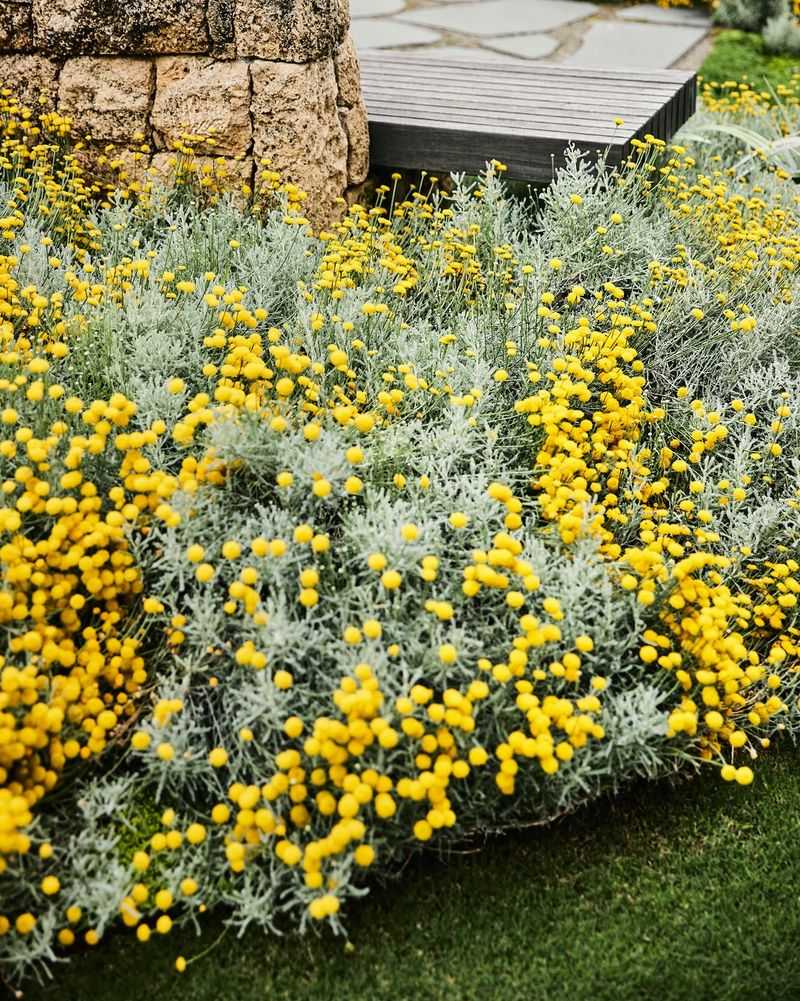
Few plants bring the same combination of structure, fragrance, and drought toughness that Santolina delivers in a hot garden.
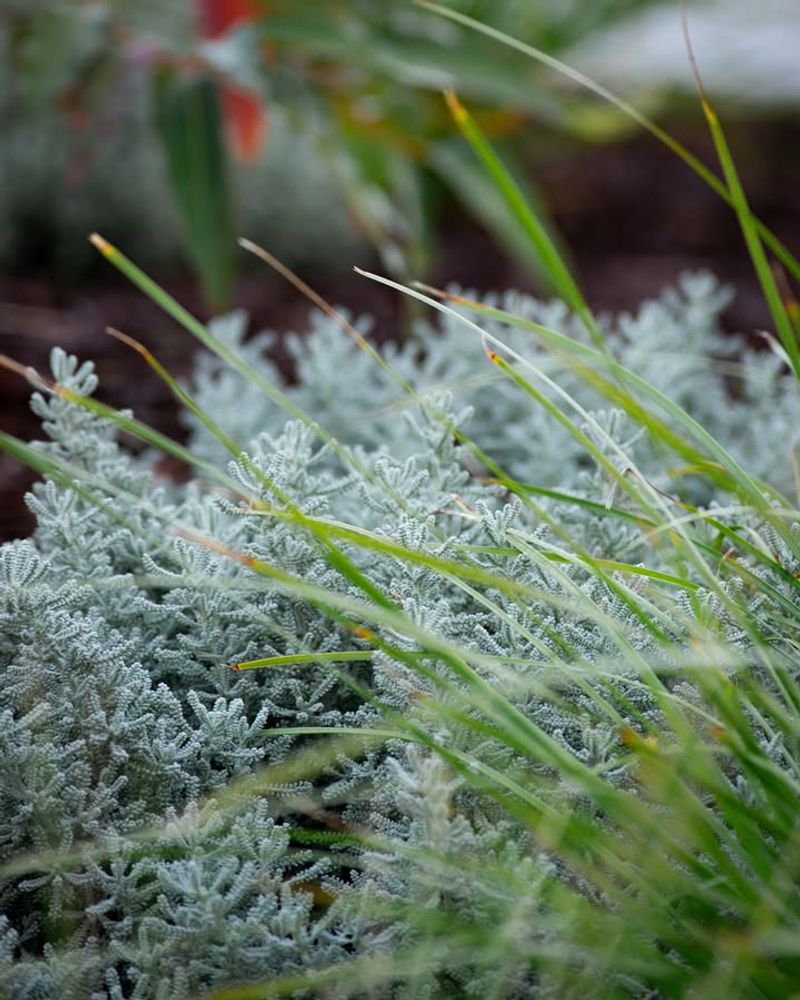
Sometimes called Lavender Cotton, this compact shrub forms a tight, silvery mound that behaves almost like a living carpet when planted in groups. The finely textured, aromatic foliage is part of what makes it so special.
Santolina thrives in full sun and poor, fast-draining soil. It actually struggles when given too much water or rich fertilizer, so neglect is basically its preferred care routine.
In summer, small, round, bright yellow flowers pop up above the silver foliage and add a cheerful burst of color without any extra effort on your part.
Pruning once a year in early spring keeps Santolina looking neat and compact. Without occasional trimming, it can get a little leggy and open in the center over time.
A light shearing after flowering encourages fresh, dense growth that keeps the carpet effect looking full and intentional.
This plant works beautifully along walkways, in rock gardens, or as a low border edging a driveway.
It pairs well with other Mediterranean plants like rosemary, lavender, and ornamental grasses.
Deer tend to avoid it because of the strong fragrance, which is a real bonus in areas where deer pressure is high. Santolina is a dependable, stylish performer in any sun-baked landscape.
4. Rockrose Spreads Wide Without Acting Like Turf
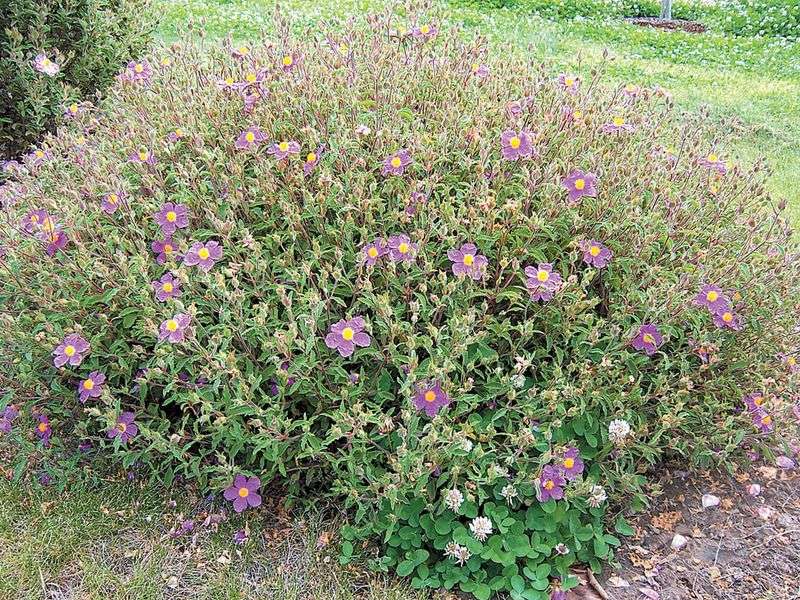
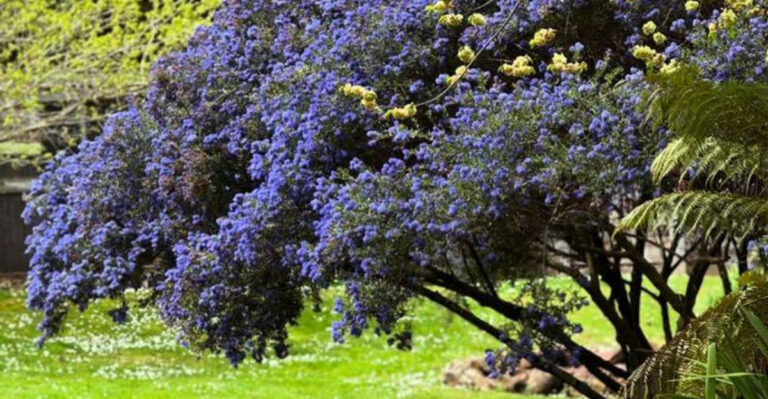
There is something almost theatrical about a Rockrose in full bloom. One week it looks like an ordinary, gray-green shrub, and the next it is absolutely covered in crinkled, papery flowers in shades of pink, white, or magenta.
The blooms only last a day or two, but the plant keeps producing new ones in waves throughout spring and early summer.
Rockrose, known botanically as Cistus, is one of the best choices for covering large, dry areas in this state. It spreads outward from a central crown and can reach four to eight feet wide depending on the variety you choose.
That spreading habit makes it excellent for slopes, fire-prone hillsides, and open spaces where you want coverage without irrigation.
Once established, Rockrose is remarkably self-sufficient. It tolerates poor, rocky, or sandy soil and handles salt spray near coastal areas without any trouble.
It also has good fire resistance compared to many other shrubs, which is a meaningful advantage in regions prone to wildfire risk.
Watering deeply a few times during the first summer helps the roots get established. After that, rainfall alone is often enough to keep it thriving in most parts of this state. You do not need to fertilize or prune it heavily.
Just let it do its thing, and it will reward you with a beautiful, wide-spreading display that requires almost nothing in return.
5. Blue Chalksticks Handles Heat With Succulent Foliage
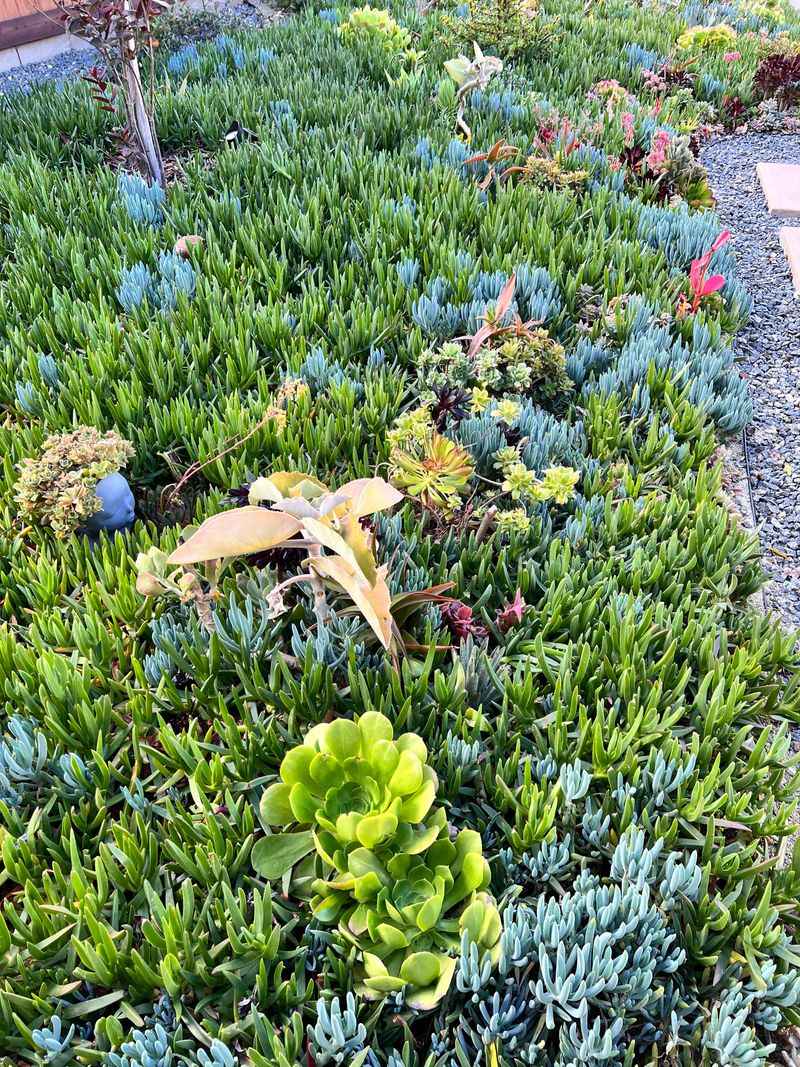
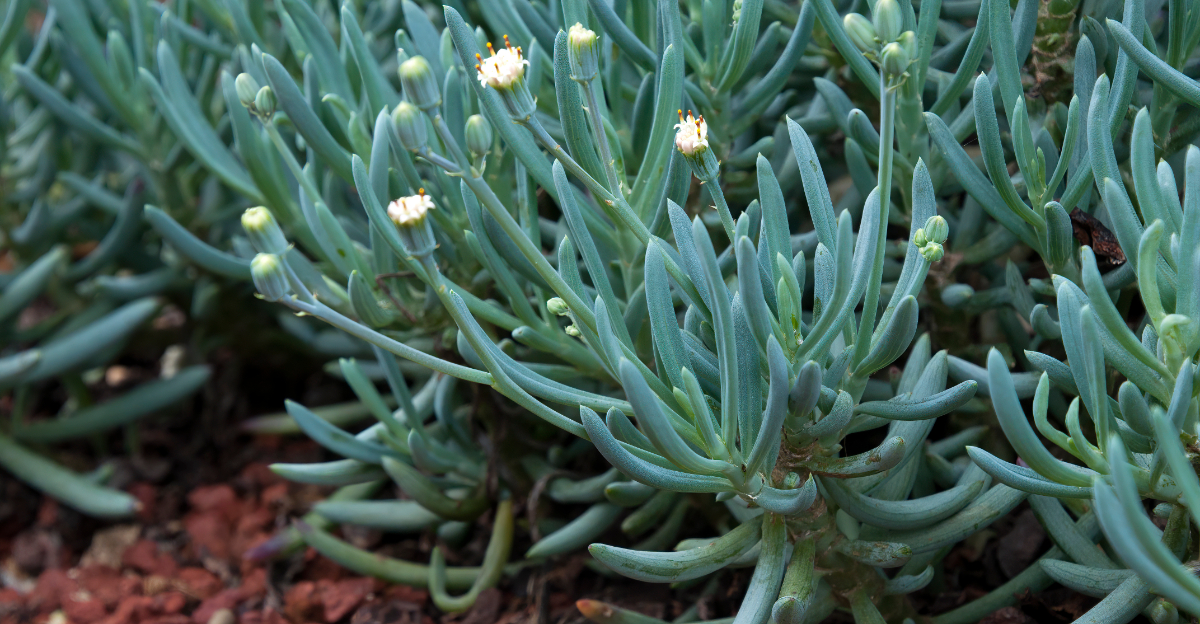
Cool, blue-gray, and almost otherworldly in appearance, Blue Chalksticks is one of those plants that makes people stop and ask what it is.
The thick, cylindrical leaves store water inside, which is exactly how this succulent handles the punishing heat of dry summers. It looks like something from a high-end landscape design, but it is incredibly easy to grow.
Botanically known as Senecio serpens, Blue Chalksticks spreads into a low mat of blue-toned foliage that contrasts beautifully with darker mulch, warm-toned gravel, or bright flowering plants nearby.
It grows about twelve to eighteen inches tall and spreads outward steadily over time. The color alone makes it a standout in any garden palette.
Full sun and excellent drainage are the two things this plant needs most. Sandy, rocky, or even decomposed granite soil suits it perfectly.
It does not like sitting in wet soil, especially during cooler months, so planting on a slight slope or in a raised bed helps prevent any moisture-related issues.
Small white flowers appear in late fall or winter, adding a seasonal bonus when most other plants look bare and tired.
Hummingbirds and small pollinators visit the blooms regularly. Dividing clumps every few years keeps the planting looking fresh and allows you to spread it to other areas.
Blue Chalksticks is a bold, water-wise choice that rewards minimal effort with maximum visual impact.
6. Prostrate Acacia Covers Dry Slopes Fast
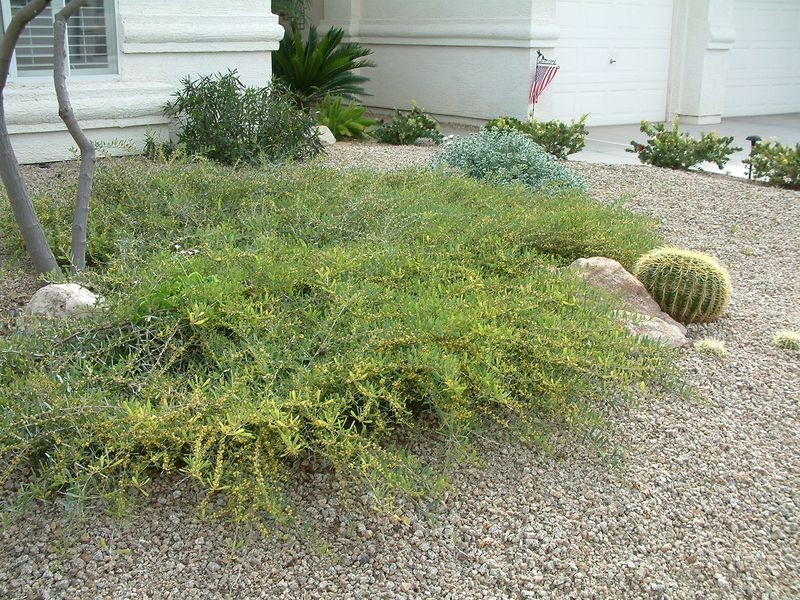
Bare slopes are one of the trickiest landscaping problems in hot, dry climates. Erosion happens fast, few plants want to grow there, and irrigation is hard to manage on steep ground.
Prostrate Acacia steps in as a practical and fast-growing solution that tackles all of those problems at once.
This low-spreading shrub hugs the ground tightly, growing only one to two feet tall while spreading six to fifteen feet wide over time.
The fine, feathery foliage is a rich green color and creates a lush-looking cover that is almost impossible to believe survives on so little water. In late winter and early spring, bright yellow puffball flowers cover the plant in a stunning display.
Prostrate Acacia establishes quickly when planted from a container in fall or early spring.
A little water during the first summer gets the roots down deep, and after that, the plant is largely on its own. It handles poor, rocky, or clay soil without any special amendments needed.
The dense growth habit suppresses weeds effectively, which reduces the amount of time you spend on yard maintenance over the long run.
It also provides habitat for birds and beneficial insects, making it a good ecological choice for your yard. If you have a hot, exposed slope that has been bare and difficult to manage, Prostrate Acacia is one of the most reliable plants you can put there.
7. Silver Carpet Asteriscus Brings Yellow Blooms To Hot Ground
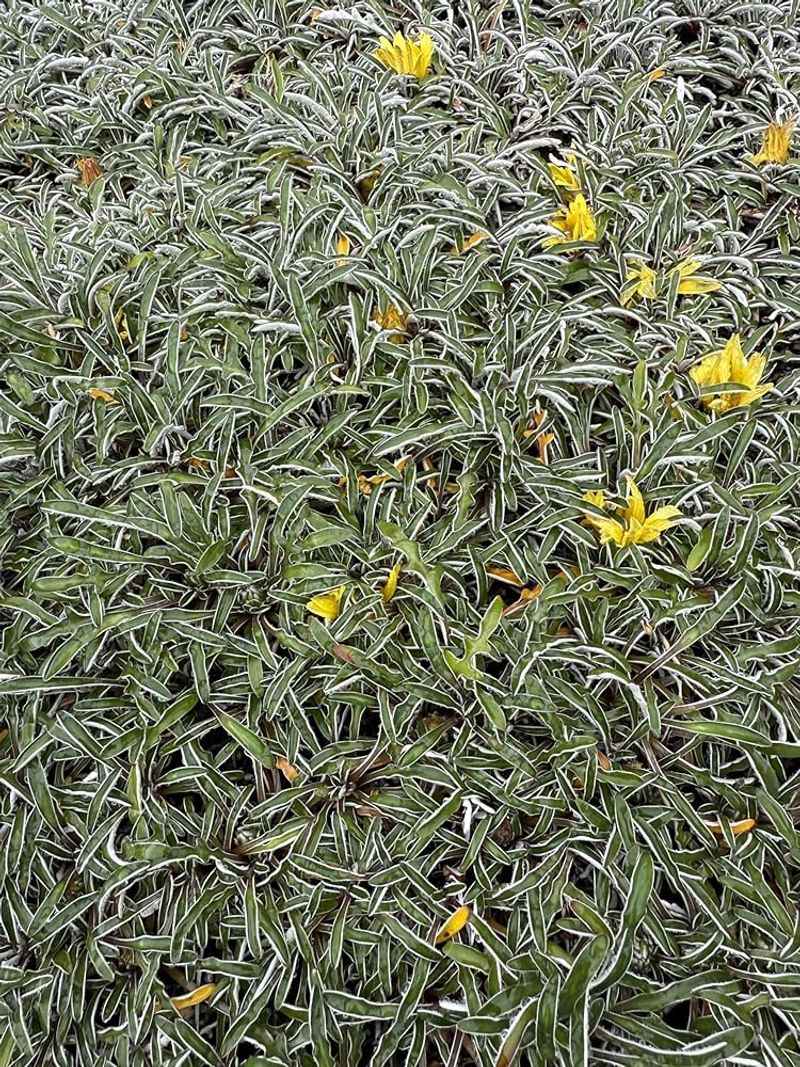
Bright yellow flowers sitting on top of silver foliage is a color combination that works in almost any garden style.
Silver Carpet Asteriscus delivers exactly that, and it does it while tolerating heat, drought, and coastal conditions that would stress out most other flowering groundcovers. It is a tough plant that does not look tough at all.
Asteriscus maritimus, also sold as Gold Coin or Beach Daisy, stays low to the ground and spreads outward into a tidy, dense mat.
The small, daisy-like flowers bloom heavily in spring and continue sporadically through summer and into fall. The contrast between the bright yellow petals and the silver-gray leaves is genuinely eye-catching.
Full sun is a must for this plant to perform its best. It handles reflected heat from pavement or walls without any problem, which makes it a great choice for planting along driveways or near south-facing walls.
Soil drainage matters a lot here, so avoid areas where water tends to pool after rain.
Once established, watering every two to three weeks during dry months keeps it blooming well.
It does not need fertilizer and actually stays more compact and attractive without it. Shearing lightly after the main flush of bloom encourages a fresh round of growth and more flowers.
Silver Carpet Asteriscus is a cheerful, hard-working groundcover that brings genuine color to the toughest spots in your yard.
8. Creeping Wire Vine Works Where Lawns Struggle In Dry Shade
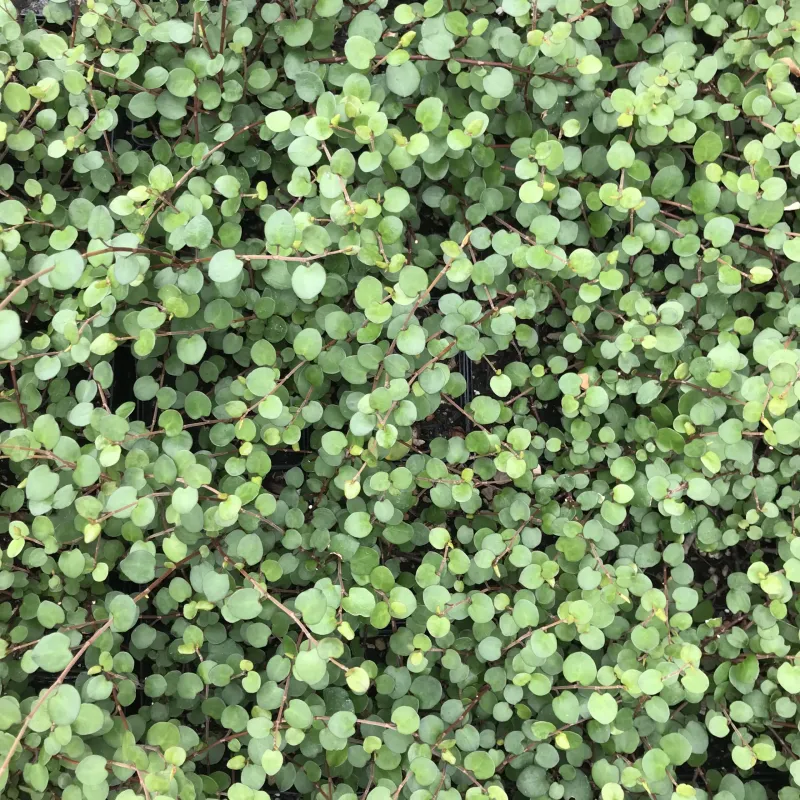
Dry shade is one of the hardest spots in any yard to plant successfully. Most groundcovers want sun, and most shade-lovers want moisture.
Creeping Wire Vine is one of the rare plants that handles both dry conditions and partial to full shade without losing its good looks or slowing its spread.
The plant gets its name from the wiry, dark stems that weave through each other as they spread, creating a tight, interlocking mat of tiny, round leaves.
That dense growth habit is what makes it so effective as a groundcover. It fills in gaps quickly and forms a smooth, even surface that looks intentional and polished.
Creeping Wire Vine grows well under trees where lawn grass always struggles due to root competition and low light.
It handles the dry soil found beneath established trees better than almost any other low-growing plant. Once it gets going, it spreads steadily and suppresses weeds without any help from you.
Foot traffic is something this plant can handle in moderation, which gives it some of the practical value of a lawn without the water demand.
It stays under two inches tall in most conditions and does not need mowing or edging to look neat. In cooler parts of this state, it stays semi-evergreen through winter.
Creeping Wire Vine is a quiet overachiever that solves one of the most frustrating yard problems with minimal fuss.