How California Gardeners Are Getting Up To 50 Cucumbers From One Plant
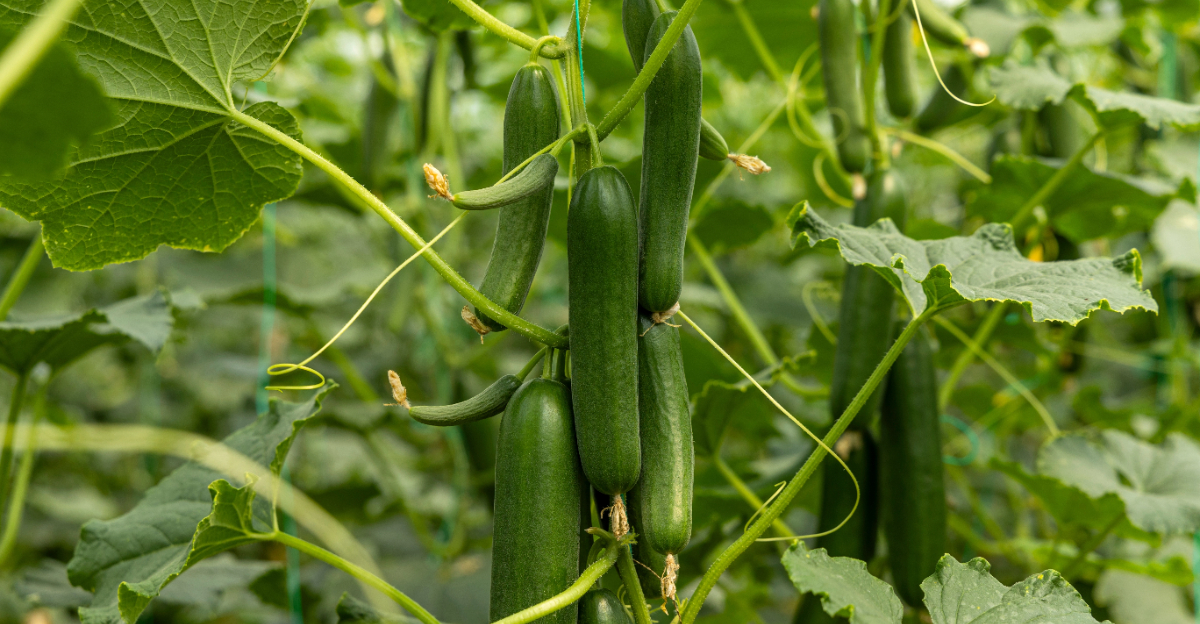
One cucumber plant can do a lot more than many gardeners expect. In California, the right setup can turn a single vine into a steady summer producer.
Warm days help, but heat alone is not enough. Cucumbers need strong roots, steady moisture, and room to climb if they are going to keep pushing out fruit.
Small choices early in the season can shape the whole harvest later. A stronger support can keep vines off the soil.
Regular picking can also encourage the plant to keep going. The real goal is to keep the plant comfortable before stress slows it down.
With smart care and good timing, one cucumber plant can become the kind of overachiever every gardener hopes for.
1. Start With A High-Yield Vining Variety
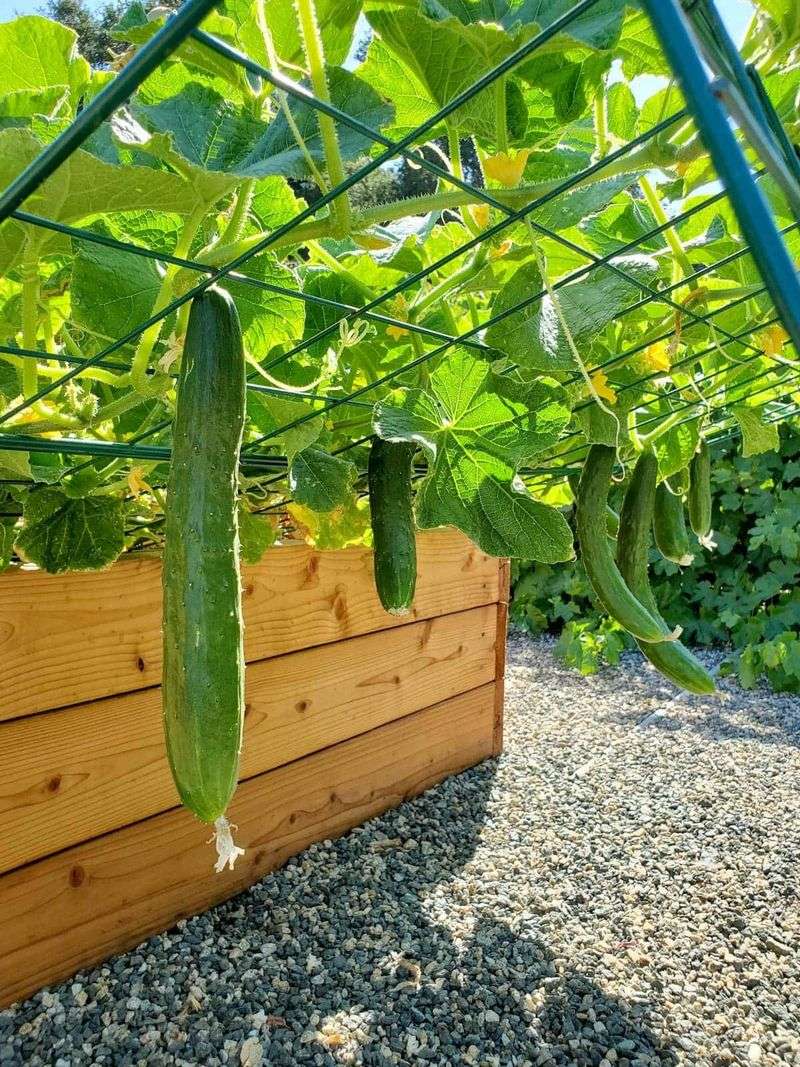
Not every cucumber plant is built the same way. Some varieties are bred to produce a small number of large fruits, while others are designed to keep pumping out cucumbers all season long.
Choosing a high-yield vining variety is the single most important decision you will make before planting season begins.
Varieties like Straight Eight, Marketmore 76, and Spacemaster are known for their heavy production and strong vine growth.
These types thrive in warm, sunny climates and do especially well in the long growing seasons found across our state.
Look for seed packets labeled “prolific,” “continuous harvest,” or “high yield” when shopping at your local nursery.
Vining cucumbers grow long, sprawling stems that can reach six feet or more. That growth means more nodes, and more nodes means more flowers.
More flowers means more fruit. Bush varieties are compact and easier to manage, but they simply cannot compete with vining types when it comes to total production.
If you want 50 cucumbers from one plant, you need to start with a variety that has the genetics to deliver. Ask your local nursery staff which vining varieties perform best in your specific region.
Coastal growers and those in hotter inland valleys may get different results from the same seed, so local advice matters a lot here.
2. Give One Plant A Tall Strong Trellis
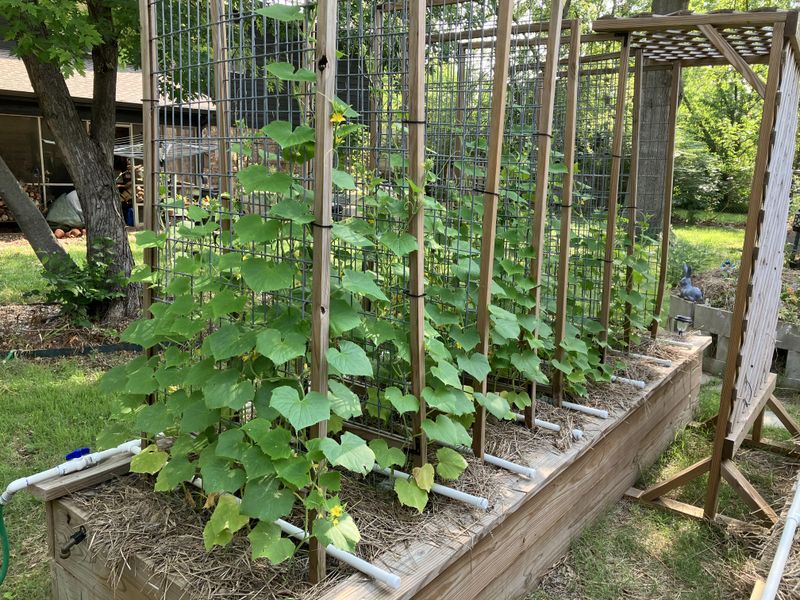
A cucumber vine left on the ground is a vine that cannot reach its full potential. When stems sprawl across the soil, fruit gets hidden, airflow drops, and the plant uses energy trying to spread sideways instead of growing upward.
A tall, sturdy trellis changes all of that instantly. Most experienced growers recommend a trellis that stands at least five to six feet tall. This gives the vine plenty of room to climb without bunching up at the top.
Wire mesh panels, wooden frames, and metal cattle panels all work well. The key is making sure the structure is secure enough to hold the weight of a full, fruit-loaded vine by midsummer.
Training the vine upward also makes harvesting much easier. You can spot ripe cucumbers quickly, pick them without bending over, and check for any problems like yellowing leaves or pest damage.
Vertical growing also helps the fruit hang straight and develop evenly, which improves both appearance and texture.
Your California Garden Changes Every Week. Your Plan Should Too.
Gardening in California changes quickly throughout the season. Every Friday you’ll receive a simple weekly plan showing exactly what to plant, prune, fertilize, harvest, and protect so you never miss the right timing.
In windy coastal areas of our state, anchoring the trellis firmly into the ground is especially important. Use stakes or posts driven at least twelve inches deep to prevent tipping.
A well-supported trellis keeps your vine productive all the way through the end of the season, which adds up to a much bigger total harvest over time.
3. Keep Soil Moist, Not Soaked
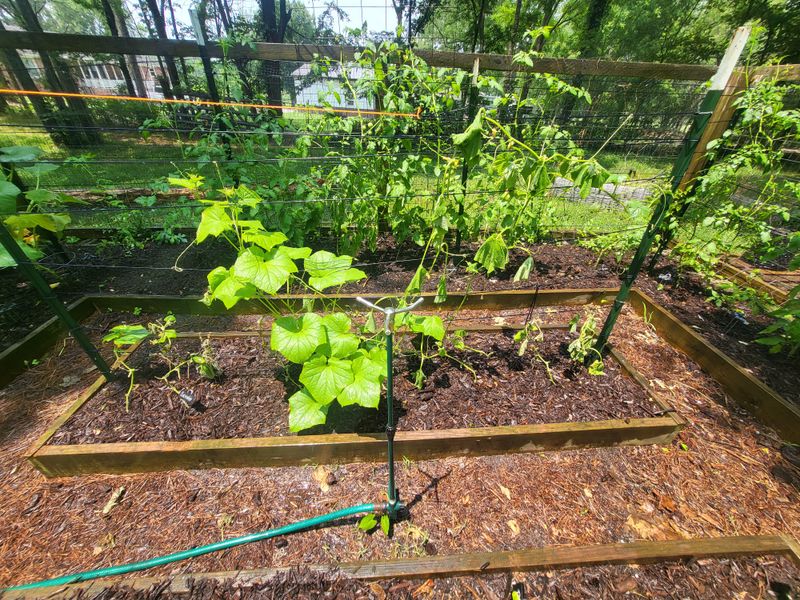
Water is everything when it comes to cucumbers. These plants are made up of roughly 96 percent water, so it should come as no surprise that consistent moisture is one of the biggest factors in how much fruit a single plant produces.
Getting the watering balance right makes a noticeable difference fast. The goal is soil that stays evenly moist about two inches down.
If it dries out completely between waterings, the plant gets stressed and may drop flowers or produce bitter, misshapen fruit.
But if the soil stays soggy for too long, roots can suffer and the plant becomes vulnerable to fungal issues.
In the warmer inland valleys of our state, cucumber plants may need watering every day during peak summer heat. Along the cooler coast, every two to three days is often enough.
The best way to check is simple: push your finger about two inches into the soil near the base of the plant. If it feels dry, water right away.
Drip irrigation is a popular choice among experienced growers in this state. It delivers water directly to the root zone without wetting the leaves, which helps reduce disease pressure.
Soaker hoses work well too and are easy to set up for a small garden bed. Consistent watering from the start of the season leads to bigger plants, more flowers, and a much heavier harvest overall.
4. Feed Once Flowers And Fruit Start
Fertilizing a cucumber plant at the wrong time is one of the most common mistakes home gardeners make.
Feeding too early, especially with a high-nitrogen formula, pushes the plant to grow lots of lush green leaves but very little fruit.
Timing your fertilizer application correctly is what separates a decent harvest from a great one.
For the first few weeks after planting, let the plant focus on building strong roots and healthy foliage.
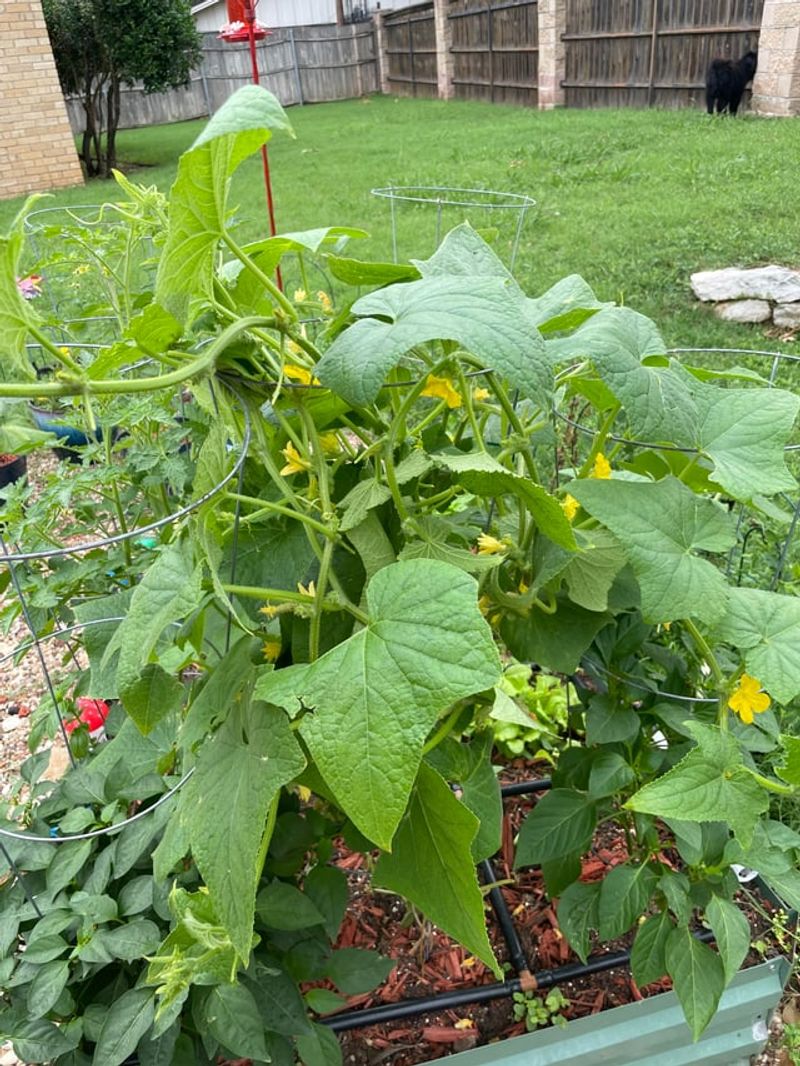
Once you start seeing yellow flowers open up and tiny cucumbers beginning to form, that is your signal to start feeding.
At this stage, the plant needs phosphorus and potassium more than nitrogen to support fruit development.
Look for a balanced vegetable fertilizer or one labeled specifically for fruiting crops. A 5-10-10 formula works well during the flowering and fruiting stage.
Liquid fertilizers tend to work faster than granular types, which is helpful during the active growing season when the plant is putting out new fruit every few days.
Feed every two weeks once fruit production begins. Do not overdo it, because too much fertilizer can actually slow things down or cause leaf burn. Always water the plant before applying fertilizer to avoid stressing the roots.
A consistent, moderate feeding schedule gives the plant exactly what it needs to stay productive from midsummer all the way through the end of the growing season.
5. Pick Cucumbers Before They Get Seedy
One of the fastest ways to slow down a cucumber plant is to leave fruit on the vine too long.
When a cucumber is allowed to grow large and fully mature, the plant gets a signal that its job is done.
Seed production kicks in, energy shifts away from making new fruit, and the harvest slows to a crawl. Picking at the right time keeps things moving.
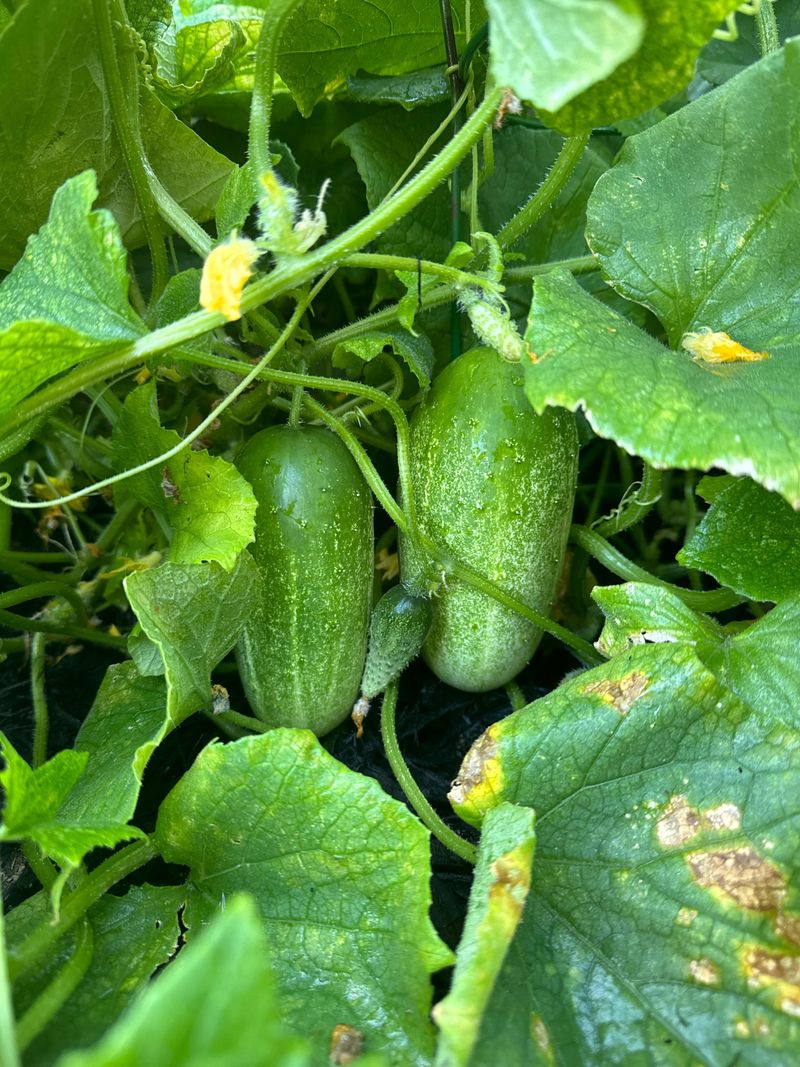
Most slicing cucumbers taste best and produce the most seeds when harvested at six to eight inches long. Pickling types are usually best at two to four inches.
At these sizes, the skin is still smooth, the seeds are small, and the flesh is crisp and sweet. Wait much longer and the texture gets spongy, the seeds get tough, and the flavor turns bitter.
Color is another helpful clue. A ripe cucumber is usually a rich, even shade of medium green.
If the fruit starts turning yellow at the blossom end, it has gone past its prime. Check your vines every single day during peak season because cucumbers can grow surprisingly fast in warm weather.
Harvesting at the right size also prevents the vine from being weighed down by oversized fruit. A lighter vine has more energy to redirect toward new flower production.
This one habit alone can add dozens of cucumbers to your total seasonal count, making it one of the easiest wins in the garden.
6. Harvest Often To Keep New Fruit Coming
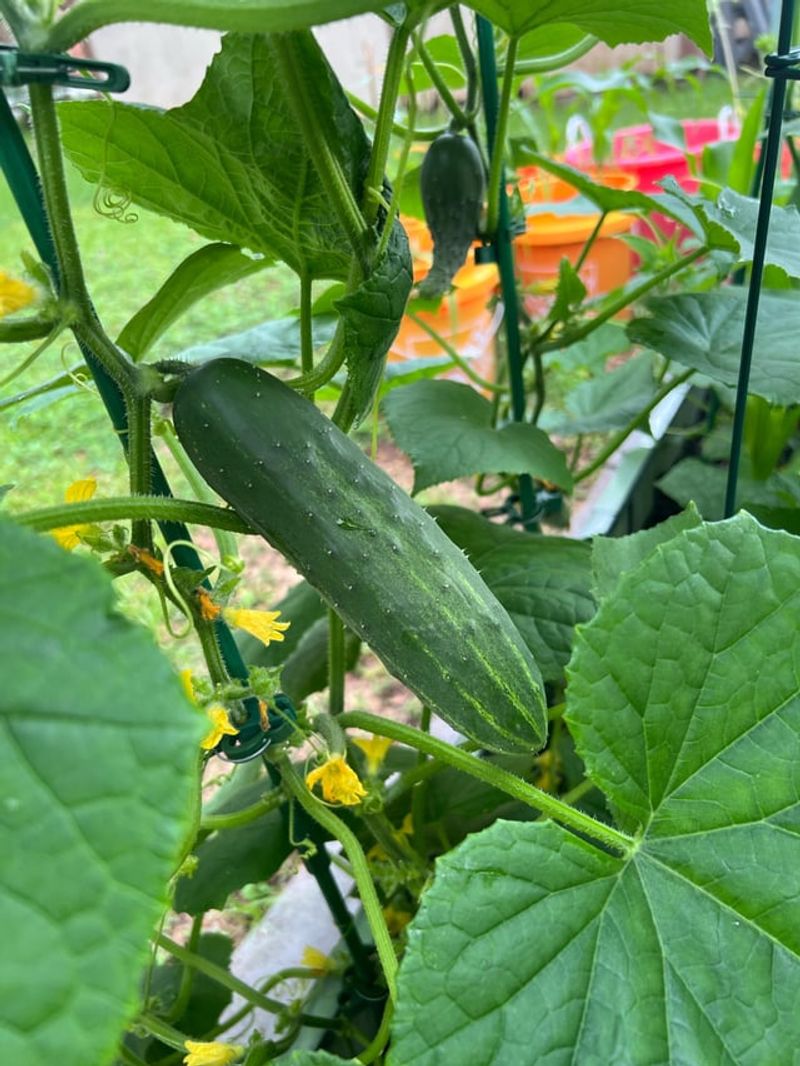
There is a simple rule that experienced cucumber growers live by: the more you pick, the more the plant grows.
A cucumber vine is always working toward one biological goal, and that is to produce seeds and complete its life cycle.
When you harvest fruit regularly, you interrupt that process and force the plant to keep trying.
During peak season, plan to check your cucumber vine every single day. In warm weather, a cucumber can go from perfect to oversize in just 48 hours.
Harvesting daily ensures you catch each fruit at its best size and keeps sending the signal to the plant that it needs to produce more.
Even if you already have more cucumbers than you can eat, pick them anyway. Give them to neighbors, bring them to work, or donate them to a local food pantry.
Leaving ripe fruit on the vine to satisfy the plant is the quickest way to end your harvest early. The vine does not know or care what you do with the cucumbers after you pick them.
Some growers in our state report harvesting five to ten cucumbers per plant per week during peak production.
Over a season that lasts eight to twelve weeks, that adds up to exactly the kind of numbers that seem almost unbelievable.
Regular harvesting is not just a tip, it is the engine that drives the entire system and keeps your vine at full speed all season long.
7. Keep Leaves Dry To Reduce Mildew
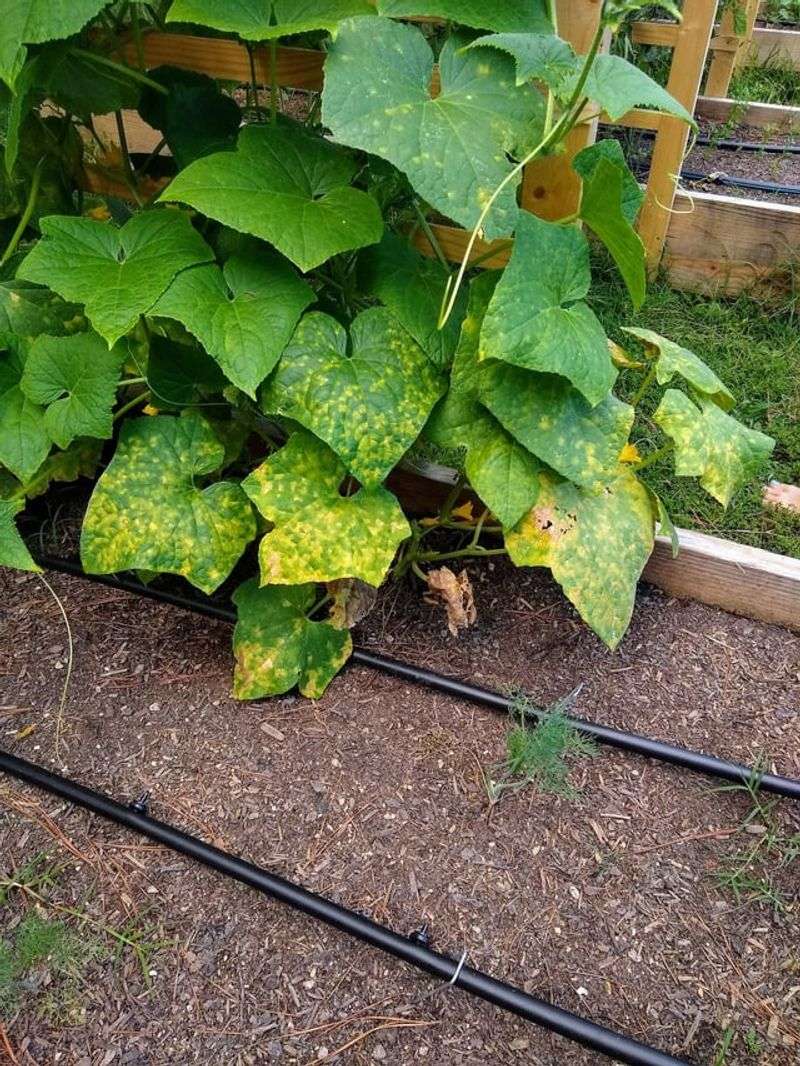
Powdery mildew is one of the most common problems cucumber growers face, and it spreads fast once it gets started.
It shows up as white or gray powdery patches on the surface of leaves, and if left unchecked, it can weaken the entire plant and cut your harvest short.
The good news is that keeping leaves dry is one of the most effective ways to stop it before it starts.
Watering at the base of the plant rather than overhead is the first and most important habit to build. Wet leaves, especially in the evening, create the perfect conditions for mildew to develop overnight.
Drip irrigation and soaker hoses make this easy because they deliver water directly to the soil without splashing foliage at all.
Good airflow through the plant also plays a big role. When vines are trained up a trellis with enough space between stems, air can move freely and leaves dry off quickly after morning dew.
Pruning away a few older leaves near the base of the plant can also improve circulation significantly.
In the warmer, drier inland areas of our state, mildew is less of a problem than in humid coastal zones. But no garden is completely immune.
Checking your leaves a few times each week lets you catch early signs quickly. If you spot white patches, remove those leaves right away and avoid composting them. Early action keeps small problems from becoming season-ending ones.
8. Help Pollination When Bees Are Missing
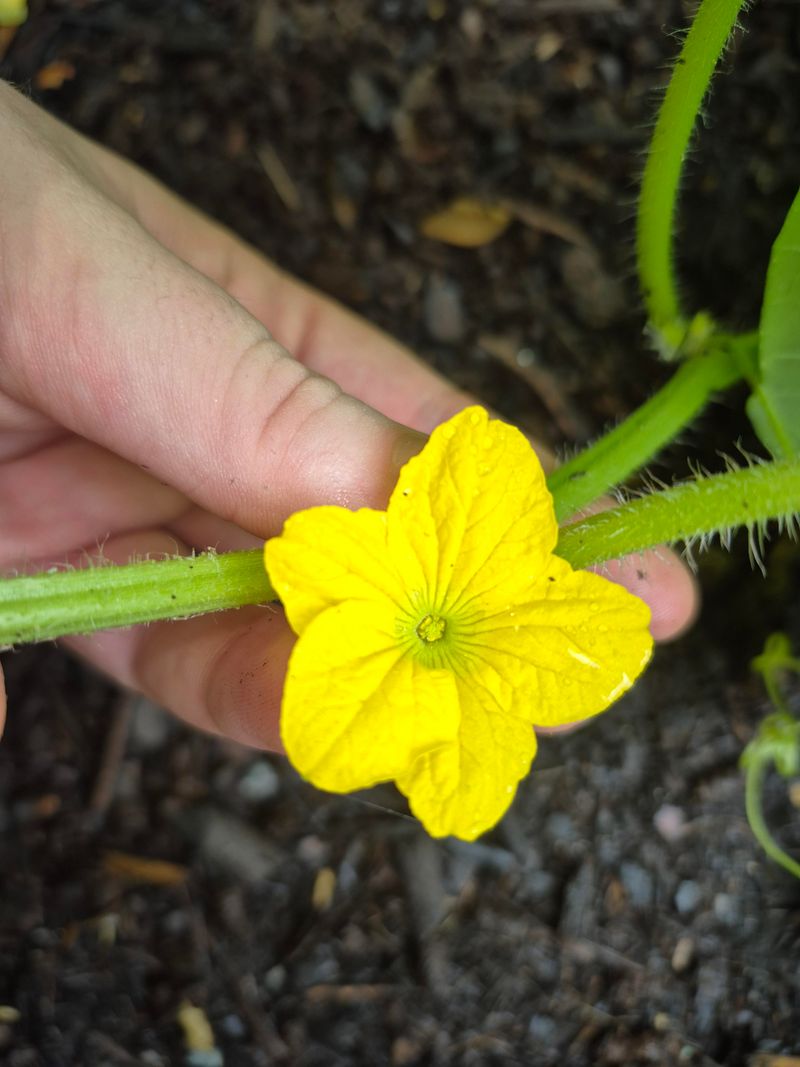
Cucumbers need pollination to set fruit, and in most gardens, bees and other insects handle that job automatically.
But when bee populations are low, when growing in an enclosed space, or when pesticides have reduced insect activity, the plant may flower heavily without producing fruit.
Hand pollination solves that problem quickly. Cucumber plants produce two types of flowers: male flowers and female flowers. Male flowers appear first and do not produce fruit.
Female flowers come a little later and have a tiny swollen base that looks like a miniature cucumber.
To hand-pollinate, you simply transfer pollen from a male flower to the center of a female flower using a small, soft paintbrush or even just your fingertip.
The best time to do this is in the morning, ideally between 8 and 10 a.m., when the flowers are fully open and pollen is most available.
Gently swab the center of a male flower to pick up the yellow pollen, then touch it to the sticky center of a female flower.
Repeat the process for every female flower you can find on the vine. Planting flowers nearby, like marigolds, zinnias, or basil, can help attract more pollinators naturally.
Avoiding pesticide sprays during the morning hours when bees are most active also makes a big difference.
A vine that gets properly pollinated every day during peak flowering can set fruit far more consistently, which directly adds to your total seasonal yield.
9. Mulch Before California Heat Dries The Bed
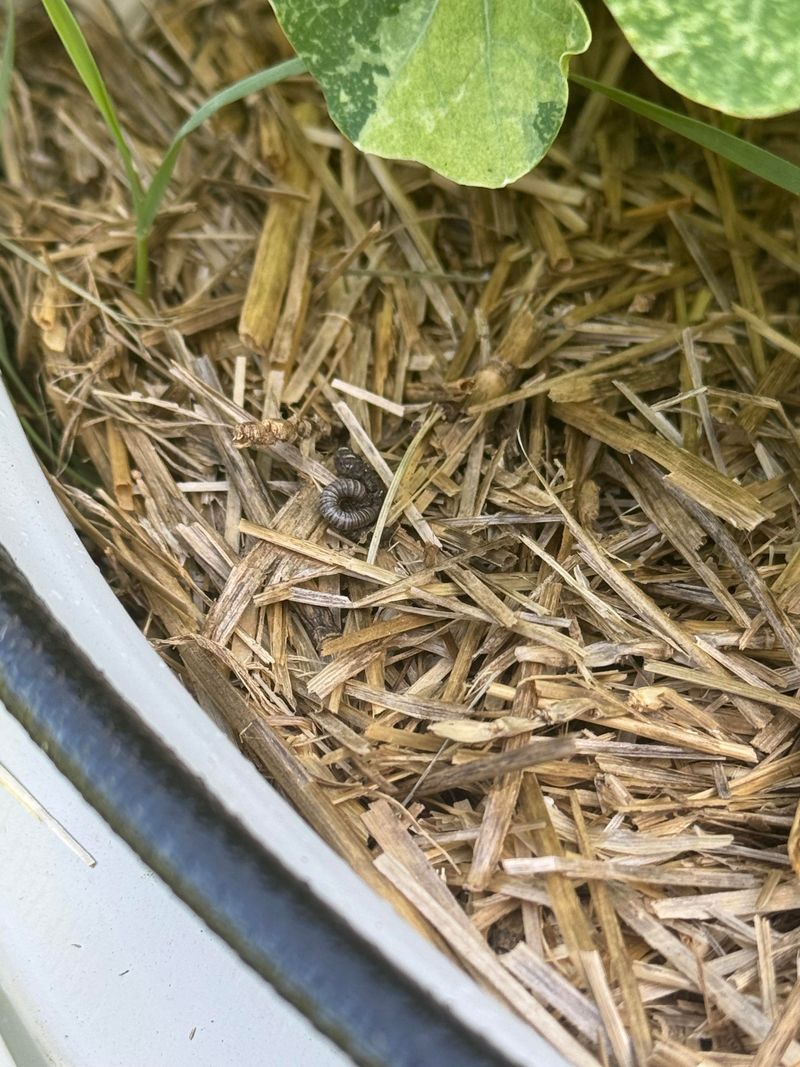
Soil temperature and moisture go hand in hand, and nothing manages both more effectively than a good layer of mulch.
In the hottest parts of our state, bare soil around cucumber plants can heat up quickly and dry out between waterings.
That stress on the roots shows up fast in the form of wilting, flower drop, and reduced fruit set.
Spreading a two to three inch layer of straw, shredded leaves, or wood chips around the base of the plant keeps the soil cooler and holds moisture in much longer.
This means you spend less time watering and the plant spends less energy recovering from heat stress.
Both of those things translate directly into more cucumbers at harvest time.
Apply mulch after the soil has warmed up enough for the plant to establish itself, usually a few weeks after transplanting.
Pull the mulch back slightly from the main stem to avoid creating a damp environment right at the base, which can sometimes lead to rot or fungal problems near the crown of the plant.
Organic mulches also break down slowly over time and add nutrients back into the soil, which gives your cucumber plant a gentle, ongoing boost throughout the season.
In California regions where summer temperatures regularly climb above 90 degrees, mulching is not optional.
It is one of the smartest moves you can make before the real heat arrives and your garden needs all the help it can get.