This Is The Best Native Plant To Grow Instead Of Hostas In Pennsylvania
Hostas are everywhere in Pennsylvania shade gardens, and that familiarity has made them the default answer for low light planting for a long time. They fill space reliably, come back every year, and are easy enough to find at any garden center without much hunting.
But easy and best are rarely the same thing, and hostas bring more limitations to Pennsylvania gardens than their popularity suggests.
They are not native to this region, they attract slugs consistently, and they offer almost nothing to the local ecosystem beyond taking up ground.
Pennsylvania has its own native plants perfectly suited to shaded conditions, and one in particular stands out as a genuine alternative that outperforms hostas on nearly every measure that matters.
It is more interesting to look at across the whole season, supports local pollinators, and thrives in the same spots where hostas have been planted out of habit for years. It deserves far more attention than it gets.
Foamflower Is The Native Pennsylvania Plant That Replaces Hostas Beautifully
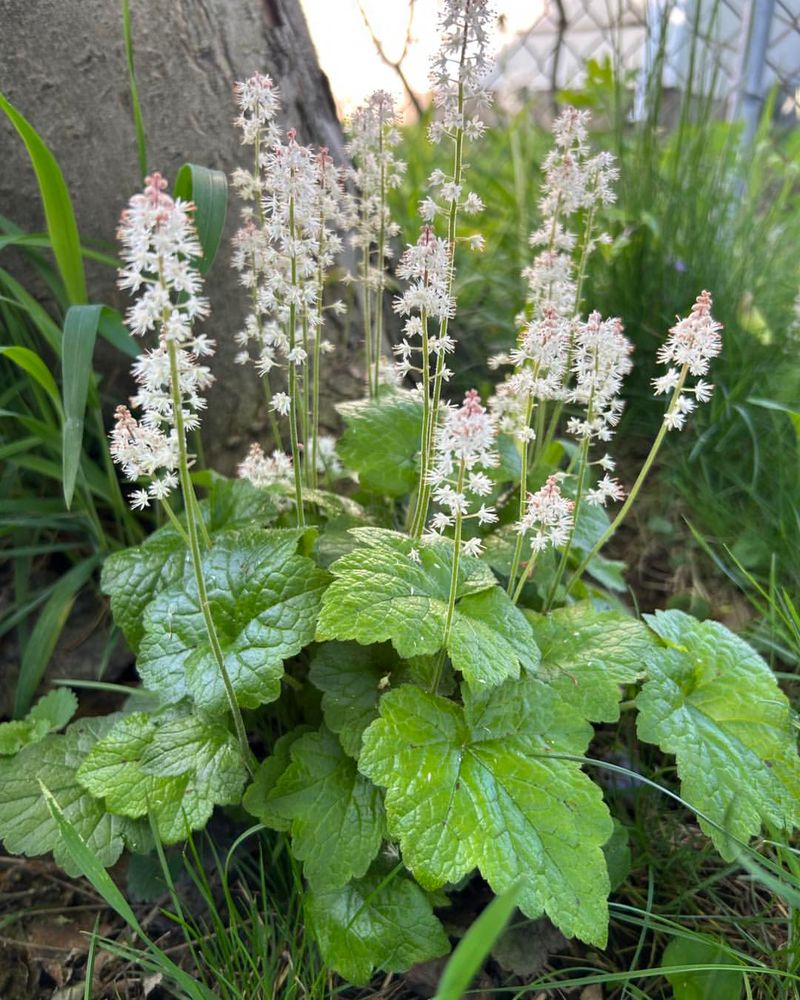
Walk through almost any Pennsylvania woodland in spring and you might spot a low-growing plant with soft white flower spikes rising above heart-shaped leaves. That plant is foamflower, and it has quietly been doing the job gardeners love hostas for, only better.
Hostas have long been a go-to choice for shady beds because they are easy to find, simple to grow, and fill space with big, attractive leaves. Many Pennsylvania gardeners plant them along house foundations, under trees, and in border beds where sunlight barely reaches.
The problem is that hostas are not native to North America. They come from Asia, which means they do not naturally support the insects, birds, and other wildlife that Pennsylvania ecosystems depend on.
Foamflower, on the other hand, evolved right here. It is native to the eastern United States, including Pennsylvania, and it fits into the local environment in ways that hostas simply cannot match.
Foamflower offers the same lush, ground-covering look that gardeners love about hostas. Its leaves are deeply lobed, slightly fuzzy, and often show burgundy or bronze markings that change with the seasons.
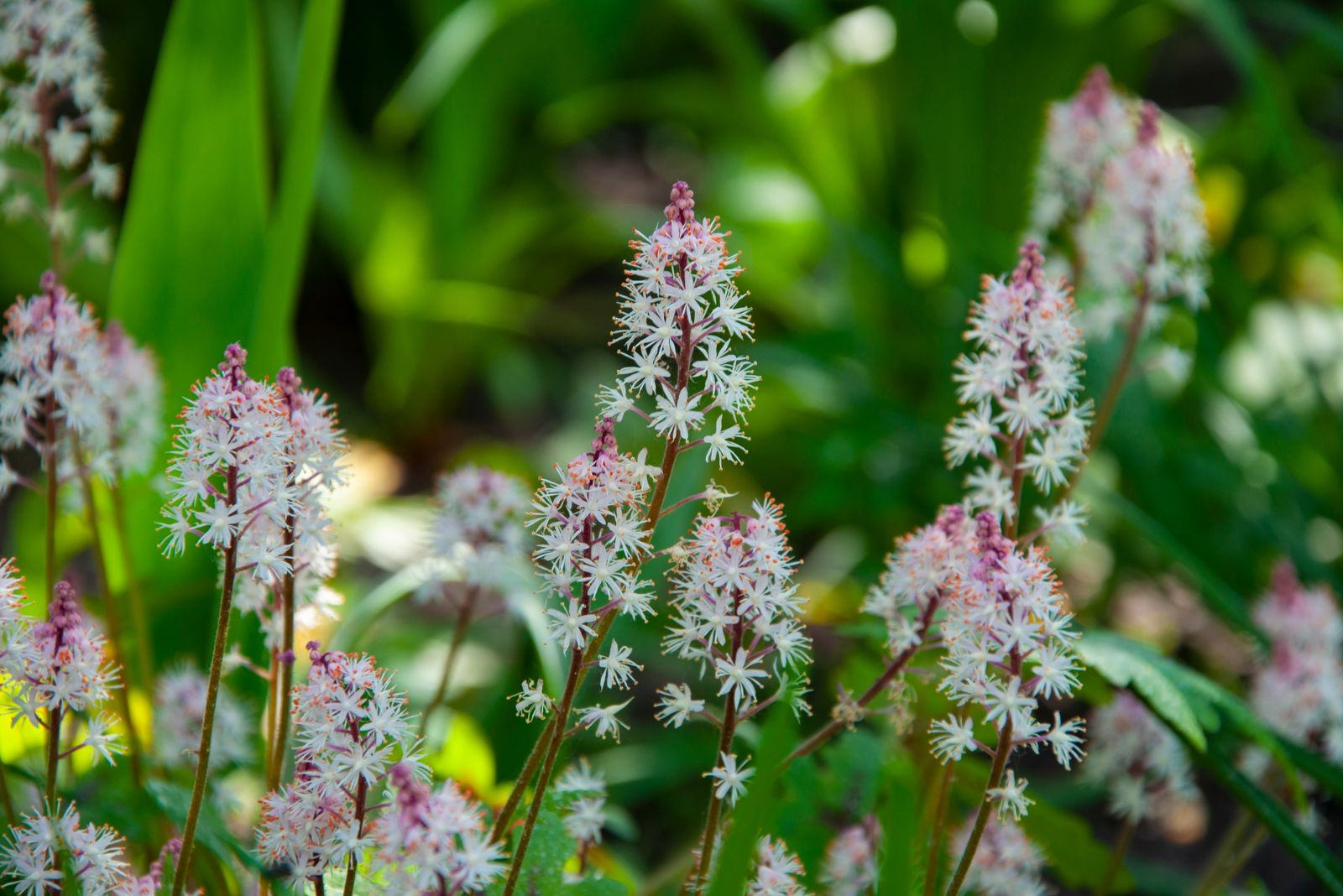
In spring, it sends up feathery white or pale pink flower spikes that give the plant its foamy, cloud-like appearance. Those blooms attract native bees, butterflies, and other pollinators that are active early in the season.
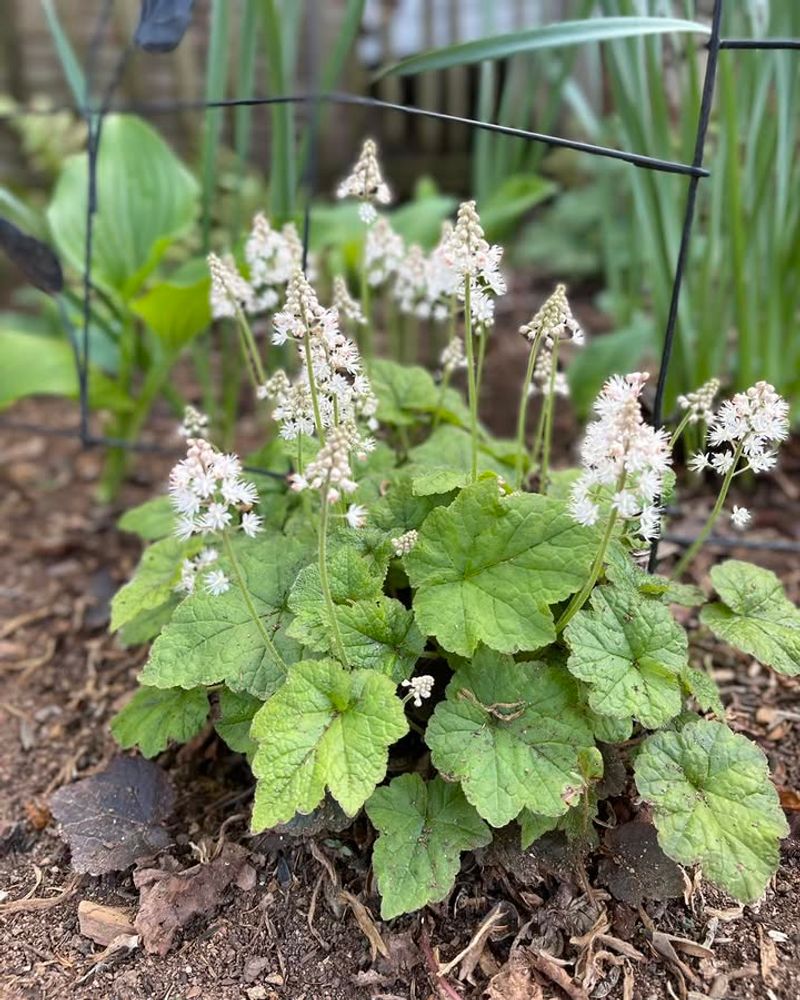
Foamflower grows in clumps and spreads slowly by runners, filling shaded spaces over time without becoming aggressive. For Pennsylvania gardeners who want beauty, wildlife value, and a plant that truly belongs in the landscape, foamflower is the clear choice over hostas.
It Thrives In Pennsylvania Shade
Pennsylvania gardens can be tricky. Many yards sit under large oak, maple, or beech trees that cast deep shade for most of the day.
Sun-loving flowers struggle in these spots, and even some shade plants look tired or washed out by midsummer. Foamflower was practically made for these conditions.
It evolved in the understory of eastern forests, which means it is completely comfortable in the kind of dappled or deep shade that challenges most ornamental plants.
Your Pennsylvania Garden Changes Every Week. Your Plan Should Too.
Gardening in Pennsylvania changes quickly throughout the season. Every Friday you’ll receive a simple weekly plan showing exactly what to plant, prune, fertilize, harvest, and protect so you never miss the right timing.
Woodland-style conditions are where foamflower truly shines. It handles the competition from tree roots better than many garden plants, partly because it has shallow, fibrous roots that do not need to fight deep into the soil.
It also tolerates the dry spells that often happen under large trees once the canopy fills in during summer. Once foamflower gets established, it becomes surprisingly tough and self-sufficient in these environments.
Placing foamflower under shrubs like rhododendrons or azaleas creates a layered, natural look that mimics the forest floor. It works equally well along shaded walkways, at the base of fences with little sun exposure, and in north-facing garden beds.
Where other plants go pale and leggy reaching for light, foamflower stays compact and healthy. Its leaves actually develop richer color markings in moderate shade compared to brighter spots.
Gardeners in Pennsylvania who have struggled to find anything that performs under their big trees often discover that foamflower solves the problem with very little effort. It is one of those plants that makes a difficult garden situation feel easy and rewarding.
It Adds Spring Flowers And Attractive Foliage
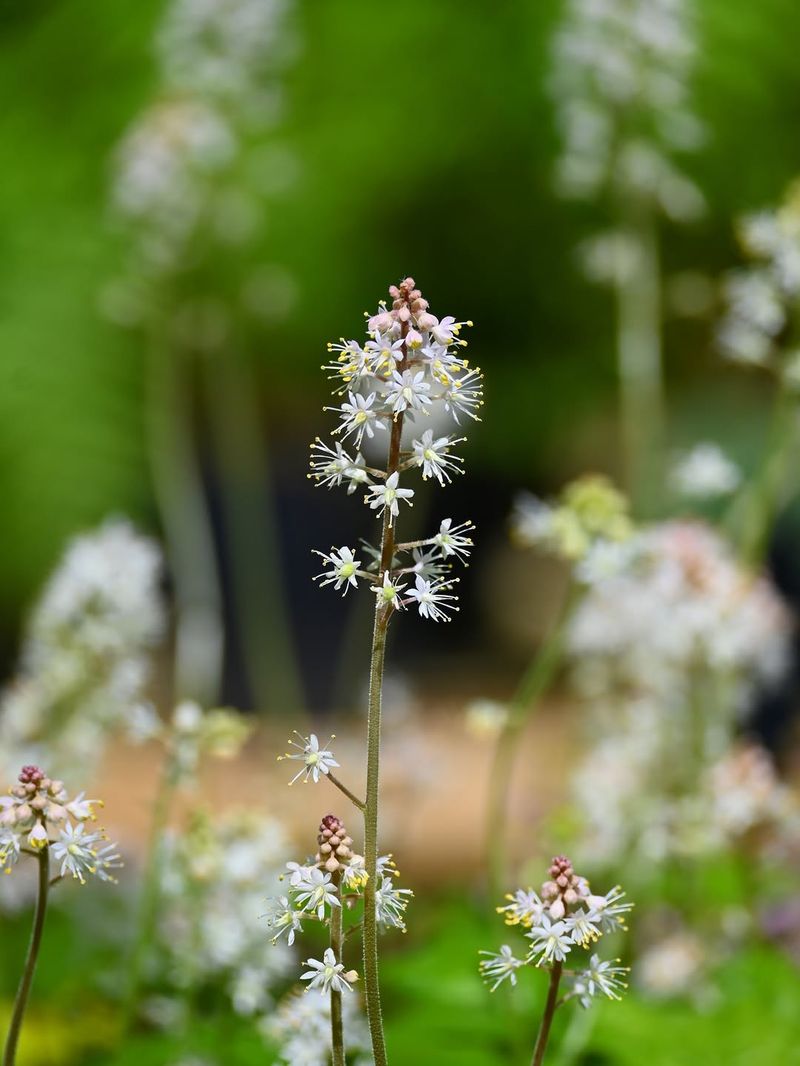
One of the biggest complaints about hostas is that their flowers are not very exciting. The lavender or white blooms hostas produce are easy to miss and do not add much visual interest to a garden bed.
Foamflower flips that around completely. In spring, it puts on a genuinely beautiful show with airy, bottlebrush-like flower spikes that range from pure white to soft pink.
The blooms rise several inches above the foliage and create a frothy, delicate texture that looks stunning in shaded borders.
Beyond the flowers, foamflower’s leaves earn their keep all season long. The heart-shaped, lobed leaves have a slightly rough, textured surface that catches light in interesting ways.
Many varieties display dark burgundy or bronze markings along the leaf veins, especially in cooler weather.
Some forms turn rich reddish-purple in fall before settling into a semi-evergreen state through winter in mild Pennsylvania years. That kind of multi-season interest is hard to find in a single ground cover plant.
Picture a shaded front yard border lined with foamflower. In April and May, the flower spikes create soft clouds of white and pink that draw the eye naturally.
Through summer, the patterned foliage provides steady texture and color contrast against mulch or stone paths. In fall, the leaves shift to warm tones before the garden goes quiet for winter.
It looks completely natural and effortless, even though it is delivering real visual impact across three seasons. For gardeners who want a shaded bed that looks polished without constant replanting or extra work, foamflower delivers results that hostas rarely match.
It Supports Pollinators Better Than Hostas
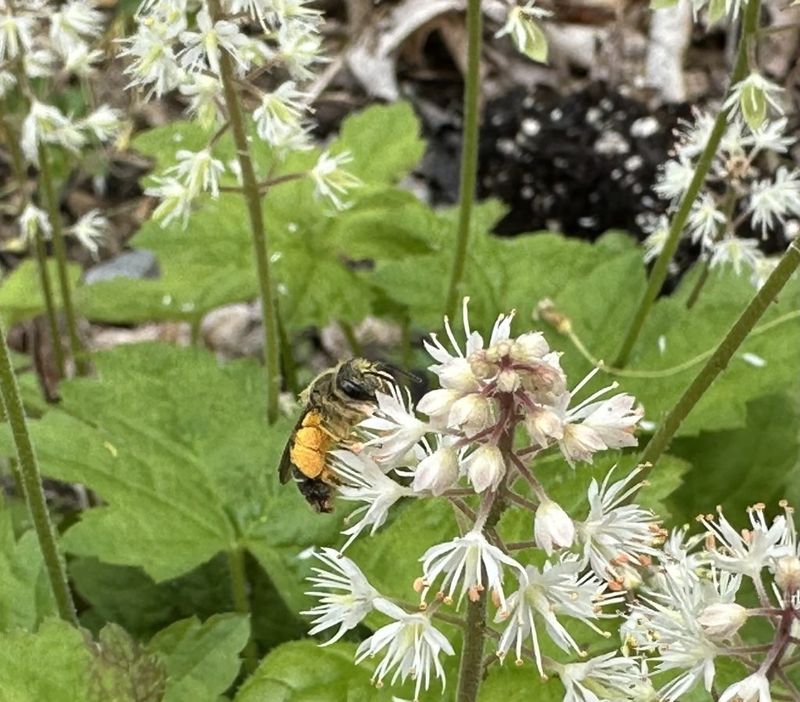
Here is something worth thinking about: most of the insects that pollinate our food crops and wildflowers need native plants to survive. Hostas, being non-native plants, offer very little to the local insect community.
Their flowers do attract some pollinators, but hostas do not host native caterpillars, provide early-season nectar, or fit into the ecological web that Pennsylvania wildlife depends on. Foamflower does all of that naturally.
Early spring is a critical time for pollinators. Native bees, including mining bees and small sweat bees, emerge from overwintering sites hungry and in need of nectar sources.
Foamflower blooms right when these insects are most active, making it an important early food source. Butterflies that are active in spring also visit the flowers regularly.
By planting foamflower in shaded garden beds, Pennsylvania homeowners are doing something genuinely helpful for the local ecosystem without any extra effort.
Building a healthier shade garden ecosystem is about more than just adding pretty plants. It means choosing plants that are connected to the local food web.
Foamflower supports insects, which in turn support birds and other wildlife. Native plant landscaping has grown significantly in popularity across Pennsylvania in recent years, partly because homeowners are realizing that a beautiful yard can also be a functional habitat.
Foamflower fits this trend perfectly. It looks polished and intentional in a garden setting while quietly supporting the natural world around it.
Replacing hostas with foamflower is one of the simplest ways a Pennsylvania gardener can make their yard more ecologically valuable without sacrificing any of the visual appeal they already love.
It Spreads Gently Without Taking Over
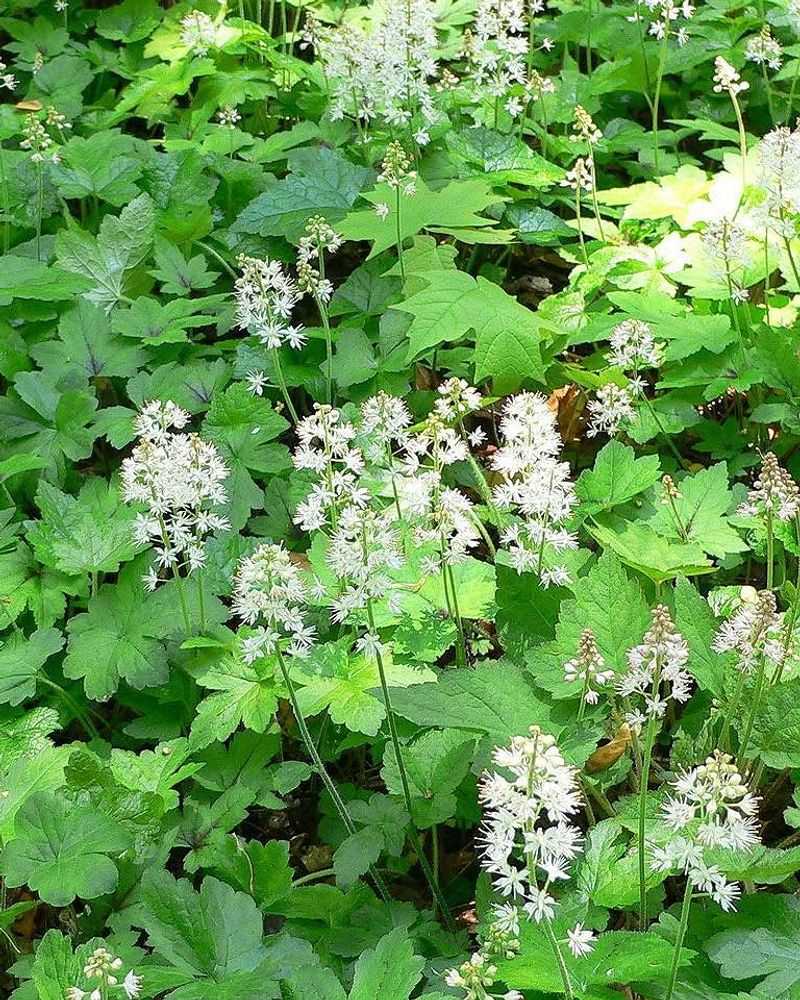
Some ground cover plants spread so aggressively that they become a problem. English ivy, for example, can take over entire garden beds and even climb trees.
Foamflower is nothing like that. It spreads by sending out short runners, similar to strawberry plants, that root into nearby soil and form new clumps.
The process is gradual and controlled, which means foamflower fills in bare spots over time without overwhelming other plants or jumping into areas where it is not wanted.
That gentle spreading habit makes foamflower incredibly useful for filling in bare soil under trees where nothing else wants to grow. Bare soil under tree canopies is a common headache for Pennsylvania gardeners.
It looks untidy, invites weeds, and can lead to erosion on slopes. Foamflower covers that ground naturally and attractively, creating a soft green carpet that looks like it belongs there, because it does.
Over a few seasons, a small planting can expand into a satisfying colony that needs almost no attention.
Think of foamflower as a living mulch. It shades the soil surface, holds moisture, reduces weed pressure, and keeps the ground looking tidy all at once.
Unlike traditional mulch, it adds flowers in spring and changes color with the seasons. And unlike aggressive spreaders, it stays where you put it without requiring constant editing or removal.
For gardeners who want their shaded beds to look full and finished without replanting every year, foamflower’s self-spreading nature is a genuine advantage.
It does the work of filling a garden bed slowly and naturally, leaving gardeners with more time to enjoy the results.
It Needs Less Fuss Once Established
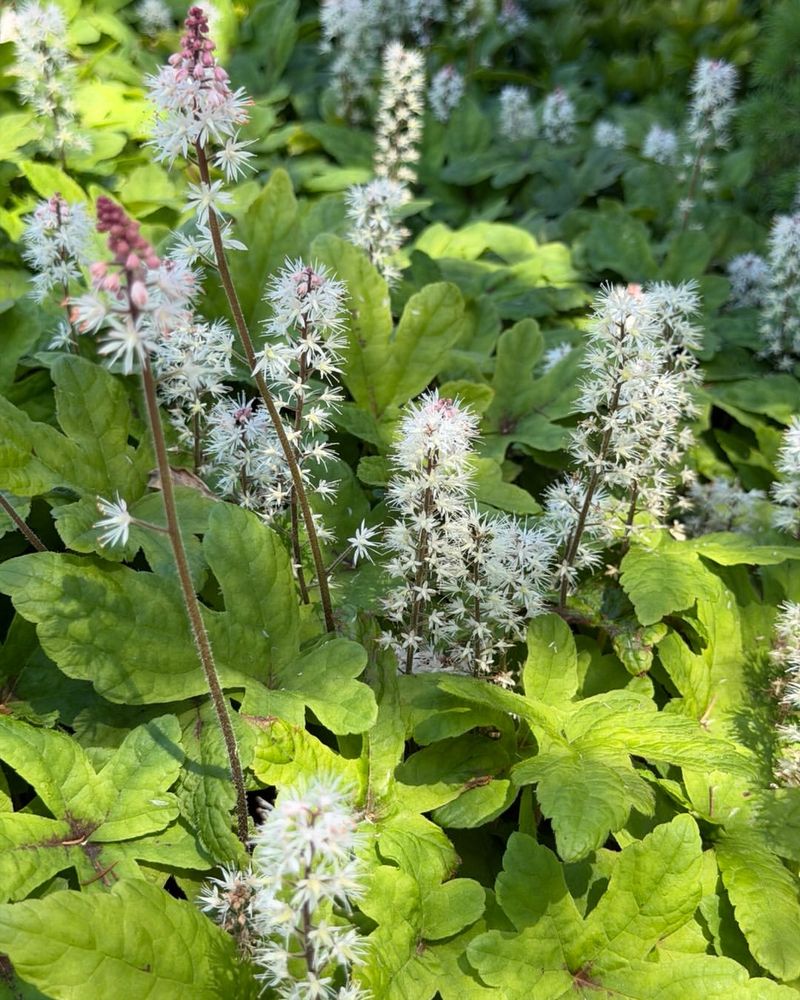
Gardening should be enjoyable, not exhausting. One reason foamflower is such a smart choice for Pennsylvania yards is that it asks very little once it settles in.
During the first season, giving it regular water while its roots get established is helpful. After that, foamflower becomes remarkably self-sufficient, especially when planted in conditions that match its natural habitat.
It does not need fertilizing, frequent dividing, or complicated seasonal care routines. Pennsylvania’s woodland soils tend to be slightly acidic and rich in organic matter from years of fallen leaves breaking down. Foamflower is perfectly adapted to these conditions.
It actually prefers soil that has not been heavily amended with fertilizers or lime. Gardeners who try to over-improve their soil for foamflower sometimes end up making things harder for it.
The best approach is to plant it in a spot with good moisture retention, some shade, and leave it alone. Adding a light layer of leaf litter around the base mimics the forest floor and keeps roots comfortable through dry spells.
Compared to hostas, which often need dividing every few years, slug control, and careful placement to avoid sun scorch, foamflower is genuinely low-effort.
There is no need to spray for pests or worry about deer eating it to the ground, since foamflower is less attractive to deer than hostas tend to be.
For busy homeowners, beginner gardeners, or anyone who wants a shade garden that looks great without constant attention, foamflower is the practical answer. Plant it right, let it settle, and it rewards you with beauty and habitat value for many years to come.