Why Michigan Gardeners Are Ripping Out Their Boxwood And What They’re Planting Instead
Boxwood removal has become one of the more common spring projects in Michigan yards, and the reasons are piling up faster than the plants can be replaced.
Boxwood blight spread steadily through the state over recent years and showed little regard for how well the plants were maintained.
Healthy, established shrubs declined quickly once it arrived, leaving gardeners with dry or disfigured plants in spots that had looked reliable for a decade or more. The decision to remove them is straightforward once the damage is visible.
What to plant instead takes more thought, and Michigan gardeners have been arriving at some genuinely good answers.
The replacements being chosen most often offer structure, seasonal interest, and disease resistance that boxwood never really provided even before the blight concerns began.
1. Inkberry Holly
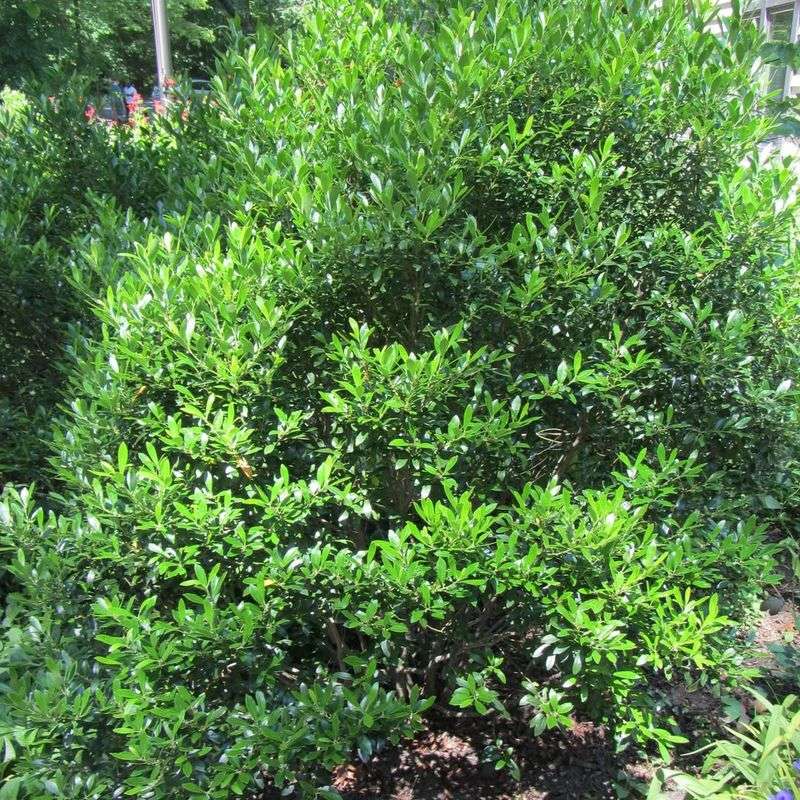
Picture a shrub that stays green all winter long, never complains about wet feet, and actually supports Michigan wildlife. That is exactly what inkberry holly brings to the table.
Native to eastern North America, this tough evergreen has been quietly outperforming boxwood in foundation beds across the Midwest for years.
Inkberry holly grows naturally in moist, slightly acidic soils, which makes it a perfect match for many yards where drainage is not always ideal.
It reaches about four to eight feet tall depending on the variety, though compact cultivars like ‘Shamrock’ and ‘Gem Box’ stay nice and tidy without much pruning.
The glossy, dark green leaves hold their color through even the harshest winters, giving your yard that polished look year-round.
Beyond good looks, this shrub is a powerhouse for local birds. The small black berries that appear in late summer stick around through winter, feeding robins, cedar waxwings, and other songbirds when food is scarce.
Pollinators love the tiny white flowers in spring too. Because inkberry is fully native to Michigan, it has built-in resistance to local pests and diseases, meaning far less work for you.
Once established, it needs very little attention, making it one of the smartest swaps you can make for a low-maintenance, wildlife-friendly yard.
2. New Jersey Tea
Here is a fun piece of history: during the American Revolution, colonists brewed the dried leaves of this plant as a tea substitute when British imports were cut off.
That is how Ceanothus americanus earned its quirky common name, and it has been earning fans ever since.
Today, gardeners are rediscovering this compact native shrub as a brilliant alternative to struggling boxwood.
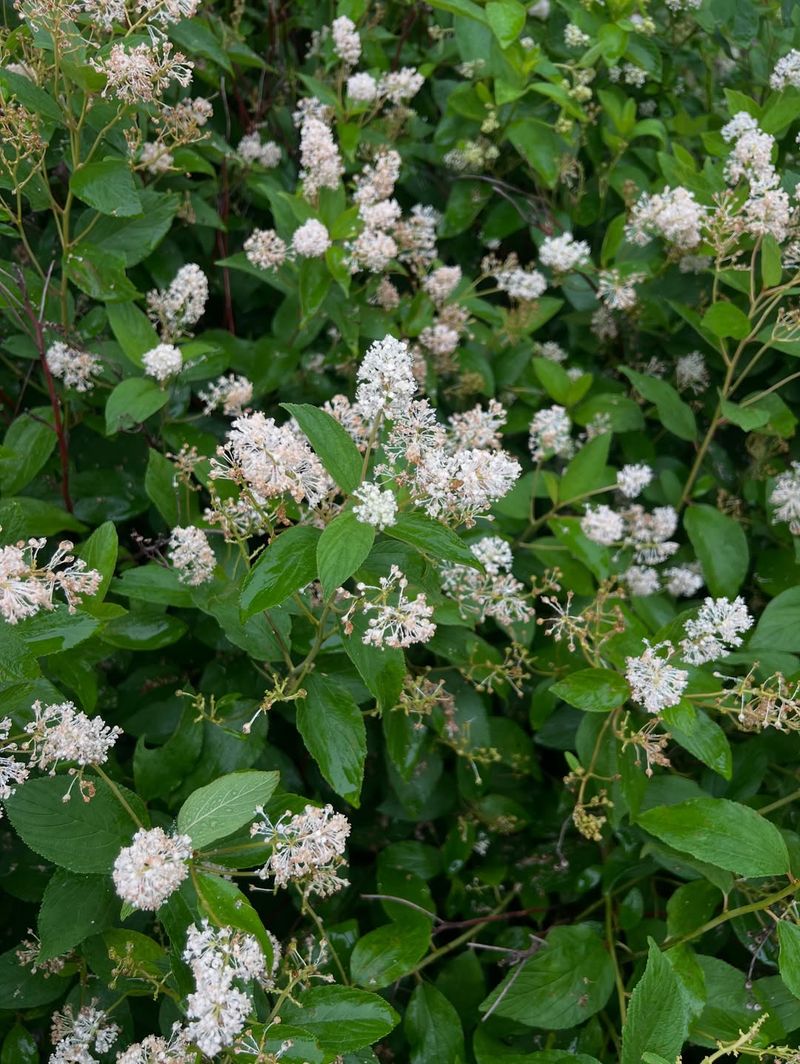
New Jersey tea grows three to four feet tall and wide, making it a great size for walkway borders and sunny foundation plantings. In midsummer, it covers itself in fluffy clusters of tiny white flowers that practically vibrate with pollinator activity.
Bumblebees, native bees, and butterflies flock to it in impressive numbers, turning an ordinary garden bed into a lively outdoor scene.
What makes this shrub especially valuable in Michigan is its deep, nitrogen-fixing root system. Those roots reach far into the ground, pulling up nutrients and improving soil health over time.
Your Michigan Garden Changes Every Week. Your Plan Should Too.
Gardening in Michigan changes quickly throughout the season. Every Friday you’ll receive a simple weekly plan showing exactly what to plant, prune, fertilize, harvest, and protect so you never miss the right timing.
That also means it handles drought with ease once established, which is a huge advantage during dry summer stretches. Sandy, well-drained soils that would spell trouble for boxwood are exactly where New Jersey tea feels most at home.
It is also notably resistant to deer browsing, a real bonus in suburban and rural areas where deer pressure is constant. For a sun-drenched spot that needs a tough, beautiful, wildlife-friendly shrub, this native gem belongs at the top of your list.
3. Dwarf Bush Honeysuckle
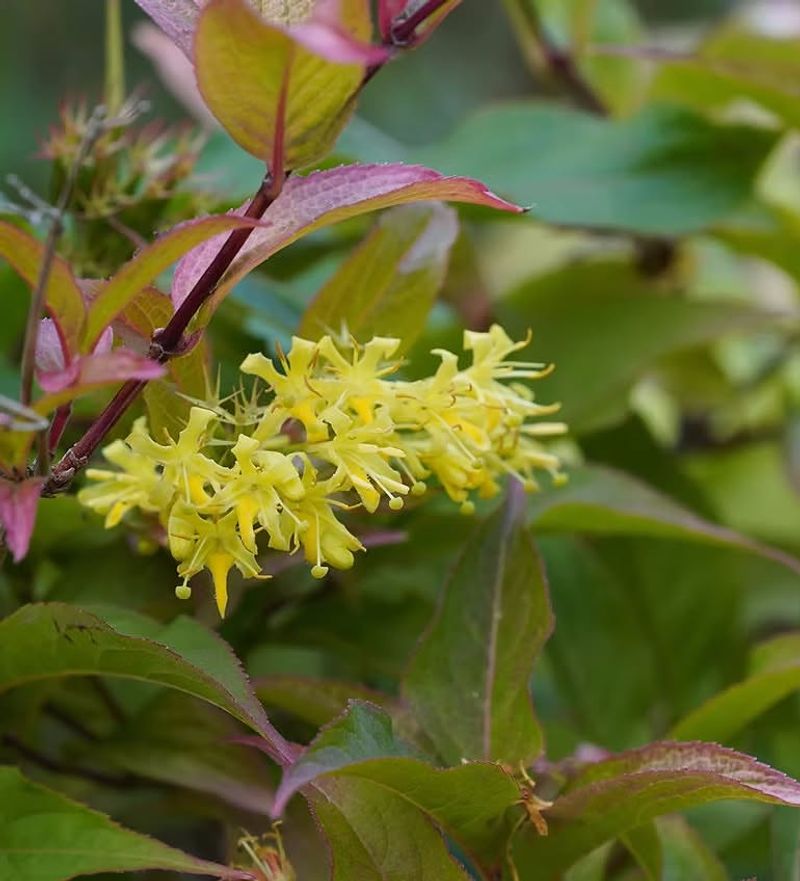
Not all honeysuckles are troublemakers. While the invasive Japanese honeysuckle vine has given the whole family a bad name, dwarf bush honeysuckle is a true Michigan native that plays by the rules and then some.
Gardeners who make the switch from boxwood are often surprised by just how tough and cheerful this compact shrub turns out to be.
Growing only two to three feet tall, dwarf bush honeysuckle fits neatly into foundation beds, borders, and slopes without ever taking over.
Its bright yellow tubular flowers bloom in early to midsummer, drawing in hummingbirds and native bees that are always on the lookout for reliable nectar sources.
The foliage turns a warm reddish-orange in fall, adding a second season of color that boxwood simply cannot offer.
One of the biggest selling points for gardeners is how well this shrub handles tough conditions. Poor, dry soils? No problem. Full sun on a hot south-facing slope?
It thrives there. It even tolerates part shade better than many flowering shrubs, giving you flexibility in spots where other plants struggle.
Because it spreads slowly by underground stems, it works beautifully as a ground-stabilizing plant on hillsides or along driveways. Maintenance is minimal once it is established, and it has no serious pest or disease issues to worry about.
Replacing boxwood with this cheerful native is genuinely one of the easiest upgrades a yard can get.
4. Fragrant Sumac
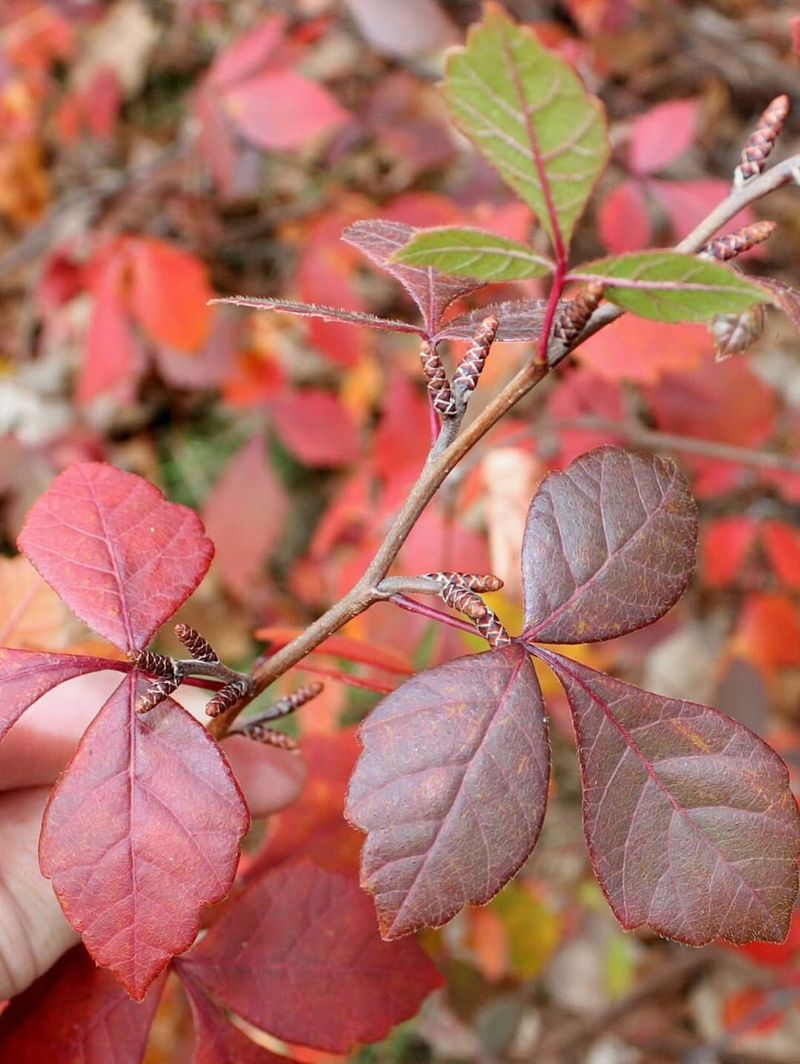
Crush a leaf of fragrant sumac between your fingers and you get a surprisingly pleasant, citrusy scent that hints at just how interesting this native shrub really is.
Far removed from the tall staghorn sumac most people picture, fragrant sumac is a low, spreading beauty that Michigan gardeners are putting to work in all kinds of tough spots where boxwood simply gave up.
The popular cultivar ‘Gro-Low’ stays just two feet tall while spreading four to six feet wide, making it a fantastic choice for slopes, driveways, and sunny foundation beds that need weed-suppressing coverage.
Small yellow flowers appear in early spring before the leaves fully open, giving early pollinators a much-needed food source.
As summer rolls in, the dense green foliage fills in beautifully, and by fall the whole plant erupts in vivid shades of orange, red, and burgundy that rival any ornamental shrub on the market.
Dry, sandy, or rocky soils that drain fast are no obstacle for fragrant sumac. It actually prefers lean conditions and struggles in overly rich or consistently wet ground, so it is tailor-made for those tough spots along driveways and south-facing banks.
Once it settles in, it needs almost no irrigation or fertilizer. Birds and small mammals appreciate the small red berries that develop in summer.
For pure toughness, striking fall color, and wildlife value all rolled into one low-maintenance package, fragrant sumac is hard to beat.
5. Shrubby Cinquefoil
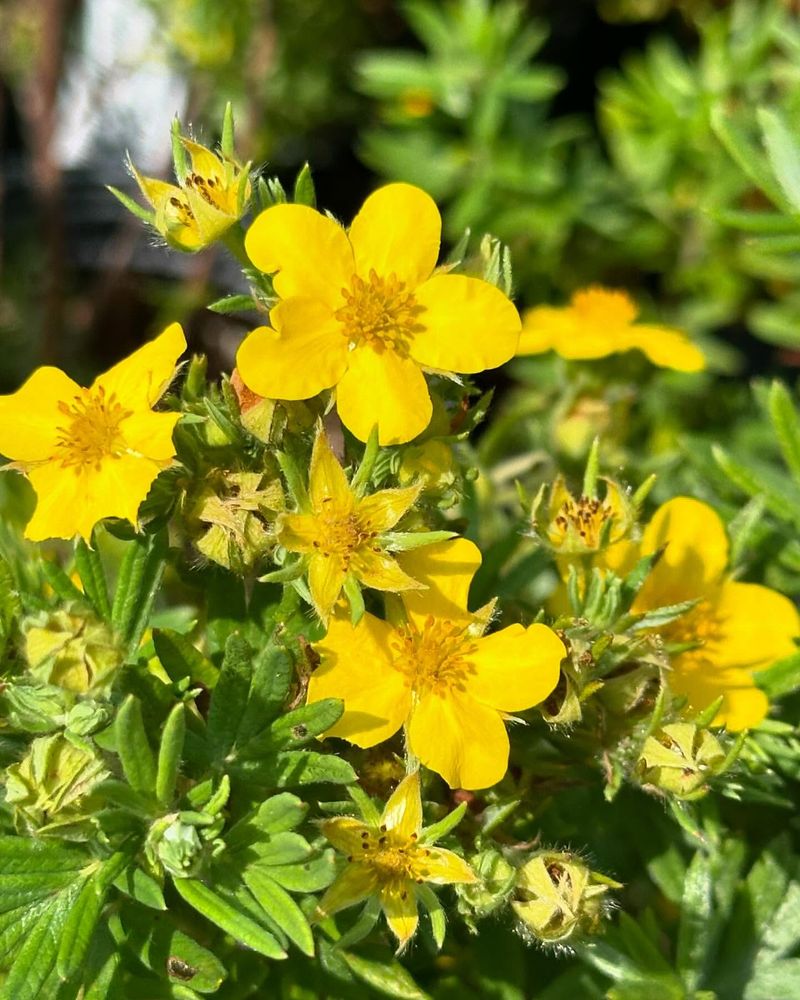
Some shrubs bloom for a couple of weeks and then spend the rest of summer looking ordinary. Shrubby cinquefoil is not one of them.
This cheerful native starts flowering in June and keeps going strong all the way through September, making it one of the longest-blooming shrubs you can plant in a Michigan yard.
The bright yellow, butter-cup-like flowers are small but produced in such abundance that the whole plant glows during the growing season.
Compact varieties like ‘Goldfinger’ and ‘Abbottswood’ stay neatly rounded at two to four feet tall and wide, fitting perfectly into foundation beds and formal borders where boxwood once lived.
The fine-textured foliage has a soft, feathery quality that looks elegant without any pruning at all.
Native bees and small butterflies visit the flowers regularly, so adding this shrub to your yard is a genuine boost for local pollinators. As a bonus, deer tend to leave it alone, which is a relief for gardeners in areas with heavy deer traffic.
Shrubby cinquefoil is also remarkably cold-hardy, handling our winters without a second thought. It prefers full sun and well-drained soil, tolerating dry conditions once established.
Poor, rocky, or sandy soils are not a problem either. If you want a tidy, low-care shrub that rewards you with months of golden color and real wildlife value, this is one replacement you will feel great about every single summer.
6. Black Chokeberry
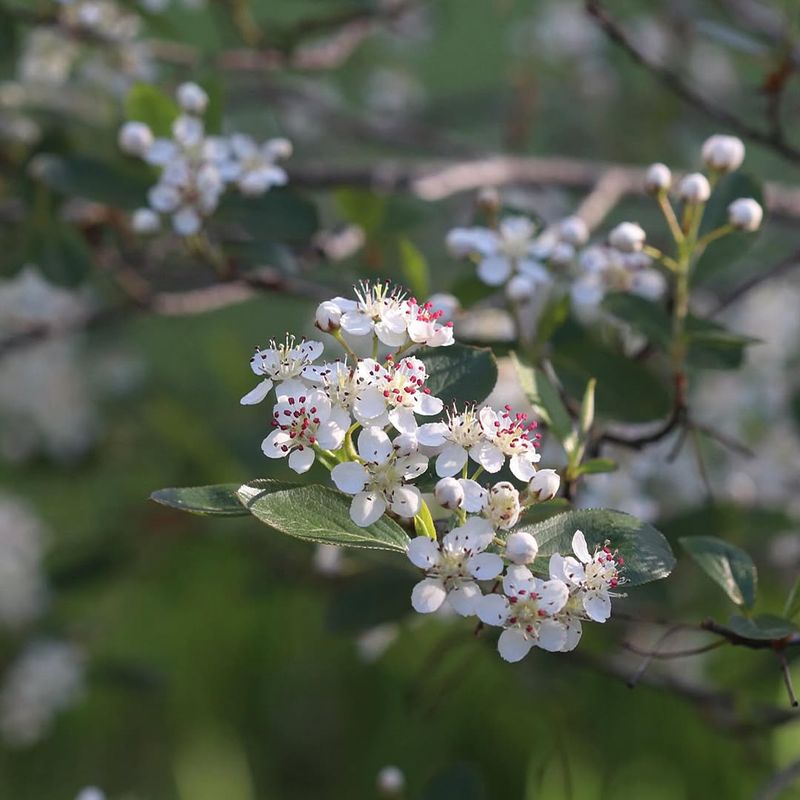
Aronia has become something of a superstar in the native plant world, and gardeners are finally giving it the spotlight it deserves.
Black chokeberry is a versatile, four-season native shrub that brings spring flowers, summer berries, blazing fall color, and attractive winter structure to your yard, all without the headaches that come with boxwood.
White flower clusters open in May, attracting native bees and early-season pollinators right when they need support most. By late summer, the branches are loaded with glossy dark purple-black berries that are incredibly rich in antioxidants.
Birds go absolutely wild for them, especially robins, bluebirds, and cedar waxwings passing through during fall migration. The foliage turns a spectacular deep red in autumn, making this one of the most visually rewarding native shrubs available in Michigan.
Black chokeberry grows three to five feet tall and handles a wide range of soil conditions, from consistently moist rain garden edges to drier upland beds. It tolerates both full sun and part shade, which gives you a lot of flexibility when planning your landscape.
Established plants spread slowly by root suckers, which can be useful for filling in a naturalized area or stabilizing a bank. Compact cultivars like ‘Morton’ (sold as Iroquois Beauty) stay tidy and well-behaved in smaller spaces.
Basically zero serious pest or disease problems make this shrub a true set-it-and-enjoy-it addition to any yard replacing old boxwood.
7. Mapleleaf Viburnum
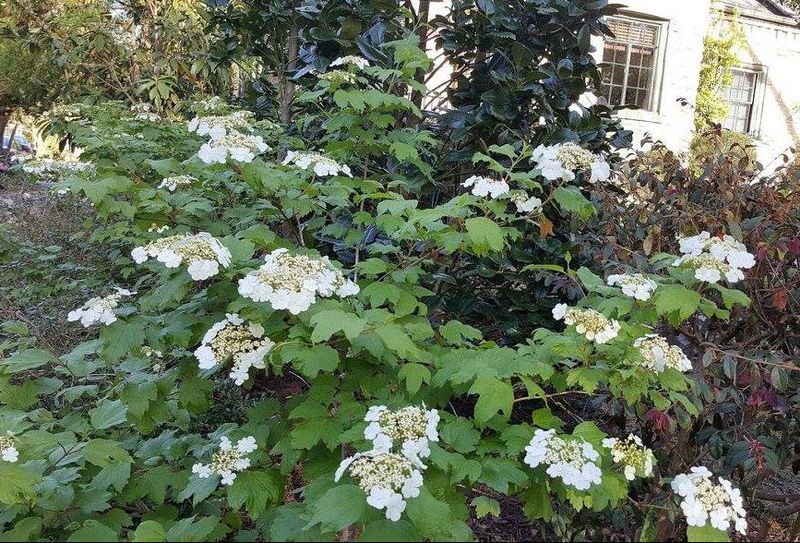
Shady spots are notoriously tricky for shrubs. Most flowering natives want full sun, and boxwood replacements for shaded foundation beds can feel like slim pickings.
Mapleleaf viburnum changes that conversation entirely. This underused native thrives in the kind of dry, shaded conditions under mature trees where almost nothing else wants to grow.
The leaves really do look like maple leaves, which gives the plant a charming, woodland feel that fits beautifully beneath oaks and maples. Flat-topped clusters of creamy white flowers bloom in late spring, providing nectar for native bees and butterflies.
By fall, the berries shift from pink to deep blue-black, and birds snap them up quickly. The foliage turns a stunning range of pinks, purples, and reds in autumn, which is genuinely unexpected for a shade-tolerant shrub.
Growing four to six feet tall, mapleleaf viburnum works well as an informal hedge, a woodland edge planting, or a mixed border backdrop.
It tolerates dry shade better than almost any other native shrub in Michigan, making it invaluable for those challenging spots where clay soil dries out under a canopy of established trees.
Deer tend to browse it occasionally, but it recovers quickly and keeps growing. Very few pests bother it, and it needs no special soil amendments or fertilizers to perform well.
Planting it where boxwood once struggled is one of the smartest shade-garden decisions a Michigan homeowner can make this season.
8. Ninebark
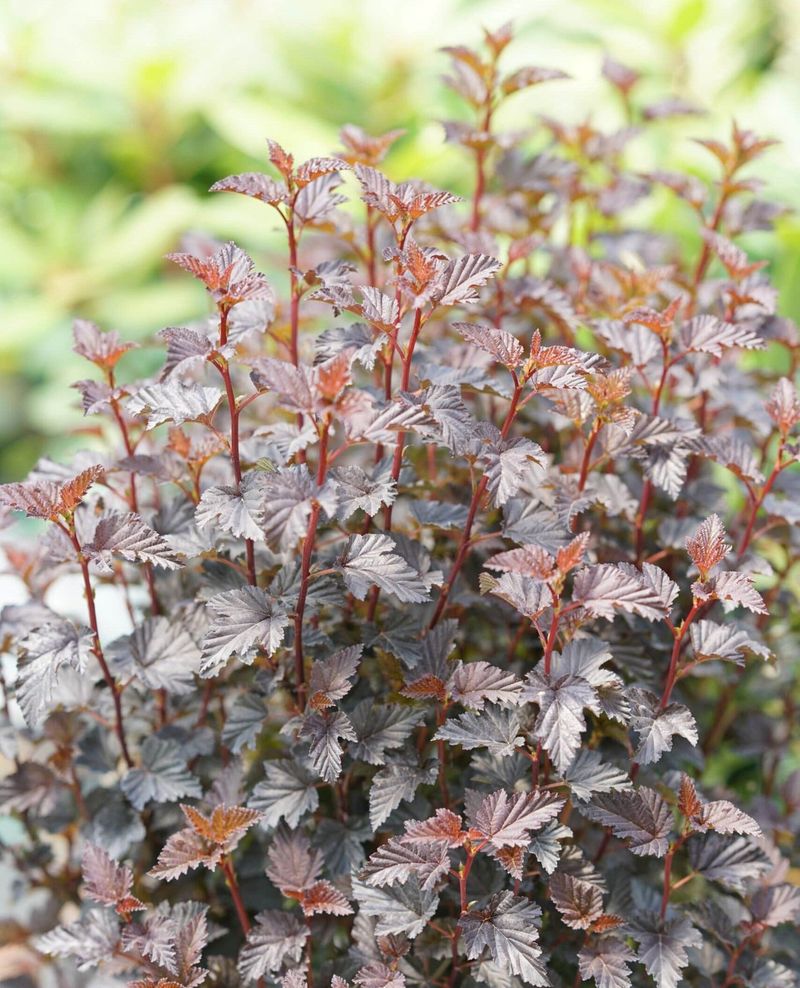
Ninebark has been having a serious moment in the gardening world, and for very good reason.
This rugged Michigan native offers something that most shrubs cannot: stunning bark that peels back in layers to reveal rich cinnamon and orange tones underneath, turning winter interest into a genuine feature rather than an afterthought.
In early summer, the branches are covered in rounded clusters of small white or pale pink flowers that attract a wide variety of native bees and beneficial insects. The foliage comes in a range of colors depending on the cultivar.
Classic green types like the straight species blend naturally into mixed borders, while dark-leaved varieties like ‘Diabolo’ or ‘Summer Wine’ create bold contrast against lighter plants. Fall brings small reddish seed clusters that birds find irresistible.
Compact cultivars such as ‘Tiny Wine’ and ‘Little Devil’ stay under four feet tall, making them ideal replacements for boxwood in foundation beds and formal borders.
Full sun brings out the richest foliage color, but ninebark handles part shade without losing its appeal.
It tolerates clay soils, wet conditions, drought, and urban pollution, which makes it one of the most adaptable native shrubs in Michigan’s plant palette. Pruning is easy and forgiving.
If you want a shrub that earns its keep in every season, looks great without fuss, and supports local wildlife all year long, ninebark belongs in your yard without question.
9. Smooth Hydrangea
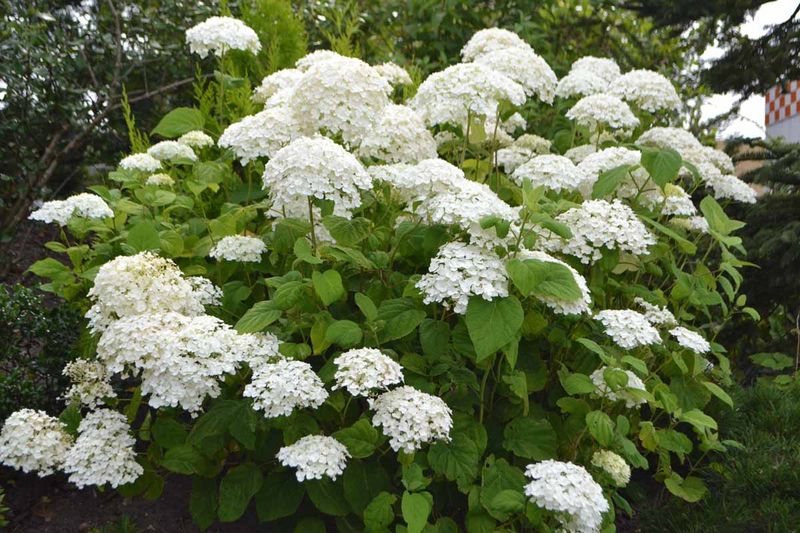
Walk through almost any woodland in Michigan during July and you might spot smooth hydrangea blooming quietly along a creek bank or forest edge.
This native shrub has been growing here long before anyone planted boxwood in their yard, and it brings a lush, cottage-garden look to foundation beds that is genuinely hard to match.
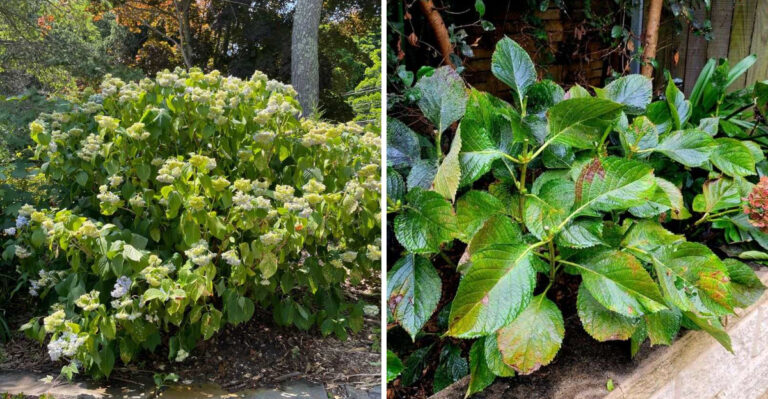
The large, dome-shaped flower clusters of ‘Annabelle’ and similar cultivars can reach the size of a volleyball, opening bright white in midsummer and slowly fading to a warm parchment color by fall.
That dried look actually adds beauty through winter, giving the plant four-season interest. Cut them back hard in early spring and the shrub bounces back fresh and full every single year.
Smooth hydrangea grows three to five feet tall and wide, and it handles part shade better than most flowering shrubs, making it a wonderful option for north-facing foundation beds or spots under the canopy of large trees.
It prefers consistently moist, fertile soil and rewards regular watering with the most impressive bloom show possible.
Deer do occasionally browse new growth, but established plants recover without issue. Native bees, particularly bumblebees, visit the flowers enthusiastically.
For a gardener who misses the lush, full look of a well-kept boxwood hedge but wants something that actually thrives without constant battles, smooth hydrangea is the kind of upgrade that makes you wonder why you waited so long to make the switch.
10. Common Snowberry
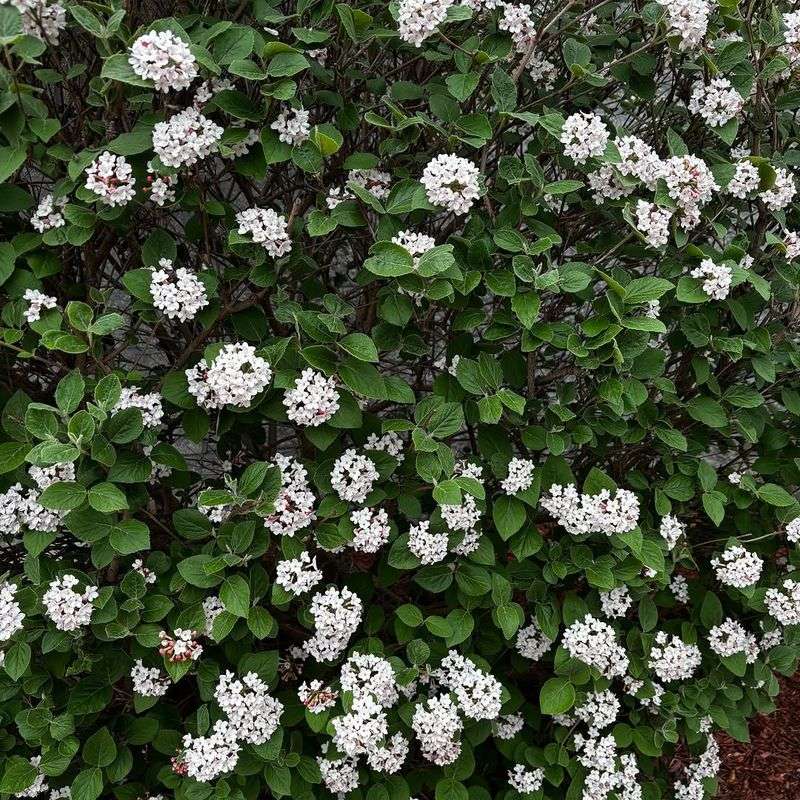
There is something almost magical about a shrub covered in clusters of pure white berries in October when everything else in the garden is winding down for the year.
Common snowberry pulls off exactly that trick, and it does it in spots where most other shrubs would struggle to survive.
Michigan gardeners are putting this overlooked native to work in shaded borders and woodland edges with great results.
Growing three to four feet tall with an arching, graceful habit, snowberry fits naturally into informal borders and naturalized areas. The small pinkish flowers in early summer are modest but beloved by hummingbirds and native bees.
The real show begins in late August when the branches droop under the weight of those distinctive white berries, which persist well into winter and provide food for ruffed grouse, pheasants, and other birds during lean months.
One of snowberry’s greatest strengths is its tolerance for difficult conditions. Dry shade under large trees, clay soils, north-facing slopes, and urban settings are all fine by this tough native.
It spreads by underground stems to form a dense colony over time, which makes it superb for erosion control on slopes or for filling in large naturalized areas. Smaller spaces benefit from occasional thinning to keep it tidy.
Deer browse it lightly but rarely cause serious damage. For a shade-tolerant, wildlife-supporting native shrub that brings genuine winter interest to your yard, common snowberry is a seriously underrated choice worth planting right away.
11. Meadowsweet
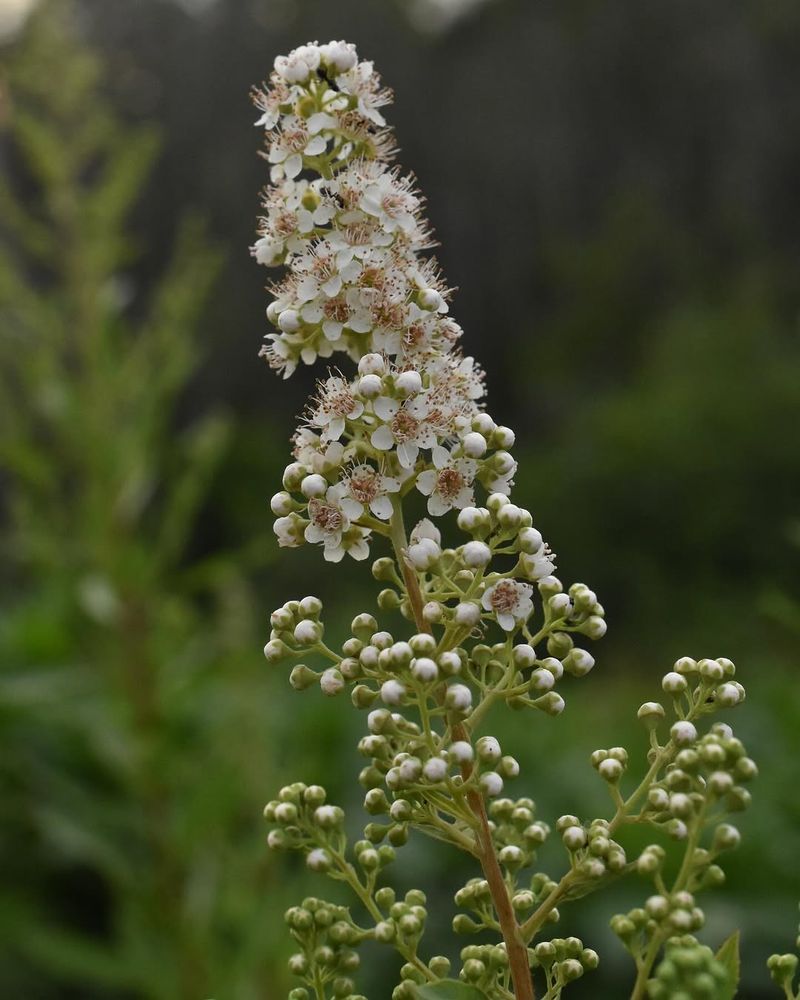
Meadowsweet earned its name honestly.
Growing along stream banks, wet meadows, and boggy edges across Michigan, this native spiraea produces tall, feathery plumes of white flowers in midsummer that genuinely look like something straight out of a wildflower painting.
For rain garden borders and moist low spots where boxwood never had a chance, meadowsweet is a natural fit.
The narrow, upright flower spikes bloom from July into August, attracting a remarkable variety of native bees, wasps, and small butterflies.
Growing three to four feet tall with an upright, airy habit, it combines beautifully with native sedges, Joe-Pye weed, and swamp milkweed in wet garden areas.
The stems turn a warm reddish-brown in fall and winter, adding subtle structure to the landscape when the growing season ends.
Moist to wet soils are where meadowsweet truly shines, making it one of the few ornamental shrubs that actually welcomes the boggy, poorly drained spots that cause homeowners headaches every spring.
Full sun to part shade both work well, and once established it is a remarkably self-sufficient plant that spreads slowly by stolons to form a natural colony.
Deer pressure is generally low, and pest issues are essentially nonexistent in our landscapes.
For gardeners dealing with wet, low-lying areas where boxwood rotted out years ago, meadowsweet transforms a problem spot into one of the most charming and ecologically productive corners of the entire yard.