These Are The 7 Shrubs Michigan Gardeners Regret Planting Near Their Foundation
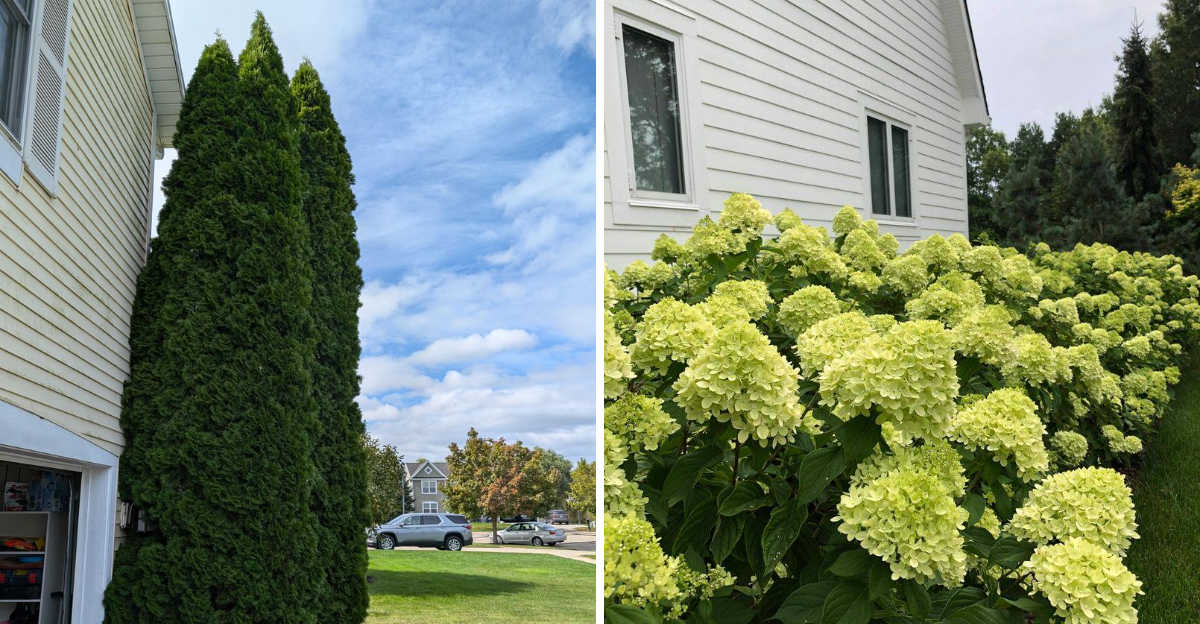
Every Michigan homeowner who has ever stood in a garden center holding a small shrub and thought “that looks about right for the front bed” knows exactly how this story goes. The plant looks manageable.
The tag says something vague about mature size that nobody really reads. It goes in the ground two feet from the foundation and looks great for about a season and a half.
Then the growing starts. Within a few years, windows are half covered, the walkway feels narrower, and pruning has become a recurring chore with no clear end in sight.
Foundation planting mistakes like these are incredibly common across Michigan, and they almost always come down to the same handful of avoidable decisions made right at the start.
1. Taxus Become A Constant Pruning Job Near Foundations
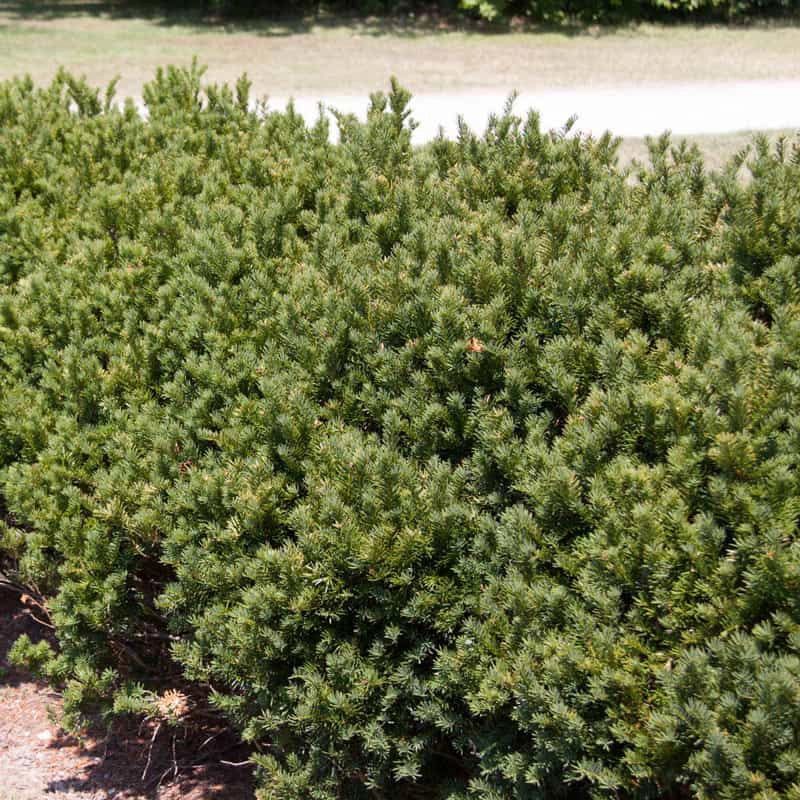
Few shrubs end up in as many Michigan foundation beds as taxus, and few end up causing as much ongoing frustration once they settle in and start putting on size.
At the garden center, a taxus might look like a compact, manageable evergreen that will stay tidy with just a little trimming each season.
The reality tends to be quite different once the plant has been in the ground for five or six years.
Taxus are vigorous growers that can spread six to eight feet wide or wider depending on the variety, and many of the common types sold for foundation use will keep pushing outward unless they are cut back regularly.
In Michigan yards, this often means pruning two or three times a year just to keep the shrub from touching the siding, blocking the window, or swallowing the front walkway.
The real frustration is that taxus do not respond well to being cut back hard into older wood. Once a taxus has grown too large for its space, a heavy cutback can leave it looking sparse and uneven for years.
Many homeowners find themselves stuck in a cycle of constant light trimming rather than ever solving the underlying size problem.
Taxus work well in larger landscape beds where they have room to spread, but in a narrow foundation planting, they tend to become a maintenance burden that only grows heavier over time.
2. Arborvitae Can Swallow A Foundation Bed Over Time
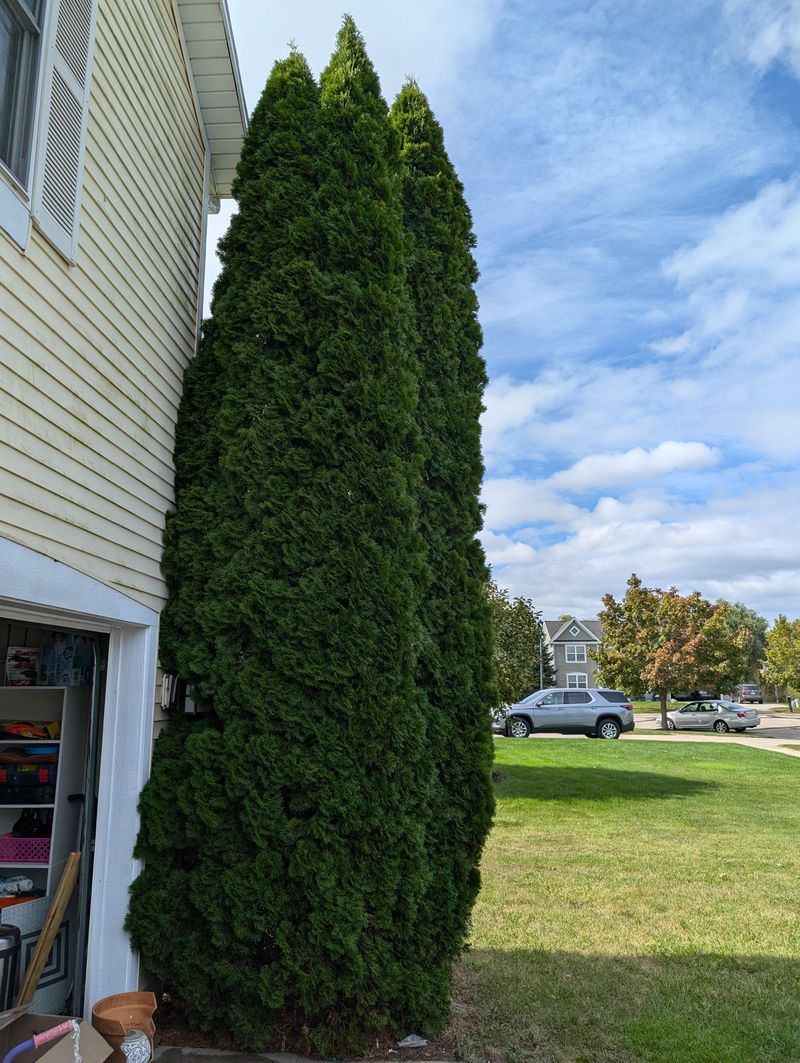
Arborvitae are one of the most popular foundation and privacy shrubs sold across Michigan, and it is easy to understand why. They are evergreen, relatively fast-growing, and they look clean and structured when they are young.
The problem shows up later, when a shrub that was labeled as a foundation plant has grown taller than the gutters and wider than the window it was supposed to frame.
Many common arborvitae varieties sold in Michigan grow 15 to 30 feet tall at maturity, and even the compact selections can reach six to eight feet wide. In a foundation bed that is only three or four feet deep, that kind of spread creates serious problems.
The shrubs press against the siding, hold moisture against the house, and block light from windows that were never meant to be shaded year-round.
Your Michigan Garden Changes Every Week. Your Plan Should Too.
Gardening in Michigan changes quickly throughout the season. Every Friday you’ll receive a simple weekly plan showing exactly what to plant, prune, fertilize, harvest, and protect so you never miss the right timing.
Homeowners also notice that arborvitae planted close together or close to the house tend to develop thin, bare patches on the interior where light cannot reach.
Cutting them back to fix the size rarely works well because arborvitae do not reliably regrow from old brown wood.
Once they have grown too large, removal is often the only practical option. Arborvitae can be excellent in the right spot, but a tight foundation bed next to a window or front entry is rarely that spot, no matter how appealing they look at the nursery.
3. Junipers Are Hard To Shrink Once They Get Too Big
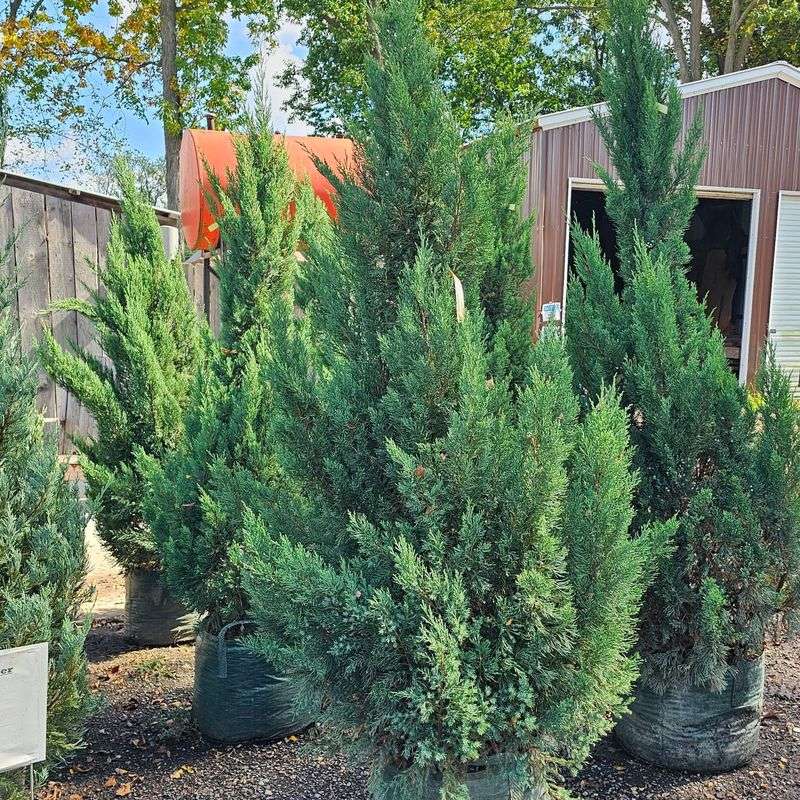
Spreading junipers have been a staple of Michigan foundation plantings for decades, partly because they tolerate tough conditions and partly because they look low-maintenance when they are young.
That low-maintenance reputation is part of what makes them such a common regret.
Once a spreading juniper has filled its bed and started reaching into the lawn, the walkway, or the neighboring plants, bringing it back under control becomes a real challenge.
Most spreading juniper varieties grow three to six feet tall and can spread six to ten feet wide or more at maturity. In a foundation bed designed for a smaller shrub, that kind of horizontal growth is overwhelming.
The branches layer and interlock over time, making it nearly impossible to prune cleanly without leaving obvious gaps or brown hollow zones that never fill back in.
Junipers do not regenerate well from old wood the way some shrubs do. Cutting into the bare interior sections typically produces woody stubs rather than any fresh new growth.
Gardeners who have tried to reduce an overgrown juniper often end up with a shrub that looks patchy and uneven no matter how carefully it is trimmed.
The shrubs also tend to collect debris inside their dense branches, which can hold moisture against the foundation.
Junipers genuinely thrive in open slopes, rock gardens, and wide landscape beds where their natural spread is an asset rather than a problem. Foundation beds rarely give them that kind of space.
4. Common Lilac Often Feels Cramped Near The House

There is something deeply nostalgic about a lilac in a Michigan yard. The fragrance alone is enough to make almost any gardener want to plant one near the front door so they can enjoy it every time they walk in or out of the house.
That impulse is completely understandable, but common lilac is a shrub that needs considerably more space than most foundation beds can offer.
Common lilac grows 8 to 15 feet tall and 6 to 12 feet wide at maturity. It also sends up suckers from the base over time, gradually widening the clump beyond what was originally planted.
In a narrow foundation bed or a tight corner near a porch, that kind of growth quickly becomes a problem. Branches reach the roofline, stems brush against the siding, and the base of the shrub starts creeping into the lawn or the walkway.
Homeowners who plant lilac near the house also tend to notice that the shrub’s thick canopy limits airflow in that part of the yard, which can lead to moisture buildup against the siding.
Lilac blooms on old wood, so heavy pruning to manage its size often means sacrificing the flowers for a season or two.
The fragrance and spring color are genuinely wonderful, but a lilac planted too close to the house tends to create more headaches than happy moments. A spot farther from the foundation, with room to spread naturally, suits it far better.
5. Burning Bush Creates More Problems Than Many Expect

Burning bush earns a lot of attention every fall when its foliage turns that vivid, fiery red that stops traffic in Michigan neighborhoods.
It is one of those shrubs that looks so striking in autumn that many homeowners plant it without thinking too carefully about what it will look like the other ten months of the year, or how large it will eventually grow.
Standard burning bush varieties can reach 8 to 10 feet tall and equally wide at maturity. Even the compact selections often grow four to six feet in both directions, which is more than most foundation beds can comfortably handle.
Once the shrub fills its allotted space, it needs regular pruning to stay in bounds, and heavy pruning tends to reduce the natural, rounded form that makes it appealing in the first place.
Beyond the size concern, burning bush is listed as an invasive plant in several Midwestern states, and gardeners should be aware that its seeds are spread by birds into natural areas and woodland edges.
This does not mean it is prohibited everywhere in Michigan, but it is a factor worth considering seriously before planting it close to the house or anywhere near natural areas.
Many Michigan landscape professionals now recommend native alternatives that offer similar fall color without the same concerns.
Burning bush is far from a poor plant in every situation, but near a foundation, its size and ecological considerations make it a frequent regret.
6. Large Panicle Hydrangeas Can Take Over Small Beds
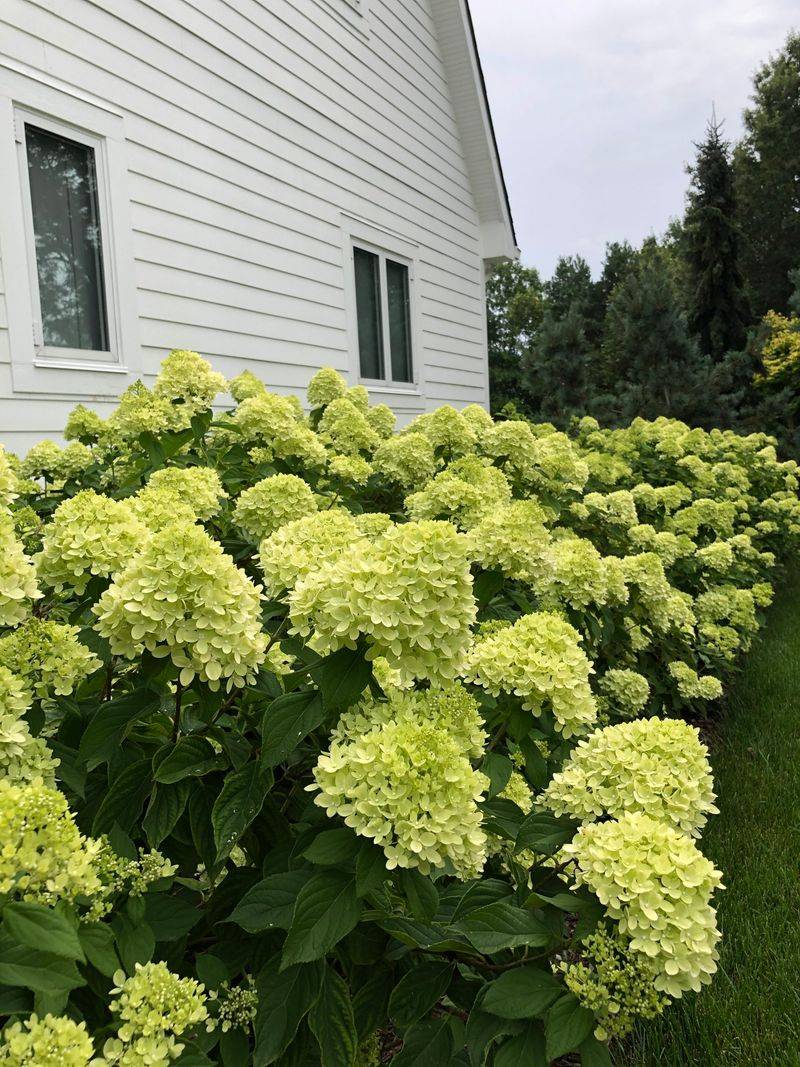
Panicle hydrangeas have become one of the most popular shrubs in Michigan over the past decade, and for good reason.
They bloom reliably, tolerate the cold winters Michigan regularly delivers, and produce those large, showy flower heads that look stunning from midsummer through fall.
The enthusiasm around them is well-earned, but planting the larger varieties in a foundation bed can lead to some genuine regret once they mature.
Many panicle hydrangea varieties grow six to ten feet tall and equally wide, and some of the showier cultivars push even larger.
In a foundation bed that sits below a window or lines a front entry, that mature size can block sightlines, crowd the entrance, and put constant pressure on the surrounding plants and hardscape.
The heavy flower heads also bend branches outward, which means the shrub can lean into a walkway or press against the siding even when it is not technically overgrown.
Gardeners who plant panicle hydrangeas close to the house often find themselves pruning more aggressively than they expected, and heavy annual pruning changes the shrub’s natural arching form into something stiffer and less graceful.
Compact varieties like Bobo or Little Lime are much better suited to tight foundation spaces, though even these need room to breathe.
If you love panicle hydrangeas, a spot farther from the house where their full size and arching habit can shine freely is a much smarter choice for a Michigan yard.
7. Forsythia Turns Messy When It Outgrows Its Space

Forsythia is one of the first shrubs to bloom in Michigan each spring, and those bright yellow flowers on bare branches are a genuinely welcome sight after a long winter.
That early burst of color makes forsythia easy to love, which is exactly why so many gardeners plant it near the front door or along the foundation where they can enjoy it up close.
The problem is that forsythia does not stay small or tidy for long.
A mature forsythia can reach 8 to 10 feet tall and spread just as wide, with long arching branches that root where they touch the ground and gradually expand the clump outward.
In a foundation bed, this means the shrub will eventually sprawl into the lawn, over the walkway, and up against the siding in a way that looks wild rather than welcoming.
Even with regular pruning, forsythia tends to look rangy and uneven rather than shaped and polished.
Forsythia blooms on the previous year’s growth, so if you prune it after it flowers, you cut off next year’s blooms. If you prune it in late summer or fall to control size, you lose the spring show.
Michigan homeowners often end up doing neither consistently, which leads to a shrub that grows larger every year and blooms less reliably over time.
Forsythia is a cheerful, tough plant that works well in a large open bed or a naturalized area, but foundation planting tends to bring out its worst qualities.