7 Things Your Yellow Petunia Leaves Are Trying To Tell You
Petunias bring some of the boldest, most reliable color to any garden, blooming strong from spring through fall. But when those bright leaves start turning yellow, it stops you in your tracks.
Here is the part worth knowing: yellow leaves on petunias are almost always a solvable problem. In fact, gardeners across the state spot this issue every season and turn it around quickly once they know what to look for.
Every yellow leaf is trying to tell you something, and once you speak the language, the fix becomes obvious. The cause is usually hiding in plain sight. New to flower beds or ten seasons deep, the answers are closer than you think.
By the end, you will know exactly what your petunias need to bounce back and fill your state’s gardens with vibrant, lush color again. Your blooms are worth fighting for.
1. Overwatering Is The First Mistake To Rule Out
Too much of a good thing is still too much. Overwatering is one of the most common reasons petunia leaves turn yellow and roots struggle to access oxygen in soggy ground.
Without proper oxygen reaching the roots, the plant cannot absorb nutrients, and that shows up fast as yellow leaves.
Petunias prefer soil that dries out slightly between waterings. Stick your finger about an inch into the soil before reaching for the hose.
If it still feels damp, put the watering can down and walk away. Most petunias only need watering every two to three days in warm weather, and even less when temperatures cool down.
Container-grown petunias are especially vulnerable to overwatering because water can pool at the bottom if drainage holes are blocked or missing. Always make sure your pots have proper drainage, and never let them sit in standing water.
Yellow leaves that feel soft or mushy at the stem base are a strong sign you have been watering too much.
Cut back immediately, allow the soil to dry out, and your plant will likely bounce back within a week. Healthy roots mean healthy leaves, and that starts with knowing when not to water.
2. Underwatering Is Pushing Your Petunias To The Edge
Bone-dry soil is just as harmful as waterlogged ground. Underwatering is a sneaky cause of yellow leaves on petunias because it often gets mistaken for other problems.
When a petunia does not get enough water, the leaves start to yellow from the edges inward, and the plant may also look wilted or droopy. The stems can feel brittle, and the soil will be cracked or pulling away from the sides of the pot.
Petunias are thirsty plants, especially during the heat of summer. In a garden bed, they may need watering daily during a heat wave.
In containers, the soil dries out even faster because pots absorb and release heat quickly. Missing just a day or two of watering during a stretch of hot, dry weather can stress the plant enough to trigger leaf yellowing almost overnight.
The fix is straightforward but requires consistency. Water deeply rather than just sprinkling the surface, making sure moisture reaches the root zone several inches below.
Mulching around the base of your petunias with wood chips or straw helps the soil hold onto moisture between waterings. After a good deep soak, most underwatered petunias perk up within a day or two.
Going forward, check the soil regularly instead of watering on a set schedule, because your garden’s needs change with the weather. Staying attentive keeps those leaves green and gorgeous all season long.
3. Without Enough Nitrogen Your Petunias Are Running On Empty
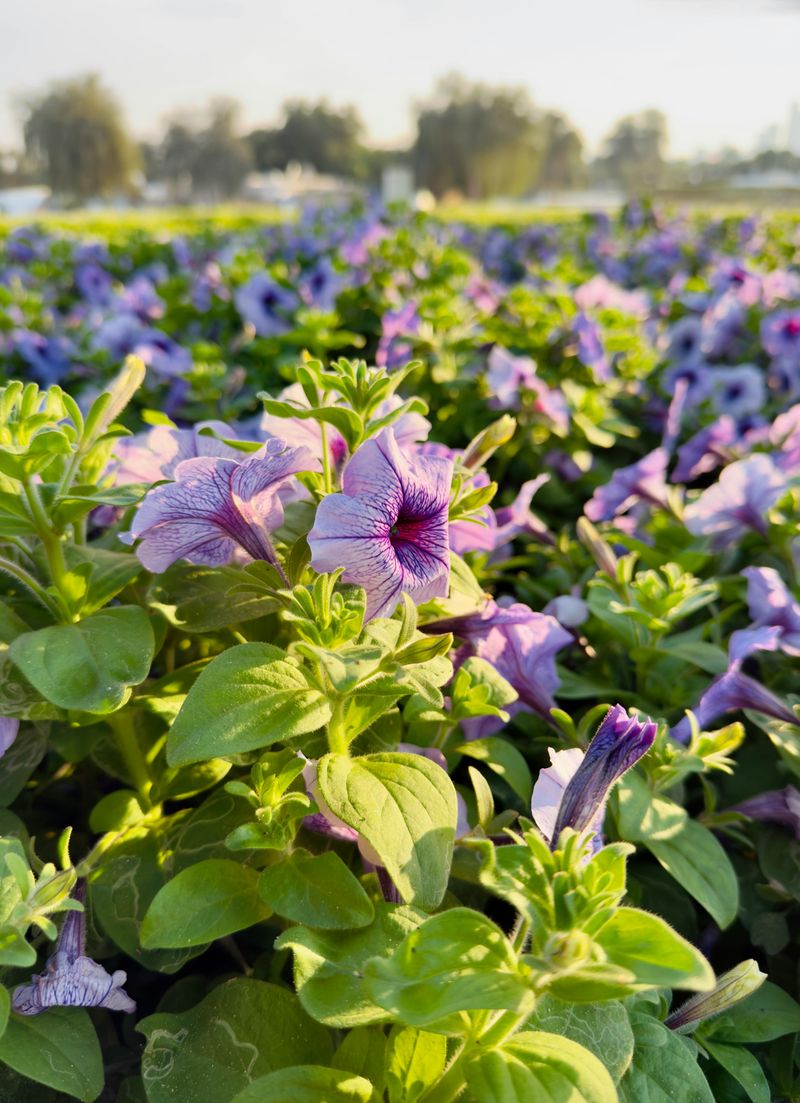
Nitrogen is the engine behind green, leafy growth, and without enough of it, petunias start to fade fast. A nitrogen deficiency shows up in a very specific pattern that sets it apart from other causes of yellow leaves on petunias.
The yellowing begins on the oldest, lowest leaves first and then works its way up the plant over time. The newer growth at the top usually stays green, at least in the early stages of the deficiency.
This problem is common in containers because nutrients get flushed out of the soil every time you water.
Garden beds can also become nitrogen-depleted, especially if you have been growing flowers in the same spot for several seasons without refreshing the soil.
Heavy rainfall can wash nitrogen away quickly too, leaving your plants hungry even when the rest of the soil looks fine.
Fixing a nitrogen deficiency is one of the more satisfying garden problems to solve because results come fast.
Apply water-soluble fertilizer with a higher first number, like 10-5-5 formula, and you should see improvement within a week or two. Slow-release granular fertilizers are great for long-term feeding in garden beds.
For potted petunias, feeding every two weeks during the growing season keeps nutrient levels steady.
Do not go overboard with fertilizer though, because too much nitrogen creates its own set of problems, including burnt roots. A little goes a long way toward keeping petunias lush and full of color.
4. Iron Deficiency Is Stealing The Green Right Out Of Your Petunias
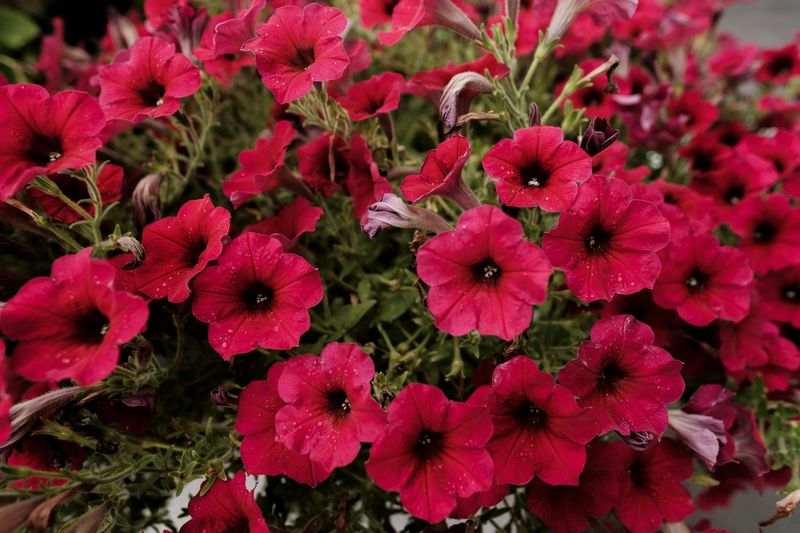
Your soil can have plenty of iron and your petunia can still be unable to access it. Iron deficiency, also called chlorosis, happens when plants cannot absorb iron even when it is present in the soil.
The telltale sign is leaves that turn yellow between the veins while the veins themselves stay bright green, creating a striking striped pattern that looks almost decorative but signals real trouble.
The most common reason petunias cannot access iron is soil pH. When soil becomes too alkaline, iron gets locked up in a form the plant roots simply cannot take in.
This often happens in areas with hard water or in soils that have been amended with too much lime. Overwatering can also contribute by creating conditions that limit iron uptake at the root level.
Start by testing your soil pH with an inexpensive kit from any garden center. Petunias thrive in slightly acidic soil, ideally between 6.0 and 6.5.
If your pH is too high, you can lower it by adding sulfur or using an acidifying fertilizer. Chelated iron supplements, available as a liquid spray or soil drench, can also deliver iron directly to the plant in a form it can absorb right away.
Spray the leaves with a chelated iron solution and you may see color returning within days. Addressing soil pH is the long-term fix that prevents chlorosis from coming back season after season.
5. Too Much Direct Sun Or Heat Stress
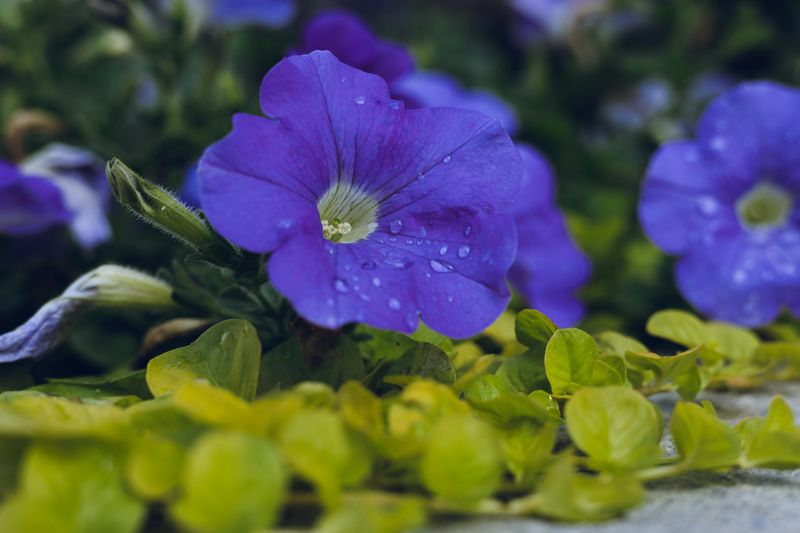
Petunias love the sun, but even sun-loving plants have their limits. During the peak heat of summer, petunias can suffer from heat stress in climates where afternoon temperatures regularly climb above 90 degrees Fahrenheit.
This stress often shows up as yellowing, bleached-out leaves. The upper leaves and those most exposed to direct afternoon sun tend to take the worst of it.
They sometimes develop yellow or even whitish patches where the tissue has been damaged by heat.
Heat stress and sun damage are often confused with nutrient problems because the symptoms can look similar. The key difference is location on the plant.
If the yellowing is concentrated on the side facing the strongest sun or the topmost leaves, heat is likely the cause. The plant may also drop flowers faster than usual and look generally exhausted by mid-afternoon, wilting even when the soil is moist.
Moving container petunias to a spot with afternoon shade during the hottest weeks of summer can make a dramatic difference.
For plants in the ground, a shade cloth draped over them during peak heat hours offers protection without blocking all the light they need. Deep watering in the early morning helps the plant stay hydrated before temperatures rise.
Petunias are resilient, and once the heat breaks, they often push out fresh, healthy growth on their own. Giving them a light trim and a dose of fertilizer after a heat wave can speed up their recovery and bring back that full, lush look.
6. Root Rot Starts Underground And Takes Your Petunias Down Fast
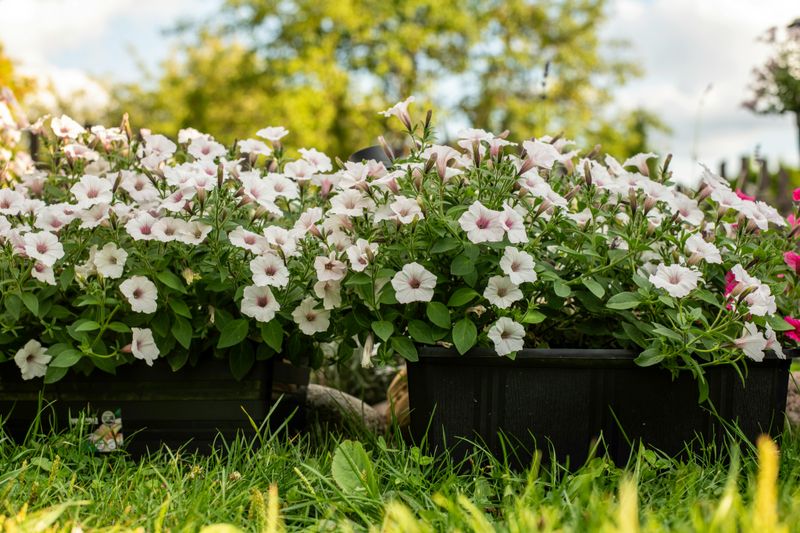
Root rot is the silent problem that sneaks up before you even realize something is wrong. By the time the leaves start turning yellow, the damage underground may already be serious.
Root rot is caused by fungal pathogens that thrive in consistently wet, poorly drained soil. The roots turn dark brown or black, become mushy, and lose their ability to deliver water and nutrients to the rest of the plant.
What you see above ground is a petunia that looks like it is starving and drowning at the same time.
The tricky part is that root rot looks a lot like overwatering, and for good reason: overwatering is usually what triggers it in the first place.
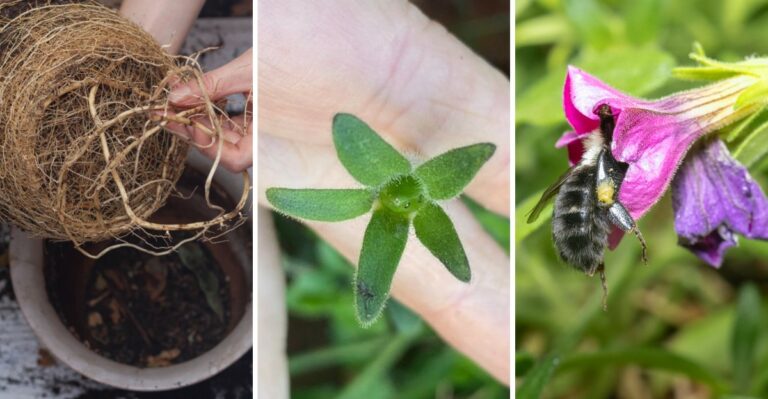
If you have already cut back on watering and the leaves are still yellowing, gently remove the plant from its pot or carefully dig around the base in a garden bed.
Healthy roots are white or light tan and feel firm. Rotted roots are dark, slimy, and may smell unpleasant.
Catching root rot early gives you a fighting chance. Trim away all the affected roots with clean scissors, let the remaining roots air out for an hour, and repot the plant in fresh, well-draining soil.
Adding perlite or coarse sand to your potting mix improves drainage and helps prevent future fungal issues. Act quickly, because root rot that goes untreated spreads and can move through an entire planting.
A soil drench with a copper-based fungicide can help slow the spread and give your plant a fighting chance. Use it sparingly though, as repeated applications can build up in the soil over time.
7. Not Every Yellow Leaf Is A Problem, Sometimes Its Just Natural Aging
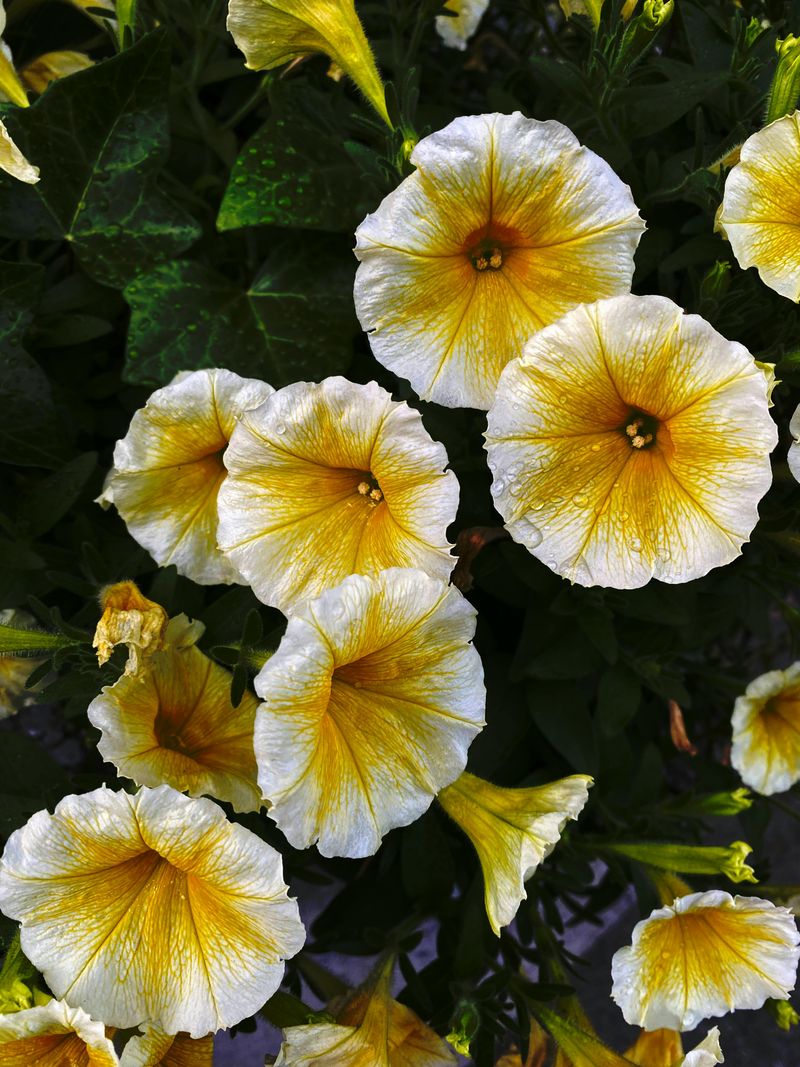
Not every yellow leaf is a crisis. Sometimes petunias are just doing what all living plants do, shedding older growth to make room for new.
Natural aging is a completely normal process, and once you recognize it for what it is, you can stop second-guessing yourself and focus on enjoying your garden.
As petunia plants mature through the season, the lower, older leaves gradually yellow and drop off on their own. This is the plant redirecting its energy toward new growth and flower production.
The pattern of natural aging is distinct from disease or nutrient problems. The yellowing happens evenly on the oldest leaves at the base of the plant, and the rest of the plant looks healthy, green, and full of blooms.
There is no wilting, no mushy stems, no striped veining. The plant just quietly lets go of what it no longer needs, which is actually a sign of a plant doing its job well.
You do not need to do anything dramatic when natural aging is the cause of yellow leaves on petunias. Simply pinch off the yellowing leaves to keep the plant tidy and improve airflow around the base.
A mid-season trim, often called a hard cutback, can also rejuvenate a petunia that looks leggy or sparse.
Cut the stems back by about a third, give the plant a good feeding, and within two to three weeks, fresh new growth will fill in beautifully. Aging gracefully is something petunias do remarkably well.