7 Reasons Your Tomatoes Keep Cracking After Watering
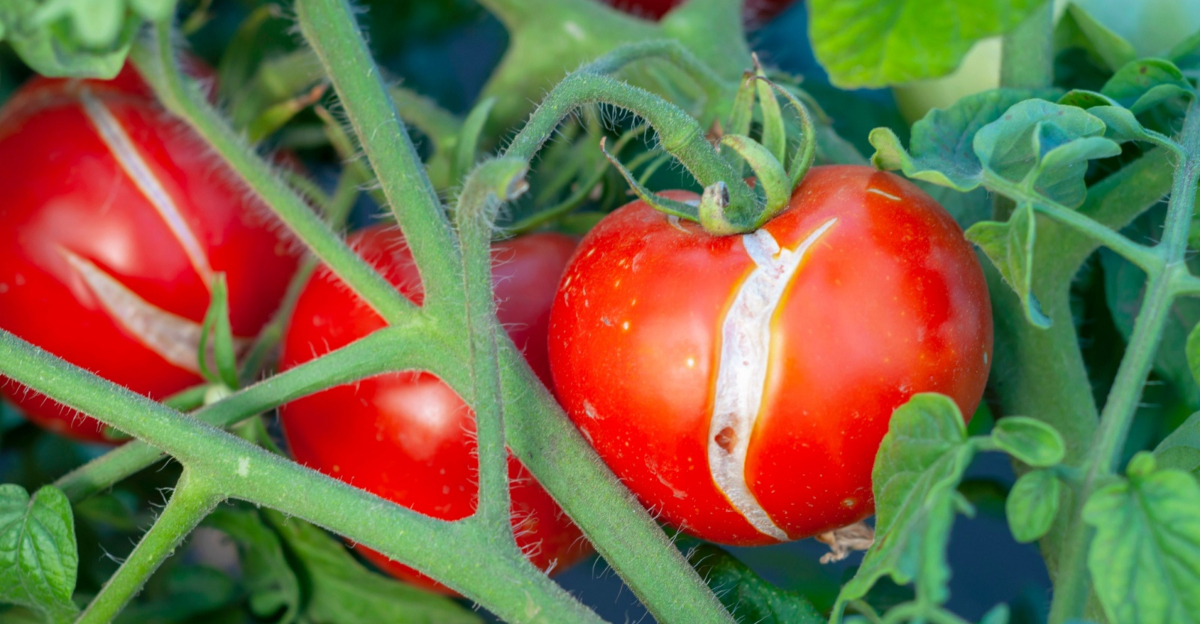
You reach into the garden, fingers wrapped around what should be a perfect tomato. There it is.
A crack splitting straight through the skin like it had somewhere better to be.
Cracked tomatoes are one of those gardening frustrations that feel deeply personal. You watered on schedule, waited patiently, and somehow, your tomato still split right before you could pick it.
Here’s the thing: cracking is rarely random. It tends to be a direct response to how, when, and how much water hits the plant.
Once you start to understand the pattern, it gets a lot easier to break it.
This one breaks down seven common watering mistakes that cause tomatoes to crack, and exactly what to do instead. Simple adjustments, real fixes, and hopefully a much better harvest waiting for you on the other side.
1. Watering Too Frequently
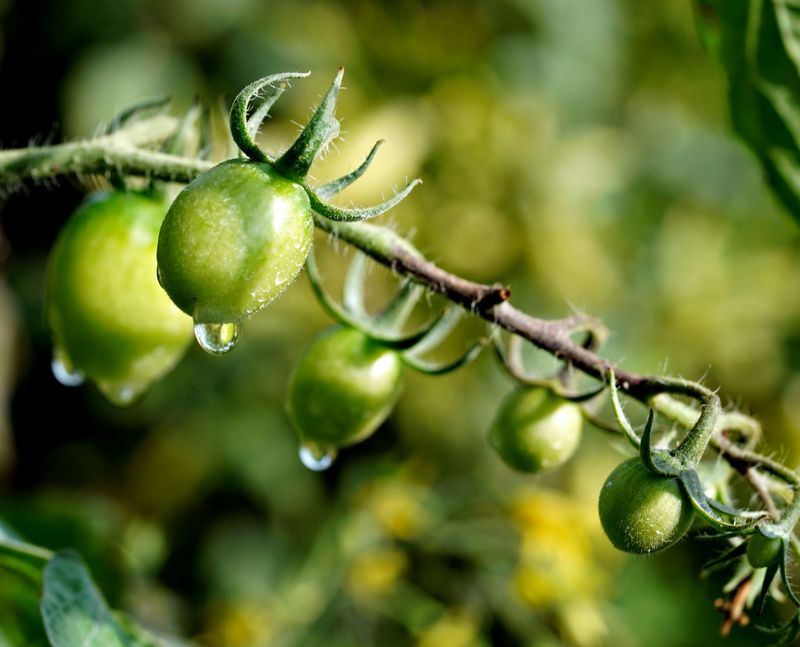
Image Credit: © hartono subagio / Pexels
Your tomatoes are tougher than you think. Watering them every single day might feel like good care, but it is actually one of the fastest ways to cause cracking.
When soil stays constantly wet, the roots absorb water at a rapid, almost frantic pace. The fruit fills up with liquid faster than the skin can stretch to keep up.
That pressure is what splits the tomato open. The skin simply cannot grow fast enough to handle the sudden surge of moisture inside.
Think of it like blowing up a balloon too quickly. At some point, something has to give, and with tomatoes, it is always the skin.
Most tomato plants do best with deep watering every two to three days, depending on your climate and soil type. Sandy soils dry out faster, while clay-heavy soils hold moisture much longer.
Stick your finger about two inches into the soil before you reach for the hose. If it still feels damp at that depth, your plants do not need water yet.
Consistent moisture is the goal, but that does not mean constant moisture. There is a big difference between the two, and your tomatoes know it.
Letting the soil dry out slightly between waterings encourages the roots to grow deeper and stronger. Deeper roots lead to more stable water uptake, which means the fruit fills more gradually and evenly.
Tomatoes that crack frequently are often growing in soil that never gets a chance to breathe. Giving the ground a short rest between waterings can dramatically reduce the number of split fruits you find each morning.
Deeper roots take in water more gradually, and that alone can cut down on split fruit significantly.
2. Skipping Watering Days
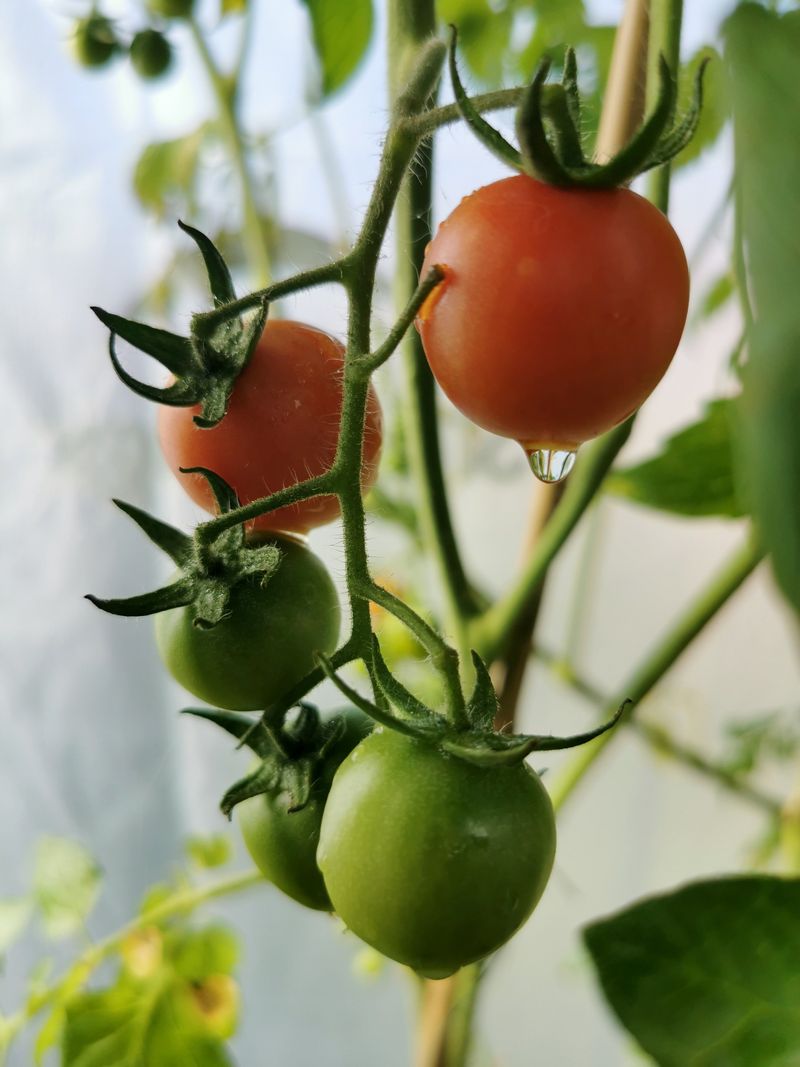
Skipping a watering day here and there might not seem like a big deal, but your tomatoes disagree strongly. Inconsistent watering is one of the top reasons cracked tomatoes show up even in well-maintained gardens.
Here is what happens when you go several days without watering. The soil dries out, the fruit stops expanding, and the skin begins to tighten and harden around the flesh inside.
Then you water generously to make up for lost time. The roots suddenly flood with moisture, the fruit swells rapidly, and the already-tight skin tears under the pressure.
It is a cycle that repeats itself every time watering becomes irregular. The tomato skin cannot adapt fast enough when the moisture supply swings wildly from dry to soaked.
Hot summer days make this problem worse. Temperatures above 90 degrees can dry out the soil in less than 24 hours, especially in raised beds or containers.
Sticking to a consistent schedule is one of the most effective things you can do for this issue. Whether you water every two days or every three, stick to it as closely as possible.
A timer-based drip irrigation system takes the guesswork out of the equation entirely. These systems are affordable, easy to install, and can be set to water at the same time every day.
Mulching around the base of your plants also helps by slowing down soil moisture evaporation. A two to three inch layer of straw or wood chips can make a noticeable difference during heat waves.
It is a small habit shift, but your tomatoes will show the difference by the end of the season.
3. Drowning Your Plants With Too Much Water
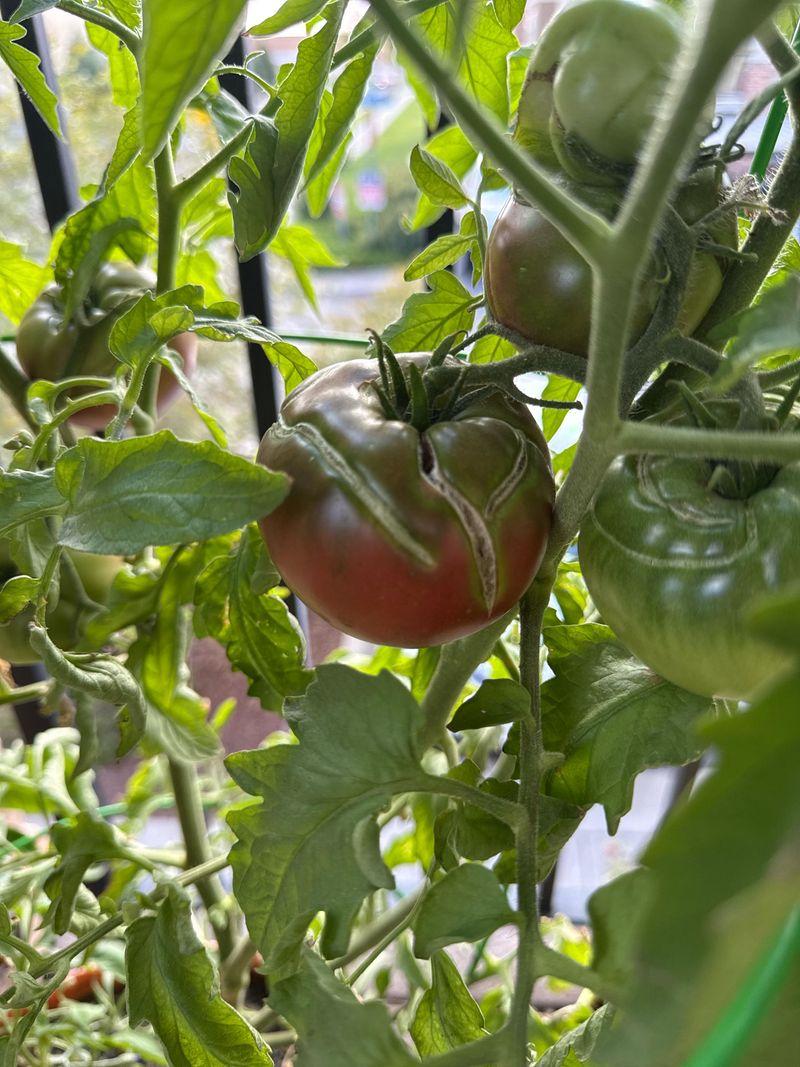
More water does not always mean happier plants. Flooding your tomato beds with too much water at once can cause just as much damage as not watering enough.
When you pour on a huge amount all at once, the roots absorb it rapidly and send it rushing into the fruit. The inside of the tomato expands faster than the outer skin can handle.
That sudden internal pressure is exactly what causes those deep, jagged cracks you find after a big rain or an overly generous watering session.
A good rule of thumb is to give your tomato plants about one to one and a half inches of water per week. That amount should be spread out over multiple sessions, not delivered all at once.
Using a rain gauge in your garden is a simple and inexpensive way to track exactly how much water your plants are receiving.
Drip irrigation is one of the best tools for avoiding this problem because it delivers water slowly and directly to the root zone. The fruit fills gradually, giving the skin time to keep pace.
Raised beds with good drainage also help because excess water can escape instead of pooling around the roots. Standing water is a warning sign that your soil needs better drainage or less frequent watering.
If you garden in a region with heavy summer rains, harvest nearly ripe fruit before major rain after a dry spell. Protecting against sudden water surges can save a lot of fruit from splitting.
4. Watering Too Fast And Too Hard
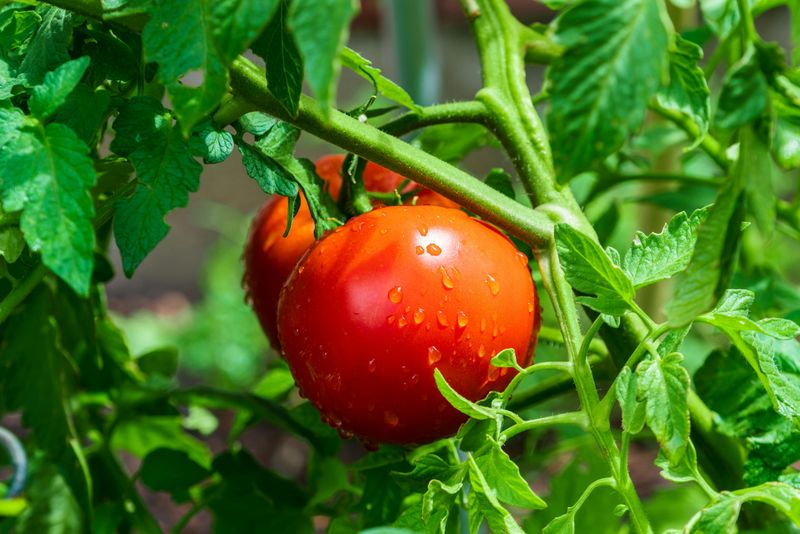
The speed and force of your watering matters more than most gardeners realize. Blasting water onto your tomato plants with a strong stream can shock the root system and trigger rapid fruit expansion.
When water hits the soil hard and fast, it does not absorb evenly. Instead, it runs off the surface, compacts the soil, and then soaks in unevenly once the runoff slows down.
That uneven absorption causes the roots to take in moisture in sudden bursts rather than at a slow, steady pace. Those bursts send water rushing into the fruit all at once, which stretches the skin beyond its limit.
Switching to a gentle, low-pressure watering method makes a real difference. A soaker hose or a drip system delivers water slowly right at the soil level, giving it time to absorb deeply and evenly.
If you prefer using a hose, attach a gentle spray nozzle and hold it close to the base of the plant. Aim for the soil, not the leaves or the fruit itself.
Watering slowly for a longer period is far more effective than a quick, forceful blast. A slow, ten-minute soak beats a two-minute power spray every single time when it comes to healthy tomatoes.
Hard watering also splashes soil up onto the lower leaves and fruit, which can spread soil-borne diseases. Keeping the water at ground level reduces that risk significantly.
Gentle watering encourages roots to grow deep rather than staying shallow near the surface. Deep roots are better at regulating water uptake, which leads to more stable fruit development and far fewer cracked tomatoes in your garden over time.
5. Watering at the Wrong Time of Day
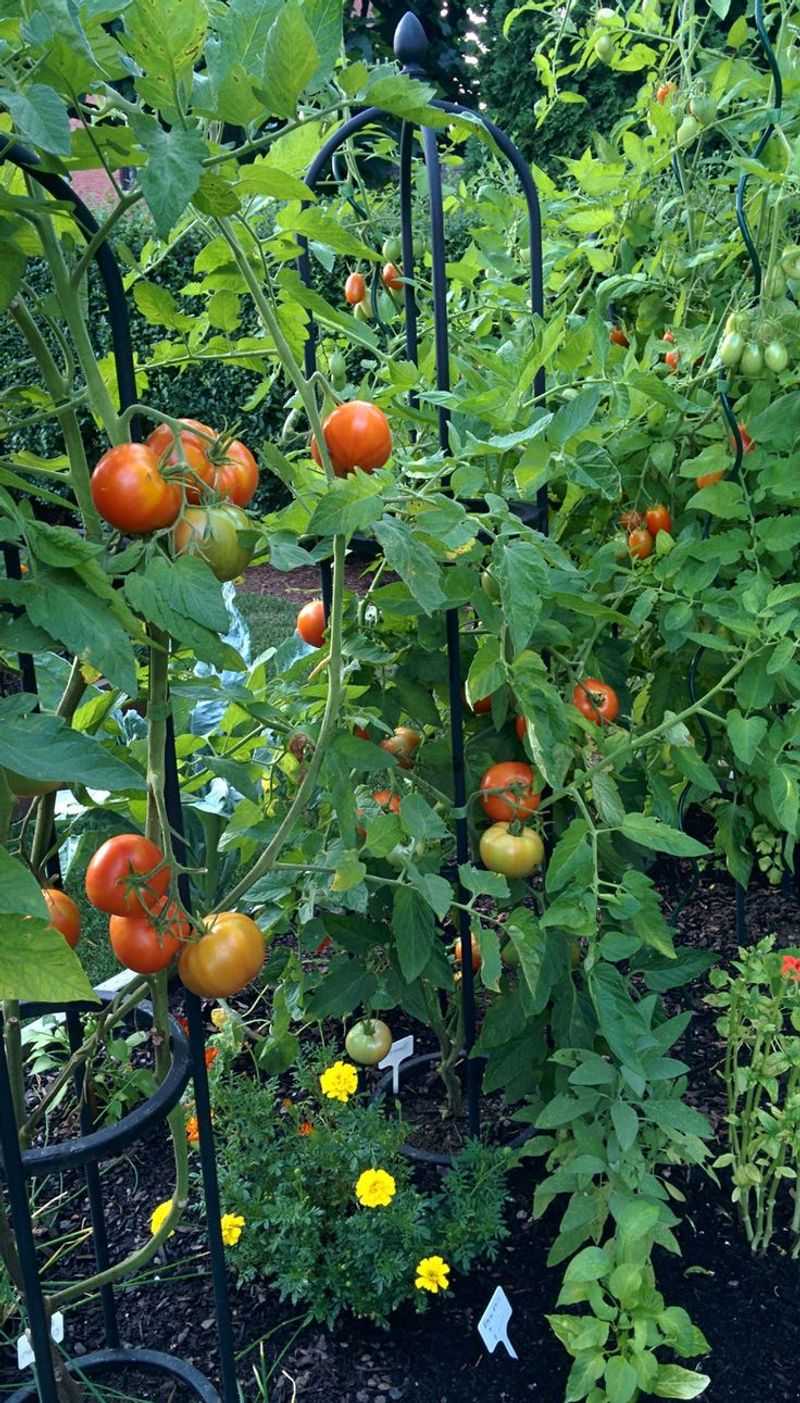
Timing your watering sessions might sound like a minor detail, but it can have a surprisingly big impact on fruit cracking. Watering at the hottest part of the day creates problems that many gardeners never connect back to their schedule.
When you water midday in peak summer heat, the water evaporates from the soil surface before it can soak in deeply. The roots get a shallow drink instead of a deep one, which sets up an uneven absorption pattern.
Later in the evening, the roots catch up and pull in moisture more efficiently as temperatures drop. That delayed surge of water into the fruit can cause the skin to crack overnight, leaving you with split tomatoes by morning.
Early morning is generally the best time to water tomato plants. The soil is cool, evaporation is low, and the roots have the entire day to absorb moisture at a natural, steady rate.
Morning watering also gives the leaves time to dry out before nightfall, which reduces the risk of fungal diseases like early blight and septoria leaf spot. Wet foliage sitting overnight is an open invitation for trouble.
If your schedule makes morning watering difficult, late afternoon is an acceptable alternative. Just aim to finish at least two hours before sunset so the plant has time to settle before the cooler night air arrives.
A programmable irrigation timer is a great investment for busy gardeners. Set it once, and your plants get watered at the right time every day without you having to think about it.
It is a small scheduling tweak, but one that tends to show up clearly in the quality of your harvest.
6. Watering From Above
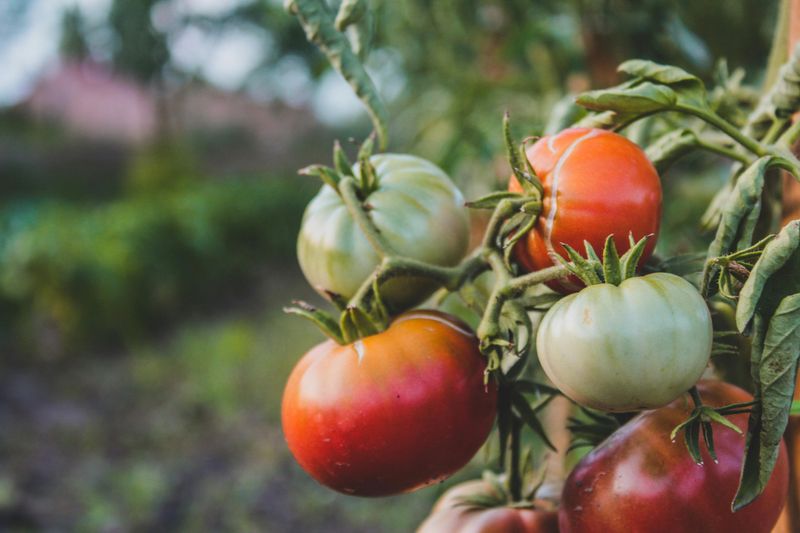
Watering from above feels natural, especially if you are using a sprinkler or a handheld hose. However, this method causes more problems for tomato plants than almost any other watering habit.
When water falls onto the fruit directly, it creates a rapid temperature change on the outer skin. That sudden shift can cause micro-cracks in the surface, which then expand as the fruit continues to grow.
Overhead watering also keeps the foliage wet for extended periods, which creates the perfect environment for fungal diseases. Blight, mold, and leaf spot all thrive when leaves stay damp, and once these diseases take hold, they spread fast.
Water landing directly on the fruit can create temperature fluctuations on the skin, making it more vulnerable to cracking as internal pressure builds. The combination of soft skin and rapid moisture uptake is a recipe for cracked tomatoes.
Switching to ground-level watering solves most of these problems immediately. Soaker hoses, drip lines, and hand watering at the base of the plant all deliver moisture directly to the roots without touching the fruit or foliage.
If you currently use an overhead sprinkler system, consider converting at least your tomato beds to drip irrigation. The setup cost is low, and the improvement in fruit quality is often dramatic within just one growing season.
Ground-level watering also conserves water because less is lost to evaporation and runoff. Less water is lost to evaporation and the fruit stays healthier overall.
Less water is lost to evaporation, the fruit stays healthier, and your tomato beds become a lot easier to manage.
7. Watering Too Close To Harvest Time
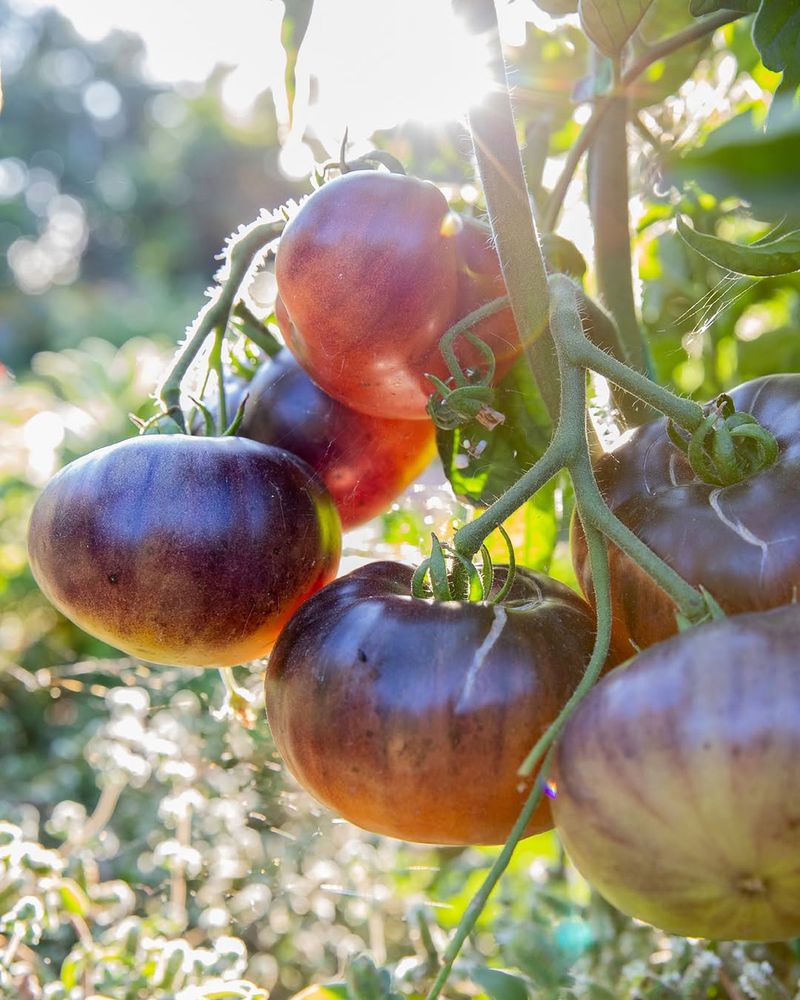
Timing matters right up until the moment you pick your tomatoes. As fruit approaches full ripeness, the skin stretches thin and loses much of its flexibility.
At that stage, even a normal watering session can be enough to trigger cracking. The flesh inside swells just enough to push the skin past its limit.
The cracks that appear in the final days before harvest are often the most frustrating because the fruit looks perfect right up until it splits. All that waiting, and the damage happens in the last stretch.
One of the most effective ways to handle this is to reduce watering frequency once you notice your tomatoes starting to blush. That early color change is a signal that ripening has begun and that the skin is entering its most vulnerable phase.
You do not need to stop watering entirely. Cutting back slightly and spacing out your sessions can make a real difference without stressing the plant.
Checking your tomatoes daily during the final ripening stage also helps. Picking fruit as soon as it reaches full color, rather than leaving it on the vine for extra days, reduces the window of time when cracking is most likely to occur.
Some gardeners also find that reducing water a day or two before an expected heavy rain helps buffer against the sudden moisture spike that storms can bring. It is a simple adjustment, but one that can save a lot of fruit in the final weeks of the season.