Watch For These 8 Signs A Opossum Is Visiting Your New York Yard At Night
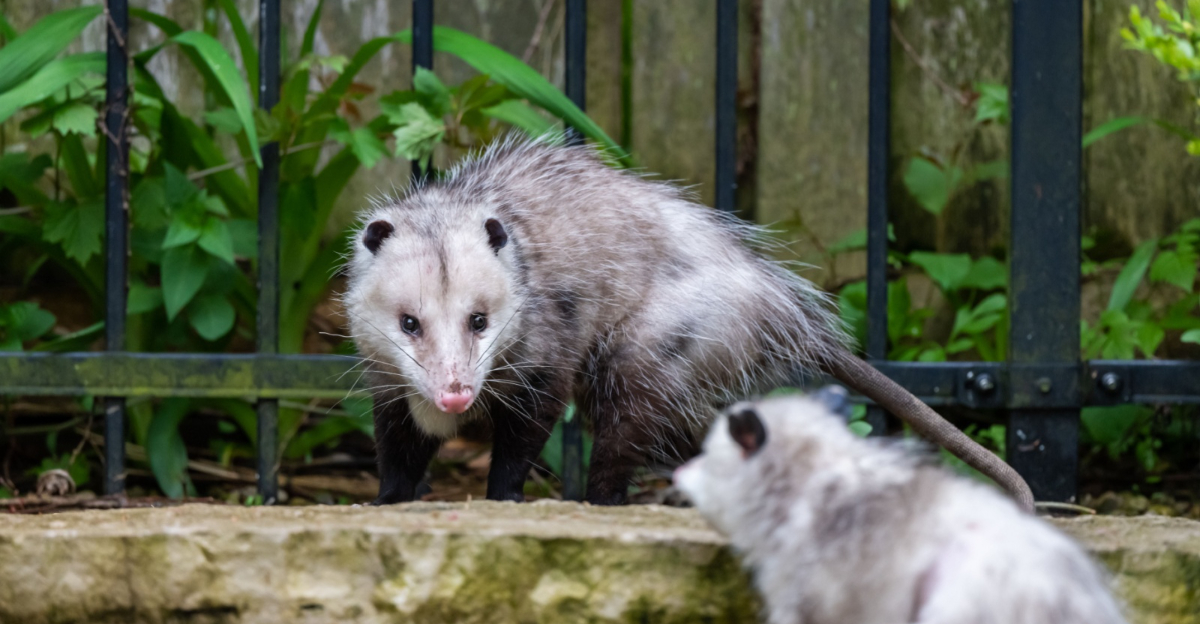
Something is creeping around your yard after dark, and you have no idea what it is. Opossums are surprisingly common nighttime visitors in New York neighborhoods, from suburban backyards to city edges.
These marsupials are quiet, sneaky, and mostly harmless, but they leave behind some very clear clues. Knowing what to look for helps you figure out exactly who your late-night guest is.
Once you spot these signs, you can decide whether to coexist peacefully or gently encourage them to move along. Keep reading to learn the eight telltale signs a opossum has been visiting your yard at night.
1. Overturned Trash Cans
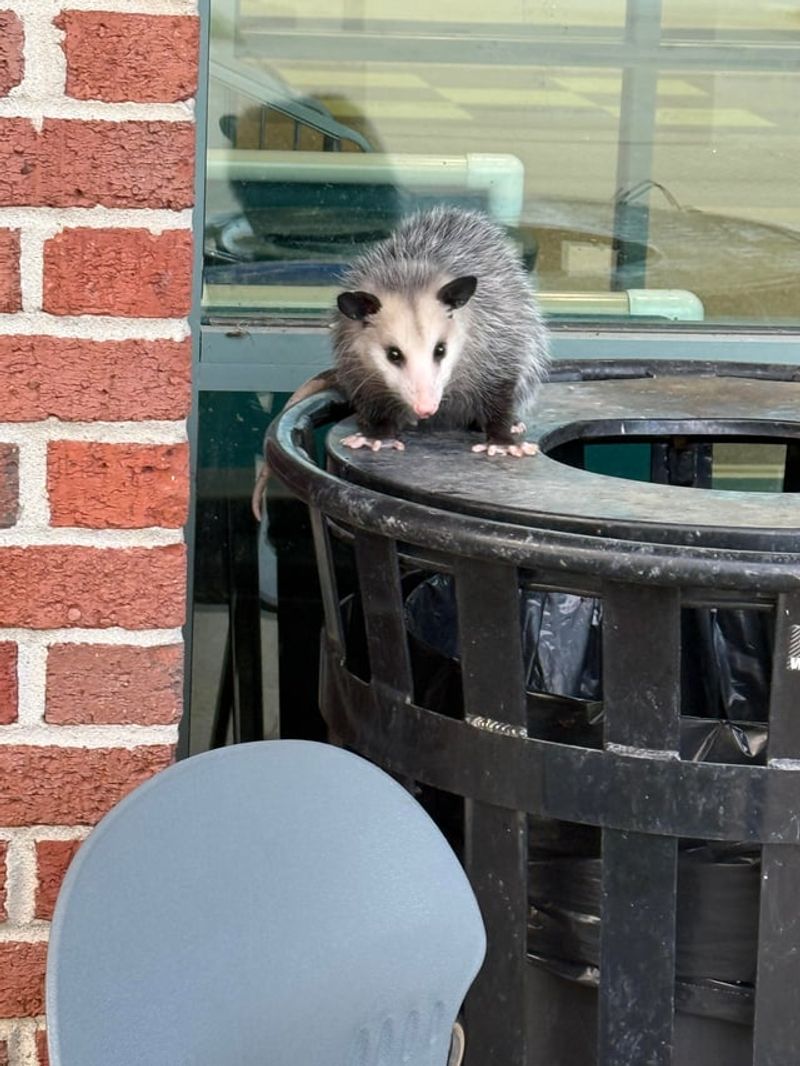
Your trash can was perfectly upright when you went to bed. Now it is on its side with garbage spread across your yard like a yard sale nobody planned.
Opossums are opportunistic eaters, which means free food is always on their radar. Trash cans are basically an all-you-can-eat buffet to these marsupials.
They use their nimble front paws to nudge lids off and tip containers over. Standard bins without locking lids are especially easy targets for a hungry nighttime visitor.
The mess they leave behind is usually scattered but not totally destroyed. You will notice food scraps pulled out and partially eaten, with some items dragged a short distance away.
Raccoons do this too, so how do you tell the difference? Look for small, hand-shaped tracks nearby and check for droppings, which tend to be more tubular and tapered than raccoon waste.
Switching to a bin with a bungee cord or locking lid is the fastest fix. Bringing trash cans into your garage overnight also works well in colder months.
Opossums rarely damage the can itself since they are not strong enough to chew through hard plastic. The mess is annoying, but the animal causing it is mostly just hungry.
If this keeps happening in your yard, there is a good chance the same opossum is returning each night. Eliminating easy food sources is the most effective way to break that habit fast.
2. Tracks In Soft Soil
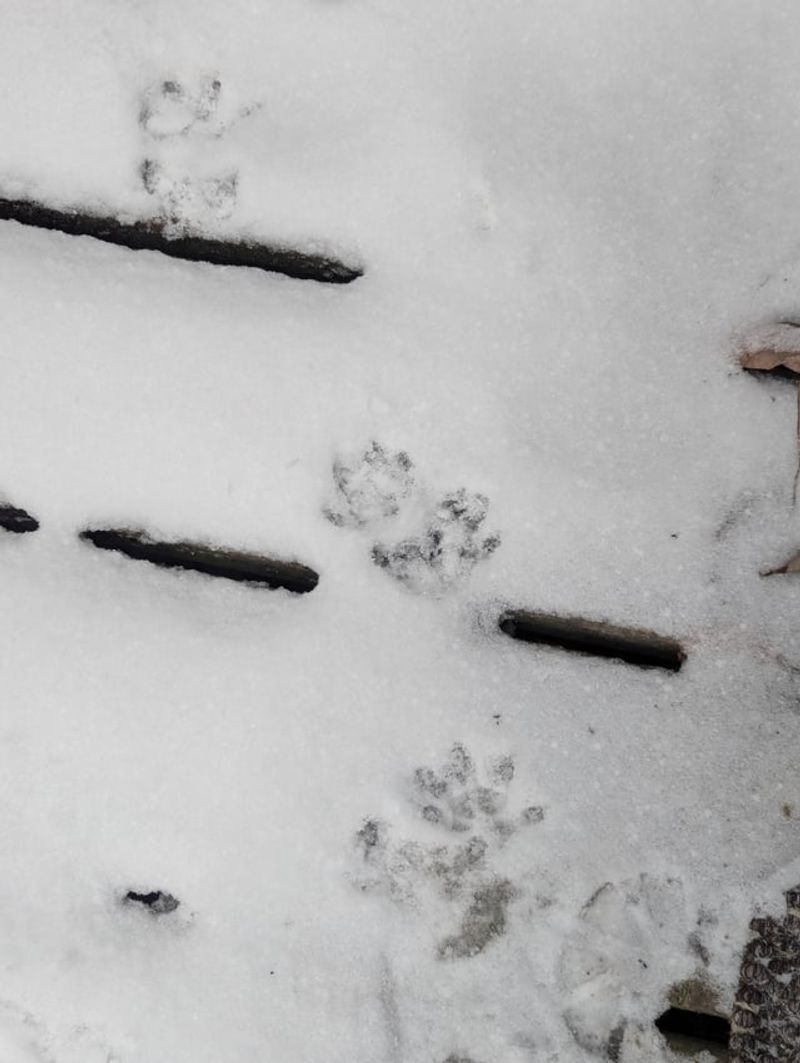
Soft mud near a garden bed or puddle is basically a opossum’s signature book. If one walked through your yard last night, the evidence is pressed right into the ground.
Opossum tracks are genuinely unlike most other animal prints you will find. Their rear feet have an opposable inner toe that sticks out sideways, making the track look almost like a tiny hand with a thumb.
Front prints show five toes splayed outward in a star-like pattern. Rear prints are longer and show that distinctive side-pointing toe that no other common backyard animal has.
The stride between prints is usually short because opossums move slowly and deliberately. You will often see a winding trail that weaves between shrubs, garden edges, and fence lines.
Check damp areas first thing in the morning before foot traffic disturbs the ground. Garden beds after rain, muddy patches near downspouts, and soft soil around compost piles are prime spots to look.
Grab your phone and photograph the tracks before they dry out or get walked over. Comparing your photo to a opossum track guide online makes identification quick and satisfying.
Your New York Garden Changes Every Week. Your Plan Should Too.
Gardening in New York changes quickly throughout the season. Every Friday you’ll receive a simple weekly plan showing exactly what to plant, prune, fertilize, harvest, and protect so you never miss the right timing.
Finding tracks near your fence line tells you exactly where the animal is entering your property. That information is useful if you ever want to set up a deterrent or exclusion barrier.
Tracks in your yard are one of the clearest signs a opossum is visiting, and they tell a story worth reading carefully.
3. Droppings Near Food Sources
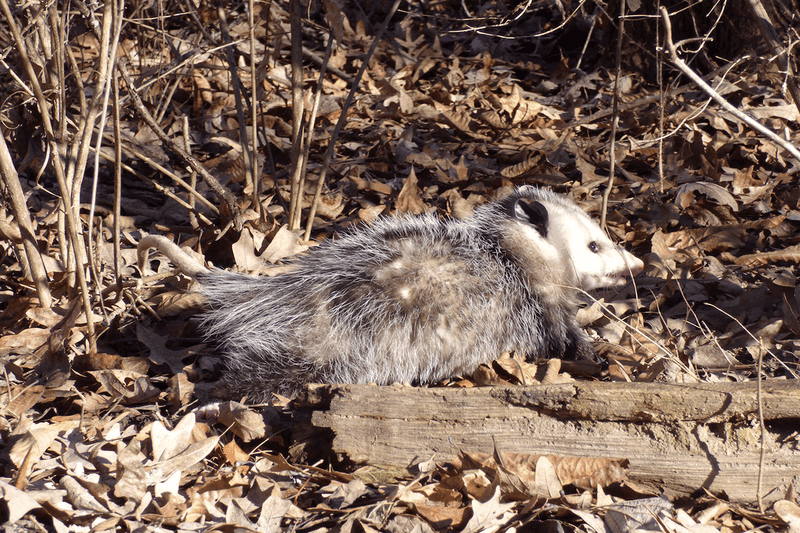
Nobody wants to find droppings in their yard, but this clue is one of the most reliable ways to confirm a nighttime visitor. Opossum droppings are distinct enough that once you know what to look for, you will recognize them immediately.
They tend to be about one to two inches long, tubular, and slightly tapered or curled at the ends. The color is usually dark brown to almost black, depending on what the animal has been eating recently.
You will typically find them clustered near wherever the opossum was feeding. Check around trash cans, compost bins, pet food bowls, and fruit trees for the most obvious deposits.
Unlike some wildlife, opossums don’t tend to use a single designated spot. Droppings may appear in multiple locations across your yard in one night.
Always use gloves when cleaning up animal waste and avoid touching your face afterward. A mild bleach solution is effective for sanitizing hard surfaces like decks or patios where droppings are found.
Opossum droppings can carry bacteria and parasites, so handling them carefully is important. Children and pets should be kept away from any contaminated areas until cleanup is complete.
Spotting droppings near your garden or compost pile is a strong indicator the animal is making regular stops. Securing food sources is the most direct way to reduce repeat visits to those areas.
Once the easy meals disappear, so does the motivation for a opossum to keep coming back to your yard each night.
4. Raided Pet Food Bowls
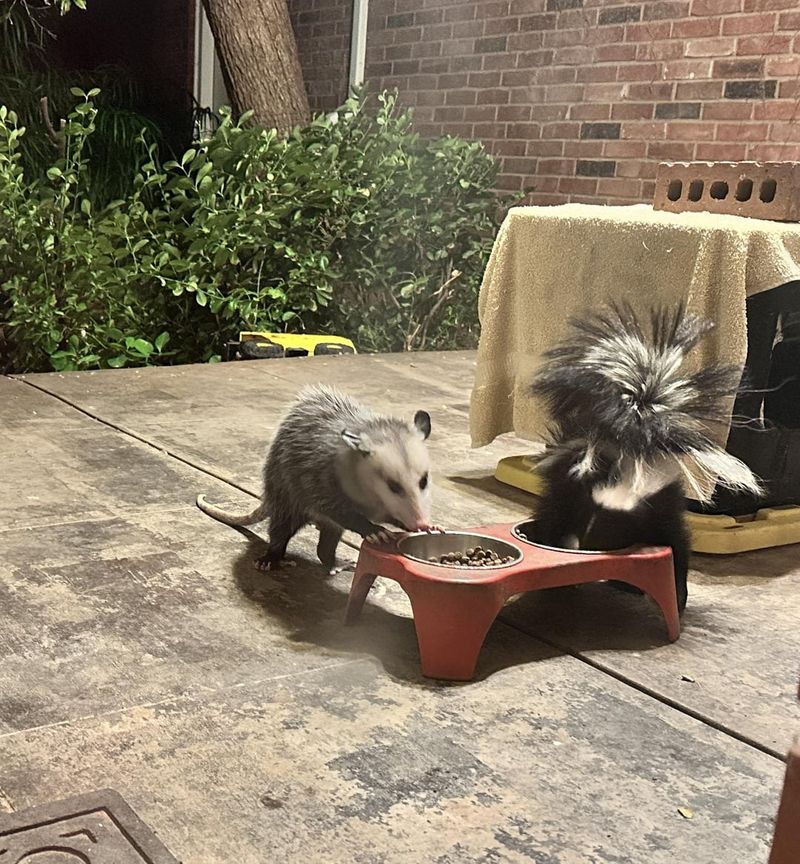
You filled your dog’s bowl before bed and woke up to find it completely empty. No, your pup did not sneak out for a midnight snack.
Opossums are highly attracted to the smell of pet food, whether it is kibble, wet food, or even water bowls left outside. An outdoor bowl is essentially an open invitation for any hungry nocturnal animal in the area.
These marsupials are not picky eaters at all. Cat food, dog food, bird seed, and even leftover table scraps sitting near a back porch will all catch their attention quickly.
The bowl itself usually stays in place since opossums do not knock things around the way raccoons do. What you will notice is the food is simply gone, sometimes with a few scattered crumbs around the bowl’s edge.
Check for small, muddy paw prints on your porch or deck around the bowl. That hand-like print with the splayed toes is a clear giveaway that your nighttime diner was a opossum.
The easiest solution is bringing pet food bowls inside before dusk every evening. If your pet needs access to water outside, consider a covered water station that is harder for wildlife to access.
Motion-activated lights near your porch can also startle opossums enough to make them think twice before approaching. Consistency is key since one empty bowl is all it takes to establish a nightly habit.
Cutting off the food supply is the fastest way to stop a opossum from treating your porch like a personal restaurant.
5. Damaged Garden Or Compost Pile
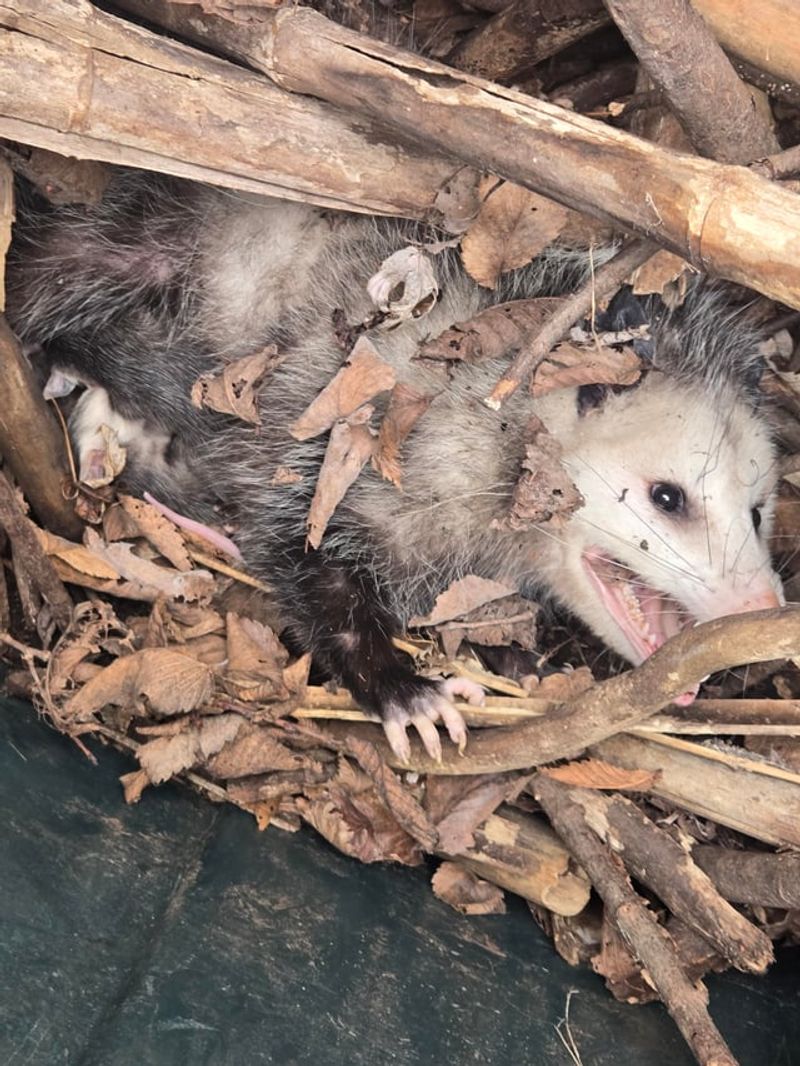
Something dug through your compost pile and now it looks like a small tornado passed through. Opossums are enthusiastic foragers, and a compost bin or garden bed is one of their favorite stops.
They are omnivores with a wide appetite, which means they will eat fruit, vegetables, insects, grubs, and even small snails they find while rooting around. Your garden essentially offers a full menu.
The damage they cause is usually shallow and scattered rather than deep and destructive. You might notice disturbed soil, overturned mulch, or partially eaten vegetables near the ground level of your plants.
Compost piles are especially attractive because the decomposing organic material generates warmth and smells strongly of food. A opossum can spend a long time picking through a pile and return to the same spot multiple nights in a row.
Covering your compost bin with a secure lid or hardware cloth helps significantly. Turning the pile regularly and burying fresh scraps under older material also reduces the surface smell that attracts wildlife.
For garden beds, A simple wire fence about two feet tall can help deter a opossum. Opossums aren’t particularly motivated climbers when easier food is available nearby.
Raised garden beds also offer better protection since the height alone can discourage casual foraging. Pairing physical barriers with motion-activated sprinklers gives you two layers of defense without harming the animal.
A little prevention now saves your tomatoes, herbs, and compost from becoming a opossum’s personal pantry each night.
6. Hissing Or Rustling Sounds At Night
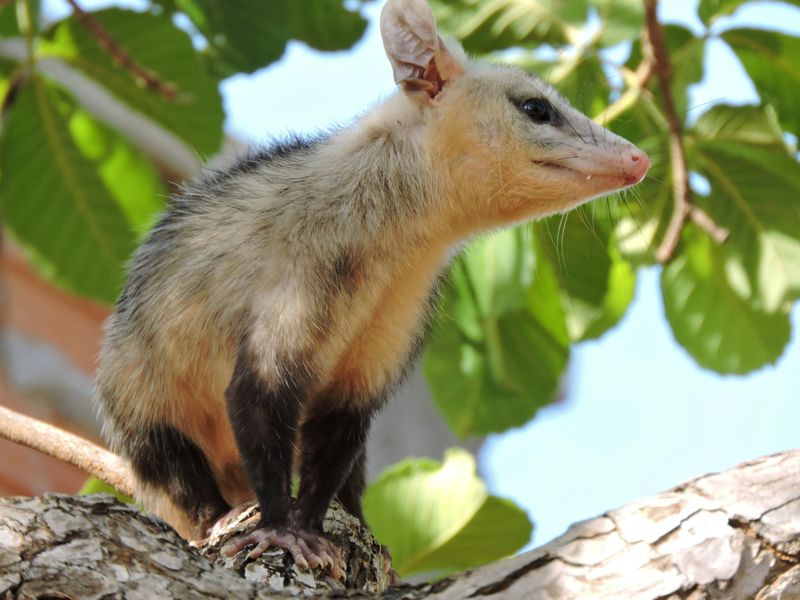
You are lying in bed and suddenly hear a strange rustling from the bushes outside. Then comes a low, raspy hiss that makes the hair on the back of your neck stand up.
Opossums are generally quiet animals, but they do make noise when startled, threatened, or competing for food with another animal. That hissing sound is one of their primary defense mechanisms.
The hiss is loud enough to hear from inside a house, especially on a quiet night. It can sound almost like a slow air leak combined with a low growl, which is unsettling if you have never heard it before.
Beyond hissing, you might hear rustling in leaf piles, scratching near wooden fences, or the soft thud of an animal moving through low shrubs. Opossums are not particularly graceful, so they make more noise than you might expect.
If you hear these sounds repeatedly around the same time each night, a opossum has likely established a regular route through your yard. Nighttime animals are creatures of habit when food and shelter are consistent.
Shining a flashlight toward the sound is usually enough to make the animal freeze or retreat. Opossums are not aggressive toward humans and will almost always choose to leave rather than confront you.
Hearing these sounds near your fence, shed, or porch is a strong clue to check those areas in the morning for other signs. The noise is the opossum announcing itself, and it is worth paying attention to.
7. Chewed Or Damaged Fruit
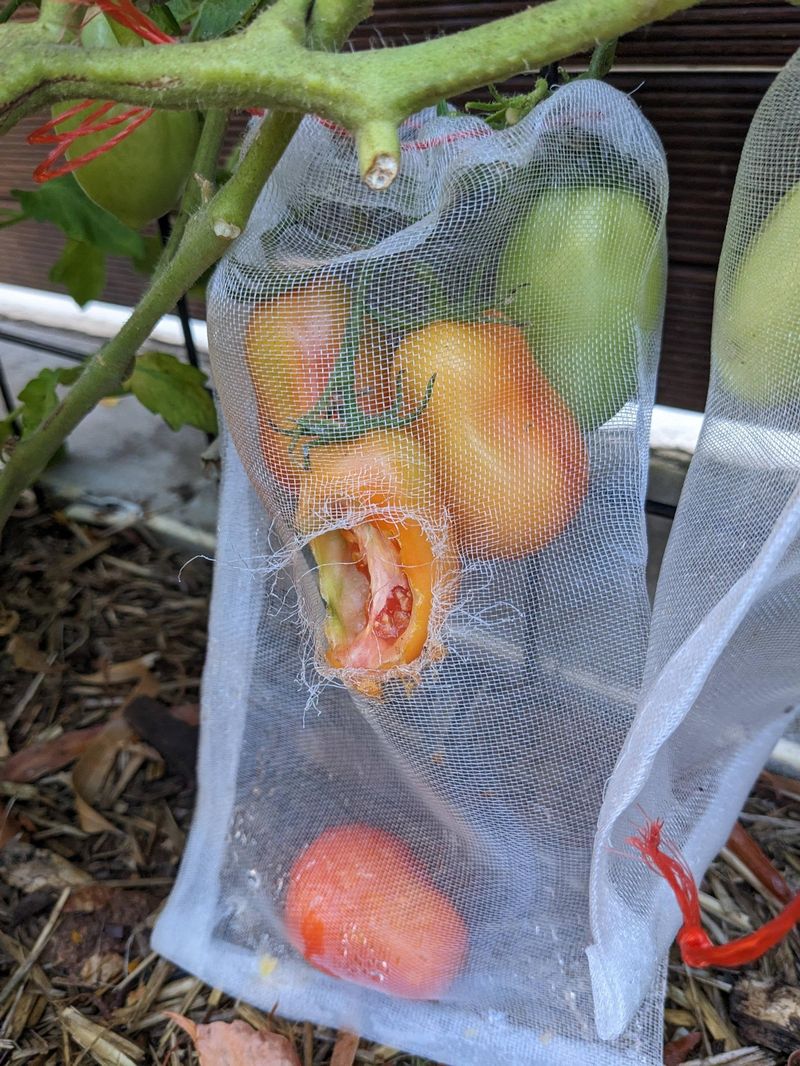
Finding half-eaten fruit on the ground beneath your apple or pear tree is a classic sign of a opossum visit. These animals have a serious sweet tooth and will target ripe or fallen fruit before almost anything else.
Opossums tend to eat from the outside of a fruit inward, leaving the core or pit behind with visible bite marks around the edges. The damage looks different from bird pecking, which is usually more surface-level and scattered.
They are also drawn to berry bushes, grape vines, and even garden tomatoes that are close to the ground. Anything fragrant and ripe is fair game once the sun goes down.
Fallen fruit is the biggest attractant, so picking it up before nightfall makes a huge difference. Even one or two overripe apples left on the ground overnight can bring a opossum back to the same spot for weeks.
Interestingly, opossums can tolerate overripe or slightly spoiled fruit that other animals would avoid. This makes them particularly persistent around fruit trees in late summer and fall.
Placing a tarp or drop cloth under fruit trees and collecting fallen fruit each evening is a simple habit that removes the temptation. Netting around berry bushes adds another layer of protection for your harvest.
Protecting your fruit means fewer nighttime visits, less waste, and more produce for you. A opossum that finds nothing edible in your yard will eventually move on to easier hunting grounds nearby.
8. A Slow-Moving Animal After Dark
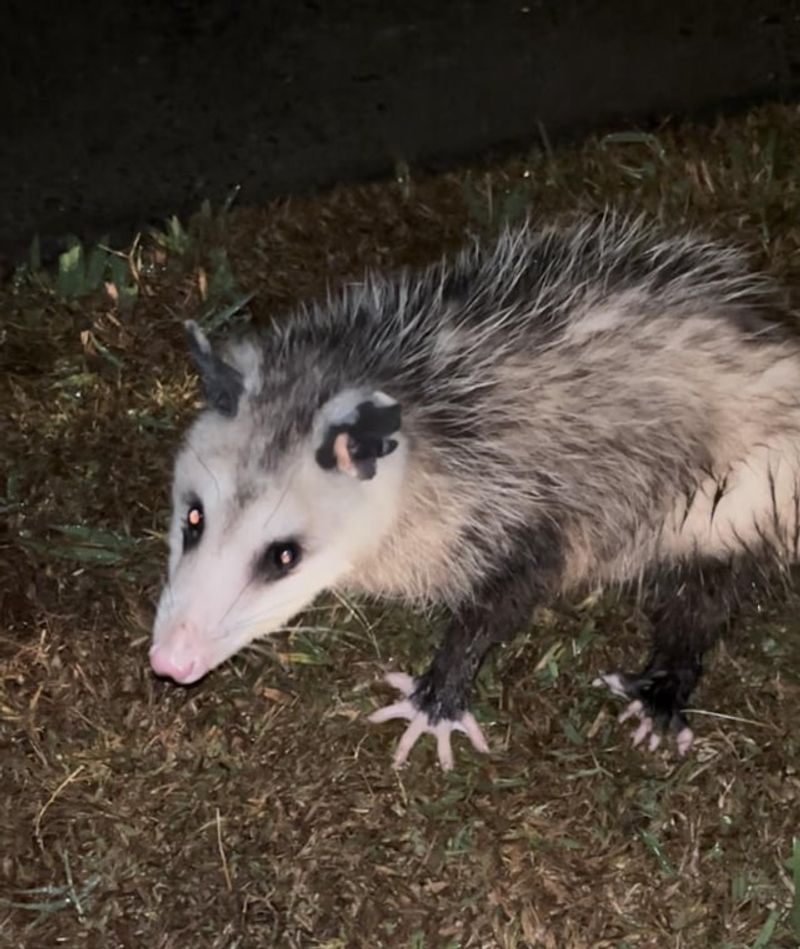
You step outside for some late-night air and catch something shuffling slowly across your lawn. It is low to the ground, grayish-white, and moving with no urgency.
They are just unbothered.
A opossum in your yard is not hard to spot once you see one in person. They are about the size of a house cat, with coarse gray fur, a pointed white face, and a long, hairless tail that looks almost rat-like.
Their eyes reflect light in a distinctive way, appearing reddish or orange when caught in a flashlight beam. That glow in the dark is often the first thing people notice before they even identify the animal.
Opossums move slowly and deliberately, which makes them easy to observe without startling them immediately. They are nearsighted and rely more on smell and touch than on sharp vision.
Seeing one in your New York yard at night is actually a sign of a healthy local ecosystem. These animals eat ticks, cockroaches, snails, and small rodents, making them surprisingly beneficial neighbors.
If you spot one, the best thing to do is give it space and observe from a distance. Opossums rarely act aggressively toward humans unless they feel cornered with no escape route.
They may freeze, hiss, or go completely still if they feel threatened, which is where the phrase “playing opossum” comes from. That dramatic response is completely harmless and usually ends within a few minutes.
Spotting a slow-moving animal after dark is the most direct sign a opossum is visiting your yard, and it is one worth remembering.