8 Best Groundcovers For Keeping Georgia Garden Beds Cooler In Summer
Late June in Georgia does not ask permission. It arrives with full confidence and starts testing almost every inch of your garden.
The sun presses down hard. The soil tightens up. Bare patches start looking exposed in a way that makes a gardener uncomfortable.
And the usual fixes, more mulch, more water, taller plants, only go so far before the heat wins anyway. Sometimes the answer stays low.
If your beds warm up too fast, and your corners dry out before noon, there are plants that were practically designed for those spots.
Some of them spread on their own. Some bring color. Some bring pollinators. Almost all of them ask for far less than they give back.
One of these low-growing plants might be the coolest thing you add to your Georgia garden this season. Literally.
1. Asiatic Jasmine Shades Soil In Hot Georgia Beds
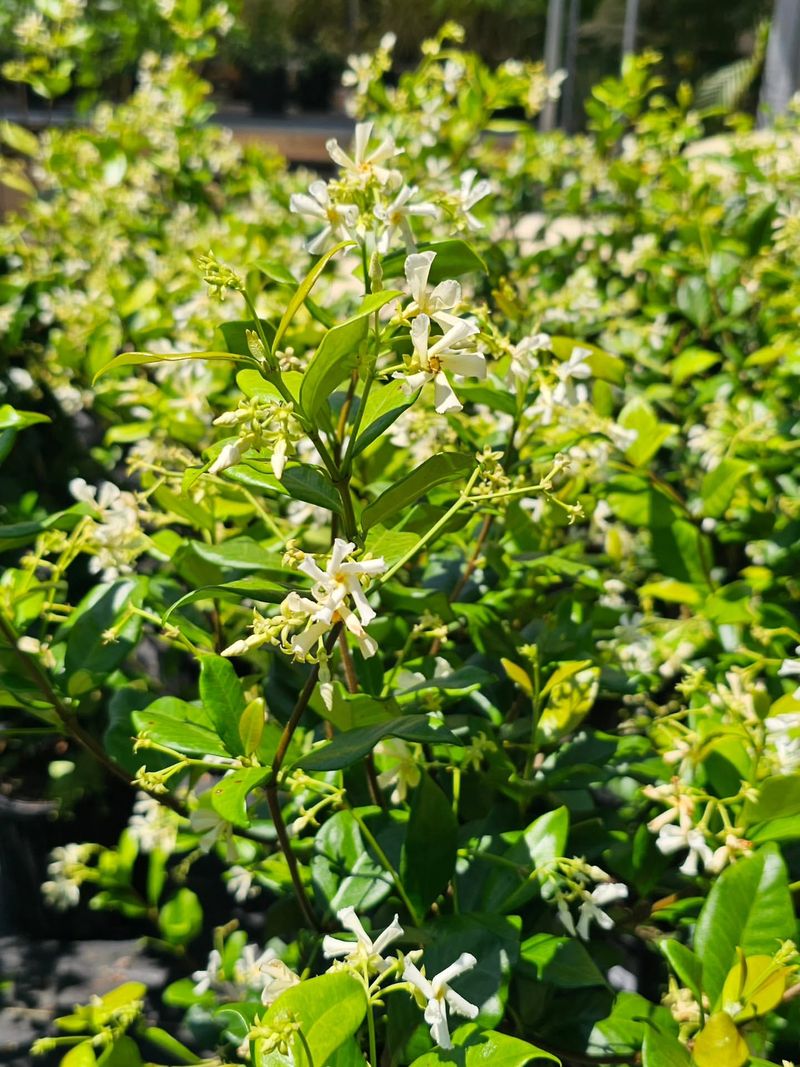
Some groundcovers look delicate. Asiatic jasmine does not play that game for long. Once it settles in, this evergreen spreader forms a thick mat of small, dark green leaves.
That leafy cover can shade the soil so sunlight does not hit it directly all day. In a Georgia summer, that kind of coverage can make a real difference.
Think about the hottest spot in your garden. Maybe it is a bed edge near the driveway. Maybe it is a slope where grass never looks happy. Asiatic jasmine may be worth considering there.
It handles full sun to partial shade, which makes it flexible. It also grows well in many Georgia soils once it gets established. Clay-heavy ground can be challenging for lots of plants, but this one often manages better than many softer options.
The first season asks for patience. Asiatic jasmine can be slow to take off at first. Water it regularly while the roots settle, especially through its first hot summer. After that, it usually becomes much easier.
Space plants about twelve to eighteen inches apart. Closer spacing can help create faster coverage. Wider spacing saves money but means you wait longer for a full mat. If you are trying to cool bare soil quickly, tighter spacing may be the better move.
A little trimming once or twice a year can help keep edges neat. This plant can creep into paths or lawn areas if you let it wander too freely. That is not a crisis. It just needs a boundary reminder.
2. Moss Phlox Covers Sunny Edges Before Summer Heat
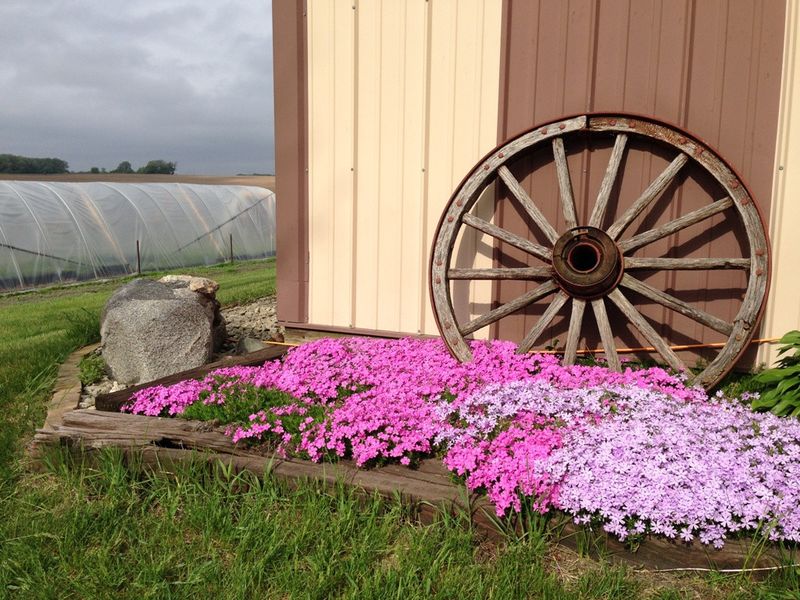
Moss phlox knows how to make an entrance. In early spring, it can spill over edges in a bright carpet of pink, purple, lavender, or white.
For a few weeks, it looks like the garden rolled out a floral welcome mat. Then summer approaches, and moss phlox shifts roles.
The flowers finish, but the low mat of needle-like foliage keeps working. That dense cover can shade sunny soil edges and slow moisture loss when Georgia heat starts building.
This makes moss phlox especially useful along front borders, rock gardens, slopes, and raised bed edges. It stays low, often around four to six inches tall. So it does not block taller plants or make the bed feel crowded.
Your Georgia Garden Changes Every Week. Your Plan Should Too.
Gardening in Georgia changes quickly throughout the season. Every Friday you’ll receive a simple weekly plan showing exactly what to plant, prune, fertilize, harvest, and protect so you never miss the right timing.
If you have a sunny edge that always looks bare by June, take a closer look at this plant. It can help soften the line while protecting the soil below.
Drainage matters here. Moss phlox usually prefers well-drained soil and does not appreciate soggy roots. If your Georgia clay holds water too long, consider planting it on a slope, raised edge, or amended mound.
Sun is important too. Moss phlox tends to bloom best in full sun. Too much shade can make it thinner and less colorful.
After spring bloom, give it a light trim. You are not giving it a severe haircut. You are just encouraging a neater, tighter mat for summer.
Every few years, check the center of the clump. If it starts looking thin, division can refresh the planting and keep the coverage stronger.
Moss phlox pairs beautifully with ornamental grasses, low shrubs, and spring bulbs. It brings color early and coverage later. That is what I call phlox and loaded. A little spring sparkle, followed by practical summer soil shade.
3. Ajuga Fills Bare Spots With Dense Low Foliage
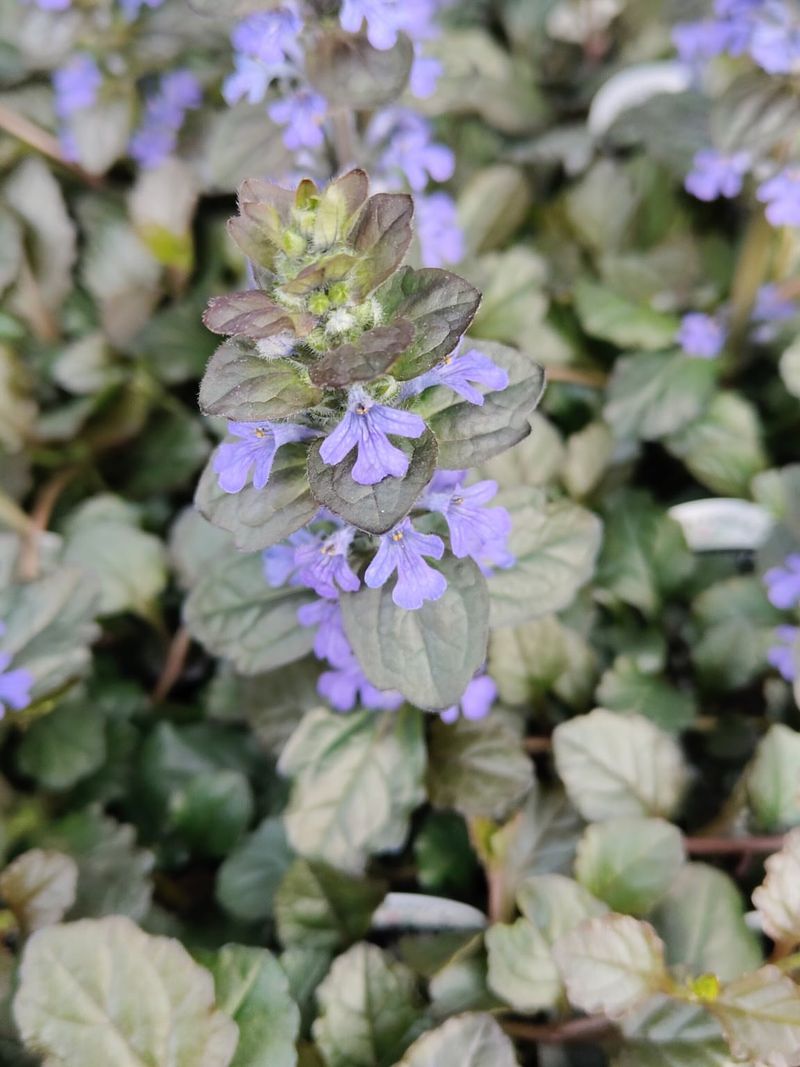
Bare soil in a shaded Georgia bed rarely stays quiet. Weeds notice it. Heat finds it. Moisture slips away faster than you want. Ajuga can help close that gap.
Also called bugleweed, ajuga spreads by runners and forms a low, dense carpet. That cover can shade the soil surface and help keep it cooler through humid summer days.
This plant is especially useful in shade to part shade. Think beds under trees, the north side of a house, or corners where grass never really cooperates. Ajuga does not just cover ground. It adds color and texture, too.
Depending on the variety, the leaves may be deep green, bronze, burgundy, purple, or variegated. That means the bed can look interesting even after the spring flower spikes finish. Those short blue-purple blooms are a nice bonus. But the foliage is the real long-season worker.
Ajuga usually grows only a few inches tall. That makes it useful where you need coverage without bulk. It can tuck around stepping stones, fill between shrubs, or soften shady bed edges.
Space plants about six to twelve inches apart. Closer spacing fills faster. Wider spacing gives the runners more time to do the job.
Give new plants regular moisture while they settle. After establishment, ajuga can often need less attention, though it still prefers not to dry out for too long.
Good drainage and airflow matter. In heavy, wet, crowded spots, crown problems may show up. Avoid packing plants too tightly in areas that stay damp.
If clumps get too crowded, divide them and spread the extras elsewhere. That is free garden coverage, which always feels like a win.
Think of ajuga as the shade bed’s bugle call. It announces, “No bare soil here,” and then gets right to work.
4. Creeping Juniper Handles Sunny Slopes And Dry Heat
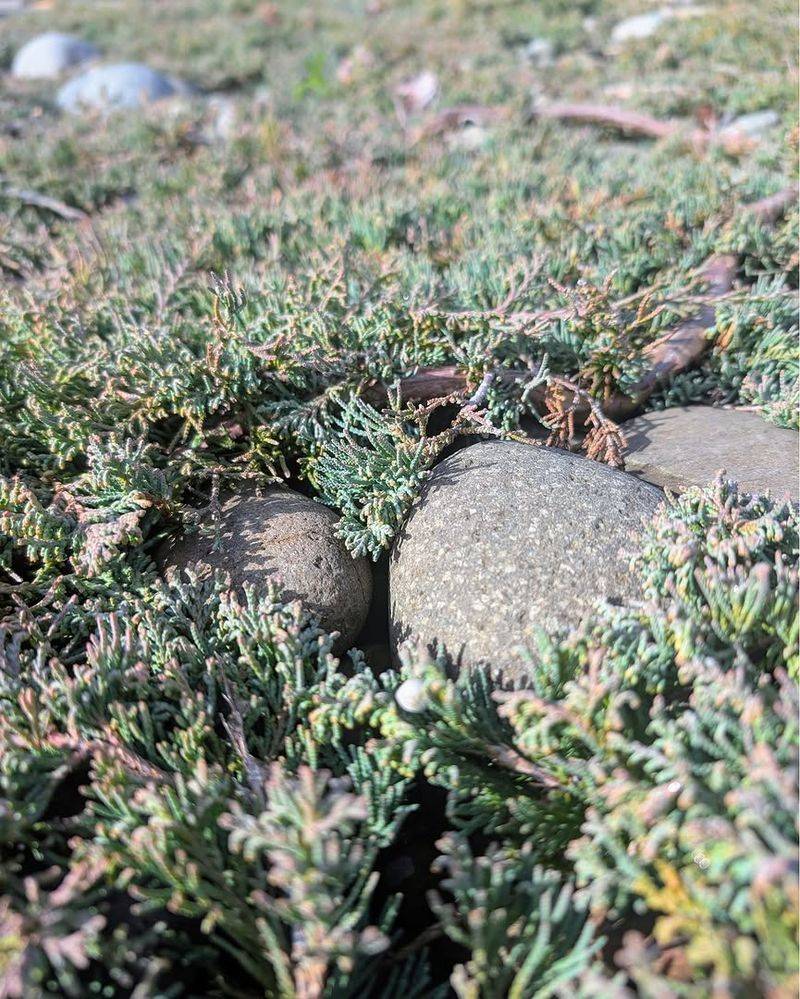
Sunny slopes can be tough customers, but Creeping juniper is built for that kind of job. Its low, spreading branches hug the ground and form a dense evergreen layer. That cover shades soil, helps slow runoff, and adds year-round texture to exposed areas.
If you have a bank, roadside edge, gravelly slope, or dry sunny patch, this plant may be a strong candidate.
Most varieties stay low, often between six and eighteen inches tall. But they can spread several feet wide over time. That makes spacing important.
Do not plant them too close just because they look small at the nursery. Give each one room to reach its mature spread. Crowding can reduce airflow and make the planting look messy later.
Creeping juniper prefers full sun and well-drained soil. It usually handles dry conditions much better once roots are established. The first year still matters, though.
Water deeply and consistently enough to help roots settle. After that, you can usually ease back. During unusually long hot spells, a deep soak may still help the plant look its best.
This groundcover is also useful for erosion-prone areas. Its roots help hold soil in place while the branches protect the surface above.
Use it with rocks, ornamental grasses, yucca, or other drought-wise plants for a clean, sun-loving design.
The look is more rugged than soft. But in the right place, that is exactly the point. It stays low, grips well, and helps keep hot soil covered.
5. Liriope Cools Bed Edges With Tough Strappy Growth
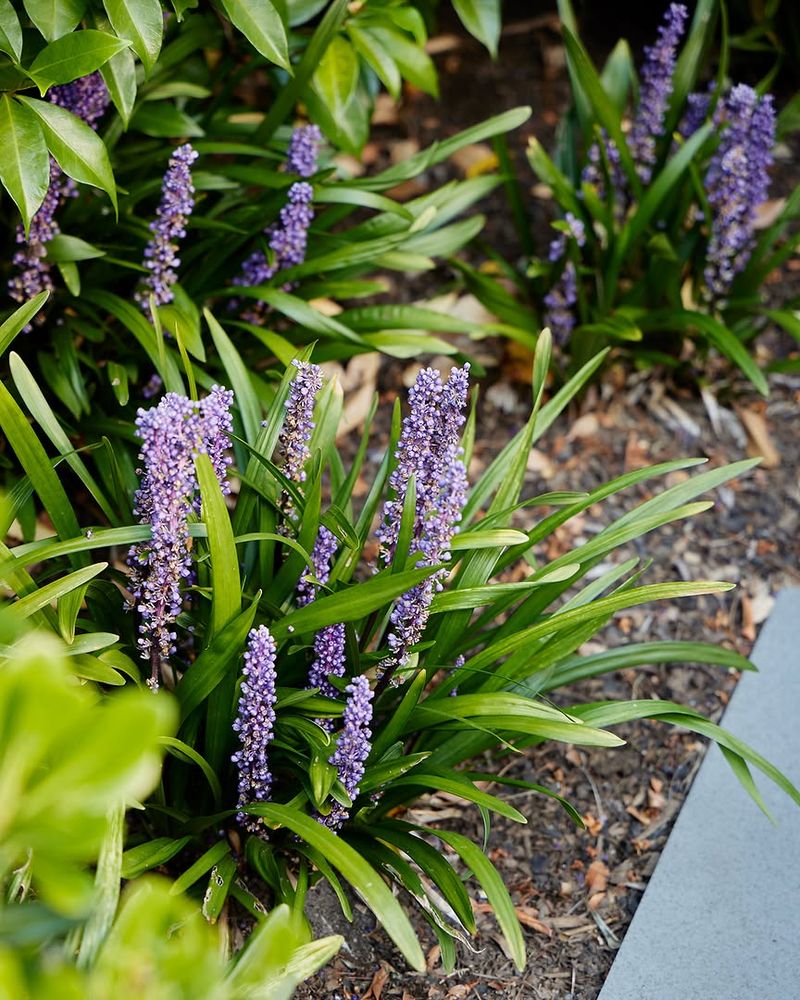
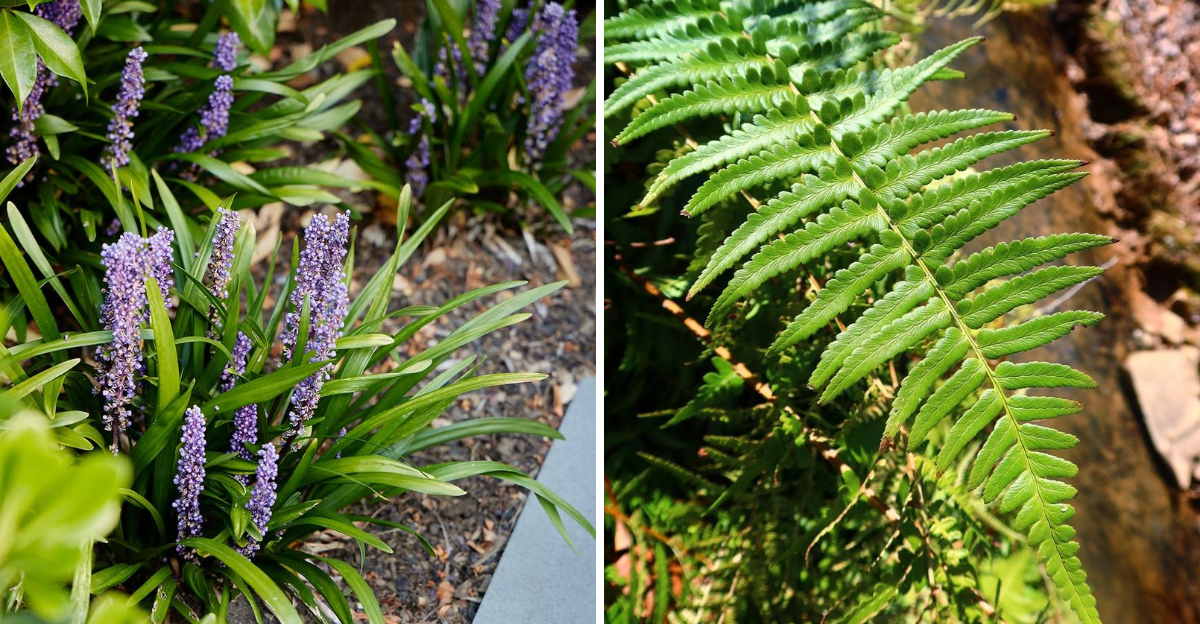
Liriope shows up all over Georgia for a reason. It works. Those arching, grass-like leaves form dense clumps that can line paths, frame beds, and soften hard edges.
They also shade the soil beneath them, which can help bed margins stay cooler during summer heat. So, if your garden edges always look exposed, liriope may be a practical fix.
It is especially useful along shrub beds, driveways, walkways, tree rings, and foundation plantings. The clumps create a tidy border without needing constant attention.
Liriope can handle sun, part shade, and even fairly shady spots. That flexibility makes it easy to repeat across a landscape. A repeated edging plant can also make the whole yard feel more pulled together.
There are clumping types and spreading types, so choose carefully. Clumping liriope is often easier to manage in formal edges. Spreading types can cover more ground but may wander more than you want.
Space clumps about twelve to eighteen inches apart for a fuller edge. If you want instant density, plant closer. If you are patient, give them more room and let them fill in.
Water during the first season while roots settle. Once established, liriope often handles heat and dry spells with less fuss than many edging plants.
In late winter, cut back old foliage before new growth begins. That refresh keeps the plant from looking tired when spring growth starts.
Late summer flower spikes add another small reward. Purple blooms rise from the foliage and give the edge a little seasonal lift.
Liriope also pairs well with shrubs, ferns, mondo grass, and ornamental grasses. Use it where you need a neat line and a cooler soil edge, and voila.
6. Mondo Grass Works Under Trees And Along Paths
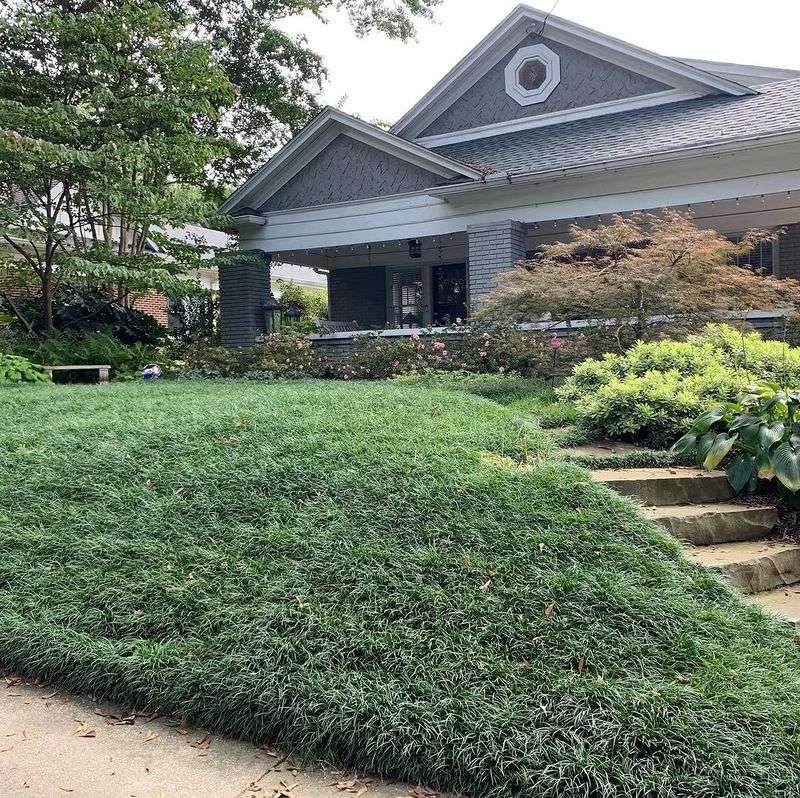
Mondo grass is quiet, but it has style. It grows in low tufts of narrow, dark green blades. The look is neat, calm, and almost polished. That makes it excellent for small spaces where bigger groundcovers would feel too pushy.
In Georgia gardens, mondo grass can be especially useful under trees and along shaded paths. Those areas are often difficult. Tree roots compete for moisture. Light is limited. Soil can dry and crack during summer.
Mondo grass handles shade better than many groundcovers. It spreads slowly, which can be a benefit in tight places. You get coverage without the plant rushing into every nearby space.
Use it along stepping stones, narrow borders, shaded bed edges, or beneath large oaks and pines. It can soften the ground without hiding the shape of a path.
Standard mondo grass usually stays low, often under six inches. Black mondo grass brings a dramatic twist with very dark foliage. That variety can look stunning against light stone, pale mulch, or silver-leaved plants.
Plant in amended soil if the ground is compacted. Spacing plants six to eight inches apart can help create quicker coverage. If you space them farther apart, the look will be more open for a while.
Keep new plantings watered during the first season. After that, mondo grass usually needs little maintenance.
It does not need mowing in garden beds. It rarely needs feeding. A light cleanup in early spring can remove older blades and freshen the look.
This is a groundcover for gardeners who like subtle texture. It does not shout for attention, and that is part of its charm.
Think of mondo grass as the path’s little green whisper. It cools the soil, frames the walkway, and keeps things quietly elegant. Almost magic.
7. Coontie Palm Covers Warm Coastal Beds With Texture
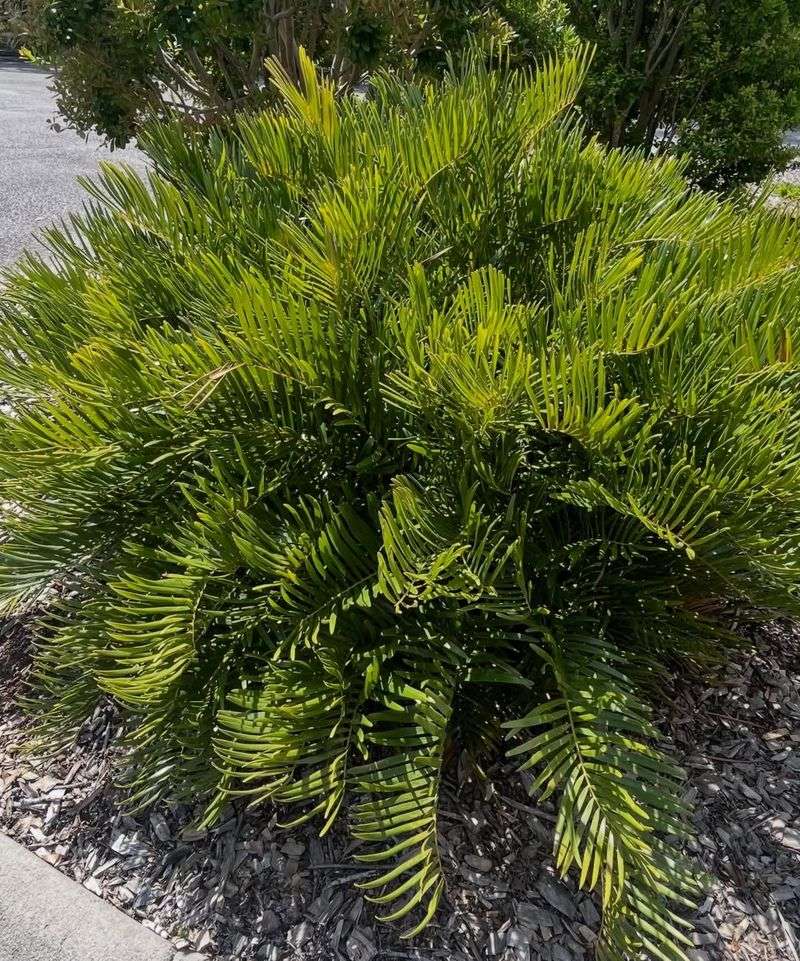
Coontie looks like it belongs in a warm coastal garden because it does. Despite the name, it is not a true palm. It is a cycad with arching fronds, bold texture, and a low, rounded shape. For coastal Georgia beds, that combination can be very useful.
Heat lingers longer near the coast. Sandy soils can drain quickly. Salt spray and reflected light can make some plants struggle. Coontie is often better suited to those conditions than many softer groundcovers.
Its fronds grow outward into a dense mound, often one to three feet tall. That leafy canopy shades the soil below and helps reduce direct sun on the ground.
If you have a warm bed near pavement, a coastal patio, or a sandy border, coontie may bring both structure and practical coverage.
It can handle full sun to partial shade. In harsher sites, a little afternoon shade may help the plant look fresher. Well-drained soil is important, especially in areas that get heavy rain.
Space plants about two to three feet apart. Give each mound room to develop its natural shape. Too much crowding can hide the graceful form.
Water new plants while they settle. Once established, coontie often handles dry periods with less attention.
It also brings wildlife value. Coontie is connected to the Atala butterfly, which uses it as a host plant in areas where the butterfly occurs. That makes it more than just a textural accent.
Use coontie with muhly grass, yucca, dwarf palmetto, or other coastal-friendly plants. It fits beautifully in naturalistic and low-water designs.
Think of coontie as coastal cool with prehistoric flair. It shades, shapes, and gives the bed a little ancient-garden attitude.
8. Native Ferns Help Shaded Georgia Beds Hold Moisture
Shade does not always mean cool, moist soil. In Georgia summers, even shaded beds can dry out faster than expected.
Tree roots drink heavily. Humidity hangs in the air, but the soil can still lose moisture. Bare ground under trees may look tired by July. Native ferns can help change the feeling of those spaces.
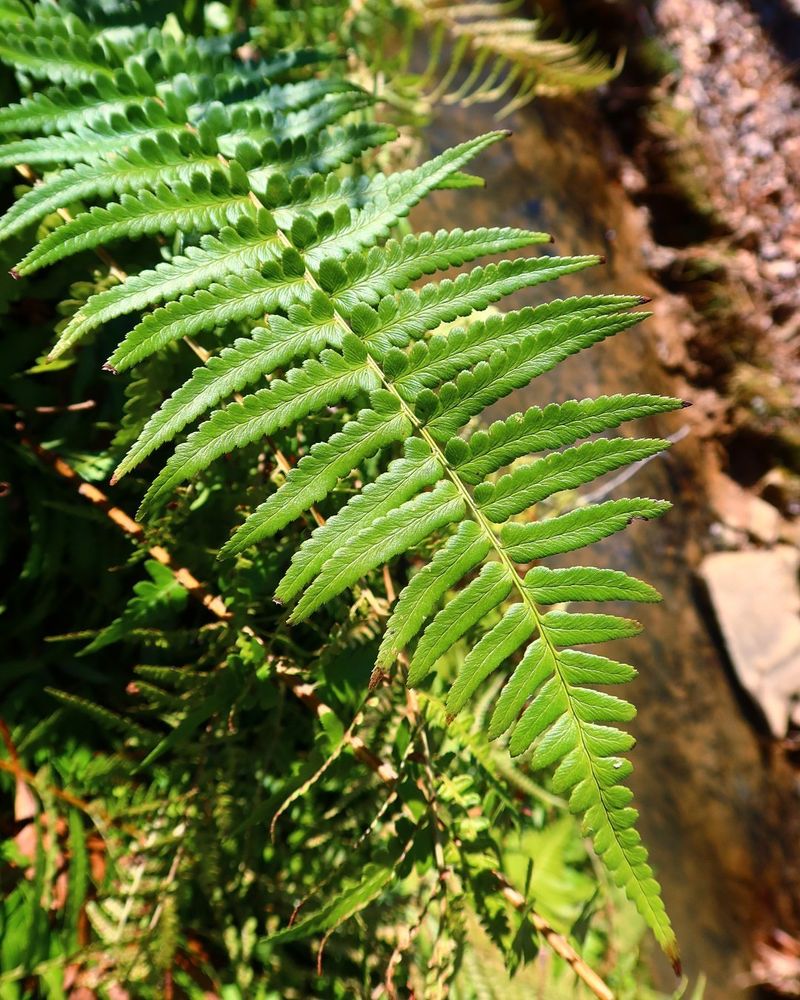
Their arching fronds create layers of shade close to the soil. That leafy cover can slow evaporation and help the bed stay more evenly moist. The result is a softer, cooler woodland look.
Southern wood fern and cinnamon fern are two strong options for Georgia shade. Both bring texture, movement, and a natural feel to beds under trees or along shaded slopes.
Ferns work especially well with organic matter. Before planting, improve the soil with compost or leaf mold if it feels thin or compacted. They often appreciate the kind of loose, leafy ground found in woodland settings.
Moist, well-drained soil is the goal. Avoid spots where water sits for long periods after rain. Ferns like moisture, but many do not want a constantly soggy root zone.
Water during dry spells while plants establish. After a full growing season, they may become more resilient with less attention, depending on the site.
Mulch can make the planting even better. Use shredded leaves, pine straw, or fine bark around the ferns. A two-to-three-inch layer can help hold moisture and feed the soil as it breaks down.
Pair ferns with foamflower, wild ginger, sedges, or shade-loving shrubs. Together, they can create a layered bed that feels cooler just by looking at it.
They shade the soil, soften the bed, and bring that lush Georgia woodland mood. For shaded beds that need moisture help and texture, ferns are a natural fit.