These Are The Ohio Native Nut Trees Worth Planting In Any Backyard For Wildlife And Harvests
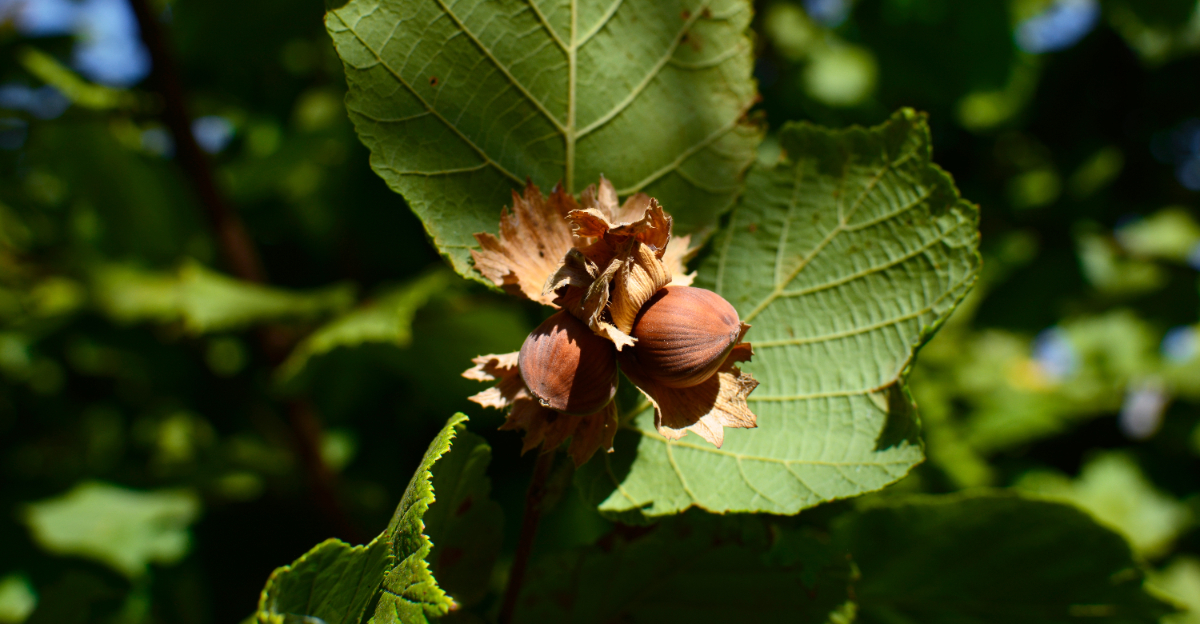
Ohio has some of the best native nut tree country in North America and most backyard gardeners are sitting on an opportunity they have not taken seriously yet.
Nut trees planted today become one of the most productive things on your property within a few years.
Wildlife value, harvestable food, deep shade, and root systems that improve soil for decades. Squirrels, turkeys, deer, and dozens of bird species depend on native nut trees in ways that ornamental plantings simply cannot replicate.
Our climate and soil are genuinely well suited for several species that perform beautifully at a backyard scale, not just on large rural properties. The assumption that nut trees require acreage keeps a lot of gardeners from even considering them.
That assumption is wrong. Some of Ohio’s best native nut producers fit comfortably in a typical suburban lot and start giving back to your yard faster than most people expect.
1. American Hazelnut Gives Small Backyards A Big Wildlife Payoff
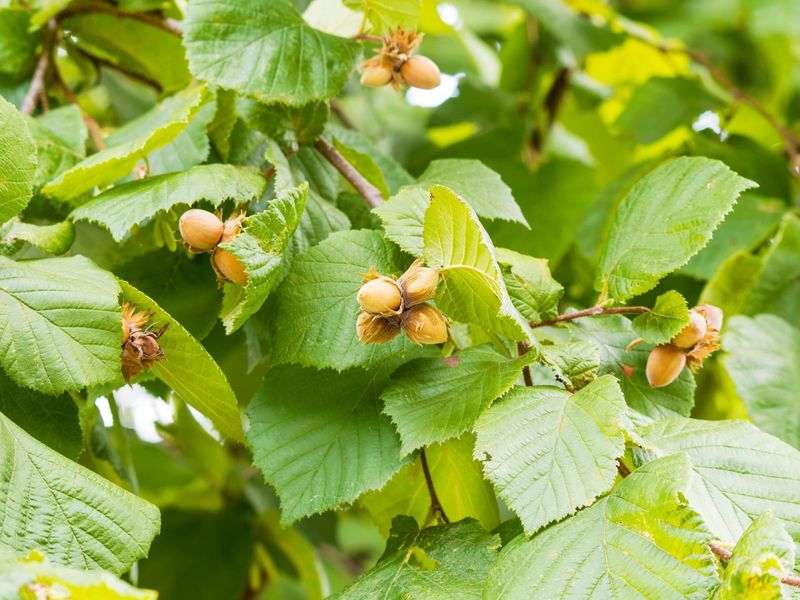
Tucked along a sunny fence line or shrub border, American hazelnut can quietly become one of the most productive native plants in your entire yard.
Unlike the towering nut trees on this list, it grows as a multi-stemmed shrub, typically reaching six to twelve feet tall.
That compact size makes it a realistic choice for backyards that simply cannot support a large canopy tree.
The Department of Natural Resources recognizes American hazelnut as a native species. It provides food and cover for wildlife without demanding a lot of real estate.
Squirrels, turkeys, deer, and several songbird species all use the nuts. The dense branching structure also offers nesting cover and escape habitat for small birds and mammals.
For people hoping to harvest some nuts themselves, hazelnut is genuinely one of the more approachable options on this list. The nuts ripen in late summer to early fall and can be eaten raw, roasted, or pressed.
The honest caveat is that wildlife moves fast, and you may need to net branches or check plants daily during harvest season to beat the squirrels.
Pollination is worth planning for. Hazelnut produces better nut crops when more than one genetically different plant grows nearby, since it relies on wind to carry pollen between plants.
Planting two or three shrubs in a loose grouping tends to produce more consistent results than planting a single specimen.
Young plants need some protection from deer and rabbit browsing, especially in the first two or three growing seasons. A simple wire cage around each shrub works well until the plants get established.
American hazelnut thrives in full sun to part shade and tolerates a range of soil types. That makes it one of the most adaptable native nut producers available to homeowners.
2. Black Walnut Rewards Patient Growers With Serious Harvests
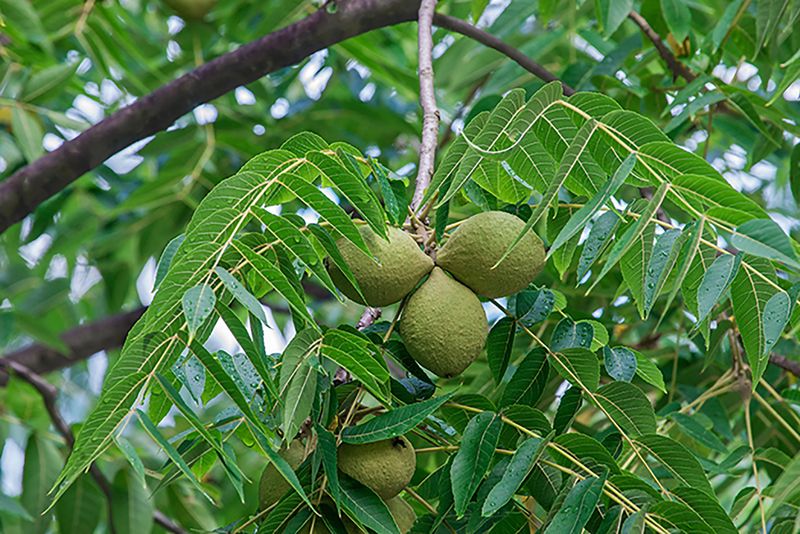
Few native trees in this state carry as much practical weight as black walnut, but it earns that reputation honestly and on its own timeline. A mature black walnut can reach seventy to one hundred feet tall with a broad crown that shades a wide area.
Your Ohio Garden Changes Every Week. Your Plan Should Too.
Gardening in Ohio changes quickly throughout the season. Every Friday you’ll receive a simple weekly plan showing exactly what to plant, prune, fertilize, harvest, and protect so you never miss the right timing.
This is not a tree for a small suburban lot with tight property lines and a vegetable garden next door.
Black walnut produces juglone, a natural compound that leaches into the soil from roots, husks, and fallen leaves.
Several common garden plants, including tomatoes, blueberries, and some ornamental shrubs, are sensitive to juglone and may struggle or decline near a walnut.
State University Extension advises homeowners to keep black walnut well away from vegetable gardens, ornamental beds, and septic systems to avoid problems.
The nuts themselves are genuinely worth the effort for people who enjoy them. Black walnuts have a rich, bold flavor that differs completely from English walnuts sold in grocery stores.
Squirrels, deer, and many other wildlife species also rely on walnut mast heavily in fall. Expect wildlife to claim a significant share of any crop before you get to it.
Shelling black walnuts takes real effort. The husks stain skin and clothing a deep brown that does not wash out easily.
Wearing gloves and old clothes during harvest is not optional advice. A mechanical nut cracker designed for black walnuts saves a lot of frustration compared to a hammer and a concrete block.
Black walnut fits best in large yards, open fields, hedgerows, and naturalized edges where its size, root spread, and nut drop are not a problem. Give it full sun, deep soil, and at least thirty to forty feet of clearance from structures.
Patience is part of the deal, as meaningful nut production often takes a decade or more.
3. Shagbark Hickory Brings Sweet Nuts And Standout Bark
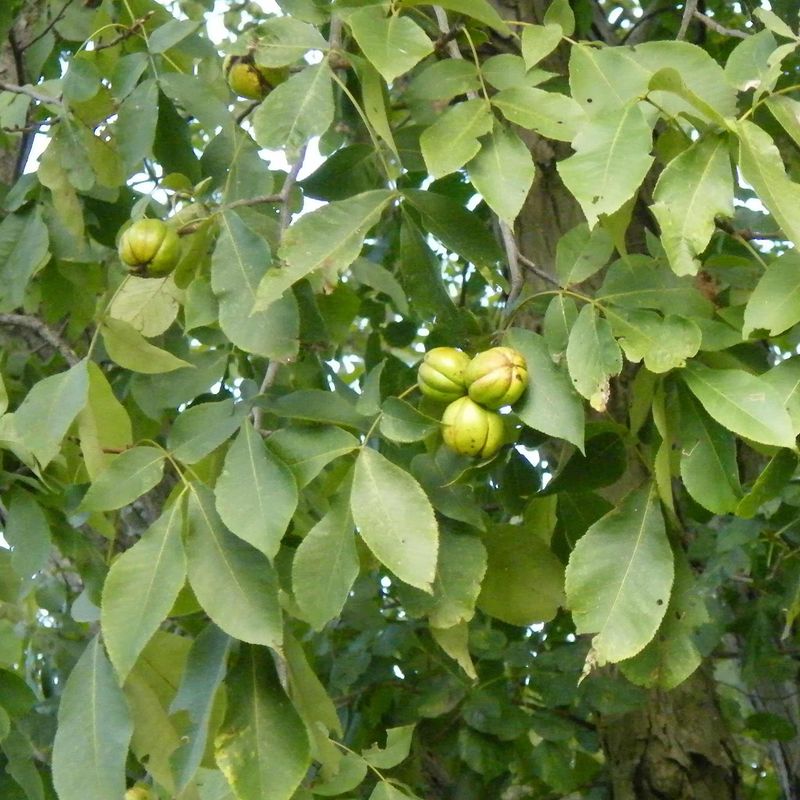
There is no mistaking a shagbark hickory once you know what to look for. The bark peels away from the trunk in long, curving plates that give the tree its name and one of the most recognizable silhouettes of any native tree.
Beyond the looks, shagbark hickory earns its place in large yards for two very practical reasons: sweet edible nuts and exceptional wildlife value.
OSU Extension lists shagbark hickory as a recommended hard-mast producer for our landscapes. The nuts are considered among the best-tasting of all native hickories, with a sweetness that makes them worth cracking.
Squirrels are the most enthusiastic harvesters, but deer, turkeys, and several woodpecker species also feed on hickory mast. The loose, shaggy bark provides roosting cover for bats, which is a bonus for any homeowner interested in natural insect control.
Shagbark hickory handles medium to dry upland sites reasonably well compared to some bottomland nut trees that need consistent moisture.
That said, it still needs good soil preparation and regular watering during the first few growing seasons to establish a deep root system.
Once established, it becomes quite tough and long-lived.
Nut production varies from year to year, which is normal for most hard-mast trees. Some years bring heavy crops, while other years produce very little.
Planning for that variability is part of working with native mast trees. Do not count on a reliable annual harvest the way you might with a fruit tree.
Mature shagbark hickory trees need significant space, often reaching sixty to eighty feet tall with a medium-wide crown. Suburban lots with overhead utility lines, close neighbors, or limited room are not a good match.
It belongs in large yards, open lawn areas, or naturalized plantings where it can grow undisturbed for many decades.
4. Pecan Fits Warmer Ohio Yards With Space And Sun
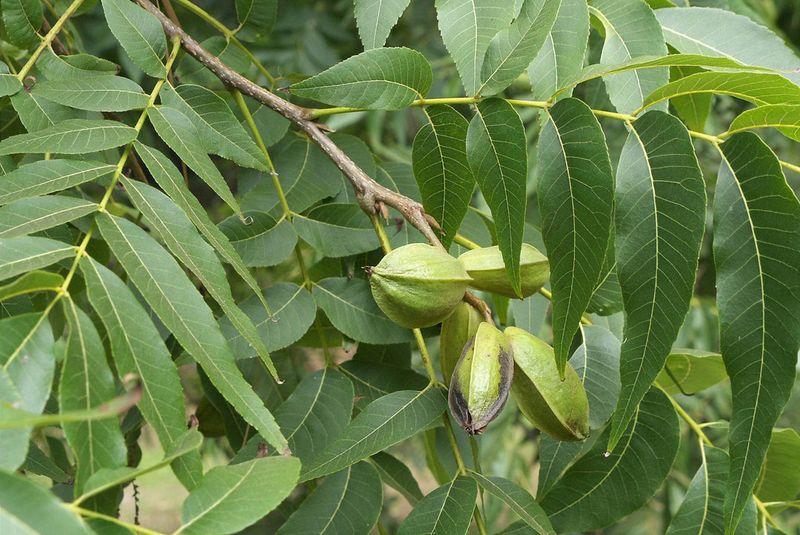
Pecan is a tree that rewards careful site selection more than almost any other nut producer on this list. Its native status in this state is debated in some sources.
Most authorities treat it as native to southwestern Ohio river bottoms and the Ohio Valley rather than the state as a whole. Homeowners in colder northern regions should approach pecan with extra caution and realistic expectations.
Southern regions of the state generally offer the warmest temperatures and longest growing seasons, which is what pecan needs to ripen nuts reliably.
Pecans require a long frost-free period to fully develop their husks and shells, and cold snaps arriving too early in fall can prevent nuts from maturing.
OSU Extension and regional arborist sources note that nut ripening becomes less predictable as you move farther north.
Full sun is non-negotiable for pecan. It also needs deep, fertile, well-drained soil with enough room for a tree that can eventually reach seventy to one hundred feet tall.
Shallow soils, heavy clay without amendment, or sites with standing water are poor choices. Pecan roots go deep and wide, so give it generous clearance from driveways, foundations, and neighbor property lines.
Pollination is another detail that catches many homeowners off guard. Many pecan varieties set heavier crops when a compatible second variety grows nearby.
The timing of pollen release and flower receptivity does not always overlap perfectly within a single tree.
Checking with your local county Extension office for recommended hardy cultivars suited to your specific region is worth doing before you purchase any tree.
Wildlife, particularly squirrels and crows, will compete aggressively for ripe pecans. Plan for shared harvests and focus your planting energy on sites in southern regions where the growing season actually supports consistent nut production.
5. American Beech Adds Beechnuts And Major Habitat Value
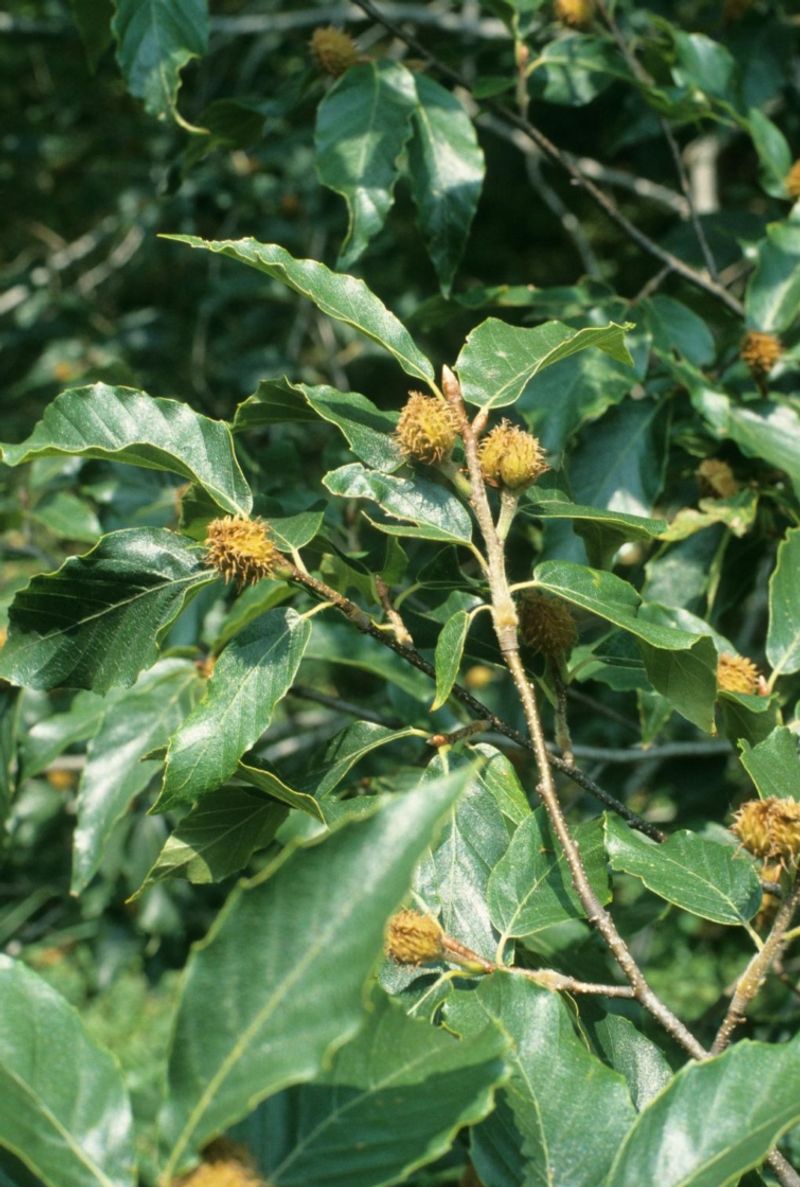
Smooth silver-gray bark, golden fall color, and small but nutritious beechnuts make American beech one of the most ecologically important native trees in this state. For wildlife, it punches well above its weight.
Deer, black bears, turkeys, grouse, and more than a dozen songbird species feed on beechnuts during fall, according to OSU Extension hard-mast resources. The calorie-rich nuts help many animals build fat reserves before winter.
Older beech trees often develop hollow trunks and large cavities that provide nesting and denning habitat for wood ducks, owls, raccoons, and flying squirrels.
That long-term habitat value is one reason beech belongs in large-landscape plantings where it can grow undisturbed for generations.
It is not a tree you plant for a quick payoff.
For human harvests, beechnuts are small and somewhat tedious to gather and shell in large quantities. They are edible and nutritious, but most homeowners who plant American beech are doing it primarily for wildlife and shade rather than for a pantry crop.
Setting realistic expectations upfront prevents disappointment.
American beech faces serious disease pressure in parts of this state. Beech leaf disease is caused by a foliar nematode and has been spreading through beech populations.
It is a legitimate concern that the Department of Natural Resources has been monitoring. Beech bark disease, caused by a combination of an introduced scale insect and a fungal pathogen, is another documented threat.
Planting beech despite these challenges is still worthwhile in many cases, but buyers should purchase from reputable nurseries and monitor trees regularly.
Beech prefers moist, well-drained soils and does not handle compacted urban soils, road salt, or heavy construction disturbance well. Give it space, healthy soil, and a site where it will not be crowded by utilities or structures.
Contact your local county Extension office for current disease guidance before planting.
6. Bur Oak Delivers Wildlife Acorns For Large Landscapes
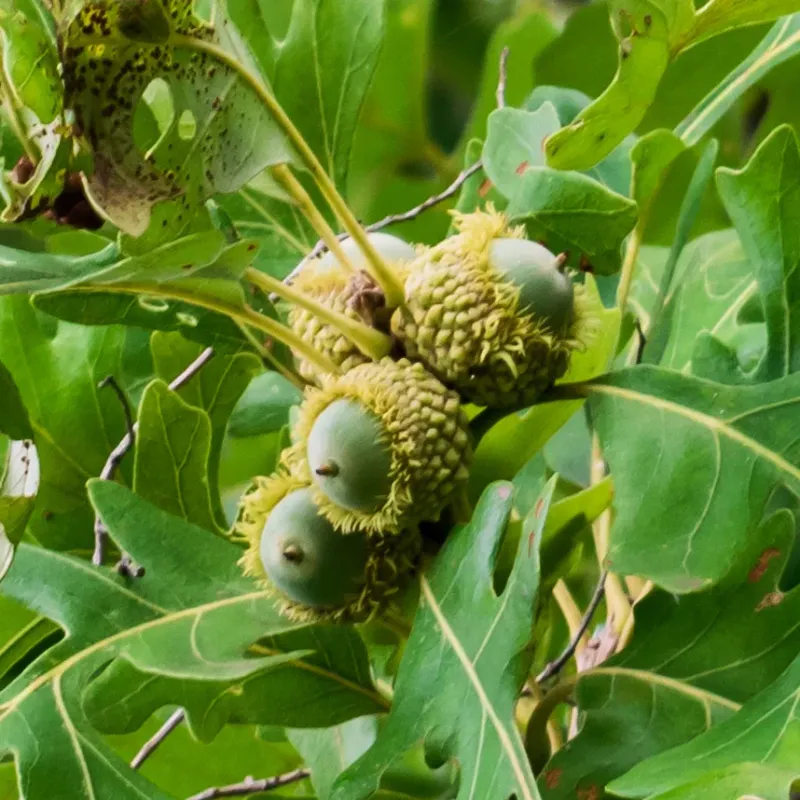
Bur oak is the kind of tree that makes a landscape look like it has history. The broad crown, deeply furrowed bark, and large fringed acorns give it a presence that few other native trees can match.
For wildlife, those acorns are the main event. Bur oak belongs to the white oak group.
OSU Extension notes that white oak group acorns are often preferred by wildlife in fall because they have lower tannin levels than red oak group acorns.
White-tailed deer, wild turkeys, wood ducks, blue jays, squirrels, and many other species feed heavily on bur oak acorns during fall and early winter.
A mature bur oak in a large yard or field edge can produce thousands of acorns in a good mast year, providing a concentrated food source that draws wildlife reliably.
That alone makes it one of the most valuable trees a homeowner with space can plant.
Bur oak is one of the more adaptable native oaks in this state. It can handle medium to wetter sites, clay soils, and even periodic flooding better than many other oaks.
It also shows reasonable drought tolerance once fully established, which is a useful quality for upland sites with variable rainfall.
The tree still needs room. Mature bur oaks commonly reach sixty to eighty feet tall with a crown spread that can match or exceed the height.
Planting one near overhead utility lines, driveways, sidewalks, or foundations creates long-term problems that are difficult and expensive to fix later. This is a tree for open lawns, field edges, and long-term habitat plantings with generous clearance on all sides.
Establishment care matters. Water young bur oaks during dry stretches in the first two to three years, and avoid heavy mulch piled against the trunk.
Once the root system is established, bur oak becomes one of the most durable and long-lived native trees you can grow in this state.
7. Butternut Offers Native Nut Production With Honest Challenges
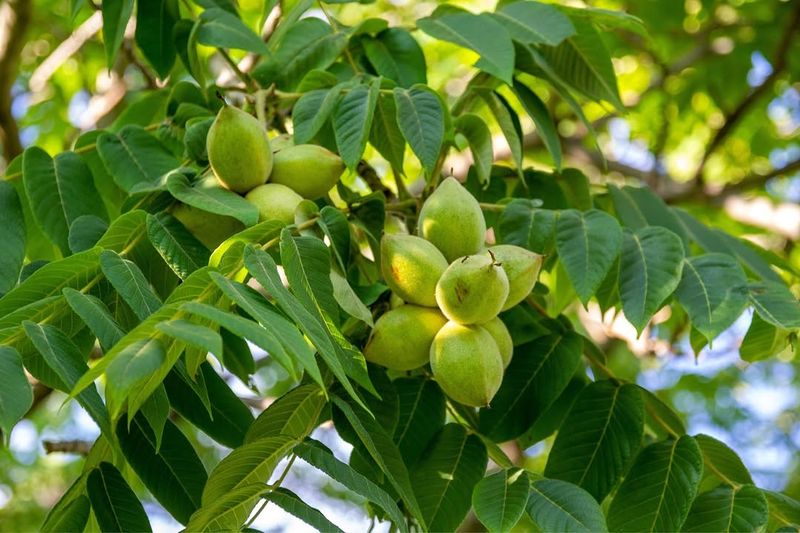
Butternut, sometimes called white walnut, is a native nut tree that deserves mention alongside the more famous black walnut.
The nuts have a rich, buttery flavor that many people find milder and more pleasant than black walnut, and the husks are easier to work with.
Squirrels, deer, and other wildlife use butternut mast, though it is less abundant in most landscapes than walnut or hickory simply because the tree is less common.
Butternut canker is the most important thing to understand before planting this tree. The disease, caused by a fungal pathogen, has reduced butternut populations significantly across the eastern United States, and Ohio populations have not been spared.
The Ohio Department of Natural Resources has documented butternut canker in this state, and many wild trees show infection. Purchasing trees from reputable nurseries that source from canker-resistant or canker-tolerant stock is essential.
Despite the disease pressure, butternut is worth considering for homeowners who want to support a native species that needs help and who understand the risk.
Some trees show natural resistance, and planting efforts in appropriate locations contribute to long-term conservation of a native species under pressure.
Local conservation districts and native plant nurseries may carry screened stock.
Butternut prefers rich, moist, well-drained soils and does best in full sun to light shade. It is smaller than black walnut at maturity, often reaching forty to sixty feet, which makes it slightly more manageable for mid-sized yards.
Like black walnut, it also produces juglone, so keep it away from sensitive garden plants and vegetable beds.
Check with your county Extension office or Department of Natural Resources forestry contacts before purchasing. Ask for guidance on sourcing canker-resistant butternut stock.
Planting a healthy individual from quality nursery stock gives the tree its best chance of long-term survival.