Georgia Native Ground Covers That Replace Pine Straw And Look Better Through Every Season
If spreading fresh pine straw every year is starting to feel like a never-ending chore, you are not alone. It breaks down, it washes off slopes after heavy rain, and before long you’re back at the garden center loading up the car again.
There’s a better way to fill those landscape beds, and it actually grows. Native ground covers have been quietly gaining fans among Georgia gardeners, and it’s easy to see why.
These plants are naturally suited to the conditions that make landscape beds tricky in the first place: clay soil, variable shade, and seasons that swing between extremes.
Once they establish, they can hold beds together through every season with far less intervention than pine straw ever could.
Seasonal flowers, interesting foliage, and real year-round texture are all part of the deal.
1. Green-And-Gold Brightens Bare Soil
Bare soil under a canopy of tall Georgia pines can feel like an impossible problem to solve.
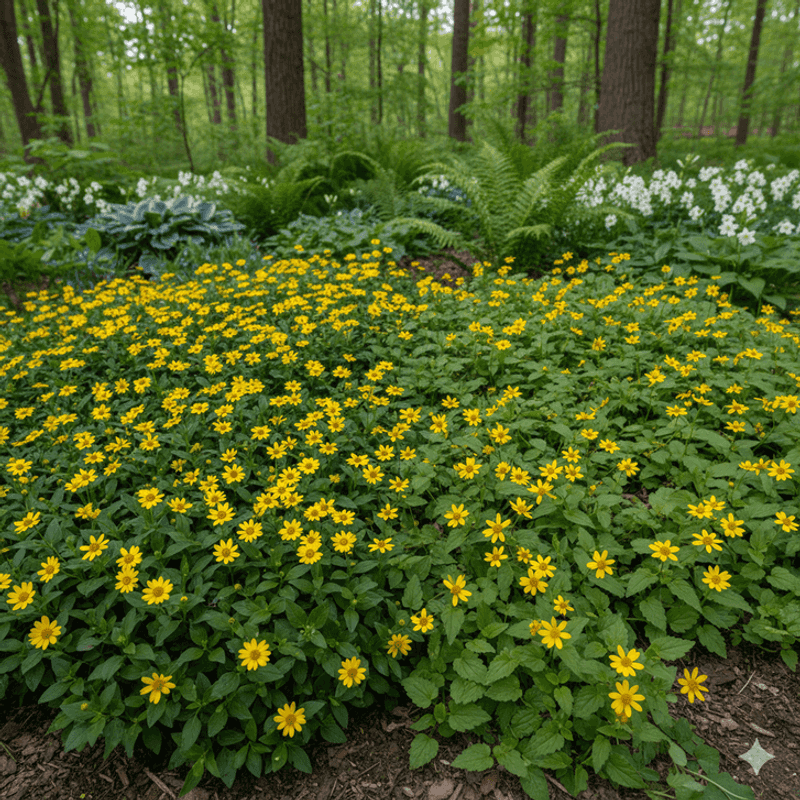
Green-and-gold, known botanically as Chrysogonum virginianum, is a low-growing native perennial that spreads slowly across open ground and brings cheerful yellow flowers to spots that are hard to fill with anything else.
The plant typically stays under six inches tall, which gives it a tidy, mat-like appearance that works well along woodland paths or beneath trees where pine straw tends to wash away.
The bright yellow, star-shaped blooms appear most heavily in spring, with a lighter flush of flowers possible through summer and into fall in Georgia gardens.
Even when not in bloom, the dark green, semi-evergreen foliage holds its color reasonably well through winter in most parts of the state.
That seasonal staying power makes it a reliable choice for shaded beds that need year-round coverage.
Green-and-gold grows best in part shade to full shade with moist, well-drained soil, though it can tolerate drier conditions once established. In Georgia, it tends to do well under deciduous trees where it gets some spring sunlight before the canopy fills in.
Spacing plants about a foot apart gives them room to spread without leaving too much bare ground in the early seasons. Patience pays off because the coverage becomes denser with each passing year.
2. Creeping Phlox Softens Woodland Edges
Along the edges where woodland gardens meet open lawn, there is often a ragged transition that no amount of pine straw quite hides.
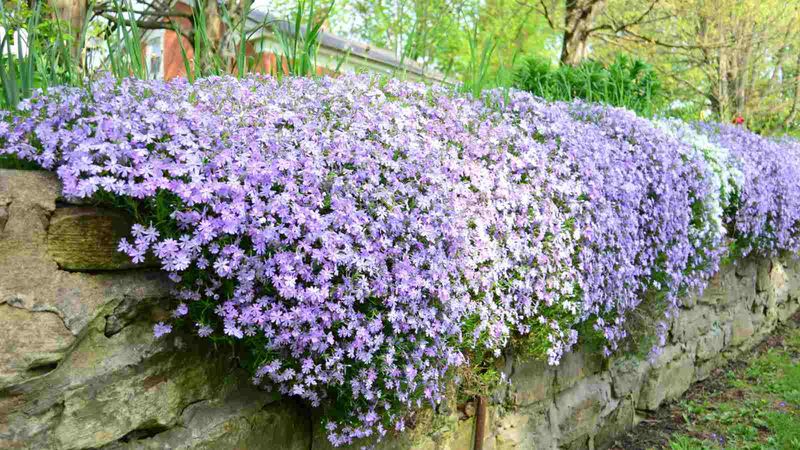
Creeping phlox, specifically Phlox stolonifera, is a native species that softens those edges beautifully with low, spreading stems and a generous flush of flowers each spring.
It is worth noting that this is different from the sun-loving moss phlox commonly sold at garden centers, so reading the label carefully before purchasing matters.
The blooms on creeping phlox come in shades of pink, lavender, and white, and they appear in mid-spring when gardens are waking up from winter.
The foliage is semi-evergreen, forming a soft mat that stays reasonably attractive through summer and fall even after the flowers fade.
In shaded beds with decent moisture, the plant spreads at a moderate pace, gradually filling gaps that would otherwise require repeated pine straw applications.
Your Georgia Garden Changes Every Week. Your Plan Should Too.
Gardening in Georgia changes quickly throughout the season. Every Friday you’ll receive a simple weekly plan showing exactly what to plant, prune, fertilize, harvest, and protect so you never miss the right timing.
Creeping phlox prefers part shade to full shade and performs well in the moist, slightly acidic soils common in many Georgia woodlands. It works nicely along slopes where erosion can be a concern, since the spreading stems help hold soil in place.
Giving it rich, organic soil at planting time helps it establish more quickly. Once settled in, it requires little attention beyond occasional watering during dry Georgia summers, making it an easygoing addition to shaded native plant beds.
3. Foamflower Covers Shady Garden Spots
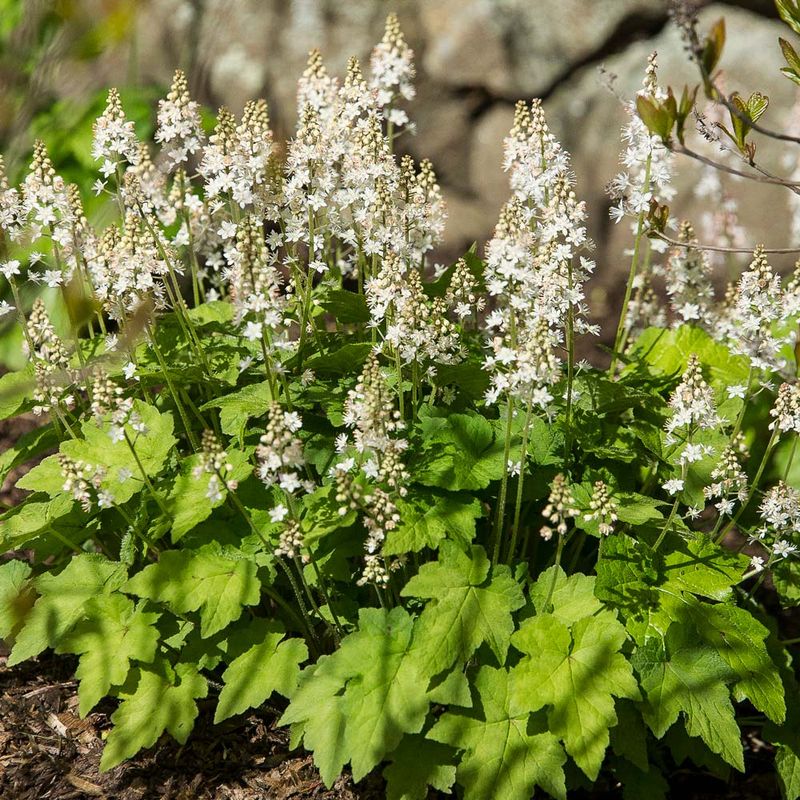
Few plants handle deep shade with as much grace as foamflower, a native perennial whose botanical name is Tiarella cordifolia.
The common name comes from the delicate, foamy white flower spikes that rise above the foliage in spring, creating a soft, cloud-like effect in beds that might otherwise look flat and uninviting.
Those flowers attract early pollinators and give shaded corners of Georgia gardens a seasonal lift that pine straw simply cannot offer.
Beyond the spring bloom, foamflower earns its place as a ground cover through its attractive, heart-shaped leaves that often display interesting mottling or burgundy veining depending on the variety.
The foliage is semi-evergreen to evergreen in much of Georgia, meaning the plant continues to cover soil through fall and into winter when many other perennials have gone completely dormant.
That year-round coverage is one of its most practical qualities.
Foamflower spreads through stolons, which are slender horizontal stems that root as they travel along the soil surface. This spreading habit makes it effective at filling shaded beds over time, though it moves at a measured pace rather than aggressively taking over.
It performs best in moist, organically rich soil with consistent moisture, which matches conditions found in many woodland gardens and shaded borders near the house.
Avoid planting it in spots with poor drainage or full afternoon sun, as those conditions tend to stress the plant during hot summer months.
4. Largeflower Heartleaf Stays Green In Winter
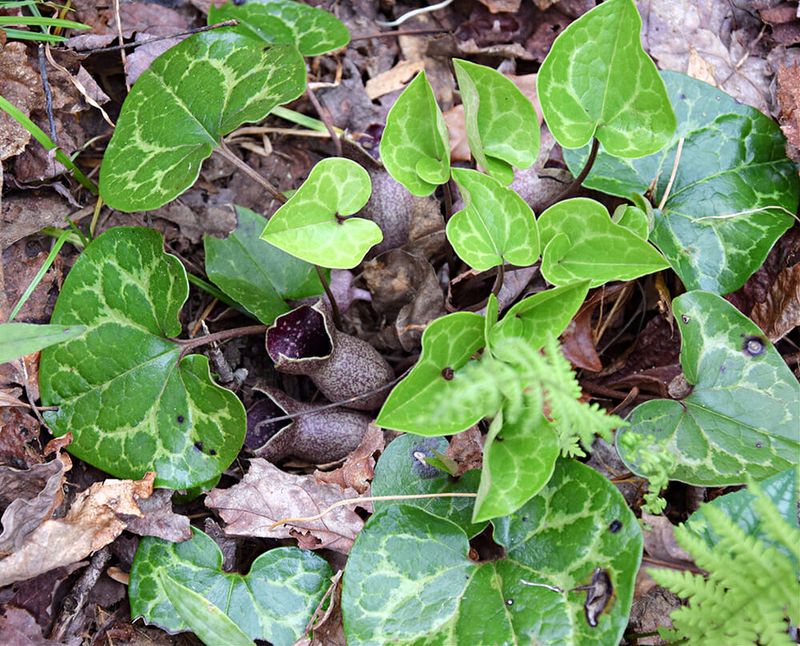
When winter strips most of the Georgia landscape down to bare branches and brown leaves, largeflower heartleaf holds its ground quietly and without complaint.
Known botanically as Hexastylis shuttleworthii, this native evergreen ground cover keeps its glossy, heart-shaped leaves through the coldest months the state typically experiences, providing a reliable patch of green when the rest of the garden looks tired.
That winter presence alone sets it apart from many other shade-tolerant options.
The leaves are thick, leathery, and often marked with attractive silver mottling that gives them a subtle decorative quality throughout the year. In spring, the plant produces small, jug-shaped flowers that hide at the base of the foliage near the soil.
They are easy to miss but interesting up close, and they have a quiet charm that fits well in naturalistic woodland gardens where subtle details reward a closer look.
Largeflower heartleaf spreads slowly through rhizomes, forming a low, dense mat that rarely exceeds six inches in height.
It is best suited to moist, shaded sites with humus-rich soil, which are conditions found naturally along stream banks, ravines, and under hardwood canopies across many parts of Georgia.
Because it spreads gradually, it works best as part of a longer-term planting plan where patience is part of the strategy. Mixing it with faster-spreading companions helps cover soil more quickly while the heartleaf fills in its own space at its own pace.
5. Christmas Fern Adds Texture Under Trees
Standing under a large Georgia oak or hickory and looking down at the bare, root-covered soil is a familiar frustration for many homeowners.
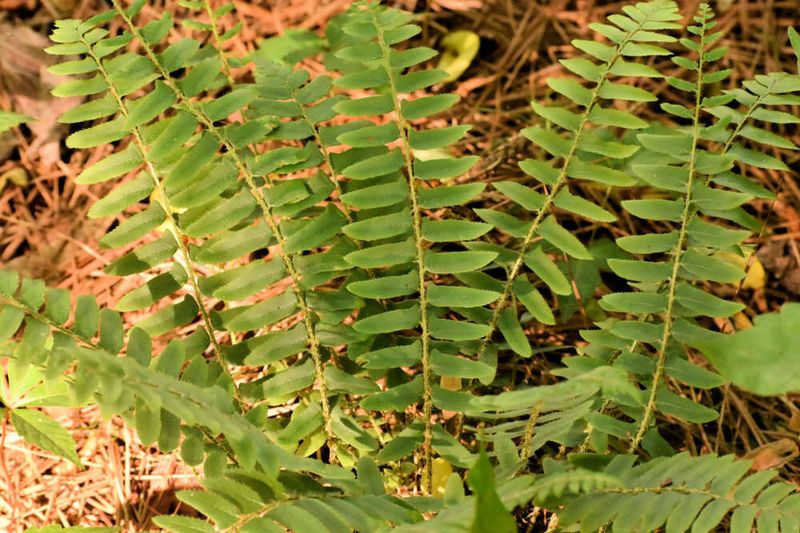
Christmas fern, Polystichum acrostichoides, is one of the most reliable native plants for exactly that kind of difficult spot.
Its dark green, leathery fronds arch outward from a central crown and stay green through winter, which is how the plant earned its common name – people noticed the fronds still looked fresh during the Christmas season.
The texture that Christmas fern brings to a shaded bed is genuinely distinctive. The individual leaflets along each frond have a slightly eared base that gives them a boot-like or stocking-like shape, adding fine detail to the foliage.
In spring, new fronds unfurl in a silvery green color before deepening to the rich, dark green that persists through the rest of the year. That seasonal shift gives the plant a quiet visual rhythm that pine straw simply cannot replicate.
Christmas fern grows in clumps rather than spreading aggressively, which makes it easy to place deliberately in a Georgia landscape without worrying about it overtaking neighboring plants.
It handles dry shade better than most ferns, making it a sensible choice for beds under established trees where soil moisture can be inconsistent.
Planting in groups of three or more creates a fuller, more natural-looking cover across larger areas. Over several years, established clumps grow larger and more impressive, adding increasing texture to the landscape with very little maintenance required.
6. Partridgeberry Forms A Low Evergreen Carpet
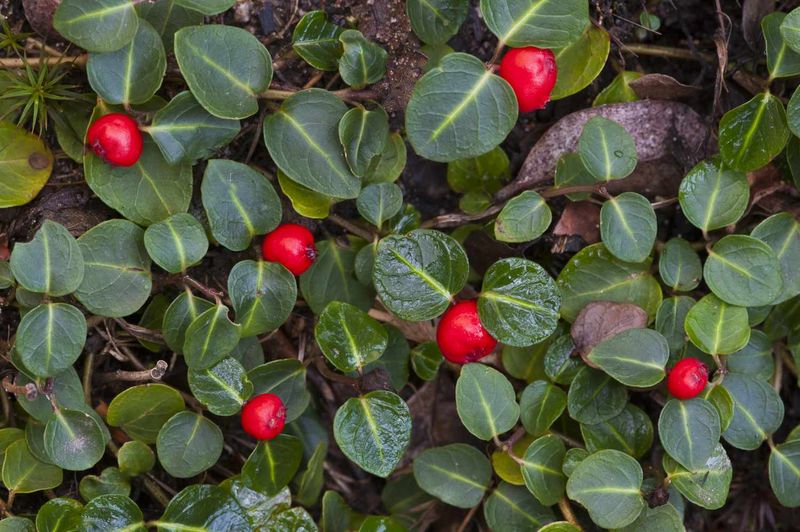
Tucked beneath the canopy of a Georgia woodland, partridgeberry moves quietly across the forest floor with small, paired leaves and a trailing habit that forms one of the most charming evergreen mats found in native plant gardens.
Botanically called Mitchella repens, this low-growing plant reaches only a few inches in height but spreads steadily along the ground, rooting at nodes as it travels.
The result, over time, is a dense, weed-suppressing carpet that looks polished through every season.
In late spring and early summer, pairs of small white, tubular flowers appear along the stems. Those paired blooms are botanically fascinating because each pair fuses together and eventually produces a single red berry.
The berries ripen in fall and often persist through winter, adding a pop of color to the green mat that makes the plant especially appealing during the quieter months of the Georgia garden calendar.
Partridgeberry is best suited to moist, shaded sites with acidic, organic soil – conditions that match the woodland environments where it grows naturally across Georgia and much of the eastern United States.
It tends to struggle in hot, dry spots or areas with heavy foot traffic, so placement matters.
Using it along shaded paths, beneath rhododendrons, or in naturalized woodland beds gives it the environment it needs to spread successfully.
Because it grows slowly, combining it with other native ground covers helps fill in bare areas more quickly while partridgeberry fills its designated space over time.
7. Bird’s Foot Violet Brings Color To Dry Spots
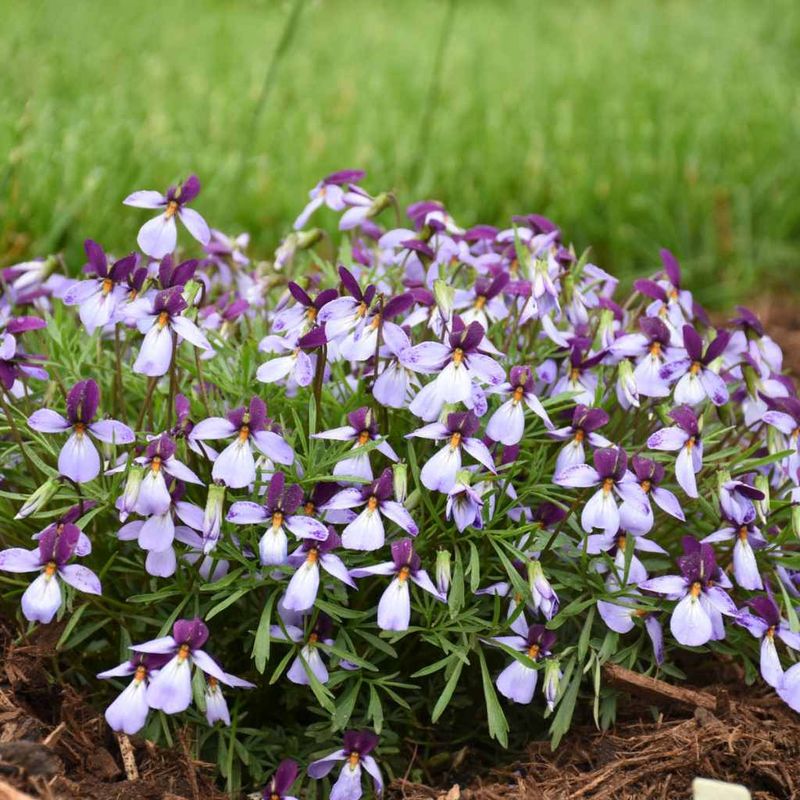
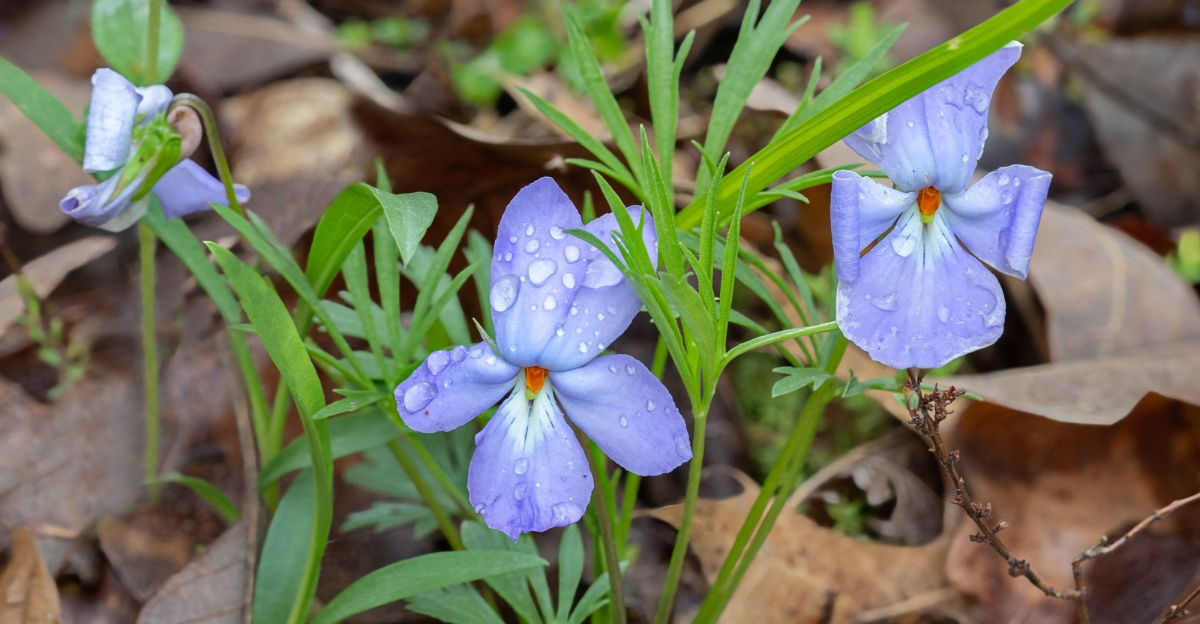
Sunny, dry slopes and lean, sandy spots in Georgia gardens can feel nearly impossible to plant successfully. Bird’s foot violet, Viola pedata, is one native plant that genuinely thrives in those challenging conditions rather than just tolerating them.
The common name comes from the deeply divided, bird’s-foot-shaped leaves that give the plant a delicate, lacy texture even when it is not in bloom. That foliage alone makes it worth growing as a ground-level accent in dry, open areas.
The flowers are the real showstopper. Blooming in spring, they are larger than most violet species and often display a striking two-toned pattern of pale lavender petals above and deeper purple petals below.
They tend to appear in generous numbers when the plant is happy, creating a low carpet of color across dry, sunny spots that most other ground covers would find inhospitable. Early pollinators, including native bees, visit the blooms regularly.
Bird’s foot violet needs excellent drainage and does not perform well in clay-heavy or consistently moist soil. In Georgia, it fits best along rocky outcroppings, dry sunny borders, or sandy slopes where water moves through quickly.
Unlike many native violets, it does not spread aggressively by stolons, so it tends to stay where it is planted rather than wandering into unwanted areas.
Planting several together creates a more impactful display, and allowing the plants to self-seed over time gradually increases coverage across suitable dry spots in the landscape.
8. New York Fern Spreads Through Moist Shade
Moist, shaded slopes in Georgia gardens often develop bare patches where pine straw slides downhill after every heavy rain.
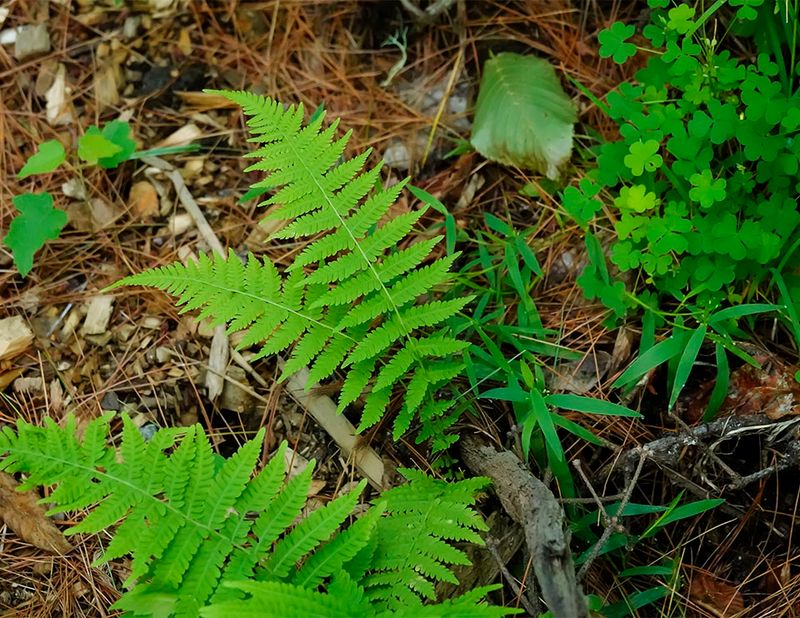
New York fern, Thelypteris noveboracensis, handles those tricky spots with a spreading, colony-forming habit that helps stabilize soil while filling in bare ground with soft, yellow-green fronds.
Unlike the clump-forming Christmas fern, New York fern spreads through underground rhizomes, gradually expanding into a lush, connected mass of foliage that covers ground more quickly than many other native options.
The fronds have a distinctive look that makes them easy to identify – they taper at both ends, meaning the leaflets are smallest near the base and near the tip of each frond.
This gives the fern a graceful, lance-like shape that moves gently in a breeze and creates a soft, layered texture across shaded beds.
The foliage is a fresh, light green through spring and summer, turning golden yellow in fall before the fronds flatten to the ground for winter.
New York fern is deciduous, so it does not provide winter coverage the way Christmas fern or largeflower heartleaf does.
However, for Georgia gardens where moist shade is the main challenge and seasonal coverage is the primary goal, it is a practical and attractive choice.
It grows best in consistently moist, acidic soil with light to moderate shade.
Pairing it with evergreen companions fills in the winter gap while the fern focuses on delivering lush summer coverage across slopes, stream edges, and shaded rain gardens throughout the warmer months.