What Georgia Gardeners Should Do With Blueberry Bushes As Soon As Harvest Ends
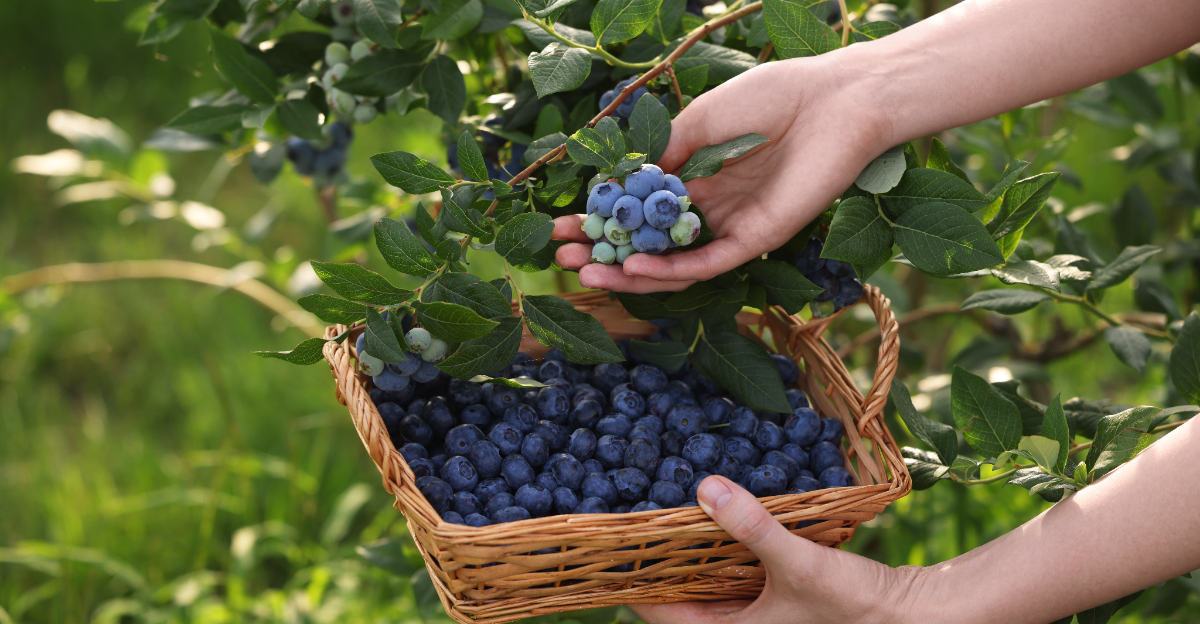
Harvest season always feels a little bittersweet. After weeks of watching berries ripen and picking fresh fruit from the bush, the excitement starts winding down.
The branches that were once loaded with blueberries suddenly look much different, and it is easy to assume the hard work is finished until next year.
That is where many gardeners miss an important opportunity. The period right after harvest plays a bigger role than most people realize.
What happens during these weeks can influence how the plant grows, how healthy it stays, and what kind of crop it produces in the future.
For Georgia gardeners, summer does not mark the end of blueberry care. In fact, some of the most important tasks happen after the last berries have been picked.
Taking the right steps now can help bushes recover from the harvest season and prepare for the months ahead.
1. Prune Out Older And Less Productive Canes
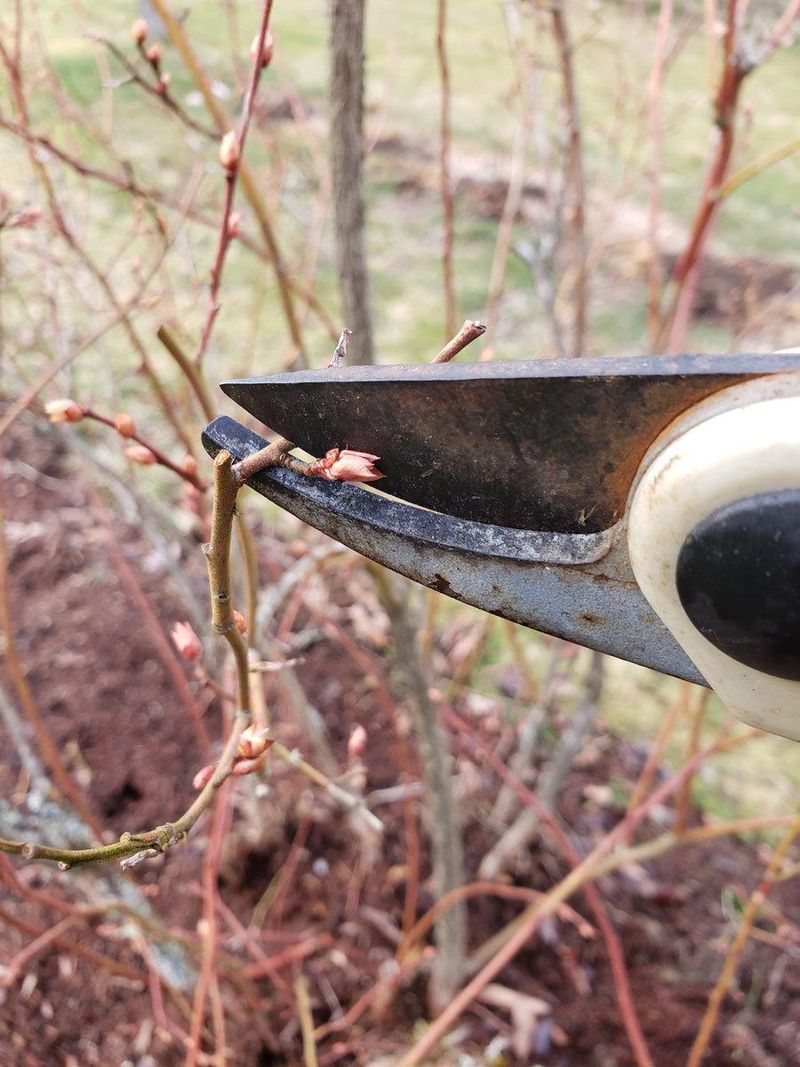
Old canes are quietly robbing your bush of energy. Blueberry plants produce the best fruit on younger wood, typically two to four years old.
Canes older than that start to slow down and take up space better used by vigorous new growth.
Right after harvest ends, walk through your patch and look closely at the base of each bush. Thick, dark, and gnarled canes that barely produced this season are the ones to remove first.
Cut them down close to the ground using sharp, clean pruning shears.
Aim to leave around six to eight healthy canes per plant. Removing too many at once stresses the bush, so stay focused on the oldest and least productive ones.
A clean cut heals faster and reduces the chance of disease entering the wound.
Pruning right after harvest gives the plant the entire growing season to push out fresh replacement canes. Those new shoots will harden off before winter and become your most productive wood next summer.
Waiting until late fall means missing that growth window entirely.
Sharp, clean tools make a real difference. Dull blades crush rather than cut, which slows healing and invites problems.
Wipe blades with rubbing alcohol between plants to avoid spreading anything from bush to bush.
2. Water Consistently Through Summer Heat
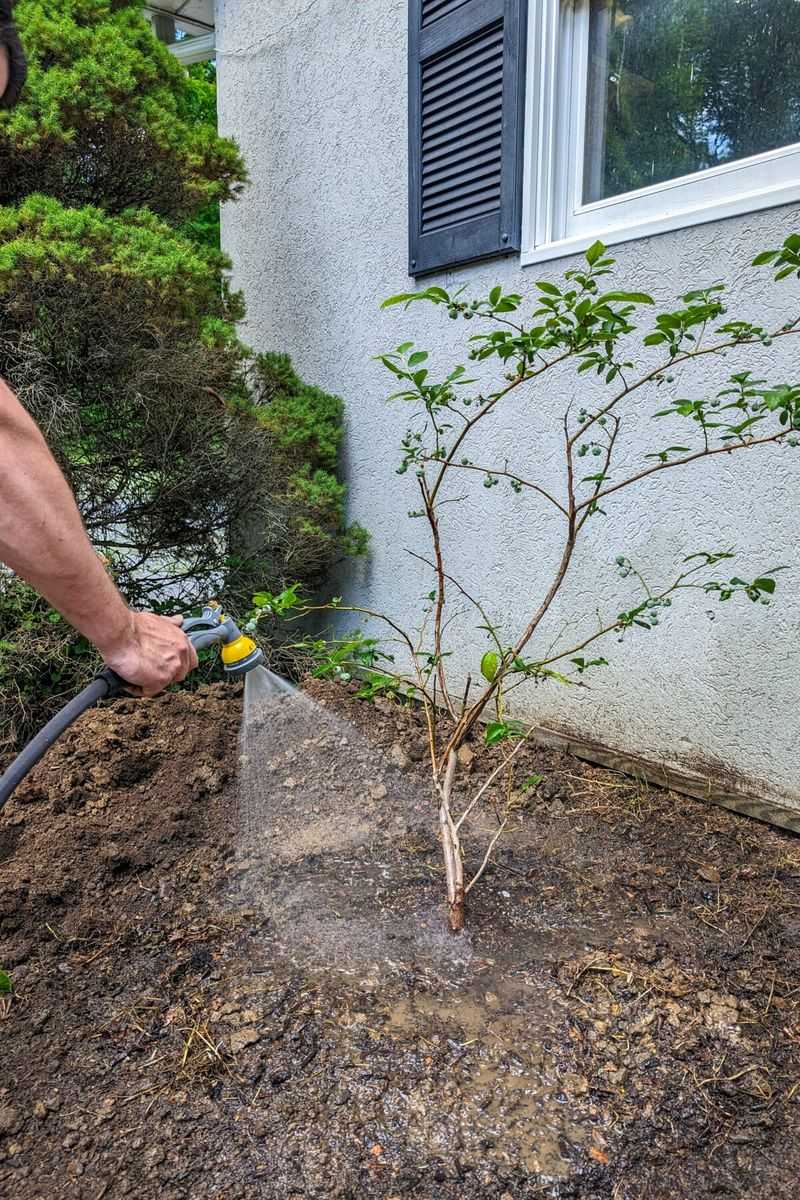
Most gardeners ease up on watering once the fruit is gone. That is actually one of the worst things you can do for your blueberry plants after harvest.
Blueberry bushes keep working hard through summer even without berries on the branches. Roots are expanding, buds for next year are forming, and the plant needs steady moisture to support all of it.
Letting the soil dry out repeatedly puts real stress on the bush during a critical recovery window.
Sandy soils common across parts of the Southeast drain fast and need more frequent watering. Clay-heavy soils hold moisture longer but can still dry out in a hot stretch.
Check soil moisture a few inches down before watering rather than going by schedule alone.
Drip irrigation or soaker hoses work better than overhead sprinklers for blueberries. Wet foliage in warm weather encourages fungal problems, and keeping water at the root zone is simply more efficient.
Your Georgia Garden Changes Every Week. Your Plan Should Too.
Gardening in Georgia changes quickly throughout the season. Every Friday you’ll receive a simple weekly plan showing exactly what to plant, prune, fertilize, harvest, and protect so you never miss the right timing.
About one to two inches of water per week is a reasonable target during summer.
Consistency matters more than volume. A deep watering two to three times a week beats a daily shallow sprinkle every time.
3. Refresh Mulch Around The Root Zone
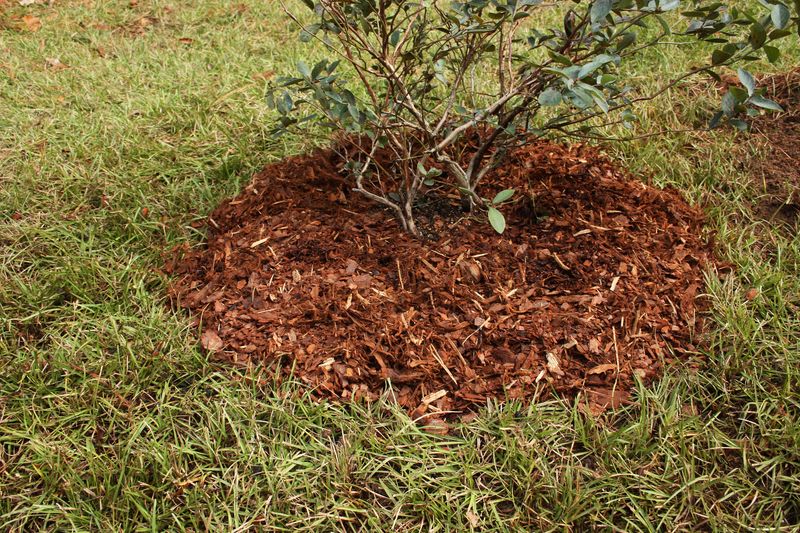
Bare soil around blueberry roots in July is a problem waiting to happen. Mulch breaks down over the growing season, and by the time harvest wraps up, coverage is often thin and patchy.
Adding a fresh layer of mulch right after picking does several things at once. It holds soil moisture in, which reduces how often you need to water.
It keeps soil temperatures cooler during the hottest weeks. It also slowly breaks down and feeds the root zone with organic matter.
Pine bark, pine straw, and wood chips all work well for blueberries. These materials break down in a way that slightly acidifies the soil over time, which suits blueberries perfectly since they prefer a low pH.
Avoid dyed or treated mulch products, which can introduce unwanted chemicals.
Apply about three to four inches of fresh mulch, keeping it a few inches back from the main stem. Piling mulch directly against the base of the plant traps moisture against the bark and can cause rot issues over time.
Extend the mulched area out to the drip line of each bush if possible. Blueberry roots spread wide and shallow, so protecting a larger area around the plant pays off.
4. Inspect Leaves For Pest And Disease Issues
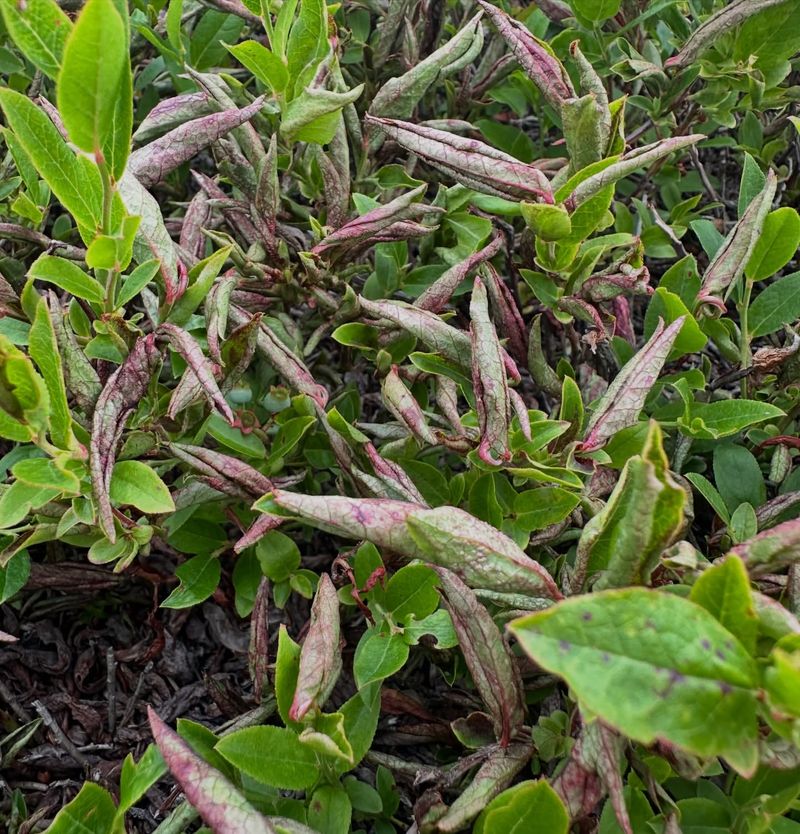
Harvest time keeps most gardeners focused on the fruit and nothing else. Once picking wraps up, take a slow walk through your patch and actually look at the leaves.
Post-harvest is when pest and disease problems tend to get overlooked. Mummy berry, leaf spot, and powdery mildew can all show up on foliage late in the season.
Catching them now prevents a worse situation next spring when conditions are right for rapid spread.
Flip leaves over and check the undersides carefully. Blueberry gall midge, leafrollers, and spider mites often hide there.
Discolored patches, curled edges, or sticky residue are all signs something is going on that needs attention.
Remove any leaves that show obvious signs of infection and dispose of them away from the garden. Leaving diseased material on the ground near the base of the plant gives problems a place to overwinter and come back strong next year.
Not every spot or blemish means serious trouble. Some cosmetic leaf damage late in the season is normal and not worth treating aggressively.
Focus on widespread patterns, unusual coloring, or active pest populations rather than isolated marks on a few leaves.
If you do need to treat, choose products labeled for blueberries and follow directions carefully.
5. Remove Weeds Growing Near The Base
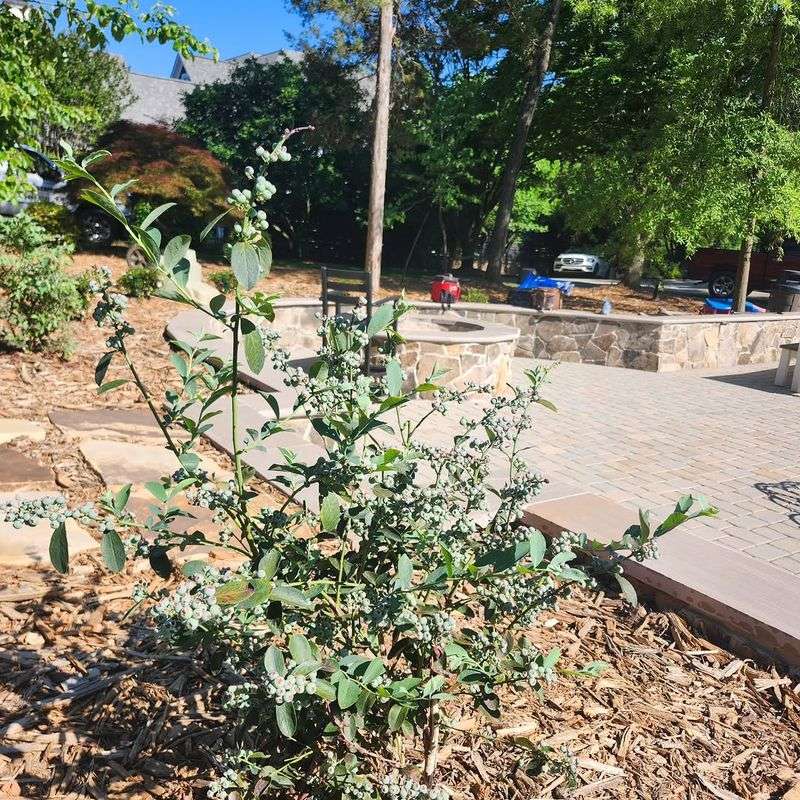
Weeds growing right up against your blueberry bushes are not just an eyesore. They compete directly for water, nutrients, and space in the root zone, and they win more often than gardeners expect.
Post-harvest is a smart time to clear them out thoroughly. Weeds that set seed before you remove them will create a much bigger problem next spring.
Getting ahead of that cycle now saves real effort later.
Pull weeds by hand near the base of the plant rather than hoeing. Blueberry roots sit close to the surface, and a hoe can slice through them easily without you realizing it.
Hand pulling lets you feel what you are removing and keeps root damage to a minimum.
Pay special attention to grassy weeds, which are especially aggressive around blueberry beds. Nutsedge and Bermuda grass are particularly stubborn in warm Southern climates and spread fast if left alone through summer.
After clearing weeds, refresh your mulch layer to make it harder for new ones to sprout. A thick mulch barrier blocks light from reaching weed seeds in the soil.
It is not a perfect solution, but it cuts down on how often you need to pull by hand.
Check around the base of each bush every couple of weeks through late summer. Staying on top of it with regular short sessions is far easier than dealing with a fully overgrown bed later.
6. Avoid Heavy Fertilizer Applications Right After Picking
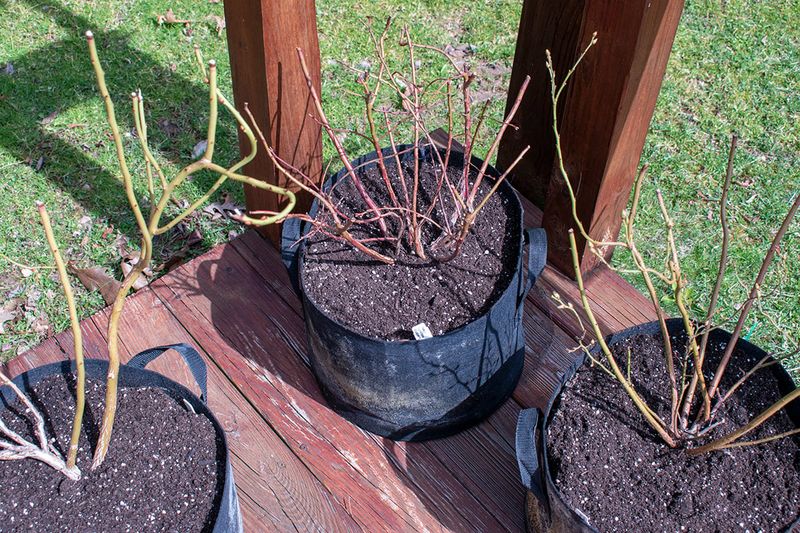
Reaching for fertilizer right after harvest feels productive, but it can actually cause real problems if you push it too hard too soon.
Blueberry plants are wrapping down from a heavy fruiting cycle and need time to settle before being pushed to grow aggressively again.
Heavy nitrogen applications in late summer push out a flush of soft, leafy growth. That new growth does not have enough time to harden before cooler weather arrives.
Tender shoots heading into fall are far more vulnerable to cold snaps and early frosts.
If you fertilized in spring as recommended, your bushes already received what they needed for the season. A second heavy feeding after harvest is usually unnecessary and can do more harm than good in most situations.
Light applications of a balanced, acid-forming fertilizer can be appropriate in some cases, but only if a soil test shows a clear nutrient deficiency. Guessing and over-applying is a common mistake that leads to salt buildup in the root zone over time.
Ammonium sulfate is commonly used for blueberries because it feeds the plant while also lowering soil pH slightly. Even with that product, less is more in the post-harvest window.
Follow package rates carefully and do not double up.
Wait until late winter or very early spring for your main feeding.
7. Check Soil Acidity Before Making Amendments
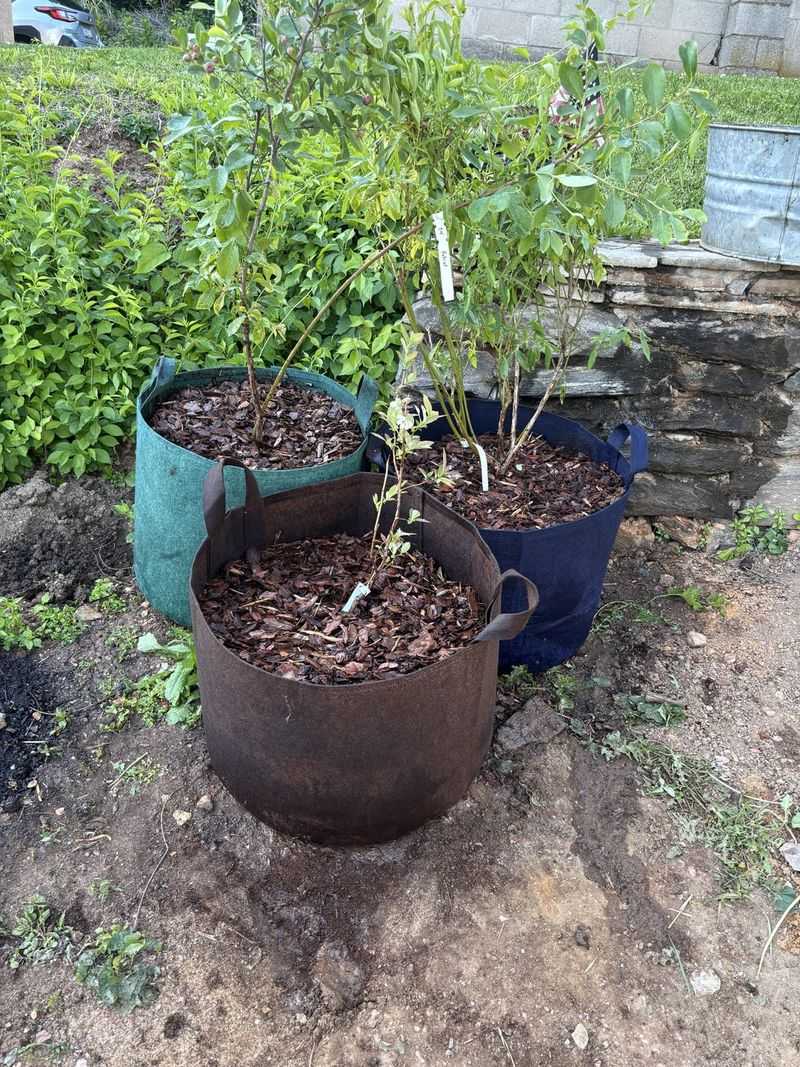
Blueberry bushes are picky about soil pH, and guessing wrong when adding amendments can set your plants back significantly. Checking actual pH levels before reaching for sulfur or lime is always the smarter move.
Blueberries grow best in soil with a pH between 4.5 and 5.5. Soil outside that range limits how well roots absorb nutrients, even if those nutrients are physically present in the ground.
Plants growing in soil that is too alkaline often show yellowing leaves and poor growth regardless of how well you water and feed them.
Inexpensive soil pH test kits are available at most garden centers and give reasonably accurate results.
Sending a sample to your local cooperative extension office gives you the most reliable reading and often comes with specific amendment recommendations based on your soil type.
In many parts of Georgia, native soils tend to be naturally acidic, which works in your favor with blueberries. But that is not always the case, especially in areas where lime has been applied previously for lawns or other crops.
If pH is too high, granular sulfur is the standard fix, but it works slowly.
Applying it in late summer or fall gives it time to work before the following growing season.